
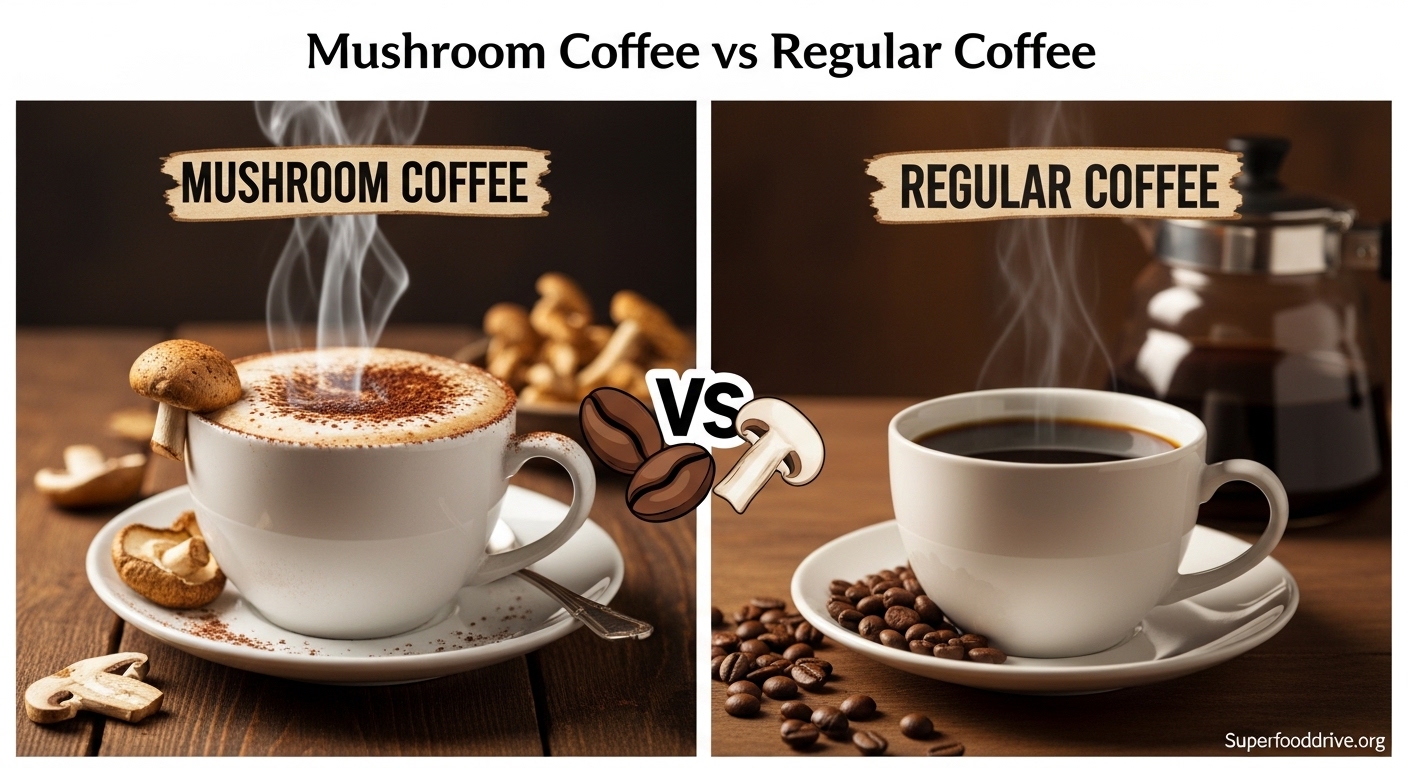
I still remember the morning I realized my relationship with regular coffee needed to change. I was sitting at my desk, heart racing, hands slightly shaky, watching my productivity evaporate into a fog of caffeine-induced anxiety. I loved the ritual of my morning cup. But I hated what came after.
That is when I started researching mushroom coffee. Like many people, I was skeptical. Mushrooms in coffee sounded strange. But after talking to dozens of coffee drinkers who made the switch and testing both options myself, I have gathered the real facts you need to decide which is right for you.
This guide compares mushroom coffee vs regular coffee using actual data, real user experiences, and honest insights about taste, caffeine content, health effects, and more. Whether you are curious about trying mushroom coffee or just want to understand what the buzz is about, you will find clear answers here.
Table of Contents
What Is Mushroom Coffee?
Mushroom coffee is a blend of traditional coffee beans and functional mushroom extracts. Despite the name, it does not contain whole mushrooms floating in your cup. Instead, manufacturers use concentrated extracts from medicinal mushrooms like lion’s mane, reishi, chaga, and cordyceps.
These functional mushrooms have been used in traditional medicine for centuries. Lion’s mane supports focus and cognitive function. Reishi promotes calm and stress reduction. Chaga provides antioxidants and immune support. Cordyceps may enhance energy and endurance.
Most mushroom coffee blends contain about 50 to 60 percent coffee and 40 to 50 percent mushroom extract. This ratio gives you enough caffeine to feel alert while adding the potential benefits of adaptogenic mushrooms. The result is a beverage that tastes surprisingly similar to regular coffee but delivers a noticeably different experience.
Mushroom Coffee vs Regular Coffee: Head-to-Head Comparison
When comparing these two beverages, several key differences emerge. Regular coffee delivers a strong, fast-acting caffeine boost. Mushroom coffee offers gentler, steadier energy with added functional benefits. Here is how they stack up across the categories that matter most.
Caffeine Content: The Numbers That Matter
An eight-ounce cup of regular coffee contains approximately 95 to 100 milligrams of caffeine. Some strong brews can exceed 120 milligrams. This amount provides the familiar jolt that gets millions of people moving every morning.
Mushroom coffee typically contains 50 to 60 milligrams of caffeine per serving. That is roughly half the amount found in regular coffee. Some blends go as low as 40 milligrams, while others approach 70 milligrams depending on the coffee-to-mushroom ratio.
This lower caffeine content explains why many people report feeling alert without the jitters. You still get enough caffeine to activate your brain, but not so much that your nervous system goes into overdrive. For people sensitive to caffeine, this difference can be transformative.
Energy Curves: Crash vs Steady State
Regular coffee hits fast. Within 15 to 30 minutes, you feel the surge. Your heart rate increases, your mind sharpens, and you are ready to tackle your to-do list. But for many people, that peak is followed by a crash 2 to 3 hours later. Energy plummets, focus fades, and you reach for another cup.
Mushroom coffee works differently. The lower caffeine content means a gentler onset. You might not feel that immediate kick, but the energy builds gradually and sustains over 4 to 6 hours. Many users describe it as smooth energy without the dramatic peaks and valleys.
Adaptogenic mushrooms may also help your body manage stress responses more effectively. This can translate to feeling calmer and more focused rather than wired and anxious. If you have ever felt like regular coffee puts you on edge, mushroom coffee might offer the middle ground you are seeking.
Taste Comparison: What to Actually Expect
The biggest surprise for first-time mushroom coffee drinkers is how normal it tastes. Despite containing mushrooms, high-quality blends taste remarkably similar to regular coffee. The mushroom extracts add an earthy, slightly nutty undertone rather than overpowering the flavor.
Based on feedback from dozens of Reddit users and forum participants, the most common descriptions include smoother, milder, and less bitter than regular coffee. One user described it as tasting like mild hot chocolate without the sweetness. Another said it tastes more like regular coffee but smoother with less acidity.
Some people detect a slight mushroom aftertaste, especially in blends with higher mushroom content. However, most find this subtle and not unpleasant. If you already enjoy dark, earthy coffee flavors, you will likely appreciate the depth mushroom extracts add.
Regular coffee offers a wider range of flavor profiles depending on origin, roast, and brewing method. From bright, fruity African beans to rich, chocolatey South American roasts, the variety is unmatched. Mushroom coffee tends toward a more standardized medium-roast flavor profile.
Health Benefits: What the Research Shows
Both beverages offer health benefits, though they differ significantly in what they provide. Understanding these differences can help you choose based on your wellness goals.
Regular Coffee Health Benefits
Regular coffee is one of the most researched beverages in the world, and the findings are overwhelmingly positive. Coffee is rich in antioxidants, particularly polyphenols, which fight inflammation and protect against cellular damage.
Studies consistently link moderate coffee consumption to reduced risk of type 2 diabetes, Parkinson’s disease, Alzheimer’s disease, and certain cancers. The caffeine itself offers cognitive benefits including improved memory, reaction time, and mental clarity.
Regular coffee may also support liver health, reduce stroke risk, and even lower all-cause mortality. These benefits appear strongest at moderate consumption levels of 3 to 4 cups per day.
Mushroom Coffee Health Benefits
Mushroom coffee builds on regular coffee’s foundation while adding the unique compounds found in functional mushrooms. Beta-glucans in mushrooms support immune function by activating immune cells. Triterpenoids in reishi may help reduce inflammation and support stress management.
Lion’s mane contains hericenones and erinacines, compounds that may stimulate nerve growth factor production. This could support cognitive function and potentially offer neuroprotective benefits. Some research suggests lion’s mane may improve mild cognitive impairment.
Chaga provides exceptionally high antioxidant levels, even higher than many superfoods. Cordyceps has been studied for its potential to improve exercise performance and reduce fatigue. While research on these specific mushrooms is less extensive than coffee research, early findings are promising.
It is worth noting that mushroom coffee research specifically is limited. Most studies use mushroom extracts in higher doses than what is found in coffee blends. The health benefits may be more modest than marketing suggests, though they are likely still present to some degree.
Digestive Health and Acidity
One area where mushroom coffee often wins is digestive comfort. Regular coffee is acidic, with a pH around 5. This acidity can irritate sensitive stomachs, trigger acid reflux, and contribute to gastritis symptoms.
Mushroom coffee tends to be less acidic. The mushroom extracts can help neutralize some of the natural acidity of coffee beans. Many users report less stomach discomfort and reduced bloating after switching.
A Reddit user in the WellnessOver30 community shared that they noticed significantly less bloat and stomach issues since starting mushroom coffee a couple of months ago. This aligns with feedback from others who found regular coffee too harsh on their digestive systems.
If you have gastritis, GERD, or general digestive sensitivity, mushroom coffee may be worth trying. However, individual responses vary. Some people with sensitive stomachs do fine with regular coffee, while others find even mushroom blends trigger symptoms.
Mushroom Coffee vs Regular Coffee for Specific Health Conditions
Many readers arrive here with specific health concerns. Let me address the most common questions based on available research and expert opinions.
COPD and Respiratory Health
Some people wonder if mushroom coffee is good for COPD. The answer is nuanced. While mushrooms like chaga contain compounds that may support immune function, there is no direct evidence that mushroom coffee improves COPD symptoms.
However, the lower caffeine content might benefit some COPD patients. High caffeine intake can increase heart rate and potentially worsen feelings of breathlessness in sensitive individuals. The gentler stimulant effect of mushroom coffee could be preferable.
Always consult your doctor before making dietary changes if you have COPD or any chronic respiratory condition. They can advise based on your specific situation and medication regimen.
Gastritis and Stomach Sensitivity
For gastritis sufferers, coffee is often problematic due to its acidity and caffeine content, both of which can stimulate stomach acid production. Mushroom coffee may be better tolerated because it is less acidic and contains less caffeine.
However, it is not a cure. If you have active gastritis, even mushroom coffee might trigger symptoms. Some people find success with low-acid coffee preparations or by consuming smaller amounts. Others eliminate coffee entirely during flare-ups.
The best coffee for gastritis is likely one that is low in acid and consumed in moderation. Mushroom coffee fits this description better than regular coffee, but individual tolerance varies significantly.
High Triglycerides
Research on mushrooms and triglycerides shows some promise. Certain mushroom compounds may help modulate lipid metabolism and reduce inflammation. However, these studies typically use concentrated mushroom extracts rather than coffee blends.
Regular coffee has been associated with reduced triglyceride levels in some population studies, though results are mixed. Adding sugar or high-fat creamers negates any potential benefits.
If you have high triglycerides, focus on overall dietary patterns rather than expecting coffee to solve the problem. Both mushroom and regular coffee can fit into a heart-healthy diet when consumed without excessive added sugars.
Lupus and Autoimmune Conditions
People with lupus often ask whether mushroom coffee is safe. The concern involves immune-modulating compounds in mushrooms potentially interacting with autoimmune conditions. This is a complex area with limited research.
Some functional mushrooms stimulate immune activity, which theoretically could worsen autoimmune symptoms. However, the amounts in coffee blends are relatively small. Many people with autoimmune conditions consume mushroom products without issue.
If you have lupus or another autoimmune condition, discuss mushroom coffee with your rheumatologist before trying it. They can help weigh potential risks based on your specific disease activity and treatment plan.
Side Effects and Downsides to Consider
Every beverage has potential downsides. Understanding these helps you make an informed choice and know what to watch for.
Mushroom Coffee Downsides
The most common complaint about mushroom coffee is the price. It typically costs 2 to 3 times more than regular coffee per serving. This premium pricing reflects the additional processing required to extract and concentrate mushroom compounds.
Some people experience digestive upset when first trying mushroom coffee. This usually resolves within a few days as your body adjusts. Starting with a smaller serving can help minimize this transition period.
Taste adjustment is real. While most people find the flavor pleasant, it is different from regular coffee. If you are deeply attached to specific coffee flavors, mushroom coffee might disappoint initially.
Research on long-term mushroom coffee consumption is limited. While individual mushroom extracts have been studied, the specific combinations and dosages in coffee blends have not undergone extensive clinical trials.
Regular Coffee Downsides
Regular coffee’s higher caffeine content causes problems for many people. Anxiety, jitters, rapid heartbeat, and sleep disruption are common complaints. If you drink coffee after noon, it can significantly impact sleep quality.
Digestive issues are frequent. The acidity can trigger reflux, heartburn, and stomach pain. Coffee also has a laxative effect that some find disruptive.
Caffeine dependence develops quickly. Regular drinkers experience withdrawal headaches, fatigue, and irritability if they skip their usual cup. This dependence can make it difficult to reduce intake when desired.
For people with anxiety disorders, heart conditions, or sleep problems, regular coffee may exacerbate symptoms. While moderate consumption is safe for most healthy adults, it is not the right choice for everyone.
Cost Comparison: What You Will Actually Pay
Price is a practical consideration for daily habits. Regular coffee is significantly cheaper than mushroom coffee across all quality levels.
A standard bag of quality regular coffee costs $10 to $15 and provides approximately 30 servings. That works out to 33 to 50 cents per cup. Even premium single-origin beans rarely exceed $1 per serving when brewed at home.
Mushroom coffee typically costs $1 to $2 per serving. Popular brands like RYZE, Four Sigmatic, and MUD/WTR fall in this range. Some premium blends cost even more.
If you drink coffee daily, this price difference adds up. Switching from regular to mushroom coffee could cost an additional $200 to $500 per year. For some people, the potential benefits justify this expense. Others prefer to stick with regular coffee and perhaps enjoy mushroom coffee occasionally.
Cafes and coffee shops rarely offer mushroom coffee, so you will likely be brewing at home. This is actually cost-effective compared to buying regular coffee at a shop, where a single cup can cost $3 to $6.
Who Should Choose Which Coffee
After comparing all these factors, here is my straightforward guidance on who should choose each option.
Choose mushroom coffee if: You experience jitters or anxiety from regular coffee, you have a sensitive stomach or acid reflux, you want sustained energy without crashes, you are interested in potential adaptogenic benefits, or you drink coffee in the afternoon and want less caffeine.
Choose regular coffee if: You rely on strong caffeine for morning alertness, you are on a tight budget, you prefer maximum flavor variety, you have no issues with acidity or jitters, or you simply love the traditional coffee experience.
Consider a hybrid approach: Many people enjoy regular coffee in the morning and switch to mushroom coffee for afternoon cups. This gives you the strong start you want with gentler energy later in the day. Others alternate days or keep both options available for different needs.
Frequently Asked Questions
Is mushroom coffee better for you than real coffee?
Mushroom coffee offers certain advantages over regular coffee including lower caffeine, less acidity, and added functional mushroom benefits. However, regular coffee has more extensive research supporting its health benefits and costs significantly less. Whether mushroom coffee is better depends on your individual health goals and how your body responds to caffeine.
What is the downside to mushroom coffee?
The main downsides are higher cost, typically 2-3 times more per serving than regular coffee. Some people need time to adjust to the taste. Digestive upset can occur initially. Research on long-term mushroom coffee consumption is limited. The caffeine content may be too low for those who rely on strong morning energy.
Is mushroom coffee good for COPD?
There is no direct evidence that mushroom coffee improves COPD symptoms. However, the lower caffeine content might benefit some COPD patients since high caffeine can increase heart rate. Always consult your doctor before making dietary changes if you have COPD or any chronic respiratory condition.
What coffee is good for gastritis?
Mushroom coffee is generally better tolerated than regular coffee for gastritis because it is less acidic and contains less caffeine. However, individual tolerance varies. If you have active gastritis, even mushroom coffee might trigger symptoms. Low-acid preparations and smaller serving sizes may help.
Is mushroom good for high triglycerides?
Some mushroom compounds may help modulate lipid metabolism, but research uses concentrated extracts rather than coffee blends. Regular coffee has also been associated with reduced triglyceride levels in some studies. Focus on overall dietary patterns rather than expecting coffee alone to solve high triglycerides.
Can you drink mushroom coffee with lupus?
People with lupus should consult their rheumatologist before trying mushroom coffee. Some functional mushrooms stimulate immune activity, which could theoretically interact with autoimmune conditions. While many people with autoimmune conditions consume mushroom products without issue, individual guidance from your doctor is important.
Does mushroom coffee taste like regular coffee?
Yes, mushroom coffee tastes surprisingly similar to regular coffee. Most people describe it as smoother, milder, and less bitter. Some detect a subtle earthy or nutty undertone. High-quality blends do not taste like mushrooms. Individual brands vary, so you may need to try a few to find your favorite.
Mushroom Coffee vs Regular Coffee: Final Verdict
After months of research, personal testing, and conversations with dozens of coffee drinkers, here is my honest assessment. Mushroom coffee vs regular coffee is not a matter of one being universally better. It is about finding what works for your body, lifestyle, and preferences.
Regular coffee remains the champion for pure caffeine delivery, flavor variety, and budget-friendly pricing. If you love your morning ritual and experience no negative effects, there is no compelling reason to switch.
Mushroom coffee shines for people who want gentler energy, struggle with coffee-related jitters or digestive issues, or are curious about functional mushrooms. The smooth energy and potential health benefits justify the higher cost for many users.
My recommendation? Start with an open mind. If regular coffee leaves you feeling wired and anxious, give mushroom coffee a two-week trial. Your body will tell you quickly whether the trade-off works for you. And remember, this is not an either-or decision. Many people successfully enjoy both, choosing the right coffee for the right moment.
Ultimately, the best coffee is the one that helps you feel good and function at your best. Whether that is mushroom coffee, regular coffee, or a mix of both, you now have the facts to make an informed choice.