
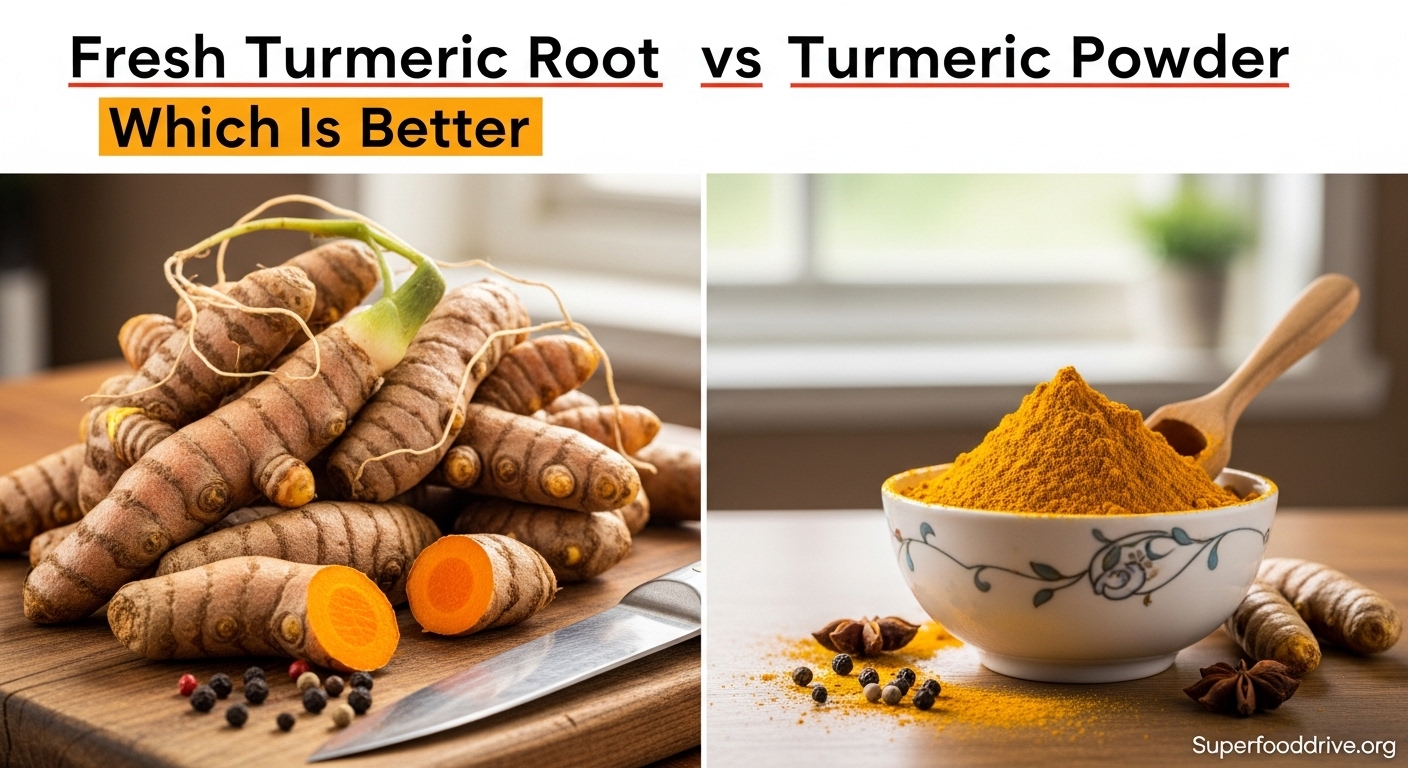
If you are wondering whether fresh turmeric root or turmeric powder offers more health benefits, here is the quick answer: turmeric powder generally contains more concentrated curcumin per gram, making it the stronger choice for antioxidant and anti-inflammatory effects. Fresh turmeric root contains higher levels of essential oils like turmerones and offers a brighter, more aromatic flavor profile that many prefer for raw applications.
I have used both forms in my kitchen for years, and the truth is that each has distinct advantages depending on your goals. In this guide, I will break down the nutritional differences, absorption factors, and practical uses so you can decide which form fits your needs.
Table of Contents
What Is Fresh Turmeric Root
Fresh turmeric root is the raw, unprocessed rhizome of the Curcuma longa plant. It looks like a smaller, more vibrant cousin of ginger, with bright orange flesh beneath thin brown skin. You will typically find it in specialty grocery stores, Asian markets, and some well-stocked supermarkets during peak season.
The root contains about 80% water by weight, which dilutes its curcumin concentration compared to dried forms. However, this high moisture content also means fresh turmeric retains more of its volatile essential oils, including turmerones and zingiberene, which contribute to its distinctive aroma and may offer their own health benefits.
Fresh turmeric is seasonal and perishable. It is usually harvested in winter months and can be difficult to find year-round depending on your location. When available, it costs more per usable amount than powder due to its water weight and shorter shelf life.
What Is Turmeric Powder
Turmeric powder is made by boiling, drying, and grinding fresh turmeric roots into a fine, bright yellow powder. The drying process removes most of the water content, concentrating the curcumin and making the powder more potent by weight.
Quality turmeric powder typically contains between 3% to 8% curcumin, though this varies significantly by brand and processing method. The powder form offers convenience and consistency, with a shelf life of 1 to 2 years when stored properly in an airtight container away from heat and light.
One downside is that some commercial powders contain additives, fillers, or lower-quality turmeric. Look for organic, single-origin turmeric powder from reputable sources to ensure you are getting a pure product without contaminants.
Curcumin Content Comparison: Fresh Turmeric vs Turmeric Powder
Curcumin is the primary bioactive compound in turmeric responsible for its anti-inflammatory and antioxidant effects. The concentration difference between fresh and powdered forms is significant.
Fresh turmeric root contains approximately 0.3% to 5.4% curcumin by weight, with most samples falling in the 1% to 3% range. Turmeric powder contains 3% to 8% curcumin, making it roughly 2 to 3 times more concentrated per gram.
This concentration difference matters for therapeutic use. If you are taking turmeric specifically for its anti-inflammatory properties, you would need to consume significantly more fresh root by weight to get the same curcumin dose as a smaller amount of powder.
Antioxidant and Anti-Inflammatory Properties
Both fresh turmeric and turmeric powder offer antioxidant benefits, but they deliver them through slightly different mechanisms. Understanding these differences can help you choose the right form for your health goals.
Fresh Turmeric Advantages
Fresh turmeric contains higher levels of essential oils, particularly aromatic turmerone (also called turmerones) and zingiberene. These compounds have shown promise in supporting brain health and reducing inflammation through pathways different from curcumin. The essential oils may also enhance the absorption of curcumin when consumed together.
The fresh form retains more of the plant’s natural enzyme activity, which some researchers believe may aid digestion and support gut health. Anecdotal reports from users suggest fresh turmeric causes less stomach irritation than large doses of powder.
Turmeric Powder Advantages
Turmeric powder delivers more curcumin per serving, making it the better choice when you want maximum antioxidant impact. Research published in nutritional journals indicates that dried, finely milled turmeric may yield somewhat higher plasma curcumin levels than fresh when matched for curcumin dose.
The powder form is also more practical for consistent daily supplementation. You can easily measure doses and incorporate it into drinks like golden milk, smoothies, and teas without the preparation time fresh root requires.
Absorption and Bioavailability: Why It Matters
Curcumin is notoriously difficult for the body to absorb. Your digestive system poorly absorbs curcumin on its own, and much of it passes through without entering your bloodstream. This low bioavailability applies to both fresh and powdered turmeric, though there are ways to enhance absorption.
Why Curcumin Is Hard to Absorb
Curcumin is fat-soluble rather than water-soluble, meaning it dissolves in fats and oils but not in water. Your body, which is mostly water, struggles to absorb it efficiently. Additionally, curcumin is rapidly metabolized by the liver and eliminated from the body before it can provide full benefits.
How to Maximize Absorption
Here are evidence-based ways to increase curcumin absorption whether you choose fresh or powdered turmeric:
Consume with black pepper. Piperine, the compound that gives black pepper its heat, can increase curcumin absorption by up to 2000%. Always add a pinch of black pepper when using turmeric.
Pair with healthy fats. Since curcumin is fat-soluble, consuming turmeric with oils, nuts, avocado, or full-fat dairy helps your body absorb it. This is why traditional golden milk recipes use milk or coconut milk.
Heat can help. Cooking turmeric with oil and black pepper may increase bioavailability compared to consuming it raw. This gives powdered turmeric an advantage in cooked dishes.
Consider fermented forms. Some studies suggest fermented turmeric may offer enhanced bioavailability, though more research is needed.
Best Cooking Uses for Fresh vs Powdered Turmeric
Your cooking method should influence which form of turmeric you choose. Each excels in different culinary applications.
Best Uses for Fresh Turmeric
Fresh turmeric shines in raw applications where its bright, peppery flavor and vibrant color can stand out. I use fresh turmeric in fresh juices and smoothies, where it pairs beautifully with ginger, citrus, and carrots. It also works well grated into salads, salad dressings, and cold soups.
For therapeutic drinks like wellness shots, fresh turmeric provides a more complex flavor profile than powder. The texture also works well in blended soups and stews when you want visible pieces of turmeric.
When using fresh turmeric, peel the thin skin with a spoon edge or vegetable peeler, then grate, slice, or blend as needed. One inch of fresh turmeric root roughly equals one tablespoon of grated fresh turmeric.
Best Uses for Turmeric Powder
Turmeric powder dominates in cooked applications and recipes requiring consistent measurement. It is the standard for curry powders, golden milk, and baked goods. The powder disperses evenly in liquids and batters, providing uniform color and flavor.
Powdered turmeric is ideal for daily supplementation in drinks. It blends smoothly into smoothies, dissolves in warm milk for traditional golden milk, and incorporates easily into honey for turmeric honey preparations.
The powder form also works better for skin care applications like face masks, where fresh turmeric might stain more intensely and be harder to apply evenly.
Practical Conversion Guide: Fresh to Powder
One of the most common questions I see is how to substitute fresh turmeric for powder or vice versa. Here is a practical conversion guide based on standard kitchen measurements:
One tablespoon of fresh grated turmeric equals approximately one teaspoon of turmeric powder. This 3-to-1 ratio accounts for the water weight in fresh root.
One inch of fresh turmeric root (about the size of your thumb joint) yields roughly one tablespoon when grated, which equals one teaspoon of powder.
For recipes calling for one teaspoon of turmeric powder, use one tablespoon of grated fresh turmeric.
Keep in mind that fresh turmeric will add more moisture to your recipe, while powder will absorb liquid. Adjust your other ingredients accordingly, especially in baking.
Storage and Shelf Life
How you store turmeric affects its potency and usability over time. Each form has different storage requirements.
Fresh turmeric root should be stored in the refrigerator in a paper bag or wrapped in a paper towel inside a plastic bag. It will keep for 2 to 3 weeks. For longer storage, freeze fresh turmeric whole or pre-grated. Frozen turmeric lasts 6 months and grates easily while still frozen.
Turmeric powder should be kept in an airtight container away from heat, light, and moisture. A cool, dark pantry is ideal. Properly stored powder maintains potency for 1 to 2 years. Discard powder if it loses its vibrant color or aromatic smell.
Quality matters with powder. Cheap turmeric powder may contain fillers or be cut with other ingredients. Look for bright orange-yellow color and a strong, earthy aroma as indicators of freshness.
Fresh Turmeric vs Turmeric Powder: Which Should You Choose
The answer depends on your priorities. Neither form is universally better, they simply serve different purposes.
Choose fresh turmeric if: You prioritize flavor complexity, want the benefits of essential oils like turmerones, enjoy juicing or raw preparations, and do not mind the extra preparation time and perishability.
Choose turmeric powder if: You want maximum curcumin per serving, need convenience and consistent dosing, cook frequently with turmeric, or are looking for cost-effectiveness and longer shelf life.
For most people, having both forms on hand offers the most flexibility. Use powder for daily golden milk and cooking, and keep fresh root in the freezer for juices, smoothies, and special recipes where the fresh flavor shines.
Frequently Asked Questions
Is turmeric powder as good as fresh turmeric root?
Turmeric powder contains more concentrated curcumin per gram, making it more potent for antioxidant and anti-inflammatory benefits. However, fresh turmeric root retains more essential oils like turmerones and offers a brighter flavor. For therapeutic curcumin intake, powder is more efficient. For culinary complexity and essential oil benefits, fresh may be preferable.
Can I take turmeric if I have hemochromatosis?
If you have hemochromatosis (iron overload), consult your doctor before taking turmeric supplements. Some research suggests curcumin may affect iron absorption. While culinary amounts of turmeric are generally safe, high-dose supplements require medical supervision. Your healthcare provider can advise based on your specific iron levels and treatment plan.
Does turmeric help bile production?
Turmeric has been traditionally used to support digestive health and may stimulate bile production. Bile helps digest fats and supports liver function. Some studies suggest curcumin may help increase bile secretion, though more research is needed. People with gallbladder issues should consult a healthcare provider before increasing turmeric intake.
Is turmeric good for an inflamed colon?
Turmeric’s anti-inflammatory properties may benefit some people with colon inflammation. Research suggests curcumin may help reduce inflammatory markers in conditions like ulcerative colitis. However, high doses can cause digestive upset in sensitive individuals. Start with small amounts and consult your healthcare provider, especially if you have a diagnosed digestive condition.
How much fresh turmeric equals turmeric powder?
Use a 3-to-1 ratio when substituting fresh turmeric for powder. One tablespoon of grated fresh turmeric equals approximately one teaspoon of turmeric powder. One inch of fresh turmeric root yields about one tablespoon grated. Remember that fresh turmeric adds moisture to recipes while powder absorbs liquid.
Which has better absorption: fresh or powdered turmeric?
Research suggests that dried, finely milled turmeric may yield somewhat higher plasma curcumin levels than fresh when matched for curcumin dose. However, both forms have low bioavailability on their own. Maximize absorption by consuming turmeric with black pepper (piperine) and healthy fats, regardless of which form you choose.
Conclusion
When comparing fresh turmeric root vs turmeric powder, the best choice depends on your specific needs. Turmeric powder offers higher curcumin concentration, convenience, and longer shelf life, making it ideal for daily supplementation and cooking. Fresh turmeric root provides essential oils, superior flavor for raw applications, and enzyme activity that supports digestion.
For maximum benefits, consider keeping both forms in your kitchen. Use powder for golden milk, curries, and consistent daily intake. Keep fresh turmeric in your freezer for juices, smoothies, and recipes where its bright flavor and aroma will shine. Whichever form you choose, always pair your turmeric with black pepper and healthy fats to maximize absorption and unlock its full anti-inflammatory potential.