
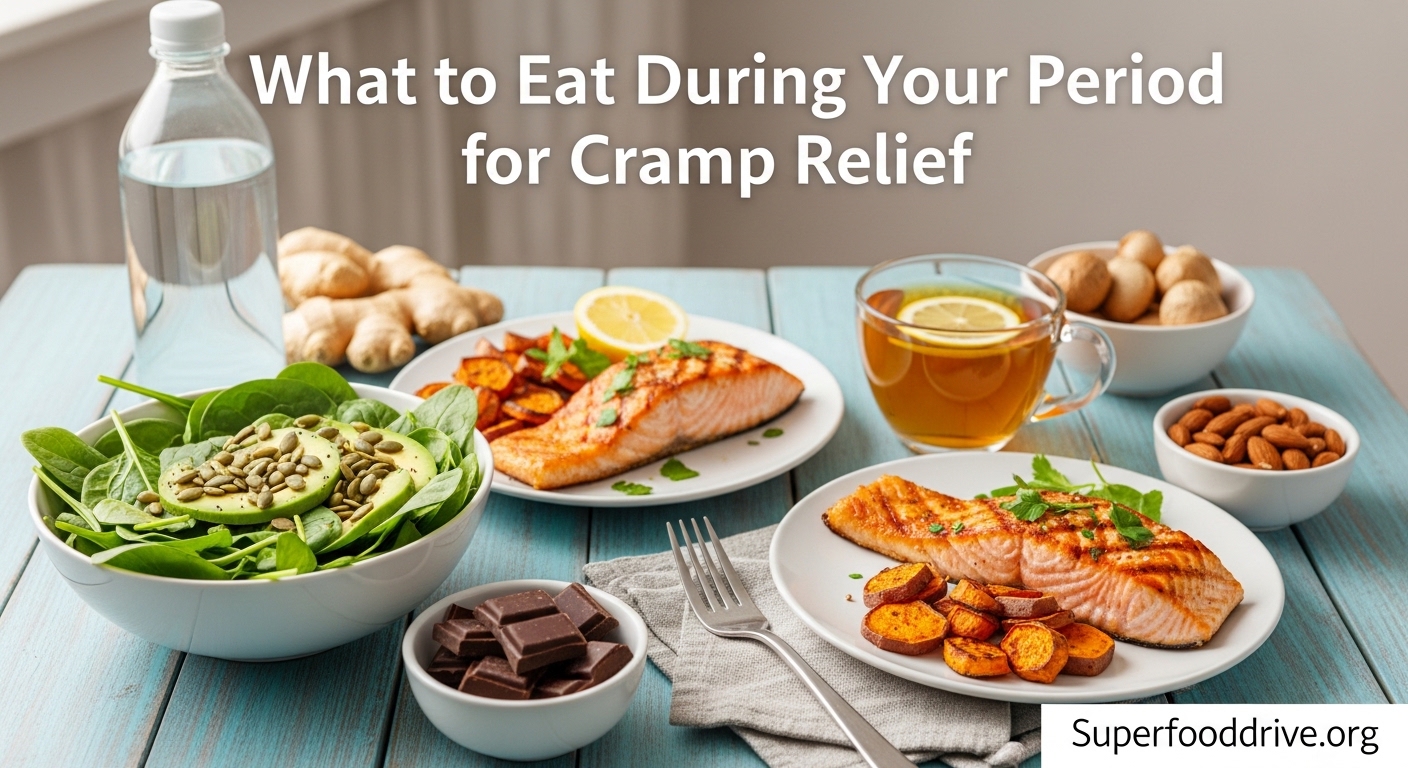
If you have ever curled up in bed clutching your stomach while your period wreaks havoc on your plans, you are not alone. Period cramps affect over 80% of menstruating people at some point in their lives. I used to reach for painkillers every month until I discovered that what I ate could make a dramatic difference in how I felt.
What you eat during your period for cramp relief matters more than most people realize. The right foods can reduce inflammation, replenish lost nutrients, and actually decrease the intensity of those dreaded uterine contractions. In this guide, I will share the science-backed foods that helped me and thousands of others find natural relief, plus exactly what to avoid when your body needs extra care.
Table of Contents
What to Eat During Your Period for Cramp Relief: The Science Behind Food and Pain
Before diving into specific foods, understanding why diet affects period pain helps you make smarter choices. Period cramps happen when your uterus contracts to shed its lining, and these contractions are triggered by hormone-like compounds called prostaglandins.
Here is the key insight: prostaglandins are made from fatty acids. When you eat anti-inflammatory foods rich in omega-3s, you produce fewer inflammatory prostaglandins. When you consume inflammatory foods high in omega-6s, your body creates more prostaglandins, leading to stronger cramps. This is why your dietary choices during menstruation can either amplify or reduce your pain.
Anti-Inflammatory Foods That Reduce Period Cramps
Anti-inflammatory foods for periods work by lowering prostaglandin production and calming irritated tissues. These are the power players I prioritize when cramps hit.
Omega-3 Rich Foods: Your First Line of Defense
Omega-3 fatty acids are the superstars for period pain relief nutrition. Research from the University of Pittsburgh found that women who took omega-3 supplements experienced significantly less menstrual pain than those who took a placebo. These healthy fats reduce inflammation and may even decrease the amount of blood flow during your period.
Salmon tops my list for omega-3 foods for periods. A 3-ounce serving provides over 1,500 milligrams of EPA and DHA, the active forms your body uses to fight inflammation. Sardines, mackerel, and herring deliver similar benefits. If you prefer plant-based options, walnuts, chia seeds, and flaxseeds provide ALA omega-3s that your body converts, though less efficiently.
Dark Leafy Greens: Iron and Magnesium Powerhouses
Your body loses iron during menstruation, and low iron levels can worsen fatigue and pain. Iron-rich foods for menstrual health become essential during this time. Spinach, kale, Swiss chard, and collard greens deliver bioavailable iron along with magnesium, a mineral that helps relax muscles and reduce cramping.
I noticed a real difference when I started adding a big handful of spinach to my morning smoothies during my period. The magnesium content in these greens also helps with the mood swings and irritability that often accompany menstruation. One cup of cooked spinach provides about 40% of your daily magnesium needs.
Ginger: Nature’s Anti-Inflammatory Medicine
Ginger deserves special recognition among foods for menstrual pain. Multiple studies have shown ginger to be as effective as ibuprofen for reducing period cramps. It works by inhibiting prostaglandin synthesis and reducing inflammation throughout the body.
I grate fresh ginger into hot water with lemon and honey when cramps start. You can also add it to stir-fries, smoothies, or enjoy ginger tea. Aim for about 1-2 grams of ginger daily during your period for maximum benefit. Many women in online communities swear by ginger tea specifically for nausea and stomach discomfort that accompanies their cycle.
Dark Chocolate: The Delicious Cramp Fighter
Yes, you can eat chocolate during your period and actually help your body. Dark chocolate with at least 65% cocoa content provides magnesium, iron, and antioxidants that support cramp relief. The magnesium helps relax uterine muscles, while the iron replenishes what you lose through bleeding.
Choose varieties with minimal added sugar for the best results. A one-ounce serving of 70% dark chocolate delivers about 65 milligrams of magnesium, which is roughly 15% of your daily needs. This explains why so many women naturally crave chocolate during their periods. Your body is asking for these specific nutrients.
Turmeric: Golden Spice for Pain Relief
Turmeric contains curcumin, a compound with powerful anti-inflammatory properties. Research shows curcumin can reduce prostaglandin production and decrease uterine contractions. I add turmeric to scrambled eggs, golden milk lattes, and roasted vegetables during my period.
For better absorption, pair turmeric with black pepper, which contains piperine that increases curcumin absorption by up to 2,000%. A daily dose of 500-1,000 milligrams of curcumin extract, or generous amounts in cooking, can provide noticeable relief.
Pineapple: The Enzyme-Rich Fruit
Pineapple contains bromelain, an enzyme with anti-inflammatory and pain-relieving properties. Bromelain helps reduce inflammation and may decrease prostaglandin levels. Fresh pineapple provides the most benefit since bromelain breaks down during cooking and canning processes.
I slice up fresh pineapple for breakfast or blend it into smoothies during the first few days of my period. The natural sweetness also satisfies sugar cravings without the inflammatory effects of refined sugar. Many women in health forums mention pineapple as one of their go-to foods for period relief.
Berries: Antioxidant Protection
Blueberries, strawberries, raspberries, and blackberries pack antioxidants that combat oxidative stress and inflammation. These fruits are lower in sugar than many alternatives and provide vitamin C, which helps with iron absorption from plant-based sources.
Frozen berries work just as well as fresh and make easy additions to smoothies, yogurt, or oatmeal. Aim for at least one cup daily during your period for optimal antioxidant benefits.
Legumes: Plant-Based Protein and Iron
Lentils, chickpeas, and black beans provide protein, fiber, iron, and magnesium. These complex carbohydrates stabilize blood sugar, preventing the energy crashes that can worsen mood and pain perception. The fiber also supports digestive health, which often suffers during menstruation.
A cup of cooked lentils delivers about 6 milligrams of iron and nearly 70 milligrams of magnesium. I make big batches of lentil soup during my period week for easy, nourishing meals.
Seeds: Tiny Nutrient Powerhouses
Pumpkin seeds, sesame seeds, and sunflower seeds provide zinc, magnesium, and healthy fats that support hormone balance and reduce inflammation. Pumpkin seeds are particularly rich in zinc, which helps regulate prostaglandin metabolism.
I keep a jar of mixed seeds on my counter and sprinkle them on salads, oatmeal, or yogurt. Just two tablespoons of pumpkin seeds provide about 15% of your daily zinc needs and nearly 40% of your magnesium needs.
Whole Grains: Sustained Energy
Quinoa, brown rice, oats, and whole wheat provide B vitamins, magnesium, and fiber that support energy levels and mood stability. Unlike refined grains, whole grains release energy slowly, preventing blood sugar spikes and crashes that can worsen irritability and fatigue.
Oatmeal is my go-to breakfast during my period. It is warm, comforting, and provides steady energy for hours. Steel-cut or rolled oats offer more fiber and nutrients than instant varieties.
Avocados: Healthy Fats and Potassium
Avocados deliver monounsaturated fats that support hormone production and potassium that helps reduce bloating. They also contain magnesium and vitamin B6, both of which help with mood and cramp relief. Half an avocado provides about 15% of your daily potassium needs.
Bananas: Nature’s Cramp Relief
Bananas are one of the best foods for period cramps because they are rich in potassium, magnesium, and vitamin B6. Potassium helps regulate fluid balance and muscle contractions, potentially reducing cramp intensity. One medium banana provides about 9% of your daily potassium and 8% of your magnesium needs.
Oranges and Citrus: Vitamin C for Iron Absorption
Oranges, grapefruits, and other citrus fruits provide vitamin C that enhances iron absorption from plant-based foods. They also contain calcium and potassium that support muscle function and reduce cramping. The refreshing taste can also help with nausea some people experience during their periods.
Probiotic Foods: Gut Health Support
Yogurt, kefir, sauerkraut, and kimchi provide beneficial bacteria that support digestive health. Many women experience digestive upset during their periods, and probiotics can help maintain gut balance. Choose unsweetened yogurt to avoid excess sugar while getting protein and calcium.
Foods to Avoid During Your Period
Just as certain foods help with period pain, others can make it worse. Avoiding these inflammatory foods during menstruation can significantly reduce your discomfort.
Processed and High-Sodium Foods
Processed foods, frozen meals, and salty snacks promote water retention and bloating. High sodium intake makes your body hold onto fluids, increasing the pressure and discomfort you feel. Skip the chips, canned soups, and fast food during your period.
Caffeine
Coffee, energy drinks, and even black tea can constrict blood vessels and increase tension. Caffeine may also worsen breast tenderness and irritability. If you cannot skip your morning cup entirely, limit yourself to one small cup and switch to herbal teas afterward.
Alcohol
Alcohol dehydrates your body and can worsen bloating, headaches, and mood swings. It also interferes with your sleep, which is essential for managing pain and energy levels during your period. Skip the wine and cocktails for these few days.
Refined Sugars
Candy, pastries, and sugary drinks cause blood sugar spikes followed by crashes. These fluctuations worsen mood swings and energy crashes. The inflammation triggered by sugar can also amplify pain. Choose fruit or dark chocolate when cravings hit.
Fatty and Fried Foods
Fried foods and foods high in unhealthy fats increase inflammation and can worsen digestive issues. They also tend to be low in the nutrients your body needs during menstruation. Skip the french fries, fried chicken, and greasy takeout.
Dairy (for Some People)
While dairy provides calcium that can help with cramps, some people find it increases mucus production and bloating. If you notice dairy worsens your symptoms, try plant-based alternatives like almond milk or oat milk during your period.
What to Drink During Your Period for Cramp Relief
Hydration plays a crucial role in managing period cramps. Dehydration makes cramps worse because it reduces blood flow and increases muscle tension. Here are the best beverages for period relief.
Water: Your Essential Foundation
Drink at least 8-10 glasses of water daily during your period. Water reduces bloating by helping your kidneys flush out excess sodium. It also supports healthy blood flow to your uterus, potentially reducing cramp severity.
Herbal Teas for Natural Relief
Chamomile tea with honey helps relax muscles and reduce anxiety. Peppermint tea eases digestive discomfort and may reduce headache pain. Ginger tea specifically targets nausea and stomach upset. Raspberry leaf tea has been used traditionally to tone uterine muscles and reduce cramping.
Green Tea: Antioxidant Support
Green tea provides antioxidants and a small amount of caffeine for gentle energy without the jitters. It also contains compounds that may reduce inflammation. Limit yourself to 1-2 cups daily to avoid excess caffeine.
Smoothies: Nutrient Delivery
Blend spinach, berries, banana, ginger, and almond milk for a cramp-fighting smoothie that hydrates while delivering essential nutrients. Smoothies are especially helpful when heavy flow days leave you with low energy for cooking.
Quick Meal Ideas for Period Days
When cramps and fatigue hit, you need simple, nourishing meals that do not require much effort. These are the meals I rotate through during my period week.
Breakfast Options
Oatmeal topped with sliced banana, walnuts, and cinnamon provides magnesium, potassium, and omega-3s in one warm bowl. A spinach and mushroom omelet delivers iron and protein for sustained energy. Smoothie bowls with mixed berries, chia seeds, and almond butter offer antioxidants and healthy fats.
Lunch Ideas
Salmon salad with leafy greens, avocado, and pumpkin seeds combines multiple cramp-fighting foods. Lentil soup with turmeric and ginger provides warmth, comfort, and anti-inflammatory benefits. Quinoa bowls with roasted vegetables and tahini dressing deliver complete protein and healthy fats.
Dinner Suggestions
Baked salmon with steamed broccoli and brown rice offers omega-3s, magnesium, and complex carbohydrates. Stir-fried tofu with bok choy, ginger, and sesame seeds provides plant-based protein and anti-inflammatory compounds. Turkey chili with beans and bell peppers delivers iron, fiber, and warming spices.
Snack Recommendations
Keep dark chocolate squares, mixed nuts, fresh fruit, and cut vegetables on hand for easy snacking. Dates stuffed with almond butter satisfy sweet cravings while providing iron and healthy fats. Greek yogurt with berries and flaxseeds offers protein, probiotics, and omega-3s.
Additional Tips for Managing Period Cramps
While diet forms the foundation of natural cramp relief, these additional strategies can enhance your results.
Heat therapy relaxes uterine muscles and increases blood flow. Use a heating pad or hot water bottle on your lower abdomen for 15-20 minutes at a time. Gentle movement like walking or yoga reduces tension and releases endorphins, your body’s natural painkillers.
Sleep matters more than ever during your period. Aim for 7-9 hours nightly to support hormone regulation and pain tolerance. Magnesium supplements before bed can help with both sleep quality and muscle relaxation, but consult your healthcare provider before starting any new supplement.
Frequently Asked Questions
What should I eat to calm my period cramps?
Focus on anti-inflammatory foods rich in omega-3 fatty acids like salmon, walnuts, and chia seeds. Include iron-rich foods such as spinach and lentils to replenish lost nutrients. Add magnesium sources like dark chocolate, bananas, and pumpkin seeds to help relax muscles. Ginger and turmeric provide powerful anti-inflammatory compounds that reduce prostaglandin production.
What foods help ease period cramping?
The best foods for easing period cramps include fatty fish, dark leafy greens, berries, dark chocolate, ginger, pineapple, avocados, and whole grains. These foods reduce inflammation, provide essential nutrients like iron and magnesium, and help regulate prostaglandin levels. Warm foods like soups and herbal teas also provide comfort and hydration.
What to not eat during period cramps?
Avoid processed and high-sodium foods that cause bloating. Skip caffeine and alcohol as they can worsen dehydration and tension. Limit refined sugars that spike blood sugar and increase inflammation. Reduce fried and fatty foods that burden digestion. Some people find dairy increases bloating and may want to limit it during their period.
How does nutrition affect period cramps?
Nutrition directly impacts period cramps through prostaglandin production. Anti-inflammatory foods like those rich in omega-3s reduce prostaglandin synthesis, leading to less intense uterine contractions. Nutrients like magnesium relax muscles, while iron replenishes what is lost during bleeding. Proper hydration supports healthy blood flow and reduces bloating. Conversely, inflammatory foods increase prostaglandin production and worsen cramp severity.
What can I drink to reduce period pain instantly?
Warm ginger tea provides fast anti-inflammatory relief. Chamomile tea helps relax muscles and calm anxiety. Raspberry leaf tea may reduce cramping over time. Warm water with lemon supports hydration and digestion. Avoid caffeine and alcohol as they can worsen symptoms. Staying well-hydrated throughout the day helps prevent cramps from intensifying.
Is dark chocolate good for period cramps?
Yes, dark chocolate with at least 65% cocoa content is excellent for period cramps. It provides magnesium that helps relax uterine muscles, iron to replenish blood loss, and antioxidants that reduce inflammation. The magnesium content also helps with mood stabilization. Choose varieties with minimal added sugar for the best anti-inflammatory benefits. A one-ounce serving delivers about 15% of your daily magnesium needs.
Final Thoughts on What to Eat During Your Period for Cramp Relief
Your diet during menstruation can either amplify or reduce your discomfort. By focusing on anti-inflammatory foods rich in omega-3s, iron, and magnesium while avoiding processed foods, caffeine, and excess sugar, you give your body the tools it needs to manage cramps naturally.
I encourage you to experiment with these foods and find the combination that works best for your body. Everyone is different, and what helps one person may help another in different ways. Start incorporating these changes a day or two before your period begins for the best results.
While dietary changes can significantly reduce period cramps, consult a healthcare provider if your pain is severe, suddenly worsens, or interferes with daily activities. These could be signs of underlying conditions like endometriosis or fibroids that require medical attention.