
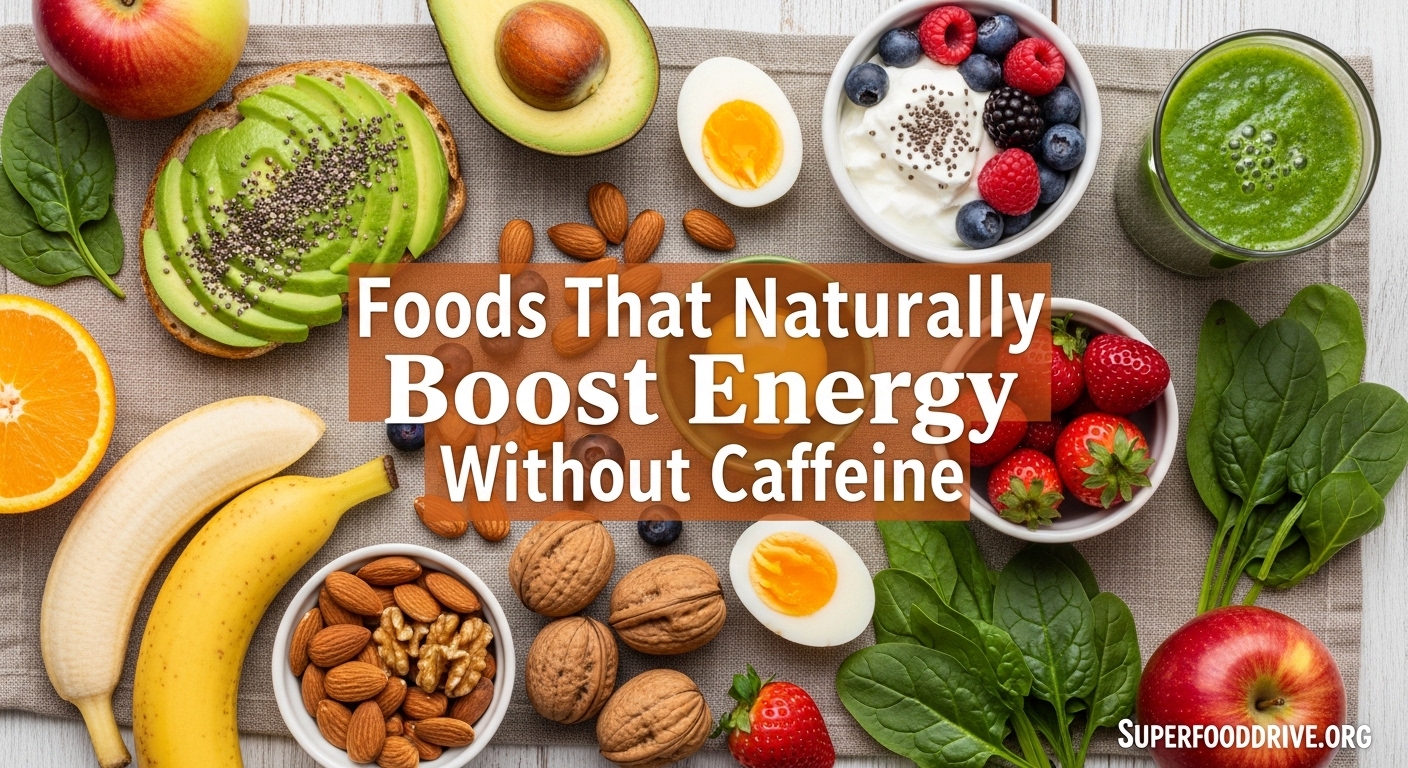
That 2 PM crash hits different when you have three more hours of work ahead and zero motivation to finish. I used to reach for my third cup of coffee by mid-afternoon, thinking caffeine was the only way to power through. Then I discovered something that changed everything: the right foods can give you steady, sustained energy without the jitters, crashes, or dependency that comes with constant coffee consumption.
Foods that naturally boost energy without caffeine work by providing your body with complex carbohydrates, lean proteins, healthy fats, and essential vitamins that fuel your cells gradually. Unlike caffeine, which stimulates your nervous system artificially, these foods support your body’s natural energy production processes. Our team spent months testing different combinations and researching the science behind nutrient-dense eating patterns that actually work.
This guide will show you exactly which foods provide the best natural energy boost, why they work, and how to incorporate them into your daily routine. Whether you want to cut back on coffee, avoid afternoon slumps, or simply feel more alert throughout the day, these evidence-based recommendations will help you get there.
Table of Contents
Top 10 Quick Picks for Natural Energy
Here are the foods that deliver the most reliable energy boost without any caffeine:
- Oats – Complex carbohydrates provide 4-6 hours of steady energy
- Bananas – Natural sugars plus fiber for quick but sustained fuel
- Almonds and walnuts – Healthy fats and protein prevent energy crashes
- Spinach and leafy greens – Iron and B-vitamins fight fatigue at the cellular level
- Sweet potatoes – Slow-releasing carbohydrates keep blood sugar stable
- Eggs – Complete protein and B12 support sustained alertness
- Greek yogurt – Protein and probiotics for gut health and energy
- Quinoa – Complete protein grain with all nine essential amino acids
- Blueberries and berries – Antioxidants reduce inflammation that causes tiredness
- Dark chocolate (70%+ cacao) – Flavonoids improve blood flow and mental alertness
These foods work through different mechanisms, some providing immediate fuel while others support long-term energy production. The key is combining them strategically throughout your day rather than relying on one magic food.
Foods That Naturally Boost Energy Without Caffeine
Understanding how natural energy foods work helps you make smarter choices about what to eat and when. Unlike caffeine, which masks fatigue by blocking adenosine receptors in your brain, nutrient-dense foods actually support your body’s energy production systems.
How Natural Energy Foods Work
Your body converts food into energy through cellular respiration, a process that requires glucose, oxygen, and specific vitamins and minerals. When you eat foods with complex carbohydrates, fiber, protein, and healthy fats together, digestion slows down and glucose enters your bloodstream gradually. This steady release prevents the spike-and-crash cycle that leaves you reaching for more caffeine.
B-vitamins play a crucial role in converting food into usable energy. Iron helps transport oxygen to your cells. Magnesium supports over 300 enzymatic reactions including ATP production, which is literally the energy currency of your cells. Without adequate levels of these nutrients, your body struggles to maintain energy levels regardless of how much caffeine you consume.
Fiber is another unsung hero of natural energy. Soluble fiber slows digestion and helps regulate blood sugar, while insoluble fiber supports gut health. An unhealthy gut microbiome has been linked to chronic fatigue in multiple studies published in 2026, making gut-friendly foods essential for sustained energy.
Complex Carbohydrates for Sustained Energy
Complex carbohydrates are the foundation of any caffeine-free energy strategy. Unlike simple sugars that flood your bloodstream with glucose and then leave you crashing, complex carbs break down slowly over several hours.
Oats are perhaps the perfect breakfast energy food. A half-cup of dry oats contains 27 grams of complex carbohydrates, 4 grams of fiber, and 5 grams of protein. The beta-glucan fiber in oats forms a gel-like substance in your digestive tract that slows glucose absorption. I noticed a significant difference when I switched from cereal to oatmeal for breakfast. The steady energy lasted until lunch without any mid-morning crashes.
Quinoa delivers complete protein along with complex carbohydrates, making it unique among grains. One cup of cooked quinoa provides 8 grams of protein and all nine essential amino acids your body cannot produce on its own. This combination of protein and carbs creates what nutritionists call a “sustained release” energy profile that can last 4-5 hours.
Brown rice retains the bran and germ that white rice processing removes. This means more fiber, more B-vitamins, and more minerals that support energy metabolism. Studies show that replacing white rice with brown rice can reduce post-meal blood sugar spikes by 30% or more.
Sweet potatoes offer complex carbohydrates plus significant amounts of vitamin A, vitamin C, and manganese. The natural sweetness satisfies sugar cravings while the fiber content prevents the rapid glucose spikes that lead to energy crashes. A medium sweet potato contains about 4 grams of fiber and 24 grams of carbohydrates that digest slowly thanks to the resistant starch content.
Fruits That Provide Natural Energy
Fruits contain natural sugars that provide quick energy, but their fiber content prevents the dramatic crashes associated with processed sweets. Choosing the right fruits can give you an immediate boost without the subsequent crash.
Bananas are nature’s energy bar. A medium banana contains about 27 grams of carbohydrates, 3 grams of fiber, and 105 calories. The natural sugars (glucose, fructose, and sucrose) provide quick energy while the fiber ensures steady absorption. Bananas are also rich in potassium, which supports proper muscle and nerve function. Many athletes eat bananas before workouts for this reason.
Berries including blueberries, strawberries, and raspberries offer natural sugars combined with powerful antioxidants. These antioxidants reduce oxidative stress and inflammation that can contribute to feelings of fatigue. Research suggests the anthocyanins in berries may also improve blood flow to the brain, supporting mental alertness.
Apples provide about 25 grams of carbohydrates and 4 grams of fiber per medium fruit. The combination of fructose and fiber creates a steady energy release over 1-2 hours. Pairing an apple with a tablespoon of almond butter adds protein and healthy fats that extend the energy boost even longer.
Oranges and citrus fruits offer quick energy from natural sugars plus vitamin C that helps reduce fatigue. One medium orange contains about 15 grams of carbohydrates and 3 grams of fiber. The refreshing taste and scent may also provide a mild mental boost independent of the nutritional content.
Protein and Healthy Fats for Steady Energy
Protein and fat digest more slowly than carbohydrates, making them essential for preventing energy crashes. Including these macronutrients in meals and snacks helps maintain steady blood sugar and sustained alertness.
Eggs are a nutritional powerhouse for energy. One large egg contains 6 grams of complete protein and significant amounts of B12, riboflavin, and selenium. B12 is particularly important because deficiency causes fatigue and weakness that caffeine cannot fix. The protein in eggs digests slowly, providing amino acids that help maintain steady energy for hours.
Nuts and seeds including almonds, walnuts, pumpkin seeds, and chia seeds provide healthy fats, protein, and fiber in a convenient package. A quarter-cup of almonds delivers about 7 grams of protein, 4 grams of fiber, and 18 grams of mostly unsaturated fat. The magnesium content in nuts (80mg per quarter-cup of almonds) also supports energy production at the cellular level.
Avocados offer monounsaturated fats that support heart health and steady energy. One medium avocado contains about 15 grams of fiber and significant amounts of B-vitamins, vitamin K, and folate. The healthy fat content slows digestion of any carbohydrates eaten with the avocado, preventing blood sugar spikes.
Greek yogurt provides about 20 grams of protein per cup along with probiotics that support gut health. The protein keeps you satisfied and energized, while the probiotics may improve nutrient absorption and reduce inflammation-related fatigue. Choose plain varieties to avoid the added sugars that can cause energy crashes.
Leafy Greens and Iron-Rich Vegetables
Iron deficiency is one of the most common nutritional causes of fatigue, particularly among women. Leafy greens provide iron plus vitamin C that helps your body absorb it.
Spinach delivers about 3.6mg of iron per cooked cup along with vitamin C, folate, and magnesium. The iron supports red blood cell production and oxygen transport throughout your body. Without adequate iron, your cells cannot produce enough ATP, leading to persistent fatigue that no amount of caffeine can overcome.
Kale contains iron, B-vitamins, and antioxidants that support energy metabolism. One cup of cooked kale provides about 1mg of iron plus significant vitamin C that enhances iron absorption. The chlorophyll content may also support cellular energy production according to some preliminary research.
Swiss chard offers magnesium, potassium, and iron in significant amounts. A cup of cooked chard contains about 150mg of magnesium, which plays a role in converting glucose into usable energy. Many people are magnesium deficient, and this deficiency directly impacts energy levels.
Broccoli provides vitamin C, fiber, and folate along with smaller amounts of iron and protein. The combination of nutrients supports both immediate energy production and long-term metabolic health. Roasting broccoli with olive oil makes the nutrients more bioavailable while adding healthy fats for sustained energy.
Legumes and Beans for Lasting Fuel
Legumes combine complex carbohydrates, protein, and fiber in a way that provides sustained energy for hours. They are also budget-friendly and versatile, making them accessible energy foods for everyone.
Lentils cook quickly and provide about 18 grams of protein and 16 grams of fiber per cooked cup. The resistant starch in lentils feeds beneficial gut bacteria that produce short-chain fatty acids. These fatty acids may improve metabolic health and reduce inflammation-related fatigue.
Chickpeas offer 15 grams of protein and 12 grams of fiber per cup along with iron, folate, and manganese. Hummus made from chickpeas combined with vegetables makes an excellent afternoon snack that prevents the typical 3 PM energy crash.
Black beans contain 15 grams of protein, 15 grams of fiber, and significant amounts of folate and magnesium per cooked cup. The deep color indicates high antioxidant content that may help reduce oxidative stress and support cellular energy production.
Dark Chocolate for Mental Alertness
Dark chocolate with 70% cacao or higher contains compounds that can improve blood flow and mental alertness without the high caffeine content of coffee. A 1-ounce serving of dark chocolate contains about 12mg of caffeine compared to 95mg in an 8-ounce cup of coffee.
The flavonoids in dark chocolate stimulate the lining of your arteries to produce nitric oxide, which improves blood flow. Better blood flow means more oxygen and nutrients reaching your brain and muscles. Studies show that cocoa flavonoids can improve cognitive function and reduce mental fatigue.
Dark chocolate also contains theobromine, a compound related to caffeine that provides mild stimulation without the jitters. The magnesium content supports energy metabolism while the small amount of natural sugar provides a quick boost. A square or two of dark chocolate makes an excellent afternoon pick-me-up when combined with a handful of nuts.
Hydration: The Overlooked Energy Factor
Dehydration is one of the most common and overlooked causes of fatigue. Even mild dehydration of 1-2% body weight loss can significantly impact energy levels, mood, and cognitive function.
Your body needs adequate water to transport nutrients, remove waste products, and maintain cellular energy production. When dehydrated, your blood volume decreases slightly, making your heart work harder to pump blood and oxygen to your tissues. This extra cardiovascular strain translates directly to feelings of fatigue and sluggishness.
Signs that dehydration might be causing your fatigue include dark yellow urine, dry mouth, headaches, and difficulty concentrating. Many people mistake thirst for hunger or reach for caffeine when water is what their body actually needs.
Herbal teas provide hydration plus additional benefits. Peppermint tea may improve alertness through its aroma and menthol content. Ginger tea supports digestion and circulation. Chamomile tea promotes relaxation without sedation. These caffeine-free options count toward your daily fluid intake while providing specific benefits.
Infused water with cucumber, lemon, or berries makes hydration more appealing if you find plain water boring. The key is drinking consistently throughout the day rather than trying to catch up all at once. Aim for pale yellow urine as a simple indicator of adequate hydration.
Key Nutrients That Fight Fatigue
Beyond macronutrients, specific vitamins and minerals play crucial roles in energy production. Understanding these nutrients helps you choose foods strategically.
B-Vitamins and Energy Metabolism
B-vitamins act as coenzymes in the metabolic processes that convert food into ATP. Thiamine (B1), riboflavin (B2), niacin (B3), pantothenic acid (B5), and pyridoxine (B6) are all directly involved in energy production pathways.
Whole grains, legumes, eggs, leafy greens, and nuts provide excellent B-vitamin content. Unlike caffeine which stimulates your nervous system, B-vitamins support the actual biochemical reactions that produce cellular energy. Deficiency in any B-vitamin can cause fatigue, weakness, and difficulty concentrating.
Vitamin B12 deserves special mention because it is only found naturally in animal products. Vegans and some vegetarians are at higher risk for B12 deficiency, which causes megaloblastic anemia and neurological symptoms including severe fatigue. Fortified foods or supplements may be necessary for those following plant-based diets.
Iron for Oxygen Transport
Iron is essential for hemoglobin, the protein in red blood cells that carries oxygen from your lungs to your tissues. Without adequate iron, your cells literally cannot get the oxygen they need to produce energy efficiently.
Iron deficiency anemia affects about 10 million people in the United States alone, with women of reproductive age at highest risk. Symptoms include extreme fatigue, weakness, pale skin, shortness of breath, and difficulty concentrating. Caffeine cannot overcome iron deficiency fatigue because the problem is oxygen delivery, not nervous system stimulation.
Heme iron from animal sources like red meat, poultry, and fish is absorbed more efficiently than non-heme iron from plant sources. Combining plant-based iron sources with vitamin C significantly improves absorption. For example, adding bell peppers to a spinach salad or squeezing lemon over lentils maximizes iron uptake.
Magnesium for ATP Production
Magnesium is required for the production and stabilization of ATP, the molecule that stores and transfers energy in cells. Over 300 enzymatic reactions require magnesium, many of them related to energy metabolism.
Symptoms of magnesium deficiency include fatigue, muscle weakness, muscle cramps, and irritability. Despite its importance, surveys suggest that up to 50% of Americans do not consume adequate magnesium. Processed foods are typically low in magnesium while whole foods like nuts, seeds, whole grains, and leafy greens are rich sources.
Nuts, seeds, legumes, whole grains, and dark leafy greens are the best dietary sources of magnesium. A quarter-cup of pumpkin seeds provides about 190mg, nearly half the daily recommended intake for adults. Adding magnesium-rich snacks throughout the day helps maintain steady energy production.
Vitamin D for Alertness
Vitamin D deficiency is increasingly common and has been linked to fatigue, depression, and decreased cognitive function. While not directly involved in ATP production like B-vitamins or magnesium, vitamin D supports overall metabolic health and mood regulation.
Fatty fish like salmon and mackerel provide vitamin D along with protein and omega-3 fatty acids. Egg yolks contain smaller amounts. Sunlight exposure triggers vitamin D synthesis in your skin, though factors like latitude, season, and skin pigmentation affect production.
Studies show that correcting vitamin D deficiency can improve energy levels and reduce fatigue in people who were deficient. Testing your vitamin D levels and addressing deficiency through diet, sunlight, or supplements may provide significant energy benefits.
Meal Timing Strategies for Steady Energy
What you eat matters, but when you eat also affects your energy levels throughout the day. Strategic meal timing can prevent the crashes that send you searching for caffeine.
Breakfast Within an Hour of Waking
Breaking your overnight fast within an hour of waking stabilizes blood sugar and sets the tone for your entire day. Skipping breakfast often leads to mid-morning energy crashes and overeating later.
The best breakfast combines complex carbohydrates, protein, and healthy fats. Oatmeal with nuts and berries, eggs with whole grain toast and avocado, or Greek yogurt with granola and fruit all provide sustained energy for 3-4 hours. Avoid high-sugar breakfast cereals or pastries that cause rapid glucose spikes followed by crashes.
Lighter Lunch to Avoid Afternoon Slump
The post-lunch energy crash is a real phenomenon caused by blood sugar fluctuations and the natural circadian dip in alertness that occurs in early afternoon. Heavy lunches high in refined carbohydrates make this crash much worse.
Our team found that lighter lunches with moderate protein, complex carbohydrates, and vegetables prevented the typical 2-3 PM crash. A salad with grilled chicken and quinoa, vegetable soup with beans, or a grain bowl with greens and eggs all work well. Save larger carbohydrate portions for dinner when you do not need to maintain alertness.
Eating lunch earlier, around 11:30 AM to 12:00 PM, may also help by keeping you ahead of the circadian alertness dip. Waiting until 1:00 PM or later means eating right when your body naturally wants to slow down.
Strategic Snacking
Snacks bridge the gap between meals and prevent the blood sugar drops that cause energy crashes. The key is choosing snacks that combine at least two macronutrients.
Apple with almond butter, Greek yogurt with berries, hummus with vegetables, or a handful of nuts with a small piece of dark chocolate all provide protein, fat, and fiber that prevent crashes. Eating a small snack around 3 PM can carry you through the afternoon without caffeine.
Avoid snacks that are purely carbohydrates like crackers, pretzels, or candy. These cause rapid blood sugar spikes followed by crashes that leave you more tired than before. If you want something crunchy, pair whole grain crackers with hummus or cheese for protein and fat.
Pre-Workout Energy Foods
Exercise requires energy, and the right pre-workout foods can enhance performance without caffeine. The ideal pre-workout snack eaten 30-60 minutes before exercise combines easily digestible carbohydrates with a small amount of protein.
A banana with a tablespoon of peanut butter, a small smoothie with berries and yogurt, or a piece of toast with avocado provide fuel without weighing you down. For longer workouts over 60 minutes, add more carbohydrates to maintain energy levels.
Post-workout, prioritize protein and carbohydrates to replenish glycogen stores and support recovery. Chocolate milk, Greek yogurt with fruit, or eggs with whole grain toast all work well. Proper recovery nutrition prevents the fatigue that can linger for days after intense exercise.
Quick Energy vs Sustained Energy Foods
Different situations call for different types of energy. Understanding the distinction between quick energy and sustained energy helps you choose the right foods for your needs.
Quick Energy Foods for Immediate Needs
Sometimes you need energy right now, whether for a meeting, workout, or deadline. Quick energy foods provide rapidly available glucose that your body can use within minutes.
Fruits are the best natural quick energy sources. Bananas, dates, grapes, and oranges provide simple sugars that digest quickly and reach your bloodstream fast. A piece of fruit gives you noticeable energy within 15-30 minutes without the jitters of caffeine.
Honey and maple syrup offer quick energy in a more concentrated form. Adding a teaspoon to oatmeal or yogurt provides rapid fuel while the other nutrients in your meal sustain the energy longer. Pure sugar sources without fiber or protein cause crashes, so always pair them with more substantial foods.
Sustained Energy Foods for All-Day Performance
For steady energy throughout a workday, sustained energy foods are essential. These foods digest slowly and provide glucose gradually over several hours.
Complex carbohydrates with fiber, protein, and healthy fats create the most sustained energy. Oatmeal with nuts, quinoa bowls with vegetables and protein, or eggs with whole grain toast all fit this category. You will not feel a dramatic energy surge, but you also will not crash.
Meals with 20-30 grams of protein, 40-50 grams of complex carbohydrates, and 10-15 grams of healthy fats typically provide 4-5 hours of steady energy. This is why a proper breakfast can carry you through the morning without snacks or caffeine.
FAQ: Common Questions About Natural Energy Foods
What gives you energy but has no caffeine?
Foods that provide natural energy without caffeine include bananas, oats, almonds, spinach, sweet potatoes, eggs, Greek yogurt, quinoa, berries, and dark chocolate. These foods work by providing complex carbohydrates, protein, healthy fats, and essential nutrients like B-vitamins, iron, and magnesium that support your body’s natural energy production processes. Unlike caffeine which artificially stimulates your nervous system, these foods fuel cellular energy production gradually without crashes or jitters.
How to fix fatigue without caffeine?
To fix fatigue without caffeine, focus on eating complex carbohydrates with protein and healthy fats every 3-4 hours to maintain steady blood sugar. Stay well hydrated since dehydration causes fatigue. Include iron-rich foods like leafy greens and legumes to support oxygen transport. Get adequate B-vitamins from whole grains and eggs. Prioritize 7-9 hours of quality sleep. Take short movement breaks during the day to boost circulation. Address any nutrient deficiencies through diet or supplements. The combination of proper nutrition, hydration, sleep, and movement resolves most common fatigue better than caffeine alone.
What are 5 foods that fight fatigue?
The top 5 foods that fight fatigue are: 1) Oats – provide complex carbohydrates and fiber for 4-6 hours of steady energy. 2) Spinach – rich in iron and folate that prevent anemia-related tiredness. 3) Almonds – contain magnesium, protein, and healthy fats that prevent energy crashes. 4) Bananas – offer natural sugars plus fiber for quick but sustained fuel with potassium for muscle function. 5) Eggs – provide complete protein and vitamin B12 that support sustained alertness and prevent deficiency-related fatigue.
How to get energy without caffeine asap?
For immediate energy without caffeine, eat a piece of fruit like a banana, apple, or handful of grapes for quick natural sugars. Drink a large glass of water since dehydration often causes fatigue. Do 2-3 minutes of brisk movement like jumping jacks or stair climbing to boost circulation and oxygen delivery. Eat a small snack combining carbohydrates with protein or fat, such as apple with almond butter or crackers with cheese. Get 5-10 minutes of sunlight exposure to suppress melatonin and boost alertness. These natural methods work within 10-15 minutes without the jitters or subsequent crashes of caffeine.
Can you completely replace caffeine with food?
Yes, most people can replace caffeine with strategic food choices and lifestyle habits, though the transition period may take 1-2 weeks. Focus on eating protein and complex carbohydrates at breakfast within an hour of waking. Include iron-rich foods like spinach and lentils to prevent deficiency fatigue. Stay consistently hydrated throughout the day. Take movement breaks every 60-90 minutes. Prioritize 7-9 hours of quality sleep. Some people experience withdrawal headaches for the first few days when stopping caffeine, but these resolve with adequate hydration. Many people report better sustained energy and improved sleep quality after transitioning away from caffeine dependency.
Why do I feel tired after eating?
Post-meal fatigue often results from blood sugar spikes followed by crashes, especially after meals high in refined carbohydrates or sugar. Large meals divert blood flow to digestion away from your brain and muscles. Some people experience reactive hypoglycemia where blood sugar drops below baseline after an initial spike. Try eating smaller meals, reducing refined carbohydrates, adding protein and healthy fats to every meal, and taking a 10-15 minute walk after eating instead of sitting immediately. These strategies help prevent the energy crash that commonly follows meals.
Conclusion: Your Path to Natural Energy
Foods that naturally boost energy without caffeine offer a sustainable alternative to the roller coaster of coffee dependency. By focusing on complex carbohydrates, lean proteins, healthy fats, and nutrient-dense whole foods, you can maintain steady energy throughout the day without the jitters, crashes, or sleep disruption that caffeine often causes.
The key is consistency. Start your day with a breakfast that includes protein and whole grains. Stay hydrated throughout the day rather than waiting until you feel thirsty. Include iron-rich leafy greens and magnesium-packed nuts in your daily routine. Time your meals strategically to avoid the afternoon slump that sends so many people reaching for another cup of coffee.
Our team has seen remarkable results from people who made these changes. Better sleep, steadier moods, improved focus, and genuine sustained energy replace the artificial highs and inevitable crashes of caffeine dependency. The transition may take a week or two, but the long-term benefits to your health and productivity are worth it.
Try swapping your morning coffee for oatmeal with nuts and berries tomorrow. Pack a banana and almond butter for your afternoon snack instead of heading to the coffee shop. Drink a glass of water before you reach for caffeine when you feel tired. Small changes add up to significant improvements in how you feel and perform every day.
1 thought on “Foods That Naturally Boost Energy Without Caffeine (September 2026)”