
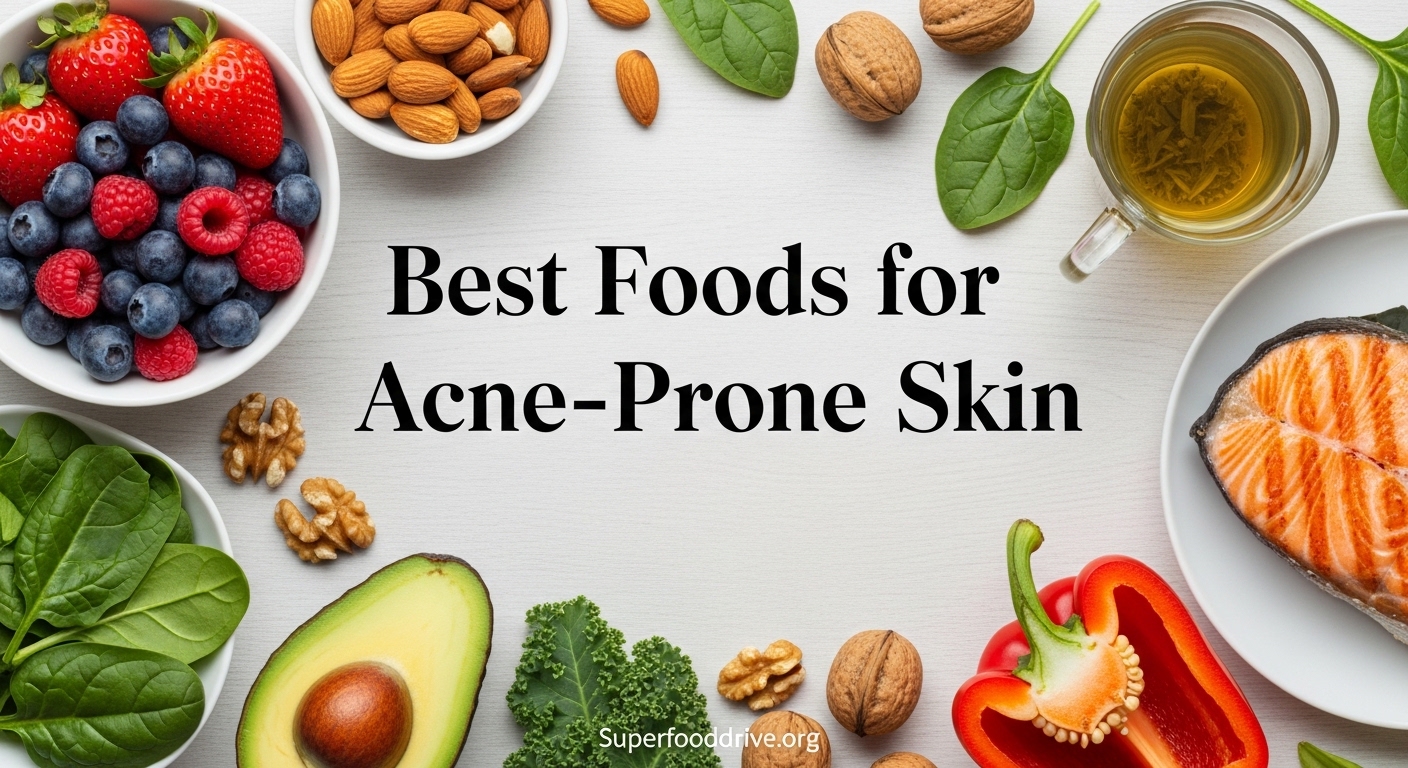
Your diet might be the missing piece in your quest for clear skin. After years of trying every topical treatment on the market, I discovered that what I put inside my body mattered just as much as what I put on it. The connection between nutrition and acne is backed by solid science, and two nutrients stand out above the rest: zinc and omega-3 fatty acids. In this guide to foods for acne-prone skin, I will walk you through exactly what to eat to support your skin from within.
Research consistently shows that zinc helps regulate oil production and fight acne-causing bacteria. Meanwhile, omega-3 fatty acids work as powerful anti-inflammatories that calm the redness and swelling associated with breakouts. Together, these nutrients form a foundation for clearer, healthier skin.
Whether you are dealing with hormonal acne, cystic breakouts, or occasional flare-ups, the foods you choose can either help heal your skin or trigger more problems. I have spent months researching the science behind acne nutrition and testing these recommendations myself. Let us dive into the best foods for acne-prone skin and how to incorporate them into your daily meals.
Table of Contents
How Zinc and Omega-3 Work Together for Clear Skin
Zinc and omega-3 fatty acids tackle acne through different but complementary mechanisms. Understanding how they work helps you appreciate why these nutrients deserve a place on your plate every single day.
Zinc controls sebum production by regulating the activity of your sebaceous glands. When these glands produce too much oil, pores become clogged and create the perfect environment for acne-causing bacteria called Propionibacterium acnes. Zinc has natural antibacterial properties that help keep this bacteria in check. It also supports wound healing, which means existing blemishes heal faster with less scarring.
Omega-3 fatty acids, particularly EPA and DHA found in fatty fish, reduce inflammation throughout your body. Acne is fundamentally an inflammatory condition. By lowering levels of inflammatory compounds called prostaglandins and leukotrienes, omega-3s help calm angry, red breakouts. They also appear to reduce levels of IGF-1 (insulin-like growth factor 1), a hormone linked to increased oil production and acne severity.
The synergy between these nutrients is remarkable. Zinc helps prevent new breakouts by controlling oil and bacteria. Omega-3s reduce the inflammation that makes existing acne visible and painful. Together, they address both the root causes and the visible symptoms of acne-prone skin.
The IGF-1 Connection: Why Blood Sugar Matters
High-glycemic foods like white bread, sugary snacks, and processed cereals spike your blood sugar. This triggers a surge in insulin and IGF-1, which stimulates your sebaceous glands to produce more oil. The result? More clogged pores and more breakouts. Foods rich in zinc and omega-3s tend to be low on the glycemic index, making them doubly beneficial for acne-prone skin.
Zinc-Rich Foods: Your Skin’s Natural Defender
Getting enough zinc through food sources is one of the most effective dietary strategies for managing acne. The recommended daily intake is 8-11mg for adults, but therapeutic doses for acne often range higher. Here are the best food sources to boost your zinc intake naturally.
1. Oysters: The Zinc Powerhouse
Six medium oysters deliver over 30mg of zinc, more than triple your daily requirement. This makes oysters the most concentrated food source of zinc available. If you enjoy seafood, adding oysters to your diet even once or twice a week provides a significant acne-fighting boost.
For those new to oysters, try them raw on the half shell with a squeeze of lemon, or grilled with garlic and herbs. Canned smoked oysters offer a more budget-friendly option with approximately 15mg of zinc per serving.
2. Grass-Fed Beef and Red Meat
A 4-ounce serving of beef provides about 5-7mg of zinc, making it an excellent source for meat-eaters. Grass-fed beef contains higher levels of omega-3s compared to conventional grain-fed beef, giving you a double benefit for your skin. Look for cuts like sirloin or lean ground beef to minimize saturated fat intake.
3. Pumpkin Seeds: Plant-Based Zinc Champions
Just one ounce of pumpkin seeds contains about 3mg of zinc, making them one of the best plant-based sources available. They are also rich in antioxidants and healthy fats that support overall skin health. I keep a jar of roasted pumpkin seeds on my desk for easy snacking throughout the day.
Sprinkle pumpkin seeds on salads, blend them into smoothies, or enjoy them as a trail mix with other nuts and dried fruit. Soaking seeds overnight before eating them may improve zinc absorption by reducing phytate content.
4. Chickpeas and Legumes
One cup of cooked chickpeas provides about 2.5mg of zinc along with fiber that helps stabilize blood sugar. Lentils, black beans, and kidney beans offer similar zinc content. While legumes contain phytates that can inhibit zinc absorption, pairing them with animal proteins or soaking them before cooking improves bioavailability.
Hummus made from chickpeas and tahini (which also contains zinc) creates a skin-friendly snack when paired with vegetable sticks instead of processed crackers.
5. Hemp Seeds and Sesame Seeds
Three tablespoons of hemp seeds provide about 3mg of zinc plus a complete protein profile and omega-3 fatty acids. Sesame seeds, whether whole or as tahini paste, deliver similar zinc levels. These seeds blend seamlessly into smoothies, oatmeal, and baked goods.
6. Cashews and Pine Nuts
One ounce of cashews contains approximately 1.6mg of zinc, while pine nuts offer about 1.2mg per ounce. These nuts also provide healthy monounsaturated fats that support skin barrier function. Enjoy them in moderation as calorie-dense but nutrient-rich additions to your acne-fighting diet.
7. Dark Chocolate and Cacao
One ounce of dark chocolate (70% cacao or higher) provides about 0.9mg of zinc along with antioxidant flavanols that benefit skin health. Choose varieties with minimal added sugar to avoid spiking your blood glucose. Raw cacao powder added to smoothies or oatmeal offers concentrated zinc without the sugar.
8. Greek Yogurt and Dairy Products
One cup of plain Greek yogurt delivers about 1.5mg of zinc plus probiotics that support gut health. However, dairy can trigger acne in some individuals due to hormones and IGF-1 content. Pay attention to your personal response. If dairy seems to worsen your skin, focus on the non-dairy zinc sources listed above.
Omega-3 Foods: Fighting Inflammation from Within
Omega-3 fatty acids are essential fats your body cannot produce on its own. You must obtain them through food. For acne-prone skin, the anti-inflammatory effects of omega-3s can mean the difference between persistent breakouts and calm, clear skin.
1. Wild-Caught Salmon: The Gold Standard
A 4-ounce serving of wild salmon provides approximately 2,000-2,500mg of combined EPA and DHA omega-3s. These are the most bioavailable forms that your body can use immediately to reduce inflammation. Farmed salmon contains less omega-3s and more omega-6s, so choose wild-caught when possible.
Bake salmon with lemon and herbs, grill it with a light glaze, or add flaked cooked salmon to salads. Aim for 2-3 servings of fatty fish per week to maintain therapeutic omega-3 levels.
2. Sardines and Mackerel: Affordable Powerhouses
These smaller fish offer even higher omega-3 concentrations than salmon, often at a fraction of the cost. One serving of sardines delivers about 1,500mg of EPA and DHA. Because sardines and mackerel are lower on the food chain, they accumulate fewer heavy metals than larger predatory fish.
Canned sardines in olive oil make a convenient snack or salad topping. Mackerel works beautifully grilled or smoked and added to pasta dishes.
3. Anchovies: Small Fish, Big Benefits
Just one ounce of canned anchovies provides roughly 400-500mg of omega-3s. Their intense flavor means a little goes a long way. Add anchovies to Caesar salads, pasta sauces, or pizzas for an umami boost that also fights inflammation.
4. Walnuts: The Best Tree Nut Source
One ounce of walnuts (about 14 halves) contains 2,500mg of ALA, a plant-based omega-3. While ALA must be converted to EPA and DHA in your body (a process with limited efficiency), walnuts still offer significant anti-inflammatory benefits. They also contain zinc and antioxidants that support skin health.
Walnuts make an excellent snack, salad topping, or ingredient in homemade granola. Store them in the refrigerator to prevent their healthy fats from going rancid.
5. Chia Seeds and Flaxseeds: Plant-Based Options
Two tablespoons of chia seeds provide about 2,400mg of ALA omega-3s. Ground flaxseeds offer similar amounts. These seeds also contain fiber that helps regulate blood sugar and support gut health. Their gel-forming property when mixed with liquid makes them perfect for puddings and smoothies.
Grind flaxseeds fresh before eating to maximize nutrient absorption. Whole flaxseeds often pass through your digestive system undigested.
6. Algae and Algal Oil Supplements
Algae is the original source of DHA and EPA omega-3s. Fish obtain their omega-3s by eating algae. Algal oil supplements provide direct DHA without the fish, making them ideal for vegetarians and vegans. One serving typically delivers 200-300mg of DHA.
Many users in online forums report that algal oil helped their chin acne specifically, likely due to its anti-inflammatory properties.
7. Herring and Trout
Pickled herring, popular in Scandinavian cuisine, provides about 1,800mg of omega-3s per serving. Rainbow and steelhead trout offer similar benefits to salmon with a milder flavor. Both are excellent choices for expanding your omega-3 food repertoire.
Other Skin-Supporting Nutrients Beyond Zinc and Omega-3
While zinc and omega-3s deserve top billing in your acne-fighting diet, several other nutrients play supporting roles that enhance your results.
Vitamin A and Beta-Carotene
Vitamin A regulates skin cell turnover, preventing the buildup of dead cells that clog pores. It also supports the skin barrier and reduces inflammation. Sweet potatoes, carrots, spinach, kale, and butternut squash provide beta-carotene that your body converts to vitamin A. Retinol forms of vitamin A from liver and eggs offer more direct benefits but should be consumed in moderation.
A medium sweet potato delivers over 400% of your daily vitamin A needs in the form of beta-carotene. Roast sweet potato wedges with olive oil and herbs for a delicious side dish.
Vitamin C: The Collagen Builder
This antioxidant supports collagen production, which helps repair acne scars and maintain skin structure. It also protects against free radical damage from sun exposure and pollution. Bell peppers, citrus fruits, strawberries, broccoli, and kiwi provide excellent vitamin C content.
One cup of sliced red bell pepper contains nearly three times the vitamin C of an orange. Add raw peppers to salads or stir-fry them lightly to preserve nutrients.
Vitamin E: The Protective Shield
Vitamin E works synergistically with vitamin C to protect skin cells from oxidative damage. It also supports skin barrier function and helps reduce inflammation. Almonds, sunflower seeds, spinach, avocados, and wheat germ provide this fat-soluble vitamin.
One ounce of almonds delivers about 7mg of vitamin E, roughly half your daily needs. Enjoy almonds as a snack or blend almond butter into smoothies.
Selenium: The Lesser-Known Skin Mineral
Selenium supports skin elasticity and works as an antioxidant alongside vitamin E. Brazil nuts are the standout source here. Just two Brazil nuts provide your entire daily selenium requirement. Other sources include fish, eggs, and sunflower seeds.
Be cautious with Brazil nuts. Their selenium content is so concentrated that eating more than 3-4 daily can lead to toxicity. Two nuts is the sweet spot.
Probiotics and the Gut-Skin Connection
Emerging research reveals strong connections between gut health and skin health. Probiotics help balance your gut microbiome, which influences inflammation throughout your body including your skin. Fermented foods like sauerkraut, kimchi, kefir, and kombucha provide beneficial bacteria.
Look for unpasteurized fermented products, as pasteurization kills beneficial bacteria. Start with small servings if you are new to fermented foods, as they can cause temporary digestive changes.
Foods to Avoid for Acne-Prone Skin
Just as certain foods help your skin, others consistently trigger breakouts. Understanding what to limit or eliminate helps you create an environment where clear skin can flourish.
High-Glycemic Foods and Refined Sugar
Foods that spike blood sugar trigger insulin and IGF-1 surges that stimulate oil production. White bread, white rice, sugary cereals, candy, soda, and baked goods are the worst offenders. Replace these with whole grains like quinoa, brown rice, and oats that release energy slowly.
A study published in the Journal of the Academy of Nutrition and Dietetics found that participants on a low-glycemic diet experienced significant acne improvement compared to those eating standard high-glycemic foods.
Dairy Products
Milk, cheese, and whey protein contain hormones that may trigger acne in susceptible individuals. Dairy also raises IGF-1 levels. Many people notice clearer skin within weeks of eliminating dairy. If you are not ready to cut dairy entirely, try switching to organic products or goat/sheep milk alternatives.
Whey protein supplements are particularly problematic for acne. Consider plant-based protein powders like pea, hemp, or rice protein instead.
Processed and Fast Foods
These foods combine multiple acne triggers: high glycemic load, unhealthy fats, added sugars, and artificial ingredients. The trans fats and excess omega-6 fatty acids in fried and processed foods promote inflammation. Replace fast food with home-cooked meals using whole ingredients.
Omega-6 Rich Oils
While some omega-6 is essential, the modern diet contains excessive amounts from corn oil, soybean oil, sunflower oil, and processed foods. This omega-6 to omega-3 imbalance promotes inflammation. Cook with olive oil, avocado oil, or coconut oil instead. Avoid processed foods made with vegetable oil blends.
Alcohol
Alcohol affects hormones, dehydrates skin, and impairs liver function needed for hormone processing. It also often contains sugar that spikes blood glucose. Limit alcohol consumption or eliminate it entirely during active breakout phases.
Building an Acne-Friendly Meal Plan
Putting this information into practice requires a strategy. Here is how to build daily meals that maximize zinc, omega-3s, and other skin-supporting nutrients while avoiding common triggers.
Sample Daily Structure
Breakfast: Start with stable blood sugar. Try oatmeal topped with walnuts, chia seeds, and berries. Or make a smoothie with spinach, banana, ground flaxseed, and almond butter.
Mid-Morning Snack: A handful of pumpkin seeds or Brazil nuts provides zinc and healthy fats without spiking blood sugar.
Lunch: Build around protein and vegetables. A salmon salad with mixed greens, avocado, and olive oil dressing combines omega-3s with vitamin E. Or try chickpea curry with brown rice for a plant-based zinc boost.
Afternoon Snack: Fresh vegetables with hummus provides zinc from chickpeas and tahini along with fiber.
Dinner: Grilled mackerel or sardines with roasted sweet potato and steamed broccoli delivers omega-3s, vitamin A, and vitamin C. Grass-fed beef with sautéed spinach offers zinc and iron.
Evening: If you eat dairy, a small serving of plain Greek yogurt with a few walnuts provides zinc, protein, and probiotics.
Maximizing Nutrient Absorption
Soaking beans, nuts, and seeds reduces phytates that inhibit zinc absorption. Pair plant-based iron sources with vitamin C-rich foods to enhance uptake. Consume fat-soluble vitamins A, D, E, and K with healthy fats for optimal absorption.
Budget-Friendly Shopping Tips
Canned sardines and mackerel offer the same omega-3 benefits as fresh fish at a fraction of the cost. Frozen vegetables retain nutrients well and cost less than fresh. Buy nuts and seeds in bulk sections. Seasonal produce costs less and tastes better.
Timeline for Results
Skin cells turn over approximately every 28 days, so give your new diet at least 4-6 weeks before judging results. Many people notice initial improvements within 2-3 weeks as inflammation decreases. Deeper changes to oil production and bacterial balance take longer. Be patient and consistent.
Frequently Asked Questions
What foods are high in zinc for acne?
The best zinc-rich foods for acne include oysters (30mg per 6 oysters), beef (5-7mg per 4oz serving), pumpkin seeds (3mg per ounce), chickpeas (2.5mg per cup), hemp seeds (3mg per 3 tablespoons), cashews (1.6mg per ounce), dark chocolate (0.9mg per ounce), and Greek yogurt (1.5mg per cup).
Is zinc and omega-3 good for acne?
Yes, both zinc and omega-3 fatty acids are beneficial for acne. Zinc controls oil production and kills acne-causing bacteria while supporting wound healing. Omega-3s reduce inflammation and lower IGF-1 levels linked to increased oil production. Together they address multiple root causes of acne.
Which foods are rich in both zinc and omega-3?
Foods containing both zinc and omega-3 include oysters, certain fish like sardines and mackerel, hemp seeds, and pumpkin seeds when paired with omega-3 sources. The best strategy is combining zinc-rich foods with omega-3-rich foods in meals, such as beef with a side of walnuts or salmon with pumpkin seed garnish.
How long does it take to see results from diet changes for acne?
Most people see initial improvements in 2-3 weeks as inflammation decreases, but significant results typically appear after 4-6 weeks as skin cells complete their turnover cycle. Consistency matters more than perfection. Stick with your acne-friendly diet for at least two months before evaluating its effectiveness for your skin.
What foods should you avoid for acne?
Avoid high-glycemic foods like white bread, sugary snacks, and soda that spike insulin. Limit dairy products and whey protein supplements. Reduce processed foods, fast food, and omega-6 rich oils like corn and soybean oil. Alcohol can also trigger breakouts by affecting hormones and dehydration.
Can I get enough omega-3 from plant sources alone?
Plant sources like flaxseeds, chia seeds, and walnuts provide ALA omega-3, which must convert to EPA and DHA in your body. This conversion is inefficient, with only 5-10% becoming usable omega-3s. For optimal acne benefits, include fatty fish 2-3 times weekly or consider an algal oil supplement if you are vegetarian or vegan.
Conclusion
The right foods for acne-prone skin can transform your complexion from the inside out. By prioritizing zinc-rich foods like oysters, beef, pumpkin seeds, and legumes, you give your skin the tools it needs to regulate oil and fight bacteria. Adding omega-3 sources such as salmon, sardines, walnuts, and chia seeds calms inflammation and supports your skin’s natural healing processes.
Remember that clear skin is not about perfection. It is about consistency. Start by adding one or two of these acne-fighting foods to your daily routine. Gradually replace high-glycemic snacks with nuts and seeds. Experiment with fatty fish recipes until you find ones you enjoy. Over time, these small changes compound into significant improvements.
Combine these dietary strategies with proper skincare, adequate sleep, and stress management for the best results. Your skin reflects your overall health, and nourishing it with the right foods is one of the most powerful steps you can take toward lasting clarity. Start your journey with foods for acne-prone skin today, and give your skin the nutrition it deserves.