
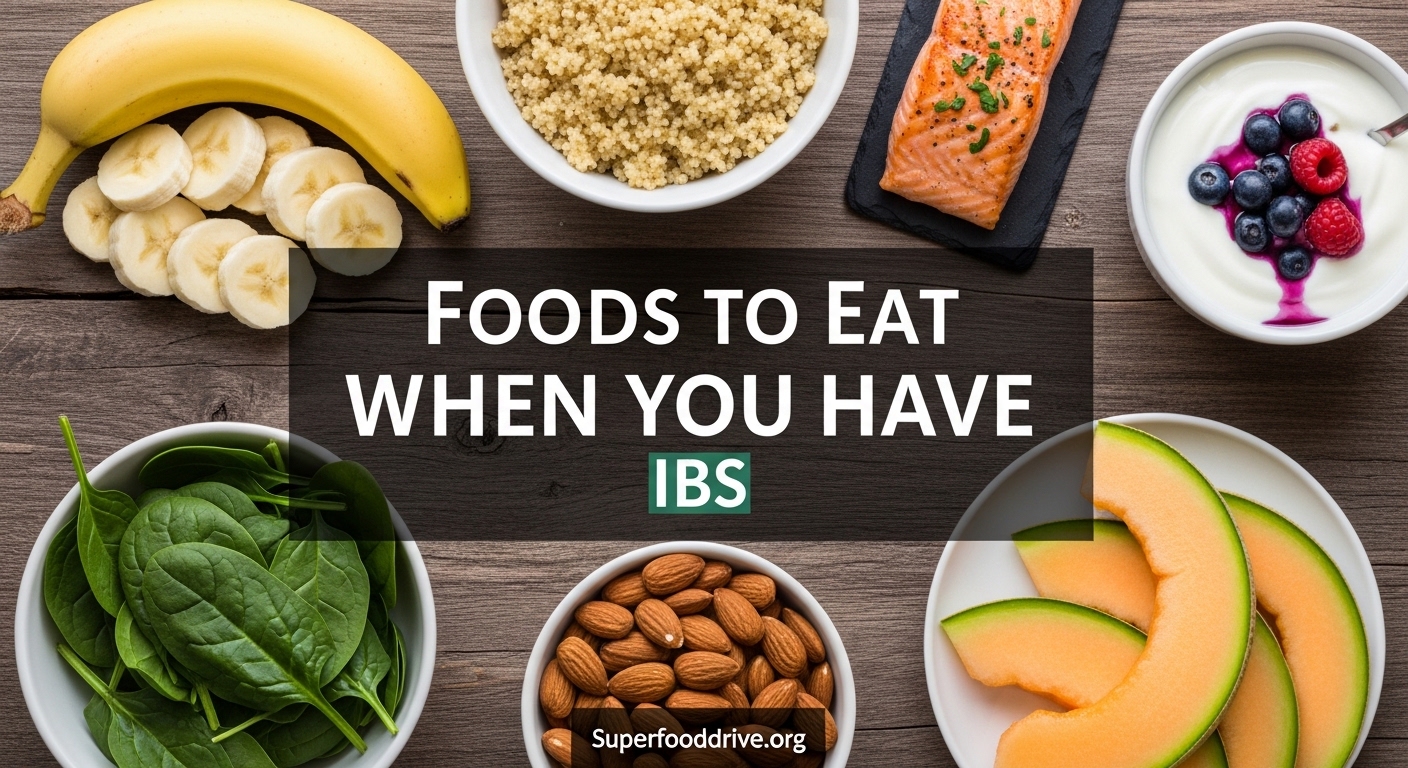
Living with IBS can feel like a constant battle with your own body. I remember standing in the grocery store, staring at food labels, wondering if this would be the meal that sent me running to the bathroom or left me curled up with cramps. If you have been there, you know that desperation. The good news is that research from Monash University has given us a proven approach to finding relief. In this guide, I will share the complete list of low FODMAP foods for IBS that can help you take back control of your digestive health in 2026.
The low FODMAP diet is not a lifetime sentence of restriction. It is a systematic, temporary elimination diet that helps you identify your personal trigger foods. Studies show that 75% to 86% of IBS sufferers experience significant symptom improvement when following this approach correctly. I will walk you through exactly what to eat, what to avoid, and how to navigate each phase of the diet.
Whether you are newly diagnosed or have been managing IBS for years, this guide gives you practical, research-backed food lists and meal ideas that competitors often skip. Let us start with understanding what FODMAP actually means.
Table of Contents
What Is FODMAP and Why It Matters for IBS
FODMAP stands for Fermentable Oligosaccharides, Disaccharides, Monosaccharides, and Polyols. These are short-chain carbohydrates that your small intestine absorbs poorly. When they reach your large intestine, gut bacteria ferment them rapidly, producing gas and drawing water into your gut.
For most people, this fermentation is no big deal. But if you have IBS, your gut is hypersensitive. That extra gas and fluid triggers bloating, cramping, diarrhea, constipation, or that awful mix of both. Breaking down each component helps you understand why certain foods become problems.
The FODMAP Breakdown
Oligosaccharides include fructans and galacto-oligosaccharides (GOS). You will find fructans in wheat, rye, onions, and garlic. GOS appears in legumes like beans, lentils, and chickpeas. Humans lack the enzymes to digest these properly.
Disaccharides primarily refers to lactose, the sugar in dairy products. You need lactase enzyme to break it down, and many adults produce less of this enzyme as they age.
Monosaccharides here means excess fructose, found in honey, apples, and high-fructose corn syrup. When fructose outnumbers glucose in a food, your gut struggles to absorb it efficiently.
Polyols are sugar alcohols like sorbitol and mannitol. These occur naturally in some fruits and vegetables, and they are common in sugar-free gum and candies. Your body only partially absorbs them.
How the Low-FODMAP Diet Works
The diet follows a three-phase process designed to identify your personal triggers without keeping you on a restrictive diet forever. I have seen too many people get stuck in the elimination phase out of fear. Understanding all three phases helps you move forward confidently.
Phase 1: Elimination (2-6 Weeks)
During this phase, you remove all high-FODMAP foods from your diet completely. You eat only from the low-FODMAP food lists I provide below. Most people start feeling better within 2 to 3 weeks. If you do not see improvement after 6 weeks, this diet may not be right for you, and you should consult your healthcare provider.
Phase 2: Reintroduction (6-8 Weeks)
This is where you systematically test foods from each FODMAP group. You introduce one food at a time, in increasing portions over 3 days, then return to the elimination baseline before testing the next food. This phase reveals which specific FODMAPs trigger your symptoms and in what amounts.
Phase 3: Personalization (Ongoing)
In this final phase, you create your customized long-term eating plan. You include all foods that did not trigger symptoms, limit those that caused mild reactions, and avoid only those that caused significant problems. Most people end up tolerating many foods they initially eliminated.
Low FODMAP Foods to Eat
Here is your comprehensive guide to safe foods during the elimination phase. I have organized these by category to make meal planning easier. Many people ask what are the best low FODMAP foods, and the answer depends on your preferences, but these options give you plenty of variety.
Fruits
Safe fruit options include bananas, blueberries, cantaloupe, grapes, grapefruit, honeydew melon, kiwi, lemon, lime, oranges, passion fruit, raspberries, strawberries, and tangelos. These provide the sweetness you crave without the excess fructose that triggers symptoms.
Stick to one serving of fruit per meal to avoid FODMAP stacking. A serving is typically one piece of whole fruit or about one cup of berries or melon.
Vegetables
Your vegetable options remain plentiful. Enjoy alfalfa, bamboo shoots, bean sprouts, bell peppers, bok choy, carrots, chives, choy sum, cucumber, eggplant, ginger, green beans, kale, lettuce, olives, parsnips, potatoes, pumpkin, radishes, spinach, spring onions (green tops only), squash, swiss chard, tomatoes, turnips, water chestnuts, and zucchini.
These vegetables provide fiber and nutrients while keeping your gut calm. The variety here means your meals never need to be boring.
Dairy and Alternatives
You can enjoy lactose-free milk, lactose-free yogurt, almond milk, rice milk, coconut milk, hard cheeses like cheddar and parmesan, brie, camembert, feta, and Swiss cheese. These provide calcium and protein without the lactose that triggers many IBS sufferers.
Coconut milk works beautifully in curries and smoothies. Hard cheeses contain minimal lactose because the aging process breaks it down.
Proteins
All plain meats, poultry, and fish are naturally low FODMAP. Eggs are also low FODMAP and provide an excellent protein source. You can also enjoy firm tofu and tempeh. Just avoid marinated or processed meats that might contain high-FODMAP ingredients like garlic or onion powder.
For vegetarians, eggs and firm tofu become your protein staples during elimination. Tempeh offers another versatile option with a nutty flavor.
Grains and Starches
Safe grains include oats, rice, quinoa, millet, polenta, corn tortillas, sourdough spelt bread, gluten-free bread and pasta, and rice noodles. Oats make a perfect breakfast base, while rice and quinoa work for any meal.
Sourdough bread undergoes a fermentation process that reduces FODMAP content, making it often tolerable even though it contains wheat.
Nuts, Seeds, and Legumes
Enjoy almonds (limited to 10 nuts), brazil nuts, chestnuts, hazelnuts, macadamia nuts, peanuts, pecans, pine nuts, walnuts, chia seeds, pumpkin seeds, sesame seeds, and sunflower seeds. For legumes, canned lentils and chickpeas in small portions (quarter cup) are often tolerated.
Nut butters like peanut butter and certain almond butters work well too. Choose smooth varieties without added high-FODMAP ingredients.
High FODMAP Foods to Avoid
Knowing what foods trigger IBS flare-ups is just as important as knowing what to eat. Here are the foods to eliminate during the first phase of the diet.
Fruits to Avoid
Skip apples, apricots, blackberries, cherries, dates, figs, mangoes, nectarines, peaches, pears, plums, prunes, and watermelon. These contain excess fructose or polyols that commonly trigger symptoms.
Also avoid fruit juice and dried fruits, which concentrate the FODMAPs into smaller servings.
Vegetables to Avoid
High-FODMAP vegetables include artichokes, asparagus, beetroot, broccoli, brussels sprouts, cabbage, cauliflower, celery, fennel, garlic, leeks, mushrooms, onions, shallots, and snow peas. Garlic and onions hide in many prepared foods, so read labels carefully.
Garlic-infused oil is often tolerated because the FODMAPs are water-soluble and do not transfer to the oil. This becomes a flavor-saving trick for many people.
Dairy to Avoid
Avoid regular milk, soft cheeses like ricotta and cottage cheese, cream cheese, yogurt made with regular milk, ice cream, and sour cream. These contain lactose that can trigger symptoms in lactose-sensitive individuals.
Always check labels on dairy alternatives, as some contain added high-FODMAP ingredients like inulin or chicory root.
Grains and Legumes to Avoid
Limit wheat, rye, and barley-based products including regular bread, pasta, and cereals. Avoid large portions of legumes including black beans, kidney beans, baked beans, and large servings of chickpeas or lentils.
Many people find they can tolerate sourdough wheat bread or spelt sourdough better than regular wheat products.
Other High-FODMAP Foods
Watch out for honey, agave nectar, high-fructose corn syrup, sugar alcohols (sorbitol, mannitol, xylitol, isomalt), inulin, chicory root, and certain chewing gums and mints. These sneak into processed foods under names like “fiber” or “natural sweeteners.”
Sample Low-FODMAP Meal Ideas
One of the biggest gaps I found in competitor content was practical meal inspiration. Here are specific meal ideas that keep you satisfied while following the diet.
Breakfast Options
Start your day with oatmeal made with lactose-free milk and topped with blueberries and sliced banana. Or try scrambled eggs with spinach and tomatoes, served with sourdough spelt toast. A smoothie with lactose-free yogurt, strawberries, and spinach also works well.
For a quick option, pair rice cakes with peanut butter and sliced strawberries. Keep portions reasonable to avoid stacking FODMAPs.
Lunch Ideas
Build a quinoa bowl with grilled chicken, cucumber, bell peppers, and a drizzle of garlic-infused oil. Or enjoy a salad with mixed greens, carrots, grilled salmon, and a lemon-olive oil dressing wrapped in corn tortillas.
Leftover rice with stir-fried bok choy, green beans, and firm tofu makes a filling midday meal. Season with ginger and soy sauce.
Dinner Options
Grilled steak or fish with roasted carrots, parsnips, and potatoes hits the spot. Try a zucchini noodle pasta with tomatoes, olives, and parmesan. Or make a curry with coconut milk, rice, and tolerated vegetables.
Baked chicken with herbs, served with quinoa and steamed green beans, provides balanced nutrition without triggering symptoms.
Snack Ideas
What are the best low FODMAP snacks? Keep it simple with rice cakes and peanut butter, a small handful of macadamia nuts, carrot sticks with allowed dip, or a piece of firm cheese with grapes. Rice crackers with permitted toppings also work well.
Popcorn made without butter or garlic powder makes an excellent high-fiber snack. Dark chocolate in small portions often sits well too.
Practical Tips for Success on the Low-FODMAP Diet
Understanding the food lists is just the beginning. Here are strategies I have learned from both research and real experiences shared in IBS support communities.
Understanding FODMAP Stacking
What is FODMAP stacking? This happens when you eat multiple low-FODMAP foods in one meal that together exceed your tolerance threshold. A banana is low FODMAP. A piece of sourdough is often fine. But eating both together might trigger symptoms.
Space out your FODMAP intake across meals rather than concentrating them. This gives your gut time to process each food individually.
Portion Sizes Matter
Some foods sit in a gray area where small portions are fine but larger amounts trigger symptoms. Avocado is a perfect example. One-eighth of an avocado is low FODMAP, but one-quarter can cause problems for some people.
Corn falls into this category too. A small cob or half cup of kernels typically works, but larger servings may not. Is corn low FODMAP? Yes, in appropriate portions.
Dining Out Strategies
Eating out requires planning. Call ahead to ask about ingredients. Choose simple grilled proteins with plain vegetables. Ask for sauces and dressings on the side. Many restaurants use garlic and onion in their base recipes, so communicate clearly about your restrictions.
Ethnic cuisines vary in FODMAP-friendliness. Japanese, grilled proteins, and plain rice dishes often work better than Italian or Indian options heavy in garlic and onions.
Work With Professionals
The low-FODMAP diet works best with guidance from a registered dietitian familiar with the protocol. They help you navigate challenges, ensure nutritional adequacy, and troubleshoot when progress stalls. Your gastroenterologist can also monitor your symptoms and rule out other conditions.
Many people feel overwhelmed initially. Professional support makes the difference between giving up and finding lasting relief.
Frequently Asked Questions
What does FODMAP stand for?
FODMAP stands for Fermentable Oligosaccharides, Disaccharides, Monosaccharides, and Polyols. These are short-chain carbohydrates that are poorly absorbed in the small intestine and can trigger digestive symptoms in people with IBS.
How does the low FODMAP diet work?
The diet works in three phases: elimination (removing high-FODMAP foods for 2-6 weeks), reintroduction (systematically testing foods to identify triggers), and personalization (creating a long-term diet based on your specific tolerances).
Is corn low FODMAP?
Yes, corn is low FODMAP in moderate portions. A small cob or half cup of kernels is typically well tolerated. Larger servings may trigger symptoms in some people, so start with smaller portions during elimination.
Is peanut butter low FODMAP?
Yes, peanut butter is low FODMAP in servings of 2 tablespoons or less. Choose smooth varieties without added high-FODMAP ingredients like honey or inulin. Natural peanut butter with just peanuts and salt is your safest option.
Can you eat avocado on low FODMAP diet?
Yes, but in limited portions. One-eighth of a whole avocado is considered low FODMAP. One-quarter becomes moderate, and half an avocado is high FODMAP. Start with small amounts and monitor your response.
Are eggs low FODMAP?
Yes, eggs are naturally low FODMAP and are an excellent protein source for people following the diet. They contain no carbohydrates, so they do not contribute to FODMAP intake at all.
What is FODMAP stacking?
FODMAP stacking occurs when you eat multiple low-FODMAP foods together that collectively exceed your tolerance threshold. Even individually safe foods can trigger symptoms when combined in one meal. Space FODMAP intake across meals.
What are the best low FODMAP snacks?
Good snack options include rice cakes with peanut butter, a small handful of macadamia nuts or walnuts, carrot sticks, firm cheese with grapes, popcorn without butter, corn tortillas with tolerated toppings, and lactose-free yogurt with allowed berries.
Conclusion
The low FODMAP foods for IBS approach gives you a proven, systematic way to identify your personal triggers and reclaim your digestive health. Remember that this is a temporary elimination diet, not a lifetime of restriction. Most people successfully reintroduce many foods and end up with a varied, enjoyable diet.
Success rates of 75% to 86% show that this approach works for the majority of IBS sufferers. The key is following the three phases completely, working with healthcare professionals, and being patient with the process. Your gut did not develop sensitivity overnight, and finding your personal balance takes time.
Start with the elimination phase using the food lists provided here. Track your symptoms. Move through reintroduction methodically. And most importantly, do not lose hope. Relief is possible, and you have the tools to find it.