
Figuring out what to eat when you have Type 2 diabetes or insulin resistance can feel overwhelming at first. I remember standing in the grocery store aisle, reading label after label, wondering if anything was actually safe to put in my cart. The good news is that managing blood sugar through food does not require perfection or expensive specialty products. Foods for Type 2 diabetes and insulin resistance are more accessible than you might think, and small changes can make a real difference in how you feel.
In this guide, you will learn which foods help stabilize blood sugar and improve insulin sensitivity. We will cover the science behind why certain foods work, walk through practical meal planning strategies, and address the budget concerns that many people face when changing their diet. By the end, you will have a clear roadmap for building meals that support your health without breaking the bank.
Table of Contents
Understanding Type 2 Diabetes and Insulin Resistance
Type 2 diabetes develops when your body becomes resistant to insulin, the hormone that helps move glucose from your bloodstream into your cells for energy. Think of insulin as a key that unlocks your cells to let sugar in. With insulin resistance, those locks get sticky, and the key does not work as well. Your pancreas tries to compensate by producing more insulin, but over time it cannot keep up, leading to elevated blood sugar levels.
Food plays a central role in this process because everything you eat eventually breaks down into glucose. Carbohydrates become glucose quickly, while proteins and fats convert more slowly. The types of carbohydrates matter enormously. Complex carbohydrates from whole foods release glucose gradually, while refined carbs cause rapid spikes that stress your insulin response.
Dietary changes are one of the most powerful tools for managing Type 2 diabetes. Research consistently shows that the right food choices can improve insulin sensitivity, reduce HbA1c levels, and even put Type 2 diabetes into remission for some people. The key is knowing which foods support your goals and how to build balanced meals around them.
How to Build a Diabetes-Friendly Plate
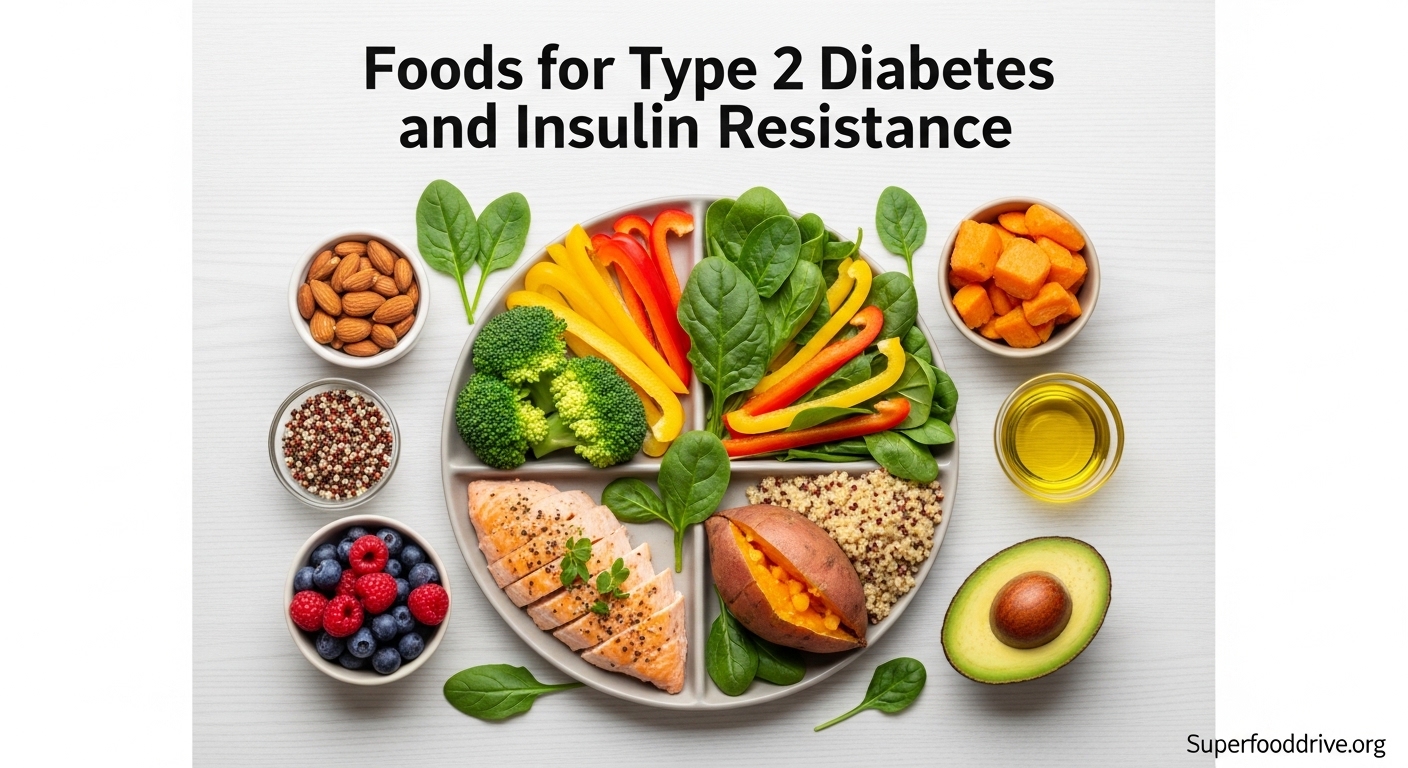
The Diabetes Plate Method, developed by the American Diabetes Association, offers a simple visual guide for meal planning. Picture a standard nine-inch dinner plate divided into sections. Fill half your plate with non-starchy vegetables like broccoli, spinach, or peppers. These foods are low in calories and carbohydrates but high in fiber, vitamins, and minerals.
Reserve one quarter of your plate for lean protein sources such as fish, chicken, turkey, eggs, or beans. Protein helps you feel full and slows the absorption of carbohydrates. The remaining quarter holds carbohydrate foods, preferably whole grains or starchy vegetables. This might include brown rice, quinoa, sweet potato, or whole grain bread.
Portion control matters as much as food selection. Even healthy foods can raise blood sugar if you eat too much. Using smaller plates, measuring servings initially, and learning to recognize appropriate portions helps prevent overeating. Many people find that eating consistent amounts of carbohydrates at each meal creates more predictable blood sugar patterns.
Best Foods for Type 2 Diabetes and Insulin Resistance
Non-Starchy Vegetables
Non-starchy vegetables should form the foundation of every meal for people managing insulin resistance. These vegetables contain minimal carbohydrates and calories while providing essential nutrients and fiber. Dark leafy greens like spinach, kale, and Swiss chard deliver vitamins A, C, and K plus minerals like iron and calcium.
Broccoli deserves special mention because it contains sulforaphane, a compound with powerful antioxidant properties that may help reduce blood sugar levels. Research published in medical journals suggests that sulforaphane can protect against cellular damage and support glucose regulation. Cauliflower, Brussels sprouts, cabbage, and other cruciferous vegetables offer similar benefits.
Other excellent choices include bell peppers, zucchini, tomatoes, cucumbers, asparagus, and green beans. These vegetables add volume and satisfaction to meals without significantly impacting blood glucose. Aim to include at least two to three servings of non-starchy vegetables with every meal.
Whole Grains and Complex Carbohydrates
Whole grains provide complex carbohydrates that digest slowly and steadily release glucose into your bloodstream. Unlike refined grains that strip away fiber and nutrients, whole grains retain their bran and germ, delivering more nutrition and better blood sugar control. Quinoa offers complete protein alongside complex carbs, making it particularly valuable for plant-based eaters.
Oats contain beta-glucan, a type of soluble fiber that forms a gel in your digestive tract, slowing glucose absorption. Steel-cut or rolled oats have lower glycemic impact than instant varieties. Barley provides similar benefits with its high beta-glucan content. Brown rice, farro, and bulgur wheat serve as satisfying alternatives to white rice and pasta.
When selecting grain products, check that whole grain appears as the first ingredient. Look for breads and cereals with at least three grams of fiber per serving. The fiber content indicates how much the processing has preserved the grain’s natural structure.
Lean Proteins
Protein foods do not directly raise blood sugar and can help moderate the glucose response from carbohydrate foods. Fish high in omega-3 fatty acids, such as salmon, sardines, mackerel, and trout, provide heart-healthy fats alongside quality protein. The omega-3s in these fish reduce inflammation, which plays a role in insulin resistance.
Poultry like chicken and turkey breast offer lean protein without excessive saturated fat. Eggs provide complete protein and important nutrients like choline and vitamin D. For plant-based options, legumes including lentils, chickpeas, and black beans deliver protein plus resistant starch and fiber that benefit blood sugar control.
Greek yogurt and cottage cheese provide protein with probiotics that support gut health. Some research suggests that a healthy gut microbiome influences glucose metabolism and insulin sensitivity. Choose plain varieties without added sugars.
Healthy Fats
Healthy fats slow digestion and help prevent rapid blood sugar spikes after meals. Avocados offer monounsaturated fats, fiber, and potassium with minimal carbohydrate impact. Adding avocado to meals containing carbohydrates can reduce the overall glycemic response.
Nuts and seeds provide healthy fats, protein, and fiber in a convenient package. Walnuts contain omega-3 fatty acids, while almonds offer vitamin E and magnesium. Chia seeds and flaxseeds provide soluble fiber and alpha-linolenic acid, an omega-3 fat. Research suggests that regular nut consumption associates with better blood sugar control and reduced heart disease risk.
Extra virgin olive oil serves as the ideal cooking fat and salad dressing base. Its monounsaturated fats and polyphenol antioxidants support cardiovascular health, which matters greatly since people with diabetes face higher heart disease risk.
Fruits That Support Blood Sugar Control
Fruit contains natural sugars, but many options have low glycemic impact when eaten in appropriate portions. Berries rank among the best choices for blood sugar management. Strawberries, blueberries, raspberries, and blackberries deliver antioxidants called anthocyanins that may improve insulin sensitivity. One cup of berries contains roughly fifteen grams of carbohydrate.
Citrus fruits like oranges, grapefruits, and lemons provide vitamin C and soluble fiber. Despite their sweet taste, they have moderate glycemic index values. Apples and pears offer pectin, a fiber that slows digestion and supports gut health. Eating the whole fruit rather than drinking juice preserves the fiber and prevents rapid glucose spikes.
Portion awareness matters with fruit. A small piece of whole fruit or one cup of berries typically represents one carbohydrate serving. Pairing fruit with protein or healthy fat, such as apple slices with almond butter, creates a more balanced snack.
Foods to Avoid with Type 2 Diabetes and Insulin Resistance
Certain foods consistently raise blood sugar and worsen insulin resistance. Sugary beverages top the list of foods to eliminate. Regular soda, sweetened coffee drinks, fruit juices, and energy drinks deliver large amounts of rapidly absorbed sugar without fiber to slow absorption. Even one sugary drink can cause significant glucose spikes.
Refined carbohydrates act similarly in the body. White bread, white rice, regular pasta, and pastries made with white flour digest quickly and flood your bloodstream with glucose. These foods also lack the fiber, vitamins, and minerals found in their whole grain counterparts.
Processed meats like bacon, sausage, hot dogs, and deli meats contain high sodium levels and often include preservatives linked to health concerns. Research connects high processed meat consumption with increased Type 2 diabetes risk. Choose fresh, unprocessed proteins instead.
Trans fats and excessive saturated fats contribute to inflammation and insulin resistance. Avoid foods containing partially hydrogenated oils. Limit fatty cuts of red meat, full-fat dairy products, and fried foods. These choices also raise cardiovascular risk, which is already elevated with diabetes.
High-sodium foods pose additional concerns since people with diabetes face increased risk of high blood pressure and heart disease. Processed snacks, canned soups, frozen meals, and restaurant foods often contain hidden sodium. Reading labels and choosing low-sodium options helps protect your heart.
Understanding the Glycemic Index
The glycemic index measures how quickly a food raises blood sugar compared to pure glucose. Foods scoring below fifty-five count as low glycemic, fifty-five to seventy as medium, and above seventy as high. Choosing lower glycemic foods creates steadier blood sugar patterns throughout the day.
However, glycemic index represents only part of the picture. The glycemic load considers both the quality and quantity of carbohydrates in a typical serving. A food might have high glycemic index but low glycemic load if you eat small portions. Watermelon has high GI but low GL because it contains mostly water.
Practical application means favoring low glycemic options without becoming obsessive about numbers. Non-starchy vegetables, most fruits, legumes, dairy products, and whole grains generally fall in the low to medium range. Refined grains, potatoes, and sugary foods rank higher. Combining higher glycemic foods with protein, fat, or fiber lowers the overall impact on your blood sugar.
Budget-Friendly Shopping Tips for Diabetes Management
Eating well for diabetes does not require expensive specialty foods. Frozen vegetables often provide better value than fresh while retaining equivalent nutrition. Buy large bags of frozen broccoli, spinach, green beans, and mixed vegetables. These staples last months and work in countless recipes.
Dried beans and lentils cost pennies per serving and deliver protein, fiber, and complex carbohydrates. A pound of dried beans yields multiple meals and costs less than one can of prepared beans. Soaking and cooking beans at home takes planning but saves significant money.
Eggs remain one of the most affordable protein sources available. Oats, brown rice, and seasonal fresh vegetables round out budget-friendly staples. Canned fish like salmon and sardines provide omega-3s at lower cost than fresh seafood.
Shopping seasonal produce reduces costs significantly. Summer brings affordable berries, tomatoes, and zucchini. Winter offers root vegetables, cabbage, and citrus fruits. Buying store brands for staples like oats, canned tomatoes, and frozen vegetables cuts grocery bills without sacrificing quality.
Meal planning prevents waste and saves money. Planning weekly menus around sales and what you already have reduces impulse purchases. Cooking larger portions and freezing individual meals creates convenient options for busy days.
Quick and Simple Meal Ideas
Breakfast options include oatmeal topped with berries and walnuts, scrambled eggs with spinach and whole grain toast, or Greek yogurt with chia seeds and sliced almonds. These combinations provide protein, fiber, and healthy fats to start your day with stable energy.
For lunch, try a large salad with grilled chicken, chickpeas, vegetables, and olive oil dressing. Whole grain wraps with turkey, avocado, and vegetables offer portable alternatives. Leftover grain bowls with roasted vegetables and beans make excellent quick lunches.
Dinner might feature baked salmon with roasted broccoli and quinoa, stir-fried vegetables with tofu over brown rice, or turkey chili with a side salad. Sheet pan meals where everything cooks together simplify preparation and cleanup.
Smart snacks prevent blood sugar dips between meals. A small apple with peanut butter, raw vegetables with hummus, a handful of almonds, or cottage cheese with cucumber slices all work well. Keeping portion sizes reasonable prevents overeating.
The Mediterranean Diet Connection
The Mediterranean diet pattern consistently ranks among the best approaches for managing Type 2 diabetes and insulin resistance. This eating style emphasizes vegetables, fruits, whole grains, legumes, fish, nuts, and olive oil while limiting red meat and processed foods.
Research studies show that following a Mediterranean diet improves insulin sensitivity, reduces HbA1c levels, and lowers cardiovascular risk in people with diabetes. The combination of anti-inflammatory foods, healthy fats, fiber-rich carbohydrates, and lean proteins creates optimal conditions for blood sugar control.
Adapting Mediterranean principles does not require expensive ingredients or complicated recipes. Focus on adding more vegetables to every meal, choosing olive oil over butter, eating fish twice weekly, and snacking on nuts instead of processed foods. These simple shifts align perfectly with insulin resistance diet goals.
Hydration and Blood Sugar
What you drink matters as much as what you eat for blood sugar management. Water remains the best choice for hydration. Aim for eight glasses daily, more if you exercise or live in hot climates. Proper hydration helps your kidneys flush excess glucose through urine.
Unsweetened tea and coffee offer additional benefits. Green tea contains catechins that may improve insulin sensitivity. Black coffee has minimal carbohydrate impact and provides antioxidants. Avoid adding sugar, flavored syrups, or excessive cream.
Limit or eliminate sugary beverages completely. Even fruit juice concentrates sugar without the fiber of whole fruit. Diet sodas, while sugar-free, may affect gut bacteria and cravings. Sparkling water with lemon or lime provides a refreshing alternative to soda.
Lifestyle Tips Beyond Food
While diet forms the foundation of diabetes management, other lifestyle factors significantly impact insulin sensitivity. Regular physical activity helps muscles absorb glucose without requiring as much insulin. Even thirty minutes of walking after meals can improve blood sugar control.
Sleep quality affects hormone regulation including insulin. Poor sleep increases insulin resistance and cravings for high-carbohydrate foods. Aim for seven to nine hours of quality sleep nightly.
Chronic stress elevates cortisol, which raises blood sugar and promotes fat storage. Finding healthy stress management techniques like meditation, deep breathing, or enjoyable hobbies supports both mental health and glucose control.
Frequently Asked Questions About Type 2 Diabetes and Insulin Resistance
What food reverses insulin resistance?
No single food reverses insulin resistance, but a diet rich in non-starchy vegetables, whole grains, lean proteins, and healthy fats can significantly improve insulin sensitivity over time. Foods like leafy greens, broccoli, fatty fish, nuts, and berries contain compounds that support glucose regulation. Combined with weight management and exercise, dietary changes can put Type 2 diabetes into remission for some people.
What is the miracle fruit for type 2 diabetes?
There is no single miracle fruit for Type 2 diabetes, but berries consistently rank among the best choices. Blueberries, strawberries, and raspberries contain anthocyanins that may improve insulin sensitivity. Citrus fruits like grapefruit and oranges also show benefits. The key is choosing whole fruits over juices and watching portion sizes to manage carbohydrate intake.
Which foods are worst for insulin resistance?
Sugary beverages including soda, sweetened coffee drinks, and fruit juices top the list. Refined carbohydrates like white bread, white rice, and pastries cause rapid blood sugar spikes. Processed meats, trans fats, and foods high in added sugars worsen insulin resistance. Fried foods and excessive alcohol also negatively impact blood sugar control.
What foods stop an insulin spike?
Foods that prevent insulin spikes combine protein, fiber, and healthy fats. Non-starchy vegetables, nuts, seeds, avocado, and lean proteins slow digestion. Adding these foods to meals containing carbohydrates reduces glucose absorption speed. Vinegar, cinnamon, and chia seeds also show potential for moderating post-meal blood sugar rises.
What is the 10 10 10 rule for diabetes?
The 10-10-10 rule suggests testing blood sugar ten minutes before eating, ten minutes after starting a meal, and ten minutes after finishing. This helps identify how specific foods affect your glucose levels. Some variations refer to ten grams of carbohydrate, ten grams of protein, and ten grams of fiber as a balanced snack formula.
What is the number one worst food for your blood sugar?
Sugary beverages rank as the worst food for blood sugar because they deliver large amounts of rapidly absorbed sugar without fiber, protein, or fat to slow absorption. A single soda can contain ten teaspoons of sugar that enters your bloodstream within minutes. Regular consumption significantly increases diabetes risk and complicates blood sugar management.
Has anyone reversed insulin resistance?
Yes, many people have successfully reversed insulin resistance through sustained lifestyle changes. Research shows that significant weight loss, dietary improvements, and increased physical activity can restore insulin sensitivity. Some individuals with Type 2 diabetes achieve remission, maintaining normal blood sugar without medication. Success requires long-term commitment to healthy habits.
Conclusion
Managing Type 2 diabetes and insulin resistance through diet does not require perfection or deprivation. The foods for Type 2 diabetes and insulin resistance that work best are whole, unprocessed options that you can find at any grocery store. Building meals around non-starchy vegetables, whole grains, lean proteins, and healthy fats creates the foundation for stable blood sugar.
Start with small, sustainable changes rather than attempting a complete overhaul overnight. Replace sugary drinks with water. Add an extra serving of vegetables to your dinner. Choose brown rice over white. These incremental shifts add up to significant improvements in how you feel and your long-term health outcomes. Remember that many people have successfully improved their insulin sensitivity and even reversed Type 2 diabetes through consistent dietary changes. You can too.