
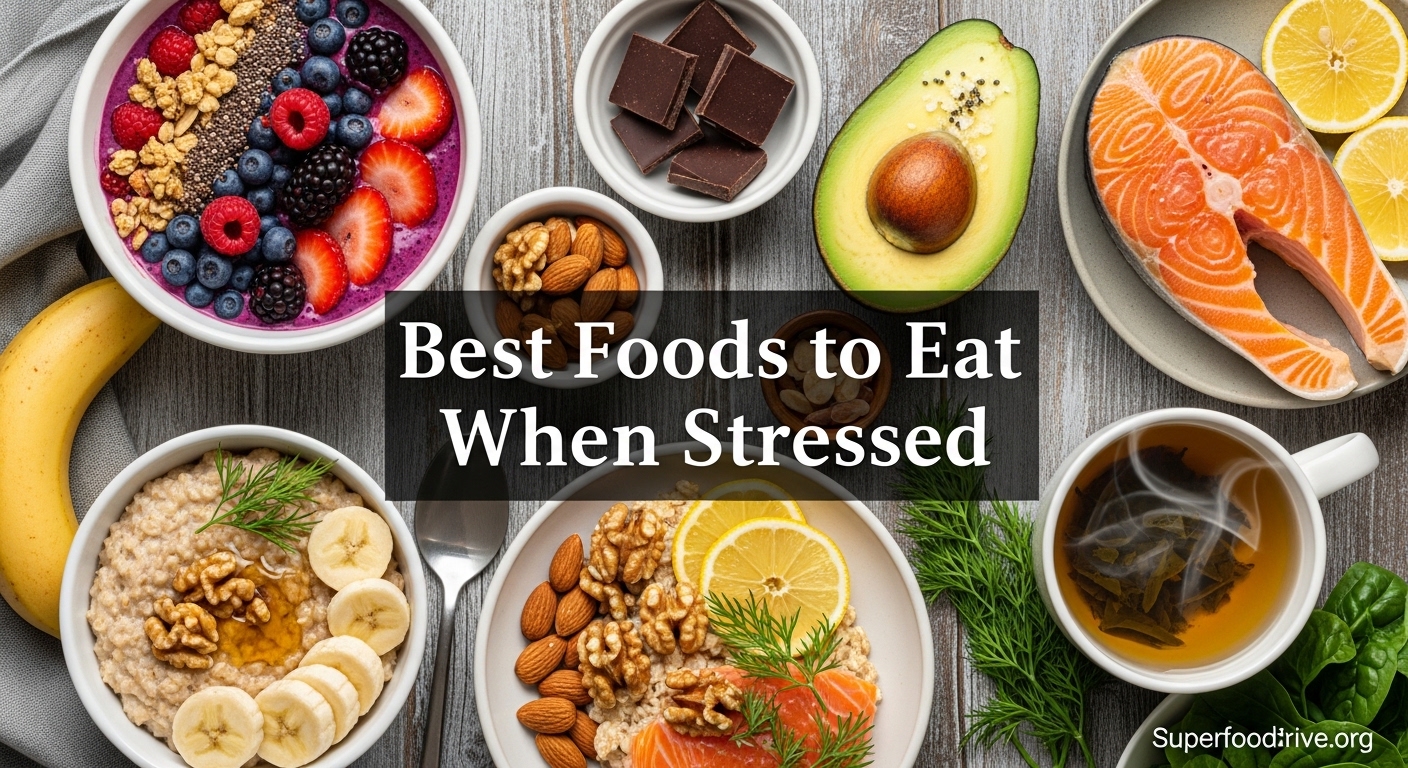
When stress hits, your first instinct might be to reach for comfort food. But the right foods to eat when you’re stressed can actually help calm your nervous system, lower cortisol levels, and restore balance. I’ve spent years researching the connection between nutrition and stress management, and the science is clear: what you eat directly impacts how your body handles pressure.
This guide covers 12 science-backed stress-relieving foods that work with your body’s natural systems. You’ll also learn which foods to avoid, quick snack ideas for overwhelming moments, and practical tips from real people who’ve struggled with stress eating.
Table of Contents
How Food Affects Your Stress Levels
Your body responds to stress by releasing cortisol, often called the stress hormone. While cortisol helps you handle short-term threats, chronic elevation leads to inflammation, poor sleep, and even weight gain. The good news? Certain nutrients can help regulate cortisol and support your body’s stress response systems.
The gut-brain connection plays a huge role here. Your gut produces about 95% of your body’s serotonin, a neurotransmitter that stabilizes mood. When you eat foods rich in omega-3 fatty acids, magnesium, and B vitamins, you support both gut health and brain function. This creates a positive feedback loop that helps you feel calmer and more resilient.
12 Foods to Eat When You’re Stressed
These stress-relieving foods target different aspects of your stress response. I’ve organized them by their primary benefit, though many foods offer multiple advantages.
1. Fatty Fish (Salmon, Mackerel, Sardines)
Fatty fish tops the list of foods that reduce stress because of their exceptional omega-3 content. These healthy fats reduce inflammation and help regulate cortisol levels. Research published in the Journal of the American Medical Association shows that omega-3 supplementation can reduce anxiety symptoms by up to 20%.
Aim for two servings per week. Wild-caught salmon offers the highest omega-3 concentration, but canned sardines work perfectly for budget-friendly options.
2. Dark Chocolate (70% Cocoa or Higher)
Dark chocolate isn’t just a treat—it’s a legitimate stress fighter. The flavonoids in dark chocolate reduce inflammation and improve blood flow to the brain. Studies show that eating 1.5 ounces of dark chocolate daily for two weeks lowers cortisol levels significantly.
Choose chocolate with at least 70% cocoa content. Milk chocolate won’t provide the same benefits due to lower flavonoid concentration and added sugar.
3. Avocados
Avocados deliver magnesium and healthy fats that help calm your nervous system. One medium avocado provides about 15% of your daily magnesium needs. This mineral regulates neurotransmitters and helps prevent cortisol spikes during stressful situations.
Add avocado to toast, smoothies, or salads. The creamy texture also provides sensory comfort that many people crave when stressed.
4. Nuts and Seeds (Almonds, Walnuts, Pumpkin Seeds)
Nuts offer a perfect combination of magnesium, healthy fats, and protein for blood sugar stabilization. Walnuts specifically contain alpha-linolenic acid, a plant-based omega-3 that supports brain health. Pumpkin seeds provide zinc, which plays a role in mood regulation.
Keep a small container of mixed nuts in your desk or bag. A quarter-cup serving makes an ideal stress-relief snack.
5. Blueberries
These antioxidant powerhouses combat oxidative stress that accompanies chronic anxiety. The anthocyanins in blueberries reduce inflammation and protect brain cells from stress-related damage. Research from the British Journal of Nutrition links regular blueberry consumption to improved mood.
Frozen blueberries work just as well as fresh. Add them to yogurt or blend into a quick smoothie when cooking feels overwhelming.
6. Leafy Greens (Spinach, Kale, Swiss Chard)
Leafy greens are among the best magnesium-rich foods for stress relief. Magnesium deficiency correlates strongly with anxiety and depression. One cup of cooked spinach provides nearly 40% of your daily magnesium requirement.
If you’re too stressed to cook, grab pre-washed baby spinach and add it to sandwiches or smoothies. Raw greens still provide substantial benefits.
7. Greek Yogurt
Probiotic-rich foods like Greek yogurt support your gut-brain connection. The beneficial bacteria in fermented foods reduce inflammation and produce neurotransmitters that influence mood. Studies show that regular probiotic consumption reduces cortisol and anxiety symptoms.
Choose plain varieties to avoid added sugars. Top with berries and a drizzle of honey for a stress-fighting breakfast or snack.
8. Eggs
Eggs provide choline, a nutrient essential for brain health and stress response regulation. They’re also rich in vitamin D, which deficiency links to depression and anxiety. The complete protein in eggs stabilizes blood sugar, preventing mood crashes.
Hard-boil a batch at the start of the week for instant stress-relief snacks. Eggs keep in the refrigerator for up to seven days.
9. Oatmeal
Complex carbohydrates like oatmeal boost serotonin production naturally. Unlike simple carbs that cause blood sugar spikes and crashes, oatmeal provides sustained energy and mood stability. The fiber content also supports gut health.
Overnight oats require zero morning effort. Combine oats with milk and chia seeds before bed, then add fruit in the morning.
10. Citrus Fruits (Oranges, Grapefruit, Kiwi)
Vitamin C foods for stress work by reducing cortisol and blood pressure during stressful situations. One study found that people with high vitamin C levels bounced back faster from stressful tasks. Citrus fruits also provide hydration, which many people neglect when stressed.
Keep easy-peel clementines on hand. They’re portable, require no preparation, and provide quick energy plus stress-fighting nutrients.
11. Chamomile Tea
While not technically a food, chamomile tea deserves mention among calming foods. The apigenin in chamomile binds to brain receptors that promote sleepiness and reduce anxiety. Multiple studies confirm chamomile’s effectiveness for generalized anxiety disorder.
Brew a cup 30 minutes before bed to improve sleep quality. Better sleep means better stress resilience the following day.
12. Sweet Potatoes
Sweet potatoes offer complex carbohydrates plus potassium, which helps regulate blood pressure during stress. The natural sweetness satisfies cravings without the crash associated with refined sugar. They’re also rich in fiber for gut health.
Bake several sweet potatoes at once and refrigerate. Reheat with a sprinkle of cinnamon for an instant comfort food that actually helps your body manage stress.
Key Nutrients That Fight Stress
Understanding the nutrients behind stress relief helps you make informed food choices. Here are the key players:
Omega-3 fatty acids reduce inflammation and cortisol while supporting brain cell membranes. Best sources include fatty fish, walnuts, and flaxseeds.
Magnesium regulates the HPA axis, your body’s central stress response system. Most adults don’t get enough. Load up on leafy greens, nuts, seeds, and dark chocolate.
Vitamin C helps metabolize cortisol and acts as an antioxidant. Citrus fruits, bell peppers, and strawberries provide excellent amounts.
B vitamins support energy production and neurotransmitter synthesis. Whole grains, eggs, and legumes offer comprehensive B vitamin profiles.
L-theanine, found in green tea and matcha, promotes relaxation without drowsiness. It increases alpha brain waves associated with calm alertness.
Foods to Avoid When Stressed
Just as some foods help reduce stress, others amplify it. When you’re already overwhelmed, avoid these cortisol-boosting options:
Refined sugar causes blood sugar spikes followed by crashes that mimic anxiety symptoms. The temporary mood boost isn’t worth the subsequent crash.
Excessive caffeine increases cortisol production and can trigger jitters, racing thoughts, and sleep disruption. Limit coffee to one or two cups daily.
Alcohol might seem relaxing initially, but it disrupts sleep architecture and increases anxiety the following day. It also depletes B vitamins needed for stress management.
Ultra-processed foods contain inflammatory oils, artificial additives, and refined carbohydrates that worsen the physiological stress response.
Skipping meals might seem easier when stressed, but low blood sugar triggers cortisol release and intensifies anxiety symptoms.
Quick Stress-Relief Snacks You Can Grab in 5 Minutes
When stress kills your appetite or motivation to cook, these no-prep options save the day:
String cheese and an apple provide protein, fat, and fiber in a grab-and-go format. The chewing action also provides sensory relief.
Pre-made smoothie pouches from the freezer section require only water or milk. Look for options with greens and minimal added sugar.
Trail mix with dark chocolate chips combines healthy fats with stress-fighting flavonoids. Portion into small bags ahead of time.
Hummus and baby carrots offer protein, fiber, and satisfying crunch. Single-serve hummus cups travel well.
Banana with almond butter delivers potassium, magnesium, and healthy fats. The natural sweetness satisfies cravings.
Meal Timing Tips for Stress Management
When you eat matters almost as much as what you eat. These timing strategies optimize your body’s stress response:
Eat breakfast within one hour of waking to stabilize blood sugar and prevent cortisol spikes. Include protein and healthy fats for sustained energy.
Don’t go more than four hours without eating during high-stress periods. Small, frequent meals prevent blood sugar crashes that worsen anxiety.
Finish eating three hours before bed to support sleep quality. Poor sleep amplifies stress the following day.
Have protein at every meal to slow carbohydrate absorption and prevent energy crashes.
Frequently Asked Questions
What foods are good to relieve stress?
Fatty fish, dark chocolate, avocados, nuts, berries, leafy greens, yogurt, eggs, oatmeal, citrus fruits, chamomile tea, and sweet potatoes are excellent stress-relieving foods. These foods contain nutrients like omega-3 fatty acids, magnesium, vitamin C, and complex carbohydrates that help lower cortisol levels and support brain health.
What to eat when extremely stressed?
When extremely stressed, choose easy-to-digest foods that require minimal preparation. Try Greek yogurt with berries, a banana with almond butter, string cheese with an apple, or a small handful of nuts. These provide quick energy without blood sugar spikes. Smoothies work well when solid food feels unappealing.
What not to eat when stressed?
Avoid refined sugar, excessive caffeine, alcohol, and ultra-processed foods when stressed. These items increase cortisol production, cause blood sugar crashes, disrupt sleep, and worsen inflammation. Also avoid skipping meals, as low blood sugar triggers additional stress hormones.
How to lower stress in 5 minutes?
Eat a small piece of dark chocolate, drink chamomile tea, or have a handful of almonds. These foods contain compounds that begin reducing cortisol quickly. Combine with deep breathing for enhanced effects. Keep these quick options readily available for high-stress moments.
Can food really reduce stress?
Yes, food can significantly reduce stress when chosen strategically. Nutrients like omega-3s, magnesium, and vitamin C directly influence cortisol levels and neurotransmitter production. The gut-brain connection means that supporting digestive health through food also improves mood regulation. However, food works best as part of a comprehensive stress management approach including sleep, exercise, and social support.
Foods to Eat When You’re Stressed: Final Thoughts
The foods to eat when you’re stressed work by providing specific nutrients that regulate cortisol, support neurotransmitter production, and reduce inflammation. Fatty fish, dark chocolate, leafy greens, and berries offer some of the strongest evidence for stress reduction.
Remember that stress eating is normal, and you shouldn’t feel guilty about it. The goal isn’t perfection but progress. Start by adding one or two stress-fighting foods to your daily routine. Keep quick options available for moments when cooking feels impossible. And be gentle with yourself—food is one tool among many for managing stress.
If you’re experiencing chronic stress that interferes with daily life, consider speaking with a healthcare provider. Nutrition supports mental health, but professional guidance ensures you get comprehensive care.