
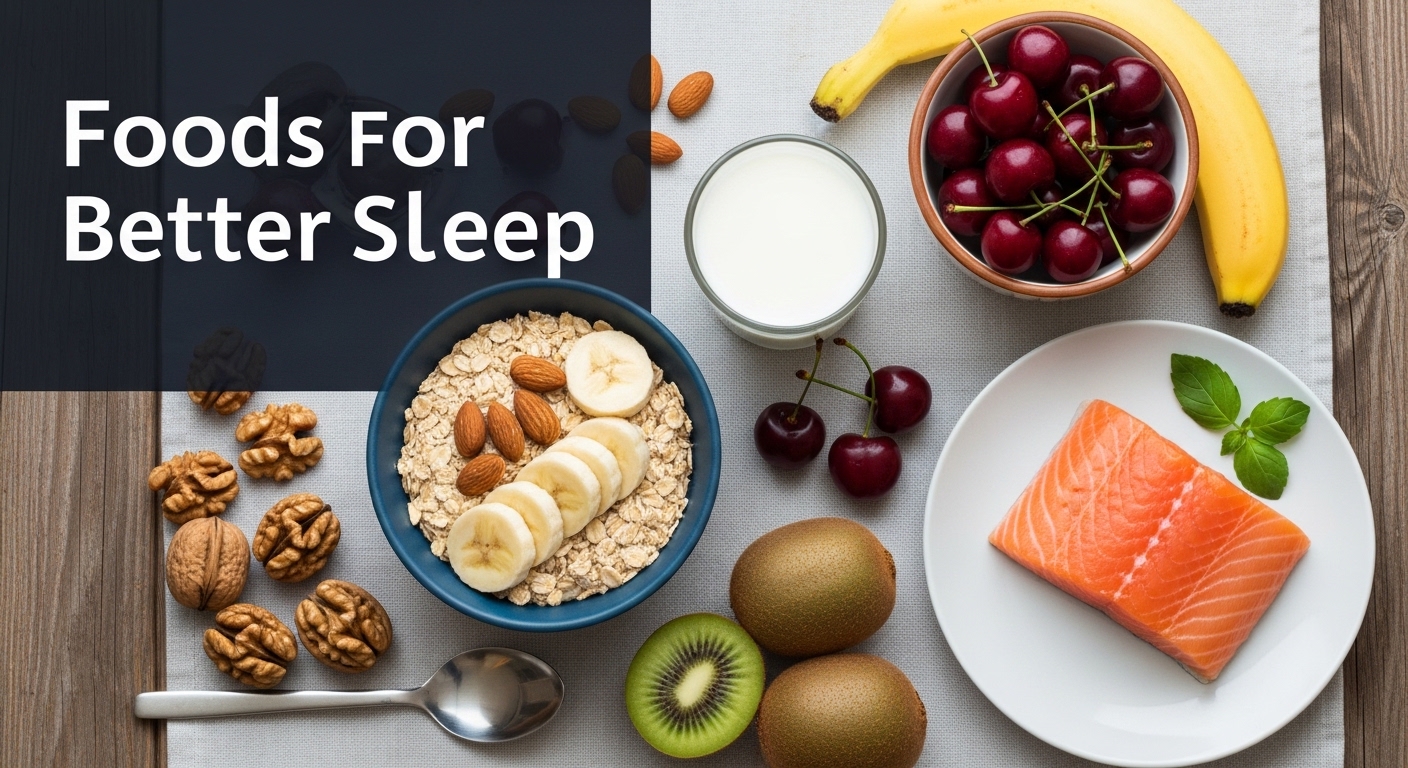
We have all been there. You are lying in bed, staring at the ceiling, wondering why sleep just will not come. Before you reach for another supplement or sleep aid, consider this: your dinner plate might hold the answer to better rest tonight.
Foods to eat for better sleep are not a myth or old wives’ tale. Science has confirmed that certain nutrients directly influence your ability to fall asleep, stay asleep, and wake up feeling refreshed. Our team spent months reviewing nutritional research and talking to sleep specialists to bring you this complete guide.
In this article, you will discover exactly which foods promote sleep and why they work. You will learn the simple timing rules that maximize their effectiveness. And you will get practical snack ideas you can try tonight.
Table of Contents
Quick Reference: 10 Best Foods for Sleep Tonight
Sometimes you just need the list, not the science. Here are the top foods that help you sleep, organized by how they work in your body:
Melatonin-Rich Foods:
- Tart cherry juice – The natural melatonin powerhouse
- Almonds – Tree nut with the highest melatonin content
- Pistachios – Contain more melatonin than most other nuts
Tryptophan Sources:
- Turkey – The classic post-Thanksgiving nap inducer
- Salmon – Fatty fish with omega-3s plus tryptophan
- Pumpkin seeds – A vegetarian protein packed with this amino acid
Magnesium Powerhouses:
- Bananas – Nature’s sleep aid with magnesium and potassium
- Spinach – Leafy green loaded with muscle-relaxing minerals
- Oats – Whole grain that supports GABA production
Special Mentions:
- Kiwi – Research shows it improves sleep onset and duration
- Chamomile tea – Herbal remedy with apigenin for relaxation
How Food Affects Your Sleep: The Science
Your brain uses specific nutrients to manufacture the hormones and neurotransmitters that control sleep. Understanding this process helps you make smarter food choices.
Melatonin: Your Sleep Hormone
Melatonin is often called the sleep hormone because it tells your body it is time to wind down. Your brain produces it naturally in response to darkness. Certain foods contain melatonin directly or provide the building blocks your body needs to make it.
Research from Louisiana State University found that drinking tart cherry juice twice daily increased sleep time by 84 minutes in older adults with insomnia. That is not a minor improvement. That is the difference between exhaustion and feeling human again.
Tryptophan: The Serotonin Pathway
Tryptophan is an essential amino acid found in many protein-rich foods. Your body converts tryptophan into serotonin, which then becomes melatonin. Without adequate tryptophan, this entire cascade suffers.
Here is where it gets interesting. Tryptophan needs carbohydrates to cross the blood-brain barrier effectively. That is why a small serving of turkey with a little rice or oatmeal works better than turkey alone.
Magnesium: Nature’s Relaxation Mineral
Magnesium plays a role in over 300 enzymatic reactions in your body, including those that regulate GABA. GABA is a neurotransmitter that quiets down neural activity and prepares your brain for sleep.
Studies have shown that magnesium deficiency correlates with poor sleep and insomnia. Supplementing with magnesium or eating magnesium-rich foods has been shown to improve sleep quality, especially in older adults.
Melatonin-Rich Foods for Natural Sleep Support
These foods deliver melatonin directly to your system, helping you fall asleep faster when consumed regularly.
Tart Cherry Juice: The Research-Backed Winner
Tart cherries, specifically Montmorency cherries, contain the highest melatonin levels of any natural food source. A 2017 study published in the American Journal of Therapeutics found that adults with insomnia who drank 8 ounces of tart cherry juice twice daily for two weeks slept significantly longer and reported better sleep quality.
We recommend drinking 4 to 8 ounces of unsweetened tart cherry juice about an hour before bedtime. The tartness can be intense, so some people dilute it with water. Avoid sweetened versions, which add sugar that can disrupt your blood sugar levels.
Almonds: The Convenient Sleep Snack
Almonds are a standout among melatonin-rich foods. A one-ounce serving provides about 76 milligrams of melatonin along with magnesium and healthy fats that keep you satisfied without spiking blood sugar.
Keep a small container of almonds on your nightstand. A dozen almonds about 30 minutes before bed gives you the melatonin boost without overloading your digestive system. The crunch is satisfying, and the ritual itself can become a helpful sleep cue.
Pistachios: The Unexpected Champion
Pistachios contain even more melatonin than almonds. Research has shown they have about 660 nanograms of melatonin per gram, making them one of the most potent natural sources available.
A small handful of shelled pistachios makes an ideal bedtime snack. The shelling process also forces you to slow down, which can be part of your wind-down routine. Choose unsalted varieties to avoid excess sodium that might make you thirsty during the night.
Eggs and Milk: The Classic Combo
Both eggs and milk contain moderate amounts of melatonin along with tryptophan. This combination is why warm milk has been a folk remedy for insomnia for generations.
A small bowl of cottage cheese or a hard-boiled egg as an evening snack provides protein that stabilizes blood sugar through the night. Pair either with a small piece of fruit for the carbohydrate component that helps tryptophan reach your brain.
Tryptophan-Packed Foods for Deeper Sleep
These protein-rich foods give your body the raw materials to build serotonin and melatonin.
Turkey: More Than a Thanksgiving Legend
The post-Thanksgiving food coma is real, and turkey is largely responsible. Turkey contains high levels of tryptophan, which your body converts to serotonin and then melatonin. A 3-ounce serving of turkey provides approximately 250 to 300 milligrams of tryptophan.
You do not need a holiday feast to benefit. A turkey wrap for dinner or turkey slices as an evening snack can provide the same sleep-promoting effects. Pair turkey with a complex carbohydrate like whole grain bread to maximize tryptophan absorption.
Fatty Fish: The Dual-Action Sleep Food
Salmon, tuna, mackerel, and trout offer a powerful combination for sleep. They provide tryptophan plus omega-3 fatty acids, which have been shown to increase serotonin production. Research published in the Journal of Clinical Sleep Medicine found that eating fatty fish three times per week improved both sleep quality and daytime functioning.
The vitamin D in fatty fish also plays a role. Studies have linked vitamin D deficiency to poor sleep quality and shorter sleep duration. A 4-ounce serving of salmon for dinner checks multiple boxes for better sleep tonight.
Pumpkin Seeds: The Vegetarian Powerhouse
Pumpkin seeds are among the best plant-based sources of tryptophan, containing about 600 milligrams per cup. They are also incredibly rich in magnesium, with nearly 200 milligrams in a quarter-cup serving.
This double benefit makes pumpkin seeds one of our top recommendations. Roast them lightly and keep them on hand for an evening snack. You can also sprinkle them on oatmeal or yogurt for a sleep-supporting boost.
Chicken, Cheese, and Soy: Additional Sources
Chicken breast contains comparable tryptophan levels to turkey. Cottage cheese and other dairy products provide both tryptophan and calcium, which helps the brain use tryptophan effectively. For plant-based eaters, tofu, edamame, and other soy products offer substantial tryptophan along with protein to keep you satisfied.
A cheese and whole-grain cracker snack before bed combines tryptophan with carbohydrates in a convenient format. Just keep portions moderate, as large amounts of any food can disrupt sleep through digestion.
Magnesium-Rich Sleep Superstars
Magnesium deficiency affects approximately 50 percent of Americans, and poor sleep is one of the first symptoms. These foods can help correct that imbalance.
Bananas: The Perfect Bedtime Fruit
Bananas contain magnesium, potassium, and vitamin B6, all of which support sleep. Potassium helps prevent nighttime muscle cramps that can wake you up. Vitamin B6 is essential for converting tryptophan to serotonin.
A small banana about an hour before bed makes an ideal snack. It is easy to digest, naturally sweet enough to feel like a treat, and provides steady energy without the sugar crash of processed sweets. Some people find banana with a tablespoon of almond butter particularly satisfying.
Spinach and Leafy Greens: The Mineral Kings
Spinach is one of the best dietary sources of magnesium, with 157 milligrams per cooked cup. Other leafy greens like Swiss chard and kale are similarly rich in this relaxation mineral.
Incorporating a large salad with dinner or sauteeing greens as a side dish can significantly boost your magnesium intake for the day. The fiber in leafy greens also supports stable blood sugar through the night, preventing the spikes and crashes that disrupt sleep.
Oats: Not Just for Breakfast
Oats are rich in melatonin and also support GABA production through their magnesium content. The complex carbohydrates in oats help tryptophan reach your brain while providing sustained energy release.
A small bowl of oatmeal makes an excellent evening snack. Keep it simple with just a splash of milk and maybe a few sliced almonds. Avoid the instant packets with added sugar, which can spike your blood sugar and work against your sleep goals.
Avocado: The Creamy Sleep Support
Avocados provide about 58 milligrams of magnesium per fruit, along with healthy monounsaturated fats that keep you satisfied. The potassium content rivals bananas, supporting muscle relaxation throughout the night.
Half an avocado on whole grain toast makes a filling evening snack that supports sleep without weighing you down. The combination of magnesium, potassium, and fiber creates a trifecta of sleep-friendly nutrients.
Other Powerful Foods That Help You Sleep
Beyond the main nutrient categories, several other foods have shown impressive results in sleep research.
Kiwi: The Sleep Study Star
Kiwi has emerged as a surprising sleep aid in recent research. A study from Taiwan found that eating two kiwifruits one hour before bedtime significantly improved sleep onset, duration, and efficiency in adults with sleep disturbances.
Researchers believe the high serotonin content in kiwi is responsible for these effects. Serotonin not only helps you fall asleep but also improves sleep quality throughout the night. Plus, kiwi is low in calories and easy to digest, making it an ideal pre-bed snack.
Chamomile Tea: The Calming Ritual
Chamomile tea contains apigenin, an antioxidant that binds to specific receptors in your brain that promote sleepiness and reduce insomnia. The warmth of the tea itself also helps relax your body and signal that bedtime is approaching.
Drink a cup of chamomile tea 30 to 45 minutes before bed. Make it part of a consistent wind-down routine. The ritual itself, repeated nightly, becomes a powerful sleep cue for your brain.
Passionflower Tea: The GABA Booster
Passionflower has been studied for its ability to increase GABA levels in the brain. One study found that drinking passionflower tea before bed improved sleep quality in adults with mild sleep disturbances.
Passionflower tea has a more complex, slightly earthy flavor than chamomile. Some people prefer to blend the two for a sleep-promoting herbal infusion. Like chamomile, the warm beverage contributes to relaxation through temperature and ritual.
White Rice: The Glycemic Sleep Trigger
White rice has a high glycemic index, which means it raises blood sugar quickly. While this is usually not desirable, the resulting insulin spike can actually help tryptophan enter your brain more efficiently.
Research in Japan found that people who ate rice regularly reported better sleep than those who ate more bread or noodles. A small serving of white rice with dinner may help you fall asleep faster, though we recommend brown rice for most other meals due to its higher nutritional value.
Walnuts: The Omega-3 Sleep Support
Walnuts contain their own source of melatonin plus ALA, a type of omega-3 fatty acid that converts to DHA and EPA in your body. These omega-3s support serotonin production and may improve sleep quality.
A small handful of walnuts as an evening snack provides multiple sleep-supporting compounds. Their satisfying crunch and rich flavor make them feel indulgent while supporting your health goals.
Foods to Avoid Before Bed: The Sleep Killers
Just as some foods promote sleep, others actively work against it. Here is what to skip in the hours before bedtime.
Caffeine: The Obvious Offender
Caffeine blocks adenosine receptors in your brain. Adenosine is a neurotransmitter that builds up throughout the day and makes you feel sleepy. When caffeine blocks these receptors, you feel alert even when your body is tired.
The half-life of caffeine is about 5 to 6 hours, meaning half the caffeine from your afternoon coffee is still in your system at bedtime. We recommend stopping all caffeine consumption at least 6 hours before sleep. This includes coffee, black and green tea, energy drinks, chocolate, and some medications.
Alcohol: The Sleep Disruptor in Disguise
Many people use alcohol as a sleep aid because it initially makes them drowsy. However, alcohol significantly reduces sleep quality. It suppresses REM sleep in the first half of the night and causes frequent awakenings in the second half.
Alcohol is also a diuretic, meaning you will likely wake up needing to use the bathroom. If you choose to drink, finish at least 3 hours before bedtime and limit yourself to one serving.
Spicy Foods: The Heartburn Trigger
Spicy foods can cause heartburn and acid reflux, especially when you lie down. Capsaicin, the compound that makes peppers hot, can also raise your core body temperature, which interferes with the natural cooling your body needs for sleep.
If you enjoy spicy food, have it for lunch rather than dinner. If you must have it in the evening, finish eating at least 3 hours before lying down.
High-Fat Foods: The Digestive Burden
Fatty foods take longer to digest than carbohydrates or proteins. Eating a high-fat meal close to bedtime forces your digestive system to work overtime while you are trying to sleep. This can cause discomfort and disrupt your sleep cycles.
Pizza, burgers, fried foods, and heavy creamy dishes are best consumed earlier in the day. If you are hungry before bed, choose something light and easy to digest.
Sugary Foods and Simple Carbs: The Blood Sugar Rollercoaster
Sugary foods cause blood sugar spikes followed by crashes. These crashes can trigger adrenaline and cortisol, stress hormones that wake you up and make it difficult to fall back asleep.
Candy, cookies, ice cream, and sweetened beverages should be avoided before bed. If you crave something sweet, a small piece of fruit paired with a protein or fat source provides sweetness without the dramatic blood sugar swing.
When to Eat for Better Sleep: Timing Matters
What you eat matters, but when you eat it matters too. Your digestive system and your sleep system are connected.
The 3-2-1 Rule for Sleeping
You may have heard of the 3-2-1 rule for sleeping. This simple framework helps optimize your evening routine:
3 hours before bed: Stop eating large meals. Give your body time to digest before you lie down. This prevents heartburn and allows your digestive system to rest.
2 hours before bed: Stop drinking large amounts of liquid. This reduces the likelihood of waking up to use the bathroom during the night.
1 hour before bed: Stop looking at screens and begin your wind-down routine. The blue light from devices suppresses melatonin production.
Following this rule can dramatically improve your sleep quality, especially when combined with the right food choices.
The Bedtime Snack Window
If you are truly hungry before bed, eating a small snack is better than going to bed hungry. Hunger can keep you awake just as effectively as a full stomach.
The ideal snack window is 30 to 60 minutes before bedtime. Choose something small, around 150 to 200 calories, that combines a sleep-promoting food with a complex carbohydrate. This timing allows your body to begin processing the nutrients without keeping your digestive system active all night.
Individual Variation
Some people can eat a full meal an hour before bed and sleep fine. Others need 4 hours or more. Pay attention to your own patterns and adjust accordingly.
If you consistently wake up with heartburn or feeling overly full, you need more time between dinner and bed. If you wake up hungry in the night, you may need a small snack before sleeping.
Quick Bedtime Snack Ideas You Can Try Tonight
Putting it all together, here are five simple snack combinations that combine sleep-promoting foods with the right timing and portions.
1. The Classic: One small banana with a tablespoon of almond butter. The banana provides magnesium and potassium. The almond butter adds tryptophan and healthy fat to slow digestion.
2. The Savory Option: A hard-boiled egg with a few whole grain crackers. The egg provides tryptophan and protein. The crackers add the carbohydrates needed for tryptophan absorption.
3. The Sweet Treat: A half-cup of oatmeal made with milk, topped with sliced almonds. This combines oats, dairy, and nuts for a triple dose of sleep nutrients.
4. The Tea Pairing: A cup of chamomile tea with two kiwis and a small handful of pumpkin seeds. The tea relaxes you while the fruit and seeds provide serotonin and magnesium.
5. The Mini-Meal: A small turkey and avocado wrap on a whole grain tortilla. This satisfies bigger appetites while still supporting sleep through tryptophan, magnesium, and complex carbohydrates.
Keep portions modest. These are snacks, not meals. Aim for 150 to 250 calories depending on your individual needs and activity level.
Frequently Asked Questions
What to eat for better sleep tonight?
The best foods to eat for better sleep tonight include tart cherry juice, almonds, kiwi, bananas, and oatmeal. These foods contain melatonin, magnesium, or tryptophan that support sleep hormone production. Aim to eat them 30 to 60 minutes before bedtime in small portions of 150 to 200 calories.
What will knock me out to sleep?
No food will instantly knock you out like a sleep medication, but tart cherry juice shows the strongest research-backed effects for improving sleep quickly. Drinking 8 ounces of unsweetened tart cherry juice about an hour before bed has been shown to significantly reduce insomnia symptoms. Combine this with avoiding caffeine and creating a dark, cool sleep environment for best results.
What is the 3:2:1 rule for sleeping?
The 3:2:1 rule for sleeping is a timing framework to optimize sleep quality. It means stopping large meals 3 hours before bed, stopping liquids 2 hours before bed, and stopping screen time 1 hour before bed. This allows your digestive system to rest, reduces nighttime bathroom trips, and lets your brain begin producing melatonin naturally.
Which food helps to sleep quickly?
Kiwi is one of the fastest-acting foods for sleep. Research shows that eating two kiwis one hour before bed can help you fall asleep faster. Tart cherry juice and chamomile tea also work relatively quickly due to their direct melatonin and apigenin content. For best results, combine these foods with a consistent bedtime routine and dark, cool sleeping environment.
Conclusion: Start Tonight
Foods to eat for better sleep are within your reach right now. You do not need expensive supplements or complicated protocols. The foods that support healthy sleep are simple, whole foods you can find at any grocery store.
Start with one or two changes tonight. Maybe it is a cup of chamomile tea and avoiding that after-dinner coffee. Maybe it is a small bowl of oatmeal instead of ice cream. Small changes add up to significant improvements in your sleep quality.
Our team has seen firsthand how adjusting evening eating habits transforms sleep. We are confident these strategies can work for you too. Sweet dreams.