
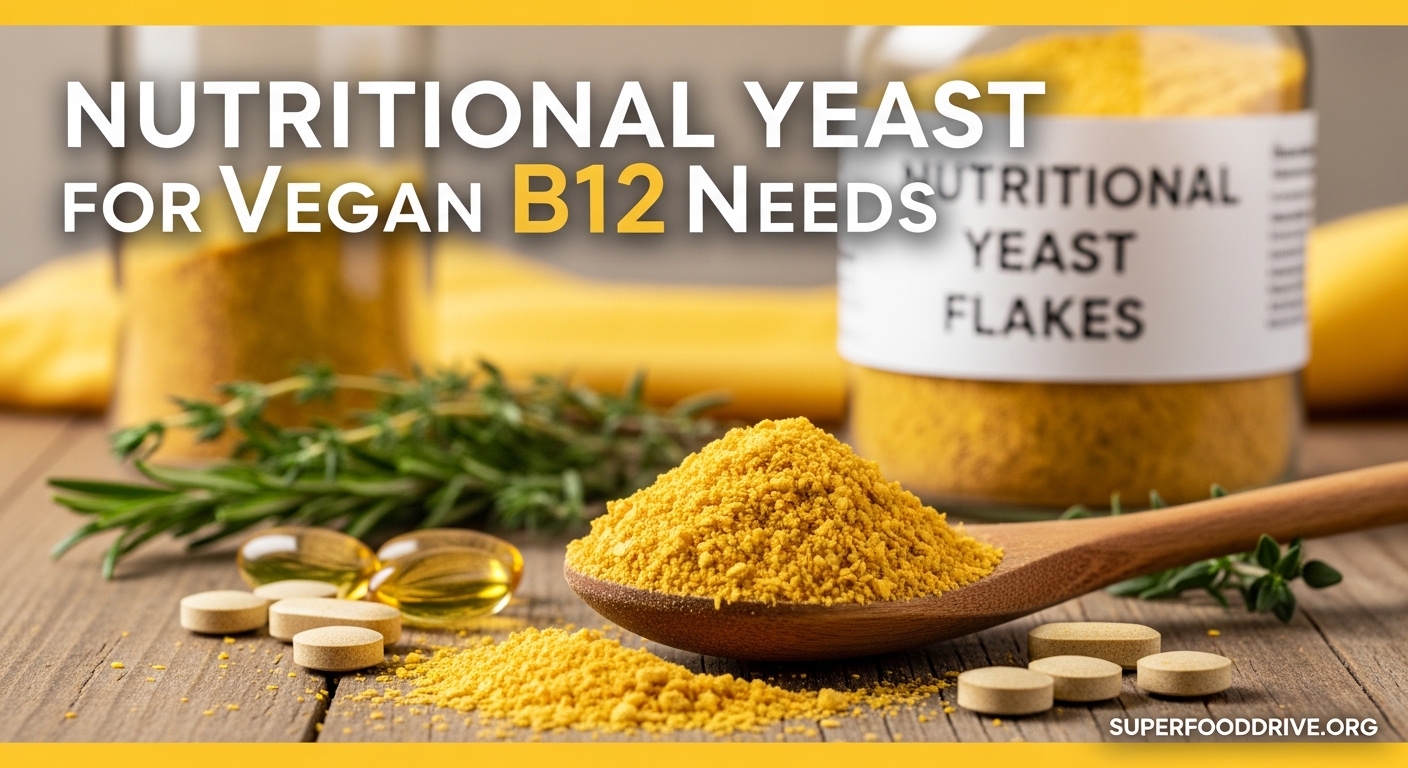
Vitamin B12 deficiency is one of the most serious nutritional concerns for anyone following a plant-based diet. Our bodies cannot produce this essential nutrient, and it is virtually absent from unfortified plant foods. That is where nutritional yeast comes in – but only if you choose the right kind.
Fortified nutritional yeast has become a staple in vegan kitchens worldwide, prized for its cheesy, nutty flavor and impressive nutrient profile. But here is what many people do not realize: not all nutritional yeast contains B12, and relying on the wrong type could leave you deficient. In this guide, we will explore everything you need to know about using nutritional yeast for vegan B12 needs, from understanding fortification to daily serving recommendations.
Table of Contents
What is Nutritional Yeast
Nutritional yeast is deactivated Saccharomyces cerevisiae, a single-celled fungus grown on molasses or sugar cane. Unlike the active yeast used in bread baking, nutritional yeast has been heated and dried, which deactivates the cells and stops any fermenting action. The result is a flaky, yellow powder with a savory, cheese-like flavor that has earned it the affectionate nickname “nooch” in vegan communities.
The term “nooch” originated from the Post Punk Kitchen community founded by cookbook author Isa Chandra Moskowitz. It spread through vegan forums and cooking circles, becoming the standard shorthand for this versatile ingredient. You will find it in the bulk bins or spice aisles of health food stores, often looking like golden fish food flakes.
Do not confuse nutritional yeast with brewer’s yeast, which is a byproduct of beer production with a bitter taste, or active dry yeast used for baking. Nutritional yeast is specifically cultivated for food use and has a completely different flavor profile and nutritional composition.
Why Nutritional Yeast Needs Fortification for B12
Here is the critical fact that trips up many new vegans: yeast does not naturally produce vitamin B12. This is a biological reality that cannot be changed. Yeast cells are fungi, and fungi do not synthesize cobalamin – the scientific name for B12. Only certain bacteria have the enzymes necessary to manufacture this vitamin.
In nature, B12 enters the food chain when animals consume plants or water contaminated with B12-producing bacteria. The vitamin then concentrates in animal tissues, which is why meat, dairy, and eggs are reliable sources. For vegans, this natural pathway is unavailable, making fortification essential.
Fortified nutritional yeast is produced by adding synthetic vitamin B12 during the manufacturing process. The yeast is grown, harvested, washed, and then sprayed or mixed with a B12 solution before drying. This creates a food product that delivers B12 in a bioavailable form along with the yeast’s natural nutrients.
Unfortified nutritional yeast contains absolutely zero B12. While it still offers protein, B vitamins, and that delicious umami flavor, it will not help you meet your B12 requirements. This is why checking labels is non-negotiable when shopping for nutritional yeast.
Fortified vs Unfortified Nutritional Yeast
Understanding the difference between fortified and unfortified varieties could mean the difference between meeting your B12 needs and developing a deficiency. Here is what sets them apart:
| Feature | Fortified Nutritional Yeast | Unfortified Nutritional Yeast |
|---|---|---|
| B12 Content | 30-180% DV per serving | 0 mcg |
| Color | Typically golden yellow | Light tan to pale yellow |
| Label Indication | “Fortified with B12” or lists cyanocobalamin | No B12 listed |
| Price | Slightly higher | Usually cheaper |
| Best For | Vegans needing B12 | General seasoning use |
How to Read Labels for B12 Content
When examining nutritional yeast packaging, look specifically for vitamin B12 in the nutrition facts panel. The ingredient list should include cyanocobalamin, the most common form of B12 used in fortification. Some brands use methylcobalamin instead, which is also effective.
Check the serving size – most brands list 2 tablespoons as one serving. A well-fortified product will provide at least 50% of your daily B12 needs per serving. The best fortified options deliver 100% or more, meaning just one serving daily covers your requirements.
Daily Recommendations for B12 Intake
The recommended dietary allowance for vitamin B12 is 2.4 micrograms daily for adults. Pregnant women need 2.6 mcg, and breastfeeding women require 2.8 mcg. These amounts represent the minimum needed to prevent deficiency, not optimal levels.
For fortified nutritional yeast specifically, most registered dietitians recommend 1 to 2 tablespoons daily. This amount typically provides between 30% and 180% of your daily B12 needs, depending on the brand. Some fortified varieties deliver as much as 8 mcg per serving – more than triple the daily requirement.
Spreading your intake throughout the day may improve absorption. B12 absorption is limited by intrinsic factor, a protein in your stomach. Taking smaller amounts multiple times daily allows for better utilization than consuming a massive amount at once.
There is no established upper limit for B12 from food sources because excess is excreted in urine. However, extremely high doses from fortified foods combined with supplements could theoretically cause issues, though this is rare. Stick to recommended serving sizes unless directed otherwise by your healthcare provider.
Can Vegans Rely on Nutritional Yeast Alone for B12
This is where expert opinion becomes important. While fortified nutritional yeast can theoretically provide adequate B12, many registered dietitians caution against relying on it as your sole source. The concern is not about whether the B12 is present – it is about consistency and reliability.
First, B12 content degrades over time. Light, heat, and oxygen exposure all reduce the vitamin content of fortified foods. That container sitting in your pantry for six months may contain significantly less B12 than when purchased. Second, cooking temperatures above 100 degrees Celsius can destroy B12, meaning heavily cooked dishes lose some of their vitamin content.
Third, many people do not consume nutritional yeast every single day. Unlike a daily supplement habit, food-based B12 depends on consistent dietary choices. Missing days or using unfortified varieties by mistake creates gaps in intake.
The consensus among plant-based nutrition experts is clear: nutritional yeast is a helpful supplemental source, but it should be combined with other B12 sources or a dedicated supplement. Think of it as part of your B12 strategy, not the entire solution.
Health Benefits Beyond B12
Even if you are taking a B12 supplement, nutritional yeast offers impressive nutritional advantages that make it worth including in your diet. It is one of the few plant-based complete proteins, meaning it contains all nine essential amino acids your body cannot produce on its own.
A 2-tablespoon serving provides about 8 grams of protein with minimal calories and zero fat. The B vitamin complex extends beyond B12 to include thiamine (B1), riboflavin (B2), niacin (B3), pyridoxine (B6), and folate – all crucial for energy metabolism and nervous system health.
The beta-glucan fiber in nutritional yeast supports heart health by helping to lower cholesterol levels. It also contains trace minerals including zinc, selenium, and manganese. The umami flavor comes from naturally occurring glutamates, which enhance savory dishes without added sodium.
For those transitioning to a plant-based diet, nutritional yeast helps satisfy cheese cravings while providing far more nutrition than dairy alternatives. It adds depth to dishes that might otherwise taste flat or unsatisfying on a vegan diet.
How to Use Nutritional Yeast for Maximum B12
To preserve B12 content, add nutritional yeast at the end of cooking or use it as a finishing seasoning. High heat from frying, baking, or boiling can degrade B12, so sprinkle it on after removing dishes from heat when possible.
Easy Ways to Incorporate Nutritional Yeast Daily
- Sprinkle on popcorn with a pinch of salt for a cheesy snack
- Add to pasta sauces after removing from heat
- Mix into hummus or white bean dip
- Top salads, grain bowls, and roasted vegetables
- Stir into mashed potatoes or cauliflower mash
- Blend into cashew cream sauce for mac and cheese
- Make “parmesan” by blending with cashews and salt
- Add to soups right before serving
- Mix into tofu scramble for an eggy flavor
- Sprinkle on avocado toast
The key is building a habit. Keep your nutritional yeast container visible on the counter, not buried in the pantry. Once you start adding it to dishes, you will find countless opportunities to boost both flavor and nutrition.
Risks and Precautions
While generally safe, nutritional yeast does carry some considerations. The high niacin content can cause “niacin flush” – a temporary reddening, warming, and tingling sensation of the skin – when consumed in large amounts. This is harmless but uncomfortable.
People with yeast allergies should avoid nutritional yeast entirely. Though deactivated, it can still trigger allergic reactions in sensitive individuals. Those with inflammatory bowel disease or irritable bowel syndrome may experience digestive discomfort from the fiber content.
Nutritional yeast is high in purines, which break down into uric acid. People with gout or a history of kidney stones should discuss consumption with their healthcare provider. Additionally, the tyramine content means those taking MAOI antidepressants need medical guidance.
If you have a history of fungal infections, some practitioners recommend limiting yeast products, though this is more precautionary than evidence-based. As with any food, listen to your body and adjust intake if you experience adverse effects.
FAQ
How much nutritional yeast daily for B12?
Most registered dietitians recommend 1-2 tablespoons of fortified nutritional yeast daily to meet B12 needs. This amount typically provides 30-180% of the daily requirement depending on the brand. For best absorption, consider splitting this into two servings throughout the day.
Which nutritional yeast is best for B12?
Choose nutritional yeast explicitly labeled as fortified with B12. Look for cyanocobalamin or methylcobalamin in the ingredient list. Brands like Bragg, Red Star, and Bob’s Red Mill offer well-fortified options that provide 100% or more of daily B12 per serving.
Can vegans get enough B12 from nutritional yeast?
While fortified nutritional yeast can provide adequate B12, most nutrition experts recommend combining it with a dedicated B12 supplement rather than relying on yeast alone. This ensures consistent intake since yeast B12 degrades with storage and cooking, and daily consumption habits can vary.
Does cooking destroy B12 in nutritional yeast?
High heat can degrade B12, though moderate cooking temperatures preserve most of the vitamin. To maximize B12 retention, add nutritional yeast at the end of cooking or use it as a finishing sprinkle on already-cooked foods. No-heat applications like salad toppings preserve B12 completely.
Is nutritional yeast better than B12 supplements?
Nutritional yeast provides additional nutrients like complete protein and other B vitamins, but supplements offer more reliable, consistent dosing. Many vegans use both: yeast for daily nutritional support and flavor, plus a weekly or daily supplement as insurance against deficiency.
Conclusion
Nutritional yeast for vegan B12 needs can be an effective part of your nutrition strategy when you choose the fortified variety and consume it consistently. The key is understanding that only fortified nutritional yeast contains B12 – unfortified varieties offer zero vitamin B12 despite their other nutritional benefits.
While 1-2 tablespoons daily can theoretically meet your B12 requirements, the most prudent approach for long-term vegan health combines fortified foods with a dedicated B12 supplement. This dual strategy accounts for the variability in fortified food intake and ensures you are protected against deficiency.
Remember to get your B12 levels tested annually, even if you are consuming fortified nutritional yeast regularly. A simple blood test can confirm your strategy is working and give you peace of mind about your plant-based nutrition choices.