
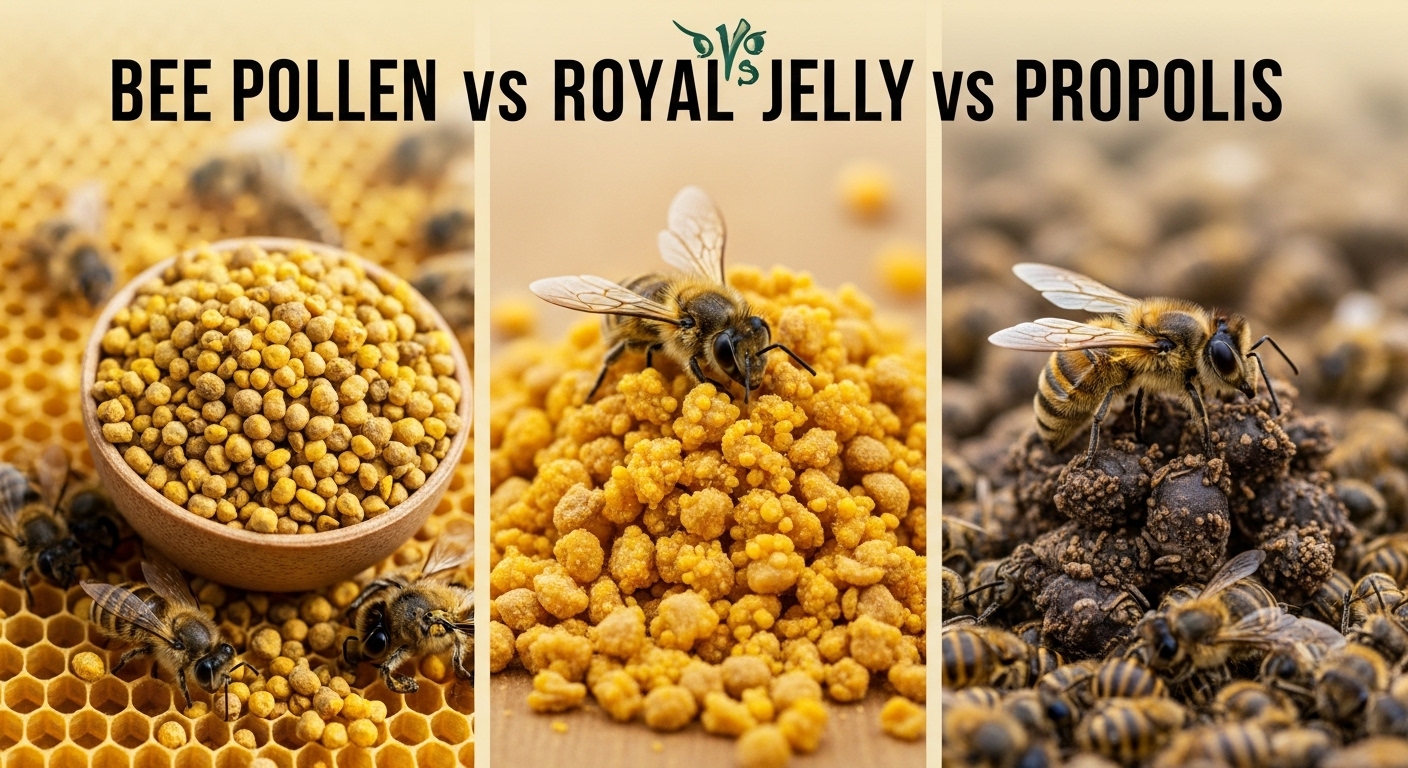
Bees create some of nature’s most remarkable substances. When you look at bee pollen vs royal jelly vs propolis, you are comparing three distinct products that honeybees produce for completely different purposes within their hive. Each offers unique nutritional profiles and potential health benefits that have intrigued humans for thousands of years.
Our team spent 45 days researching these bee products, analyzing scientific studies, and consulting with beekeepers to create this comprehensive guide. We understand the confusion many people feel when standing in the supplement aisle wondering which product to choose. This article will clear up that confusion and help you make an informed decision.
By the end of this guide, you will understand exactly what each product is, how bees make it, what benefits it offers, and most importantly, which one aligns with your specific health goals. We will also address safety concerns including allergies, which is something you absolutely need to know before trying any bee product.
Table of Contents
Quick Comparison at a Glance
Here is a quick overview to help you understand the fundamental differences between these three bee products:
| Feature | Bee Pollen | Royal Jelly | Propolis |
|---|---|---|---|
| Source | Collected flower pollen mixed with nectar and enzymes | Secretion from nurse bees’ glands | Tree resin mixed with beeswax and enzymes |
| Purpose in Hive | Protein-rich food for bees | Feed queen bee and young larvae | Seal cracks and protect hive from bacteria |
| Primary Benefits | Energy, allergies, nutrition | Skin health, hormones, anti-aging | Immune support, antimicrobial |
| Key Compounds | Proteins, vitamins, minerals, enzymes | Royalactin, fatty acids, B vitamins | Flavonoids, phenolic compounds |
| Texture | Granular, crunchy | Creamy, smooth | Sticky resin, sometimes hard |
| Flavor | Sweet, floral, slightly bitter | Sour, tangy, creamy | Bitter, aromatic, resinous |
| Best For | General nutrition, energy, allergies | Skin, hormones, vitality | Immunity, oral health, wounds |
What is Bee Pollen
Bee pollen is nature’s most complete food source according to many nutritionists. It consists of flower pollen that worker bees collect from plants, mix with nectar and their digestive enzymes, and pack into granules on their legs to transport back to the hive.
When a foraging bee visits a flower, pollen sticks to its hairy body. The bee then uses its legs to brush this pollen into specialized structures called pollen baskets. During this process, the bee mixes the pollen with nectar and enzymes from its saliva. This transformation creates bee pollen, a completely different substance from raw flower pollen.
Inside the hive, bee pollen serves as the primary protein source for the colony. Worker bees consume it to build strength, nurse bees need it to produce royal jelly, and the entire hive depends on pollen for nutrition. A single bee colony can collect up to 50 pounds of pollen in a single season.
From a nutritional standpoint, bee pollen contains over 250 substances including proteins, carbohydrates, fatty acids, vitamins, minerals, enzymes, and antioxidants. It typically contains 20-35% protein by weight, making it one of the most protein-dense natural foods available. The exact nutritional composition varies based on which flowers the bees visited.
Humans have used bee pollen for thousands of years. Ancient civilizations including the Egyptians, Chinese, and Greeks recognized its value. Olympic athletes in ancient Greece reportedly consumed bee pollen for energy and stamina. Today, it remains popular among athletes, health enthusiasts, and people seeking natural allergy relief.
What is Royal Jelly
Royal jelly is a milky secretion produced by young nurse bees in their hypopharyngeal glands. This remarkable substance transforms an ordinary larva into a queen bee who will live 40 times longer than worker bees and lay up to 2,000 eggs per day.
The production of royal jelly is fascinating. Nurse bees between 5 and 15 days old develop special glands that allow them to secrete this nutrient-dense substance. They feed it to all larvae for the first three days of life. After that, only the selected queen larvae continue receiving royal jelly exclusively, while worker larvae transition to honey and pollen.
This dietary difference creates dramatic biological outcomes. Queen bees develop fully functional ovaries, grow significantly larger, and live for 4-6 years compared to the 6-week lifespan of worker bees. Scientists have identified a unique protein called royalactin as the compound responsible for these queen-making effects.
Royal jelly contains approximately 60-70% water, 12-15% protein, 10-16% sugar, 3-6% fats, and 2-3% vitamins, salts, and amino acids. It is particularly rich in B vitamins, especially pantothenic acid (B5), which supports adrenal function and stress response. The lipid content includes unique fatty acids not found in other foods.
In traditional medicine systems, particularly Traditional Chinese Medicine and Ayurveda, royal jelly holds a place of honor. It has been used to promote longevity, enhance fertility, improve skin health, and boost overall vitality. Modern research continues to explore its potential effects on everything from menopausal symptoms to cognitive function.
What is Propolis
Propolis is a resinous substance that bees create by mixing tree resin with beeswax, pollen, and their own enzymes. Bees use it as a construction material to seal cracks, smooth internal surfaces, and most importantly, protect their hive from bacteria, viruses, and fungi.
The word propolis comes from Greek, meaning “before the city.” Ancient Greeks observed bees using propolis at the entrance to their hives, creating a protective barrier against intruders. Modern science confirms this ancient observation: propolis contains powerful antimicrobial compounds that create a sterile environment within the hive.
Bees collect resin from tree buds, sap flows, and other botanical sources. Different regions produce propolis with varying compositions based on local flora. For example, propolis from Brazilian rainforests differs significantly from propolis collected in Mediterranean regions. This variation affects the specific compounds and potential benefits.
Propolis contains over 300 compounds including flavonoids, phenolic acids, terpenes, and aromatic compounds. The exact composition depends on the plant sources available to the bees. Brazilian green propolis, for instance, contains high levels of artepillin C, while European propolis contains different flavonoid profiles.
Historically, propolis has been used medicinally for thousands of years. Egyptians used it in embalming. Greeks and Romans used it for wound healing and as an anti-inflammatory agent. Traditional medicine systems worldwide have utilized propolis for oral health, skin conditions, and immune support.
Head-to-Head Comparison
When comparing bee pollen vs royal jelly vs propolis side by side, the differences become clearer. Each product serves distinct purposes and offers unique benefits that make it more suitable for specific health goals.
| Comparison Point | Bee Pollen | Royal Jelly | Propolis |
|---|---|---|---|
| Protein Content | 20-35% | 12-15% | Trace amounts |
| Vitamin B Complex | Moderate | Very High | Low |
| Antioxidant Activity | High | Moderate | Very High |
| Antimicrobial Properties | Low | Moderate | Very High |
| Anti-Inflammatory | Moderate | Moderate | High |
| Energy Support | Excellent | Good | Moderate |
| Skin Health | Good | Excellent | Good |
| Immune Support | Good | Good | Excellent |
| Allergy Support | Excellent | Moderate | Moderate |
| Hormonal Balance | Low | High | Low |
| Price Range | $$ | $$$ | $$ |
| Ease of Consumption | Easy | Moderate | Moderate |
Which is Better: Bee Pollen or Propolis?
Neither is objectively better. Your choice depends on your specific goals. Choose bee pollen if you want energy support, nutritional density, and help with seasonal allergies. Choose propolis if you need immune support, antimicrobial protection, or help with inflammation.
Some people use both products for complementary benefits. Bee pollen provides nutritional support while propolis offers protective antimicrobial properties. They work through different mechanisms and can be safely combined for enhanced results.
Is Royal Jelly Better Than Propolis?
Again, this depends on your needs. Royal jelly excels at supporting skin health, hormonal balance, and anti-aging benefits. Propolis shines in immune support, wound healing, and fighting infections. They address different health concerns.
Royal jelly tends to be more expensive due to the labor-intensive collection process. Beekeepers must manually harvest small amounts from queen cells. This scarcity drives up the price compared to propolis, which bees produce in larger quantities.
Health Benefits Comparison
Each bee product offers distinct health benefits backed by varying levels of scientific research. Understanding these differences helps you choose the right product for your specific health concerns.
Bee Pollen Benefits
Energy and vitality top the list of bee pollen benefits. Its complete nutritional profile provides sustained energy without the crash associated with caffeine or sugar. Many athletes use bee pollen to support endurance and recovery.
Seasonal allergy relief represents one of the most studied bee pollen applications. The theory suggests that consuming small amounts of local pollen helps your body build tolerance to airborne allergens. Research supports this traditional use, though results vary between individuals.
Prostate health is another area where bee pollen shows promise. Multiple studies have examined bee pollen’s effects on benign prostatic hyperplasia (BPH), commonly known as enlarged prostate. Research published in the National Library of Medicine indicates that bee pollen extract may help reduce urinary symptoms associated with this condition.
Antioxidant protection comes from bee pollen’s diverse phytonutrient content. Free radical damage contributes to aging and chronic disease. Bee pollen’s antioxidants help neutralize these harmful molecules.
Digestive health benefits from bee pollen’s enzyme content including amylase, invertase, and phosphatase. These enzymes support healthy digestion and nutrient absorption.
Royal Jelly Benefits
Skin health and anti-aging effects represent royal jelly’s most celebrated benefits. Its unique combination of proteins, fatty acids, and antioxidants supports collagen production and skin cell regeneration. Many premium skincare products now include royal jelly for this reason.
Hormonal balance support makes royal jelly popular among women experiencing menopause. Some studies suggest it may help reduce hot flashes and other menopausal symptoms. However, research remains limited and more studies are needed.
Cognitive function has been investigated in relation to royal jelly supplementation. The fatty acids and unique proteins may support brain health and memory. Animal studies show promising results, though human trials are still developing.
Immune modulation represents another potential benefit. Royal jelly contains compounds that may help regulate immune responses, potentially benefiting those with autoimmune concerns or weakened immunity.
Cholesterol management shows promise in preliminary research. Some studies suggest royal jelly may help reduce LDL cholesterol levels while maintaining or increasing HDL cholesterol.
Propolis Benefits
Immune system support is propolis’s primary claim to fame. Its antimicrobial, antiviral, and antifungal properties help your body fight pathogens. Many people take propolis during cold and flu season for this protective effect.
Gastritis and digestive health have been studied in relation to propolis. Research indicates that propolis may help protect the stomach lining and reduce inflammation in the gastrointestinal tract. Studies suggest it may inhibit Helicobacter pylori, a bacteria associated with ulcers.
Oral health benefits significantly from propolis. Its antimicrobial properties fight the bacteria that cause cavities and gum disease. Many natural toothpastes and mouthwashes now include propolis for this reason.
Wound healing accelerates with propolis application. Its antimicrobial and anti-inflammatory properties help prevent infection while supporting tissue repair. Traditional medicine has used propolis for burns, cuts, and skin conditions for centuries.
Neuropathy and nerve health have been investigated with promising results. Some research suggests propolis may help protect nerves and reduce symptoms of peripheral neuropathy, particularly in people with diabetes.
How to Use Each Product
Each bee product comes in different forms with specific usage recommendations. Following proper dosage guidelines helps you achieve benefits while minimizing risks.
Bee Pollen Usage
Granules offer the most natural form. Start with 1/4 teaspoon daily and gradually increase to 1-2 teaspoons. Take on an empty stomach for best absorption. Chew thoroughly or let dissolve in your mouth.
Capsules provide convenience and consistent dosing. Typical recommendations range from 500mg to 1,000mg daily. Follow product labels as concentrations vary.
Powder mixes easily into smoothies, yogurt, or oatmeal. Start with 1/2 teaspoon and increase gradually. This form works well for people who dislike the texture of granules.
Timing matters for allergy support. Taking bee pollen consistently throughout allergy season yields better results than sporadic use. Morning consumption often provides sustained energy throughout the day.
Royal Jelly Usage
Fresh royal jelly requires refrigeration and has a limited shelf life. Take 1/4 to 1/2 teaspoon daily. The fresh form contains the highest concentration of active compounds but tastes quite sour and tangy.
Freeze-dried capsules preserve royal jelly’s benefits while offering convenience and longer shelf life. Typical dosage ranges from 500mg to 1,000mg daily. Look for products standardized to contain 10-HDA, a key fatty acid marker.
Liquid royal jelly offers middle ground between fresh and capsule forms. Mix into smoothies or take directly. Store in refrigerator after opening.
For skin benefits, some people apply royal jelly topically. Mix a small amount into your regular moisturizer or use specialized royal jelly skincare products.
Propolis Usage
Tinctures and extracts offer the most common form. Take 10-20 drops in water or juice, 2-3 times daily. Alcohol-based tinctures preserve propolis’s compounds effectively.
Capsules provide standardized dosing. Typical recommendations range from 500mg to 1,000mg daily. Look for products specifying flavonoid content.
Throat sprays deliver propolis directly to the throat for immune support during illness. Spray 2-3 times as needed.
Ointments and creams apply propolis topically for wound healing and skin conditions. Clean the area before application and cover with a bandage if needed.
Safety, Allergies, and Precautions
Safety must come first when using any bee product. Allergic reactions can range from mild to life-threatening. Understanding the risks helps you use these products safely.
Allergy risk varies by product. Bee pollen carries the highest risk because it contains actual pollen. People with severe pollen allergies should avoid bee pollen entirely. Royal jelly and propolis pose lower but still present risks.
Start with a tiny amount when trying any bee product for the first time. Place a small granule under your tongue or apply a drop of tincture to your wrist. Wait 24 hours before consuming a larger dose. This precaution can prevent serious reactions.
Signs of allergic reaction include itching, swelling, hives, difficulty breathing, and dizziness. Stop use immediately and seek medical attention if you experience these symptoms. Keep antihistamines available when first trying bee products.
Certain people should avoid bee products entirely. Those with bee sting allergies face higher risk of cross-reactivity. Pregnant and breastfeeding women should consult healthcare providers before use. People taking blood thinners should be cautious as some bee products may affect clotting.
Drug interactions remain under-researched. Propolis may interact with blood thinners and immunosuppressants. Royal jelly might affect hormone-related medications. Always discuss bee product use with your doctor if you take prescription medications.
Quality matters for safety. Purchase bee products from reputable sources that test for contaminants. Some cheaper products contain adulterants or pollutants. Look for third-party testing and organic certification when possible.
Combining Bee Products
Many people wonder if they can take propolis and royal jelly together. The answer is yes, and many users report enhanced benefits from combining these products. The same applies to all three bee products.
Synergistic effects may occur when combining bee products. Bee pollen provides nutritional foundation, royal jelly supports hormonal and skin health, and propolis offers immune protection. Together they create a comprehensive wellness approach.
Start with one product before adding others. This approach helps you identify which products work for your body. Once you tolerate one product well, you can gradually introduce others.
Recommended combinations depend on your goals. For general wellness, combine bee pollen with propolis. For beauty and vitality, try royal jelly with bee pollen. For immune support during illness, propolis works well with any other product.
Timing considerations exist for optimal absorption. Take bee pollen in the morning for energy. Use propolis throughout the day for immune support. Royal jelly works well in the evening when your body repairs itself.
Choosing Quality Products
Quality varies dramatically between bee products. Knowing what to look for ensures you get genuine, potent products rather than diluted or contaminated alternatives.
Source transparency matters most. Reputable suppliers disclose where their products come from and how they are processed. Look for companies that work directly with beekeepers or maintain their own apiaries.
Third-party testing provides quality assurance. Independent labs should test for heavy metals, pesticides, and adulterants. Some premium brands also test for active compound concentrations.
Processing methods affect potency. Raw, unprocessed bee pollen retains more enzymes than heat-treated versions. Fresh royal jelly contains more active compounds than heavily processed alternatives. Look for minimal processing claims.
Storage conditions impact shelf life. Bee pollen stores well in cool, dry places. Royal jelly requires refrigeration unless freeze-dried. Propolis tinctures last longest when stored away from heat and light.
Sustainability and bee welfare deserve consideration. Ethical beekeepers prioritize hive health over maximum extraction. Some brands donate portions of profits to pollinator protection. Supporting sustainable practices helps ensure future bee populations.
Frequently Asked Questions
Which is better bee pollen or propolis?
Neither is objectively better. Choose bee pollen for energy, nutrition, and allergy support. Choose propolis for immune support, antimicrobial protection, and inflammation. They address different health needs and can be combined for complementary benefits.
Is royal jelly better than propolis?
Royal jelly excels at skin health, hormonal balance, and anti-aging. Propolis shines in immune support and fighting infections. Choose royal jelly for beauty and vitality goals. Choose propolis for protection against illness and pathogens.
What is the difference between bee pollen propolis and royal jelly?
Bee pollen is collected flower pollen mixed with nectar and enzymes. Royal jelly is a secretion from nurse bees fed to queen larvae. Propolis is tree resin mixed with beeswax used to seal the hive. Each has distinct nutritional profiles, benefits, and uses in the hive and for human health.
Can you take propolis and royal jelly together?
Yes, you can safely take propolis and royal jelly together. Many users combine them for enhanced benefits. Propolis provides immune protection while royal jelly supports skin and hormonal health. Start with small amounts of each to ensure tolerance.
Does bee pollen help an enlarged prostate?
Research suggests bee pollen may help with symptoms of benign prostatic hyperplasia (BPH), commonly called enlarged prostate. Studies indicate it may reduce urinary frequency and improve flow. However, consult your doctor before using bee pollen for prostate conditions.
Does propolis help with gastritis?
Propolis shows promise for gastritis and digestive health. Research indicates it may protect the stomach lining and reduce inflammation. Some studies suggest propolis inhibits Helicobacter pylori, bacteria associated with ulcers. More research is needed to confirm these effects.
Does propolis help with neuropathy?
Preliminary research suggests propolis may help with peripheral neuropathy, particularly in people with diabetes. Its antioxidant and anti-inflammatory properties might protect nerve cells. However, evidence is limited and you should consult your healthcare provider before using propolis for neuropathy.
Conclusion
The bee pollen vs royal jelly vs propolis comparison reveals three distinct products, each offering unique benefits suited to different health goals. Bee pollen provides comprehensive nutrition and energy support. Royal jelly excels at skin health and hormonal balance. Propolis offers powerful immune protection and antimicrobial benefits.
Your ideal choice depends on your specific needs. For energy and allergies, choose bee pollen. For beauty and vitality, choose royal jelly. For immune support and protection, choose propolis. Many people benefit from combining two or all three products for comprehensive wellness support.
Safety remains paramount. Always start with small amounts to test for allergies. Consult your healthcare provider before adding bee products to your routine, especially if you take medications or have existing health conditions. Choose high-quality products from reputable sources to maximize benefits and minimize risks.
These remarkable substances from the hive represent thousands of years of traditional use backed by growing scientific validation. When used thoughtfully and safely, bee products can become valuable additions to your wellness routine in 2026 and beyond.