
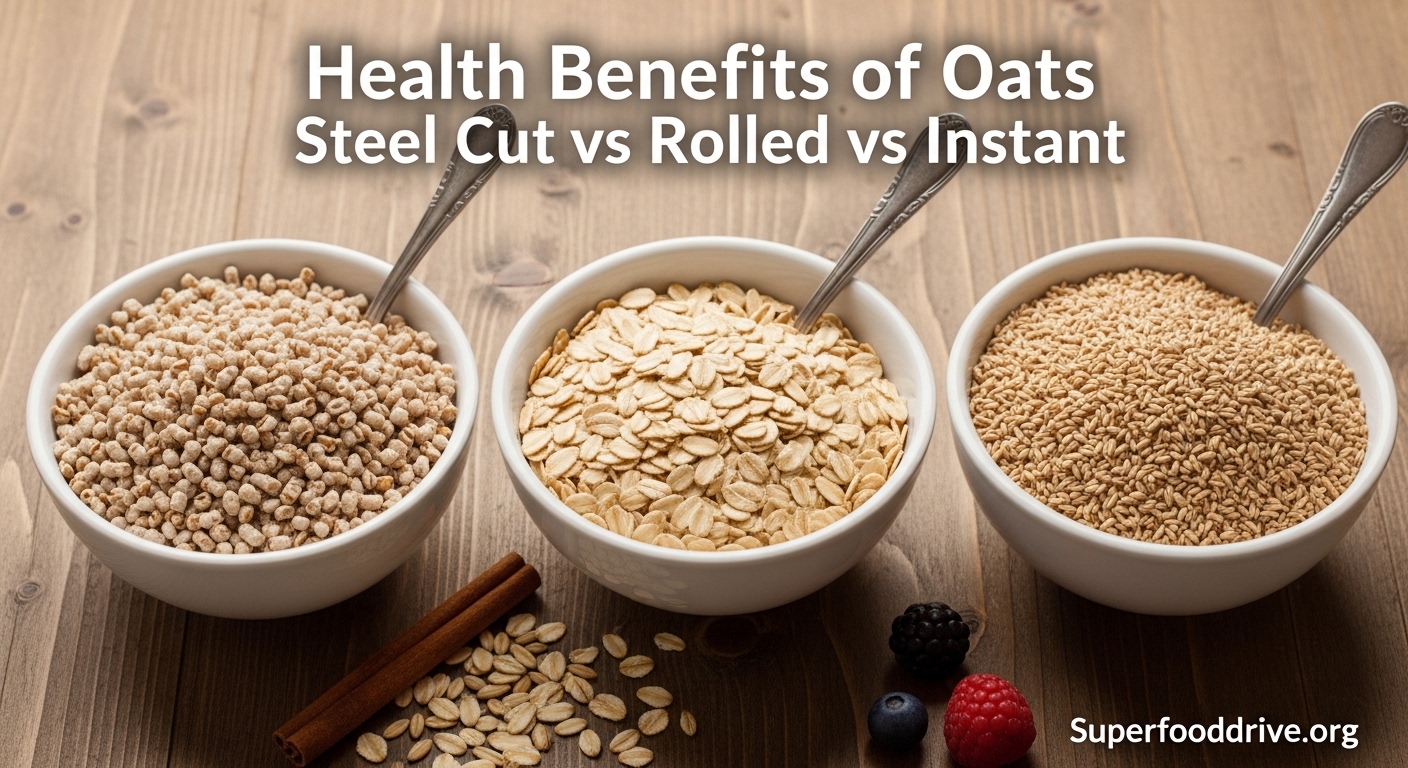
Walk down any cereal aisle and you will face a wall of oat options that can leave you scratching your head. Steel-cut, rolled, quick, instant – they all promise health benefits, but which one actually delivers? The truth about health benefits of oats steel cut vs rolled vs instant might surprise you. All three types start as the same whole grain oat groat. The differences come down to how much the oat has been processed and flattened, which affects cooking time, texture, and how quickly your body digests them.
I have eaten oats almost every morning for the past decade. Through countless bowls and experiments with every type available, I have learned that the “best” oat depends on your lifestyle, health goals, and patience level. This guide breaks down exactly what makes each oat type unique, how they compare nutritionally, and which one deserves a spot in your pantry.
Table of Contents
What Are Oats? Understanding the Basics
Before diving into the differences, it helps to understand what oats actually are. Oats are whole grains harvested from the oat plant, a cereal grain that has sustained humans for thousands of years. When harvested, oats come off the plant as oat groats – the whole, unbroken kernel containing the bran, germ, and endosperm.
Think of oat groats as the starting point, like a raw ingredient waiting to be transformed. From this single starting point, manufacturers create steel-cut, rolled, and instant oats through different processing methods. The key thing to remember: despite different names and appearances, all three types remain whole grains unless additional processing removes parts of the kernel.
The magic of oats lies in their nutritional profile. They are packed with beta-glucan, a type of soluble fiber that research shows can lower cholesterol and stabilize blood sugar. They also provide plant-based protein, B vitamins, iron, and magnesium. These benefits remain largely consistent across all oat types, though processing does create some subtle differences.
What Are Steel-Cut Oats?
Steel-cut oats, also called Irish oats or pinhead oats, are the least processed of the three types. Manufacturers take whole oat groats and chop them into small pieces using steel blades. That is it. No steaming, flattening, or pre-cooking happens.
The result is a coarse, chunky grain that looks a bit like uncooked rice cut into pieces. This minimal processing means steel-cut oats retain all parts of the original oat groat – the bran, germ, and endosperm. They take the longest to cook, typically requiring 15 to 30 minutes on the stovetop depending on your desired texture.
When cooked, steel-cut oats deliver a chewy texture with a subtle nutty flavor. Many oat enthusiasts consider them the most satisfying option because they maintain their shape and provide a substantial bite. The slower cooking time also means they digest more slowly, which helps keep you full longer and provides steady energy.
Cooking Steel-Cut Oats
The traditional stovetop method uses a 1 to 4 ratio of oats to liquid. Bring water or milk to a boil, add the oats, reduce heat, and simmer for 20 to 30 minutes while stirring occasionally. For busy mornings, you can prepare them the night before and reheat, or use a slow cooker overnight.
What Are Rolled Oats?
Rolled oats, also called old-fashioned oats, undergo slightly more processing than steel-cut varieties. Manufacturers steam whole oat groats to soften them, then run them through rollers to flatten them into flakes. This process reduces cooking time significantly while keeping most of the nutritional benefits intact.
The steaming process partially cooks the oats, which is why they only need 5 to 10 minutes on the stovetop or a couple of minutes in the microwave. The flattened shape also makes rolled oats more absorbent, which is why they work so well for overnight oats where the liquid slowly softens them in the refrigerator.
Rolled oats offer a middle ground between the hearty chew of steel-cut and the mushy texture of instant. They have a mild, slightly sweet flavor that pairs well with virtually any topping. Their flat shape makes them versatile for baking, adding to smoothies, or using as a breadcrumb substitute.
Quick Oats vs Old-Fashioned
You might notice “quick oats” or “quick-cooking oats” on shelves alongside old-fashioned rolled oats. These are simply rolled oats that have been chopped into smaller pieces before rolling. They cook even faster – usually 1 to 3 minutes – but can turn mushy more easily. Nutritionally, quick oats are nearly identical to old-fashioned rolled oats.
What Are Instant Oats?
Instant oats undergo the most processing of the three types. Manufacturers fully cook the oats, then dry and roll them into very thin flakes. Some instant oatmeal packets also include added flavors, sweeteners, and salt, though plain instant oats are available.
The extreme processing means instant oats cook in just 1 to 2 minutes in the microwave or by adding hot water. This convenience comes with a trade-off in texture. Instant oats tend to become soft and somewhat mushy when cooked, which many people describe as “slop-like” compared to heartier varieties.
Plain instant oats retain most of the nutritional benefits of less-processed oats, including fiber and beta-glucan. However, flavored instant oatmeal packets often contain significant added sugar – sometimes 10 to 15 grams per serving – which negates some health benefits. If you choose instant oats, stick to plain varieties and add your own fresh fruit, nuts, or a drizzle of honey.
Nutritional Comparison: Steel-Cut vs Rolled vs Instant Oats
Here is where many people get confused. Despite the different processing methods, the nutritional differences between steel-cut, rolled, and instant oats are surprisingly small. All three start as whole oat groats, and unless heavily processed or enriched, they provide similar amounts of fiber, protein, vitamins, and minerals.
| Nutrient (per 1/2 cup dry) | Steel-Cut Oats | Rolled Oats | Instant Oats (plain) |
|---|---|---|---|
| Calories | 150 | 150 | 150 |
| Protein | 5g | 5g | 5g |
| Total Fat | 3g | 3g | 3g |
| Carbohydrates | 27g | 27g | 27g |
| Dietary Fiber | 4g | 4g | 3g |
| Sugar | 0g | 1g | 1g |
| Cooking Time | 15-30 min | 5-10 min | 1-2 min |
As you can see, the core nutritional profile remains nearly identical. The fiber content might vary slightly between brands due to how oats are processed and measured, but generally, you are getting the same health benefits regardless of which type you choose. The real differences emerge when you look at glycemic index and how your body processes each type.
Glycemic Index and Blood Sugar Impact
The glycemic index (GI) measures how quickly a food raises blood sugar levels. Lower GI foods digest slowly and cause a more gradual rise in blood sugar, while high GI foods spike glucose quickly. This matters for everyone, but especially for people managing diabetes or trying to maintain steady energy throughout the day.
Steel-cut oats have the lowest glycemic index of the three types, typically rating around 42 on the GI scale. Rolled oats fall in the middle with a GI of approximately 55. Instant oats have the highest glycemic index, often reaching 65 or higher, especially when flavored varieties with added sugar are consumed.
Why the difference? The less processed the oat, the more intact the grain structure remains. Your body has to work harder to break down steel-cut oats, which slows digestion and prevents blood sugar spikes. The rolling and flattening process in rolled and instant oats breaks down the grain structure, making the carbohydrates more accessible and faster to digest.
For people with diabetes or prediabetes, choosing steel-cut or rolled oats over instant varieties can help with blood sugar management. The beta-glucan fiber in all oat types also helps by slowing gastric emptying and improving insulin sensitivity.
Health Benefits of Oats: Beta-Glucan and Beyond
The health benefits of oats extend far beyond their basic nutritional content. The star player is beta-glucan, a soluble fiber that gives cooked oats their characteristic creamy texture. This fiber forms a gel-like substance in your digestive tract that delivers multiple health benefits.
Heart Health and Cholesterol
Research consistently shows that oat beta-glucan can lower LDL (bad) cholesterol levels. The fiber binds to cholesterol-rich bile acids in your intestine and helps carry them out of your body. Your liver then pulls cholesterol from your blood to replace the lost bile acids, lowering your overall cholesterol levels.
The FDA actually allows oat products to carry a health claim stating that soluble fiber from oats, as part of a diet low in saturated fat and cholesterol, may reduce the risk of heart disease. To get this benefit, you need about 3 grams of beta-glucan daily, which equals roughly 1.5 cups of cooked oatmeal.
Digestive Health
Oats support digestive health in multiple ways. The fiber adds bulk to stool and helps food move through your digestive tract. Beta-glucan also acts as a prebiotic, feeding the beneficial bacteria in your gut microbiome. A healthy gut microbiome supports immune function, nutrient absorption, and even mood regulation.
Weight Management
Oats can support weight loss and maintenance efforts through several mechanisms. The high fiber content promotes feelings of fullness and satiety, which can reduce overall calorie intake. Studies show that people who eat oatmeal for breakfast consume fewer calories at lunch compared to those eating ready-to-eat breakfast cereal.
The slow digestion of steel-cut and rolled oats provides sustained energy without the crash associated with high-sugar breakfast options. This steady energy helps prevent mid-morning hunger and the temptation to reach for unhealthy snacks.
Which Type of Oats Should You Choose?
With all three types offering similar core nutrition, your choice depends on personal preferences, lifestyle factors, and health goals. Here is a breakdown to help you decide.
Choose Steel-Cut Oats If:
You have time for a leisurely breakfast or can prepare oats in advance. Steel-cut oats shine when you want the heartiest texture and lowest glycemic impact. They are ideal for weekend breakfasts, batch cooking on Sunday for the week ahead, or using a slow cooker overnight.
They are also your best choice for blood sugar management due to their lower glycemic index. The chewy texture satisfies people who find rolled or instant oats too mushy. Cost-wise, steel-cut oats typically run higher per serving, but the difference is usually minimal.
Choose Rolled Oats If:
You want versatility and convenience without sacrificing nutrition. Rolled oats offer the best balance of texture, cooking time, and health benefits. They work perfectly for overnight oats, stovetop cooking, and baking.
They digest slightly faster than steel-cut oats but still provide a moderate glycemic response. The flat shape makes them ideal for adding to cookies, muffins, and homemade granola. Rolled oats are often the most economical choice, especially when bought in bulk.
Choose Instant Oats If:
You need breakfast in under two minutes and are willing to trade texture for convenience. Plain instant oats still deliver fiber and beta-glucan benefits, though they digest fastest and may spike blood sugar more than other types.
Instant oats work well for travel, office breakfasts, or emergency meals. Just be vigilant about added sugars in flavored packets. Plain instant oats plus your own toppings provide a much healthier option than pre-sweetened varieties.
How to Cook Each Type of Oat
Getting the perfect bowl of oats depends on using the right technique for each type. Here are the best methods for cooking steel-cut, rolled, and instant oats.
Steel-Cut Oats Stovetop Method
Use a 1 to 4 ratio of oats to liquid. Bring water, milk, or a combination to a boil in a saucepan. Stir in the steel-cut oats, reduce heat to low, and simmer uncovered for 20 to 30 minutes, stirring occasionally. The longer you cook, the creamier they become. Add a pinch of salt during cooking to enhance flavor.
Overnight Steel-Cut Oats Method
For a hands-off approach, combine 1 part steel-cut oats with 4 parts liquid in a container. Refrigerate overnight or up to 3 days. The oats soften without cooking and develop a pleasant chewy texture. Heat briefly in the morning or enjoy cold.
Rolled Oats Stovetop Method
Use a 1 to 2 ratio of oats to liquid. Bring liquid to a boil, add oats, reduce heat, and simmer for 5 to 10 minutes until creamy. Stir frequently to prevent sticking. For extra creaminess, stir in a splash of milk at the end.
Overnight Rolled Oats Method
Combine equal parts rolled oats and liquid in a jar or container. Add toppings like chia seeds, fruit, or nuts. Refrigerate overnight. The oats absorb the liquid and soften without any cooking required. This method produces a pudding-like texture that many people prefer to cooked oats.
Instant Oats Method
Follow package instructions, which typically involve adding hot water or milk and waiting 1 to 2 minutes. Microwave instructions usually call for 1 to 2 minutes on high. Be careful not to overcook, as instant oats can quickly turn gummy.
Frequently Asked Questions
Are steel-cut oats really healthier than rolled oats?
Nutritionally, steel-cut and rolled oats are nearly identical. Both provide similar amounts of fiber, protein, vitamins, and minerals. The main difference is glycemic index – steel-cut oats digest more slowly due to less processing, which may provide better blood sugar control. For most people, choosing whichever type you will actually eat consistently matters more than the minimal nutritional differences.
Why does Dr. Gundry say not to eat oats?
Dr. Steven Gundry recommends avoiding oats because they contain lectins, proteins he believes cause inflammation. However, cooking oats significantly reduces lectin content. Mainstream nutrition science overwhelmingly supports oats as a healthy food, with extensive research showing benefits for heart health, blood sugar management, and weight control. Always consult your own healthcare provider for personalized advice.
What is the best way for diabetics to eat oatmeal?
People with diabetes should choose steel-cut or rolled oats over instant varieties due to their lower glycemic index. Avoid flavored instant oatmeal packets with added sugar. Instead, use plain oats and add protein and healthy fats like nuts, seeds, or Greek yogurt to further slow digestion. Cinnamon can add sweetness without sugar and may help with blood sugar control. Monitor portion sizes to around 1/2 to 3/4 cup cooked.
Which oatmeal is best for IBS?
Rolled or quick oats are often better tolerated than steel-cut oats for people with irritable bowel syndrome. The more processed the oat, the easier it is to digest. Start with small portions to test your tolerance. Some people with IBS find that soluble fiber from oats actually helps regulate digestion and reduce symptoms. Avoid adding high-FODMAP toppings like certain fruits or sweeteners that might trigger symptoms.
Can I use steel-cut oats for overnight oats?
Yes, you can make overnight oats with steel-cut oats, but the texture differs from rolled oats. Steel-cut overnight oats remain chewy and nutty rather than soft and pudding-like. Use a 1 to 4 ratio of oats to liquid and refrigerate for at least 8 hours or up to 3 days. The longer they sit, the softer they become. You can also gently warm them before eating if you prefer.
Which oats are best for weight loss?
All plain oat types can support weight loss thanks to their high fiber content and ability to promote fullness. Steel-cut oats may have a slight advantage because their low glycemic index provides longer-lasting satiety. However, the best oat for weight loss is the one you will eat consistently. Avoid instant flavored packets with added sugar, which can undermine weight loss efforts. Focus on portion control and healthy toppings.
Health Benefits of Oats Steel Cut vs Rolled vs Instant: The Bottom Line
After examining all the evidence, here is the truth about health benefits of oats steel cut vs rolled vs instant: they are all healthy choices. The nutritional differences between plain varieties are minimal. Steel-cut oats have a slight edge for blood sugar management due to their lower glycemic index. Rolled oats offer the best versatility and convenience. Instant oats work when time is your top priority.
The biggest factor affecting health is not which oat type you choose, but what you add to them. Loading up oatmeal with brown sugar, flavored syrups, or processed toppings adds empty calories that negate the health benefits. Plain oats topped with fresh fruit, nuts, seeds, or a drizzle of honey deliver the nutrition your body needs.
My recommendation? Keep both steel-cut and rolled oats in your pantry. Use steel-cut when you have time for a hearty weekend breakfast or can prep ahead. Choose rolled oats for busy weekday mornings and overnight preparations. Skip the instant flavored packets entirely and make your own quick versions with plain instant oats and real ingredients.
Whichever type you choose, you are making a smart choice for your health. Oats have earned their status as a superfood through decades of research and millions of satisfied breakfast eaters. Start your day with a bowl, and your heart, gut, and energy levels will thank you.