
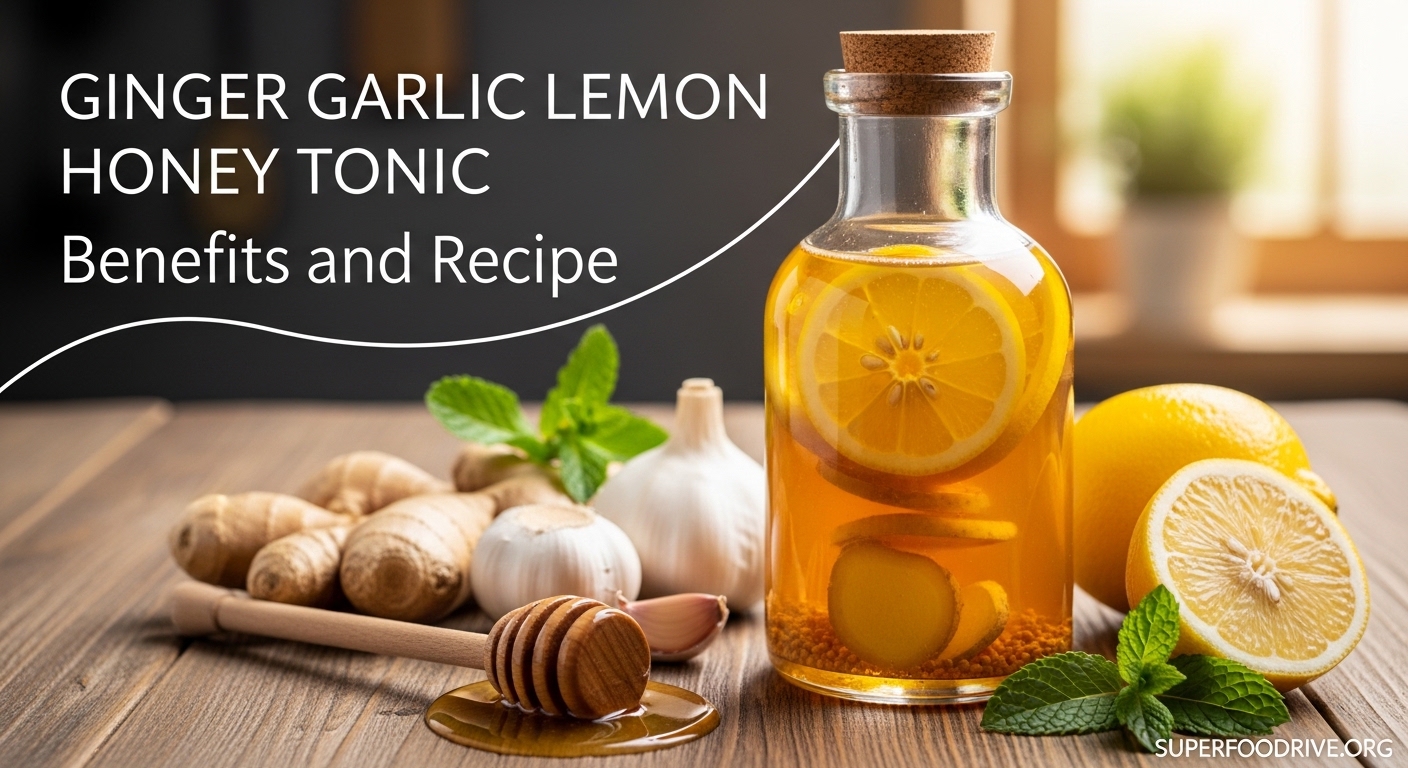
I first discovered the ginger garlic lemon honey tonic during a brutal winter cold that just would not quit. After trying countless over-the-counter remedies with little success, a family friend handed me a jar of this pungent, golden mixture. Within three days, my symptoms had dramatically improved. That was five years ago, and I have been making this immune-boosting tonic every 2026 since.
This traditional remedy combines four of nature’s most powerful ingredients into one potent wellness drink. Fresh ginger brings anti-inflammatory compounds called gingerols. Garlic delivers allicin, a natural antimicrobial agent. Lemon provides a concentrated dose of vitamin C and citrus flavonoids. Raw honey acts as both a soothing carrier and natural preservative that helps your body absorb all these beneficial compounds.
In this guide, I will walk you through everything you need to know about this ginger garlic lemon honey tonic. You will learn the science behind each ingredient, how to make it step-by-step, the best ways to use it for maximum benefit, and important safety considerations. Whether you are looking to boost your immune system, fight off a cold, or simply add a powerful wellness ritual to your daily routine, this tonic deserves a spot in your kitchen.
Table of Contents
What Is Ginger Garlic Lemon Honey Tonic
A ginger garlic lemon honey tonic is a concentrated natural remedy made by combining fresh ginger, garlic, lemon juice, and raw honey into a paste or drinkable mixture. The ingredients are typically blended or finely chopped and combined with honey, which acts as both a flavor moderator and natural preservative.
This combination has roots in traditional medicine systems across multiple cultures. Ayurvedic practitioners in India have long used similar preparations for digestive health and immune support. Traditional Chinese medicine recognizes ginger and garlic as warming foods that promote circulation. Middle Eastern and Mediterranean cultures have used honey-lemon combinations for respiratory health for centuries.
What makes this tonic special is the synergy between ingredients. Each component brings its own set of benefits, but together they create something more powerful than the sum of their parts. The honey does not just sweeten the mixture. It actually enhances the bioavailability of the beneficial compounds in garlic and ginger while providing its own antibacterial properties.
Health Benefits of Each Ingredient
Understanding what each ingredient contributes helps you appreciate why this tonic works so well. Let us break down the science and traditional uses behind each component.
Ginger: Anti-Inflammatory Powerhouse
Ginger contains bioactive compounds called gingerols, which are responsible for most of its medicinal properties. These compounds have powerful anti-inflammatory and antioxidant effects. When you consume fresh ginger, you are getting the highest concentration of these beneficial compounds.
Research published in the Journal of Medicinal Food shows that ginger can reduce muscle pain and soreness thanks to its anti-inflammatory properties. The same compounds that ease aching muscles also help calm digestive upset and reduce nausea. Many people find ginger particularly helpful for morning sickness, motion sickness, and general stomach discomfort.
Beyond digestion, ginger promotes healthy circulation. Its warming qualities help blood flow more efficiently throughout the body. This improved circulation supports the immune system by helping white blood cells reach infection sites faster.
Ginger also contains compounds that may help lower blood sugar levels and improve heart disease risk factors. While these benefits require regular consumption over time, adding ginger to your daily routine through this tonic is an easy way to incorporate it.
Garlic: Nature’s Antibiotic
Garlic has been called nature’s antibiotic for good reason. When you crush or chop fresh garlic, it produces a compound called allicin. This sulfur-containing compound is responsible for garlic’s distinctive smell and many of its health benefits.
Allicin has demonstrated antimicrobial, antifungal, and antiviral properties in numerous studies. It can help combat common pathogens including those responsible for colds and flu. A study published in Advances in Therapy found that participants taking garlic supplements had significantly fewer colds than the placebo group, and those who did get sick recovered faster.
Garlic also supports cardiovascular health. Research suggests it can help reduce blood pressure in people with hypertension and may lower total and LDL cholesterol levels. These heart-healthy benefits come from garlic’s ability to improve blood vessel function and reduce inflammation.
The immune-boosting properties of garlic extend beyond fighting infections. Regular consumption appears to enhance the function of certain immune cells, particularly natural killer cells and macrophages that play crucial roles in the body’s defense system.
Lemon: Vitamin C and Antioxidants
Lemons are one of the best natural sources of vitamin C, a nutrient essential for immune function. Just one lemon provides about 30 milligrams of vitamin C, roughly half the recommended daily intake for adults. Vitamin C supports the production and function of white blood cells, your body’s primary defense against infection.
Beyond vitamin C, lemons contain citrus flavonoids with potent antioxidant properties. These compounds help protect cells from damage caused by free radicals. Over time, this antioxidant protection may reduce the risk of chronic diseases and support healthy aging.
Despite being acidic, lemons have an alkalizing effect on the body once metabolized. This can help balance pH levels and support overall health. Many people report improved energy levels and reduced inflammation when regularly consuming lemon water or lemon-based remedies.
Lemon juice also aids digestion by stimulating stomach acid production. This can help break down food more efficiently and reduce bloating. The citric acid in lemons may also help prevent kidney stones by increasing urine volume and pH.
Honey: Natural Preservative and Soother
Raw honey is far more than a sweetener. It contains enzymes, antioxidants, and compounds with natural antibacterial properties. The low water content and acidic pH of honey create an environment where bacteria cannot easily grow, which is why honey never spoils and why it works so well as a preservative in this tonic.
Honey has been used for centuries to soothe sore throats and suppress coughs. Research published in the Archives of Pediatrics and Adolescent Medicine found that honey was more effective than common cough suppressants for reducing nighttime cough in children. The thick consistency coats the throat, while its natural compounds help reduce irritation.
When combined with garlic and ginger, honey serves another important function. It acts as a carrier that helps the beneficial compounds from the other ingredients adhere to throat tissues and digestive tract lining. This improved contact time means better absorption and more pronounced effects.
Raw honey contains trace amounts of pollen and propolis, which may help with seasonal allergies when consumed regularly. Local raw honey is particularly valued for this purpose, as it contains pollen from plants in your specific area.
Combined Benefits of the Tonic
While each ingredient offers impressive benefits on its own, the real magic happens when you combine them. The ginger garlic lemon honey tonic creates a synergistic effect where the ingredients enhance each other’s properties.
The immune support from this tonic is multi-faceted. Vitamin C from lemon supports white blood cell production. Allicin from garlic fights pathogens directly. Gingerols from ginger reduce inflammation that can compromise immune function. Honey soothes tissues and provides additional antimicrobial support. Together, these effects create a comprehensive immune boost.
Anti-inflammatory benefits are particularly notable. Chronic inflammation underlies many modern health issues, from heart disease to autoimmune conditions. This tonic delivers anti-inflammatory compounds from three different sources. Ginger provides gingerols, garlic offers sulfur compounds, and lemon contributes citrus flavonoids.
Digestive health improves through multiple mechanisms. Ginger stimulates digestion and reduces nausea. Lemon increases stomach acid production. Garlic supports healthy gut bacteria. Honey soothes the digestive tract lining. Many people find this tonic helps with bloating, indigestion, and general digestive discomfort.
The antioxidant content is exceptional. Between the gingerols, allicin, citrus flavonoids, and honey polyphenols, this tonic delivers a concentrated dose of compounds that protect cells from oxidative damage. Regular consumption may support healthy aging and reduce the risk of chronic diseases.
Respiratory support is another key benefit. The combination helps thin mucus, soothe irritated airways, and fight respiratory infections. Many users report faster recovery from colds and reduced severity of symptoms when taking this tonic at the first sign of illness.
How to Make Ginger Garlic Lemon Honey Tonic
Making this tonic at home is straightforward, but using quality ingredients and proper technique ensures the best results. Here is exactly how I prepare mine.
Ingredients You Will Need
For a standard batch that lasts about two weeks, gather these ingredients:
- 1/2 cup fresh ginger root (about 4-5 inches)
- 1/2 cup fresh garlic (about 1 large head or 20 cloves)
- 2 small organic lemons
- 3/4 to 1 cup raw, unfiltered honey
Quality matters significantly. Choose firm, smooth ginger without wrinkles or soft spots. Select garlic bulbs that feel heavy for their size with tight, unbroken skin. Organic lemons are worth the extra cost since you will be using the juice and possibly some zest. Raw honey that has not been heat-treated preserves more enzymes and beneficial compounds.
Step-by-Step Instructions
Step 1: Prepare your workspace and ingredients. Wash the lemons thoroughly under warm water, scrubbing the peel to remove any wax or residue. Peel the ginger and garlic cloves. The easiest way to peel ginger is with the edge of a spoon, which navigates the irregular shape better than a knife.
Step 2: Grate or finely chop the ginger and garlic. I prefer using a microplane grater for both, which creates a fine paste that mixes easily with honey. If you do not have a grater, mince them as finely as possible with a sharp knife. The finer the chop, the more surface area exposed, which means more beneficial compounds released.
Step 3: Juice the lemons. Roll them on the counter first to break down internal membranes and release more juice. Cut in half and squeeze thoroughly, removing seeds as you go. You should get about 1/4 to 1/3 cup of juice from two small lemons.
Step 4: Combine all ingredients in a clean glass jar. Add the grated ginger, minced garlic, and lemon juice first. Pour the honey over the top. Use a clean spoon to stir everything together until well combined. The mixture should have a thick, paste-like consistency.
Step 5: Seal the jar and let it rest. Store at room temperature for the first 24 hours to allow the flavors to meld and the honey to begin drawing out the beneficial compounds from the garlic and ginger. After the initial rest period, move it to the refrigerator.
Recipe Variations
Once you master the basic recipe, consider these variations for different health goals:
Add 1 tablespoon of ground turmeric for extra anti-inflammatory power. Turmeric contains curcumin, which works synergistically with gingerols. Include a pinch of black pepper, which enhances curcumin absorption by up to 2000 percent.
For additional immune support, add 1/4 teaspoon of cayenne pepper. The capsaicin increases circulation and adds warming properties. Start with a small amount and adjust to your heat tolerance.
Some people add 2 tablespoons of raw apple cider vinegar for digestive benefits and additional antimicrobial properties. This creates a more liquid consistency and adds a tangy flavor that some find more palatable.
For a fermented version, reduce the honey slightly and let the mixture sit at room temperature for 3-5 days before refrigerating. The natural fermentation process creates beneficial probiotics, though the flavor becomes more intense.
How to Use the Tonic
Knowing how to make the tonic is only half the battle. Using it correctly maximizes benefits and minimizes side effects.
For general immune support and wellness, take 1 tablespoon daily. I prefer taking mine first thing in the morning on an empty stomach. This timing allows the active compounds to absorb quickly and gives your immune system a boost to start the day. Wait at least 20 minutes before eating breakfast.
At the first sign of a cold or flu, increase to 1 tablespoon three times daily. Spread the doses throughout the day, morning, afternoon, and evening. Many users report that starting at the first tickle in the throat significantly reduces the severity and duration of illness.
There are several ways to consume the tonic. The simplest is to swallow it straight from the spoon. If the taste is too intense, mix it into warm water to create a tea-like drink. Use water that is warm but not boiling, as excessive heat can destroy some beneficial compounds in the honey. Some people spread it on toast or crackers, though I find this less effective for sore throats.
To make the taste more palatable, try swallowing quickly followed by a sip of water or herbal tea. Chewing a few parsley or mint leaves afterward helps freshen breath and reduces the garlic aftertaste. Taking it with a small amount of food can reduce stomach irritation if you have sensitivity.
For children over one year old, reduce the dosage to 1 teaspoon. Never give honey to infants under 12 months due to the risk of botulism. Always consult a pediatrician before giving herbal remedies to children.
Storage and Shelf Life
Proper storage ensures your tonic remains potent and safe to consume.
Always store the tonic in a glass container with a tight-fitting lid. Mason jars work perfectly. Avoid plastic, as the garlic and lemon can react with certain plastics over time. Metal lids are fine as long as they do not touch the acidic mixture directly.
Keep the tonic refrigerated after the initial 24-hour resting period. The cold temperature slows any fermentation and maintains freshness. When stored properly in the refrigerator, the tonic lasts 2 to 3 months.
Watch for signs of spoilage. Fresh tonic has a strong but clean garlic-ginger smell. If you notice any mold growth, off odors, or fermentation bubbles that seem excessive, discard the batch. The high honey content makes spoilage rare, but it can happen if water or contaminants are introduced.
Some separation is normal. The garlic and ginger may settle, with honey rising to the top. Simply stir before each use. If the mixture becomes very liquid or fizzy, fermentation is occurring. This is not necessarily dangerous but indicates the tonic is becoming more acidic and potent.
I recommend making smaller batches more frequently rather than large batches that sit for months. Fresh preparation ensures maximum potency of the beneficial compounds.
Safety and Precautions
While this tonic is safe for most people, certain groups should exercise caution or avoid it entirely.
Pregnant women should consult their healthcare provider before using this tonic regularly. While small amounts of these ingredients are generally considered safe in food, concentrated medicinal doses may not be appropriate. Some sources suggest avoiding large amounts of garlic during pregnancy, particularly in the first trimester.
People taking blood-thinning medications should be cautious. Garlic and ginger both have mild blood-thinning properties. While this is generally beneficial for cardiovascular health, it could interact with medications like warfarin or aspirin. Consult your doctor if you take any blood thinners.
Those with bleeding disorders should also seek medical advice. The blood-thinning effects, though mild, could exacerbate certain conditions.
If you have a sensitive stomach or GERD, start with small doses. The combination of garlic, ginger, and lemon can irritate some digestive systems. Taking the tonic with food rather than on an empty stomach may help.
Garlic allergies, though rare, do exist. If you experience any allergic reactions such as rash, itching, or difficulty breathing, discontinue use immediately and seek medical attention.
Diabetics should monitor blood sugar when consuming this tonic. While honey has a lower glycemic index than sugar, it still affects blood glucose. The amounts used in this tonic are relatively small, but regular consumption could have cumulative effects.
Always inform your healthcare provider about any herbal remedies you use regularly, especially if you take prescription medications or have chronic health conditions.
Common Questions and Troubleshooting
Based on forum discussions and common queries, here are answers to the most frequently asked questions about this tonic.
What do ginger, garlic, honey, and lemon do to the body?
This combination delivers immune support through multiple pathways. Ginger reduces inflammation and supports digestion. Garlic provides antimicrobial compounds that fight pathogens. Lemon supplies vitamin C for immune cell production. Honey soothes tissues and adds antibacterial properties. Together, they create a comprehensive wellness boost that supports the body’s natural defenses.
What happens when you drink lemon and ginger water for 7 days?
After a week of regular consumption, most people report improved digestion, reduced bloating, and increased energy. The vitamin C from lemon supports immune function, while ginger’s anti-inflammatory compounds may reduce chronic inflammation. Many users notice their skin looks clearer and they feel less prone to catching minor illnesses.
Is ginger and garlic good for the kidneys and liver?
Both ginger and garlic show promise for supporting liver and kidney health in research studies. Garlic may help protect the liver from toxin-induced damage. Ginger’s anti-inflammatory properties may benefit kidney function. However, those with existing kidney disease should consult their doctor, as excessive potassium from these ingredients could be problematic for some patients.
Can ginger and garlic lower blood pressure?
Research suggests both ingredients may help reduce blood pressure. Garlic has been shown to modestly lower blood pressure in people with hypertension. Ginger appears to improve circulation and may have mild blood pressure-lowering effects. These benefits are most pronounced when consumed regularly over time.
What happens if you drink ginger, lemon, and honey every day?
Daily consumption provides ongoing immune support and anti-inflammatory benefits. Most people experience improved digestion, fewer colds, and better overall wellness. Some may notice reduced joint pain or improved energy levels. The key is consistency. Occasional use provides temporary relief, but daily use builds cumulative benefits.
Does ginger tea help with insomnia?
While ginger is generally considered stimulating, some people find that the overall calming effect of this tonic, particularly when consumed warm in the evening, promotes relaxation. The ritual of preparing and sipping a warm drink can signal the body that it is time to wind down. However, if you are sensitive to stimulation, avoid taking it right before bed.
How long does ginger garlic honey tonic last?
When stored properly in the refrigerator, the tonic lasts 2 to 3 months. The honey acts as a natural preservative. Always use clean utensils to avoid introducing bacteria. If you notice mold, off smells, or excessive fermentation, discard the batch.
Can I drink ginger garlic honey tonic every day?
Yes, daily consumption is safe for most healthy adults. Start with 1 tablespoon per day for general wellness. You can increase to 2-3 tablespoons during cold season or when you feel illness coming on. Listen to your body and reduce the amount if you experience any stomach discomfort.
Is this tonic safe during pregnancy?
Pregnant women should consult their healthcare provider before using this tonic. While culinary amounts of these ingredients are generally considered safe, medicinal doses may not be appropriate. Some healthcare providers recommend avoiding large amounts of garlic during pregnancy, particularly in the first trimester.
How do I make it taste better?
If the taste is too strong, try mixing the tonic into warm water or herbal tea to dilute it. Adding more honey helps sweeten the mixture. Some people find that taking it quickly and following with a sip of juice or water makes it more tolerable. Chewing fresh parsley or mint leaves afterward reduces garlic breath.
FAQ
What do ginger, garlic, honey, and lemon do to the body?
This combination delivers immune support through multiple pathways. Ginger reduces inflammation and supports digestion. Garlic provides antimicrobial compounds that fight pathogens. Lemon supplies vitamin C for immune cell production. Honey soothes tissues and adds antibacterial properties. Together, they create a comprehensive wellness boost.
What happens when you drink lemon and ginger water for 7 days?
After a week of regular consumption, most people report improved digestion, reduced bloating, and increased energy. The vitamin C from lemon supports immune function, while ginger’s anti-inflammatory compounds may reduce chronic inflammation. Many users notice clearer skin and better resistance to minor illnesses.
Is ginger and garlic good for the kidneys and liver?
Both ginger and garlic show promise for supporting liver and kidney health in research studies. Garlic may help protect the liver from toxin-induced damage. Ginger’s anti-inflammatory properties may benefit kidney function. Those with existing kidney disease should consult their doctor first.
What is the benefit of lemon ginger, garlic and honey drink?
This drink provides immune support, anti-inflammatory benefits, digestive aid, antioxidant protection, and respiratory support. The combination works synergistically to boost the body’s natural defenses while soothing irritated tissues and supporting overall wellness.
Can ginger and garlic lower blood pressure?
Research suggests both ingredients may help reduce blood pressure. Garlic has been shown to modestly lower blood pressure in people with hypertension. Ginger appears to improve circulation and may have mild blood pressure-lowering effects when consumed regularly.
What happens if you drink ginger, lemon, and honey every day?
Daily consumption provides ongoing immune support and anti-inflammatory benefits. Most people experience improved digestion, fewer colds, and better overall wellness. Some notice reduced joint pain or improved energy levels. Consistency is key for cumulative benefits.
Does ginger tea help with insomnia?
While ginger is generally stimulating, some people find that the overall calming effect of a warm tonic consumed in the evening promotes relaxation. The ritual of preparing and sipping a warm drink can signal the body to wind down. Avoid taking it right before bed if you are sensitive to stimulation.
How long does ginger garlic honey tonic last?
When stored properly in the refrigerator, the tonic lasts 2 to 3 months. The honey acts as a natural preservative. Always use clean utensils to avoid introducing bacteria. Discard if you notice mold, off smells, or excessive fermentation.
Can I drink ginger garlic honey tonic every day?
Yes, daily consumption is safe for most healthy adults. Start with 1 tablespoon per day for general wellness. You can increase to 2-3 tablespoons during cold season or when illness threatens. Reduce the amount if you experience stomach discomfort.
Is this tonic safe during pregnancy?
Pregnant women should consult their healthcare provider before using this tonic. While culinary amounts are generally safe, medicinal doses may not be appropriate. Some providers recommend avoiding large amounts of garlic during pregnancy, particularly in the first trimester.
Conclusion
The ginger garlic lemon honey tonic represents one of the most powerful natural remedies you can make in your own kitchen. By combining four ingredients that have stood the test of time in traditional medicine systems worldwide, you create a synergistic blend that supports immune function, reduces inflammation, aids digestion, and promotes overall wellness.
What I appreciate most about this tonic is its accessibility. You do not need special equipment or hard-to-find ingredients. A trip to any grocery store provides everything you need. The preparation takes less than 30 minutes, and one batch provides weeks of immune support.
If you are new to this remedy, start small. Make your first batch and try taking 1 tablespoon each morning for a week. Pay attention to how your body responds. Many people notice improved digestion and energy within days. When cold season arrives or you feel that first tickle in your throat, you will have this powerful tool ready.
Remember that while this tonic offers impressive benefits, it works best as part of a holistic approach to health. Combine it with adequate sleep, regular movement, stress management, and a nutrient-rich diet for optimal results. Here is to your health in 2026 and beyond.