
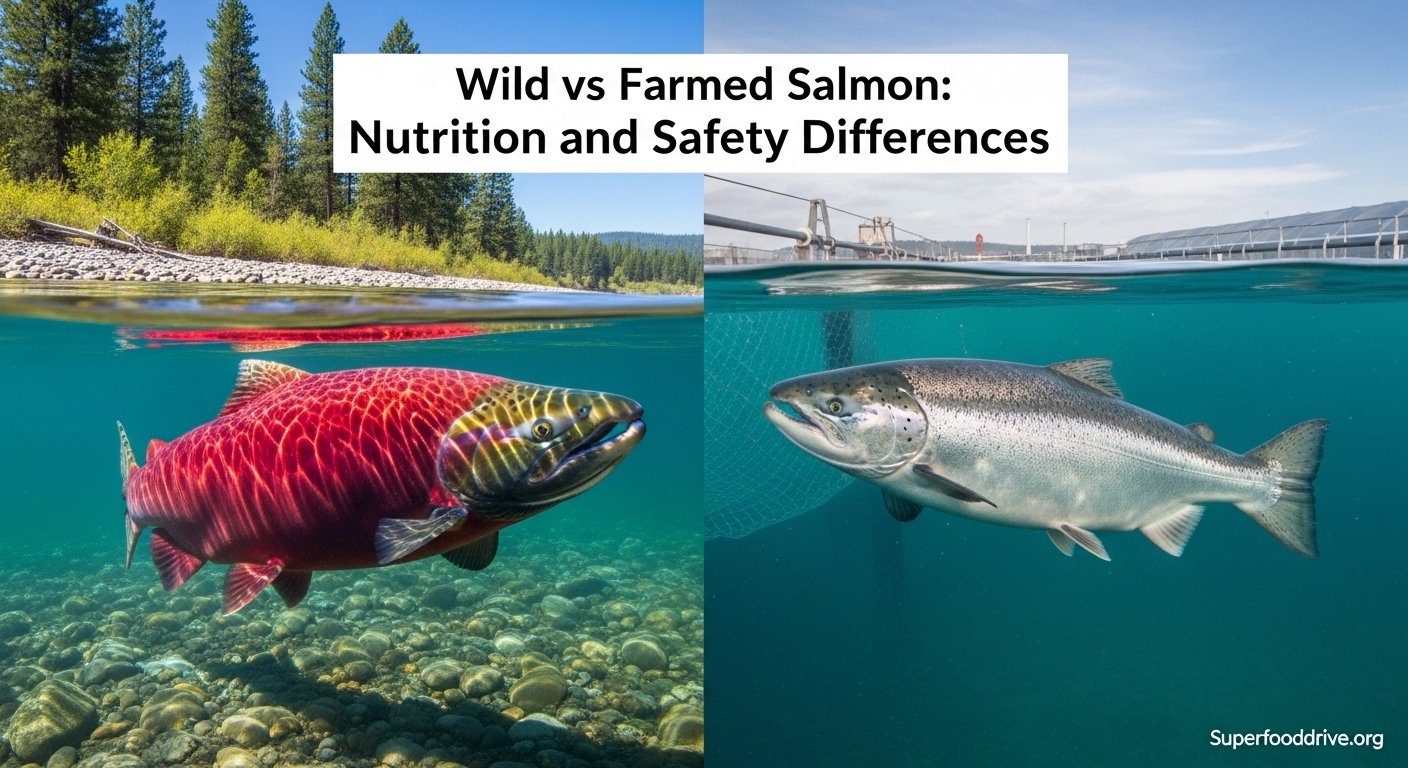
Standing at the seafood counter, you’ve probably stared at the price difference between wild and farmed salmon and wondered if the extra cost is actually worth it. I have been there too. The wild-caught fillet costs nearly double, yet the farm-raised option looks nearly identical. What exactly are you paying for, and more importantly, which one is safer and more nutritious?
The truth about wild vs farmed salmon nutrition and safety differences is more nuanced than many people realize. Both types offer impressive health benefits, but they also come with distinct risk profiles that deserve attention. In this guide, I will break down everything you need to know about nutritional content, contaminants, fatty acids, and practical safety considerations so you can make an informed decision that fits your budget and health priorities.
Table of Contents
What Makes Wild and Farmed Salmon Different
Understanding the fundamental differences between these two types starts with where and how they live.
Wild salmon grow up in their natural environments, swimming freely through oceans, rivers, and lakes. They eat a natural diet consisting of algae, plankton, and smaller fish. This diverse diet shapes their nutritional profile in specific ways that we will explore in detail.
Farmed salmon, by contrast, live in controlled aquaculture facilities where they receive processed, high-protein, high-fat feed designed to maximize growth rates. These facilities, while tightly controlled, create an entirely different environment that affects everything from the fish’s fat content to its exposure to certain contaminants.
Wild vs Farmed Salmon Nutrition and Safety Differences
When comparing the nutritional profiles side by side, the differences become immediately apparent. A 3-ounce serving of wild salmon contains approximately 114 calories and 4 grams of fat, while the same portion of farmed salmon packs around 206 calories and 12 grams of fat. This difference stems primarily from the higher fat content in farmed fish.
However, higher fat content is not necessarily bad. Farmed salmon actually contains more omega-3 fatty acids per serving because of this increased fat. A typical farmed fillet provides about 2.3 grams of omega-3s compared to 1.2 grams in wild salmon. The trade-off is that farmed salmon also contains significantly more omega-6 fatty acids and saturated fat.
Protein content remains fairly similar between both types, with wild salmon offering slightly more protein per calorie due to its leaner composition. Both varieties deliver excellent amounts of vitamin D, B vitamins, selenium, and potassium.
Nutritional Comparison at a Glance
Here is how a 3-ounce cooked serving compares:
| Nutrient | Wild Salmon | Farmed Salmon |
|---|---|---|
| Calories | 114 | 206 |
| Total Fat | 4g | 12g |
| Saturated Fat | 0.8g | 2.4g |
| Protein | 17g | 16g |
| Omega-3 (EPA/DHA) | 1.2g | 2.3g |
| Omega-6 | 0.2g | 1.8g |
| Vitamin D | 570 IU | 520 IU |
The Fatty Acid Balance: Omega-3 vs Omega-6
The omega-3 to omega-6 ratio matters more than many people realize. Wild salmon provides an excellent ratio of approximately 6:1 in favor of omega-3s, while farmed salmon skews closer to 1:1 or even tilts toward omega-6 dominance in some cases.
Why does this ratio matter? Omega-3 fatty acids, specifically EPA and DHA, reduce inflammation, support brain health, and lower cardiovascular disease risk. Omega-6 fatty acids, while essential, promote inflammation when consumed in excess relative to omega-3s. The modern diet already contains far more omega-6 than our ancestors consumed, making the additional omega-6 in farmed salmon a consideration for those trying to balance their intake.
That said, both types still provide substantial anti-inflammatory benefits. The American Heart Association recommends eating fish, particularly fatty fish like salmon, at least twice per week regardless of whether it is wild or farmed.
Contaminants, PCBs, and Safety Concerns
This is where the debate gets serious. Multiple studies have found that farmed salmon contains higher levels of certain contaminants compared to wild salmon. The most significant concern involves polychlorinated biphenyls (PCBs), dioxins, and other persistent organic pollutants (POPs).
Research published in the journal Science found that farmed salmon contained significantly higher concentrations of PCBs and dioxins compared to wild salmon. Some samples showed PCB levels up to 8 times higher than wild-caught varieties. These contaminants accumulate in the fatty tissues of fish, and since farmed salmon contains more fat, it provides more storage space for these chemicals.
However, context matters enormously here. Even farmed salmon’s contaminant levels remain well below safety limits set by the FDA and EPA. The health benefits of eating salmon, even farmed salmon, far outweigh the potential risks from these contaminants for most people. The same research that identified higher contaminant levels in farmed salmon still concluded that the benefits of eating salmon outweigh the risks.
Mercury and Heavy Metals
Contrary to some misconceptions, salmon contains relatively low mercury levels compared to other fish like tuna, swordfish, or shark. Both wild and farmed salmon fall into the “best choices” category according to FDA guidelines for pregnant women and children.
Wild salmon may contain slightly higher levels of certain trace metals like mercury and arsenic due to exposure in open waters, though the differences remain minimal. Farmed salmon shows lower mercury levels but may contain higher concentrations of other contaminants like PCBs and dioxins depending on feed sources.
Antibiotics in Farmed Salmon
The use of antibiotics in aquaculture varies dramatically by region. Norwegian farmed salmon, for example, uses minimal antibiotics due to strict regulations and advanced farming practices. Some Chilean farmed salmon operations have faced criticism for heavier antibiotic use.
The good news is that antibiotic residues in salmon sold in the United States must meet strict safety standards. The FDA regulates antibiotic use in aquaculture, and residues are monitored. That said, antibiotic resistance remains a broader concern with any agricultural use of antibiotics, which drives some consumers toward wild-caught options.
Specific Salmon Species and Their Differences
Not all salmon are created equal, and the species matters significantly when comparing wild options.
Atlantic salmon dominates the farmed salmon market almost exclusively. Wild Atlantic salmon populations are severely depleted, so essentially all Atlantic salmon sold commercially is farmed. This species tends to have the highest fat content among salmon varieties.
Pacific salmon species include sockeye, chinook (king), coho (silver), pink, and chum. These are only available wild-caught:
- Sockeye salmon: Deep red flesh, lowest fat content among Pacific species, highest astaxanthin levels
- Chinook (King): Highest fat content among wild species, rich flavor, premium price point
- Coho (Silver): Medium fat content, milder flavor, good middle-ground option
- Pink: Lowest fat, lightest color, most affordable wild option
- Chum: Firm texture, moderate fat, often used for canning
If you choose wild salmon, sockeye offers the leanest protein with the highest antioxidant content, while chinook provides the most omega-3s per serving due to its higher fat content.
Astaxanthin: Natural vs Synthetic Color
One of the most visible differences between wild and farmed salmon is color. Wild salmon develop their characteristic pink-orange flesh from eating krill and other crustaceans rich in natural astaxanthin, a powerful antioxidant with anti-inflammatory properties.
Farmed salmon would naturally be gray without supplementation. To match consumer expectations, farmers add synthetic astaxanthin or natural astaxanthin derived from algae to the feed. This coloring is safe and FDA-approved, but it does not provide the same antioxidant benefits as the natural compound consumed through a wild diet.
When examining fillets, wild salmon often displays a deeper, more vibrant red-orange color while farmed salmon tends toward a lighter pink shade.
How to Identify Wild vs Farmed Salmon at the Store
Reading labels carefully becomes essential when trying to choose between wild and farmed salmon.
Wild salmon labels should specify the species, such as “wild Alaskan sockeye” or “wild Pacific chinook.” The term “Atlantic salmon” almost always indicates farmed fish. Look for Marine Stewardship Council (MSC) certification for sustainably caught wild options.
Farmed salmon labels may indicate the country of origin, which provides clues about farming practices. Norwegian and Scottish farmed salmon generally follow stricter regulations than some other regions. “Organic” labels for salmon can be misleading since there is no USDA organic standard for aquaculture.
Color can be a giveaway in the display case. Wild sockeye appears deep red, while farmed Atlantic salmon looks paler pink. However, packaging and lighting can make this method unreliable.
Practical Tips to Reduce Contaminants
Regardless of which type you choose, proper preparation can reduce your exposure to contaminants.
Remove the skin before cooking. Many contaminants concentrate in the fatty layer just beneath the skin. Trimming visible fat from the edges of fillets also helps reduce PCB and dioxin exposure.
Grilling or broiling allows fat to drip away from the fish, carrying some contaminants with it. Avoid frying in butter or oil, which can reabsorb the melted fat back into the fish.
Choose younger, smaller salmon when possible. Older, larger fish have had more time to accumulate contaminants in their tissues.
If you eat salmon frequently, consider alternating between wild and farmed to balance the different risk profiles, or choose the type that aligns with your primary concerns.
How Often Should You Eat Salmon
The American Heart Association recommends eating fish, especially fatty fish like salmon, at least two times per week. This guideline applies to both wild and farmed salmon.
For pregnant women and young children, the FDA recommends 2-3 servings per week of “best choice” fish, which includes salmon. The low mercury content makes salmon one of the safest fish options for these populations.
If you consume salmon daily, wild-caught may be the safer choice due to lower overall contaminant levels, though even daily farmed salmon consumption falls within safety guidelines for most healthy adults. Those concerned about maximizing omega-3 intake might prefer farmed salmon despite the higher contaminant levels, while those prioritizing lower toxin exposure might choose wild.
Cost Considerations and Value
Wild salmon typically costs 50% to 100% more than farmed salmon. Fresh wild sockeye might run $20-25 per pound while farmed Atlantic salmon sells for $10-15 per pound.
Whether the premium is worth it depends on your priorities. If minimizing contaminant exposure matters most, wild salmon delivers measurable benefits. If maximizing omega-3 intake per dollar spent matters more, farmed salmon provides more EPA and DHA per serving at a lower price point.
Frozen wild salmon offers a middle ground, often costing less than fresh while maintaining nutritional quality. Canned wild salmon, particularly pink and sockeye varieties, provides an affordable way to access wild salmon benefits.
Frequently Asked Questions
Is wild salmon safer than farmed salmon?
Wild salmon generally contains lower levels of PCBs, dioxins, and other persistent organic pollutants compared to farmed salmon. However, both types fall well within safety guidelines set by the FDA and EPA. The health benefits of eating salmon outweigh the potential risks for both varieties. Wild salmon does have lower saturated fat and a better omega-3 to omega-6 ratio, which may offer additional health advantages.
What is the downside of farm-raised salmon?
The main concerns with farmed salmon include higher levels of certain contaminants like PCBs and dioxins, higher saturated fat content, less favorable omega-3 to omega-6 ratios, potential antibiotic use depending on farming region, and environmental concerns related to aquaculture practices. Farmed salmon also receives synthetic astaxanthin for color rather than developing it naturally through diet. However, farmed salmon provides more omega-3s per serving and costs significantly less than wild salmon.
Does farmed salmon have more omega-3 than wild salmon?
Yes, farmed salmon typically contains more total omega-3 fatty acids per serving than wild salmon. A 3-ounce serving of farmed salmon provides approximately 2.3 grams of omega-3s compared to 1.2 grams in wild salmon. This higher content results from farmed salmon’s higher overall fat content. However, wild salmon offers a more favorable omega-3 to omega-6 ratio, which may provide better anti-inflammatory benefits.
Should I remove the skin from salmon?
Removing salmon skin before cooking can reduce your exposure to certain contaminants. PCBs, dioxins, and other pollutants tend to concentrate in the fatty layer just beneath the skin. Trimming visible fat from the edges of fillets provides additional protection. If you enjoy crispy salmon skin, eating it occasionally poses minimal risk, but those concerned about contaminants should remove it, especially when eating farmed salmon.
How often should I eat salmon?
The American Heart Association recommends eating fish, particularly fatty fish like salmon, at least two times per week. The FDA considers salmon a best choice fish for pregnant women and children, recommending 2-3 servings weekly. Even daily salmon consumption falls within safety guidelines for most healthy adults, though alternating between wild and farmed varieties can help balance different nutritional profiles and contaminant levels.
Is farmed salmon safe during pregnancy?
Yes, farmed salmon is considered safe during pregnancy. The FDA classifies salmon as a best choice fish for pregnant women, recommending 2-3 servings per week. Salmon contains low mercury levels compared to other fish. While farmed salmon contains higher levels of PCBs than wild salmon, the difference is not significant enough to pose risks at recommended consumption levels. The omega-3 fatty acids in salmon support fetal brain and eye development, making it an excellent choice for pregnant women.
Wild vs Farmed Salmon Nutrition and Safety Differences: The Bottom Line
After reviewing the wild vs farmed salmon nutrition and safety differences, the decision ultimately comes down to your personal priorities and budget. Wild salmon offers lower contaminant levels, better fatty acid ratios, and fewer saturated fats. Farmed salmon provides more omega-3s per serving at a significantly lower price point.
Both varieties deliver exceptional nutritional benefits that far outweigh any potential risks when consumed as part of a balanced diet. The American Heart Association’s recommendation to eat fish twice weekly applies regardless of which type you choose.
If budget allows, wild sockeye or coho salmon provides the cleanest option with excellent nutritional value. If cost is a concern, farmed Atlantic salmon still delivers substantial health benefits, especially when you remove the skin and trim visible fat before cooking. Whichever you choose, eating salmon regularly supports heart health, brain function, and overall wellness.