
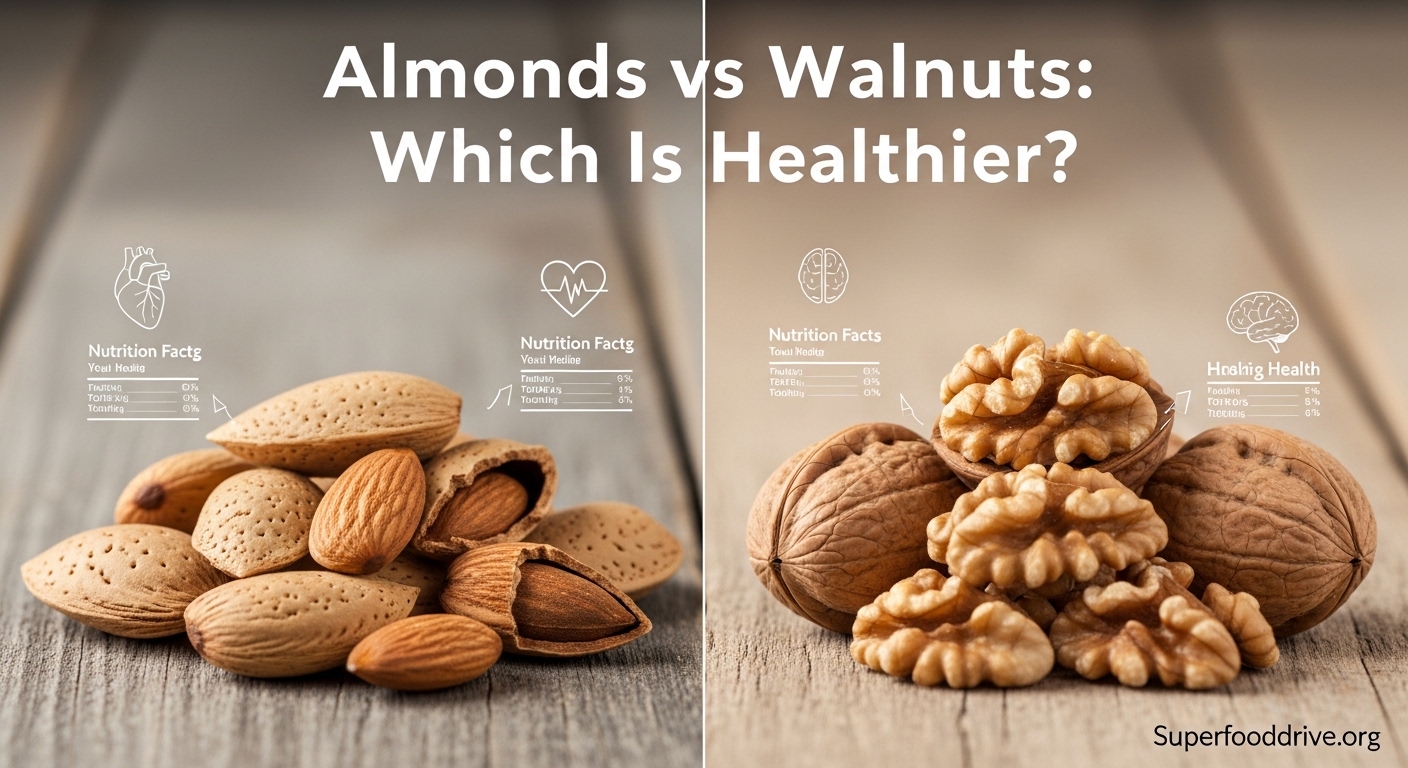
Almonds vs walnuts which is healthier is one of the most common questions I hear when people want to upgrade their snack game. Both nuts pack impressive nutritional profiles, but they shine in different areas. After digging through dozens of studies and talking with nutrition experts, I can tell you the answer depends entirely on your specific health goals.
In this guide, I will break down exactly how these two popular nuts compare across every metric that matters. Whether you are focused on heart health, brain function, weight loss, or simply eating better in 2026, you will know exactly which nut to reach for.
Table of Contents
Almonds vs Walnuts: At-a-Glance Comparison
Before diving into the details, here is how almonds and walnuts stack up for specific health goals:
Choose Almonds If You Want:
- Higher protein for muscle support
- More fiber for digestive health
- Better option for weight loss
- Superior vitamin E and magnesium
- Lower calorie density
Choose Walnuts If You Want:
- Maximum omega-3 fatty acids
- Brain health support
- Anti-inflammatory benefits
- Lower net carbs for keto diets
- Unique polyphenol antioxidants
The truth is both nuts are nutritional powerhouses. The best approach for most people is eating a mix of both rather than choosing just one.
Almonds vs Walnuts: Complete Nutritional Comparison
Let us look at the hard numbers per 1-ounce serving (about a handful):
| Nutrient | Almonds (1oz) | Walnuts (1oz) |
|---|---|---|
| Calories | 164 | 185 |
| Protein | 6g | 4.3g |
| Total Fat | 14g | 18.5g |
| Fiber | 3.5g | 1.9g |
| Omega-3 (ALA) | 0g | 2.5g |
| Vitamin E | 7.3mg (48% DV) | 0.2mg (1% DV) |
| Magnesium | 76mg (19% DV) | 45mg (11% DV) |
| Net Carbs | 2.7g | 1.9g |
These numbers tell an interesting story. Almonds win on protein, fiber, vitamin E, and magnesium. Walnuts dominate in healthy fats and omega-3 content. Your health priorities should guide your choice.
Protein and Fiber: Why Almonds Take the Lead
Almonds pack about 40% more protein than walnuts per serving. That 6 grams versus 4.3 grams might not sound like much, but it adds up if you eat nuts daily. For anyone focused on muscle maintenance, athletic recovery, or simply staying full longer, almonds have a clear advantage.
The fiber gap is even more dramatic. Almonds deliver nearly double the fiber of walnuts. This matters because fiber slows digestion, stabilizes blood sugar, feeds beneficial gut bacteria, and promotes satiety. I have found that clients trying to lose weight consistently report better hunger control when they choose almonds over walnuts.
The combination of higher protein plus higher fiber makes almonds the superior choice for weight management and digestive health.
Healthy Fats and Omega-3s: The Walnut Advantage
Here is where walnuts completely outshine almonds. Walnuts are the only nut that provides significant amounts of alpha-linolenic acid (ALA), a plant-based omega-3 fatty acid. Each ounce delivers 2.5 grams of ALA.
Your body converts ALA into EPA and DHA, the omega-3s found in fish oil. While the conversion rate is only about 5-10%, that ALA still provides direct anti-inflammatory benefits and supports cellular membrane health.
Almonds focus their fat content on monounsaturated fats, similar to olive oil. These fats support heart health by improving cholesterol profiles, but they lack the omega-3 punch that makes walnuts special.
For brain health specifically, walnuts are the clear winner. The brain is about 60% fat, and omega-3s are essential for building and maintaining brain cell membranes.
Heart Health Benefits: Both Nuts Deliver
Research consistently shows that both almonds and walnuts reduce cardiovascular disease risk. A 2018 meta-analysis found that eating just a handful of nuts daily cut heart disease risk by about 14%.
Almonds excel at lowering LDL cholesterol thanks to their unique combination of monounsaturated fats, fiber, and plant sterols. Studies show almonds can reduce LDL by 5-12 mg/dL when eaten regularly.
Walnuts improve vascular function and reduce inflammation markers. The omega-3s in walnuts have vasodilatory effects that help blood flow more easily. They also contain arginine, an amino acid that supports healthy blood vessel tone.
Both nuts contain polyphenols that act as antioxidants, protecting LDL cholesterol from oxidation. Oxidized LDL is the truly dangerous form that sticks to artery walls.
If heart health is your primary concern, you cannot go wrong with either nut. Some research suggests combining them provides complementary benefits.
Brain Health and Cognitive Function
Your brain craves the omega-3 fatty acids found abundantly in walnuts. These fats are literally structural components of brain cell membranes. Higher omega-3 intake correlates with better cognitive performance and slower age-related mental decline.
Walnuts also contain polyphenols and vitamin E that protect neurons from oxidative stress. Some researchers call walnuts the ultimate brain food because their nutritional profile matches what the brain needs most.
Almonds contribute to brain health primarily through their high vitamin E content. Vitamin E is a powerful antioxidant that protects brain cells from free radical damage. Studies link higher vitamin E intake to reduced risk of cognitive impairment and Alzheimers disease.
Both nuts provide magnesium, which supports nerve function and neurotransmitter signaling. However, almonds deliver about 70% more magnesium per serving.
For students, professionals, or anyone wanting to stay mentally sharp, walnuts edge ahead. But almonds still provide valuable neuroprotective benefits.
Weight Management and Blood Sugar Control
Despite being calorie-dense, nuts support weight loss rather than preventing it. The protein, fiber, and healthy fats in nuts promote satiety and reduce overall calorie consumption.
Between these two nuts, almonds are slightly better for weight management. They contain fewer calories per ounce (164 vs 185) and more satiating protein and fiber. One study found that people who ate almonds daily lost more weight than those eating calorie-matched carbohydrate snacks.
Both nuts help regulate blood sugar. Their low carbohydrate content, combined with high fiber and healthy fats, slows glucose absorption. Research shows almonds specifically help lower HbA1c levels in people with type 2 diabetes.
Walnuts have a slight advantage for keto dieters due to their lower net carb content (1.9g vs 2.7g per ounce). Every gram matters when you are keeping carbs under 20-50 grams daily.
The key with either nut is portion control. A small handful provides benefits; a large bowl can sabotage your weight goals.
Which Nut Is Best for Your Specific Health Goal?
Different health objectives favor different nuts. Here is my breakdown based on the research:
For Weight Loss: Choose almonds. Their superior protein and fiber content keeps you fuller longer, and they contain fewer calories per serving.
For Heart Health: Both work well, but consider walnuts if inflammation is a concern. Their omega-3 content provides anti-inflammatory benefits that almonds cannot match.
For Brain Health: Walnuts win decisively. The ALA omega-3s are essential for cognitive function and brain structure.
For Keto Diet: Walnuts have the edge with lower net carbs. Either fits keto macros, but walnuts give you more flexibility.
For Diabetes Management: Almonds show stronger evidence for blood sugar control and HbA1c reduction.
For Muscle Building: Almonds provide 40% more protein, making them the better choice for athletic recovery.
For Anti-Inflammatory Benefits: Walnuts contain unique compounds including ALA and polyphenols that specifically target inflammation.
How Many Almonds vs Walnuts Should You Eat Daily?
The research consistently points to about 1 ounce daily as the sweet spot for health benefits. That translates to:
- Almonds: 23 whole almonds
- Walnuts: 7 whole walnut halves
Without a scale, a loose handful is roughly 1 ounce for most adults. I recommend measuring once so you can eyeball portions accurately.
You can eat them all at once or split them throughout the day. Many people enjoy nuts as a mid-morning snack to prevent energy crashes.
Soaking almonds overnight may improve digestibility for some people. Walnuts are typically eaten raw or lightly toasted. Avoid nuts roasted in unhealthy oils or covered in sugar and salt.
One concern with almonds is their oxalate content. People with kidney stones or kidney disease may need to limit almond intake. Walnuts are lower in oxalates and generally safer for sensitive individuals.
Practical Ways to Enjoy Both Nuts
Both almonds and walnuts are incredibly versatile. Here are my favorite ways to incorporate them:
Almond Ideas:
- Whole almonds as a portable snack
- Almond butter on apple slices
- Slivered almonds on salads
- Ground almonds in smoothies
- Almond flour for gluten-free baking
- Homemade almond milk
Walnut Ideas:
- Raw walnuts on oatmeal or yogurt
- Toasted walnuts in salads with bitter greens
- Walnut pesto instead of pine nuts
- Chopped walnuts in banana bread
- Walnut-crusted fish or chicken
- Trail mix with walnuts and dark chocolate
Store both nuts in airtight containers in the refrigerator or freezer. Their high fat content makes them prone to rancidity, especially walnuts. Proper storage keeps them fresh for months.
Buy raw nuts when possible. You can always toast them yourself, but you cannot un-toast nuts that have been roasted in poor quality oils.
Frequently Asked Questions
What are the top 3 healthiest nuts to eat?
The top 3 healthiest nuts are walnuts, almonds, and pistachios. Walnuts lead in omega-3 fatty acids and brain benefits. Almonds excel in protein, fiber, vitamin E, and magnesium. Pistachios offer excellent protein content and the lowest calorie count per serving. All three provide heart health benefits, but choosing a variety ensures you get the full spectrum of nutrients.
Do almonds help lower A1c?
Yes, research shows almonds can help lower HbA1c levels, especially in people with type 2 diabetes. Studies demonstrate that eating 1-2 ounces of almonds daily improves blood sugar control and insulin sensitivity. The combination of healthy fats, fiber, and magnesium in almonds slows carbohydrate absorption and improves glucose metabolism.
What happens if I eat almonds and walnuts every day?
Eating almonds and walnuts daily provides significant health benefits including reduced heart disease risk, better brain function, improved blood sugar control, and healthy weight management. Most studies show benefits with 1 ounce of nuts daily, though up to 2 ounces provides additional advantages. Regular consumption is linked to lower mortality rates and reduced inflammation markers.
Why are almonds no longer a superfood?
Almonds remain highly nutritious, but some nutrition experts have raised concerns about their high omega-6 to omega-3 ratio and oxalate content. The omega-6 fatty acids in almonds can promote inflammation if not balanced with omega-3s. Additionally, almonds contain oxalates that may contribute to kidney stones in susceptible individuals. However, for most people, almonds are still an excellent healthy food choice.
Almonds vs Walnuts: Final Verdict
So which is healthier, almonds or walnuts? The honest answer is both are excellent choices, and the ideal approach is eating both rather than picking one.
Choose almonds if your priorities are weight management, muscle support, digestive health, or blood sugar control. Their superior protein, fiber, vitamin E, and magnesium make them nutritional heavyweights.
Choose walnuts if brain health, anti-inflammatory benefits, or keto compliance matter most. Their unique omega-3 content and polyphenol antioxidants provide benefits no other nut can match.
In my experience, the people who see the best health outcomes mix both nuts into their diet. Try almonds for your morning snack and walnuts on your afternoon salad. You will get the complete spectrum of nutrients and avoid the downsides of relying on any single food.
The research is clear: regular nut consumption, whether almonds, walnuts, or a combination, supports longer, healthier lives. Pick your favorites, watch your portions, and enjoy the benefits.