
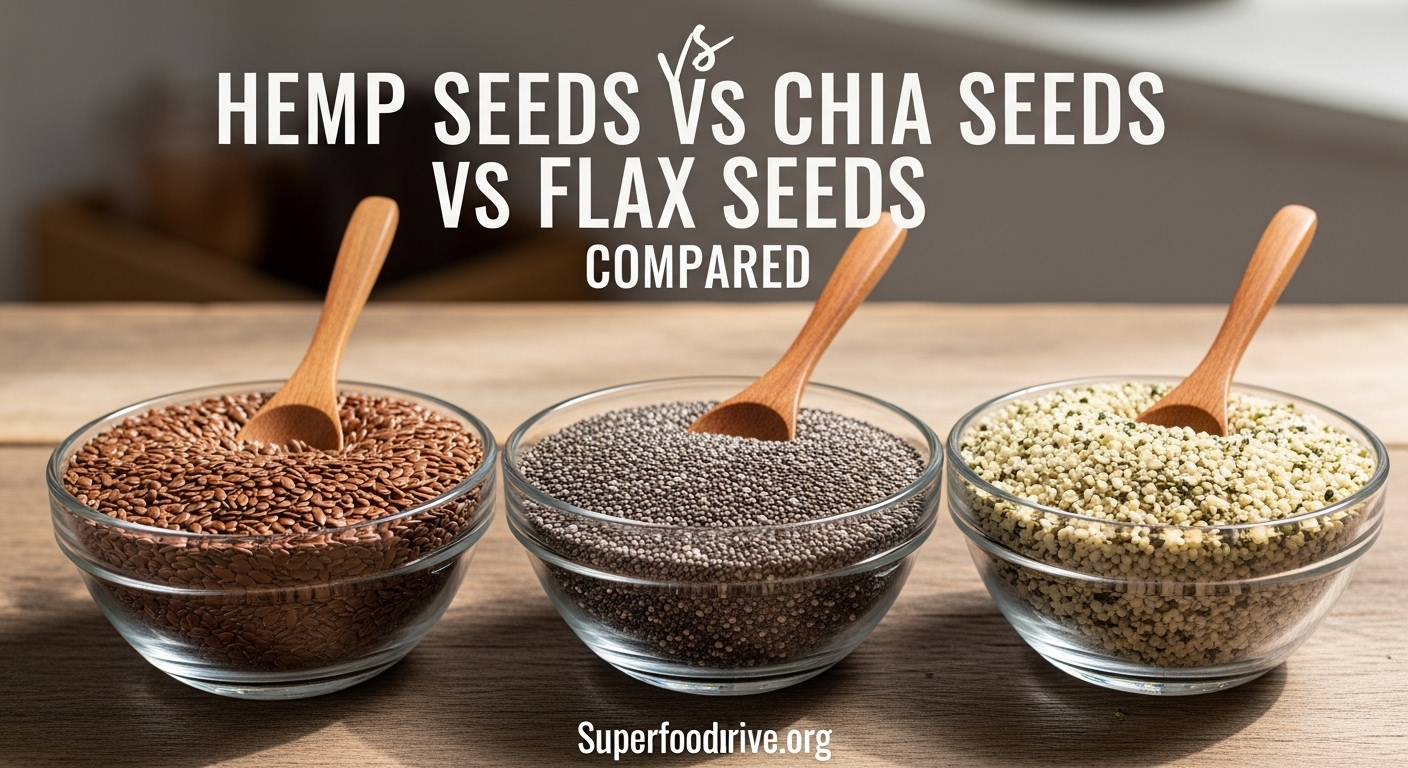
Hemp seeds, chia seeds, and flax seeds are three of the most talked-about superfoods in nutrition circles today. Each one packs a serious nutritional punch in a tiny package. But when you line them up side by side, which one actually deserves a spot in your daily diet?
I spent weeks digging through nutrition databases, scientific studies, and community discussions to answer that exact question. The truth might surprise you: there is no single winner. Each seed shines in different areas, and the smartest approach is understanding what each brings to the table.
In this guide, you will learn exactly how hemp seeds vs chia seeds vs flax seeds compare across protein, fiber, omega-3s, vitamins, and minerals. You will discover which seed works best for specific health goals like weight loss, muscle building, or fighting inflammation. And you will get clear, practical answers about how much to eat, how to prepare them, and whether you can combine all three.
Table of Contents
Quick Comparison: Hemp vs Chia vs Flax at a Glance
Before diving into the details, here is the simplest way to understand these three seeds. Each one has a clear nutritional superpower that sets it apart from the others.
Flax seeds lead the pack in omega-3 fatty acids with the best omega-6 to omega-3 ratio. They also contain unique compounds called lignans that have antioxidant and phytoestrogen properties.
Hemp seeds (often sold as hemp hearts) are the protein champions. They provide complete protein with all nine essential amino acids and deliver the highest amounts of minerals like zinc and magnesium.
Chia seeds dominate when it comes to fiber content, particularly soluble fiber that forms a gel when mixed with liquid. They also provide the most calcium of the three.
Think of it this way: if you are chasing omega-3s, reach for flax. If you need protein, grab hemp. If fiber is your priority, chia is your best bet.
| Nutrient (per 28g serving) | Hemp Seeds | Chia Seeds | Flax Seeds |
|---|---|---|---|
| Calories | 166 | 138 | 150 |
| Protein | 9.5g | 4.7g | 5.1g |
| Total Fat | 14.6g | 8.7g | 11.8g |
| Fiber | 1.2g | 9.8g | 7.8g |
| Omega-3 (ALA) | 2.4g | 5.3g | 6.4g |
| Omega-6 to Omega-3 Ratio | 3:1 | 1:3 | 1:4 |
| Calcium | 21mg | 179mg | 71mg |
| Magnesium | 210mg | 95mg | 110mg |
| Zinc | 2.9mg | 1.3mg | 1.2mg |
| Iron | 2.4mg | 1.6mg | 1.6mg |
Understanding Each Seed: Individual Profiles
To make an informed choice about which seeds to include in your diet, you need to understand what makes each one unique. Let us break down the origin, nutrition, and characteristics of hemp, chia, and flax seeds.
Hemp Seeds (Hemp Hearts)
Hemp seeds come from the Cannabis sativa plant, though the varieties used for food contain only trace amounts of THC and will not cause any psychoactive effects. You will often see them sold as hemp hearts, which are the shelled inner seeds with a soft, nutty center.
What makes hemp seeds stand out is their exceptional protein content and quality. A 28-gram serving (about 3 tablespoons) delivers 9.5 grams of protein, making them the highest protein seed of the three. Even more impressive, hemp protein is a complete protein containing all nine essential amino acids your body cannot produce on its own.
The fat profile of hemp seeds is also noteworthy. They contain about 14.6 grams of fat per serving, with a balanced omega-6 to omega-3 ratio of approximately 3:1. This is considered an ideal ratio for reducing inflammation. Hemp seeds are particularly rich in gamma-linolenic acid (GLA), a type of omega-6 with anti-inflammatory properties.
Hemp seeds shine in the mineral department too. They provide 210mg of magnesium per serving (about 50% of your daily needs), 2.9mg of zinc (26% of daily needs), and significant amounts of phosphorus and iron. The texture is soft and slightly crunchy, with a mild, nutty flavor that works well in both sweet and savory dishes.
Chia Seeds
Chia seeds come from Salvia hispanica, a plant native to Central America that was a staple food for ancient Aztec and Mayan civilizations. These tiny black or white seeds have gained modern popularity for good reason: they pack an incredible amount of nutrition into a small package.
The defining characteristic of chia seeds is their fiber content. A 28-gram serving provides 9.8 grams of fiber, which is about 35% of your daily recommended intake. About 90% of this fiber is insoluble, which helps promote regular digestion, while 10% is soluble fiber that forms a gel when mixed with liquid.
This gel-forming ability is unique to chia among these three seeds. When you mix chia with water or other liquids, the seeds absorb up to 12 times their weight in fluid, creating a pudding-like consistency. This property makes chia useful as a thickening agent and egg replacement in vegan baking.
Chia seeds are also the calcium champion of the three, providing 179mg per serving (about 14% of daily needs). They deliver 5.3 grams of ALA omega-3s per serving and contain a variety of antioxidants including chlorogenic acid, caffeic acid, and quercetin. The flavor is virtually neutral, making chia easy to add to almost any food without changing the taste.
Flax Seeds
Flax seeds (also called linseeds) come from the flax plant Linum usitatissimum and have been cultivated for thousands of years. While whole flax seeds have a hard shell that passes through your digestive system undigested, ground flaxseed unlocks the full nutritional potential.
Flax seeds are the omega-3 powerhouse of this trio. A 28-gram serving provides 6.4 grams of ALA, the plant-based form of omega-3 fatty acids. More importantly, flax has the best omega-6 to omega-3 ratio at approximately 1:4, meaning it provides four times more omega-3 than omega-6. This ratio is ideal for fighting inflammation.
What truly sets flax apart is its lignan content. Lignans are polyphenols with antioxidant and phytoestrogen properties. Flax seeds contain up to 800 times more lignans than other plant foods. These compounds have been studied for their potential to reduce cancer risk, particularly hormone-related cancers, and to support hormonal balance.
Flax seeds also deliver 7.8 grams of fiber per serving and provide decent amounts of magnesium (110mg), phosphorus, and copper. The flavor is slightly nutty with a hint of earthiness, though some people find whole flax gritty. This is why ground flaxseed is generally preferred for eating.
Hemp Seeds vs Chia Seeds vs Flax Seeds: Detailed Nutritional Breakdown
Now that you understand what makes each seed unique, let us dive deeper into the nutritional specifics. This section breaks down exactly how these seeds compare across macronutrients, omega-3 content, vitamins, minerals, and other important factors.
Macronutrient Comparison
Calorie content is fairly similar across all three seeds, ranging from 138 calories per serving for chia to 166 for hemp. This difference is not significant enough to be a deciding factor for most people.
Protein is where hemp seeds pull away from the competition. With 9.5 grams per serving compared to about 5 grams for chia and flax, hemp provides nearly twice as much protein. This makes hemp seeds the clear choice for anyone focused on building muscle, recovering from workouts, or meeting protein needs on a plant-based diet.
Fat content varies more than you might expect. Hemp seeds contain the most fat at 14.6 grams per serving, while chia has the least at 8.7 grams. However, these are primarily healthy unsaturated fats, and the type of fat matters more than the amount. All three seeds are low in saturated fat.
Carbohydrate content tells a different story. Chia seeds contain about 12 grams of total carbs per serving, flax has 8 grams, and hemp has only 2.6 grams. However, most of the carbs in chia and flax come from fiber, making their net carb counts much lower.
Omega-3 Fatty Acids: The Critical Difference
Omega-3 fatty acids are one of the main reasons people add these seeds to their diet. But not all omega-3s are created equal, and this is where understanding the details matters.
All three seeds provide alpha-linolenic acid (ALA), which is a plant-based omega-3. Your body can convert ALA into the more active forms EPA and DHA, but this conversion process is inefficient. Only about 5-10% of ALA converts to EPA, and 2-5% converts to DHA.
Flax seeds lead with 6.4 grams of ALA per serving. Chia seeds follow with 5.3 grams. Hemp seeds provide 2.4 grams of ALA but also contain stearidonic acid (SDA), which converts to EPA more efficiently than ALA does.
The omega-6 to omega-3 ratio is perhaps more important than the absolute amount of omega-3. The ideal ratio for human health is between 1:1 and 4:1. Flax achieves the best ratio at roughly 1:4. Chia comes in second at about 1:3. Hemp has a 3:1 ratio, which is still considered good but provides relatively more omega-6.
If your primary goal is maximizing omega-3 intake for heart health or fighting inflammation, flax seeds are your best choice. If you want a more balanced approach with some unique benefits, hemp’s SDA content offers an interesting advantage.
Vitamin and Mineral Content
While macros get most of the attention, the micronutrient profiles of these seeds reveal important differences that could influence your choice based on specific health needs.
Magnesium is crucial for over 300 biochemical reactions in your body, including muscle function, nerve signaling, and blood sugar control. Hemp seeds dominate here with 210mg per serving, providing about half your daily needs. Flax offers 110mg, and chia provides 95mg.
Calcium is essential for bone health, muscle function, and nerve transmission. Chia seeds are the clear winner with 179mg per serving, nearly double the amount in flax (71mg) and far ahead of hemp (21mg). This makes chia particularly valuable for those avoiding dairy.
Zinc supports immune function, wound healing, and DNA synthesis. Hemp seeds provide 2.9mg per serving (26% of daily needs), more than double what chia (1.3mg) and flax (1.2mg) offer.
Iron content is fairly similar across all three, with each providing about 1.6-2.4mg per serving. This represents roughly 9-13% of daily iron needs, making seeds a helpful contributor to iron intake, especially for plant-based eaters.
Phosphorus, manganese, and copper are also present in meaningful amounts across all three seeds, supporting bone health, metabolism, and antioxidant defenses.
Net Carbs and Keto Diet Considerations
For those following a ketogenic diet or managing blood sugar, understanding the net carb content of these seeds is essential. Net carbs are calculated by subtracting fiber from total carbohydrates.
Chia seeds contain about 12 grams of total carbs per serving, but with 9.8 grams of fiber, the net carb count drops to just 2.2 grams. This makes chia surprisingly keto-friendly despite seeming high in carbs at first glance.
Flax seeds have 8 grams of total carbs and 7.8 grams of fiber, leaving just 0.2 grams of net carbs per serving. This effectively makes flax seeds a zero-net-carb food, which is ideal for strict keto dieters.
Hemp seeds are naturally lowest in total carbs at just 2.6 grams per serving, with 1.2 grams of fiber, resulting in about 1.4 grams of net carbs. They are the safest choice for anyone counting every gram of carbohydrate.
All three seeds are suitable for a ketogenic diet in moderation. Flax is the most carb-conscious choice, while chia offers the best fiber-to-net-carb ratio. Hemp provides the most protein with minimal carb impact.
Health Benefits Compared
Each of these seeds has been studied for various health benefits, though research quality and quantity varies. Here is what the science says about how they support different aspects of health.
Heart Health
All three seeds support cardiovascular health through different mechanisms. The omega-3 fatty acids in flax, chia, and hemp help reduce inflammation and may lower blood pressure. Flax seeds have the strongest research specifically for heart health, with studies showing they can reduce LDL cholesterol and blood pressure.
The fiber in chia and flax helps reduce cholesterol levels by binding to bile acids in the digestive tract. Lignans in flax may also contribute to cardiovascular protection through their antioxidant effects. Hemp’s gamma-linolenic acid (GLA) has shown promise for reducing inflammation markers linked to heart disease.
Randomized controlled trials suggest that consuming 30-50 grams of flax daily can reduce blood pressure by 2-3 mmHg. While this seems modest, even small reductions in blood pressure can significantly lower heart disease risk at the population level.
Inflammation and Chronic Disease
Chronic inflammation is linked to numerous diseases including arthritis, diabetes, and certain cancers. The omega-3 fatty acids in all three seeds help combat inflammation by competing with omega-6 fatty acids for incorporation into cell membranes.
Flax seeds lead here due to their superior omega-3 content and omega-6 to omega-3 ratio. The lignans in flax also have anti-inflammatory properties. Some studies suggest flax consumption may reduce markers of inflammation like C-reactive protein (CRP).
Hemp seeds contain the anti-inflammatory compound GLA, which has been studied for conditions like eczema and rheumatoid arthritis. Chia seeds provide antioxidants including quercetin and chlorogenic acid that help neutralize free radicals and reduce oxidative stress.
While no seed is a miracle cure, including them regularly as part of an overall anti-inflammatory eating pattern can contribute to better health outcomes over time.
Digestive Health
Fiber is essential for digestive health, and chia and flax seeds excel in this area with nearly 8-10 grams of fiber per serving. This fiber supports regular bowel movements, feeds beneficial gut bacteria, and helps maintain a healthy gut barrier.
Chia seeds form a gel when mixed with liquid, which can help regulate bowel movements and may provide relief from both constipation and diarrhea. The soluble fiber in chia and flax absorbs water and adds bulk to stool, while insoluble fiber speeds transit time through the digestive tract.
Hemp seeds contain less fiber (1.2g per serving) but still contribute to digestive health. The healthy fats in hemp support the gut lining and may help reduce intestinal inflammation.
If digestive health is your primary concern, chia and flax are superior choices. Start with small amounts and increase gradually to avoid bloating and gas as your gut microbiome adjusts to the increased fiber.
Blood Sugar Control
The fiber and healthy fats in all three seeds help slow digestion and prevent blood sugar spikes after meals. This makes them valuable additions for people with diabetes or those trying to maintain stable energy levels.
Research suggests that chia seeds may be particularly effective for blood sugar control. Studies have shown that adding chia to meals reduces the glycemic response compared to eating the same meal without chia. The gel-forming fiber slows carbohydrate absorption.
Flax seeds also show promise for blood sugar management. Some studies indicate that daily flax consumption can improve insulin sensitivity and reduce fasting blood sugar levels in people with type 2 diabetes.
Hemp seeds, while lower in fiber, provide protein and fat that help balance blood sugar. The magnesium in hemp also supports healthy glucose metabolism. All three seeds have low glycemic impact and can be part of a blood sugar-friendly eating plan.
Weight Management
The combination of protein, fiber, and healthy fats in these seeds makes them valuable for weight management. These nutrients increase satiety, helping you feel full longer and potentially reducing overall calorie intake.
Chia seeds may be particularly helpful for weight loss due to their high fiber content and gel-forming ability. When chia absorbs liquid and expands in your stomach, it creates a sense of fullness that can last for hours. Some studies suggest chia consumption reduces appetite and food intake.
The protein in hemp seeds also supports weight management by promoting satiety and preserving muscle mass during calorie restriction. Higher protein intake is consistently associated with better weight loss outcomes in research.
Flax seeds contribute to weight management through fiber and their ability to slow digestion. However, no seed alone will cause weight loss. They work best as part of an overall healthy eating pattern that includes appropriate calorie intake.
Anti-Nutrients and Potential Concerns
One topic that comes up frequently in health forums but is rarely addressed in mainstream articles is anti-nutrients. These are compounds in plant foods that can interfere with nutrient absorption or cause digestive issues in some people.
Phytic Acid Content
Phytic acid is the main anti-nutrient found in seeds, nuts, and grains. It binds to minerals like iron, zinc, and calcium, potentially reducing their absorption. All three seeds contain phytic acid, though levels vary.
Chia seeds contain the highest amount of phytic acid, followed by flax, then hemp. However, the phytic acid content in these seeds is significantly lower than in foods like wheat bran or soybeans. For most people eating a balanced diet, this is not a major concern.
If you are worried about mineral absorption, grinding flax seeds (which you should do anyway) helps reduce phytic acid impact. Soaking chia seeds also reduces phytic acid content and makes the nutrients more bioavailable.
The benefits of these seeds far outweigh any minor reduction in mineral absorption for the vast majority of people. Only those with severe mineral deficiencies or very limited diets need to be concerned.
Digestive Considerations
Adding a large amount of fiber to your diet quickly can cause bloating, gas, and digestive discomfort. This is the most common side effect people report when starting to eat these seeds.
The solution is simple: start with small amounts (1 teaspoon) and gradually increase over several weeks. Drink plenty of water, especially when consuming chia seeds, as they absorb significant liquid. Your gut microbiome needs time to adapt to the increased fiber.
Some people find whole flax seeds pass through undigested, which is why grinding is recommended. Whole chia seeds are generally well-tolerated, though some prefer them soaked or ground for easier digestion.
If you have inflammatory bowel disease, irritable bowel syndrome, or other digestive conditions, consult your healthcare provider before adding large amounts of seeds to your diet.
Allergy and Safety Considerations
True allergies to hemp, chia, or flax seeds are rare but possible. If you experience hives, swelling, difficulty breathing, or other allergic symptoms after eating these seeds, seek medical attention immediately.
People with seed allergies should be cautious when trying new types. Those allergic to sesame or mustard seeds may have cross-reactivity with other seeds, though this is not guaranteed.
Flax seeds contain phytoestrogens (lignans), which mimic estrogen in the body. While generally considered safe, people with hormone-sensitive conditions should discuss flax consumption with their healthcare provider.
Because of their high fiber content, these seeds may affect the absorption of certain medications. Take medications at least 2 hours before or after consuming large amounts of seeds. People on blood thinners should be particularly mindful of the omega-3 content and consult their doctor.
How to Use Hemp, Chia, and Flax Seeds
Knowing the nutritional benefits is only half the battle. You also need practical guidance on how much to eat, how to prepare each seed, and easy ways to incorporate them into your daily routine.
Dosage Recommendations: How Much to Eat Per Day
Research suggests that 1-2 tablespoons (approximately 15-30 grams) of any single seed is a reasonable daily target for most adults. This amount provides meaningful nutritional benefits without excessive calories.
For specific health goals, here are evidence-based recommendations:
For heart health and cholesterol reduction, studies typically use 30-50 grams of ground flaxseed daily. For blood sugar control, 20-30 grams of chia seeds per meal has shown benefits. For general health and protein intake, 3 tablespoons of hemp seeds provides nearly 10 grams of complete protein.
If you want to eat all three seeds together, a good approach is 1 tablespoon of each daily. This provides about 30 grams total and gives you the unique benefits of all three seeds without overdoing the calories.
Start with smaller amounts (1 teaspoon per seed) if you are new to eating seeds, and gradually work up to full servings over 2-3 weeks. This helps your digestive system adapt to the increased fiber.
Preparation Guide: Grinding, Soaking, and Storage
Each seed has different preparation requirements to maximize nutrition and digestibility.
Flax seeds: Must be ground for your body to absorb the nutrients. Whole flax seeds pass through your digestive system intact. Grind them fresh in a coffee grinder or buy pre-ground flaxseed meal. Store ground flax in the refrigerator or freezer as the healthy fats oxidize quickly once exposed to air.
Chia seeds: Can be eaten whole or soaked. Soaking chia in water or other liquid for at least 10 minutes creates a gel that is easier to digest and may improve nutrient absorption. The ratio is typically 1 part chia to 6-10 parts liquid. Some people prefer to grind chia seeds for use in baking.
Hemp seeds: Require no preparation. The soft hemp hearts are ready to eat as-is. No grinding or soaking needed. Their soft texture makes them the easiest seed to incorporate into foods.
Storage tips: All seeds should be stored in airtight containers away from heat and light. Whole seeds last longer than ground. Flax and hemp seeds are best kept in the refrigerator or freezer after opening to prevent the healthy fats from going rancid. Chia seeds are more shelf-stable due to their antioxidant content.
Easy Ways to Add Seeds to Your Diet
Here are practical ways to incorporate each seed into your meals:
Smoothies: All three seeds work well in smoothies. Hemp adds creaminess and protein. Chia thickens the smoothie and adds fiber. Ground flax blends in smoothly and adds a nutty flavor. Add 1-2 tablespoons per smoothie.
Oatmeal and yogurt: Sprinkle any seed on top of oatmeal or yogurt. Hemp hearts add a pleasant crunch. Chia seeds absorb liquid and create an interesting texture. Ground flax mixes in almost invisibly.
Baking: Add ground flax or chia to muffins, bread, and pancakes. Chia can replace eggs in vegan baking (1 tablespoon chia + 3 tablespoons water = 1 egg). Flax also works as an egg replacer using the same ratio.
Salads: Hemp seeds make an excellent salad topping with their nutty flavor and soft crunch. Chia seeds can be sprinkled on salads or whisked into dressings as a thickener.
Chia pudding: Mix 3 tablespoons chia with 1 cup milk or milk alternative, add sweetener and flavorings, and refrigerate overnight for a simple, healthy pudding.
Energy balls: Blend dates, nuts, and any combination of these seeds for homemade energy bites. Hemp seeds work particularly well here.
Pesto: Replace some or all of the pine nuts in pesto with hemp seeds for a protein boost.
Which Seed Is Best for Your Specific Goals?
Different health goals call for different seeds. Here is a quick guide to help you choose based on your priorities.
For maximum protein: Choose hemp seeds. With 9.5 grams per serving and complete amino acid profile, hemp is the best plant-based protein source among seeds.
For fiber and digestion: Choose chia seeds. Their 9.8 grams of fiber per serving and gel-forming ability make them ideal for digestive health.
For omega-3s and heart health: Choose flax seeds. They provide the most ALA with the best omega-6 to omega-3 ratio.
For weight loss: Chia seeds may be most effective due to their ability to expand in your stomach and increase satiety. However, all three seeds support weight management through fiber, protein, and healthy fats.
For keto diet: All three work, but flax has the lowest net carbs (0.2g per serving). Hemp is also excellent with only 1.4g net carbs and minimal total carbs.
For blood sugar control: Chia seeds have the strongest research for reducing glycemic response. Flax also shows promising results for insulin sensitivity.
For anti-inflammatory benefits: Flax leads with omega-3s, but hemp’s GLA content offers unique anti-inflammatory compounds. Eating a mix provides the broadest benefit.
For bone health: Chia seeds win with 179mg of calcium per serving, more than double what flax provides and far ahead of hemp.
For muscle building: Hemp seeds are the clear choice with nearly 10 grams of complete protein per serving plus muscle-supporting minerals like magnesium and zinc.
For budget-conscious eating: Flax seeds are typically the most affordable, followed by chia, with hemp seeds usually being the most expensive. However, prices vary by region and brand.
The bottom line: For optimal health, eat all three seeds. They complement each other perfectly, providing a wider range of nutrients than any single seed alone.
Frequently Asked Questions
Which is healthiest, chia flax or hemp seeds?
There is no single healthiest seed – each has unique strengths. Flax seeds provide the most omega-3 fatty acids and have the best omega-6 to omega-3 ratio. Hemp seeds offer the highest protein content and most minerals like zinc and magnesium. Chia seeds deliver the most fiber and calcium. The healthiest approach is to include all three seeds in your diet to get the full range of benefits each provides.
Can you eat chia, flax, and hemp seeds together?
Yes, you can absolutely eat all three seeds together. In fact, this is recommended for optimal nutrition as each seed fills different nutritional gaps. A good daily approach is 1 tablespoon of each seed, providing about 30 grams total. You can mix them into the same smoothie, sprinkle all three on oatmeal, or add them to different meals throughout the day.
How much of each seed should I eat per day?
For most adults, 1-2 tablespoons (15-30 grams) of any single seed per day is a good target. If eating all three together, aim for 1 tablespoon of each daily. For specific health goals, research suggests 30-50 grams of ground flax daily for heart health, or 20-30 grams of chia per meal for blood sugar control. Start with smaller amounts if you are new to seeds and gradually increase over 2-3 weeks.
Do you need to grind flax seeds, chia seeds, or hemp seeds?
Only flax seeds need to be ground. Whole flax seeds pass through your digestive system undigested, preventing nutrient absorption. Grind flax fresh or buy pre-ground flaxseed meal. Chia seeds can be eaten whole, though some people prefer them soaked or ground. Hemp seeds (hemp hearts) require no preparation and are ready to eat as-is.
Which seed has the most protein?
Hemp seeds have the most protein with 9.5 grams per 28-gram serving. This is nearly double the protein content of chia seeds (4.7g) and flax seeds (5.1g). Additionally, hemp protein is complete, meaning it contains all nine essential amino acids that your body cannot produce on its own.
Which seed has the most omega-3?
Flax seeds have the highest omega-3 content with 6.4 grams of ALA per 28-gram serving. Chia seeds come second with 5.3 grams, while hemp seeds provide 2.4 grams of ALA plus some stearidonic acid (SDA). Flax also has the best omega-6 to omega-3 ratio at approximately 1:4.
Which seed is best for weight loss?
Chia seeds may be most effective for weight loss due to their high fiber content (9.8g per serving) and ability to absorb up to 12 times their weight in liquid. This creates a sense of fullness that can reduce appetite. However, all three seeds support weight management through their combination of protein, fiber, and healthy fats that increase satiety.
What are the side effects of eating these seeds?
The most common side effect is digestive discomfort including bloating and gas, especially when first adding seeds to your diet. Start with small amounts and increase gradually while drinking plenty of water. Flax seeds contain phytoestrogens that may affect hormone-sensitive conditions. All seeds are high in fiber and may affect medication absorption, so take medications at least 2 hours apart from large seed consumption.
Are these seeds keto-friendly?
Yes, all three seeds are suitable for a ketogenic diet. Flax seeds have the lowest net carbs at just 0.2 grams per serving (8g total carbs minus 7.8g fiber). Hemp seeds have about 1.4 grams of net carbs per serving. Chia seeds have approximately 2.2 grams of net carbs per serving (12g total minus 9.8g fiber). Their high fiber content makes them excellent low-carb choices.
What should you not mix chia seeds with?
There are no dangerous food combinations with chia seeds. However, you should drink plenty of water when consuming chia due to their high fiber and gel-forming ability. Chia may interact with certain medications including blood thinners and diabetes medications due to their omega-3 and blood sugar effects. Take medications at least 2 hours before or after eating chia. Start with small amounts to avoid digestive discomfort.
Conclusion: Hemp Seeds vs Chia Seeds vs Flax Seeds
After comparing hemp seeds vs chia seeds vs flax seeds across every nutritional metric, one thing is clear: there is no single winner. Each seed brings unique benefits that complement the others perfectly.
Flax seeds are your go-to for omega-3 fatty acids and heart health, with the added benefit of lignans found nowhere else. Hemp seeds deliver unmatched protein quality and mineral content that supports muscle and metabolic health. Chia seeds provide the fiber and calcium your digestive system and bones need.
The smartest strategy is not choosing one seed, but incorporating all three into your routine. A daily serving of 1 tablespoon each gives you approximately 30 grams of super seed nutrition covering all your bases: complete protein, omega-3s, fiber, and essential minerals.
Start with what you can manage, increase gradually to avoid digestive discomfort, and enjoy the benefits of these tiny nutritional powerhouses. Your body will thank you for making these super seeds a regular part of your 2026 diet.