
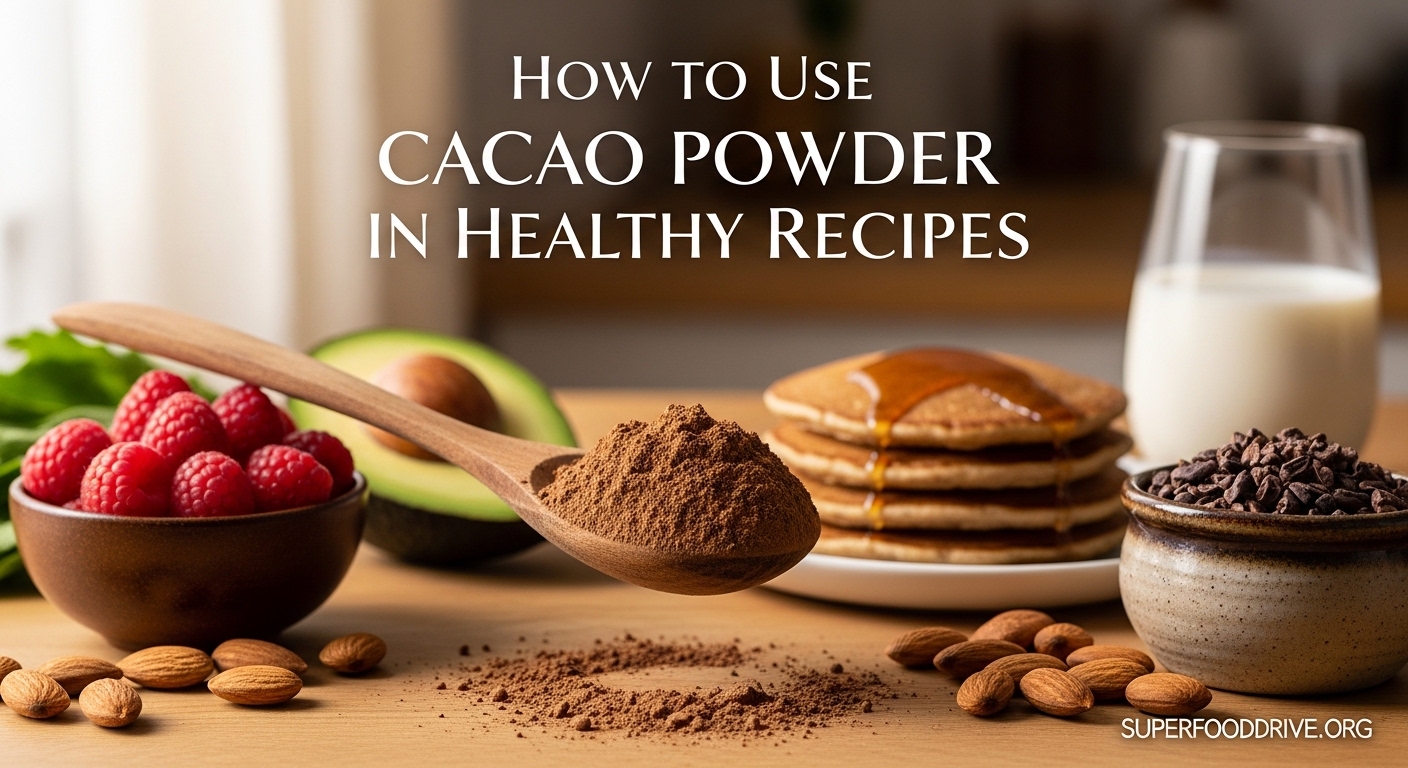
When I first bought a bag of cacao powder, I had no idea what to do with it. The package promised antioxidants and health benefits, but all I tasted was bitter disappointment. After three months of experimenting in my kitchen, I discovered the secrets to transforming this superfood into delicious, chocolatey treats. This guide shares everything I learned about using cacao powder in healthy recipes that actually taste good.
Whether you are looking for smoothie recipes, baked goods, or quick no-bake desserts, you will find practical steps and tested ratios here. By the end, you will know exactly how to use cacao powder without the clumps, bitterness, or confusion that tripped me up early on.
Table of Contents
Cacao vs Cocoa Powder: What is the Difference
Cacao and cocoa might look similar, but they are not interchangeable. Cacao powder comes from cold-pressed cacao beans that have not been roasted at high temperatures. This minimal processing preserves the antioxidants, enzymes, and nutrients that make cacao a superfood.
Cocoa powder, on the other hand, undergoes Dutch processing. The beans are roasted at high heat, which gives cocoa its milder flavor but strips away many beneficial compounds. Dutch-processed cocoa also gets treated with alkaline solution, further altering its nutritional profile.
The flavor difference matters too. Cacao tastes more bitter and complex, while cocoa is sweeter and more mellow. When substituting cacao for cocoa in recipes, use slightly less sweetener since cacao has no added alkalizing agents.
| Feature | Cacao Powder | Cocoa Powder |
|---|---|---|
| Processing | Cold-pressed, unroasted | Roasted, Dutch-processed |
| Antioxidants | High (retained) | Lower (reduced by heat) |
| Flavor | Bitter, intense | Mild, sweet |
| Color | Light brown | Dark brown |
| Substitution ratio | Use 1:1 | Reduce sweetener by 25% |
Health Benefits of Cacao Powder
Cacao powder earns its superfood status through an impressive nutritional profile. I noticed increased energy levels within two weeks of adding one tablespoon to my morning smoothies. Here is what the research and my experience reveal.
Antioxidant powerhouse: Cacao contains more antioxidants per gram than blueberries, acai, or pomegranates. These flavanols protect cells from damage and support healthy aging.
Magnesium boost: Just one tablespoon provides about 10% of your daily magnesium needs. This mineral supports muscle function, sleep quality, and stress management.
Iron and calcium: Cacao offers plant-based iron that vegetarians and vegans especially need. The calcium content supports bone health, though pairing with vitamin D sources improves absorption.
Heart health support: Regular cacao consumption links to improved blood flow and lower blood pressure. The theobromine compound dilates blood vessels naturally.
Natural mood enhancement: Cacao contains anandamide, sometimes called the bliss molecule, along with serotonin precursors that may support emotional wellbeing.
How to Use Cacao Powder in Smoothies
Smoothies became my gateway to daily cacao consumption. The key is balancing the bitterness with natural sweetness and creating a creamy texture.
Basic Chocolate Smoothie Formula
Start with this foundation: 1 cup liquid (plant milk or water), 1 frozen banana, 1 tablespoon cacao powder, 1 tablespoon nut butter. Blend until smooth for a creamy, chocolatey base.
Green Cacao Smoothie
Blend 1 cup spinach, 1 cup almond milk, 1 frozen banana, 1 tablespoon cacao powder, and 1 teaspoon maple syrup. The spinach disappears into the chocolate flavor while adding nutrients.
Protein-Packed Cacao Smoothie
Combine 1 cup oat milk, 1 scoop chocolate protein powder, 1 tablespoon cacao powder, 1 frozen banana, and 1 tablespoon hemp seeds. This keeps me full for four hours straight.
Tropical Cacao Blend
Mix 1 cup coconut water, 1/2 cup frozen pineapple, 1/2 cup frozen mango, 1 tablespoon cacao powder, and 1 tablespoon coconut flakes. The fruit sweetness balances the cacao perfectly.
Pro tip: Always add cacao powder to your liquid first, then blend briefly before adding frozen ingredients. This prevents the powder from sticking to the sides and creates a smoother blend.
Cacao Powder in Baked Goods
Baking with cacao requires understanding substitution ratios. I ruined my first batch of brownies by using too much cacao and not adjusting the sweetener.
Substitution Guidelines
When replacing cocoa powder with cacao, use a 1:1 ratio but increase sweetener by 10-15%. Cacao is more bitter, so maple syrup, coconut sugar, or ripe bananas help balance the flavor.
Healthy Cacao Brownies
Mix 1/2 cup cacao powder, 1/2 cup almond flour, 1/4 cup coconut sugar, 2 eggs, 1/4 cup coconut oil, and 1 teaspoon vanilla. Bake at 350°F for 20 minutes. The result is fudgy, rich, and far healthier than boxed mixes.
Cacao Banana Muffins
Combine 2 cups oat flour, 1/4 cup cacao powder, 1 teaspoon baking powder, 3 ripe bananas, 1/3 cup maple syrup, 2 eggs, and 1/4 cup melted coconut oil. Bake at 375°F for 18-20 minutes.
Chocolate Oatmeal Cookies
Stir together 1 cup oats, 1/2 cup almond butter, 1/4 cup cacao powder, 1/4 cup honey, 1 egg, and 1/4 cup dark chocolate chips. Drop spoonfuls on a baking sheet and bake at 350°F for 12 minutes.
Temperature Adjustations
Cacao burns more easily than cocoa. Lower your oven temperature by 25°F and check for doneness a few minutes early. The lighter color of cacao makes visual cues trickier.
No-Bake Cacao Recipes
Sometimes I want chocolate without turning on the oven. These no-bake options take under 10 minutes of active preparation.
Chocolate Energy Balls
Blend 1 cup dates (soaked 10 minutes), 1/2 cup almonds, 1/4 cup cacao powder, 2 tablespoons coconut oil, and 1 tablespoon chia seeds. Roll into balls and refrigerate for 30 minutes. I make a double batch every Sunday for weekday snacks.
Cacao Chia Pudding
Whisk 3 tablespoons chia seeds, 1 cup almond milk, 1 tablespoon cacao powder, and 1 tablespoon maple syrup. Let sit 5 minutes, whisk again, then refrigerate overnight. Top with fresh berries in the morning.
Chocolate Overnight Oats
Mix 1/2 cup oats, 1 tablespoon cacao powder, 1 tablespoon chia seeds, 1/2 cup plant milk, 1/4 cup Greek yogurt, and 1 teaspoon maple syrup. Refrigerate overnight. The yogurt adds protein and creaminess.
Avocado Chocolate Mousse
Blend 2 ripe avocados, 1/3 cup cacao powder, 1/4 cup maple syrup, 1/4 cup plant milk, and 1 teaspoon vanilla until silky smooth. Chill for 1 hour before serving. No one ever guesses the secret ingredient.
Raw Brownie Bites
Process 1 cup walnuts, 1/2 cup dates, 1/3 cup cacao powder, 2 tablespoons coconut oil, and pinch of salt in a food processor until sticky. Press into a pan and freeze 1 hour before cutting.
Cacao Drinks and Hot Chocolate
Warm cacao drinks became my evening ritual. The theobromine provides gentle stimulation without the jitters of coffee.
Healthy Hot Chocolate
Heat 1 cup milk of choice with 1 tablespoon cacao powder, 1 teaspoon maple syrup, and 1/4 teaspoon vanilla. Whisk constantly while heating to prevent clumping. Top with a cinnamon sprinkle.
Cacao Latte
Make a paste by mixing 1 tablespoon cacao powder with 2 tablespoons hot water. Add 1 teaspoon maple syrup and stir until smooth. Pour in 1 cup heated milk and whisk until frothy.
Iced Cacao Mocha
Stir 1 tablespoon cacao powder into 1/4 cup hot coffee until dissolved. Add 1 cup cold milk, ice, and 1 teaspoon maple syrup. Shake in a jar with a lid for the best texture.
Golden Cacao Milk
Combine 1 cup warm milk, 1 tablespoon cacao powder, 1/2 teaspoon turmeric, 1/4 teaspoon cinnamon, and 1 teaspoon honey. This anti-inflammatory blend tastes like a spiced hot chocolate.
Key technique: Always make a slurry first. Mix cacao powder with a small amount of hot liquid to create a smooth paste before adding remaining ingredients. This eliminates clumps completely.
Tips for Using Cacao Powder
These practical tips saved me from countless kitchen disasters.
Storage: Keep cacao powder in an airtight container away from light and heat. The pantry works fine, but refrigeration extends freshness to 2 years. Check for a rancid smell before using old powder.
Dosage guidelines: Start with 1 tablespoon daily. I worked up to 2 tablespoons without issues. Some people experience digestive sensitivity at higher amounts.
Sweetener pairings: Maple syrup and dates complement cacao’s earthy flavor better than white sugar. Coconut sugar works well for baking. Stevia and monk fruit suit those avoiding sugar entirely.
Mixing technique: For cold recipes, blend cacao with a small amount of warm liquid first. For hot recipes, gradually add liquid to the powder while whisking constantly.
Quality selection: Look for organic, raw cacao powder with no additives. Darker color indicates Dutch processing, which means you are getting cocoa, not cacao.
How to Use Cacao Powder in Healthy Recipes: Frequently Asked Questions
What is the healthiest way to consume cacao powder?
The healthiest way to consume cacao powder is in its raw form without excessive heat or added sugar. Adding 1-2 tablespoons to smoothies provides maximum nutrient retention. Mixing with warm (not boiling) milk preserves antioxidants while creating a comforting drink. Avoid temperatures above 170°F as heat degrades beneficial enzymes.
Is cacao powder okay for GERD?
Cacao powder may trigger GERD symptoms in sensitive individuals due to its natural acidity and theobromine content. Start with small amounts (1 teaspoon) and monitor your body’s response. Consuming with alkaline foods like bananas or plant milk can help reduce acid reflux potential. Consult your doctor if you have chronic GERD before adding cacao to your diet.
Is unsweetened cocoa powder ok for diabetics?
Unsweetened cacao powder is suitable for diabetics when consumed in moderation. It contains no sugar and has a low glycemic impact. The fiber content may actually help stabilize blood sugar. However, always account for any added sweeteners in recipes. Pair cacao with protein and healthy fats to minimize blood sugar spikes.
Can you take cacao with antidepressants?
Cacao contains small amounts of MAO inhibitors and serotonin precursors. While generally safe, those taking MAO inhibitor antidepressants should consult their healthcare provider before consuming large amounts of cacao powder. Standard culinary amounts (1-2 tablespoons daily) rarely cause interactions, but individual sensitivity varies.
Which is better: cacao or cocoa powder?
Cacao powder is nutritionally superior due to minimal processing that preserves antioxidants, enzymes, and minerals. However, cocoa powder works better for some recipes requiring milder flavor and darker color. Choose cacao for health benefits and superfood nutrition. Choose Dutch-processed cocoa for traditional baking where color and mild flavor matter more.
How much cacao powder per day is safe?
Most adults can safely consume 1-2 tablespoons (15-30 grams) of cacao powder daily. Some sources suggest up to 40 grams provides health benefits without side effects. Start with smaller amounts and increase gradually. Excessive consumption may cause digestive upset, headaches, or caffeine-like sensitivity due to theobromine content.
Conclusion
Learning how to use cacao powder in healthy recipes opened up a world of nutritious chocolate possibilities for me. From morning smoothies to evening hot chocolate, this superfood adds rich flavor and impressive health benefits to everyday eating.
Start with one recipe that appeals to you. The basic chocolate smoothie makes an excellent entry point. Once you master the slurry technique and understand the sweetness balance, you will find yourself reaching for cacao instead of cocoa in most recipes.
Remember to store your powder properly, make that initial paste with hot liquid, and adjust sweeteners to taste. Your taste buds and your body will thank you for making the switch to this antioxidant-rich superfood.
What cacao recipe will you try first?