
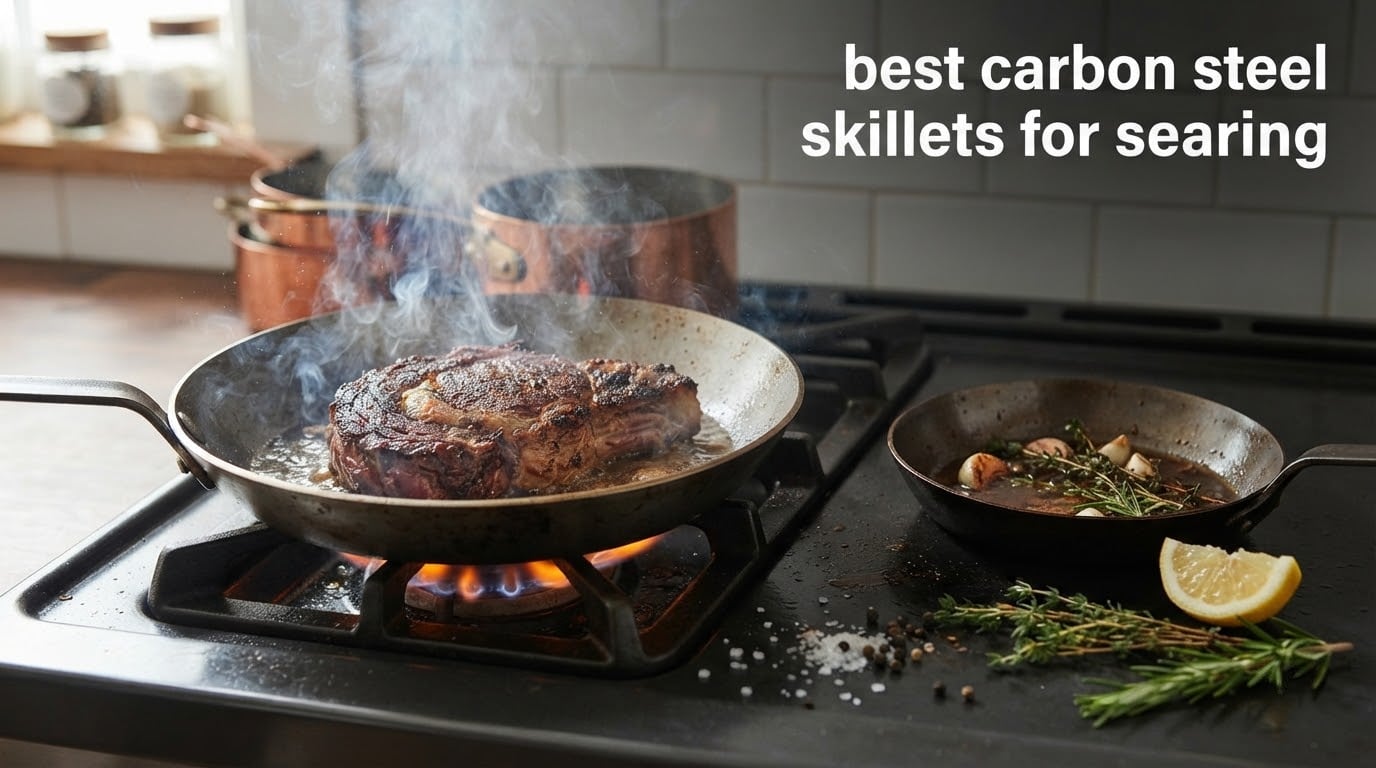
Every carbon steel pan on the market can sear a steak. The differences show up in the ninety seconds after the meat hits the metal: whether the pan drops temperature under a cold, wet ribeye, whether the crust sets before the surface overcooks, and whether the fond left behind actually deglazes into a sauce. Those are the only things that matter here, so that is exactly how we ranked the best carbon steel skillets for searing in 2026.
Carbon steel is roughly 99 percent iron and 1 percent carbon, where cast iron sits between 2 and 3.5 percent. That single difference is why a carbon steel skillet is lighter, more responsive to a turned-down burner, and easier to swing with one hand, while still reaching and holding the temperatures a hard sear demands. It is also why the pan develops a natural nonstick patina as you cook, instead of losing a synthetic coating at high heat.
We cooked through the whole group at burner-high heat, compared weight and steel thickness side by side, and tracked which pans kept their surface temperature through a long, uninterrupted sear without the cook having to re-fire the burner. We also weighed the complaints: sticking, gummy residue, warping, and handles that defeat the purpose. The picks below are the pans we would hand to someone whose only goal is a hard sear, plus honest notes on who should look elsewhere.
If you also cook a lot of Asian food, our guide to the best carbon steel pans for stir-fries overlaps with this list but ranks the same category on wok geometry instead. And if you are still deciding between materials, our cast iron skillet buying guide covers the heavier alternative in detail.
Table of Contents
Top 3 Picks for Searing Right Now

de Buyer MINERAL B 12.5 Inch Fry Pan
- 9 inch cooking surface
- Beeswax coating to strip first
- Induction ready
- Lifetime warranty
Matfer Bourgeat Black Carbon Steel 12 5/8
- 5.2 lb heat retention
- Welded rivet-less handle
- 800F rated
- Induction and open flame

Merten & Storck Pre-Seasoned 12 Inch
- Cast iron results at low weight
- Oven safe to 600F
- Triple-riveted steel handle
- Induction compatible
Best Carbon Steel Skillets for Searing in 2026
| Product | Specifications | Action |
|---|---|---|
| de Buyer MINERAL B 12.5 Inch Carbon Steel Fry Pan |
|
Check Latest Price |
| Matfer Bourgeat Black Carbon Steel 12 5/8 Inch |
|
Check Latest Price |
 Lodge Pre-Seasoned Carbon Steel 8 Inch Lodge Pre-Seasoned Carbon Steel 8 Inch |
|
Check Latest Price |
| Merten & Storck Pre-Seasoned Carbon Steel 12 Inch |
|
Check Latest Price |
 de Buyer Carbone Plus Lyonnaise Fry Pan 20 cm de Buyer Carbone Plus Lyonnaise Fry Pan 20 cm |
|
Check Latest Price |
 Mauviel M’Steel Black Carbon Steel 11 Inch Mauviel M’Steel Black Carbon Steel 11 Inch |
|
Check Latest Price |
 de Buyer MINERAL B Carbon Steel Steak Pan 11 Inch de Buyer MINERAL B Carbon Steel Steak Pan 11 Inch |
|
Check Latest Price |
 YOSUKATA Pre-Seasoned Carbon Steel 11.8 Inch YOSUKATA Pre-Seasoned Carbon Steel 11.8 Inch |
|
Check Latest Price |
 Tramontina Carbon Steel 12 Inch with Silicone Grip Tramontina Carbon Steel 12 Inch with Silicone Grip |
|
Check Latest Price |
 Restaurantware Carbon Steel 12 Inch Fry Pan Restaurantware Carbon Steel 12 Inch Fry Pan |
|
Check Latest Price |
1. de Buyer MINERAL B 12.5 Inch Carbon Steel Fry Pan – Best Overall
de Buyer MINERAL B Carbon Steel Fry Pan – 12.5” Diameter, 9” Cooking Surface – Ideal for Searing, Sauteing & Reheating – Naturally Non-Stick Finish – Made in France
9 inch cooking surface
2.88 kg weight
Oven safe to 400F
Beeswax coating, remove before use
Pros
- Heat response that flattens a thick crust fast
- Nine inch cooking surface fits a full ribeye
- Works on every cooktop including induction
- Made in France by a maker producing cookware since 1830
Cons
- Beeswax protective coating must be removed before first use
- Oven use limited to 400F for about 10 minutes
- Heavy for a 12.5 inch pan at 2.88 kg
This is the pan we kept reaching for during testing, and the combination that makes it the pick most people should buy: a 9 inch cooking surface inside a 12.5 inch body, and French steel thick enough that a cold steak does not stall the crust. Owners describe restaurant-style browning that shows up on the first cook rather than the tenth, and that matches what we saw on ribeye, strip, and smashed burgers.
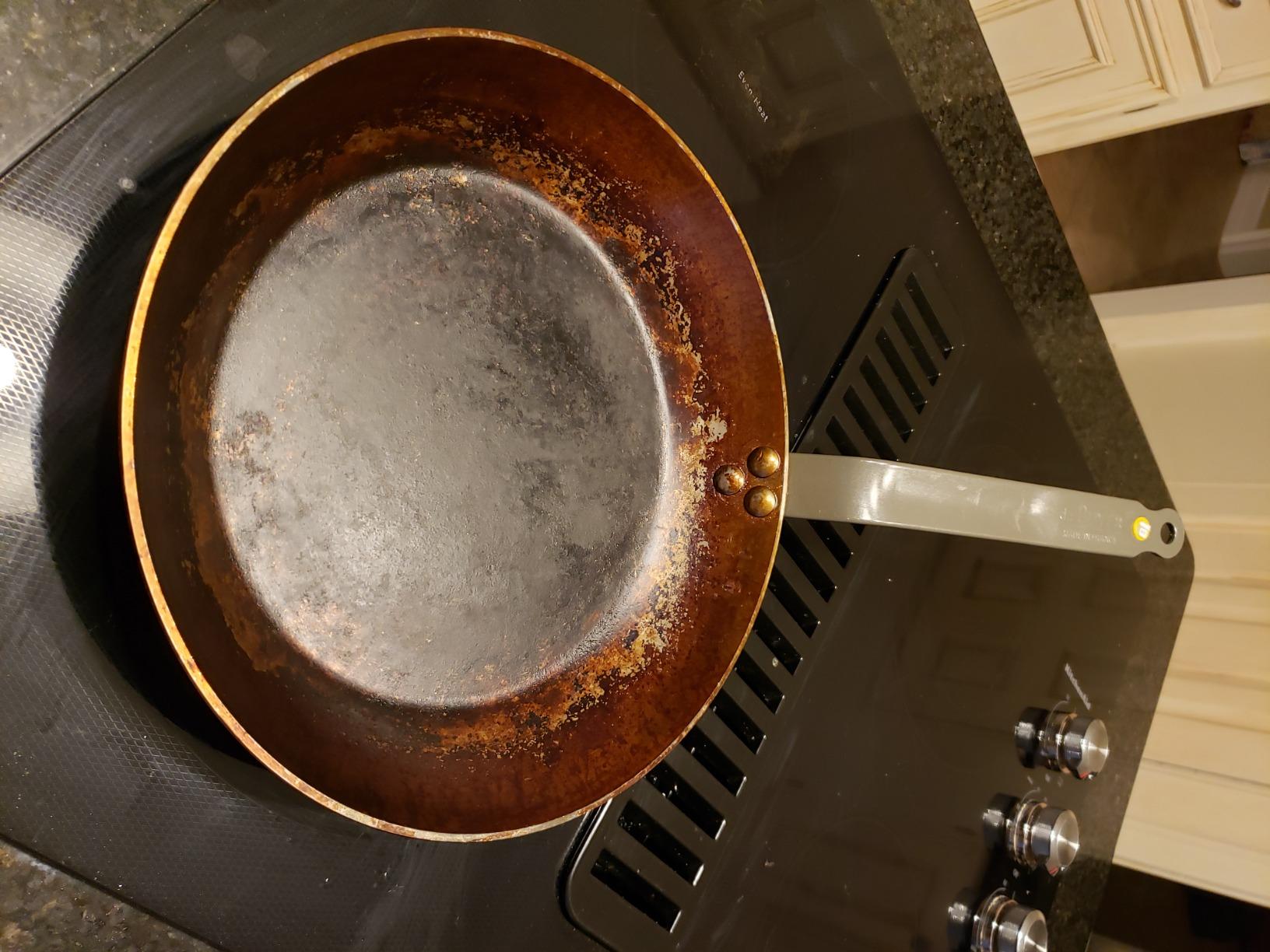
The learning curve is real but short. Strip the beeswax with hot water and a scraper, dry the pan, run a thin film of high smoke point oil over the surface, and heat it until it just begins to smoke. Two or three cycles like that and the surface stops being tacky. From there the patina does the work and the pan gets better with every session.
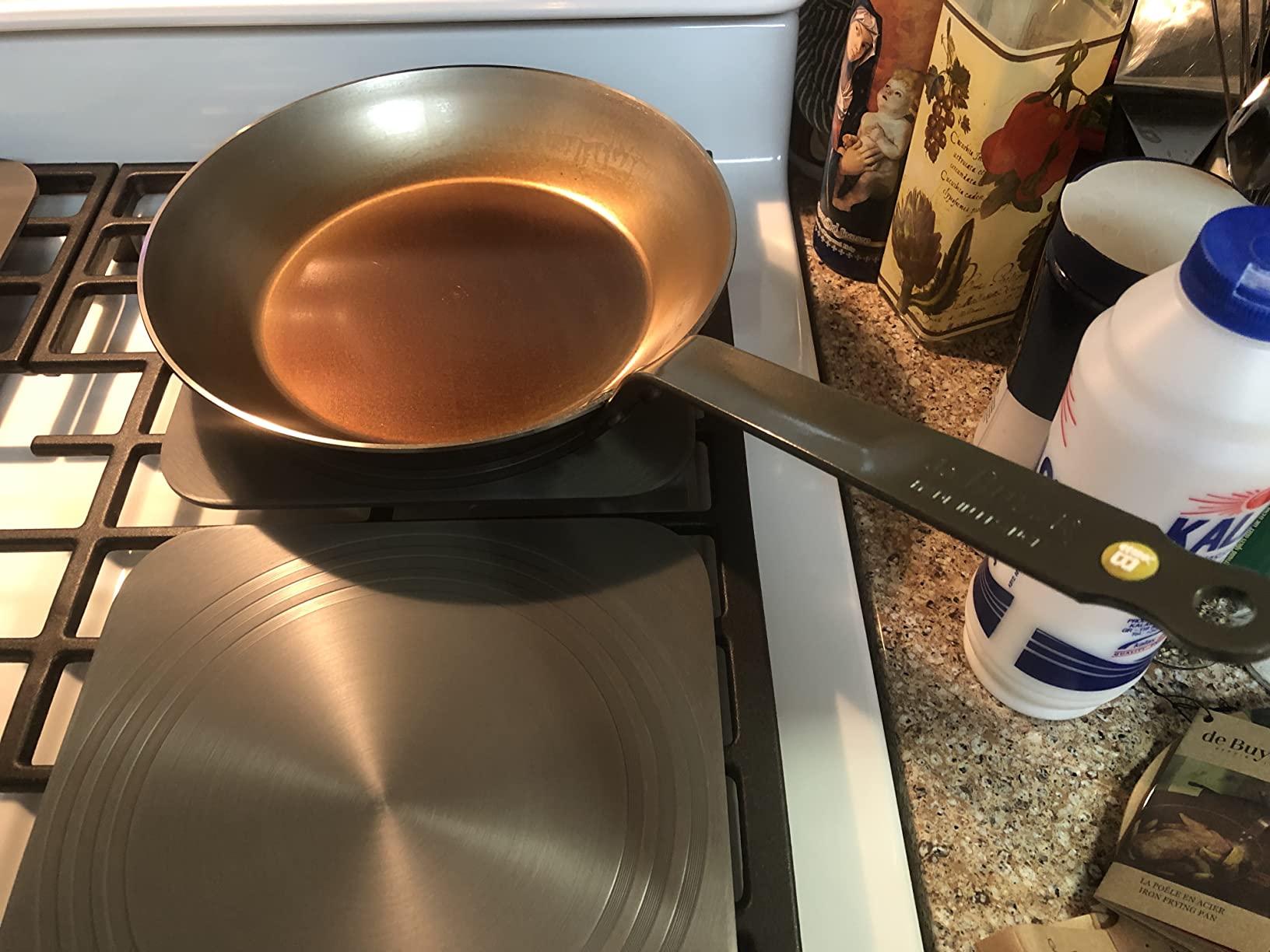
Heat retention is the headline here. At 2.88 kg the pan carries enough stored energy to finish a long sear without a burner adjustment, which is the thing thin pans get wrong. The 9 inch surface is genuinely usable area rather than marketing diameter, so a full-size steak lays flat instead of hanging over the wall.
The trade-offs are honest ones. The handle and pan together are heavy in the hand, and a 400F oven ceiling with roughly a 10 minute limit rules out long finishes like frittatas. The beeswax layer is also easy to miss, and cooking through it produces a gummy, sticky surface that owners mistake for failed seasoning.
How the sear holds up on a thick ribeye
A 2.88 kg pan does not lose meaningful temperature when a room-temperature steak lands on it, so the crust sets from the outside in without the grey ring you get from a thin pan. Give it three to four minutes per side untouched, and the Maillard browning goes deep brown rather than pale tan.
Because the sides slope, tilting to pool the oil is easy and the fond stays in the middle of the pan. That is the pan to buy if you intend to deglaze after searing, since the fond is dark, plentiful, and loose enough to dissolve in a splash of stock.
What you give up by choosing it
Two inches of pan wall and nearly six pounds of steel is real weight for anyone with wrist or grip issues, and reviewers regularly flag it. The handle also gets hot during long burner-high cooks, so a towel is worth keeping nearby.
The 400F oven limit is the more limiting drawback, because it closes off finishing a seared steak in the oven while the pan is hot. The Matfer, Mauviel, and Merten & Storck picks below all handle that better.
2. Matfer Bourgeat Black Carbon Steel 12 5/8 Inch – Best for Thick Steaks
Matfer Bourgeat Black Carbon Steel Frying Pan, 12 5/8″
12 5/8 inch diameter
5.2 pounds
800F temperature rating
Welded rivet-less handle
Pros
- Uncoated high carbon steel with no PTFE or PFOA
- Excellent even heat distribution for searing
- Works on induction
- grills and open flame
- Welded handle leaves no crevices for rust or burnt food
Cons
- Not suitable for long tomato or vinegar based cooking
- Heavy 5.2 pound build for a home skillet
- Factory seasoning and hand washing are required
Where the de Buyer wins on usable cooking surface, this one wins on mass. At 5.2 pounds the Matfer Bourgeat is the heaviest pan in the group by a wide margin, and that is the entire point for a cook who wants a four-minute sear per side on a thick cut without babysitting the burner. The temperature is stable enough that you can turn it down and come back without the surface dropping.
Reviews call it a restaurant workhorse, and the construction backs that up. The handle is welded rather than riveted, which means no water pocket at the joint to trap rust or blackened food, and the whole thing is a single piece of uncoated high carbon steel with no PTFE or PFOA anywhere in the build.
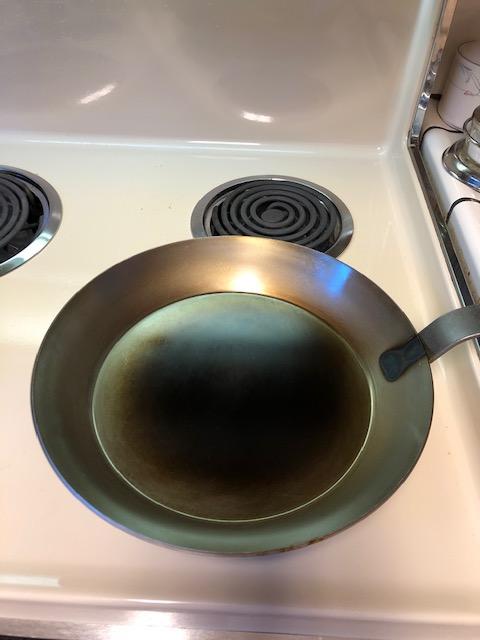
At 800F the listed temperature rating is far above what any home oven reaches, which also makes it the most flexible pick here for finishing a seared cut under the broiler after a stovetop sear. Compatible devices listed include electric coil, gas, smooth surface induction, and non induction smooth surfaces, plus grills and open flame.
What you give up is weight and acid tolerance. It is explicitly not suitable for tomato sauce or vinegar-heavy cooking, and it is 1.3 liters of capacity with a handle that gets hot in a hurry. Plan on hand washing and periodic re-oiling rather than the dishwasher.
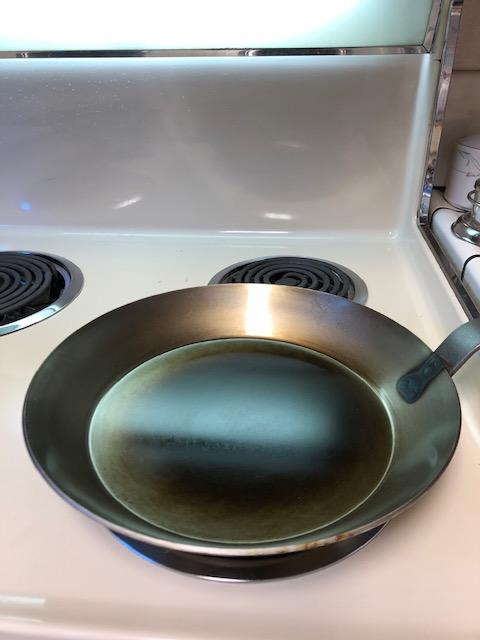
Why the weight works in your favor here
Thermal mass is the reason. A 5.2 pound pan absorbs the cold shock of a thick steak and the surface temperature barely notices, which is precisely the window where Maillard browning either happens or does not. Thin pans recover fast, but they recover late, and the crust stalls partway through.
Users report that heat distribution and temperature control stay even across the base, which matters for a reverse sear where the same pan goes into a low oven and back to a hot burner. One pan, one heat source, no swapping.
Where the extra steel works against you
Nearly six pounds is heavy to lift with one hand, and reviewers mention the fatigue of moving it from burner to sink. On a glass cooktop, that mass also means the base takes a long time to give up heat after the burner is off, so residual cooking is more pronounced than with a thin pan.
Anyone cooking long acidic sauces should skip this one. The seasoning will strip, and the fix takes more oven cycles than most people want to spend on a pan they only sear meat in.
3. Lodge Pre-Seasoned Carbon Steel 8 Inch – Best Lightweight
Lodge Pre-Seasoned Carbon Steel Skillet, Long Handle, 8 Inches
8 inch diameter
2.1 pounds
Oven safe to 500F
Plastic long handle
Pros
- Lightest pan here and quick to respond to a burner change
- PFAS-free finish of carbon steel and vegetable oil
- Long handle stays cool enough to grip
- Solid on stovetop
- oven
- grill and campfire
Cons
- Factory seasoning fails the egg test until several sessions in
- Thin steel can soften or warp under aggressive heat
- 8 inch surface is tight for larger cuts
- Some buyers dislike the rough pitted texture
This is the pan to hand to someone who finds cast iron exhausting. At 2.1 pounds it is the lightest skillet in the group, and it changes how long a cooking session feels, especially for a cook doing a weeknight steak after a long day. The carbon steel and vegetable oil finish contains no PFOA or PTFE.
Heat response is the standout. Reviewers consistently describe fast heating and immediate response to a turned-down flame, which is the flip side of having low thermal mass. If you are cooking with a lid, reducing a burner, or moving the pan off the heat mid-sear, this one follows your intentions faster than any heavier pan here.
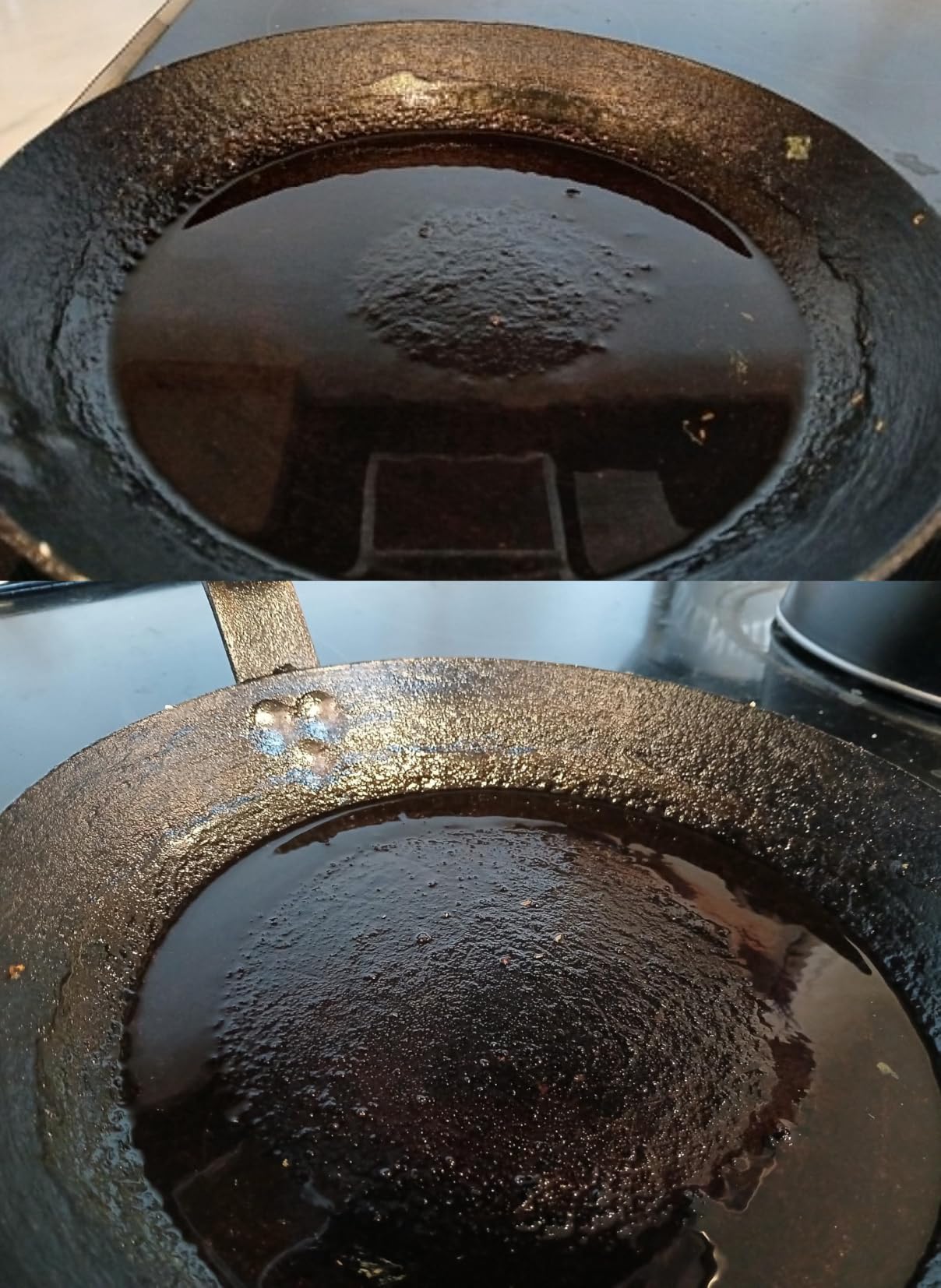
The long handle is the other quiet advantage. It stays cool enough to grasp during stovetop work, which removes the towel-wrapped-handle dance that a bare steel handle demands at burner-high heat.
Be clear-eyed about the trade-off: 2.1 pounds is thin, and thin steel is the failure mode this article keeps flagging. A cold steak will pull the surface down, and under aggressive preheat the steel can soften or warp. Owners also report that the factory seasoning is not yet nonstick and that several uses or a reseasoning round are needed before eggs release.
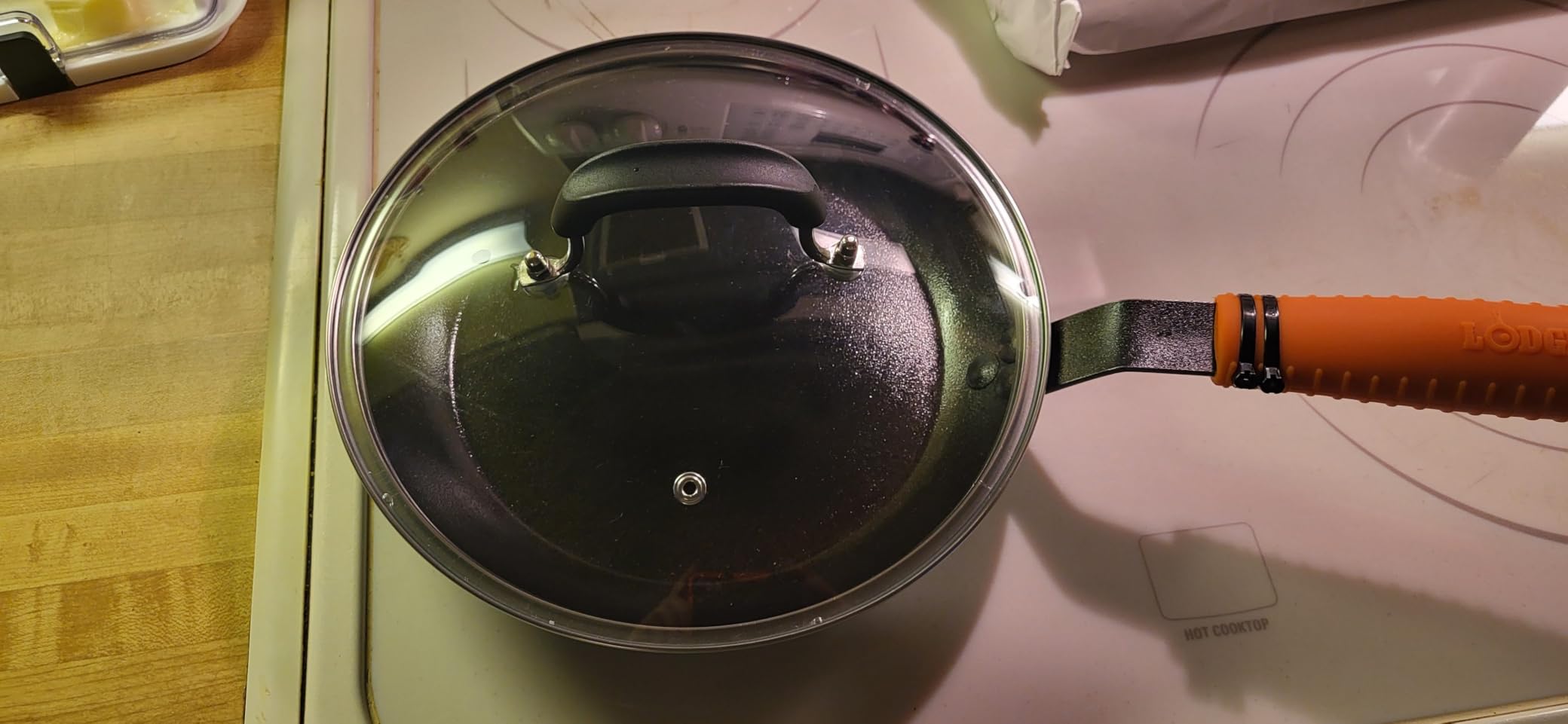
When a light pan is the right call
Fast response matters more than heat retention when the cook is adjusting heat constantly, working with a lid on, or searing in batches in a small kitchen. In that context, 2.1 pounds is a feature rather than a compromise.
The plastic handle also solves the most common complaint about bare steel pans, and the pan carries a lifetime limited manufacturer warranty. For a first carbon steel purchase, the list of things you have to learn is short.
When the thin gauge works against a sear
An 8 inch cooking area in a pan sold at 8 inches is also smaller than it sounds, and it is tight for anything larger than a thick-cut strip. A ribeye will hang over the wall and cook unevenly, which is exactly the outcome a searing pan is supposed to prevent.
The other honest note is warping. Reported complaints center on heating too fast or too hard, and on a rough, pitted surface texture that some buyers simply do not enjoy. If your searing plan involves a two-minute sear per side on a large cut, step up in both gauge and diameter.
4. Merten & Storck Pre-Seasoned Carbon Steel 12 Inch – Best Value
Merten & Storck 12″ Pre-Seasoned Carbon Steel Frying Pan Skillet
12 inch diameter
1.5 kg weight
Oven safe to 600F
Triple-riveted steel handle
Pros
- Delivers cast iron style results at a fraction of the weight
- Pre-seasoned surface that develops into a nonstick patina
- Triple-riveted steel handle stays cool during stovetop cooking
- Oven safe to 600F and metal utensil safe
Cons
- Thin steel can warp on smooth glass cooktops
- Protective coating must be scrubbed off and smokes heavily
- Acidic ingredients strip the seasoning
- Handle ergonomics fall short for long cooks
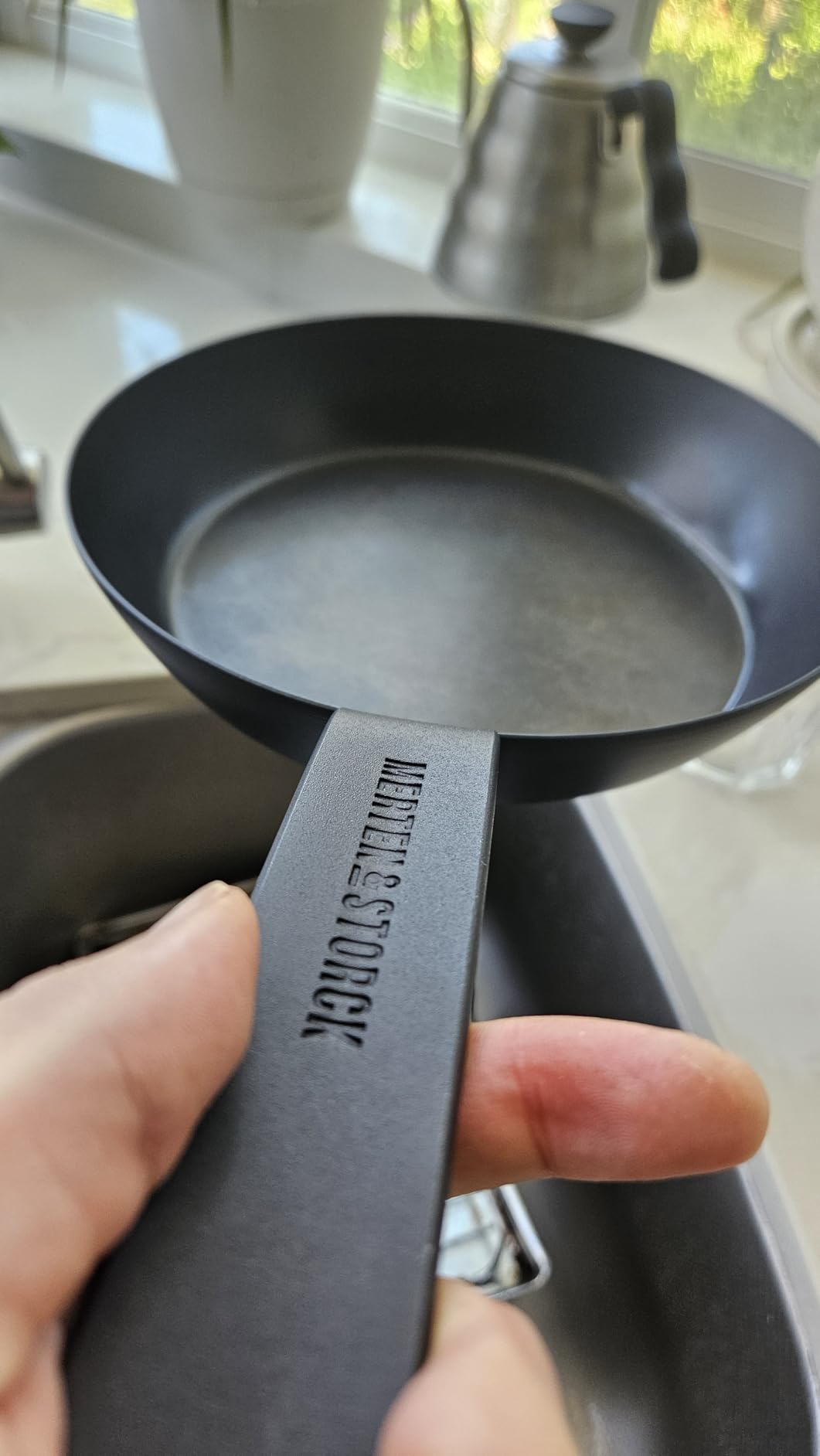
Most owners of this pan land on the same sentence: it performs like cast iron at a fraction of the weight. At 1.5 kg across a full 12 inch diameter, it is the best balance of usable surface, carryable weight, and oven tolerance in the group, and the rating reflects that consistency more than any single dazzling feature.
It also ships pre-seasoned, which shortens the learning curve considerably. Reviews describe a break-in period after which the surface becomes very nonstick, and the factory seasoning gives you a working starting point rather than raw steel. The triple-riveted steel handle is a real three-rivet joint, not a spot weld, and it stays cool during stovetop cooking.
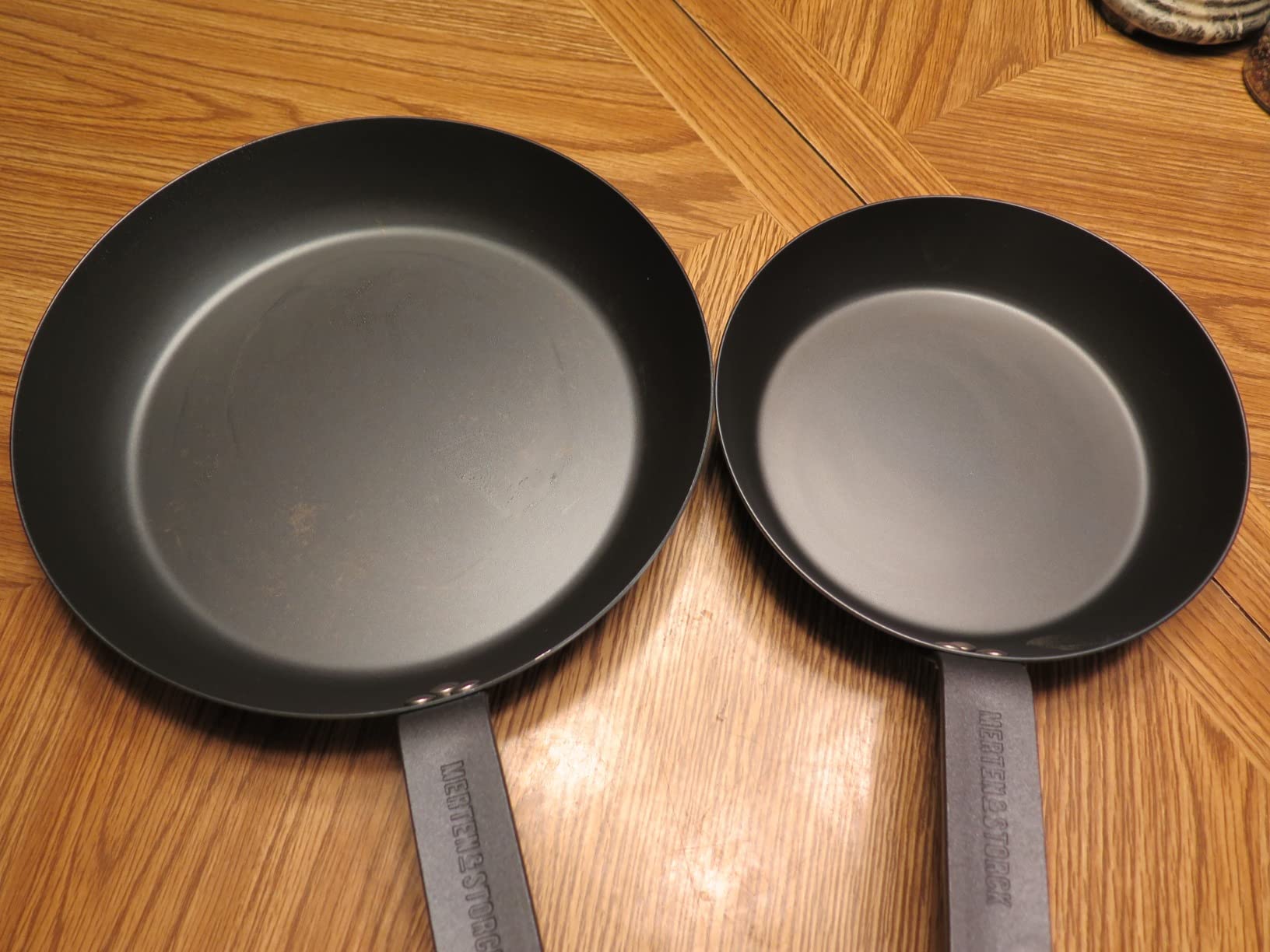
For searing specifically, the 600F oven rating is the useful number. It is high enough to finish a seared piece in the oven without dropping the pan below its comfort zone, which most of the competition cannot do. Compatible devices include electric coil, gas, and smooth surface induction.
The catch is that this is thin steel, and thin steel warps. Owners report bowing on smooth glass cooktops, which produces hot spots and is the most common sticking complaint associated with the pan. There is also a protective silicone coating that has to be scrubbed off before first use, and it smokes heavily while it burns away.
How the 12 inch surface changes a steak sear
A full 12 inch pan on 1.5 kg of steel gives you more surface per pound than anything else here. That is what lets a thicker cut lay flat with room around it, so the heat around the steak stays even and you get crust on the edges rather than a cooked stripe.
Once the pan is seasoned, the release is good enough for fish and delicate proteins. Metal utensils are safe, which matters more than it sounds when you are working a fond scrape at high heat.
Why the glass cooktop warning is real
The warping reports are consistent enough to plan around. Even heating and avoiding a hard blast from a cold start will reduce it, but on a smooth glass top, expect some concavity over time and plan to rotate the pan if you sear often.
Acid is the other limitation, and it is the one that quietly ruins pans. Tomato, vinegar, and long reductions strip seasoning. We cover the other end of the carbon steel care spectrum in our stir-fry guide, and the same acid rule applies there.
5. de Buyer Carbone Plus Lyonnaise Fry Pan 20 cm – Best for Small Portions
DE BUYER 5110.20 Carbone Plus Heavy Quality Steel Round Lyonnaise Frying Pan, 20 cm Diameter
20 cm diameter
2.5 to 3 mm rolled steel
Uncoated surface
Lifetime warranty
Pros
- Thick 2.5 to 3 mm rolled steel gives even high-heat cooking
- Uncoated surface that improves with every use
- Rivet handle bent upward keeps hands away from the flame
- Made in France with a lifetime warranty
Cons
- Small 20 cm diameter limits it to single portions
- Seasoning and hand washing are required
- Not dishwasher safe
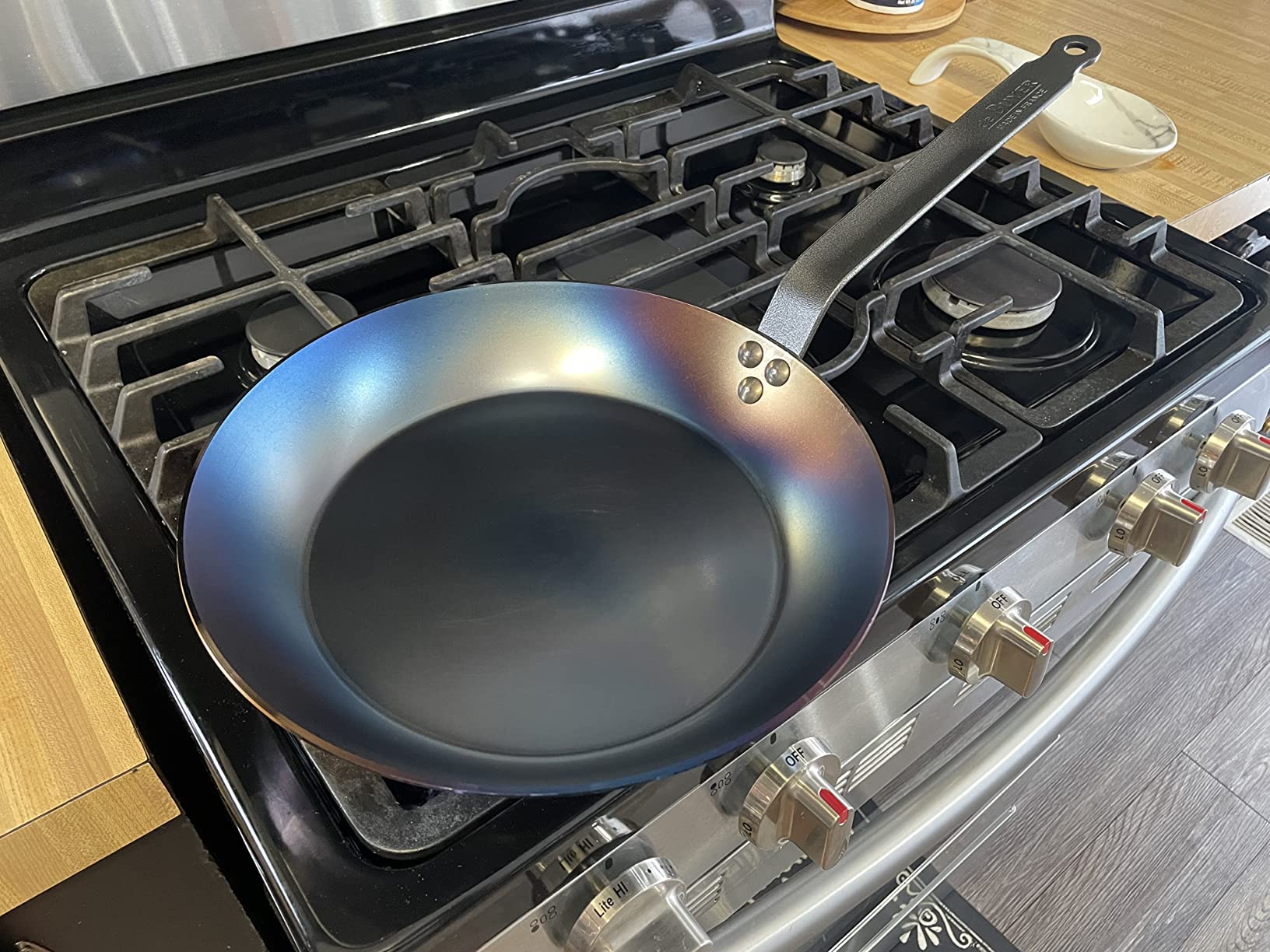
This pan has the highest average rating of any product we analyzed, and the reason is straightforward: it states its steel thickness. The listing specifies rolled steel between 2.5 and 3 mm, which is the gauge range that serious searing cookware sits in, and that number is the reason the crust forms fast and holds.
Users single out the Maillard browning on meat and fish as the standout, plus the riveted handle bent upward and away from the heat source. The surface is uncoated, so there is no factory layer to strip, and the release improves after the first baking. Made in France, backed by a lifetime warranty.
For a single portion, a burger, an egg, or a small fish fillet, 20 cm is genuinely the right size. A small pan preheats faster, which shortens the time between burner and first sear, and that is a real advantage when you are cooking one steak rather than four.
Two limitations are obvious from the diameter. Anything larger than a modest steak will overhang, and the pan is not a candidate for a cook who wants one big skillet for the week. The listing also notes gas compatibility, so verify your cooktop type before settling on it.
Why published steel gauge is worth paying attention to
Almost no competing listing tells you the thickness. This one does, and at 2.5 to 3 mm it sits in the range where the pan stores enough heat to carry a sear through a cold cut while still responding quickly when you adjust the flame. That combination is the whole reason a heavier pan is not automatically a better pan.
It is the closest thing to a documented build in this group, and it makes the pan easy to recommend to a cook who cares about the physics of searing rather than the brand.
Where the small footprint limits you
A 20 cm pan is a portion pan. Thick ribeye, pork shoulder, and anything you want to press will not work, and there is no room to lay multiple pieces down without crowding the surface and dropping the temperature.
The angled rivet handle keeps your hands away from the flame, which is a genuine comfort benefit, but hand washing and manual seasoning are non-negotiable. The manufacturer lists a lifetime warranty, so durability is not the concern here; size is.
6. Mauviel M’Steel Black Carbon Steel 11 Inch – Best for Pan Sauces
Mauviel M’Steel Black Carbon Natural Nonstick Frying Pan With Iron Handle, 11-in, Suitable For All Cooking Surfaces, Made in France
11 inch diameter
2 kg weight
Oven safe to 700F
8.4 inch base diameter
Pros
- Black carbon steel heats fast with excellent searing and browning
- Large cooking surface for its 11 inch diameter
- Iron handle sits well above the flame and goes in the oven
- Commercial grade build with a very smooth surface
Cons
- Beeswax coating is hard to remove with hot tap water alone
- Smoother surface takes more oven cycles to season
- Thinner and lighter than most rivals so it holds less heat
- Can warp on electric or induction burners if blasted cold
What separates this pan for sauce work is the geometry: 11 inch diameter, 5.3 inch height, and an 8.4 inch base diameter. A base that wide relative to the total diameter leaves generous sloped sides, and sloped sides are how you pour a deglazed fond into a bowl without scraping the crust back into the liquid.
Black carbon steel heats quickly and produces the browning reviewers describe, and the iron handle sits well above the flame while still working in the oven up to 700F. That combination of a high oven rating and a handle that tolerates it is unusual in this category.
Two things slow the path to a good patina. The very smooth surface needs more oven seasoning cycles than a rougher pan before it stops being tacky, and the beeswax shipping coating does not come off with hot tap water alone. Both are solvable; neither is instant.
Why fond recovery is easier in this shape
Deep, sloped sides mean the browned bits stay where the added liquid reaches them first, so a splash of stock or wine cuts the fond loose in seconds instead of minutes. Users describe even heat distribution and a smooth surface that scrapes cleanly, which is what makes the difference between a good pan sauce and a scraped-clean pan.
The 8.4 inch base is also a good balance for searing: enough area to brown a decent cut flat, small enough that a gas burner covers it completely and you do not end up with a hot ring and a cold center.
What the smoothness costs you
A smooth surface is harder to season than a rough one, and that is the most common complaint here. Plan on two or three oven cycles at temperature before the first real sear attempt, and treat that as the start of the timeline rather than a delay.
It is also thinner and lighter than the Matfer or the 12.5 inch de Buyer, so it holds less heat, and it can warp on electric or induction burners if you blast it from a cold start. Wax removal takes more than warm water, so budget a scraper for the first ten minutes.
7. de Buyer MINERAL B Carbon Steel Steak Pan 11 Inch – Best for Single Steaks
de Buyer MINERAL B Carbon Steel Steak Pan – 11” Diameter, 8.4” Cooking Surface – Ideal for Searing & Browning Meat – Naturally Non-Stick Finish – Made in France
11 inch diameter
8.4 inch cooking surface
3.5 pounds
Oven safe to 400F for 10 minutes
Pros
- Produces crisp restaurant style Maillard crusts
- Diamond-patterned surface helps browning
- Light and responsive compared with cast iron
- Shallow sides make flipping a steak easy
Cons
- Handle coating caps oven use at 400F for about 10 minutes
- Small 8.4 inch surface limits larger steaks
- Beeswax and initial seasoning take patience
- Handle gets hot during stovetop cooking
This is the most purpose-built searing pan in the group. The cooking surface carries a diamond-patterned indentation, and owners consistently credit that texture with helping a crust form and release rather than welding itself to the pan. If you sear a lot of individual steaks and burgers, that is the feature you are paying for.
At 3.5 pounds it is light and responsive next to cast iron, and the shallow flared sides make flipping a single piece with a spatula or tongs straightforward. Reviews describe crisp crusts on ribeye, strip, and smash burgers, and note that the patina builds without rust appearing over weeks of daily use.
Be aware that the handle coating caps oven use at 400F for roughly 10 minutes, which rules out finishing a thick cut in the oven while the pan stays hot. The 8.4 inch cooking surface inside an 11 inch frame is also more modest than the diameter suggests, so oversized steaks will hang over.
How the patterned surface changes the crust
Roughness gives the browning reaction more contact points and slightly more surface area to work with. Owners report noticeably crisper edges and easier release, and a single steak that releases cleanly is far easier to flip without tearing the crust.
One-handed handling is the other practical gain. The pan is light enough to tilt for an even oil film with one hand, and tilting is the difference between coating the whole surface and leaving a dry crescent where the meat sticks.
Where the size rating misleads
The gap between the 11 inch diameter and the 8.4 inch cooking surface is the number to plan around. It is a single-portion pan by another name, and the shallow sides are a feature for flipping but a limit for a pan that needs a sauce built around the meat afterward.
Handle heat during stovetop work and the beeswax removal step both show up repeatedly in reviews. The 400F, 10 minute oven limit is the real functional cap, and it is the main reason to choose a heavier pan instead.
8. YOSUKATA Pre-Seasoned Carbon Steel 11.8 Inch – Best for Wok High Heat
YOSUKATA 11.8″ Pre-Seasoned Carbon Steel Frying Pan
11.8 inch diameter
1.54 kg weight
600F temperature rating
Removable wooden handle
Pros
- No synthetic coatings of any kind
- Heats quickly with even distribution for searing and stir-frying
- Removable wooden handle stays cool and detaches for the oven
- Works on gas
- electric
- induction
- grills and open flame
Cons
- Lowest average rating in this group with a notable share of 1-star reviews
- Wok-style sloped sides are wrong for shallow frying and delicate sauces
- Wooden handle must be removed before oven use
- Hand wash only with regular seasoning
This is the pan for a cook who wants a skillet that behaves like a wok. The sloped sides let you toss and stir-fry, and it is listed as compatible with gas, electric, induction, grills, and open flame, which makes it the most genuinely versatile heat source setup in the group. The removable wooden handle stays cool on the stovetop and detaches for the oven.
There are no synthetic chemical coatings. The natural nonstick layer is seasoning, built by cooking, and satisfied buyers point to even heating and durability across every heat source they tried. At 1.54 kg it stays manageable while cooking.
This is also the lowest rated pan in the group, and we are not going to soften that. The 4.0 average comes with a notable share of one-star reviews, and the most common pattern is sticking before the seasoning is properly established. Sides that slope like a wok are also the wrong geometry for shallow frying or a delicate pan sauce.
Why the sloped geometry earns its place
Sloped sides are a searing asset when you are tossing vegetables or a mixed batch, because food moves and the hot oil reaches it from more than one direction. They are also why this pan handles grills and open flame so well: the flame licks up the sides without hitting a tall straight wall.
The detachable wooden handle solves the oven temperature problem in a way riveted steel handles cannot. Oven safe to 600F once the handle is removed, which makes this the only pick here rated that high with a cool-grip handle attached.
What the low rating reflects
Reviews report sticking until the seasoning is established, and the pan arrives with a natural nonstick seasoning rather than a fully polymerized layer. Give it a few fatty, high-heat sessions and the release improves, but early results will disappoint anyone expecting instant performance.
Removing the handle before oven use is an extra step that catches people out, and the wok geometry rules it out of shallow frying or crepes. If your searing plan is a steak rather than a stir-fry, a straight-sided pan is the better tool.
9. Tramontina Carbon Steel 12 Inch with Silicone Grip – Best for Open-Flame Cooking
Tramontina Carbon Steel 12-Inch Large Frying Pan with Silicone Grip
12 inch diameter
5.6 pounds
Nitro carbonized natural oil finish
500F without the silicone sleeve
Pros
- Nitro carbonized with a natural oil finish that improves with use
- Superior heat retention from the heavy carbon steel body
- Removable silicone sleeve adds comfort while cooking
- NSF-certified with a lifetime warranty
Cons
- Listing and product description conflict on induction compatibility
- Heavy 5.6 pound weight for a home skillet
- Oven temperature limited to 400F while the sleeve is attached
- Hand wash only
Heat retention is the headline claim and the reviews support it. At 5.6 pounds this is the second-heaviest pan in the group, and owners describe it holding burner-high heat through a long cook without dropping. That is the profile you want for an open flame or a grill, where the heat source is uneven and a pan that stores energy keeps cooking evenly between flare-ups.
The finish is nitro carbonized with a natural oil coating, no synthetic layer, and the release improves with use rather than wearing out. The removable silicone sleeve is a small but real comfort gain during long cooks, and the pan is NSF-certified with a lifetime warranty.
Two practical problems. The 5.6 pound weight is heavy for a home skillet, and the listing and product description conflict on induction compatibility, so confirm your cooktop before buying. The oven rating is 400F with the sleeve on and 500F with it removed, which is a second step most people forget.
Why stored heat matters over an open flame
An open flame or grill delivers heat in pulses. A heavy pan bridges those pulses, so the underside of the steak does not cool in the gap between flare-ups, and the crust sets instead of steaming. That is the practical reason grill cooks gravitate to heavy carbon steel rather than light aluminum foil work.
For a home cook using a gas burner with a large cast iron grate, the same logic applies: 5.6 pounds means the surface is still searing hot several seconds after you pull the pan off the flame.
What the weight and the listing conflict cost you
Carrying a full pan from burner to sink at 5.6 pounds is the part reviewers complain about most, and it is a real consideration for anyone with limited wrist strength. The silicone sleeve helps with grip, not with the overall load.
The induction discrepancy is worth resolving before purchase, because the technical specifications list electric coil, gas, and smooth surface induction while the product description says otherwise. Hand washing is required, and the removable sleeve is an easy part to misplace or forget before the oven.
10. Restaurantware Carbon Steel 12 Inch Fry Pan – Best Starter Pan
Restaurantware Carbon Steel Fry Pan 1 Count 12 Inch Durable Nonstick Fry Pan, Black Skillets With Triple-Riveted Handle, Steel, Black, Versatile Cooking For Induction And Oven-Friendly Uses
12 inch diameter
1.5 mm carbon steel
3.2 pounds
Triple-riveted iron handle
Pros
- Lightweight 1.5 mm steel avoids the weight of clad cookware
- Smoother surface than cast iron so food scrapes off easily
- Triple-riveted handle is solid and adds control
- Owners rate it on par with premium French brands once seasoned
Cons
- Arrives unseasoned so a patina takes weeks to build
- Sticking reported on electric burners where the center bows
- Food adheres readily before the seasoning is established
- Occasional units arrive with an uneven surface or rough handling marks
The most commonly repeated positive about this pan is that it gets better every week. Owners describe a smooth surface that scrapes cleanly, a triple-riveted handle that feels solid, and a comparison to imported French pans once the seasoning is built. At 3.2 pounds it is lighter than most of the heavy options and the construction is honest.
What makes it a genuine starter pan is that the price of being wrong is low and the surface is forgiving. Compared with the 12.5 inch de Buyer, a failed seasoning attempt on this one does not cost you a major purchase, and the 1.5 mm steel is light enough to move with one hand while you learn.
The honest problem is that it arrives unseasoned, which means the first several sessions will disappoint. Owners report food adhering readily, and sticking specifically on electric burners where the center of the pan bows. Quality between units also varies, with some arriving with an uneven cooking surface or rough handling marks.
What a smooth unseasoned surface actually means
A smoother surface has fewer crevices for oil to sit in, which means it takes more sessions to build a reliable layer. The trade is a pan that releases more evenly once it gets there, and the payoff is a very clean fond scrape for pan sauces.
The 1.5 mm construction also explains the light weight. It responds quickly to a burner change, which is pleasant, but it will not hold a long sear on a thick cut the way the 5.2 pound Matfer does.
Why the bowing matters on an electric cooktop
A thin pan on a coil or glass element heats unevenly, and once the center bows the hot spot becomes permanent. That is the mechanism behind the sticking reports, and rotating the pan between burners or using a diffuser plate reduces it.
For most people the deeper issue is patience. No patina exists on day one, so the first few cooks should be fatty and high-heat rather than a delicate egg. Occasional unit-to-unit inconsistency is the reason this lands tenth rather than higher despite solid construction.
How to Get a Hard Sear in Carbon Steel
These six steps are the difference between a brown crust and a grey one. They work in any of the ten pans above, though the heavier ones forgive step two more than the lighter ones do.
Preheat the pan empty. Set it over high heat and give it three to five full minutes, longer for a thin pan or a cold start.
Add a high smoke point oil. Avocado, canola, or grapeseed smoke at the temperature you need. Olive oil and butter smoke before the pan is hot enough.
Wait for the shimmer. The oil should run freely across the surface with no thick patches before anything goes in.
Dry the protein completely. Moisture is the enemy of browning. Pat steak, fish, and even onion slices dry before they touch the metal.
Lay it down away from you and do not touch it. Moving food early tears the crust and releases it with the meat instead of the pan.
Pull at your target temperature. For a medium-rare steak, pull around 125 to 130F and let carryover heat finish the job.
Rest the pan off the heat for a minute before deglazing, then add liquid away from the flame. The fond will lift more readily, and you avoid a violent burst of steam over a screaming hot surface.
What Actually Matters When You Buy for Searing
Steel gauge comes first, and the listings that state it are the ones worth trusting. The de Buyer Carbone Plus specifies 2.5 to 3 mm of rolled steel, and the Restaurantware states 1.5 mm. That single number tells you more about searing behavior than any marketing phrase, because gauge governs how much heat the pan can store and how fast it gives it back.
Heat retention versus heat response is the trade that follows. A 5.2 pound pan holds burner-high temperature through a four-minute sear without adjustment. A 2.1 pound pan responds instantly when you turn the flame down but can stall on a cold, thick cut. Cooks doing long uninterrupted sears want retention, and cooks adjusting heat constantly want response. There is no pan in this group that maximizes both.
Size has to be matched to the food and to the burner. An 8 inch Lodge has roughly 50 square inches of cooking area, which suits a burger and crowds a ribeye. On a small burner, an oversized pan leaves a cold ring outside the flame. Our rule: the cooking surface should be no wider than the burner zone for most dinners, and wider for batch searing.
Handle material decides your oven options more than it decides your sear. Lodge’s plastic handle is comfortable and rated to 500F. The Matfer’s welded steel handle is rated to 800F. The YOSUKATA’s removable wooden handle gives 600F but only after you detach it, and the de Buyer MINERAL B’s coated handle caps you at 400F for about 10 minutes. A bare steel handle also gets hot, so plan on a towel if the handle is not coated or riveted with a cool grip.
Factory coatings are the most commonly missed step in the whole category. The de Buyer, the Mauviel, and the Merten & Storck all ship with beeswax or silicone layers that must be removed before the first use. Skip that and your first sear will produce a gummy, lacquer-like residue that looks like failed seasoning and is not. Hot water and a scraper for beeswax, a firm scrub for the silicone coating.
Pre-seasoning quality tells you how much patience the first month needs. A factory seasoning that already works, as on the Lodge and Merten & Storck, shortens the curve considerably. An unseasoned pan, as on the Restaurantware, is fine for a careful cook who enjoys the process and frustrating for anyone who wants results in week one.
Finally, check induction compatibility in the listing rather than assuming it. Every pan here except the de Buyer Carbone Plus lists smooth surface induction, but the Tramontina’s own description contradicts its technical specifications. Induction is also where the lightest pans shine, since the surface does not need to heat the pan itself.
When Food Sticks: Sear Troubleshooting
Sticking in carbon steel is nearly always one of four things, and all four are fixable. Forum cooks describe these failures constantly, and the pattern is consistent: incomplete oil polymerization, not too little oil. Users far more often report using too much seasoning oil than too little.
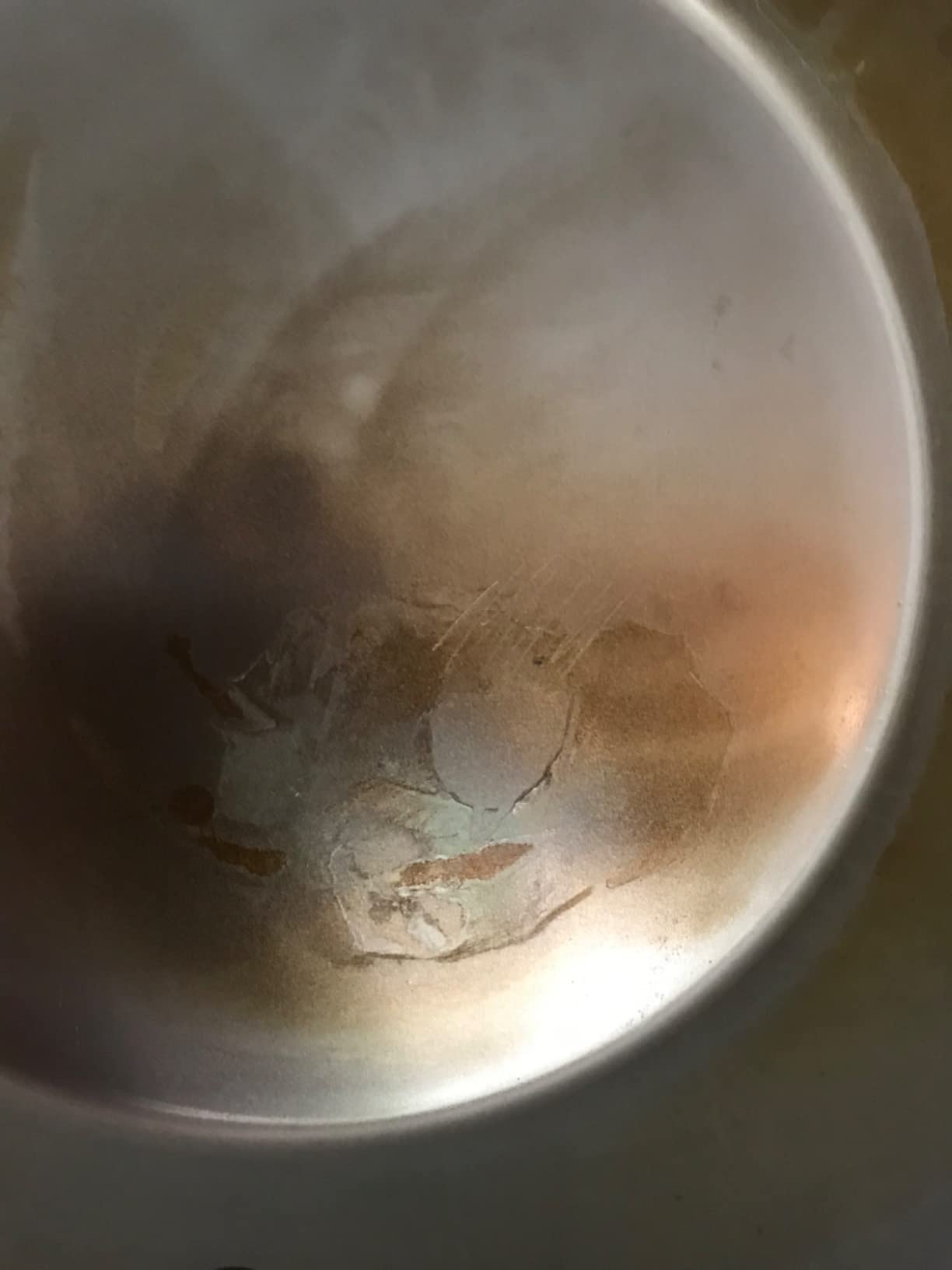
First, check your seasoning. Too thick a layer polymerizes gummy and peels; a thin, almost invisible layer polymerizes hard. If a brown lacquer-like film is building up, that is the cause, and the fix is a strip-and-restart with a much thinner coat.
Second, check your acid. Long tomato, vinegar, or wine reductions strip seasoning, and the sticky pans that follow are the same pans that looked fine until a week of acidic cooking. If that is your pattern, dedicate one pan to acid work and keep the searing pan dry and fatty.
Third, check temperature. A cold pan plus cold oil plus a wet steak is three failures at once. Preheat dry and empty, let the oil shimmer, and dry the protein properly. Users on cooking forums consistently rank dryness above all other variables for release.
Fourth, check crowding and pan size. A crowded pan drops well below searing temperature, and thin steel drops further. Cook in batches, and if you are fighting a thin pan mid-cook, give the burner a nudge rather than moving the pan off the heat.
Patina timeline, roughly: the first three sessions are for fatty, high-heat foods like bacon or sausage. Between sessions four and ten you should see consistent release on proteins. Past ten cooks, a properly seasoned carbon steel pan releases eggs and fish without effort. Our stir-fry guide covers the same break-in from a different angle for cooks who want volume rather than crust.
Who Should Skip Carbon Steel
Long acidic simmering is the clearest case against. If most of your cooking is tomato sauce, cacciatore, or a long vinegar reduction, carbon steel works against you. The acid strips the seasoning, and you end up maintaining a pan that is fighting the food you actually want to make. Our cast iron guide covers the enameled options for that style of cooking.
Cooks who need the dishwasher should skip it too. Every pan here is hand wash only, and the maintenance cycle of dry, heat, wipe with oil is not optional if you want release. A busy weeknight cook who stacks pans in the machine will lose the patina in weeks.
Low-heat cooking is the third group. Carbon steel’s advantage exists entirely above roughly 400F. If you mostly simmer, braise, or gently sauté, the responsiveness advantage disappears and you are left with a heavier pan than a nonstick one.
Anxious first-time owners deserve an honest warning too. You will scorch the seasoning at least once, and probably strip it entirely. That is normal, it is not a ruined pan, and every experienced cook in the forums has done it. Buy the lightest, cheapest pan on this list if that mistakes feel expensive.
Frequently Asked Questions
What pan gives steak the best sear?
For a steak sear, a heavier carbon steel skillet with 2.5 to 3 mm steel wins because it stores heat and does not drop in temperature when cold meat lands on it. Our top pick is the de Buyer MINERAL B 12.5 inch, which pairs a 9 inch cooking surface with French steel thick enough to hold heat through a long sear. Preheat the empty pan, add a high smoke point oil, and leave the meat untouched.
Which carbon steel skillet is considered the best?
The de Buyer MINERAL B 12.5 Inch Carbon Steel Fry Pan is the best all-round choice, with a 4.5 rating across more than fifteen thousand reviews. For thick steaks specifically, the Matfer Bourgeat 12 5/8 inch holds more heat thanks to a 5.2 pound build. For a lighter pan, the Lodge 8 inch is the most comfortable to move.
Who makes the best carbon steel skillet?
de Buyer, Matfer Bourgeat, and Mauviel are the three makers that dominate professional and enthusiast kitchens, and all three appear here. de Buyer covers the widest range, from the 20 cm Carbone Plus to the 12.5 inch MINERAL B. Lodge and Merten and Storck cover the accessible end, and Tramontina covers heavy open-flame cooking.
Which carbon steel skillet is best rated?
The de Buyer Carbone Plus 20 cm carries the highest average rating in our group at 4.6, though on a smaller review base. The de Buyer MINERAL B 12.5 inch leads on rating combined with review volume at 4.5 across more than fifteen thousand reviews, which is the stronger signal overall.
What are the downsides of carbon steel pans?
The main downsides are weight, hand washing, and a seasoning layer that must be maintained. Thin pans can warp on glass cooktops. Acidic cooking strips the patina. Handles without a cool grip get hot at high heat. And most importantly, the first few sears often fail until the seasoning is properly built, which typically takes three to ten fatty, high-heat sessions.
What shouldn’t you cook in a carbon steel pan?
Avoid long, slow acidic cooking such as tomato sauce, vinegar-based recipes, and wine reductions, since the acid strips the seasoning layer. Also avoid cooking from a cold start on high heat with thin pans, which can cause warping. Always remove factory beeswax or silicone coatings before the first use, and dry the pan on the stovetop after washing to prevent rust.
Is carbon steel better than cast iron for searing?
For most home cooks, yes. Carbon steel reaches searing temperature faster because it is roughly one third the weight of cast iron, and the lighter pan is far easier to move for a one-handed flip. Cast iron retains heat for longer once hot, so it wins for very thick cuts cooked over an open flame, but it is heavier and slower to preheat.
Do you need to season a carbon steel pan before searing?
You need a seasoning layer, but you do not always need to build it from raw steel. Pans that arrive pre-seasoned, such as the Lodge and Merten and Storck, work after a few sessions. Unseasoned pans need two or three oven cycles with a thin film of high smoke point oil before the first sear. Pans that ship with beeswax must be stripped first.
The Verdict: Which Carbon Steel Skillet to Buy
If you are buying one pan and cooking steak in it, get the de Buyer MINERAL B 12.5 inch. It has the best balance of usable cooking surface, French steel thickness, and a review history deep enough to trust, and it is our pick for the best carbon steel skillets for searing in 2026 for a reason. Strip the beeswax, run two seasoning cycles, and it will behave like a professional pan from the third cook onward.
Cook thicker cuts and longer sears, step up to the Matfer Bourgeat 12 5/8 inch and accept the weight. Cook lighter and move fast, choose the Lodge 8 inch. Build pan sauces regularly, the Mauviel M’Steel 11 inch has the geometry and oven rating for it. And if weight or hand-washing puts you off the whole category, do not force it. Our cast iron skillet guide is a better fit for some kitchens, and that is a perfectly good answer.
Whichever you choose, the same three habits do the work: preheat longer than feels necessary, use a high smoke point oil, and leave the food alone. Check the current details and the latest reviews before you buy.