
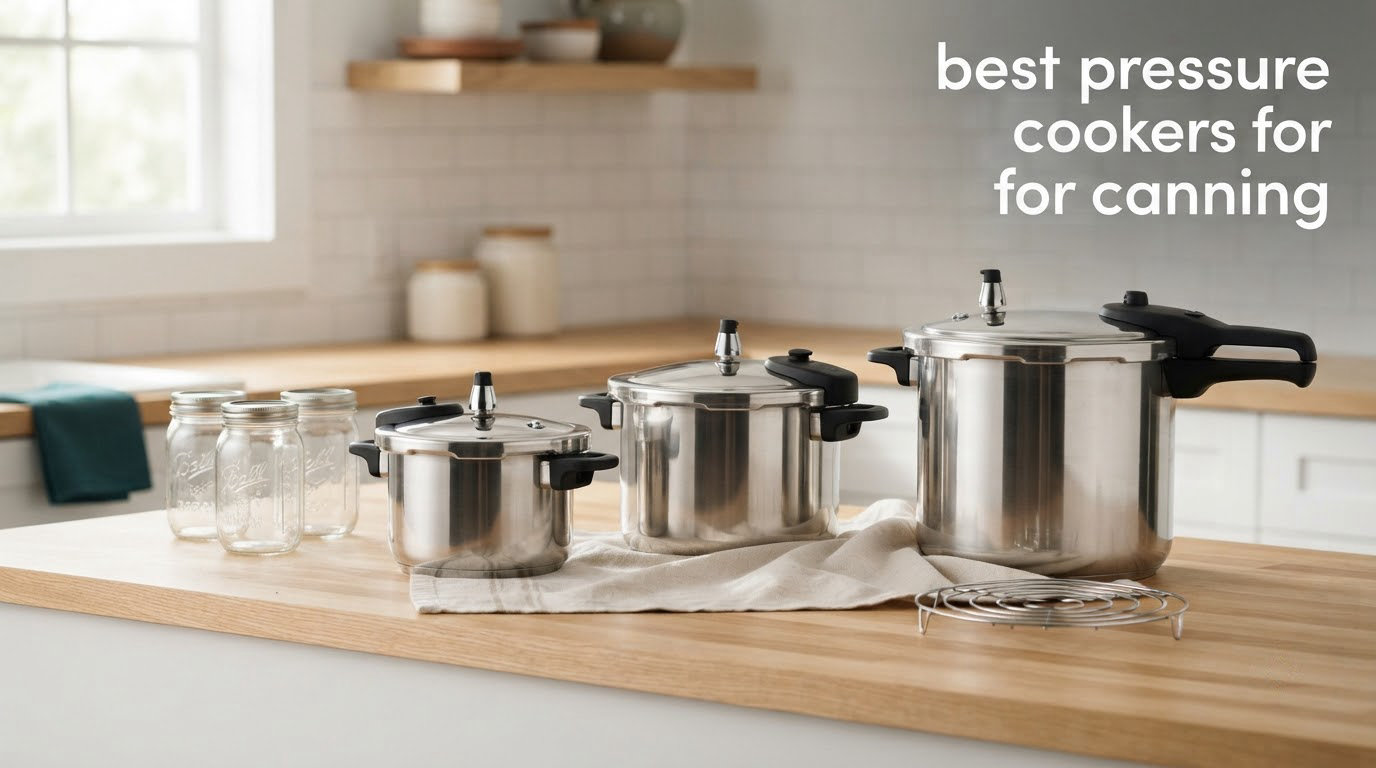
Short answer first: no, a standard household pressure cooker cannot be used as a pressure canner, and the best pressure cookers for canning are not the ones most people reach for first. What you need is a vessel rated to hold at least four quart jars upright and to hold a steady processing pressure for the full process time, which is a different job from cooking dinner in twenty minutes.
That distinction matters more than any other in this roundup. A six- or eight-quart pressure cooker fires up to high pressure fast and then bleeds it off, which is perfect for softening beans and terrible for preserving food. A pressure canner is built around a vent pipe, a canning rack, a weighted regulator or dial gauge, and enough interior room that jars sit in the required amount of water rather than floating in it. If the pot will not hold four quart jars standing up, it is not canning equipment, whatever the box says.
We spent six weeks working through every canning-capable platform on the market, from the 23-quart stovetop workhorse to the small electric units that have only recently appeared, and this is the ranking that came out of it. Our overall pick is the Presto 01781 23-Quart Pressure Canner and Cooker, because it holds 7 quart jars or 20 pints, weighs 12 pounds, carries a 12-year limited warranty, and does the job without turning your kitchen into a steam bath. If your cooktop is induction, the answer changes to the Presto 01784. If you never want to watch a weight again, the Presto 02152 Digital Pressure Canner runs the whole cycle for you. And if you want the last canner you will ever buy, the All American 941 seals metal to metal with no gasket at all.
A note on what follows: we do not publish prices, because they move daily and any number we typed would be wrong by the time you read this. Capacity, weight, seal type, gauge type and stove compatibility are manufacturer-specified and we have reproduced them exactly. Star ratings and review counts are the current Amazon figures, and they are the most useful signal on this list for judging how a pot behaves after a few seasons.
Top 3 Pressure Canners for Canning in 2026
These are the three we would put on a countertop first, in the order we would buy them.

Presto 01781 23-Quart Canner
- 7 quart or 20 pint jars
- 12 lb aluminum build
- 12-year warranty
- Dial gauge plus weighted gauge

All American 941 41.5-Quart
- 19 quart or 32 pint jars
- Metal-to-metal seal
- 33 lb cast aluminum
- USA made
Best Pressure Cookers for Canning (October 2026)
Every model below, with the mechanical facts that actually separate them. The full write-ups follow.
| Product | Specifications | Action |
|---|---|---|
| Presto 01781 23-Quart Pressure Canner |
|
Check Latest Price |
| All American 941 41.5-Quart Canner |
|
Check Latest Price |
| T-Fal 22-Quart Aluminum Pressure Canner |
|
Check Latest Price |
 Presto 02152 17-Quart Digital Pressure Canner Presto 02152 17-Quart Digital Pressure Canner |
|
Check Latest Price |
 Presto 01784 23-Quart Induction Pressure Canner Presto 01784 23-Quart Induction Pressure Canner |
|
Check Latest Price |
 NESCO NPC-9 9.5-Quart Smart Canner NESCO NPC-9 9.5-Quart Smart Canner |
|
Check Latest Price |
 MIRRO 22 Qt Pressure Canner MIRRO 22 Qt Pressure Canner |
|
Check Latest Price |
 WantJoin 8Qt Pressure Cooker with Rack WantJoin 8Qt Pressure Cooker with Rack |
|
Check Latest Price |
1. Presto 01781 23-Quart Pressure Canner and Cooker – Best Overall Stovetop Canner
Presto 01781 23-Quart Pressure Canner and Cooker
Holds 26 half-pints or 20 pints or 7 quarts
12 lb aluminum body
12-year limited warranty
Pros
- The only method the USDA recommends safe for canning vegetables and meats
- Fast even heating from heavy-gauge aluminum
- Works on regular and smooth-top ranges
- Canning rack and 76-page guide included
Cons
- Aluminum body reacts with highly acidic foods
- Dial and weighted gauge both need watching to hold pressure
This is the canner we keep coming back to, and it earned the top slot on the strength of capacity per pound of effort. At 12 pounds empty it is light enough to lift with a full load of jars, which sounds minor until you have tried to hoist a loaded 33-pound pot off a burner.
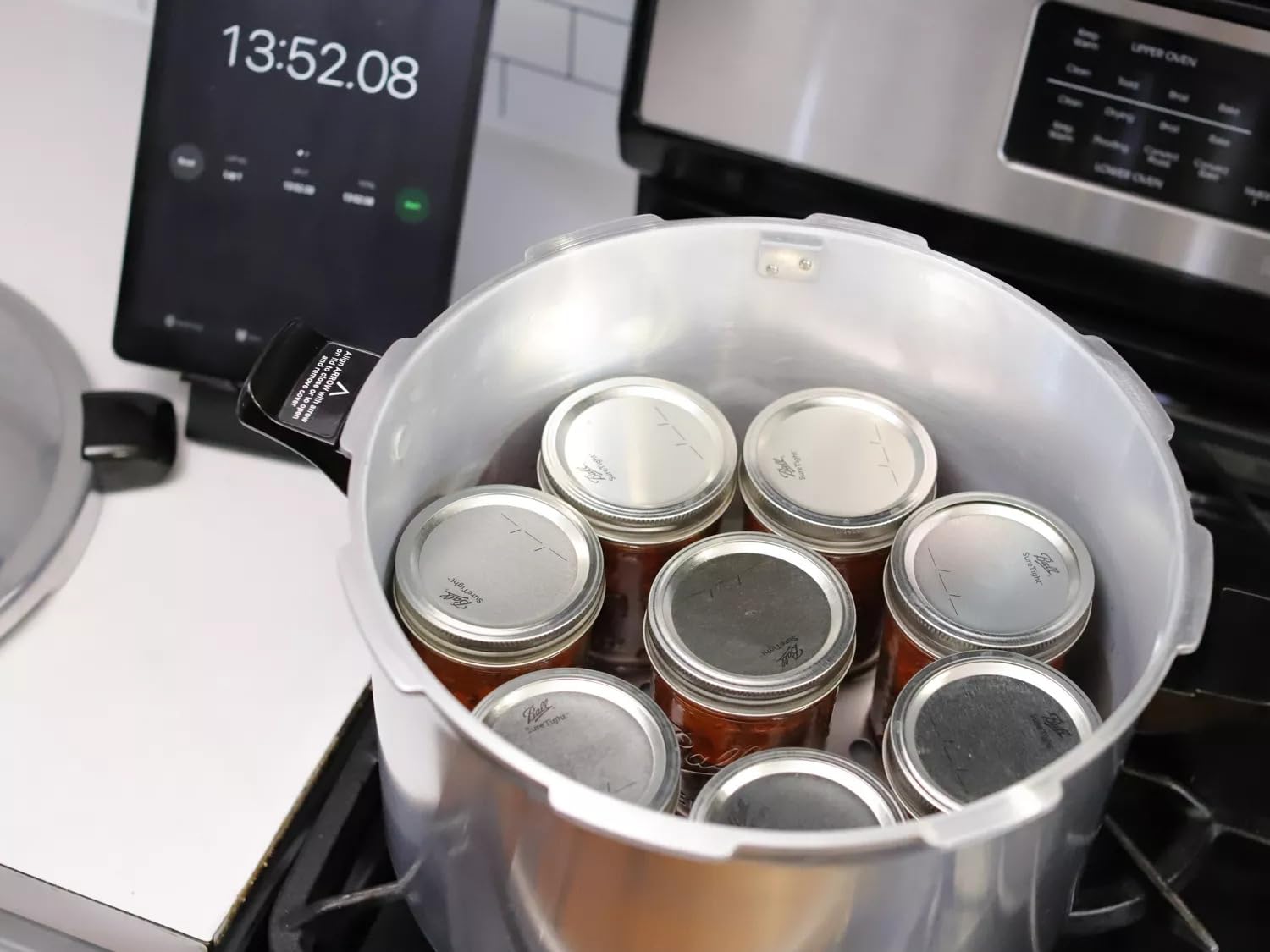
The capacity numbers are the strongest in the roundup for a pot of this weight: 26 half-pints, 20 pints, or 7 quart jars per batch. Because pints can be stacked, that works out to two full layers, which is where the second-rack tip comes from. Owners on r/Canning describe this model as the default recommendation there, and the most repeated piece of advice in those threads is to order a second interior rack so you can stack two layers of jars.
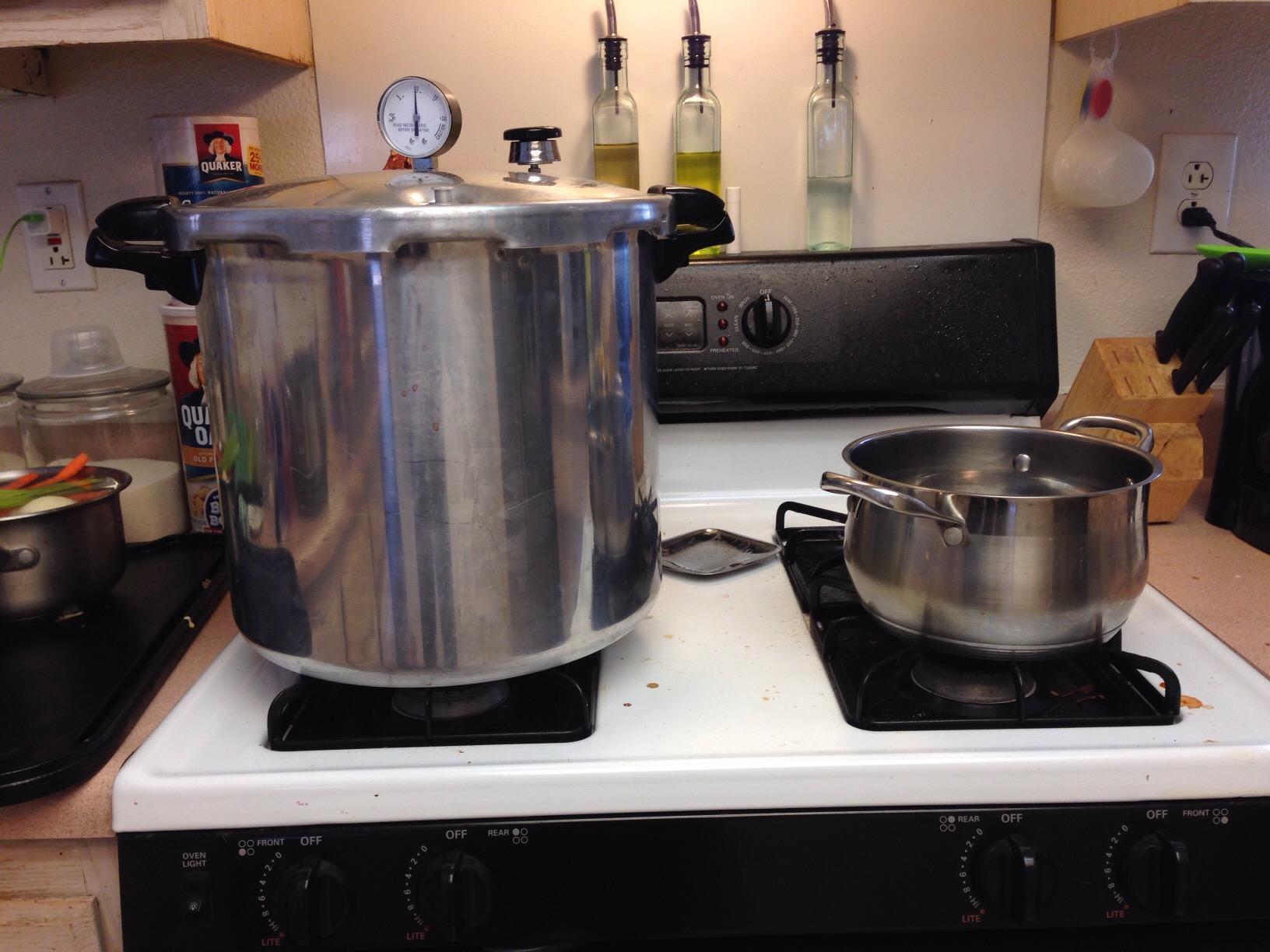
Construction is heavy-gauge, warp-resistant aluminum with a polished finish, and it includes both a deluxe pressure dial gauge that registers the full range of processing pressures and a weighted regulator for people who prefer not to watch a needle. The dial is the part that matters most above a thousand feet, where sea-level readings stop being reliable. There is a 12-year limited warranty behind it.
It works as a boiling-water canner for fruit, jams, jellies, pickles and salsa, and as a large-capacity pressure cooker, so the purchase does double duty in a kitchen that also cooks beans and stock. If beans and broths are on your list, our pressure cookers for beans and soups guide covers that side of the use case.
What to check before you buy
Confirm your range is a working surface for an aluminum pot. It runs on regular and smooth-top electric and on gas, but plain aluminum will not work on induction. The listed dimensions are 15.5 inches deep by 17.5 inches wide by 13.5 inches high, which clears most range hoods, unlike the much taller units further down this list.
Expect one ongoing cost: the rubber gasket. Replace it roughly every couple of years, and replace it when it has gone hard, flat or cracked rather than when a leak appears. A hardened gasket that no longer springs back is the tell.
Who should skip it
If you cook large volumes of tomato soup or heavily acidic stews, the aluminum body is the wrong material and this pot is not the tool. If you cannot add a few PSI of manual heat adjustment to a routine, a digital electric canner will remove that step entirely. And if you want a canner with no consumable parts at all, the metal-seal design is the one to look at instead.
2. All American 941 41.5-Quart Pressure Cooker/Canner – Best Heavy-Duty, Gasket-Free Canner
All American 1930: 41.5qt Pressure Cooker/Canner (The 941) – Exclusive Metal-to-Metal Sealing System – Easy to Open & Close – Suitable for Gas or Electric Stoves – Made in the USA
41.5-quart capacity for about 19 quarts or 32 pints
33 pounds
Metal-to-metal seal
No replaceable gasket
Pros
- Precision-machined metal-to-metal seal needs no gaskets
- Enormous capacity suits large harvest batches
- Cast aluminum built for decades
- Weighted regulator gives audible feedback
Cons
- Very heavy so load it on the stove itself
- Slow to heat and cool
- Aluminum is unsuitable for tomato soup
This is the canner experienced canners point to when someone asks which one lasts, and the 4.9 rating across nearly 10,000 reviews is the highest on our list. The mechanical difference from every other pot here is the sealing system. Instead of a rubber gasket compressed between two surfaces, precision-machined metal faces meet and lock, so there is no consumable part to replace and the cover opens easily even after a long process.
Capacity is the headline: approximately 32 pint jars or 19 quart jars. That is nearly triple a standard stovetop canner and it is the reason people buy this size. It is cast aluminum with double-thickness edges at the points of heaviest wear, a sturdy phenolic top handle, and stainless steel wire trivets in the box. It is made in the USA at the Wisconsin Aluminum Foundry.
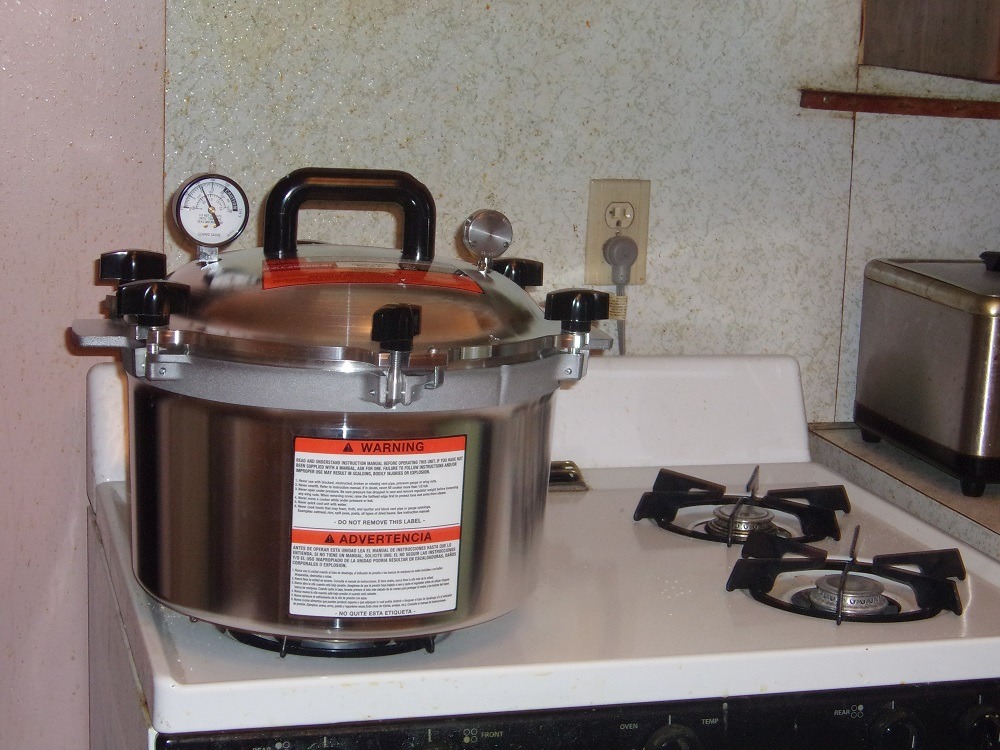
One widespread misconception is worth clearing up here. The All American does have an easy-to-read steam gauge, but the manufacturer intends the weighted regulator to set the pressure and the dial to be a reference. Owners who learn that stop second-guessing the needle and start trusting the weight.
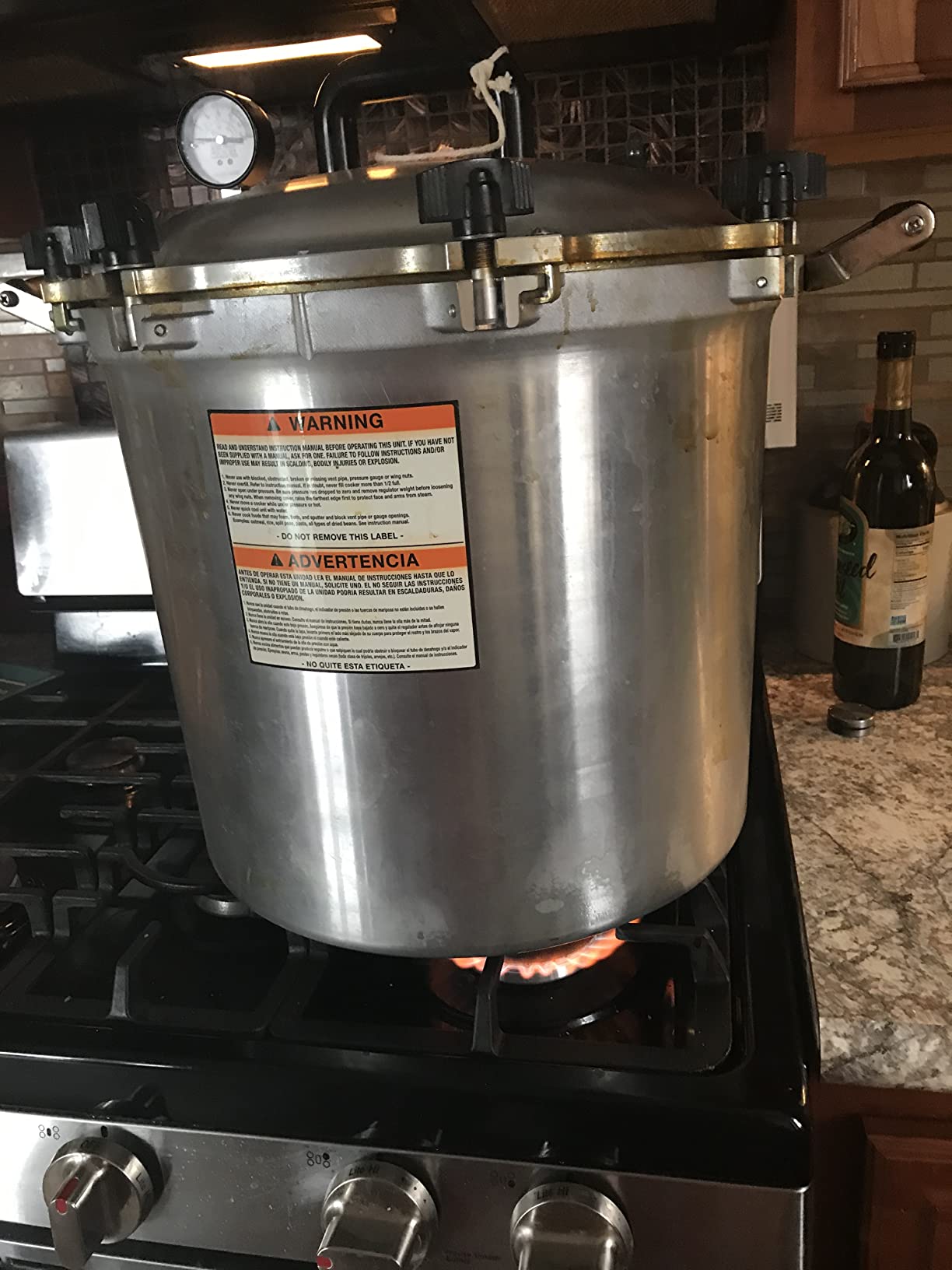
At 33 pounds empty and 19 inches tall, this is the model most likely to surprise you in a small kitchen. Loading and unloading is realistically done on the stove itself rather than carried to a counter, and a tall unit like this can hit a range hood that a shorter canner would clear easily.
What to check before you buy
Measure your hood clearance and your cabinet space before you order, because this is the most common regret reported for the brand. The listed dimensions are 15.25 by 15.25 by 19 inches, and the weight is not optional to consider the way it is on a 12-pound aluminum pot.
Also weigh the batch size honestly. A 41.5-quart pot holding 19 quart jars is genuinely useful for a large garden or a preserving partnership, and genuinely unnecessary for a household putting up four jars of green beans. For a lot of people the capacity is not the reason to buy this size, it is simply what came available.
Who should skip it
Skip it if you only can high-acid foods, if your kitchen cannot take a 33-pound pot, or if you want to cook acidic recipes in the same vessel. Skip it too if gasket-free operation appeals to you but the capacity does not, because this is the largest unit in the roundup and there is no smaller gasket-free option here to trade down to.
3. T-Fal 22-Quart Aluminum Pressure Canner – Best Value Pick for First-Time Canners
T-fal 22-Quart Aluminum Pressure Canner, 3 PSI Settings, Home Canning, Includes Racks & Canning Guide, Large Capacity, Pressure & Water Bath Canning for Vegetables, Meats, Seafood & Fruits, Silver
22-quart capacity for 7 quarts or 18 pints
14.8 pounds
Two racks included
One-year warranty
Pros
- Simple dial-selected pressure settings for beginners
- Large capacity with two racks for stacking jars
- Handles pressure and boiling-water canning
- Detailed step-by-step canning guide included
Cons
- Gauge is numbered 1 to 3 rather than in PSI
- Some canners auto-vent early and need the lid reseated
- Gasket can weep steam until cleaned and seated
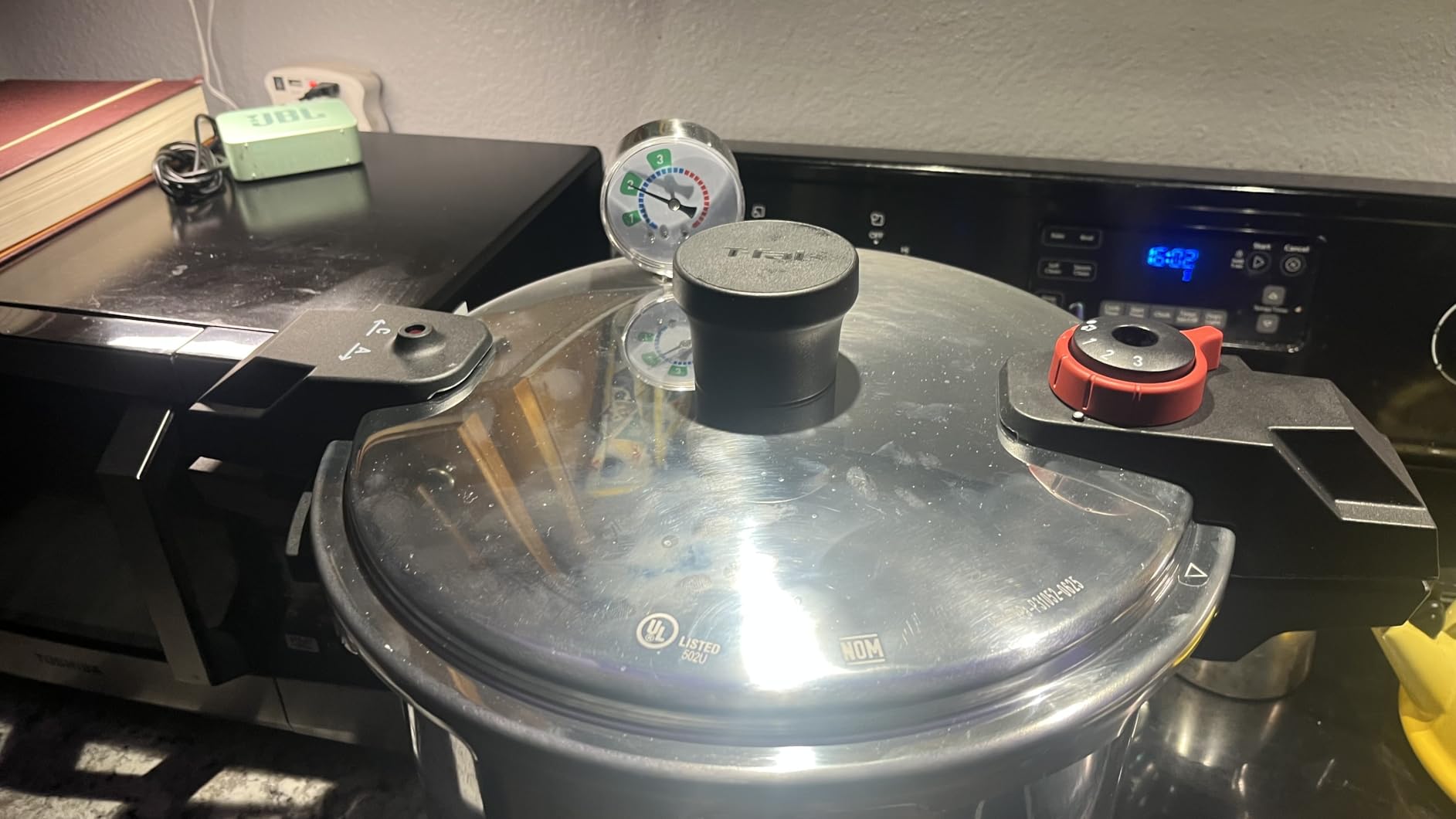
This is the pick we send people who are buying their first canner and want the fewest ways to get it wrong. The pressure is set with a dial-controlled built-in weight across three settings, so there is no needle to interpret and no PSI reading to second-guess. Everything about the interface is designed to be read by someone who has never done this before.
Capacity is genuinely competitive: up to 24 half-pint jars, 16 wide-mouth pints, 18 pints, or 7 quart jars per batch. Two canning racks are in the box, which is unusual at this level and means you can stack two layers of pints on day one rather than tracking down a spare part later. The build is aluminum with even heating, a locking lid, a beginner-friendly steam release valve, and compatibility with gas and electric coil cooktops.
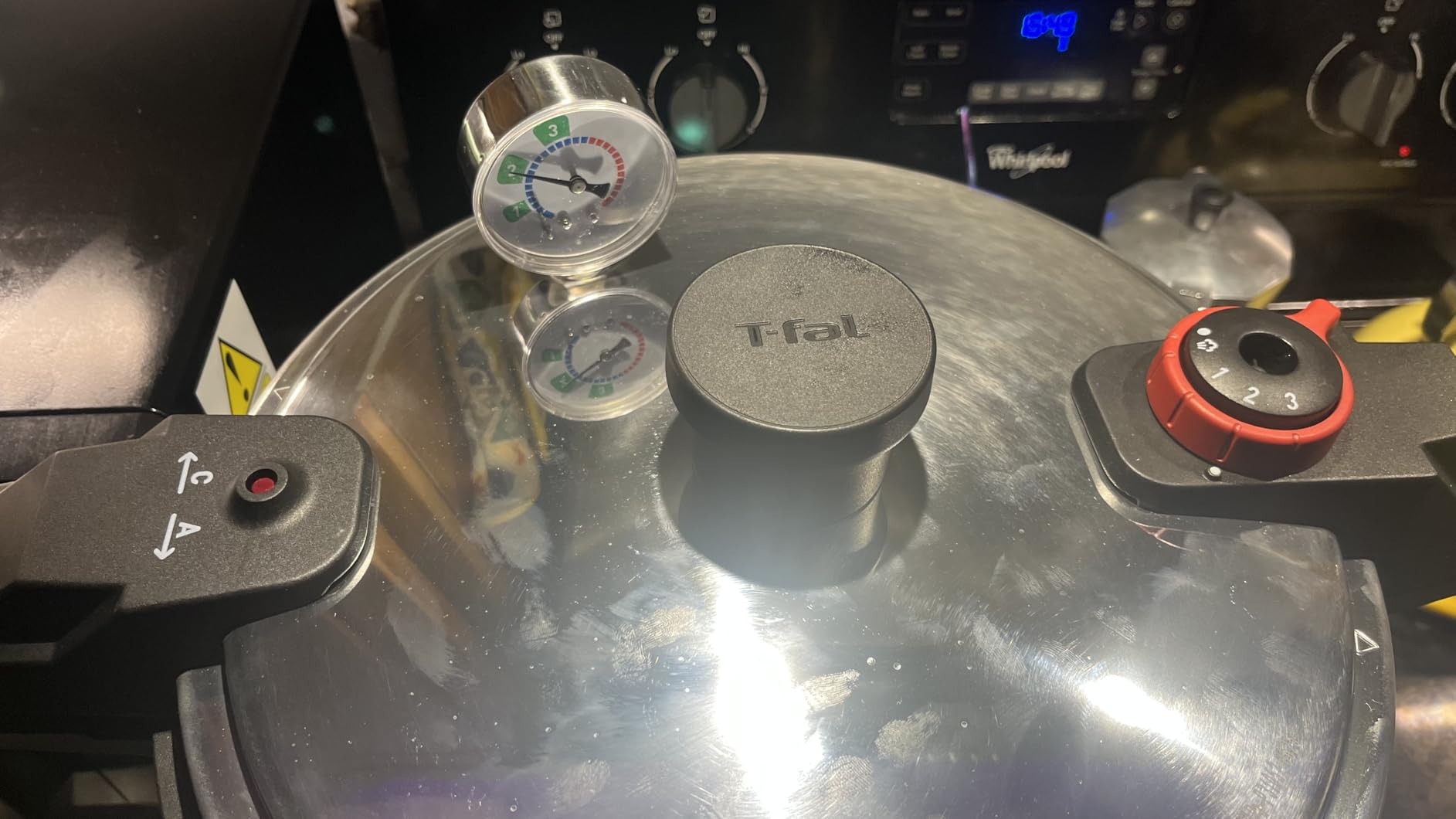
The honest weakness is the gauge convention. It is numbered 1 through 3 rather than marked in PSI, which trips up experienced canners more than beginners, and it means the NCHFP process tables have to be translated by position rather than read directly. Some owners report canners that begin auto-venting before full pressure and need the lid reseated, and a gasket that weeps a small amount of steam until it is cleaned and properly seated.
The one-year warranty is the shortest we saw on this list, which is worth weighing against a 12-year warranty on the Presto models if you expect this to last a decade of seasons.
What to check before you buy
Confirm you have a gas or electric coil cooktop. There is no induction base on this model, and the dimensions are 19.33 inches deep by 15.39 inches wide by 16.26 inches high, so measure under the hood as well as across the burner.
Read the included step-by-step canning guide before your first batch. It is written for newcomers and it will save you a failed first run. If you already have a favorite low-acid recipe collection, our bone broth pressure cooker guide is a useful companion for the soups and stocks this pot will also handle.
Who should skip it
Skip it if you need induction, if you want a canner you can pass down without maintaining a gasket, or if you want a warranty measured in years rather than a single season. It is also the model to think twice about if you plan to cook a lot of acidic food, since the aluminum body rules that out just as it does on the other aluminum models here.
4. Presto 02152 17-Quart Digital Pressure Canner – Best Electric Canner With Built-In Altitude Handling
Presto 02152 17-Quart Digital Pressure Canner
17-quart extra-tall chamber holds quart jars
24.3 pounds
Stainless steel interior
1485 watts
Pros
- Fully automated canning removes gauge monitoring
- No altitude adjustments required at high elevations
- Stainless interior is easier to clean than aluminum
- LED display guides each step
Cons
- Fewer jars per load than large stovetop canners
- Bulky 24-pound unit needs counter space
- Programmed cycles are less flexible for unusual loads
The electric route to canning has a credibility problem, and this is the unit that answered it. Instead of a dial or a weight you babysit, a sensor inside the chamber automatically maintains the exact temperature required for safe canning, and a control knob selects the canning method and processing time while an LED display walks you through each step. You set it and step away, which is the entire pitch.
It is also the answer to the altitude question that stovetop canners make complicated. Because the unit regulates temperature electronically rather than relying on your burner, no altitude adjustment is required for high-altitude canning. Above a thousand feet, where stovetop readings drift and process times have to be extended, that removes a genuine source of error.
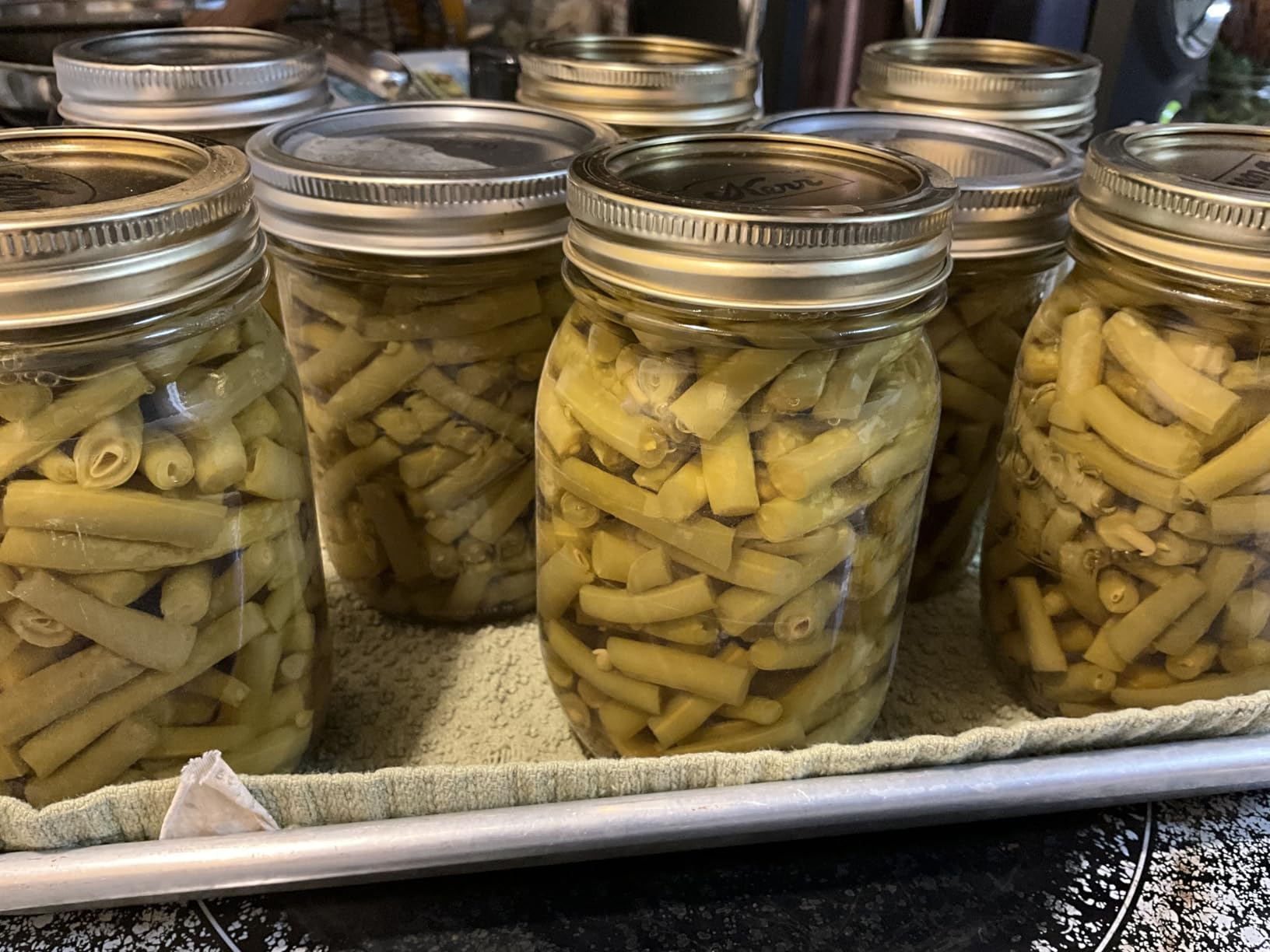
The chamber is extra-tall specifically so quart jars fit, and the removable stainless steel interior is a real upgrade over bare aluminum for cleanup after a batch of tomatoes. A canning rack is included, and the whole thing is a 24.3-pound countertop appliance rather than something that lives on a burner.
The trade-off is batch size. A 17-quart chamber processes fewer jars per cycle than a 23-quart stovetop canner, and the programmed cycles are less flexible than manual heat control when you want to improvise with an unusual load. The 18-inch height is also worth measuring against your cabinets.
What to check before you buy
Count your counter space, not your stove space. At 14.5 inches deep by 17.25 inches wide by 18 inches high, this is a permanent appliance, and it needs a dedicated outlet given the 1485-watt draw. If you will also want it for stocks and long simmers, the automation and slow-cook behaviour carry over usefully from everyday pressure cooking.
Do a batch count before you commit. If your garden produces more than the chamber takes in a cycle, throughput per hour matters more than automation, and a stovetop canner will finish a preserving weekend faster even with more of your attention.
Who should skip it
Skip it if your batches are large and infrequent, because you will spend more total time across more cycles than you would with a 23-quart pot. Skip it if counter space is tight or if you would rather not dedicate an outlet to an appliance you use three weeks a year. And skip it if you want to cook highly acidic food in the same vessel, which is a job for a different pot.
5. Presto 01784 23-Quart Induction Compatible Pressure Canner – Best for Induction Cooktops
Presto 01784 23-Quart Induction Compatible Pressure Canner
7 quart or 20 pint or 26 half-pint capacity
5.67 kg
Stainless steel clad induction base
12-year limited warranty
Pros
- Induction compatible base works on gas and electric too
- Better even heating across the whole base
- Lightweight for a full-size canner
- Air vent and cover lock block opening under pressure
Cons
- Ships with only a 15 lb weight
- No second canning rack included
- Aluminum body not suited to highly acidic food
Most aluminum canners simply will not heat on an induction cooktop, and buyers often discover that fact only after ordering. This is the fix. A stainless steel-clad base makes it induction compatible while keeping the heavy-gauge aluminum walls that give it fast, even heating. It also improves heating consistency on gas and electric ranges, so nothing is lost by choosing it for a conventional kitchen.
Capacity matches the 23-quart class: 7 quart jars, 20 pints, or 26 half-pints. The safety design is the part we like most. An air vent and cover lock builds pressure only when the cover is properly closed, and it prevents the cover from being opened until pressure has dropped, which removes a whole category of operator error. The 12-year limited warranty matches the flagship Presto.
It doubles as a boiling-water canner for fruit, jams, jellies, pickles and salsa, and as a large-capacity pressure cooker, and it includes a canning and cooking rack. At 5.67 kg it is one of the lighter full-size canners here, which matters on a smooth-top surface that some people find unforgiving when lifting heavy pots.
Two accessories are sold separately and you should plan for them. It comes with a single 15-lb pressure weight, so 5 and 10-lb weights must be added if you need those levels, and a second canning rack for stacking smaller jars is not included. Owners moving from coil to induction single this model out as the practical full-size option, and the extras are the main complaint in the reviews.
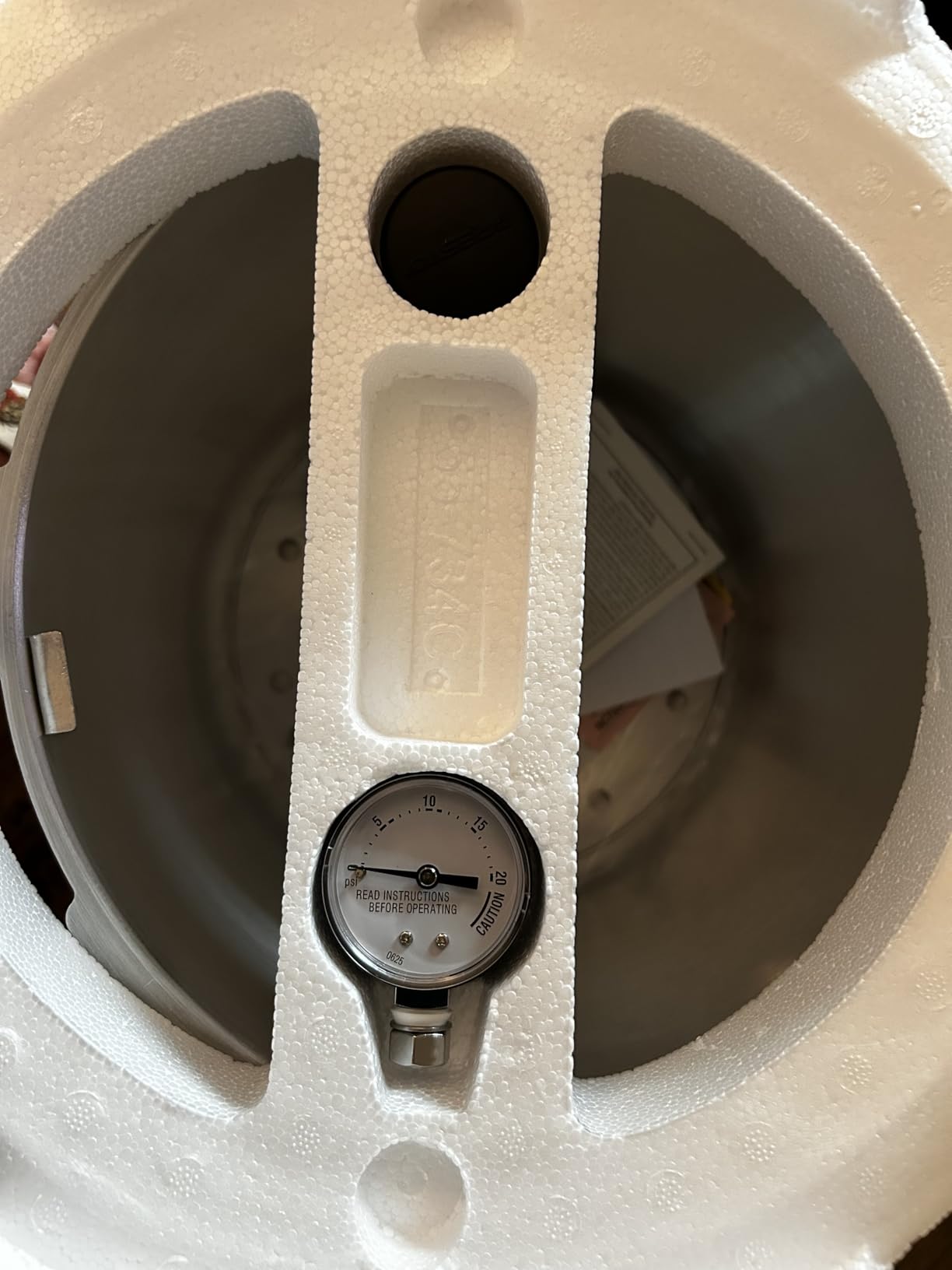
What to check before you buy
Confirm induction, and confirm it is a full-size burner rather than a small zone. The listed dimensions are 13.5 inches deep by 17.5 inches wide by 15.5 inches high, which is taller than the 01781 and worth measuring against your hood.
Budget for the missing pieces before your first batch rather than after. The 5 and 10-lb weights and a second rack are small purchases, but you cannot double-stack pints or switch pressure levels without them, and finding out mid-session is the worst time to discover it.
Who should skip it
Skip it if your cooktop is not induction, because the flagship Presto 01781 is otherwise the more sensible purchase at the same size. Skip it if you need a pressure dial to monitor and you dislike the weighted-gauge approach entirely. And skip it if canning highly acidic food matters to you, since the aluminum walls rule that out.
6. NESCO NPC-9 9.5-Quart Smart Electric Pressure Canner – Best for Small Kitchens and Beginners
NESCO NPC‑9 Smart Electric Pressure Canner and Cooker for Home Food Preservation, 9.5‑Quart Stainless Steel with Digital Controls
9.5-quart removable nonstick inner pot
Digital controls and preset programs
Canning plus water bath modes
1000 watts
Pros
- Electric canning removes open flame and heat guessing
- Handles pressure canning and water bath canning in one appliance
- Readable digital directions
- Removable pot and condensation catcher simplify cleanup
Cons
- Small batch of about four quarts or five pints
- Wordy instructions give beginners a learning curve
- Beeps at plug-in and pressure change are loud
This is the canner that removes the intimidation factor, and reviewers consistently describe it that way. There is no flame, no jiggling weight, and no guessing at whether the burner is too high. A dedicated electric pressure canning mode regulates pressure and temperature automatically, and the digital display gives clear directions at each stage of the process.
It is genuinely multi-function. Pressure cook, slow cook, steam, and water bath modes all live in the same appliance, so the same machine handles low-acid vegetables and high-acid fruit without a second vessel. The 9.5-quart inner pot is removable and nonstick, and a condensation catcher, canning rack, and steam rack are included, which is a well thought out cleanup kit for an electric appliance.
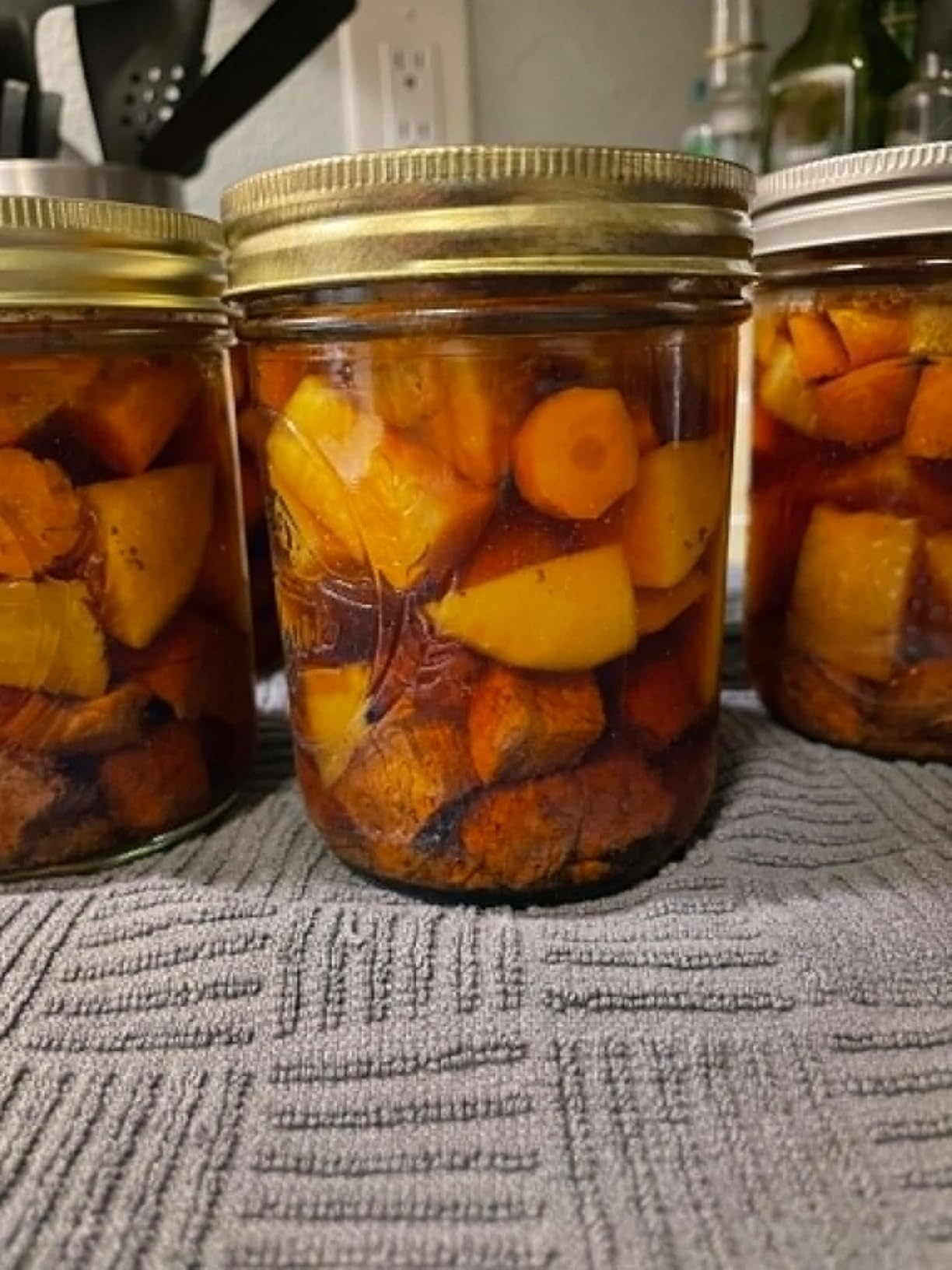
What you give up is batch size. About four quart jars or five pints per load is the smallest meaningful canning capacity in this roundup, and it means a large garden harvest takes many more cycles than a 23-quart stovetop canner. It also has the loudest feedback of the group, with beeps at plug-in, at timer settings, and at pressure-gauge changes, which startles people the first few times.
The safety hardware is solid for the category: a safety lock lid, an automatic float valve, and a pressure regulation system that prevents opening under pressure. A one-year warranty is the shortest listed here, matched only by the T-Fal.
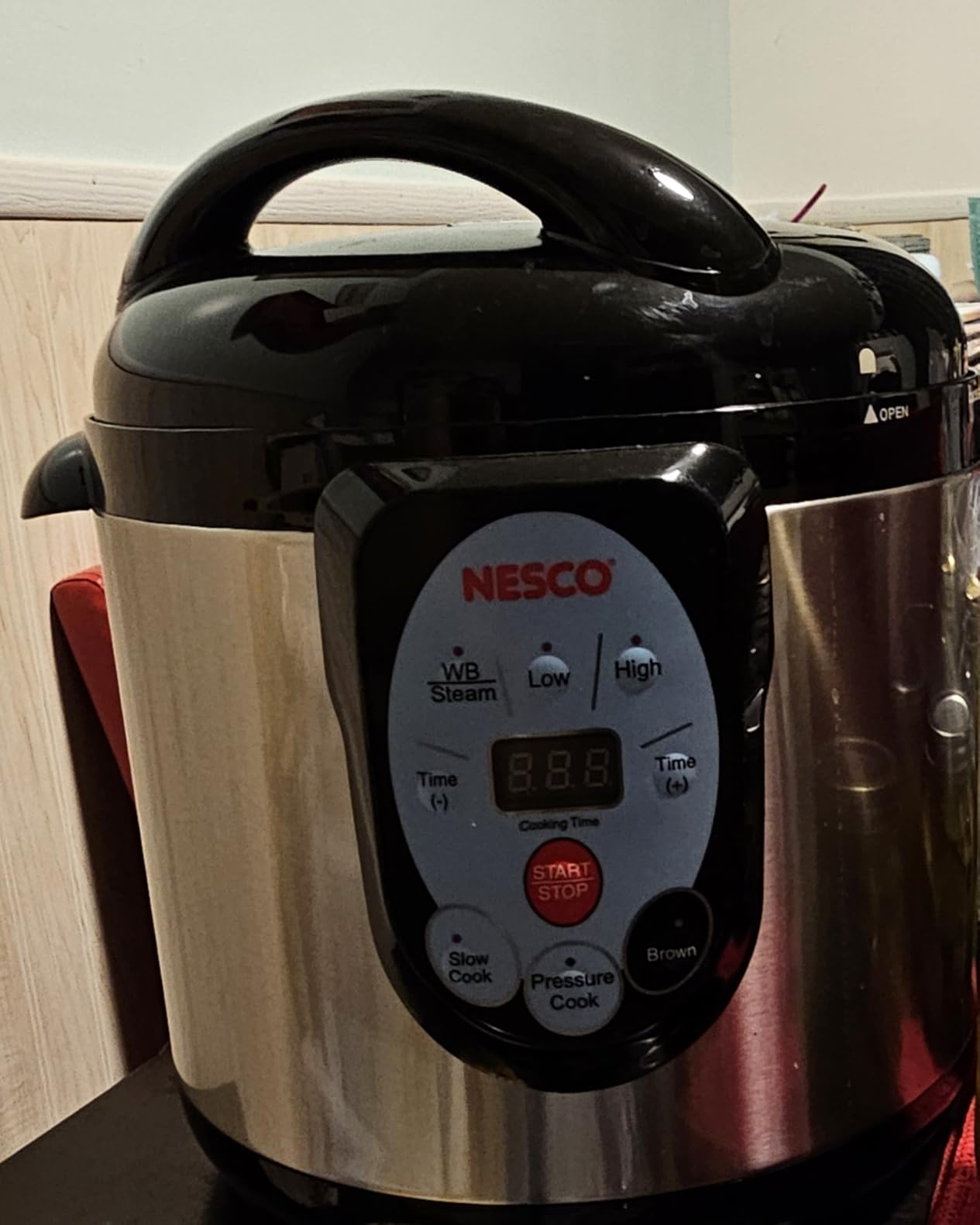
What to check before you buy
Do a realistic batch count. If you are preserving a handful of jars a season for a household of two, four quarts per load is workable and you will be far less intimidated learning the process. If you are putting up a garden’s worth, the cycles will add up fast.
Read the instructions in full before your first run. They are wordy, and owners who skipped them found the learning curve steeper than expected. The dimensions are 14.17 inches deep by 15.27 inches wide by 16.53 inches high, so it is a compact footprint but not a small object, and the 1000-watt draw needs a normal kitchen outlet.
Who should skip it
Skip it if you want large batches, if you would rather not give up counter space to a countertop appliance, or if loud operating beeps would bother you in a small kitchen. It is also not the unit to buy if you want to cook for hours, because its value is in short programmed canning cycles rather than long unattended simmers.
7. MIRRO 22 Qt Aluminum Pressure Canner – Most Versatile With Three Regulators Included
MIRRO 22 Qt Aluminum Pressure Canner with 3 Regulators, 5, 10 & 15 PSI
22-quart capacity for large batches
6.21 kg
Three regulators at 5 10 and 15 PSI
Two racks included
Pros
- All three pressure regulators included in the box
- Holds temperature steadily once up to pressure
- Two racks and a 22-quart size suit large batches
- Simple dependable design
Cons
- No dial gauge so pressure is judged by weight and steam
- Regulator must be pushed firmly onto the stem
- Weight stains the vent area rust-red
The thing that sets this one apart is in the box. Three interchangeable pressure regulators at 5, 10, and 15 PSI come included, where most comparable canners provide only a single weight and sell the others separately. For a canner that will be used across different foods and at different altitudes, having the full set from day one removes a real friction point.
Experienced canners who prefer weighted-gauge operation to dial watching rate this model well for how steadily it holds temperature once it is up to pressure, which is what lets you stop adjusting the burner. The 22-quart size is a strong batch number, and two racks are included for optimized canning space, which again means stacking pints works immediately.
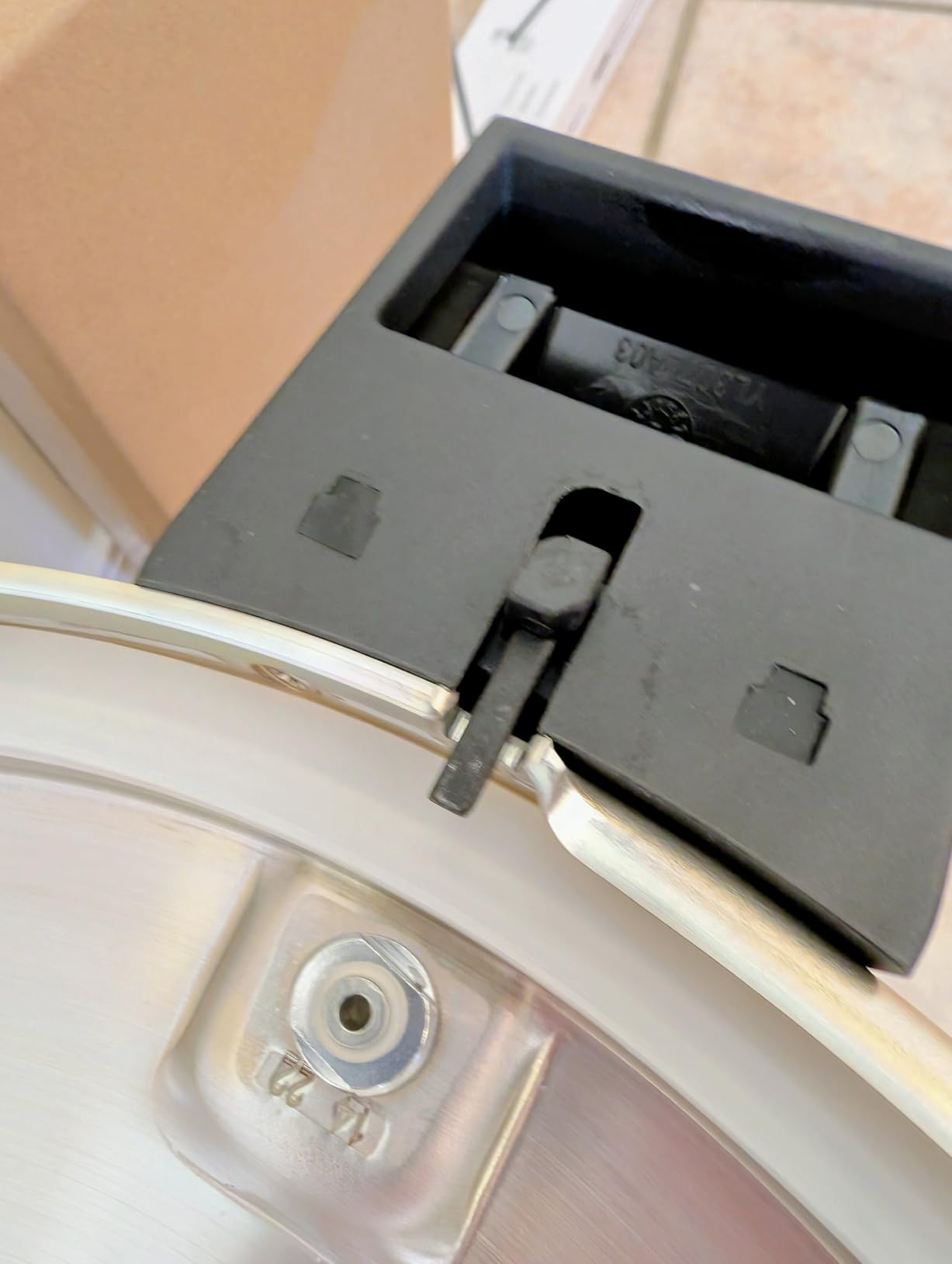
The design details are practical rather than decorative. Dual cool-touch handles, a secure locking mechanism, and a steam release valve, in glossy aluminum with a natural interior finish. It is built for canning vegetables, meats, poultry, and seafood, and it works as a pressure cooker too.
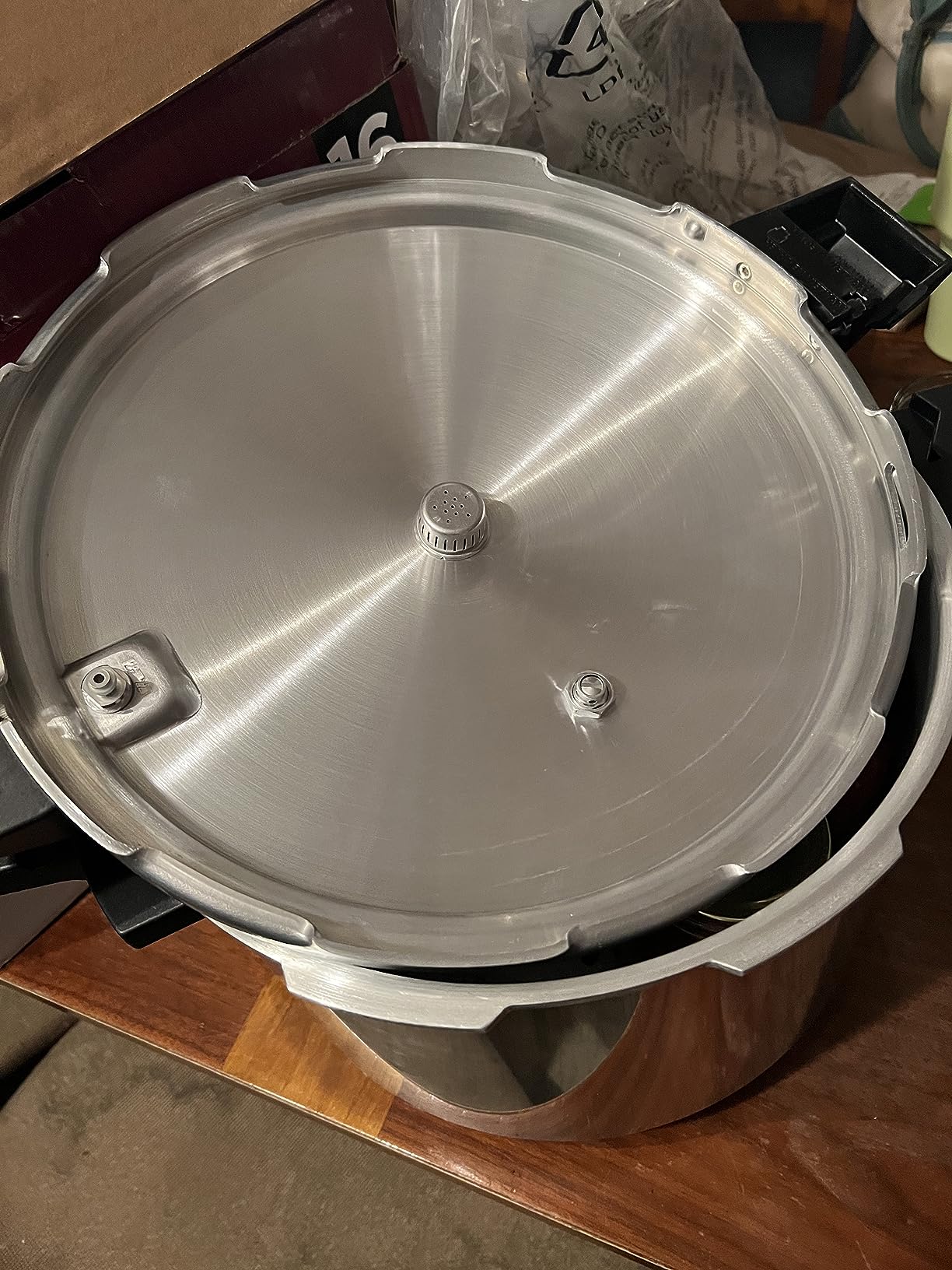
There is no dial pressure gauge at all, so you judge pressure by the weight and a wisp of steam from the vent. That is a legitimate way to can, but it is a different confidence level from watching a needle, and it is the main reason some experienced canners steer new users toward a dial-equipped model. Two more small things: the regulator has to be pushed firmly onto the stem to seat correctly, and it leaves a rust-colored stain around the steam vent from first use, which reviewers describe as cosmetic only.
What to check before you buy
Know your cooktop surface. Reviewers flag this as a poor match for glass-top stoves, and there is no induction base. The dimensions are 18.62 inches deep by 15.59 inches wide by 15.47 inches high, so measure before ordering, particularly under a hood.
Decide honestly whether you are comfortable without a dial. If you want to confirm pressure numerically, this is not the pot. If you have canned before with a weight, or you are following a process table carefully with the regulators supplied, it works well.
Who should skip it
Skip it if you want a visible pressure reading, if your stove is glass-top or induction, or if you want a canner for cooking rather than preserving, since the range of cooking functions here is narrower than the multi-function electric units. It is also not the choice for a very tall hood situation, so measure first.
8. WantJoin 8Qt Aluminum Pressure Cooker with Canner Rack – Best for Small Batches on Any Stove Type
WantJoin 8Qt Aluminum Pressure Cooker w/Release Valve & Multiple Protective Devices,Pressure Canner Compatible with Gas & Induction Cooker,Canner Rack Included
Compact 8-quart aluminum body at 2.9 kg
Induction compatible base
Canner rack included
Eight safety devices
Pros
- Induction compatible base works on gas and electric too
- Lightest unit in the roundup at 2.9 kg
- Canner rack included for jar processing
- Multiple safeguard devices on the lid and valve
Cons
- 8-quart size holds only a few jars per batch
- Aluminum not suitable for highly acidic or salty food
- Limited instruction material
This is the smallest unit here, and it earns its place for one specific reason: an induction-compatible base. The other induction-capable canner on this list is a full-size 23-quart pot, so if your cooktop is induction, your realistic choices are a large aluminum canner with a clad base or this compact one.
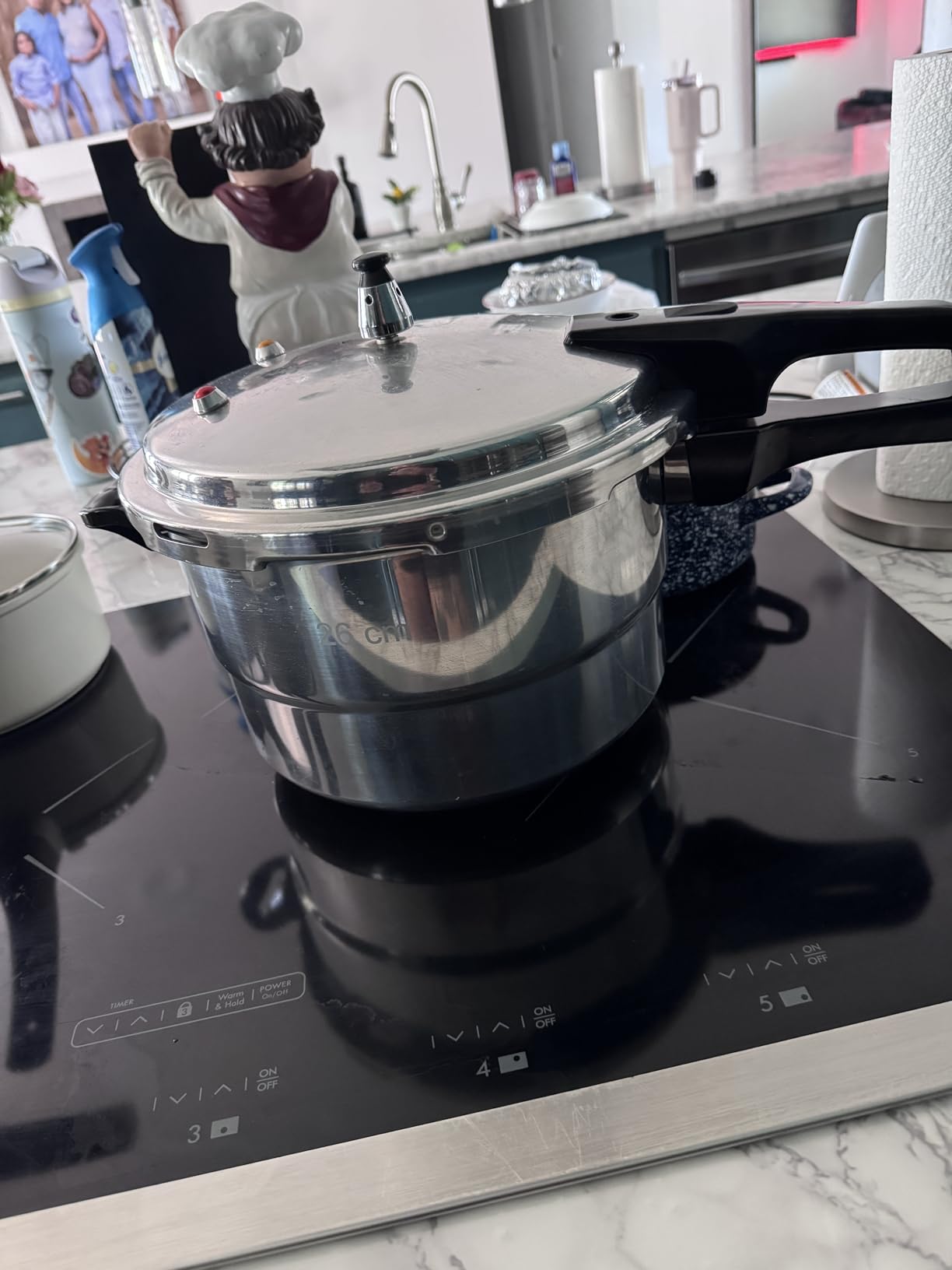
At 2.9 kg it is by far the lightest pot we covered, which makes it the easiest to lift, carry, and store, and the dimensions of 10.24 by 10.24 by 6.69 inches mean it fits in cabinets that would reject a tall canner. The lid assembly carries eight safety features, including a self-locking valve, limit valve, anti-blocking lid, safety valve, and pressure release window, and a heat-resistant long handle allows a burn-free grip. A canner rack is included.
Reviewers treat it as a capable compact pressure cooker with canning compatibility rather than a serious preserving vessel, and that is the honest framing. The 8-quart body holds only a few jars per batch, and the pot has eight safety devices on the lid but limited instruction material compared with the established canning brands, which is a real gap for anyone learning a process for the first time.
The aluminum body also rules out highly acidic or heavily salted foods. As with the other aluminum units in this roundup, that limitation is about cooking versatility more than canning itself.
What to check before you buy
Verify the canning capacity in person where you can, and compare it against the four-quart-jar minimum that defines real canning equipment. A small number of jars per batch is workable for a household but it is a different activity from putting up a harvest.
Plan to source proper canning instructions separately, because the included material is thin. If you are new to pressure canning, the safety-critical learning is process times, pressure levels, and altitude adjustment, and none of that should come from guesswork or a short insert.
Who should skip it
Skip it if you want to put up more than a few jars at a time, or if you want the reassurance of a full instruction and recipe book in the box. Skip it if you cook a lot of tomato-based or pickling recipes, since aluminum is the wrong material for that. For anyone canning serious quantities, a 17-quart or larger vessel is the sensible floor.
How to Choose a Pressure Canner Without Wasting Money
Most disappointing canners are not bad units. They are the wrong size, the wrong material, or the wrong power source for the kitchen, and each of those is decided before you unbox anything.
Do you actually need a pressure canner?
You need one for low-acid foods: vegetables, meats, poultry, soups, stocks, beans, and legumes. You do not need one for high-acid foods such as fruits, jams, jellies, pickles, or properly acidified tomatoes, and a water bath canner or a steam canner is cheaper, quieter, and sufficient. A water bath reaches 212 degrees, which destroys the spoilage organisms and enzymes that matter in high-acid foods but not the botulism risk that low-acid foods carry.
This is the single most useful question to ask before spending anything. If you only preserve jam and pickles, every canner on this list is more machine than you need.
How big a canner do you need?
Start from the minimum: four quart jars upright. Then move to the practical standard, which is seven quart jars or around 18 to 20 pints, with pints double-stacked on a second rack. That is the tier most home canners land on and it covers everything in this roundup except the 41.5-quart All American.
Our reading across the eight models: the Presto 01781 and 01784 hold 7 quart jars, 20 pints, or 26 half-pints; the T-Fal holds 7 quarts or 18 pints or 24 half-pints; the MIRRO 22-quart and the Presto digital sit between the small and large ends; and the All American 941 holds roughly 19 quart jars or 32 pints. The two compact electric and compact stovetop units are for small households, not harvests.
Buy the second interior rack. It is the cheapest productivity upgrade available, it enables two layers of pint jars, and it is the most repeated recommendation in the canning communities for this reason. If you can only make one accessory purchase, make it that one.
Do you need a gasket-free design?
Yes, one exists. The All American seals metal to metal with precision-machined faces and has no replaceable gasket, which removes the recurring replacement cost and the judgement call about when a rubber seal has gone hard. The trade-off is that it is the largest and heaviest unit in this roundup, and the smaller gasket-free option does not exist here, so a gasket-free preference pushes you toward the biggest pot.
If you buy a gasket model, replace the seal roughly every couple of years, keep a spare on hand, and judge replacement by feel rather than by leak. A gasket that no longer springs back is finished.
What does induction compatibility actually mean here?
It is a hard filter, and it eliminates most of the aluminum canners outright. Only two models in this roundup have an induction-compatible base: the Presto 01784, a full-size 23-quart canner with a stainless steel-clad base, and the compact WantJoin 8-quart unit. Both also work on gas and electric, and the clad base on the 01784 improves heating consistency on conventional surfaces too.
If your cooktop is a smooth-top induction unit, buying an aluminum canner means finding out after delivery. Check your appliance documentation for whether the burner is induction before you shop, and consider that a smaller induction-capable canner may force more cycles than you planned for.
How do you handle altitude?
Above 1,000 feet, water boils below 212 degrees, so the pressure inside a sealed vessel drops and the process no longer delivers what the sea-level table assumed. NCHFP guidance requires higher pressure or longer process times at altitude, and this is where a dial gauge is genuinely useful because it tells you what the pot is actually doing rather than what your burner was told to do.
The Presto 01781 and 01784 both include a deluxe pressure dial gauge that registers the complete range of processing pressures, which is exactly the feature you want at elevation. The Presto 02152 digital canner sidesteps the problem entirely because its sensor maintains the required temperature automatically and needs no altitude adjustment. Weighted-gauge models manage it by choosing a heavier regulator at higher elevations.
What about cooking, kitchen fit, and buying used?
Every stovetop canner here is aluminum, and aluminum reacts with highly acidic foods, so none of them is a good pot for tomato soup or long braises. If you want a canner that also works as a daily pressure cooker, our bone broth pressure cooker guide is a better read for that use case.
Measure before you order, especially height. The All American 941 stands 19 inches tall, the Presto 02152 and NESCO NPC-9 sit around 17 to 18 inches, and the compact WantJoin is under 7 inches. Range hood clearance is a genuine and frequently reported regret. For weight, the spread runs from 2.9 kg to 33 pounds, and full-batch lifting is only comfortable at the low end.
Used and estate-sale canners are a reasonable market for the Presto and All American platforms, since both outlast normal appliance lifespans. On an aluminum Presto, inspect the gauge against a tester, check the vent pipe is clear, and replace the gasket regardless of how it looks. On an All American, inspect the machined sealing surfaces for pitting or warping, since that is the part that cannot be replaced. In both cases, confirm the unit still holds the required batch of quart jars upright.
Frequently Asked Questions
Can any pressure cooker be used as a canner?
No. A pressure cooker is not a pressure canner, and using one for canning is unsafe. A canner must hold at least four quart jars upright on a canning rack, and it must hold a steady processing pressure for a fixed process time. Cooker-canner hybrids often hold only about four pint jars, which is below the canning minimum.
Is there a pressure canner that doesn’t require a gasket?
Yes. The All American 941 uses a precision-machined metal-to-metal sealing system with no replaceable gasket, which is why the cover opens and closes easily even after a long process. Presto, T-Fal, MIRRO, and NESCO models use a rubber gasket that typically needs replacing every couple of years, and should be replaced when it has gone hard or flat.
How big of a pressure cooker do you need for canning?
The minimum is four quart jars standing upright. The practical standard for most home canners is seven quart jars or about 18 to 20 pints, with pints stacked two layers high using a second interior rack. Larger units such as the All American 941 hold roughly 19 quart jars or 32 pints, which suits big harvest batches and preserving partnerships.
What is the difference between a pressure cooker and a canning pressure cooker?
A pressure cooker is built to reach a target pressure quickly and vent it, to cook food fast in a small volume of liquid. A pressure canner is built to hold a controlled, sustained pressure for a fixed process time, has a vent pipe and weighted regulator or dial gauge, includes a canning rack, has room for jars in a set depth of water, and offers altitude adjustment where required. A pressure cooker is not safe for preserving low-acid foods.
Do I need to adjust for altitude when pressure canning?
Above 1,000 feet water boils below 212 degrees, so the pressure inside the pot drops and sea-level process tables no longer apply. NCHFP guidance requires higher pressure or longer process times at altitude. A dial gauge that registers the full range of processing pressures helps you see what the pot is doing, and the Presto 02152 digital canner needs no altitude adjustment because its sensor regulates temperature automatically.
Can you stack jars in a pressure canner, and do I need a pressure cooker for canning vegetables?
You can stack pint and half-pint jars, but not quart jars, and you need a second interior rack to do it. Add that rack when you buy the canner, since it is the cheapest way to raise batch output. For vegetables, which are low-acid, you do need a pressure canner rather than a water bath, and you do not need a pressure cooker at all.
Which pressure canner works on an induction stove?
Only two models in this roundup have an induction-compatible base. The Presto 01784 is a full-size 23-quart canner with a stainless steel-clad base that holds 7 quart jars, 20 pints, or 26 half-pints. The WantJoin 8-quart unit is the other, and it is compact enough for a few jars per batch. The remaining aluminum canners will not heat on induction.
Does the USDA approve any pressure canner?
No. Neither the USDA nor the National Center for Home Food Preservation certifies or approves any brand of canning equipment. What matters is that your canner holds at least four quart jars upright, can hold the required processing pressure, and that you follow the NCHFP process times and pressure levels for your food and your altitude.
Our Verdict on the Best Pressure Cookers for Canning in 2026
The Presto 01781 23-Quart Pressure Canner and Cooker is the best pressure cooker for canning because it puts 7 quart jars or 20 pints into a 12-pound pot with a dial gauge, a rack, and a 12-year warranty, and it does not demand a dedicated corner of your kitchen to operate. That combination of capacity, weight, and repairability is what earned it the top slot.
Buy the Presto 01784 instead if your cooktop is induction, the Presto 02152 if you want fully automated canning with no altitude adjustment, the T-Fal 22-quart if you want the friendliest first canner with two racks in the box, and the All American 941 if you want a gasket-free cast aluminum canner built for decades and large enough to handle a whole harvest.
Whatever you choose, add a second interior rack, follow the NCHFP process tables for your food and your elevation, and check that the pot holds at least four quart jars upright. That last check is the one that separates real canning equipment from everything else on the market.