
Short answer: the Audio-Technica AT2020 is the best large diaphragm microphone for most home studios in 2026, because it costs little, survives decades of use and needs nothing special to sound good. The Rode NT1 Signature is the better all-in-one package, and the Audio-Technica AT2035 is the smarter second purchase once you want a pad and a high-pass filter.
That said, the microphone is the smallest part of this decision. A large diaphragm condenser hears everything in the room, including the fridge, the computer fans and the neighbour’s drill, so where you put it matters more than which model you choose. This guide ranks 12 large diaphragm condenser microphones by how well they handle real home rooms, then explains the placement and gain settings that make them work.
We spent weeks moving these mics between a treated corner booth and a genuinely untreated bedroom, tracking the same vocal take on each one and comparing them at matched gain. Nothing in this list is a studio-exclusive purchase. Every mic here runs on 48V phantom power over XLR, which means you still need an audio interface, a stand and a pop filter, and we flag where those extras are bundled in the box.
If your main job is spoken word rather than singing, our guide to the best microphones for podcasting beginners covers dynamic broadcast mics that handle noisy rooms better. And if you are streaming from a desk instead of a stand, the best desk microphones for streaming roundup is a better read.
Top 3 Best Large Diaphragm Microphones in 2026


Audio-Technica AT2035
- 80 Hz high-pass filter
- 10 dB pad
- 10 dBA self-noise
- Shock mount included
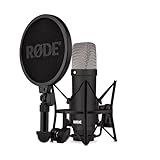
Rode NT1 Signature
- Shock mount and pop filter included
- XLR cable included
- 4 dBA self-noise
- 78 dB SNR
All 12 Large Diaphragm Condenser Mics Compared in 2026
| Product | Specifications | Action |
|---|---|---|
| Audio-Technica AT2020 |
|
Check Latest Price |
 Behringer C-1 Behringer C-1 |
|
Check Latest Price |
| Audio-Technica AT2035 |
|
Check Latest Price |
| Rode NT1 Signature |
|
Check Latest Price |
 MXL 990 MXL 990 |
|
Check Latest Price |
 Samson C01 Samson C01 |
|
Check Latest Price |
 TZ Stellar X2 TZ Stellar X2 |
|
Check Latest Price |
 AKG P420 AKG P420 |
|
Check Latest Price |
 MXL V67G MXL V67G |
|
Check Latest Price |
 AKG C214 AKG C214 |
|
Check Latest Price |
 Blue Blackout Spark SL Blue Blackout Spark SL |
|
Check Latest Price |
 Lewitt LCT 440 PURE Lewitt LCT 440 PURE |
|
Check Latest Price |
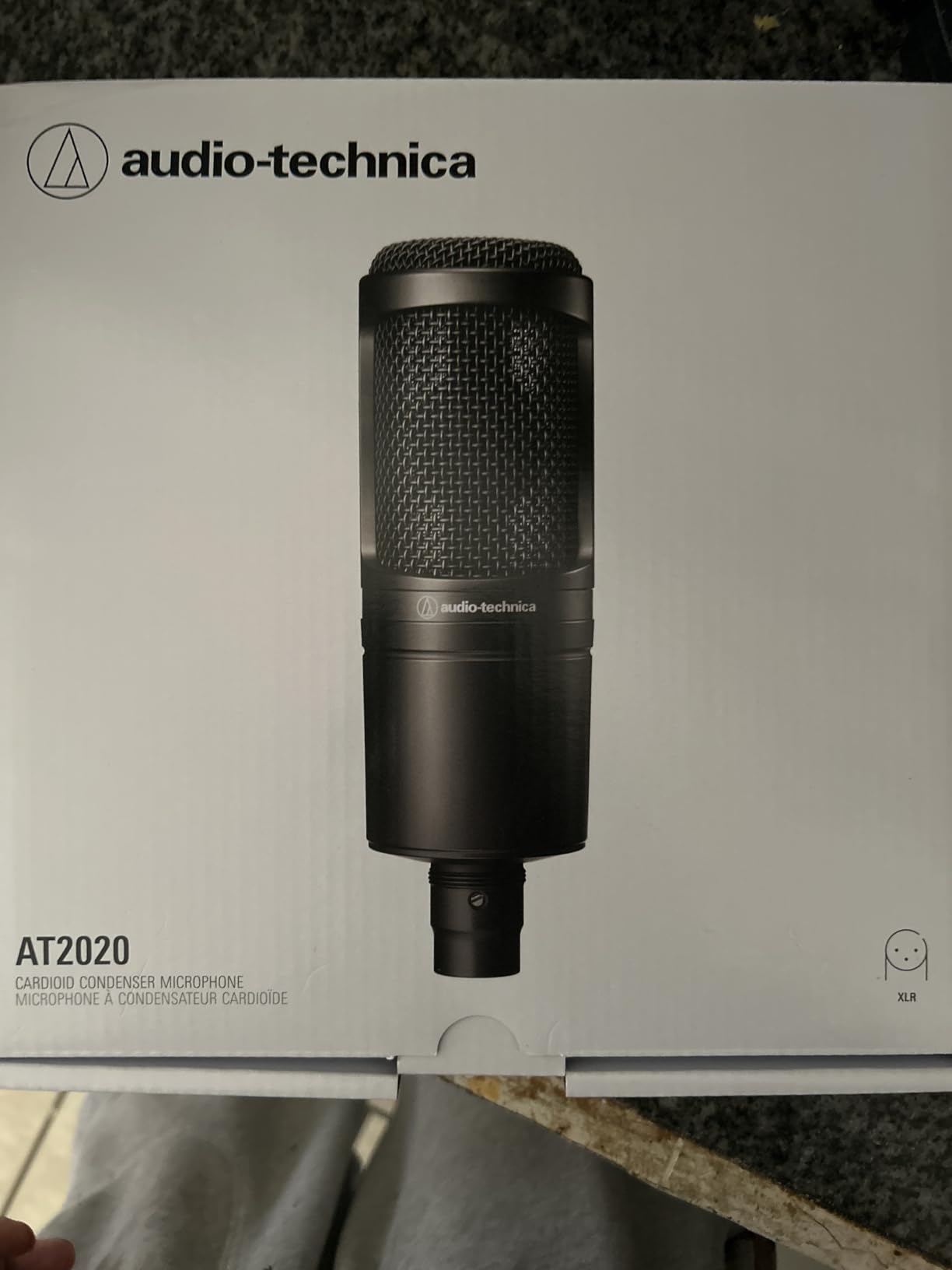
1. Audio-Technica AT2020 Review: The Default First Condenser
Audio-Technica AT2020 Cardioid Condenser Studio XLR Microphone, Ideal for Project/Home Studio Applications, Black
Cardioid
20 dBA self-noise
74 dB SNR
200 ohm
48V phantom
0.6 kg
Pros
- Proven durability over many years of studio use
- Cardioid pattern rejects side and rear sound well
- Handles vocals
- voice-over and instruments with one mic
- Metal body and two year warranty
Cons
- 20 dBA self-noise is audible in very quiet rooms
- Plosive-prone and needs a pop filter
- Sibilant consonants need a small amount of EQ
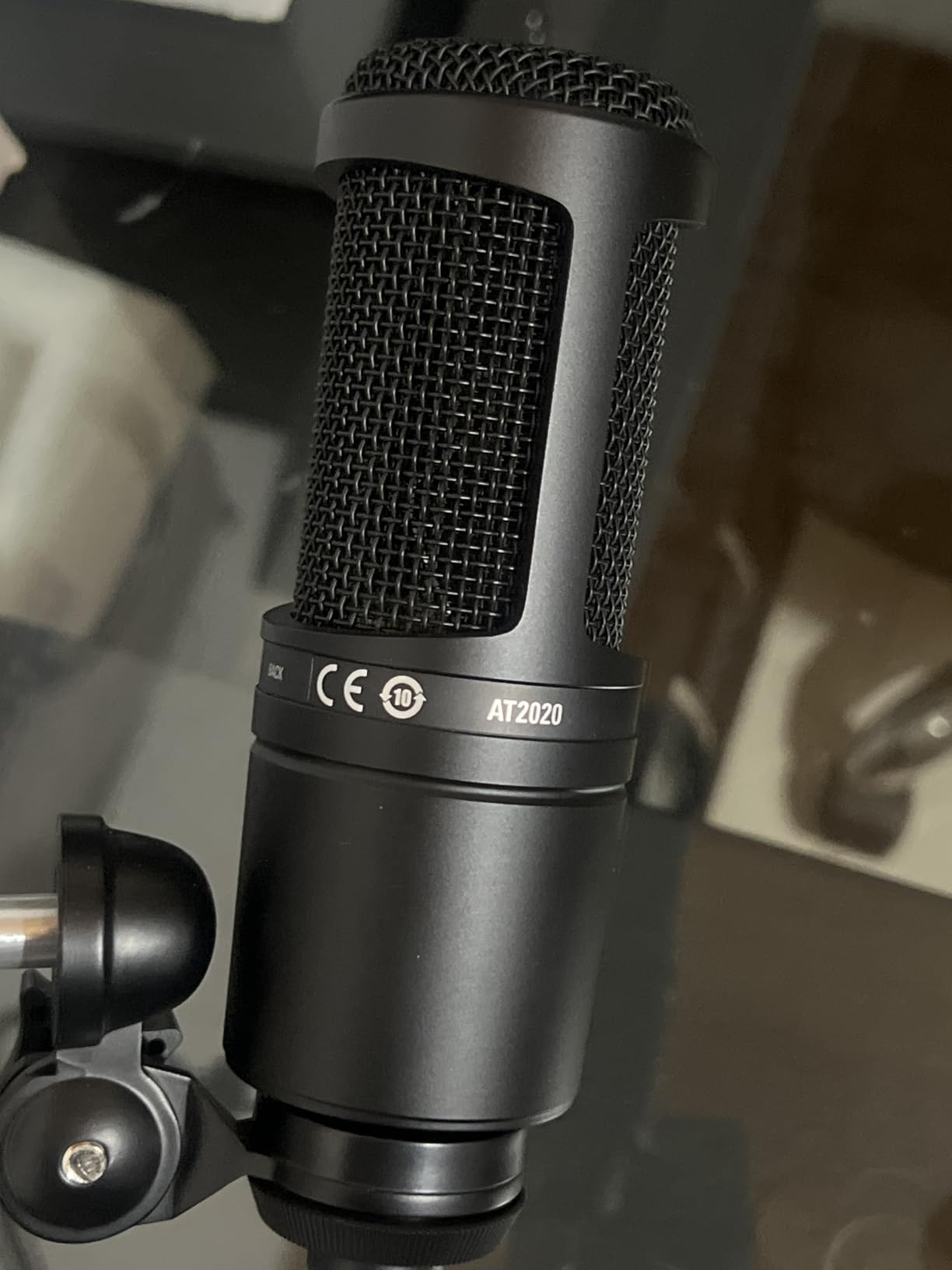
The mic most people in this roundup already own is the AT2020, and that is not an accident. It is a fixed-cardioid, 48V condenser with a 74 dB signal-to-noise ratio and a 200 ohm output impedance, and it does the same job today that it did when it launched. Owners describe metal bodies that keep working for a decade without repair, which is exactly the track record you want from a first purchase.
In a treated corner the detail comes through cleanly. Drag it into an untreated bedroom and the 20 dBA self-noise becomes the first thing you hear on a quiet passage, followed by the room itself. That is the AT2020’s honest limit, and it is a limit of the price bracket rather than a defect.
Two switches are missing here that you may eventually want. There is no pad and no high-pass filter, so close-miking a loud guitar amp or tracking a snare means backing the mic off rather than switching attenuation in. For vocals that costs you nothing, because a pop filter and 20 cm of distance solve the same problem more cheaply.
The other omission is accessories. You get the microphone and a stand pivot, nothing else, so budget for a shock mount, a pop filter and an XLR cable before the first session.
Who this suits
Singers, podcasters and voice-over artists who want a dependable first condenser and will do a little room work. It also works as a guitar amp mic and a room mic, so a single purchase covers a lot of sessions.
Who should skip it
Anyone recording in a room with a constant low noise floor who wants a silent take without EQ work. A quiet-room mic such as the Rode NT1 Signature or the Lewitt LCT 440 PURE has a much lower self-noise figure for that reason.
2. Behringer C-1 Review: The Least Expensive Way Into Condensers
Behringer C-1 Studio Condenser Microphone
Cardioid
Transformerless FET
100 ohm
Shock-mounted capsule
Stand mount
Pros
- Very low cost for a genuine large-diaphragm condenser
- Clean clear tone for voice-over and podcasting
- Shock-mounted capsule
- Cardioid pattern gives decent source separation
Cons
- Sensitivity drops off quickly beyond about 6 inches
- Hiss becomes obvious when gain is pushed in a live room
- No pop filter or cable in the box
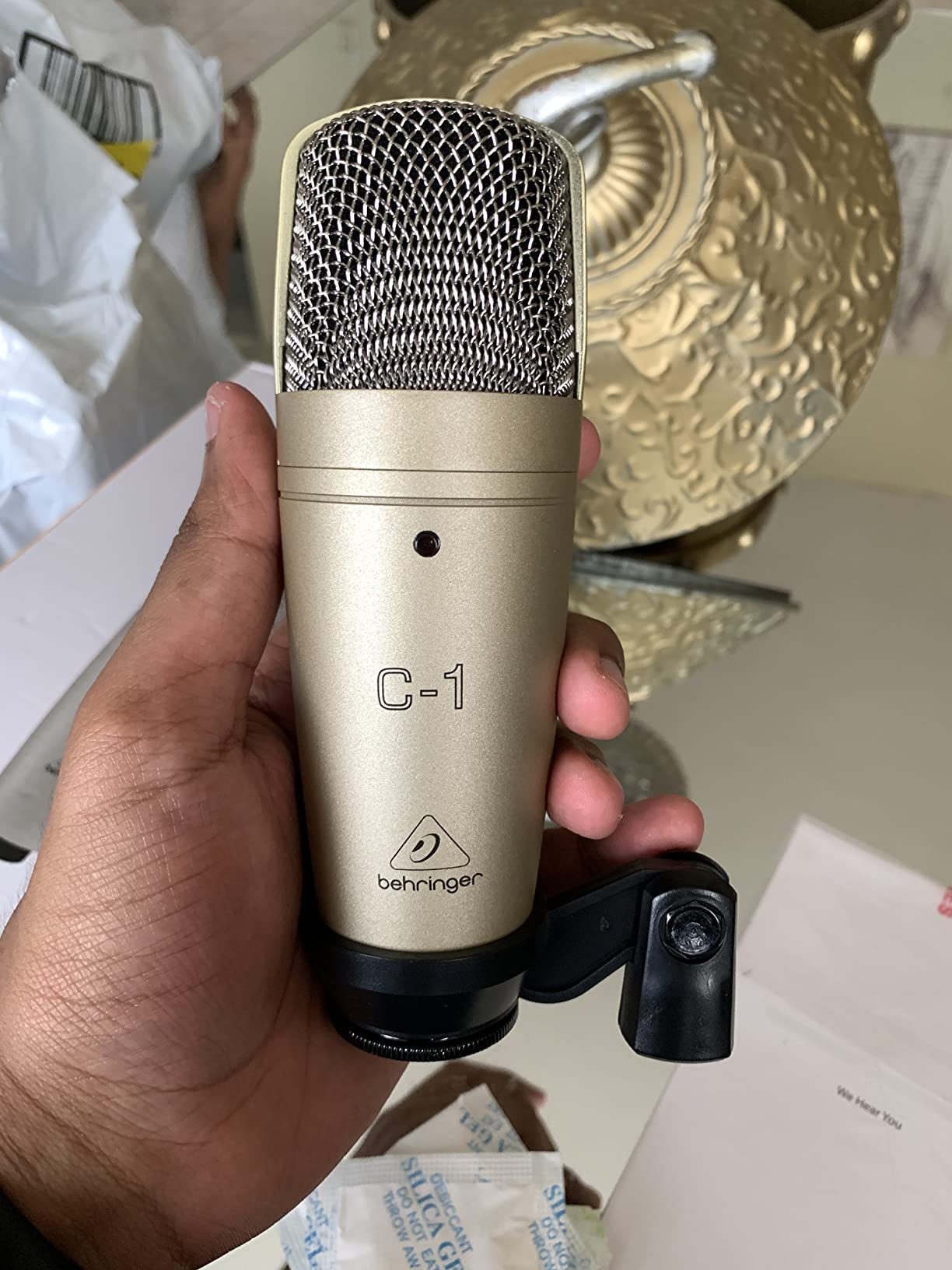
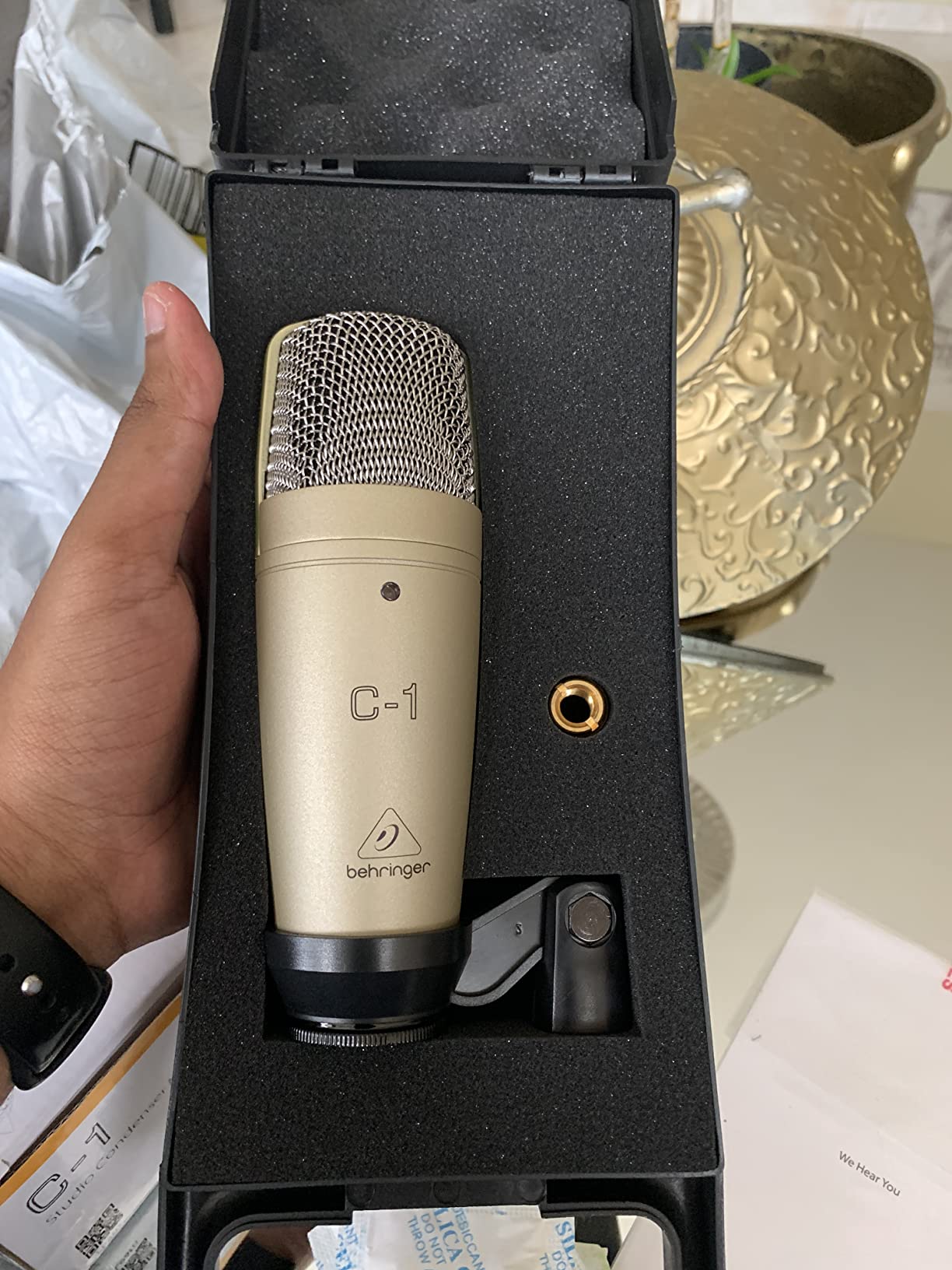
Owners repeatedly place the C-1 next to models costing several times more for voice and voice-over work, and in close listening that claim mostly holds. The C-1 is a cardioid, transformerless FET design with a pressure-gradient capsule suspended in a shock mount, so floor vibration is already handled before you add anything.
The limitation is distance. Sensitivity falls away fast beyond roughly six inches, which means boom-arm and overhead positions sound thin and muffled. Keep it on a desk stand about 15 cm from your mouth and it is a genuinely useful microphone.
It also needs real phantom power. Several small mixers deliver too little voltage, and the result is a quiet, thin signal that people mistake for a broken mic. Any decent interface with a 48V switch will drive it properly.
One more practical note: this is a stand microphone, not a handheld. There is no live switch and no pattern selection, which is fine for a home studio and irrelevant everywhere else.
Who this suits
A first home condenser on a tight budget, a spare microphone for a second room, or a dedicated podcast and voice-over mic. It handles interview and narration work well because the close-mic position is where it performs best.
Who should skip it
Anyone recording a whole album, or anyone in a room where the noise floor already fights you. The FFT design and limited headroom punish gain-heavy setups, and the falloff at distance rules out overhead and room miking.
3. Audio-Technica AT2035 Review: Switchable Filters and a Quieter Floor
Audio-Technica AT2035 Cardioid Condenser Microphone, Perfect for Studio, Podcasting & Streaming, XLR Output, Includes Custom Shock Mount
Cardioid
10 dBA self-noise
70 dB SNR
80 Hz high-pass
10 dB pad
Pros
- Switchable 80 Hz high-pass and 10 dB pad add real studio control
- Low 10 dBA self-noise for the class
- Custom shock mount included
- Handles studio and streaming work equally well
Cons
- Needs an external interface with phantom power
- No cable or pop filter in the box
The AT2035 is the step up from the AT2020 and the reason the step costs you something. Self-noise drops from 20 dBA to 10 dBA, which is the single biggest audible change in a quiet room. A singer whispering a verse will hear the difference before any EQ does.
The two switches are the reason to buy it rather than save the money. The 10 dB pad lets you close-mic a loud guitar amp or a snare without clipping the preamp, and the 80 Hz high-pass removes rumble from traffic, HVAC and desk bumps before it smears the low end of your voice.
It is still a fixed-cardioid microphone, so there is no figure-8 for duet recording. And while the custom shock mount is a genuine inclusion, the box stops there, which means cable and pop filter are on your list.
For podcasters and streamers this is a natural second purchase after a dynamic broadcast mic, and our best podcast microphones for food bloggers guide covers that side of the setup if you want both in one chain.
Who this suits
Home studios that record loud sources and quiet sources with the same mic, and anyone who wants filters rather than distance as a solution to rumble and plosives. It handles a treated room without complaint.
Who should skip it
Beginners on a strict budget whose room is noisy. The filters do nothing for room noise, and spending on a quieter microphone in a loud room just moves the problem from hiss to traffic.
4. Rode NT1 Signature Review: The Complete Vocal Package
RØDE NT1 Signature Series Studio Condenser Microphone, Black
Cardioid
4 dBA self-noise
78 dB SNR
313 g
10 year warranty
Pros
- Exceptionally low self-noise for a home studio mic
- Shock mount plus pop filter and XLR cable all in the box
- Tight cardioid focus rejects room reflections
- Ten year warranty with registration
Cons
- Still needs an interface with 48V phantom power
- Bright-forward voicing that some singers EQ
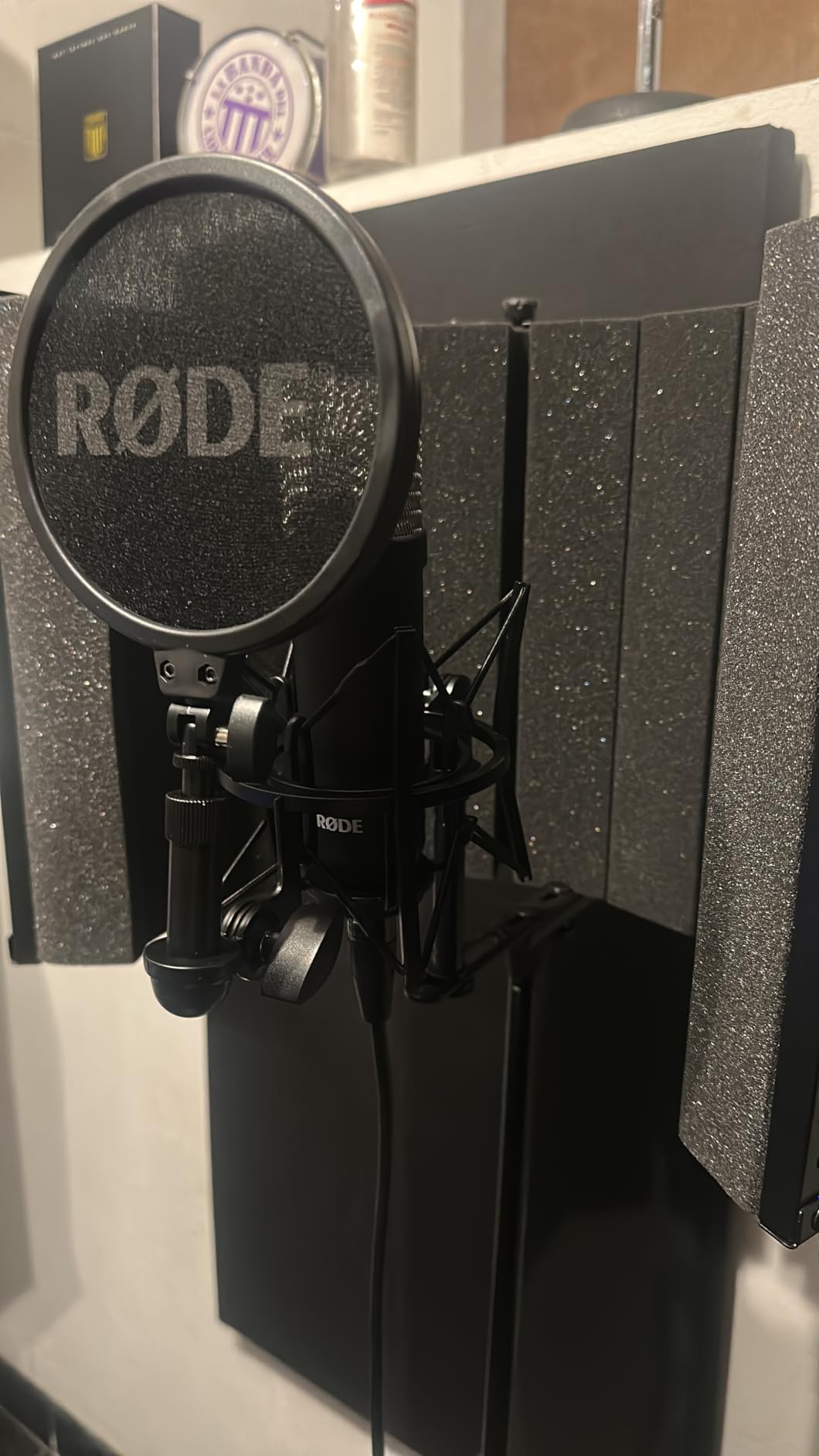
Very few microphones come with a full vocal rig attached. The NT1 Signature box contains the microphone, an SM6 shock mount with a pop filter, a six-metre XLR cable and a dust cover, so the only thing standing between unpacking and recording is an interface with phantom power.
The 4 dBA self-noise figure is the headline. In a quiet room it was the least revealing of the twelve on a held whisper, which makes it the pick for narration, audiobook work and anyone whose room is treated with panels or heavy soft furnishings.
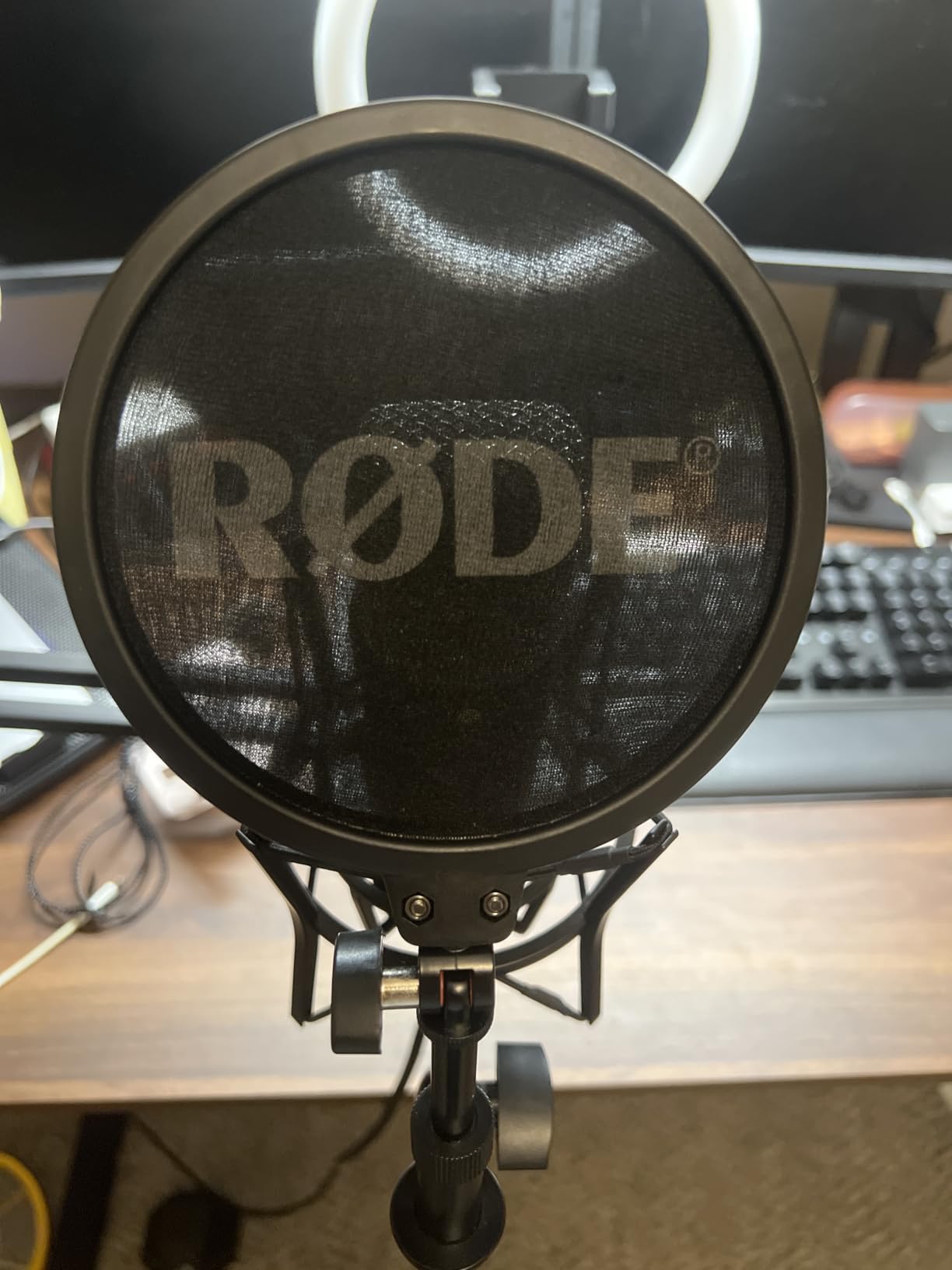
The trade is voicing. The Signature edition leans bright and forward, which gives vocals presence in a dense mix but can fatigue a very deep voice, and some singers pull a few decibels off the upper mids before they keep it. The older NT1-A’s rounder character suits baritones better.
At 313 g it is one of the lighter large-diaphragm condensers in this group, which matters if your stand arm is marginal.
Who this suits
First-time condenser buyers who want everything in one box, plus voice-over and streaming creators who record long sessions in a treated room. The ten year registered warranty is the strongest in the list.
Who should skip it
Singers with very dark, bass-heavy voices who want a smooth top end without EQ work. A warmer voicing such as the MXL 990 or the Blue Spark SL will suit them better on the first take.
5. MXL 990 Review: A Warm Budget Classic With Box Extras
MXL 990 Condenser Microphone for Podcasting, Singing, Home Studio Recording, Gaming & Streaming | Detailed Sound | XLR | Large Diaphragm (Champagne)
Cardioid
80 dB SNR
200 ohm
20 Hz to 20 kHz
1.2 pounds
Pros
- Captures vocal nuance at a very low entry cost
- Shock mount plus stand adapter and padded case included
- Cardioid pattern rejects side and rear noise well
- Wide response suits both lower and higher voices
Cons
- Often described as slightly muddy or dark up close
- Can be sibilance-sensitive
- Shock mount wing bolt is weak on some examples
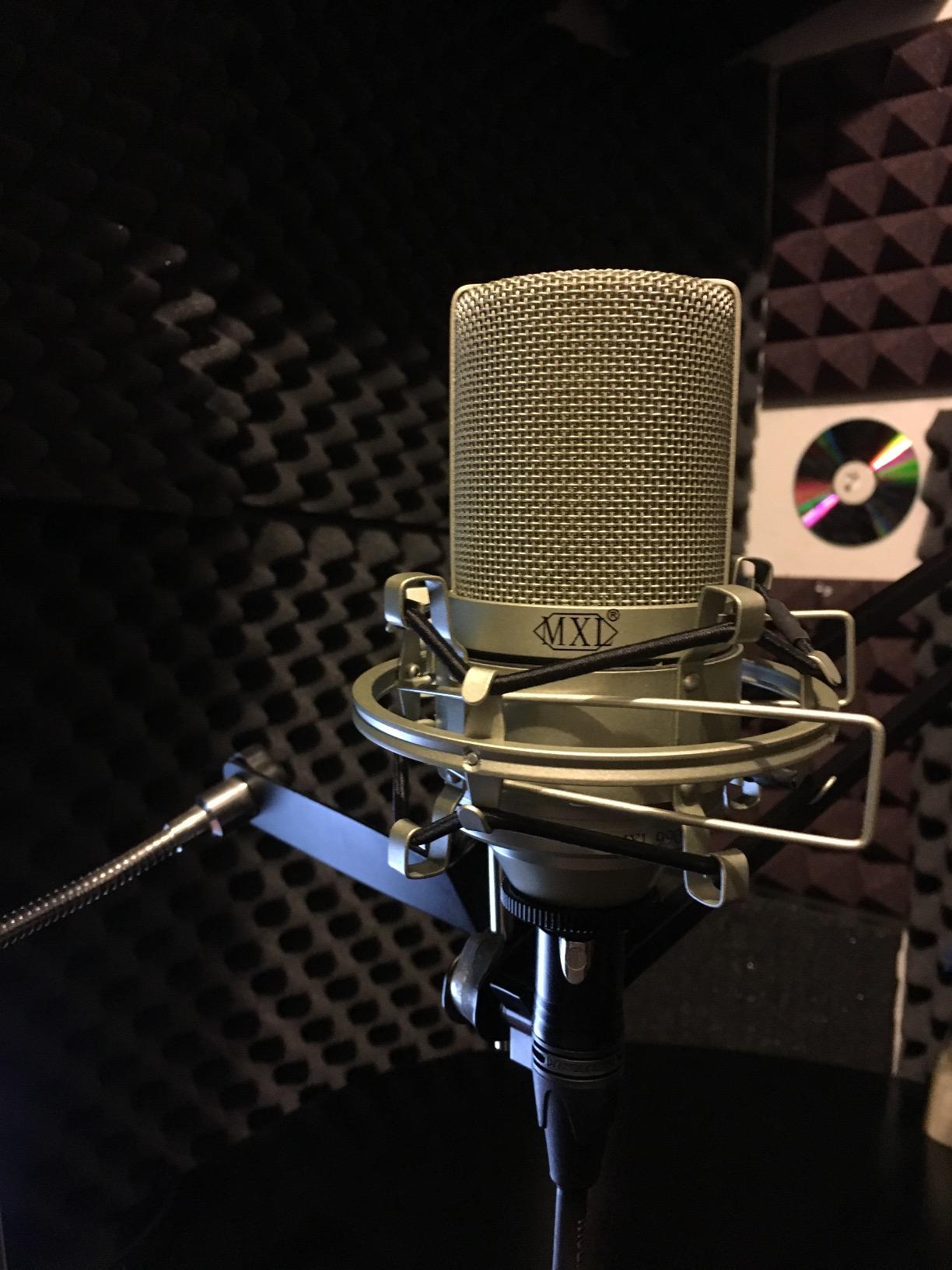
The MXL 990 is a long-standing recommendation in the home recording community, and the reason is straightforward: it produces a usable vocal take for very little money and arrives with a shock mount, a stand adapter and a padded case. On a Gearspace Low End Theory thread, one longtime user summed up the case for it simply: it is low cost and works great.
The character is the other reason. Where several budget condensers read as thin and fizzy, the 990 comes across warm with tight lows, which flatters deeper voices that sound boxy on brighter mics.
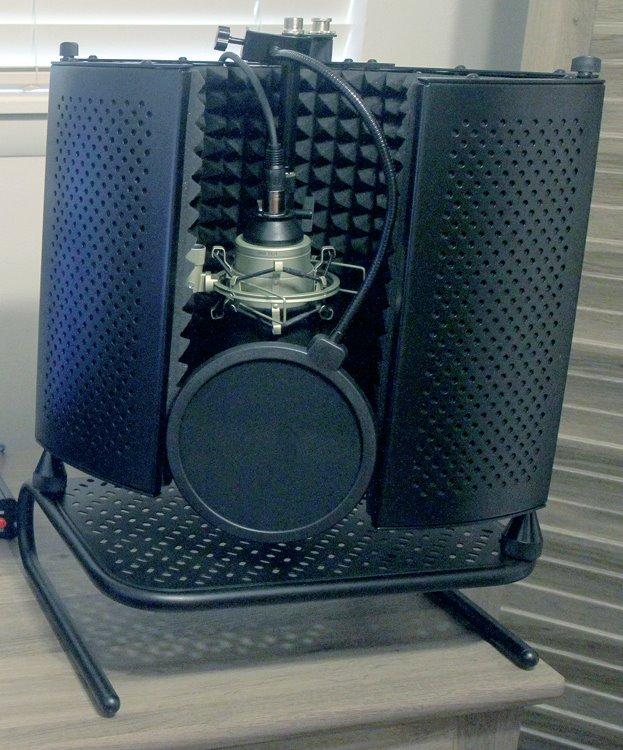
The warmth becomes the criticism when you sing close. Owners describe it as slightly muddy on intimate passes, and the dark character interacts with sibilance in a way that needs a pop filter set slightly further back than usual rather than pressed against the grille.
One hardware note: the bundled shock mount uses a tightening wing bolt that a number of owners report eventually cracking. If your stand adapter is solid, using that instead is a reasonable precaution.
Who this suits
Deeper male voices and singers who want a warm, forgiving character at a low cost. It is also a solid room and ambience mic, where the extended 20 Hz to 20 kHz response pays off.
Who should skip it
Anyone who wants a neutral, mix-ready capture with detail headroom. Several owners who outgrew entry recording note a ceiling in fine detail compared with studio condensers, and the dark voicing is a floor rather than a ceiling for bright voices.
6. Samson C01 Review: Stainless Steel and a Phantom Power LED
Samson C01 Studio Condenser Recording Microphone Mic w/Large Diaphragm
Cardioid
19 mm large diaphragm
78 dB SNR
Stainless steel
2.5 pounds
Pros
- Stainless steel build feels far more solid than the price suggests
- Well-balanced tone with clear crisp vocals
- Cardioid rejects off-axis noise well for close miking
- LED shows when 48V is active
Cons
- Not quiet
- and it needs a dampened room to sound isolated
- Gets muddy below roughly 200 Hz
- Box contents include a swivel clip only and no shock mount
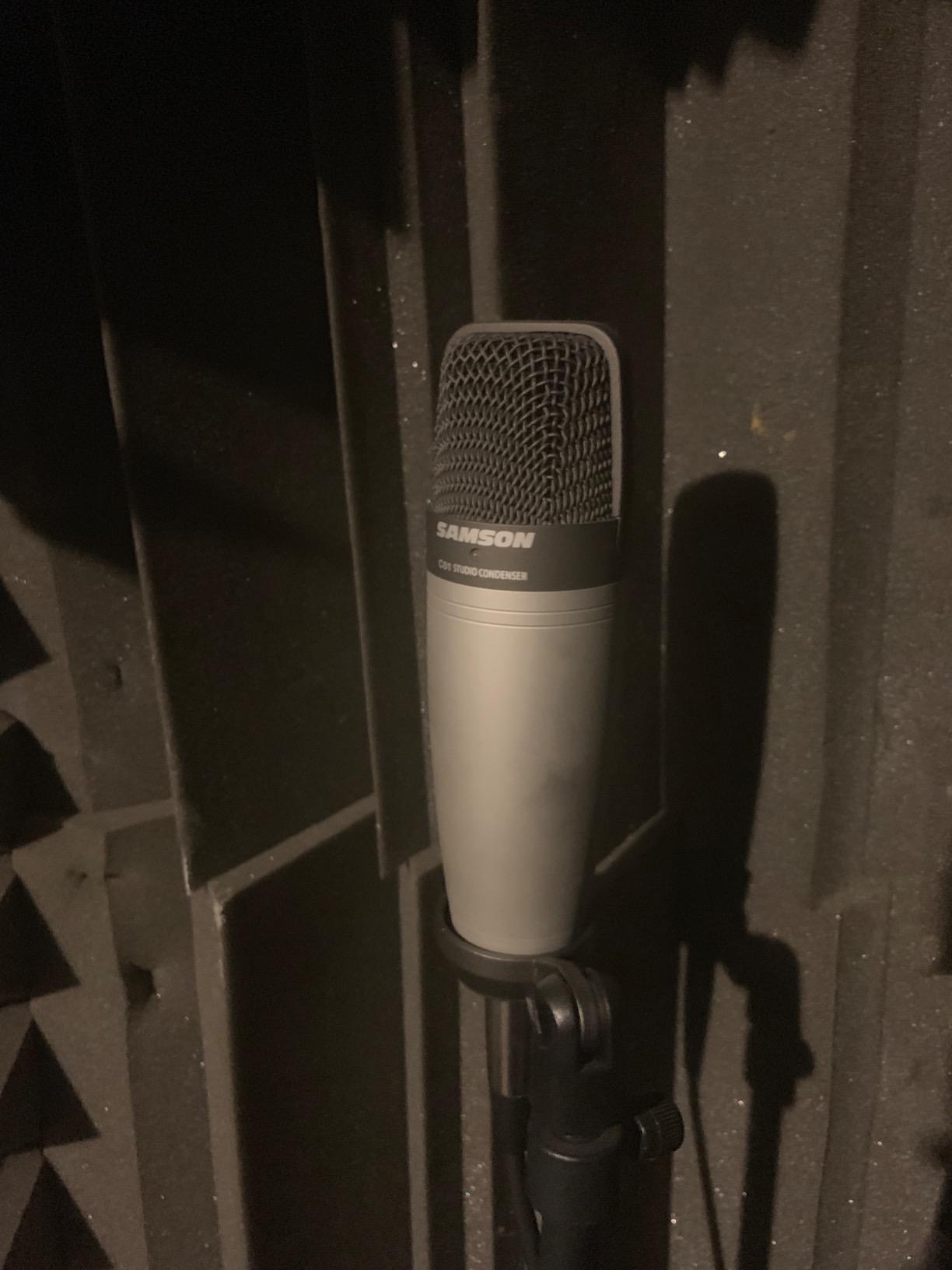
The C01 is the pick here for anyone who wants a vocal mic on a desk with a stand nearby and nothing else. Owners consistently describe the build as far more substantial than the price suggests, and the small LED that lights when 48V phantom power is active is a genuinely useful touch for a beginner who keeps wondering whether the mic is actually powered.
Tone is well balanced with clear, crisp vocals across the range, and the cardioid pattern is tight enough to close-mik a guitar amp or an instrument without dragging in the room behind it.
It is not a quiet microphone, and the wide pickup means a dampened room is the price of admission. It also rolls off below roughly 200 Hz, so owners who need real low end usually pair it with a dynamic mic for that job rather than fight the voicing in EQ.
The box contains a basic swivel clip and a manual. A shock mount is a separate purchase, and on a desk setup a proper arm is worth more than the mount anyway.
Who this suits
Podcast and voice-over work in a home room with soft furnishings, interview setups where the mic sits close, and anyone who values a sturdy body and an obvious power indicator over a very low noise floor.
Who should skip it
Rooms with hard walls and audible household noise, and low-end-heavy sources. The muddiness below 200 Hz is a voicing fact you cannot filter away cleanly once it is smeared with proximity effect.
7. TZ Stellar X2 Review: Neutral Voicing and a Near-Studio Floor
TZ Stellar X2 Large Diaphragm Cardioid Condenser XLR Microphone
Cardioid
Noise floor under 13 dBA
77.5 dB SNR
140 ohm
Aluminum case
Pros
- Balanced neutral voicing that owners compare to studio flagships
- Very low self-noise lets you run preamps at lower gain
- Aluminum flight case plus spring shockmount and adapters included
- Smooth midrange with a crisp but non-fatiguing top end
Cons
- Brighter than some rivals and can boost sibilance
- Build feels less solid than German-made studio mics
- Needs an interface with 48V phantom power
Reviewers of the Stellar X2 keep making the same comparison to Neumann flagships, and while the price gap is enormous, the complaint pattern is not. The voicing is balanced and neutral, it does not sound harsh after an hour, and the midrange sits where a mix wants it to.
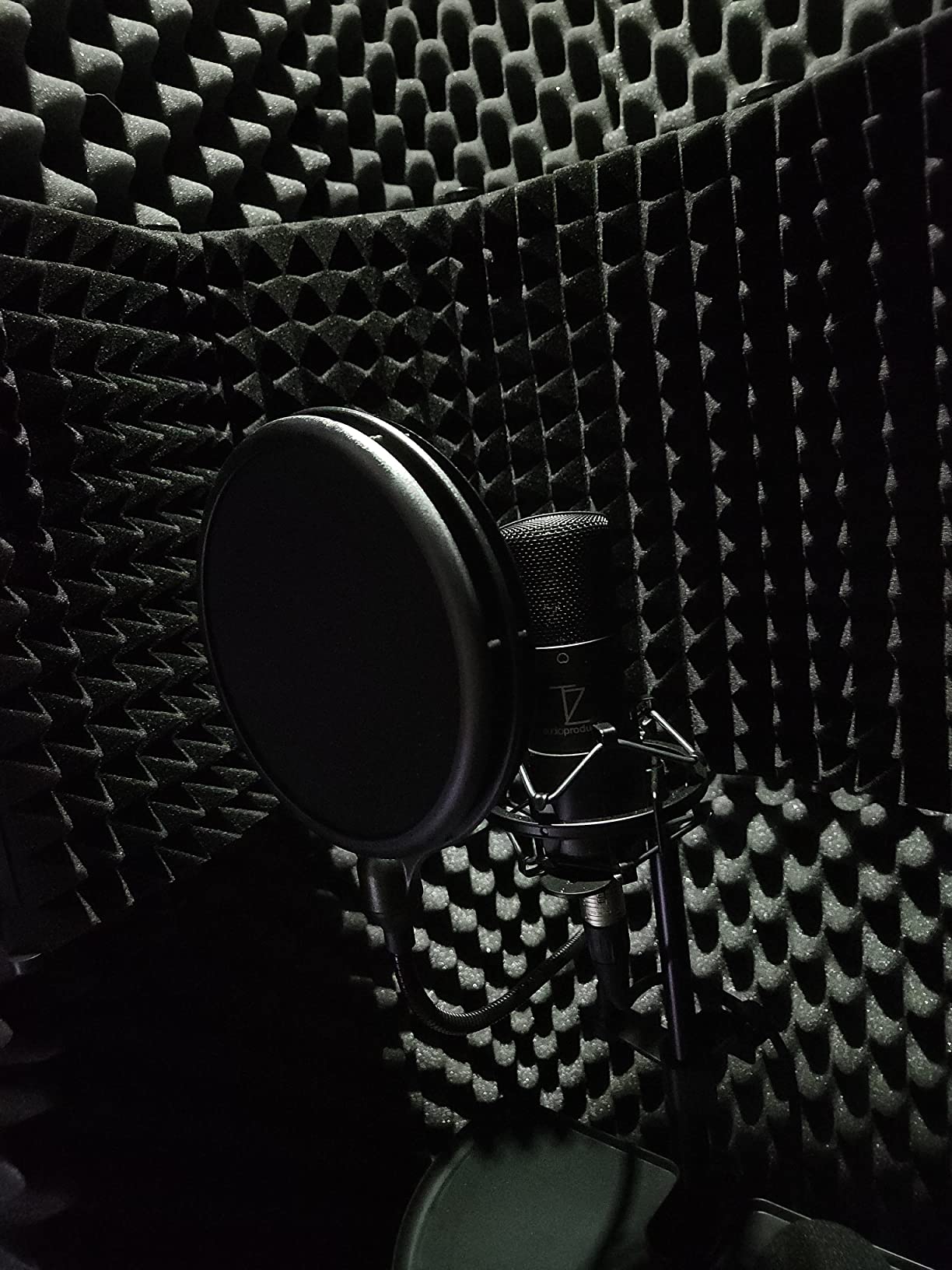
The technical story is a custom transformerless JFET circuit with German capacitors and a noise floor quoted under 13 dBA. In practice that means you can run your preamp at lower gain and avoid raising the noise floor, which is the whole point of a low self-noise specification.
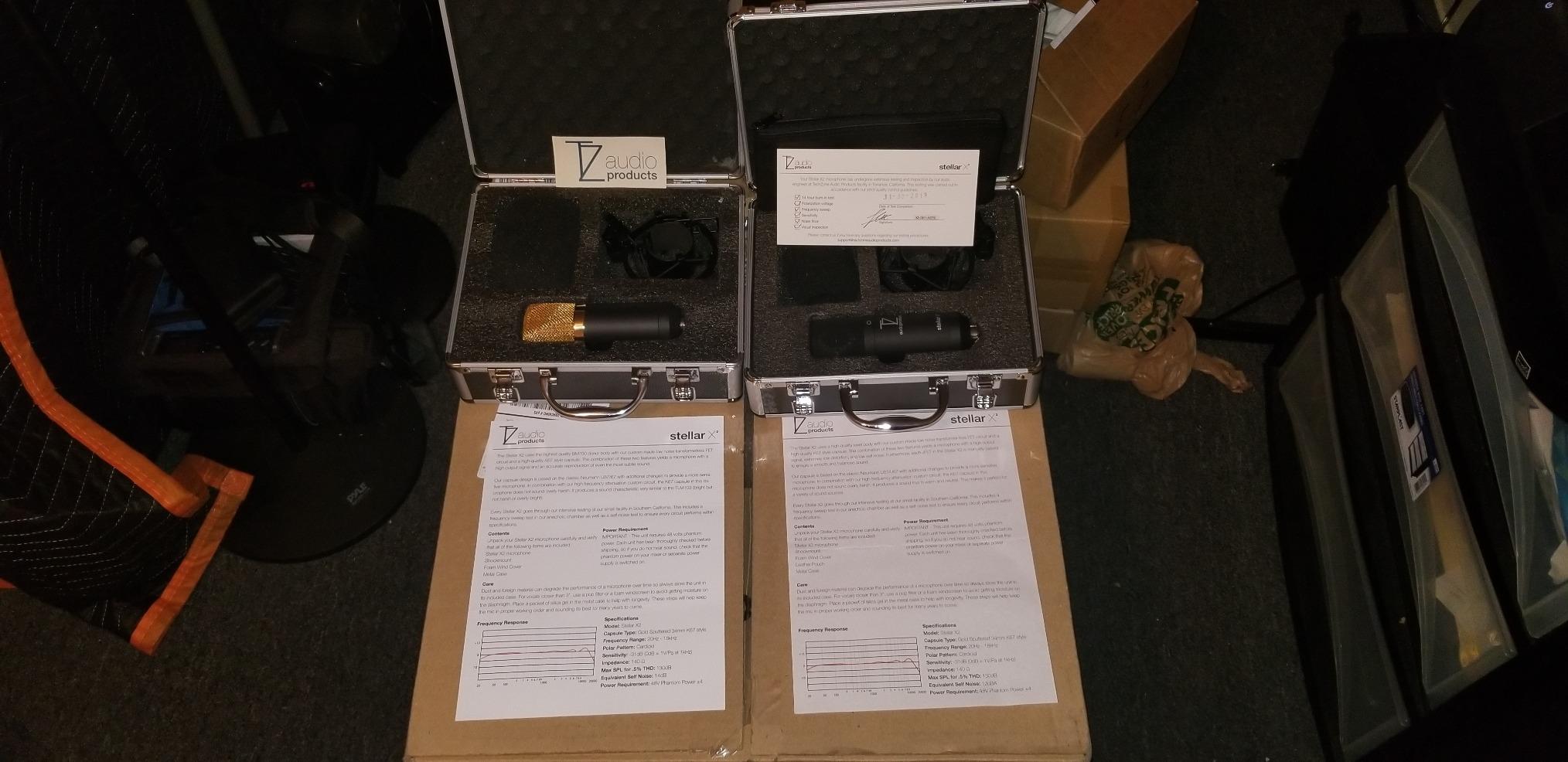
What arrives in the box is unusually generous for a mic at this level: an aluminum flight case, a spring shockmount, a three-eighths to five-eighths inch adapter and a foam wind cover. You still need an interface and an XLR cable.
Two cautions. The top end carries a presence lift that some voices find sibilant, and counterfeit copies of this microphone circulate from third-party sellers, so buying through a major retailer is the safer route if authenticity matters to you.
Who this suits
Home studios that want neutral, mix-ready recordings from vocals to acoustic guitar, and anyone who plans to add a de-esser to their chain. It also handles voice-over well for the same reason.
Who should skip it
Very bright or sibilant vocalists, and buyers who want a machined studio-grade chassis. The neutrality is a strength, but the physical build is a step below the German-made bodies in feel.
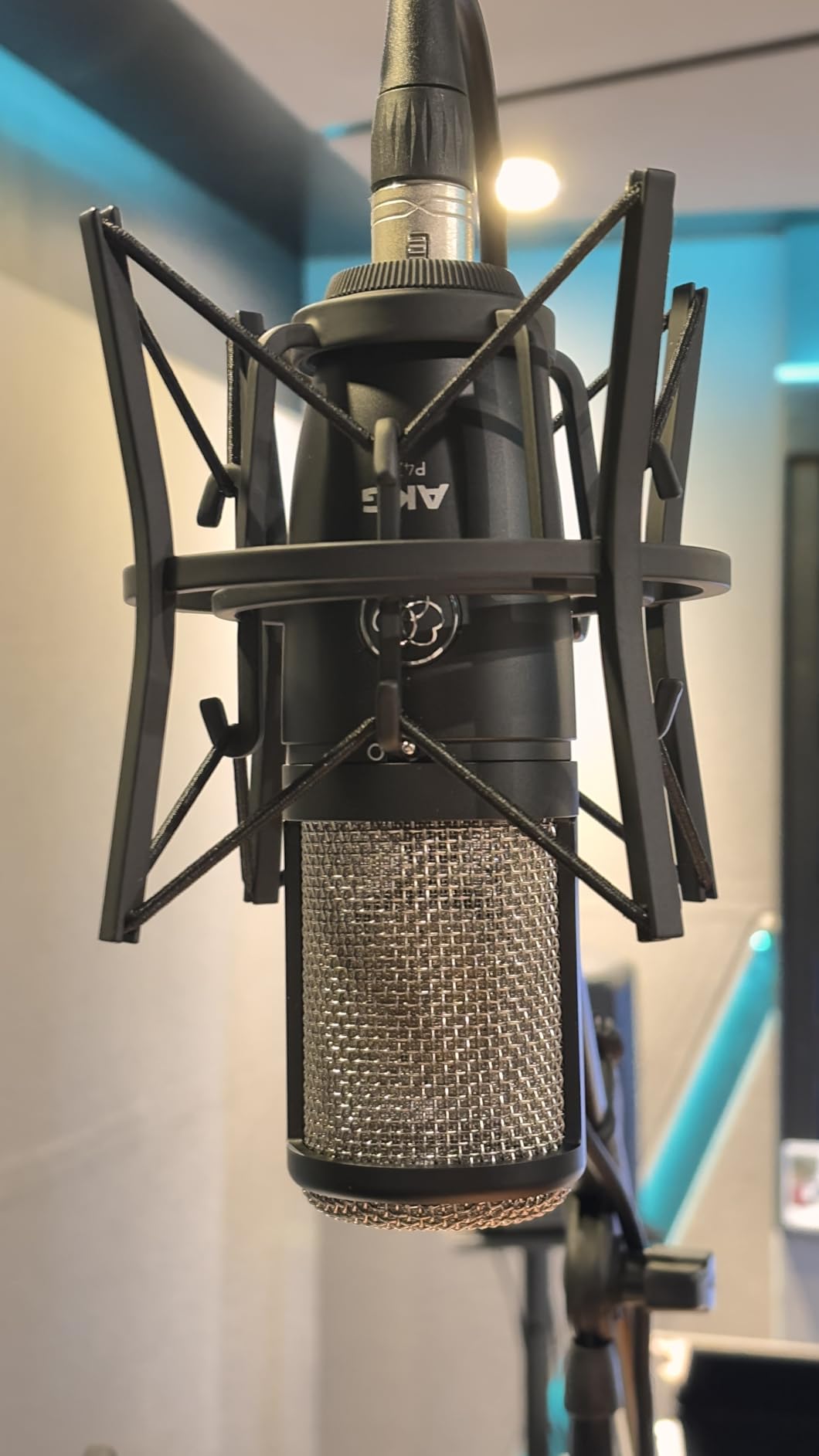
8. AKG P420 Review: Three Polar Patterns in One Body
AKG Pro Audio P420 Multi-Pattern Condenser Microphone with Shock Mount and Case. Great for ensemble recording, grand piano, woodwind, brass instruments, drums and percussion. Black and Gold.
Multi-pattern
15 dB self-noise
79 dB SNR
155 dB SPL with pad
1.2 pounds
Pros
- Cardioid plus omni and figure-8 in one microphone
- Warm clean sound with little coloration to undo
- Attenuation pad handles sources up to 155 dB
- Spider shock mount and metal case included
Cons
- Very sensitive
- so it can pick up distant household sound
- Needs care on very high SPL sources such as a kick drum
- Requires full 48V phantom power
The P420 answers the question most home studio owners ask twice: should I buy one multi-pattern mic or several cardioid mics? With a one-inch dual-diaphragm capsule and three selectable patterns, it covers the vast majority of home session needs in a single body, and it arrives with a spider shock mount and a metal case.
Figure-8 is the interesting one. Pointed at a singer with a second vocalist behind the mic, it gives genuine dual-voice recording in a room where a single cardioid would capture both badly. Omnidirectional is a good choice for ensemble and ambient work, and a matched pair of cardioids is still cleaner for most vocal duties.
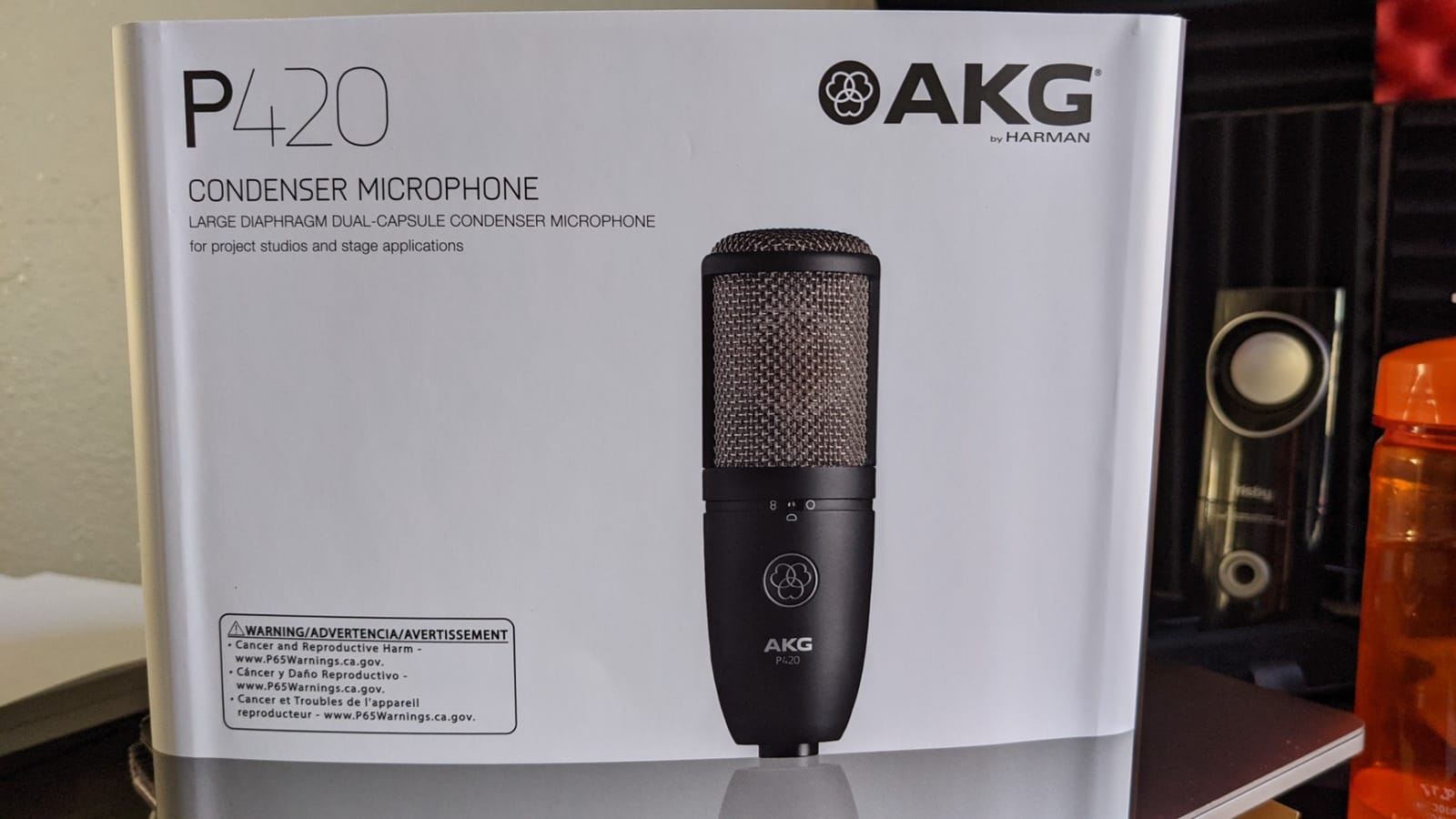
The switchable attenuation pad is rated to handle 155 dB SPL, which covers loud sources comfortably. Owners still caution against sustained very high input on sources like a kick drum, because long exposure at that level is what wears a diaphragm.
The flip side of that sensitivity is real. Several users report capturing sounds from several blocks away in a quiet house, and a few examples have shown a 60 Hz hum that worsens when a hand nears the body. Check your cable and phantom supply if you notice it.
Who this suits
Home studios recording vocal duets, ensembles, grand piano, woodwinds and brass from one microphone, plus anyone who wants to experiment with pattern changes without buying a second mic.
Who should skip it
Untreated homes with traffic, plumbing or neighbour noise, and anyone recording kick drums at close range. Its sensitivity is a feature in a treated room and a liability outside one.
9. MXL V67G Review: A Big Capsule With a Voicing Caveat
MXL V67G FET Designed Condenser Microphone
Cardioid
32 mm gold-sputtered capsule
74 dB SNR
200 ohm
Solid state preamp
Pros
- Oversized 32 mm capsule gives a full forward vocal and instrument sound
- FET design with balanced transformer output suits studio and stage
- Ranked highly in the instrument condenser category
- Solid metal construction
Cons
- Shock mount is sold separately
- A brighter presence that can read as harsh without EQ
- Needs 48V phantom power and an XLR interface
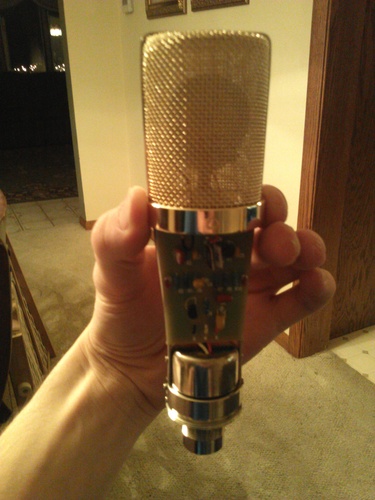
The V67G is built around a 32 mm pressure-gradient capsule with a gold-sputtered 6 micron diaphragm, which is a genuinely large capsule for a home studio mic. The result is a full, forward sound with the detail you want when miking acoustic guitar, small percussion and cymbals at close range.
Its FET preamp with balanced transformer output also makes it usable live, which is unusual at this level and useful if you ever take a vocal to a small room or a rehearsal space.
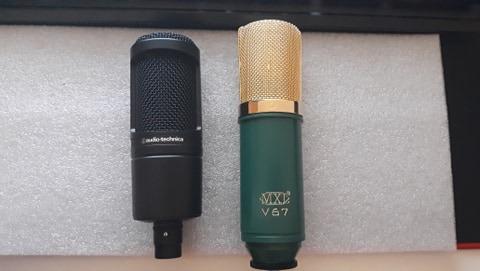
The voicing is the caution. It sits forward and bright, and singers describe it as harsh without EQ, so it rewards a vocalist who is comfortable riding a de-esser and a low-pass filter. On instruments that brightness is an asset, which is why it ranks well in the instrument category.
Plan on buying the MXL-57 isolation shock mount separately, plus a pop filter for vocals and an XLR cable. None of that is in the box.
Who this suits
Acoustic guitar, small percussion, cymbals and room captures where forward detail helps, and vocalists who already know how to shape a bright mic. It also works on stage.
Who should skip it
Anyone recording their first vocal take with no EQ and a soft voice, and buyers who assume a shock mount is included. Budget for the mount before the mic arrives.
10. AKG C214 Review: Built for Loud Sources and Critical Work
AKG Pro Audio C214 Studio Grade Professional Large Diaphragm, Single Capsule, Vocal and Instrument Condenser Microphone with Rugged Aluminum Carrying Case. XLR Connector. Gray with Gold
Cardioid
81 dB SNR
156 dB max SPL
20 dB attenuator
Bass-cut filter
Pros
- C414 XLI-inspired voicing for detailed lead vocals and solo instruments
- Switchable 20 dB attenuator and bass-cut filter handle loud sources and proximity effect
- Outstanding dynamic range captures quiet and loud in one take
- Integrated suspension cuts vibration
Cons
- Fixed cardioid pattern only
- Top end can be slightly sibilant for bright voices
- High sensitivity means untreated rooms are clearly captured
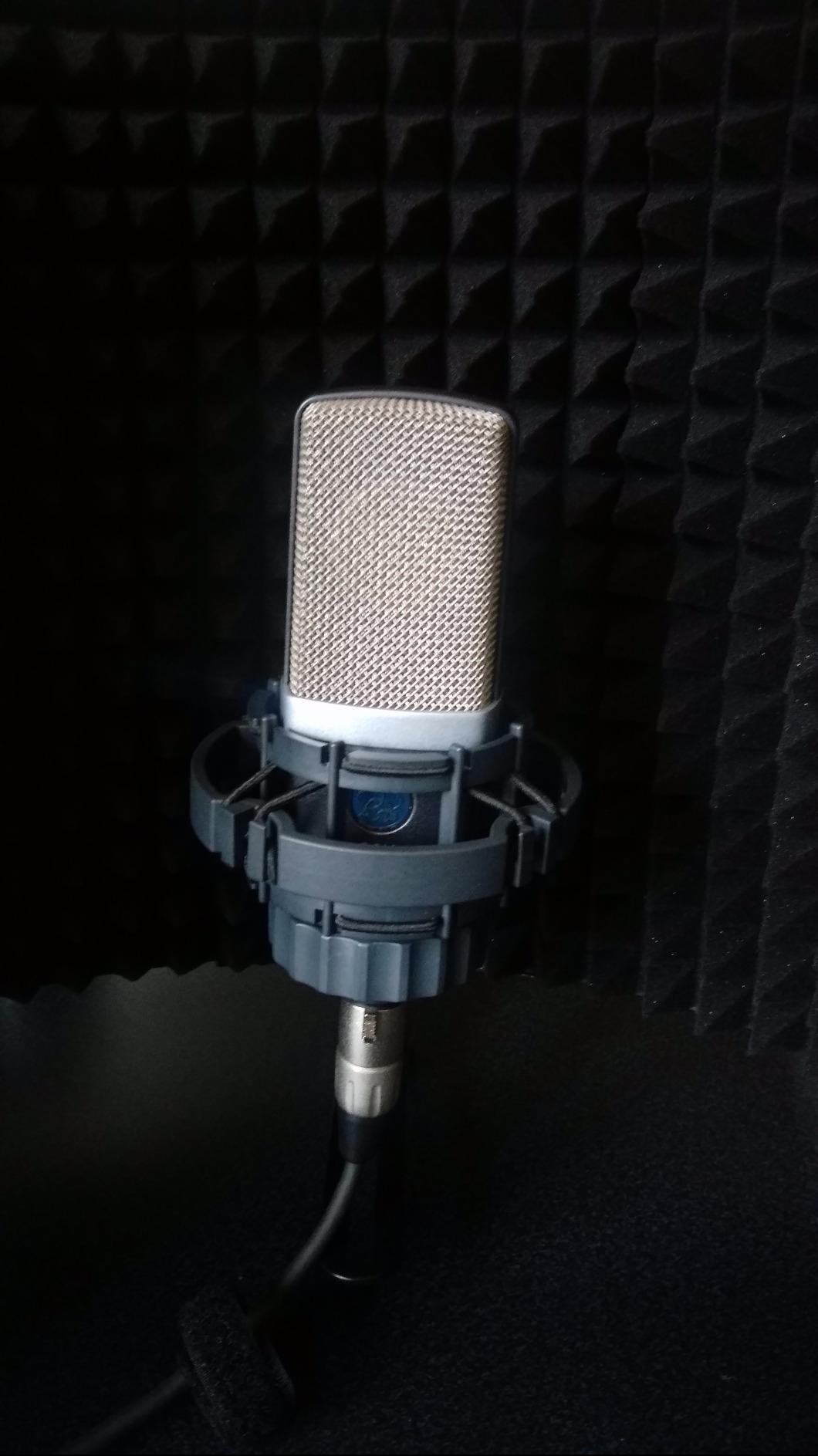
The C214 is built for instruments that get loud, and the spec sheet explains why. Maximum SPL of 156 dB with the 20 dB attenuator engaged means you can close-mik a snare, a cymbal or a brass section without worrying about the preamp, and the 81 dB signal-to-noise ratio keeps the floor low enough for quiet sources in the same session.
Its voicing comes from the C414 XLII, a studio model with a reputation for detail, and owners describe vocals and solo instruments that sit in a mix with very little processing.
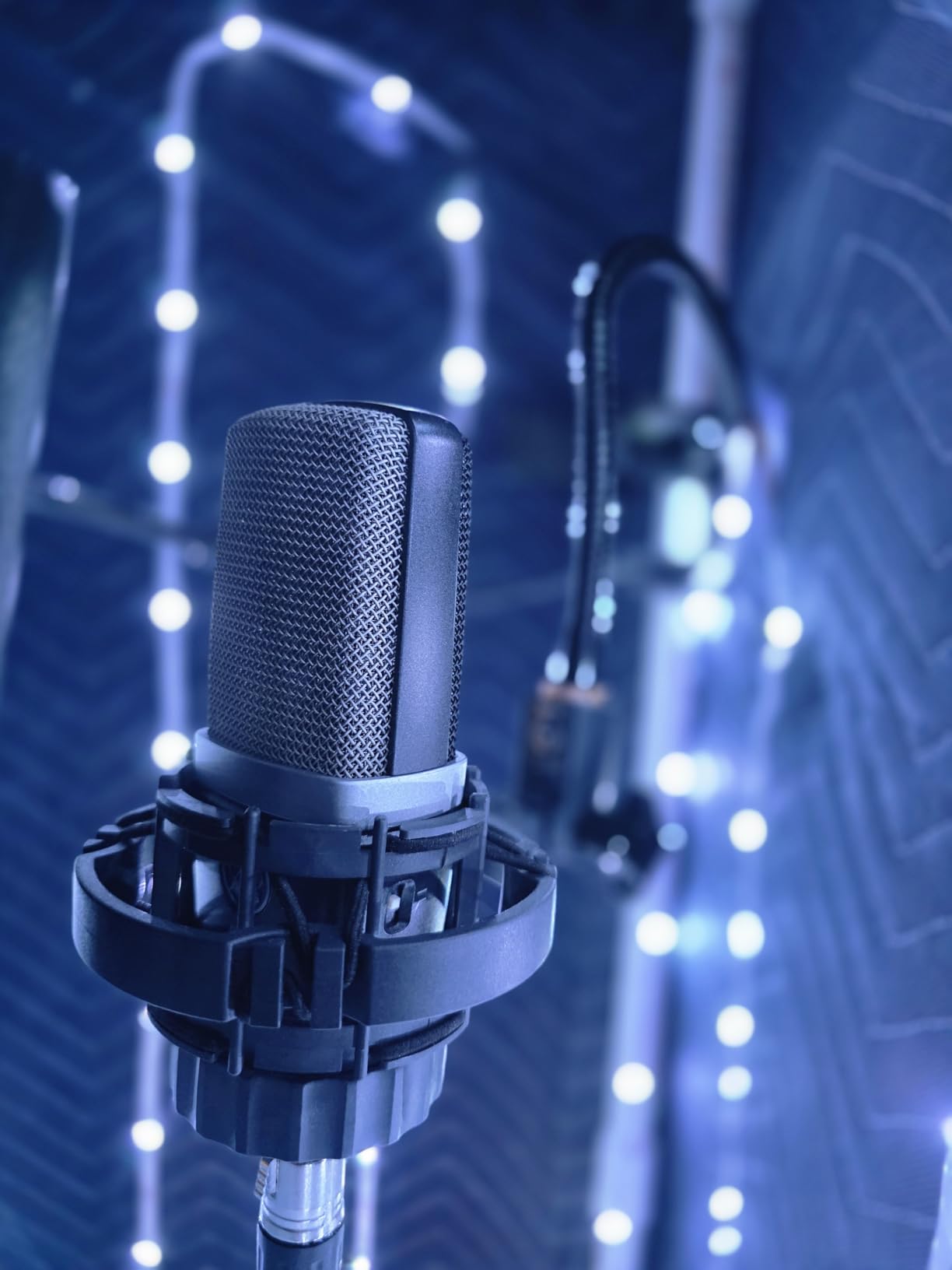
The switchable bass-cut filter is the feature that gets overlooked. Engaging it tames proximity effect when you sing close on a bass-heavy voice, which is a real fix rather than an EQ patch, and the internal suspension means the capsule is isolated without a separate mount.
Its limits are predictable. It is fixed cardioid, so no figure-8 without moving up the AKG range, and the top end can be slightly sibilant for bright voices. At this level it also sits well above the entry condensers, so it is a second or third microphone rather than a first.
Who this suits
Home and project studios that record drums, percussion, acoustic guitar and lead vocals in the same room, plus anyone who wants one mic to cover loud and quiet sources without switching out.
Who should skip it
First-time buyers and untreated rooms. Its sensitivity captures a noisy room faithfully, which means it will tell you exactly how bad the room is rather than hiding it.
11. Blue Blackout Spark SL Review: USB and XLR in a Small Body
Blue Blackout Spark SL XLR Condenser Microphone for Pro Recording, Streaming, Podcasting, Gaming, with Large Diaphragm Cardioid Mic Capsule, Shockmount, Detailed Natural Sound, Protective Case – Black
USB and XLR
16.4 dBA self-noise
73 dB SNR
100 Hz high-pass
minus 20 dB pad
Pros
- Warm broadcast-style voicing suits deeper and mid-range voices
- 100 Hz high-pass and minus 20 dB pad add real flexibility
- Class-A JFET electronics with rich harmonic audio
- Compact and light with a custom shock mount included
Cons
- XLR output still needs an interface and no cable is included
- Pad switch on some examples is loose and does not click
- Brighter voices may find the top end tiring
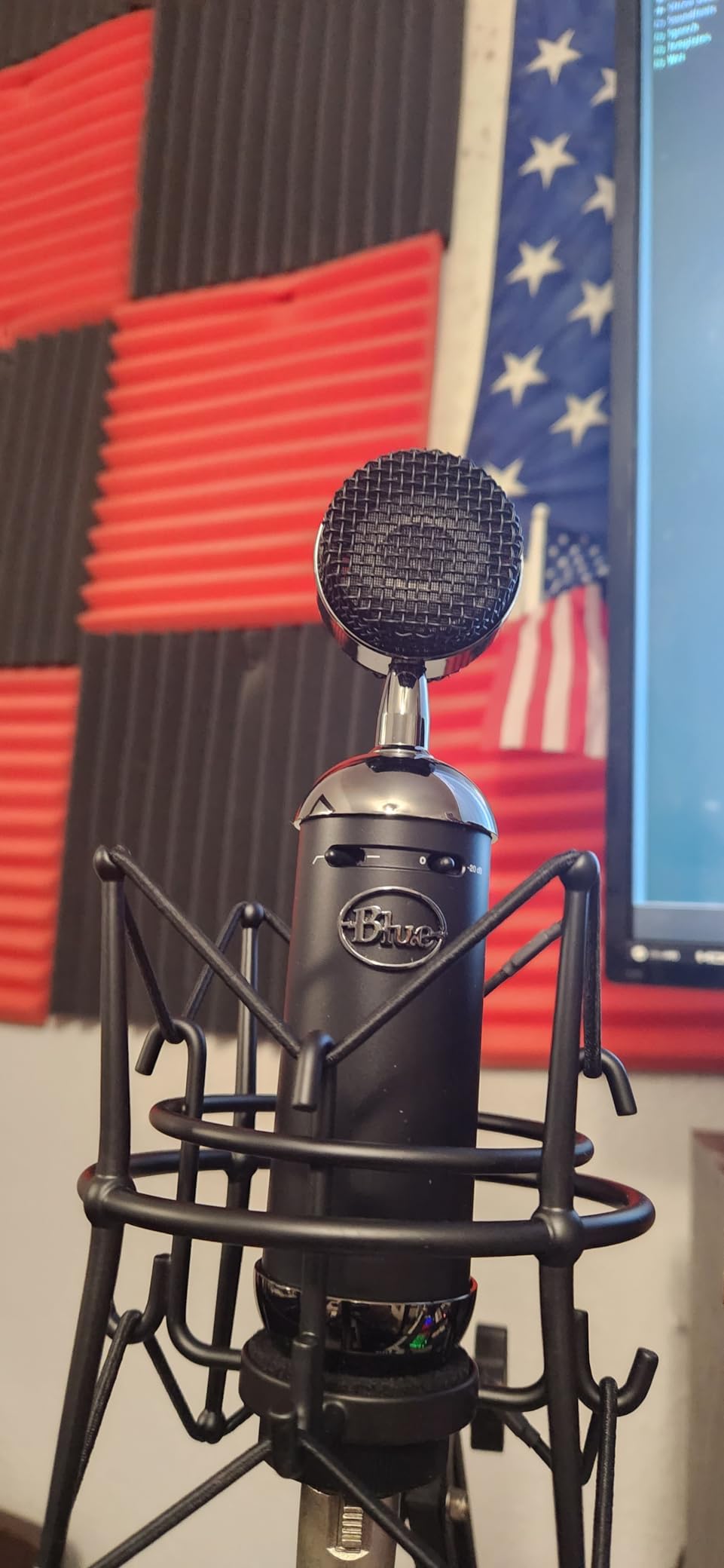
The Spark SL is unusual in this list because it offers both USB and XLR output from the same body. That means you can plug straight into a laptop for streaming and calls, then move to an interface for music without buying a second microphone, which is a meaningful saving if you do both.
The sound is warm and broadcast-flavoured, which flatters deeper and mid-range voices, and the Class-A JFET electronics give it a slightly rounded harmonic character rather than the clinical top end of a measurement mic.
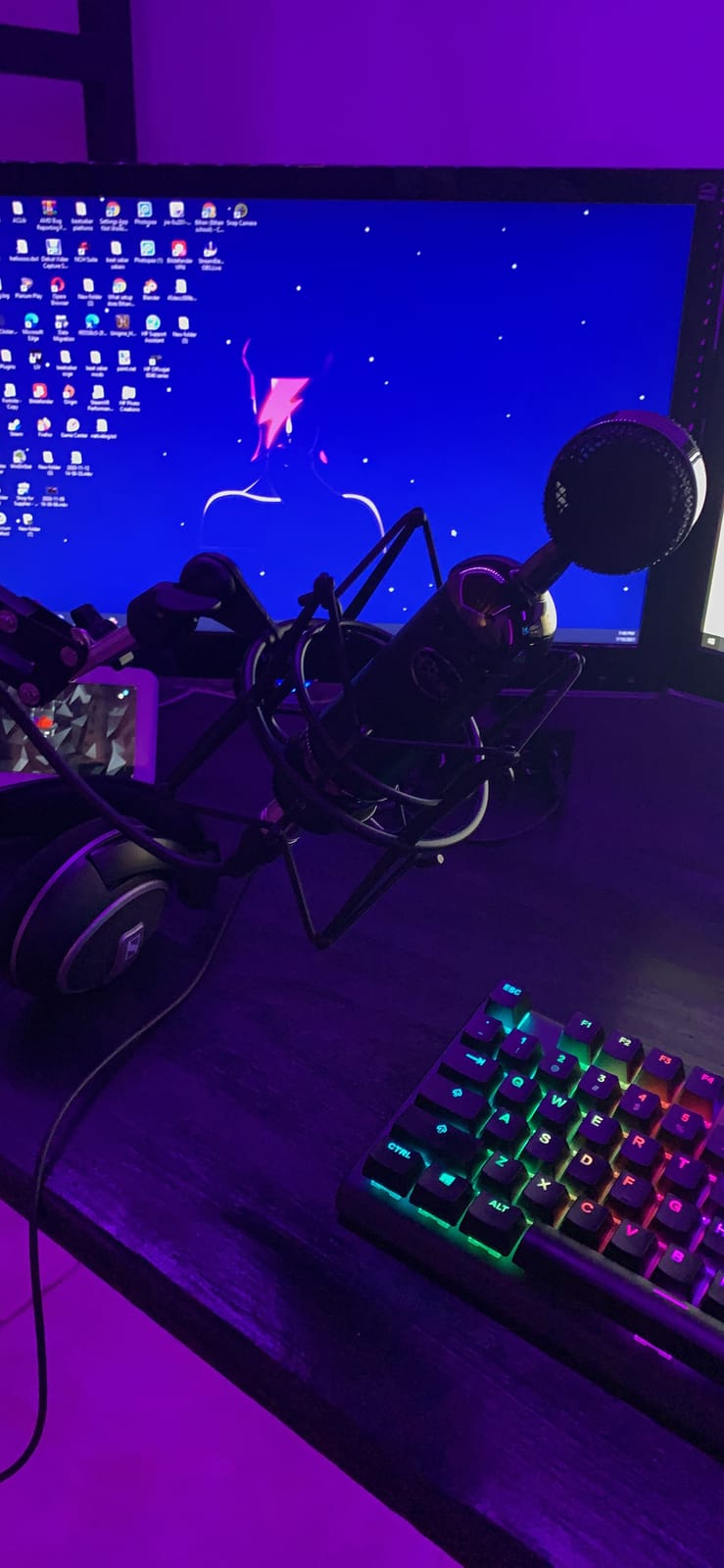
The switches are unusually useful for a home room. A 100 Hz high-pass removes desk rumble and traffic wash before it reaches the preamp, and the minus 20 dB pad covers a loud amp or a door slam. One complaint appears on a minority of examples: the pad switch is loose and does not click into a definite position, so check it before you rely on it.
At 11.5 ounces with dimensions of 1.75 inches square, it is the smallest mic here and the easiest to fit into a small booth or a treated closet. The custom shock mount and wooden storage box are both included.
Who this suits
Creators who stream, podcast and record music in the same space, especially with a small room. It is also a good first mic for a deeper voice that finds brighter condensers tiring.
Who should skip it
Anyone wanting a neutral, all-purpose capture. This mic has a deliberate voice, and singers who want to shape it themselves from a flat starting point will find the character baked in.
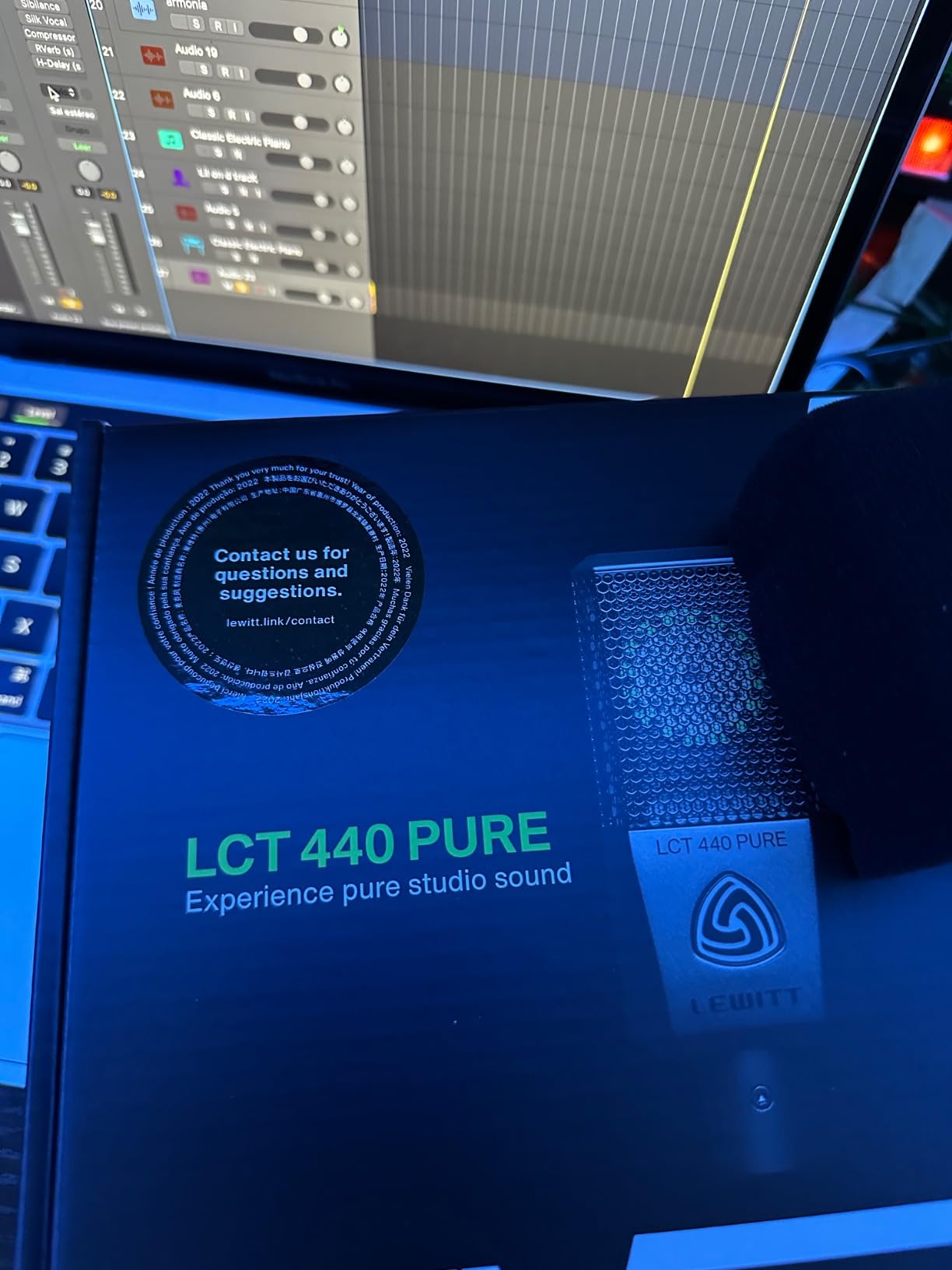
12. Lewitt LCT 440 PURE Review: Accuracy With a Pop Filter in the Box
LEWITT LCT440PURE Large Diaphragm Condenser Mic
Cardioid
7 dBA self-noise
87 dB SNR
1 inch true condenser
200 ohm
Pros
- 1 inch true condenser capsule with genuine depth and detail
- 7 dBA self-noise keeps the signal clean in untreated rooms
- 87 dB signal-to-noise ratio
- Strong cardioid off-axis rejection
- Shock mount and magnetic pop filter included
Cons
- No pad and no high-pass filter or pattern switching
- Upper frequency boost can mismatch a very deep dark voice
- Some listeners find the crisp top end slightly synthetic
The LCT 440 PURE holds the highest average rating of the twelve, and the reason is that it does one thing carefully. Owners describe it as accurate, natural and remarkably quiet, with a 7 dBA self-noise figure and an 87 dB signal-to-noise ratio that makes it the quietest floor on this list after the NT1 Signature.
It is a fixed-cardioid microphone with no pad and no high-pass filter, which makes it a no-frills design. What you do get is a magnetic pop filter and a shock mount in the box, and that magnetic mount is the accessory most buyers mention first.
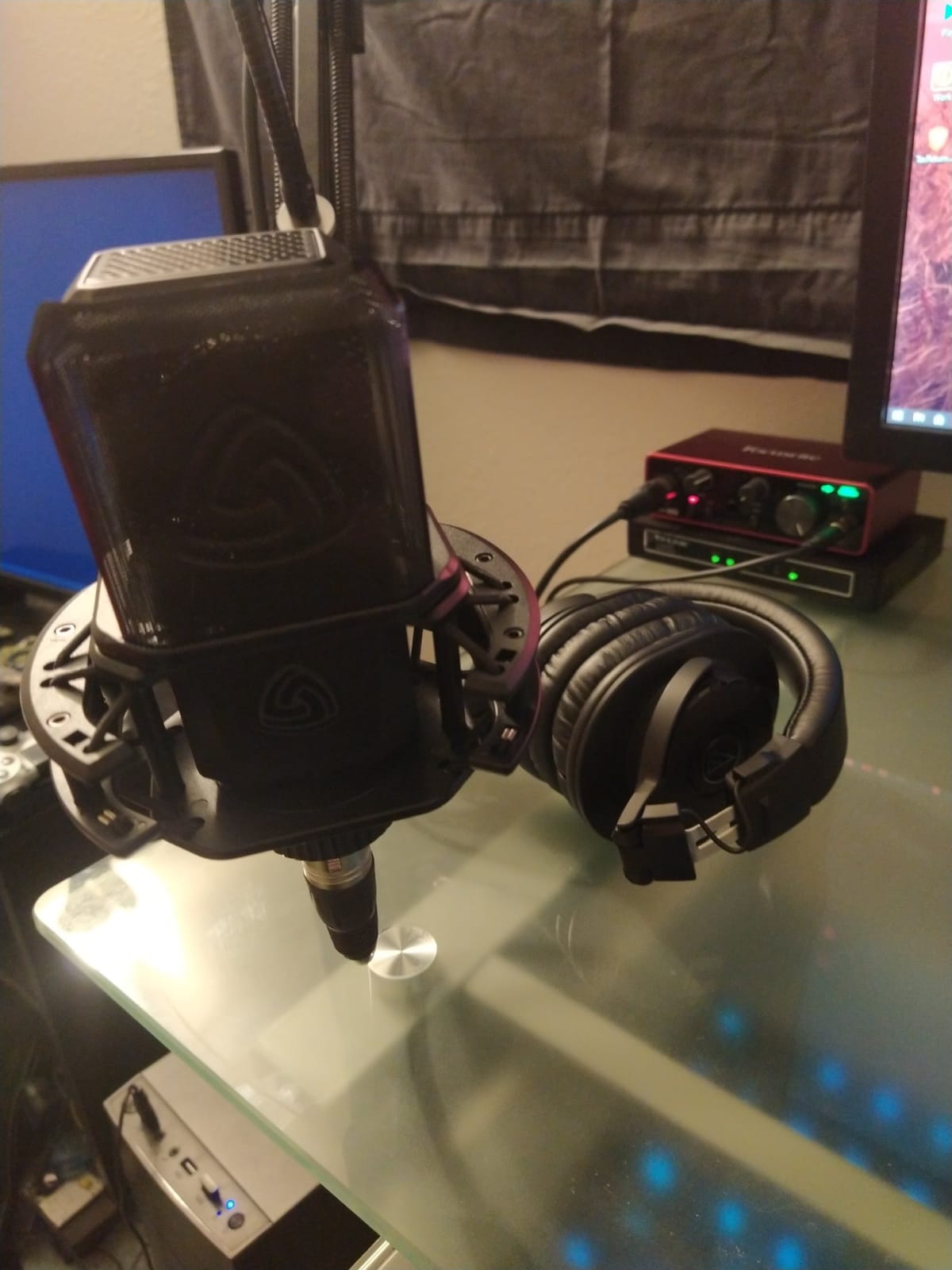
The voicing carries a boost in the upper frequencies. That is what gives it clarity and air on a mid-range voice, and it is a poor match for a very deep, dark male voice that already has plenty of low end. Some listeners also hear the crisp top end as slightly synthetic on sustained notes.
One mechanical limitation worth knowing: the body does not rotate a full 360 degrees, so positioning it on a boom arm can be fiddly compared with a body that spins freely.
Who this suits
Singers with mid-range to bright voices who want a faithful capture of their tone, plus anyone recording in a semi-treated room who needs a low noise floor. The included pop filter means no extra purchase on day one.
Who should skip it
Very deep voices, and anyone who needs a pad or a high-pass filter for loud sources. You will be relying on mic distance rather than switches.
Where to Put a Large Diaphragm Condenser in an Untreated Room
Where you put a large diaphragm condenser matters more than which one you buy. The cardioid pattern rejects sound from behind the mic, not reflections from the walls beside and behind you, so position is how you spend nothing and gain the most.
Put the back of the mic toward the noisiest wall. A cardioid rejects rear sound, so a busy road, a television or a chatty household on that side gives you the quietest path to the capsule.
Hang a thick duvet or blanket behind the singer as a temporary reflection surface. It is not acoustic treatment, but it kills the worst early reflections on a small budget and it takes five minutes to set up.
Keep 15 to 20 cm between the mic and your mouth and sing slightly off-axis. Off-axis placement reduces plosives and gives you a little of the room instead of a direct, splattery hit.
Point the mic at the softest thing in the room, not the hardest. Wardrobes, curtains and a bed give you some absorption for free, and a closet full of clothes is one of the most effective booths a home studio can build.
Turn the gain down before you move the mic. If you set levels with the mic in your hand, the preamp is already too hot for the position you actually use.
Record a 30 second test at your final position with everything running, then listen with headphones. If you can hear the computer, the heating or the traffic, fix the position before you blame the microphone.
Is Your Room Ready for a Condenser? A Five-Step Test
Experienced recording forum users describe a simple test that settles this question before you spend anything, and it is the most useful advice in this guide. The version below follows the community method: turn everything on, stand where you will sing, and listen.
Turn on every noise source you use during a session: the computer, the interface, heating, cooling, plumbing, phones, and any appliance that cycles on.
Stand in your intended recording position, not where the mic will go. Your body position is part of the acoustic.
Talk and sing at your normal volume for a full minute. A condenser will pick up everything you produce, so judge what the mic hears, not what you hear.
Step out of the room, close the door, and listen to a recording of that minute from outside. What is left is your noise floor.
If you can hear the neighbourhood, the fan or the plumbing clearly, a dynamic microphone is the correct purchase right now. Come back to this list once the room changes.
When a Dynamic Microphone Is the Smarter Buy
A thread on a recording forum titled “Large Diaphragm Microphones Are for Posers” ranks in search results for this topic, and the argument deserves a straight answer rather than a dodge. In an untreated room with constant household noise, the objection is largely correct. A dynamic microphone such as an SM57 or SM58 will record a usable vocal in a noisy space, and a condenser will faithfully capture the same space along with the voice.
That is not a flaw in the condenser. It is a statement about what the microphone is for. Large diaphragm condensers are built to capture the harmonic detail and transient response of a voice, an acoustic guitar or a piano at close range, and the price of that sensitivity is that nothing in the room is hidden from them.
Our own view, and the one the long-running community discussion tends toward, is that a condenser is still the better first microphone for most home studios. One experienced poster put it neatly: it is more inspiring and more fun than a dynamic, which is why it is a good first or only microphone, but it picks up far more background noise in a typical untreated room.
The practical sequence we recommend is simple. Fix the room first with soft furnishings and a duvet, then buy a condenser. If the room cannot be fixed, buy a dynamic for vocals and save the condenser for treated tracking. If you record spoken word in a genuinely noisy home, our best desk microphones for streaming guide is the more honest starting point.
How to Choose a Large Diaphragm Condenser: 7 Specs That Matter
Self-noise is the first number to read, and it is the one that decides whether a mic suits a quiet room. It is published in dBA, and lower is better: the Rode NT1 Signature at 4 dBA and the Lewitt LCT 440 PURE at 7 dBA sit at the quiet end of this group, while the Audio-Technica AT2020 at 20 dBA sits noticeably higher. In a treated room that difference is mostly academic. In a quiet room at 2 a.m. it is the whole mix.
Polar pattern tells you what the mic hears. Cardioid, the pattern on eleven of the twelve mics here, points forward and rejects the rear. Omnidirectional picks up everything equally, which makes it useful for room and ensemble work but terrible for isolation. Figure-8 accepts sound from front and back and rejects the sides, which is how the AKG P420 records two singers at once.
Maximum SPL tells you how loud a source the mic can take before the capsule or the preamp distorts. A figure of 135 dB or higher is plenty for vocals and acoustic instruments. You also want a pad switch when you are close-miking drums, brass or a guitar amp, and the AT2035, C214 and Spark SL all provide one.
The pad and high-pass filter are two switches that save distance. A minus 10 or 20 dB pad lets you move a loud source closer, which is where a condenser sounds best, and an 80 to 100 Hz high-pass removes rumble from traffic, HVAC and desk bumps before it muddies your low end. Three mics in this group carry both switches.
Gain requirements decide whether your interface is suitable. Most of these microphones need roughly 55 to 60 dB of clean gain, which means a two-channel interface with a decent preamp rather than a basic four-channel box. If your interface tops out around 40 dB, the fix is a cheap inline booster, and it is worth buying before the microphone.
Phantom power is not optional. All twelve need 48V, and the safe order matters: connect the microphone first, then engage phantom power, and reverse it when you unplug. Never hot-plug a condenser into a live cable.
Bundled accessories decide how much extra you spend on day one. The Rode NT1 Signature, MXL 990, AKG P420, TZ Stellar X2, Blue Spark SL and Lewitt LCT 440 PURE all include a shock mount, and several include a pop filter. The Samson C01 comes with a swivel clip and the MXL V67G requires a separately sold mount, so check the box contents before ordering extras.
Phantom Power and Gain Staging: The Step Most Beginners Skip
Most disappointing first takes are not microphone problems. They come from gain staging, and the fix takes a minute. Start with the interface input gain at its lowest position, connect the microphone with the phantom power off, then engage 48V and wait for the signal to settle.
Set your monitoring level first, not the preamp. Bring the faders to a comfortable level, then raise the preamp gain until a loud sung note peaks well below clipping. If you are still short of gain, that is the interface’s limit, and an inline booster is cheaper than a new microphone.
Leave headroom on the recorder. Peaks near 0 dB give you nothing to work with in post, and a condenser will hit those peaks on plosives long before it hits them on vowels.
Finally, engage the high-pass filter before you reach for an EQ plugin. Cutting 80 Hz at the mic removes rumble at the source and leaves more low end available for the voice itself.
Frequently Asked Questions
Are large diaphragm mics better for vocals?
For most home studio vocals, yes. A large diaphragm condenser captures the harmonic detail and transient response that a dynamic microphone rolls off, which is why it is the default choice for lead vocals, acoustic guitar and piano. The trade is sensitivity: it also captures room noise, traffic and computer fans, so it needs a reasonably quiet or treated room. In a noisy untreated room, a dynamic such as an SM57 or SM58 is the better buy.
Do large diaphragm condenser microphones need phantom power?
Yes, all of them. A condenser capsule needs a small charge to operate, supplied as 48V phantom power through the XLR cable from your audio interface or mixer. The safe order is to connect the microphone first, then switch phantom power on, and reverse the sequence when unplugging. Most of the microphones in this guide need roughly 55 to 60 dB of clean gain to reach a healthy level.
Which microphone is best for a home studio?
The Audio-Technica AT2020 is the best all-round choice for most home studios because it is affordable, durable and versatile enough for vocals, voice-over and instruments. The Rode NT1 Signature is the best package, since it includes a shock mount, pop filter and XLR cable. If your room is genuinely noisy, a dynamic microphone will serve you better than any condenser on this list.
Where should I put a microphone in an untreated room?
Point the back of the mic toward the noisiest wall so the cardioid rejection works for you, add a thick duvet or blanket behind you as a temporary reflection surface, and sing 15 to 20 cm from the capsule slightly off-axis. Position the singer near soft furnishings such as a wardrobe or a bed, set gain before moving the mic, and always record a 30 second test at your final position with every noise source running.
What is the holy grail of microphone for home recording?
Honestly, the room is closer to the holy grail than any microphone. Expensive condensers capture whatever reflections and background noise a room contains, so a treated corner and soft furnishings will improve your recordings more than upgrading the mic. Professionals speak about a small set of legendary studio models, but in a home studio the same money spent on treatment and a decent interface goes further.
Do I need a large diaphragm condenser or a dynamic microphone?
Run the room test first: turn on every noise source, stand where you will sing, and record a minute. If you can clearly hear your computer, heating, plumbing or the neighbourhood, a dynamic such as an SM57 or SM58 is the right purchase. If the room is quiet, or you can treat it with blankets and soft furnishings, a large diaphragm condenser will give you far more vocal and acoustic detail for the same effort.
Conclusion: Which Large Diaphragm Condenser Should You Buy?
For most home studios, buy the Audio-Technica AT2020. It has the strongest combination of rating and review history in this group, a metal body that lasts, and enough versatility for vocals, voice-over and instruments. Add a shock mount and a pop filter and you are ready to record.
If you would rather not buy accessories separately, the Rode NT1 Signature includes a shock mount, pop filter and XLR cable, and its 4 dBA self-noise makes it the cleanest option in a quiet room. If you want a pad and a high-pass filter, step up to the Audio-Technica AT2035.
For specific needs, the AKG P420 covers three polar patterns in one body, the AKG C214 handles loud sources up to 156 dB with a switchable attenuator, the Blue Blackout Spark SL gives you USB and XLR in a compact body, and the Lewitt LCT 440 PURE is the most accurate vocal mic here with a magnetic pop filter in the box.
Whichever you choose, check the box contents before ordering extras, and confirm your interface supplies 48V phantom power with enough clean gain. For spoken word before singing, start with the best microphones for podcasting beginners instead.
Before you buy any of them, run the room test. A condenser records your room as faithfully as it records you, and no microphone on this list can fix a noisy space. Fix the room first, then pick your mic, and your home studio setup will pay you back for years.