
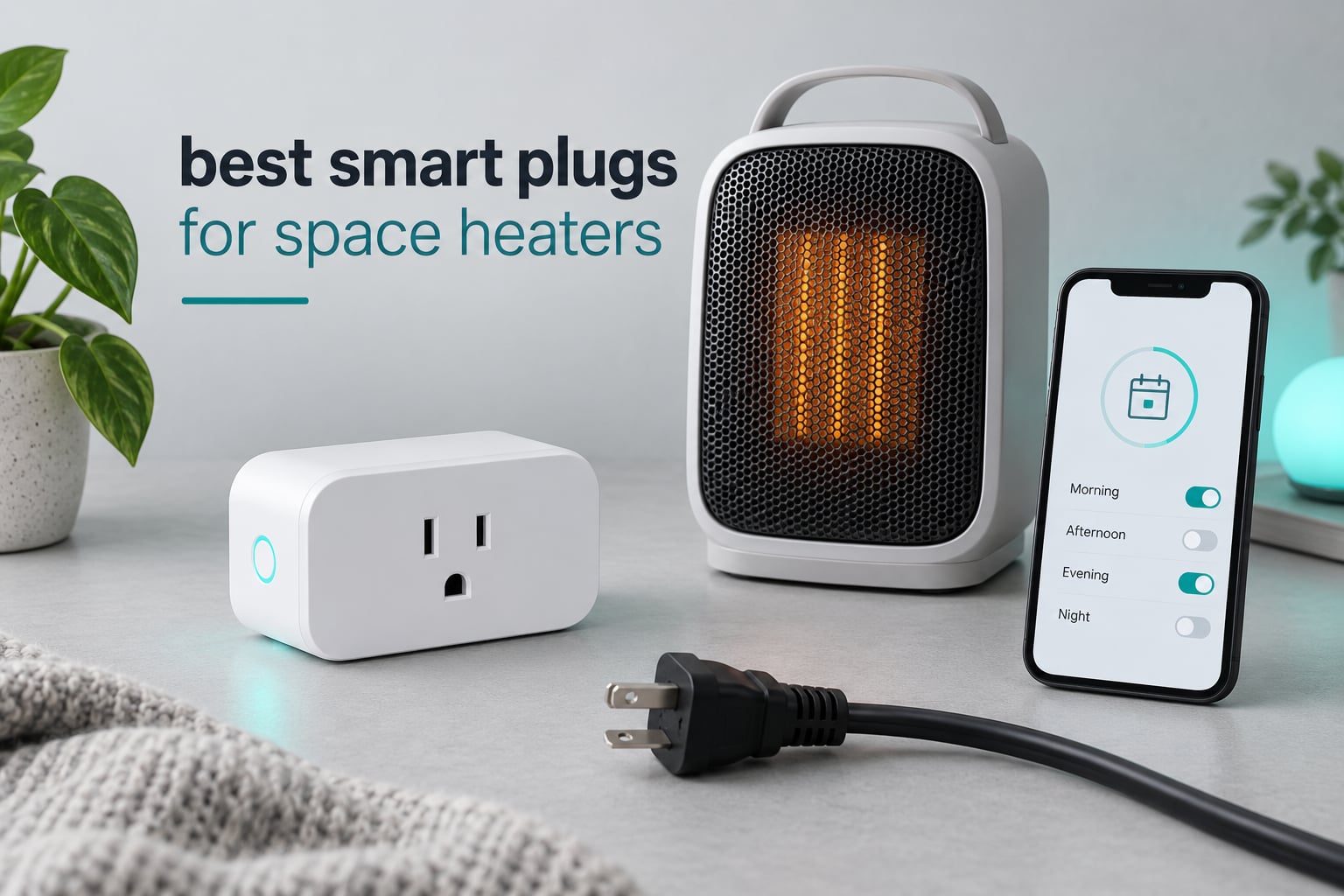
Yes, you can put a space heater on a smart plug, but only if the plug is rated for 15 amps and 1,800 watts, the heater draws under roughly 1,440 watts on a continuous basis, and the heater sits alone on a dedicated wall outlet. A 10-amp plug cannot run a 1,500W heater, no matter how many stars it has.
That answer matters because a portable heater is the biggest single power draw most people own, and because the smart plug is where that power runs through a thin relay and two small terminals. Get the rating wrong and the failure mode is a warm faceplate, a buzzing relay, or a plug housing that softens. Get it right and you get a heater that preheats the bedroom before you wake up and switches itself off at 11pm whether you remembered or not.
We went through eight smart plugs sold in 2026, pulled their amperage, wattage, temperature and certification specs, and matched each one against a typical 1,500W portable heater. Every product below carries an explicit verdict, including the ones we would not put next to a heater. Last reviewed and updated for the current heating season.
If you are starting from scratch, our general smart plug roundup covers the everyday picks for lamps and fans, which are a different job than running a heating load.
Top 3 Best Smart Plugs for Space Heaters (October 2026)

Kasa EP10 Ultra Mini 15A
- 15A / 1800W rating
- UL certified
- 2.4GHz Wi-Fi
- Alexa and Google Assistant
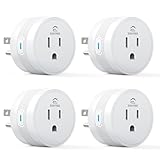
EIGHTREE 15A Smart Plug 4-Pack
- 15A current rating
- 1.2-inch body
- ETL certified
- Smart Life app

Tapo P115 15A Energy Monitoring
- 15A / 1800W with energy monitoring
- Auto-shutoff and power limit
- 4-pack
The Kasa EP10 takes the top slot because it combines a genuine 15A / 1,800W rating, UL certification and the largest review base in this group, which is the closest thing we have to a long-term reliability record. The EIGHTREE four-pack wins on value when you are heating more than one room, and the Tapo P115 earns its badge by being the one mainstream plug here that both monitors energy and enforces a wattage ceiling automatically.
All 8 Smart Plugs for Space Heaters Compared in 2026
| Product | Specifications | Action |
|---|---|---|
| Kasa EP10 Ultra Mini 15A Smart Plug |
|
Check Latest Price |
| EIGHTREE 15A Smart Plug 4-Pack |
|
Check Latest Price |
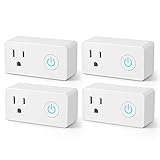 BN-LINK WiFi Heavy Duty Smart Plug BN-LINK WiFi Heavy Duty Smart Plug |
|
Check Latest Price |
| Tapo P115 15A Energy Monitoring 4-Pack |
|
Check Latest Price |
 Govee H5086 Energy Monitoring Smart Plug 4-Pack Govee H5086 Energy Monitoring Smart Plug 4-Pack |
|
Check Latest Price |
 meross MTS960 Smart Temperature Controller meross MTS960 Smart Temperature Controller |
|
Check Latest Price |
 Legrand Radiant Wi-Fi Matter 15A Smart Plug Legrand Radiant Wi-Fi Matter 15A Smart Plug |
|
Check Latest Price |
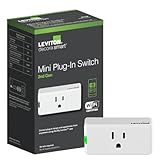 Leviton Decora Smart Plug D215P-1RW Leviton Decora Smart Plug D215P-1RW |
|
Check Latest Price |
Every plug in this table is rated at 15 amps. The differences that matter for a heater are wattage headroom, whether anything enforces a limit automatically, and whether the relay is enclosed in a body that runs cool. One product here, the Leviton, carries a 1,500W load rating rather than 1,800W, which changes how it should be used with a 1,500W heater.
1. Kasa EP10 Ultra Mini 15A – Best Overall for a Space Heater
Kasa Smart Plug Ultra Mini 15A, EP10, Smart Home Wi-Fi Outlet
15A / 1800W
UL certified
120V AC
2.4GHz Wi-Fi
32F to 104F operating range
Pros
- Genuine 15A / 1800W rating with UL certification
- Largest review base of any plug in this roundup at 4.5 stars over 40633 reviews
- Compact 2.36-inch body that does not block the second outlet
- Reliable Wi-Fi with schedules and countdown timers that behave predictably
Cons
- No Apple HomeKit support
- Status LED cannot be turned off in the Kasa app
- Google Home setup takes extra steps compared with Alexa
The verdict on the EP10 is straightforward: safe for a 1,500W heater when you keep it on a timer rather than on all afternoon. It is rated 15A and 1,800 watts, it is UL certified, and it carries a stated operating range of 32F to 104F, which covers a normal indoor winter night without sitting at the cold edge of its range.
What separates it from the rest is volume of evidence. It has a 4.5 rating across more than 40,000 reviews, and the AI summary of those reviews describes users routinely automating lamps, fans and small heaters without reliability complaints. In the r/homeautomation threads about heater plugs, the 15A TP-Link Kasa is the pairing that comes up most often as a long-term user, including people describing years of trouble-free use. That is the closest thing we have to a track record for this niche.
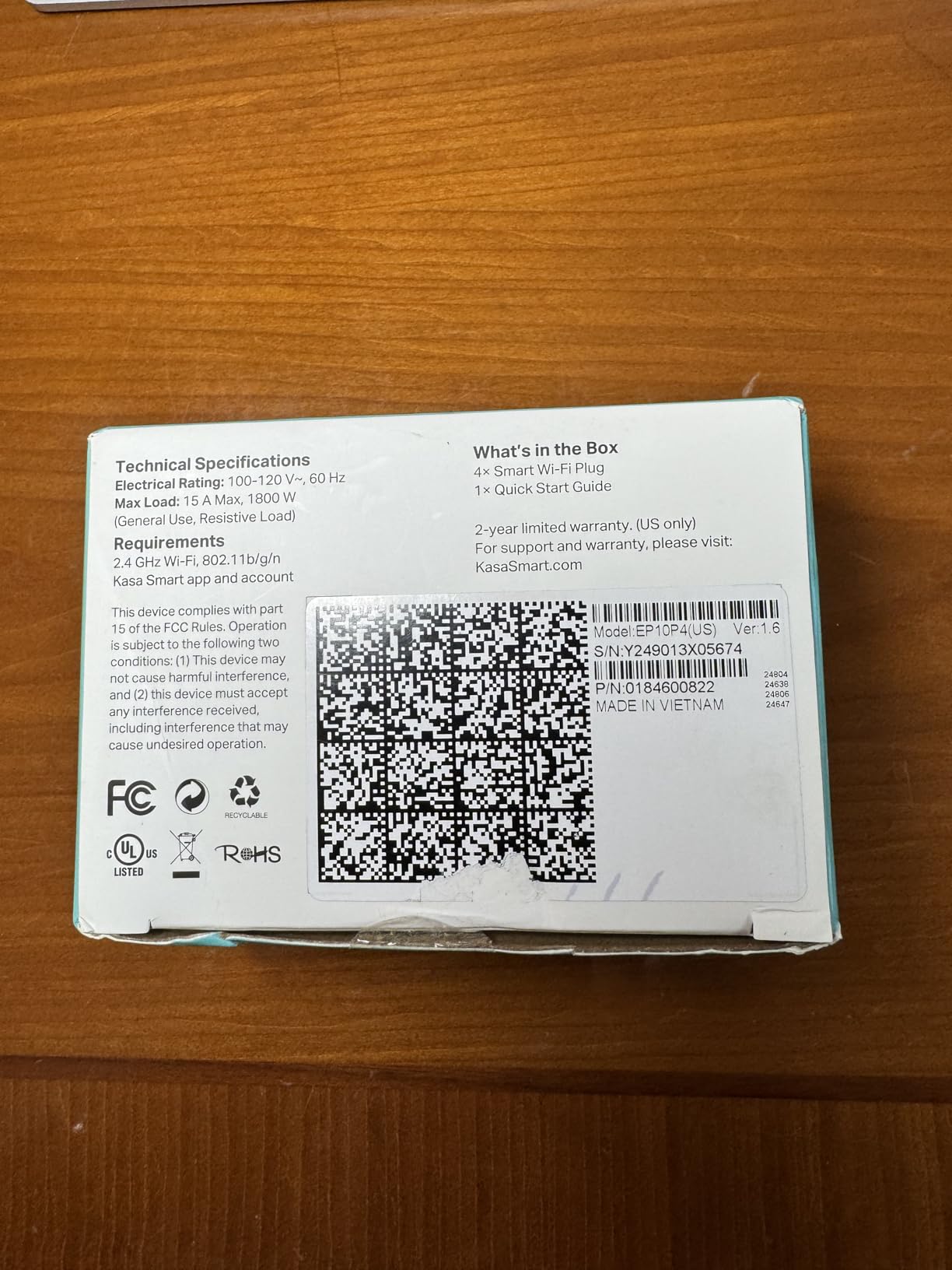
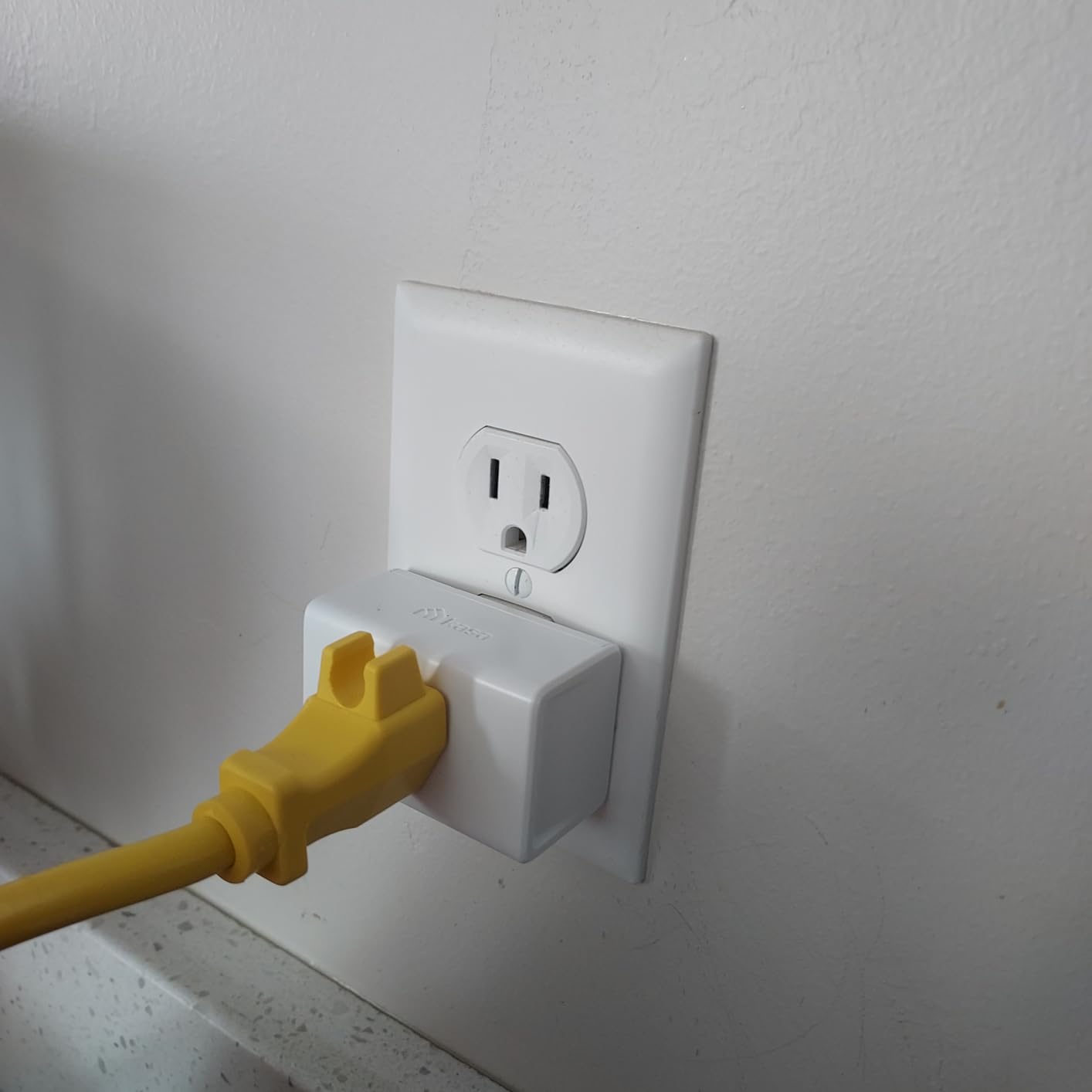
The physical design matters more than people expect here. At 2.36 by 2.03 by 1.5 inches and 2.08 ounces, it sits flush enough that a second plug can still reach the top socket, which keeps you from stacking plugs in one receptacle out of necessity. Copper contacts and a normally open contact type are sensible details at this load.
The limitations are worth naming honestly. There is no Apple HomeKit support, so if your home is HomeKit-only this is the wrong plug. The status LED cannot be disabled in the Kasa app, which matters in a dark bedroom. And a minority of owners report needing repeated setup attempts, so keep the physical button within reach on the first attempt. If you want a broader picture, we also cover the heater side in our space heater roundup.
Why the rating record matters more than the spec sheet
With a heating load, the failure mode is slow and physical: relay contacts pit, terminal screws loosen under thermal cycling, and the plastic around them softens. That kind of failure is not visible in a spec table. It shows up over seasons of use, which is why a 40,000-review history on a 15A plug carries information a 200-review product simply does not have.
The single-star share sits at 5 percent, and the complaints behind that slice are almost entirely about pairing and app quirks rather than heat. For a heater plug that is the right ratio.
Where the EP10 falls short
It cannot report wattage, so you are scheduling blind and never learn what the heater actually cost. Schedule accuracy is good but not self-correcting, and a user who forgets to set a schedule gets no warning that the heater is still running.
It also does nothing about the deeper automation question people ask in the forums, namely turning the heater on when a room reaches a set temperature. That needs an external probe, which this plug does not have. If that is your use case, look at the meross controller further down.
2. EIGHTREE 15A Smart Plug 4-Pack – Best Value for Several Heated Rooms
EIGHTREE 15A Smart Plug Works with Alexa & Google Home, Smart Outlet 4 Pack
15A current rating
Listed at 1100W
ETL certified
IP44
1.2-inch thick
Pros
- 15A current rating marketed explicitly for heaters and air fryers
- Slim 1.2-inch profile fits tight outlets and behind furniture
- Four units per pack for multi-room setups
- ETL and FCC certified
Cons
- Listed wattage of 1100W is below the headline 15A claim
- 2.4GHz Wi-Fi only with no 5GHz
- Smart Life app rather than a branded app
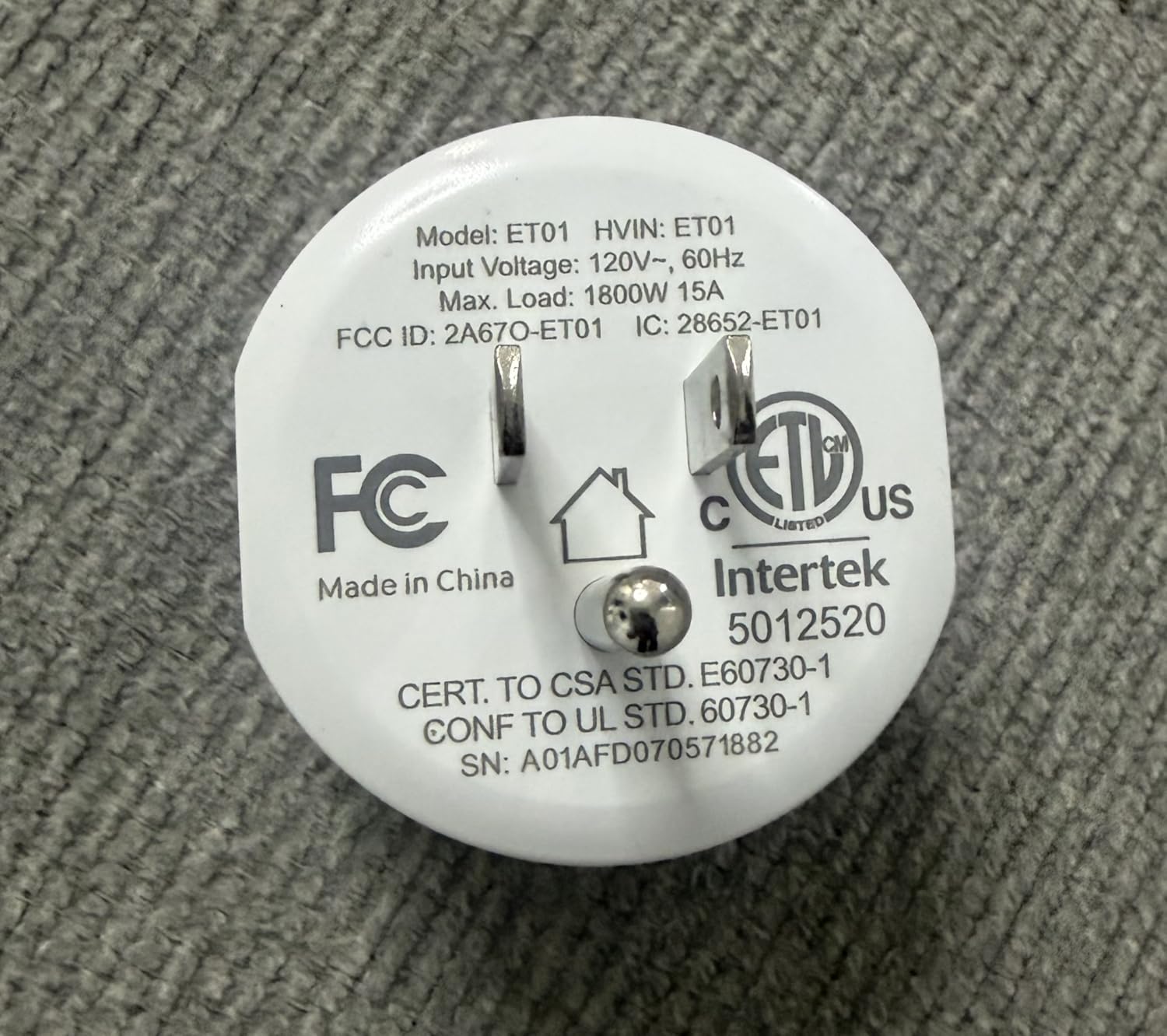
The verdict on this one is conditional. It is a 15-amp plug and the listing bullet specifically names heaters, air fryers and coffee makers as the intended loads. But the product detail field lists its wattage at 1,100W, which is below what a 1,500W space heater draws. Only buy this for a heater if the box you receive states 1,800W, and if it does not, use it for smaller loads like a 750W convection heater.
That contradiction is the first thing to check, so we are putting it plainly rather than burying it. A 15A current rating and a 1,100W rating are not the same claim, and the more conservative number is the one a heater should respect.
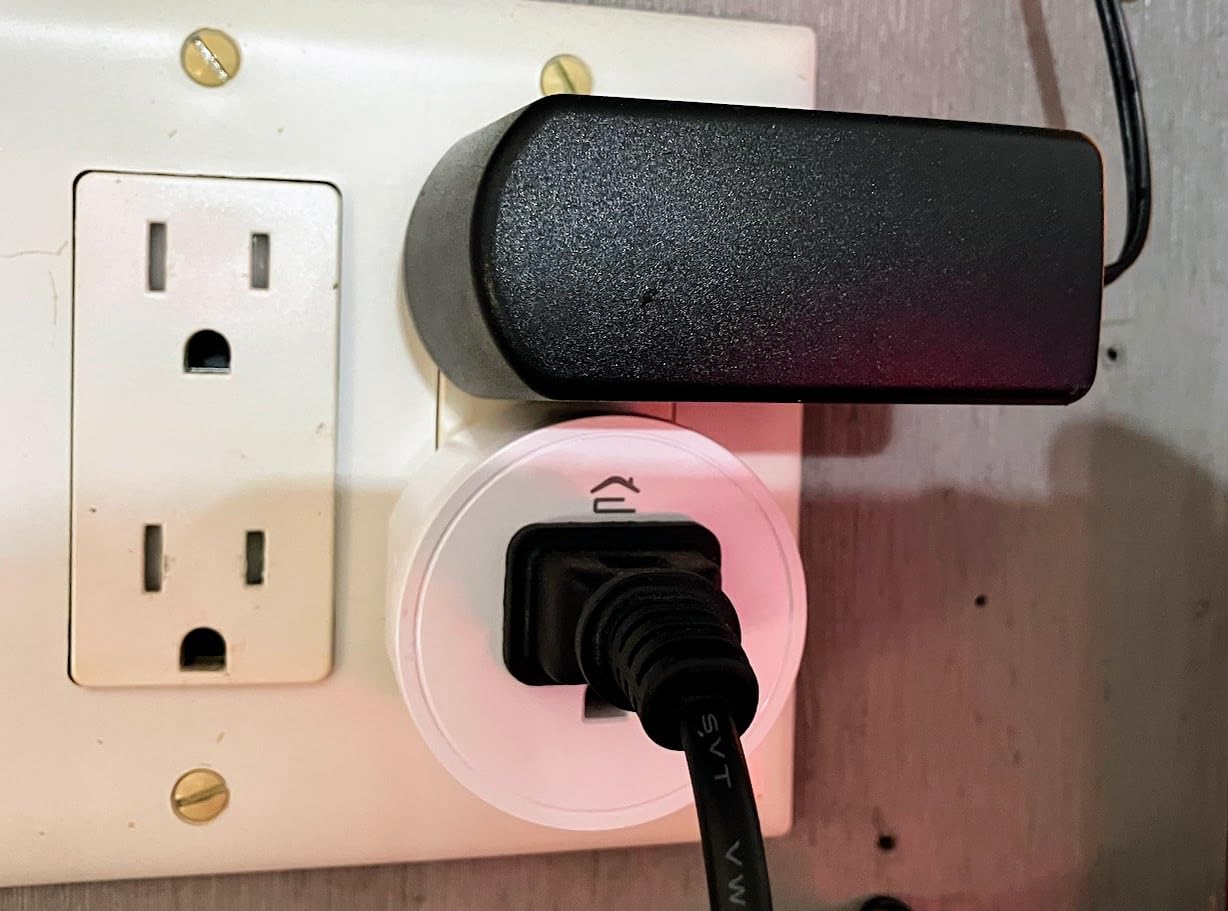
Assuming you confirm the 1,800W figure, the rest of the picture is good. Four units per pack is genuinely useful if you are heating a bedroom, an office and a basement, and the 1.2-inch body at 1.9 by 1.9 inches is among the slimmest plugs on this list, which solves the blocked-outlet problem outright. Setup runs through the Smart Life app over 2.4GHz Wi-Fi with Bluetooth assistance, and the app is well worn by most owners.
Reviewers rate it 4.4 across more than 11,000 reviews, with 74 percent at five stars.
IP44 is worth noting too. That is an indoor splash rating rather than an outdoor rating, so this is not a garage or covered-porch plug unless the manufacturer says otherwise, but it is more forgiving than the IP00 plugs on most of this list.
When a four-pack beats a single premium plug
If you only run one heater in one room, the per-unit math on this pack does not pay off. The case for it is coverage: a family heating three rooms on a schedule, a home office plus a studio, or a rental unit where you want a plug per outlet and a single app to run them all from.
For basement and garage use, keep in mind that 2.4GHz signal is weaker through masonry. If your router is upstairs, the plug may pair but drop occasionally, and a heater that drops off the schedule is a heater that stays on.
Where this plug can hurt you
The wattage discrepancy is the honest deal-breaker, and you have to resolve it against the physical box, not the listing page. Everything else is minor: no 5GHz, and dependence on a shared app ecosystem that also means you inherit Smart Life’s occasional connectivity complaints.
There is also no wattage limit enforcement and no energy monitoring, so if your goal is to see what the heater costs rather than just stop it, this is the wrong pick.
3. BN-LINK Heavy Duty Smart Plug – Best Raw Wattage Headroom
BN-LINK WiFi Heavy Duty Smart Plug Outlet, Work with Smart Life, 2.4G Only
15A / 125V / 1875W
ETL certified
Push button relay
No hub required
Pros
- Highest stated wattage rating in this roundup at 1875W
- Explicitly marketed for high-wattage space heaters
- ETL certified with no hub requirement
- Group and share control across a household
Cons
- Bulky 3 by 2 by 2 inch body compared with mini plugs
- Lowest rating here at 4.2 with a 10 percent one-star share
- Some connectivity and app reliability complaints
The verdict on the BN-LINK is that the electrical headroom is the best in this group. It is rated 15A at 125V for 1,875 watts, ETL certified, and described on the box as a heavy-duty unit for high-wattage loads. On paper it gives you the most margin above a 1,500W heater of anything we reviewed.
The catch is that a higher wattage number does not fix a weak relay or an unreliable app. This plug carries the lowest average rating in the roundup at 4.2, and its 10 percent one-star share is the highest among the general-purpose plugs here. Reviewers who are happy want exactly this rating for heaters. Reviewers who are unhappy mostly describe intermittent app or connectivity issues rather than heat.
Those two things together are why it sits at number three rather than higher. For a lamp or a fan we would not blink at the rating. For a heater running unattended overnight, the reliability profile matters as much as the amperage, and this is where it falls short.
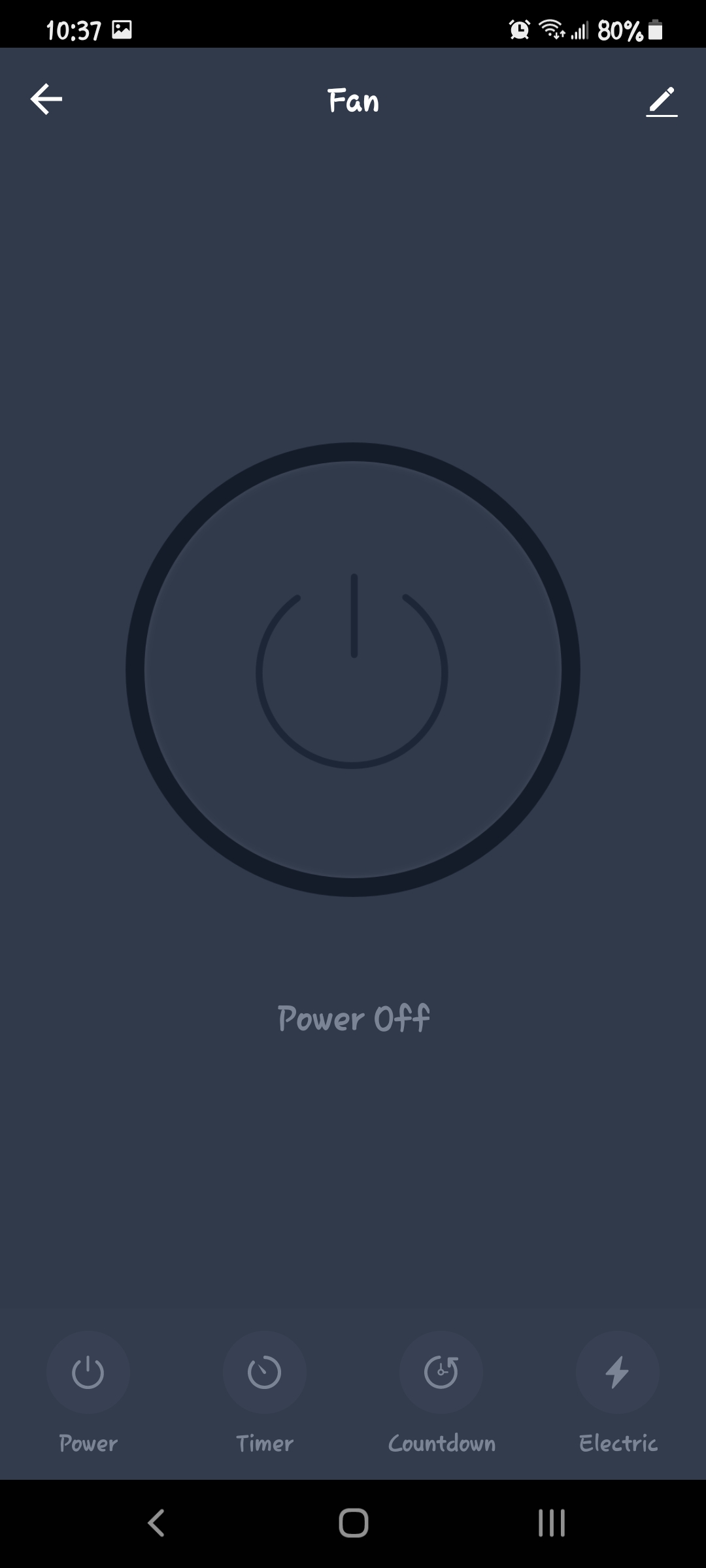
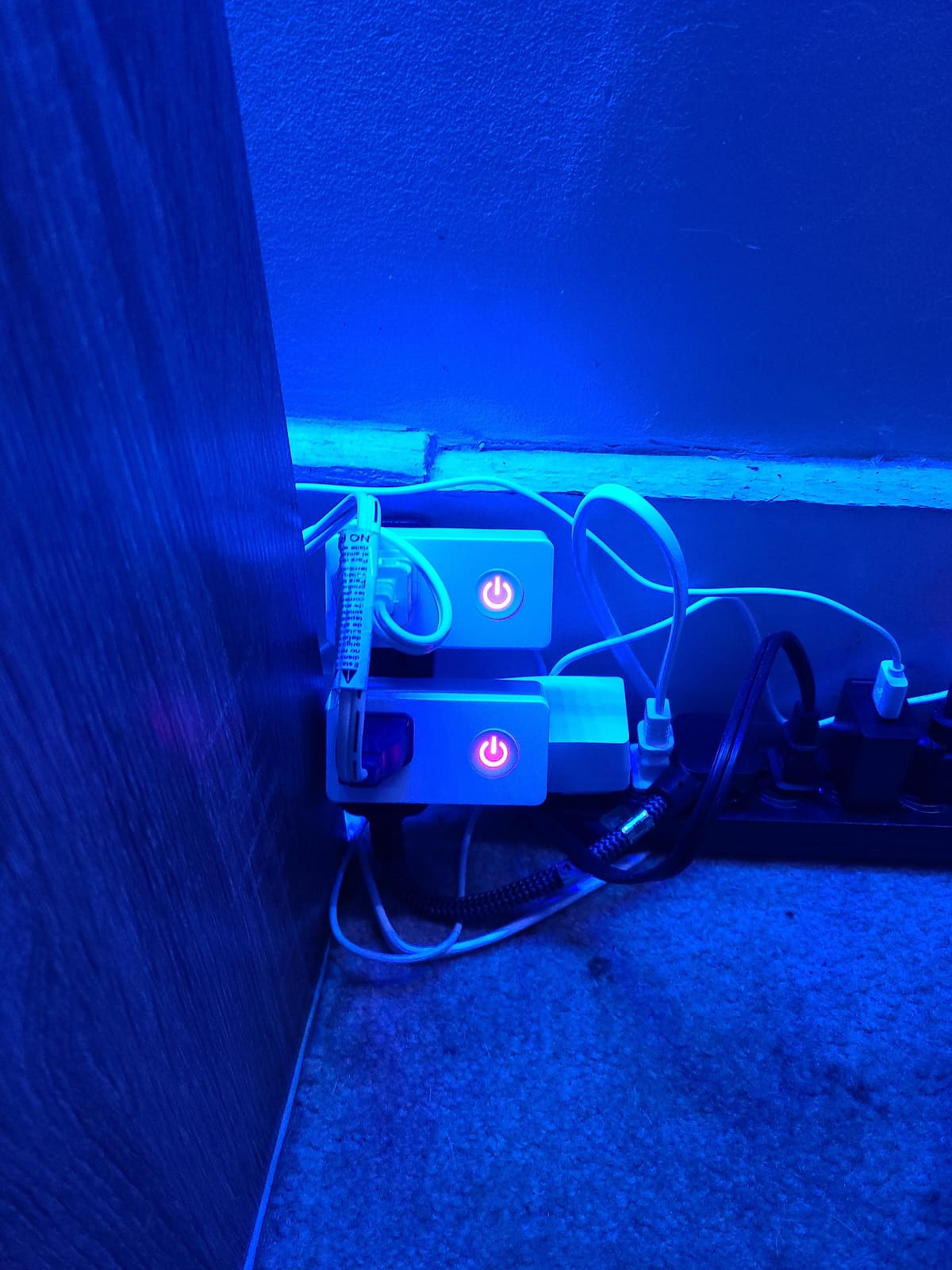
The build is a plain plastic push-button unit at 12 ounces and 3 by 2 by 2 inches. That is a chunky plug-in body for something that shares a duplex receptacle. It will block the adjacent socket, which puts you back into the stacked-plug situation we are trying to avoid. Plan to use the bottom or top socket of a dedicated receptacle and leave the other one free.
Setup runs through the Smart Life app over 2.4GHz with no hub, and it pairs with Alexa and Google Home. Timer and scheduling functions plus group and share control are all present. For an IP00 indoor unit like this one, keep it away from any damp location.
When the extra wattage is actually worth it
If your heater is a 1,500W oil-filled radiator or a full-size convection unit and you want as much margin as the spec sheet allows, this is the plug that gives it. The 1,875W figure also means the plug is not the binding constraint, which is a genuinely useful thing to know if you are ever tempted by a larger infrared heater.
It is also the sensible choice if you want several high-draw appliances on one app and do not want to think about which socket each one occupies.
Where this one lets you down
The body size pushes you toward outlet stacking, and outlet stacking is exactly the clearance problem that causes plug overheating. At 3 by 2 by 2 inches it needs a dedicated receptacle, not a shared one.
The 10 percent one-star share is the other caution. If your plan is to leave the heater running on a schedule through the night, pick the plug with the better reliability record instead. Raw wattage does not compensate for a relay that drops off the network.
4. Tapo P115 15A 4-Pack – Best for Seeing What the Heater Costs
Tapo Smart Plug Wi-Fi, Energy Monitoring, P115(4-Pack), 15A
15A / 1800W
Energy monitoring
Auto-shutoff and power limit
ETL and FCC listed
Pros
- Energy charts with daily
- weekly
- monthly and annual history
- Charge Guard
- auto-off timer and wattage limit add real safety value
- Sunrise and sunset scheduling with adjustable offsets
- Schedules heavy loads into off-peak hours automatically
Cons
- Some plugs dropped off the network after weeks of use
- Pairing instructions can mislead because Bluetooth is required on some plugs
- A few multi-pack buyers report an individual failure needing replacement
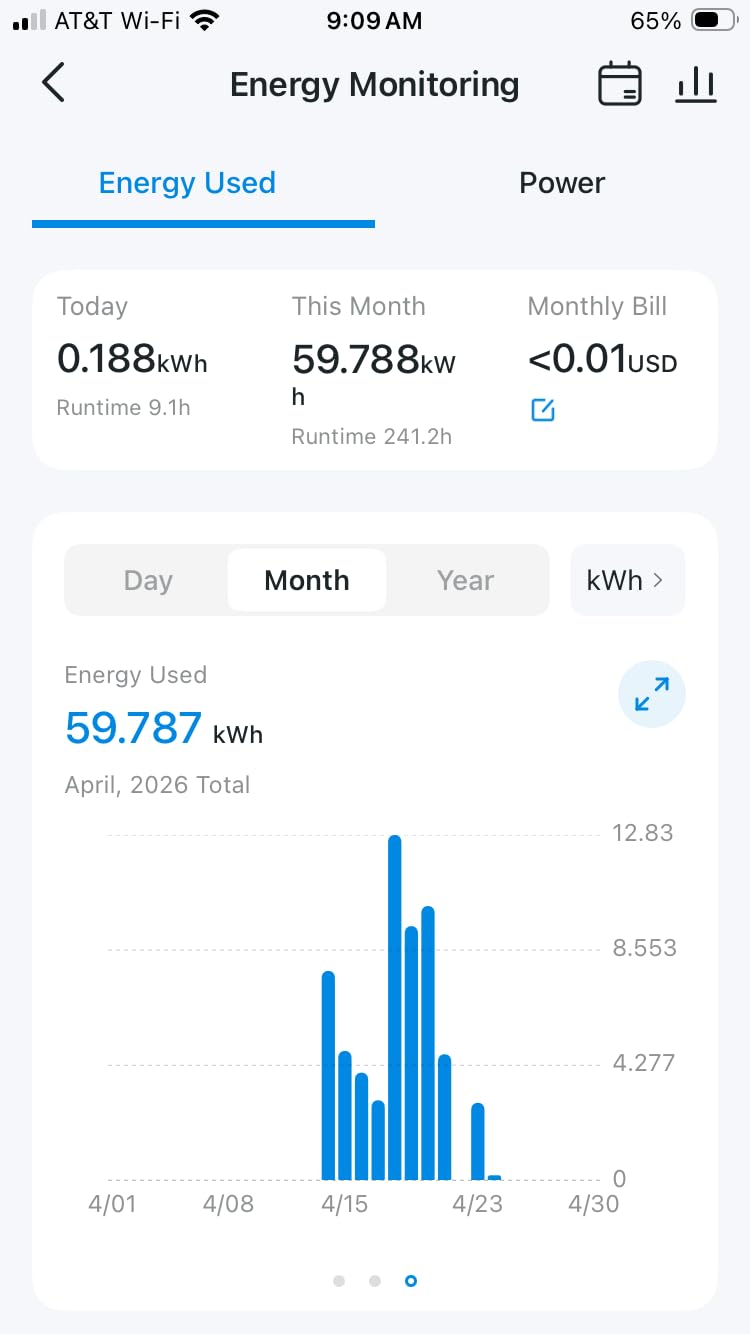
The verdict on the Tapo P115 is that it is the mainstream plug in this roundup that both measures the heater and polices it. It is rated 15A and 1,800 watts, ETL, FCC and RoHS listed, and it offers real-time energy tracking with charts you can read back over days, weeks, months and a year, plus utility-rate entry so the app can estimate your bill.
That matters more than it sounds. One user on r/homeautomation reported a 15 percent drop in their power bill after putting smart plugs on space heaters and fans, and the P115 is the plug that would let you prove whether a scheduling change actually worked on your own meter. You enter your rate plan, run the heater on a fixed overnight window, and read the daily cost back out.
The safety features are the deeper differentiator. Auto-shutoff prevents electrical overload, and a power limit protection function means you can set a ceiling rather than trusting yourself. Charge Guard is aimed at batteries rather than heaters, but it reflects a general design that leans on software limits instead of open-loop switching.
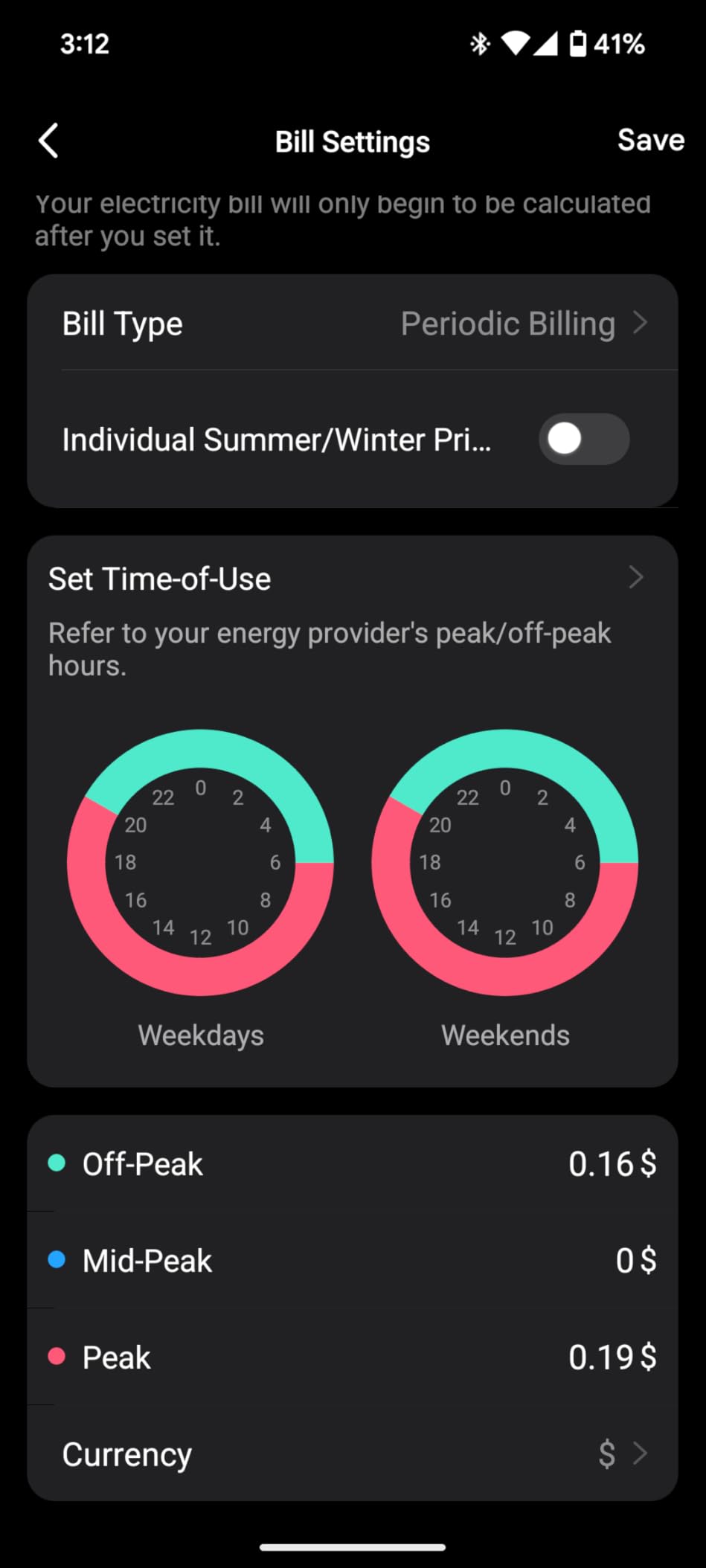
You can also push high-draw runs into off-peak tariff windows, which on a time-of-use plan is where the savings compound. Sunrise and sunset scheduling with adjustable offsets covers the preheat-before-waking use case neatly.
The honest weakness is durability. Reviewers report plugs dropping off the network and losing pairing after weeks of use, Bluetooth pairing being required on some plugs when the printed instructions do not say so, and an occasional failure inside a multi-pack. At 4.5 stars across more than 3,400 reviews the overall picture is still strong, but this is a heater plug you will want to check periodically rather than forget about.
Why energy monitoring changes the decision
A 1,500W heater running eight hours a day pulls 12 kilowatt-hours. Over a 30-day month that is 360 kilowatt-hours, which at ordinary residential rates lands somewhere in the low tens of dollars. Knowing the real figure on your own meter, for your own tariff, turns a vague sense of waste into a number you can act on.
That is also the honest argument against buying a monitoring plug. If you already know you will only ever run the heater for a fixed two-hour window before sleep, the scheduling alone does the job and the monitoring is a nice-to-have. If you are trying to work out whether a second heater is worth adding, the data pays for itself quickly.
Where the P115 falls short
Multi-pack durability is the main issue, and it is worth taking seriously in a four-unit setup where you may have a heater in three rooms. Some buyers report a whole plug failing and needing replacement inside the warranty window.
It is also an IP00 indoor plug with 2.4GHz-only networking, and it adds real dependence on the Tapo app for anything beyond a simple schedule. The pair of extras, however, is worth paying for if you care what the heater costs.
5. Govee H5086 4-Pack – Best Energy Dashboard
Govee Smart Plug with Energy Monitoring, WiFi Bluetooth Outlet, 4 Pack
15A / 1800W
Power, current and voltage monitoring
ETL and FCC listed
Up to 104F
Pros
- Highest average rating in the group at 4.6 with 80 percent five-star reviews
- Tracks power
- current and voltage in real time with a year of history
- Bluetooth plus Wi-Fi pairing makes first setup smoother
- ETL and FCC certified with fire-resistant materials
Cons
- 5GHz Wi-Fi is not supported
- Larger and heavier body than mini plugs at 0.38 kg
- 2.4GHz-only networking
The verdict on the Govee H5086 is that it is one of the strongest-rated plugs we reviewed and a good heater plug on paper. It carries 15A and 1,800 watts at 120V, ETL and FCC certification, fire-resistant materials, and a 104F upper operating temperature, which is comfortable headroom for indoor heating use.
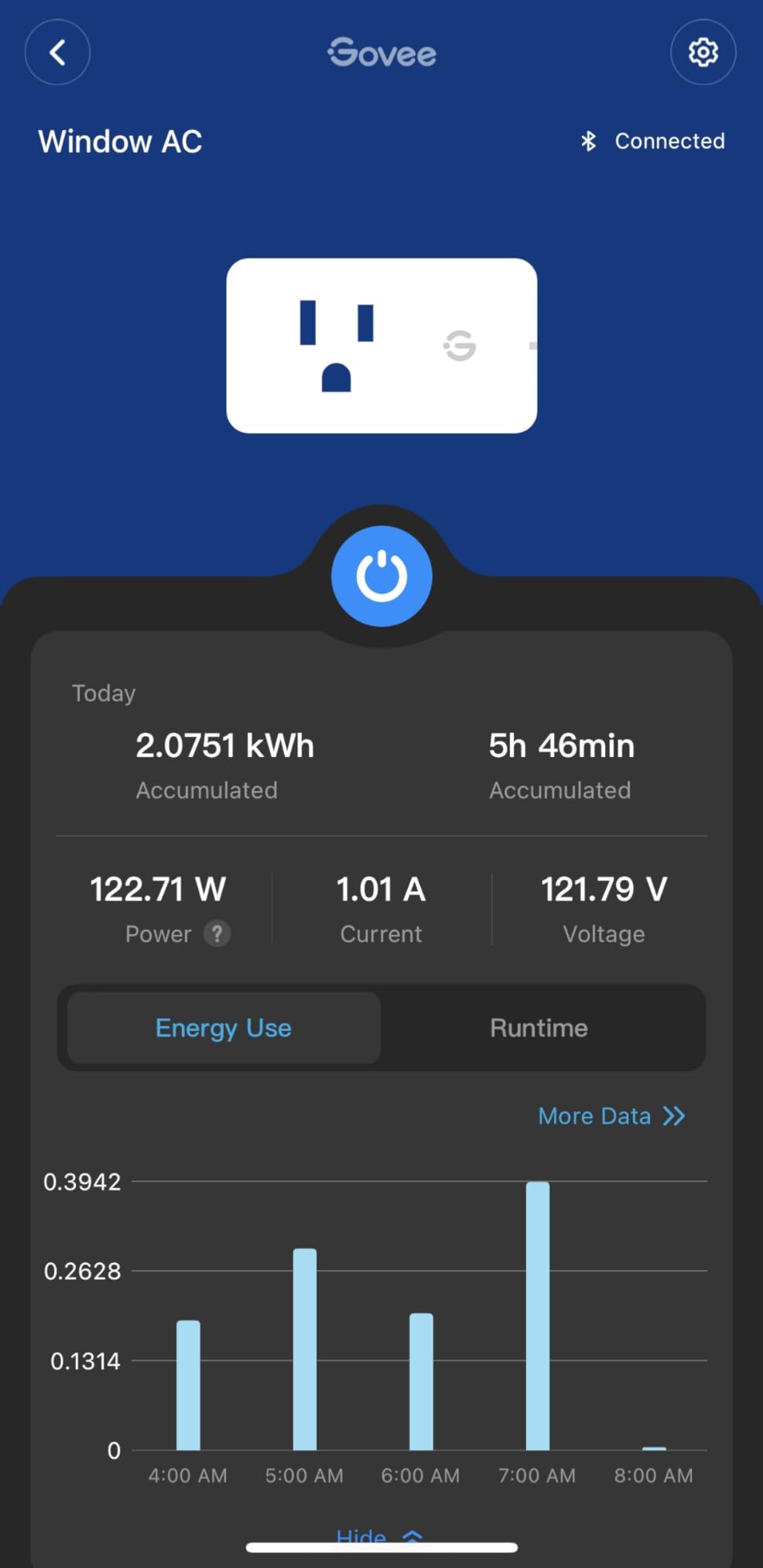
Where it beats the Tapo is the monitoring panel itself. It reports power, current and voltage separately, and keeps daily, weekly and monthly history viewable for up to one year in the Govee Home app. Seeing live current draw on a heater is the fastest way to confirm your plug is not being pushed past its rating.
Bluetooth plus Wi-Fi makes initial pairing smoother than the Wi-Fi-only competitors, which is a real advantage if your heater outlet is in a basement or a garage where a five-press button sequence is awkward.
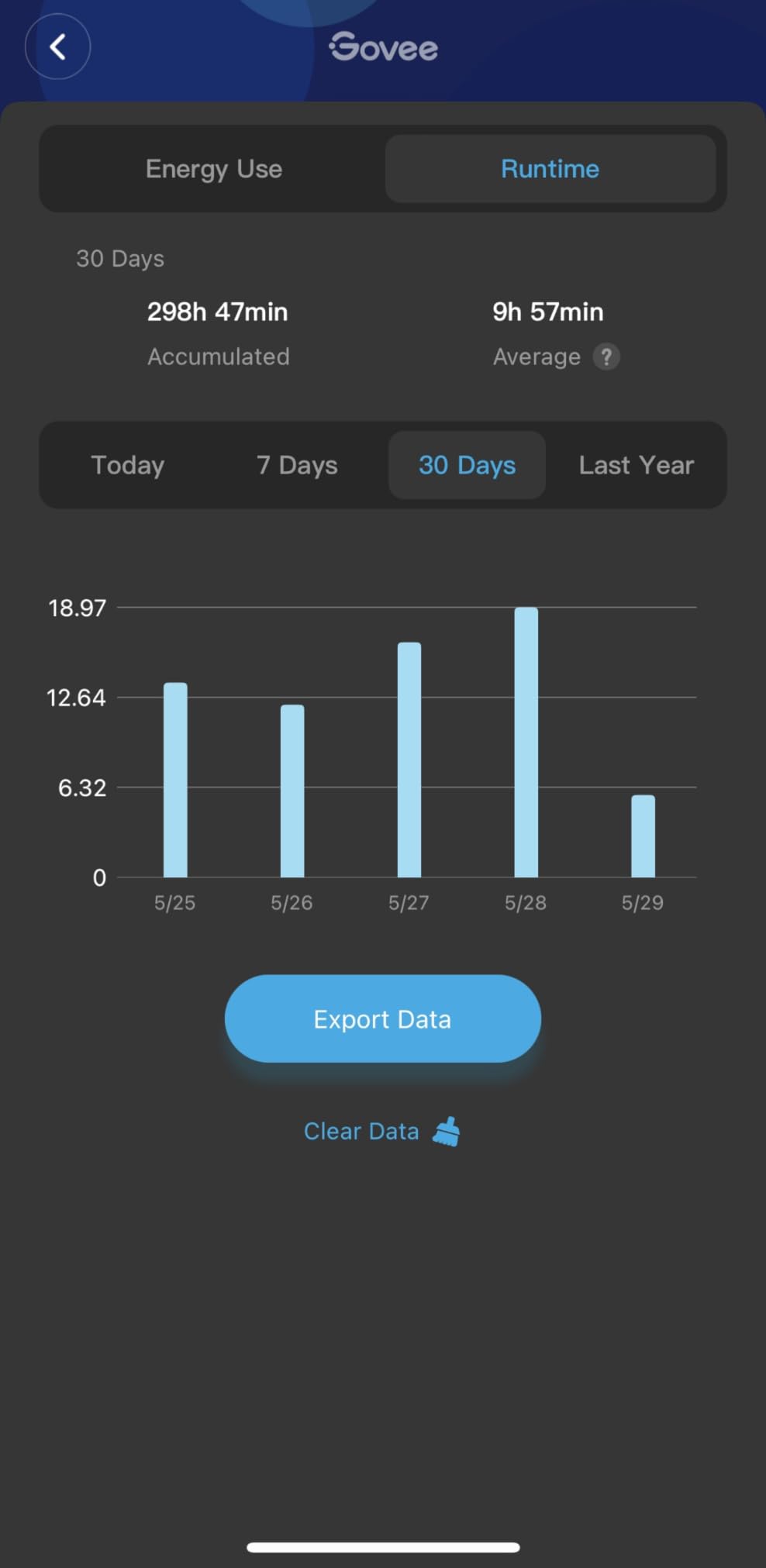
At 4.6 stars across more than 1,100 reviews with 80 percent at five stars, this sits near the top of the group on ratings. Contact material is stainless steel, the switch type is a TRIAC, and control works by touch, app or voice through Alexa, Google Assistant and IFTTT.
The physical trade-off is real. At 2.68 by 2.4 by 1.5 inches and 0.38 kg for the pack, it is both bulkier and heavier than the mini plugs, so it will crowd a duplex receptacle. Leave the neighbouring socket clear rather than stacking.
Why the current reading is the useful number
Watch the current readout for the first few runs. A 1,500W heater at 120V should sit around 12.5 amps. If the app shows a number well above that, your heater’s nameplate wattage and its actual draw do not match, and you want to know that before you rely on a schedule.
Voltage tracking helps too, especially in older homes with long runs where voltage sags under load. A plug that reports 105V is telling you the circuit is loaded further than you assumed.
Where this one falls short
Like most of its peers it is 2.4GHz-only, so it will not join a 5GHz network. The size and weight are the practical issue, and they matter for the specific outlet geometry a heater needs.
It has no automatic wattage cutoff of the kind the Tapo offers, so the protection story here rests on monitoring rather than enforcement. You see the number; you decide.
6. meross MTS960 Smart Temperature Controller – Best for Temperature-Based Control
meross Smart Temperature Controller Work with Apple HomeKit, 15A 1800W
15A / 1800W at 120V
External 79-inch probe
Heating and cooling modes
Up to 12 schedule periods
Pros
- The only true thermostat here
- cycling a heater against a real temperature setpoint
- Differential control with a deadband up to 20 degrees prevents short cycling
- Keeps its schedule running when Wi-Fi disconnects
- Energy monitoring and temperature history in the app
Cons
- Lowest average rating here at 4.1 with a 13 percent one-star share
- Bulky wall-plug-plus-probe body with a long sensor cord
- Meross app scheduling is unintuitive and the display can appear unpowered
The verdict on the meross MTS960 is that it solves the problem most people actually ask about in the forums, which is how to have a heater turn itself on when a room gets cold instead of running on a clock. It is rated 15A and 1,800 watts at 120V, and unlike the other plugs here it reads temperature through an external 79-inch stainless steel probe with a measurement range from -22F to 230F.
That probe is the point. A heater’s own thermostat cycles fast and short, and a dumb plug cannot smooth that out. The MTS960 controls on a differential with a deadband up to 20 degrees, so you set a target and a swing, and the heater runs long enough to matter instead of stuttering on and off.
It also keeps its schedule running when the Wi-Fi connection drops, which answers one of the most common fears raised in the r/homeautomation and r/smarthome threads. Users there describe wanting a fail-safe, and this device is closer to one than any other option on this list, though it is still not a certified safety device.
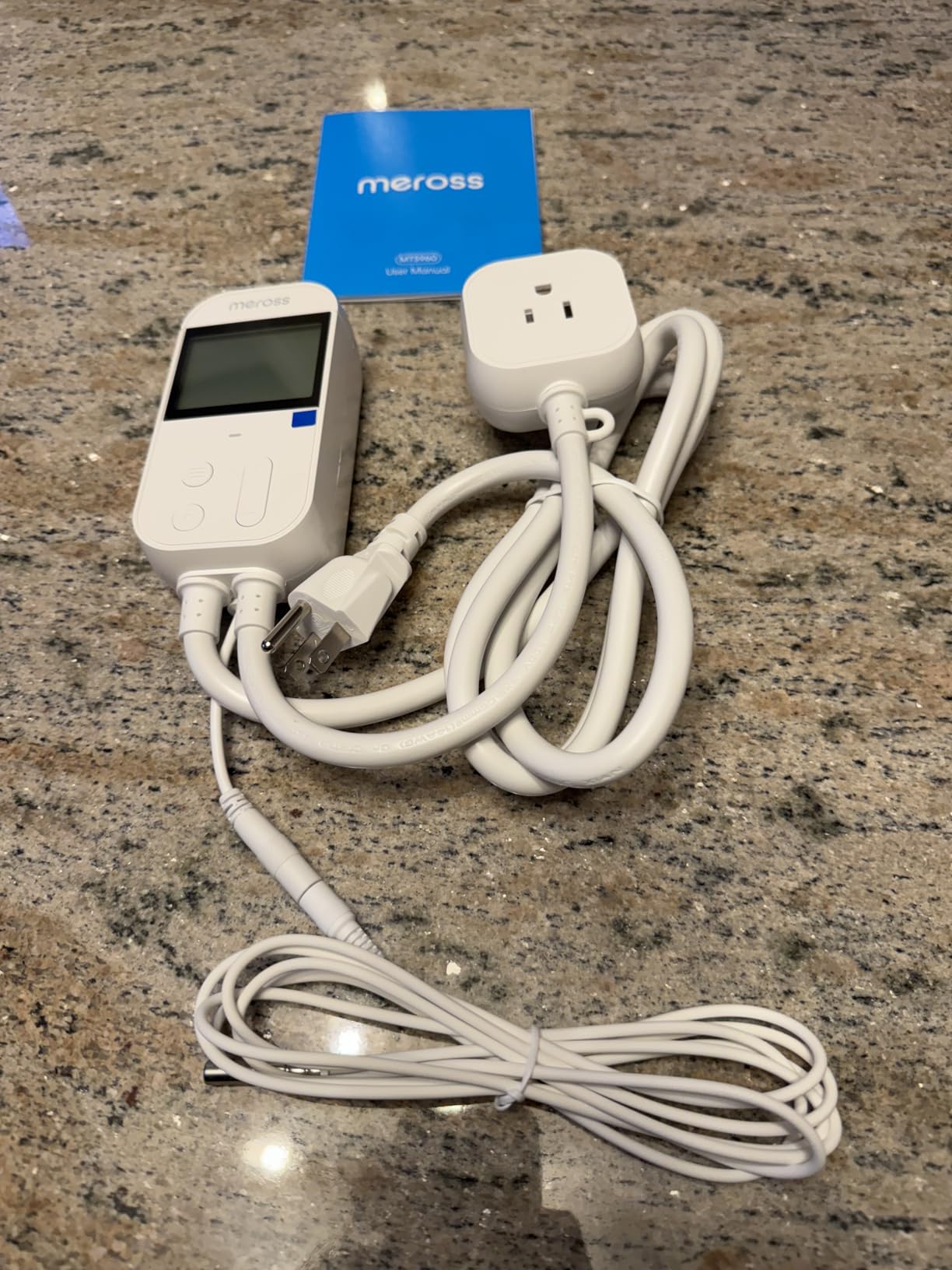
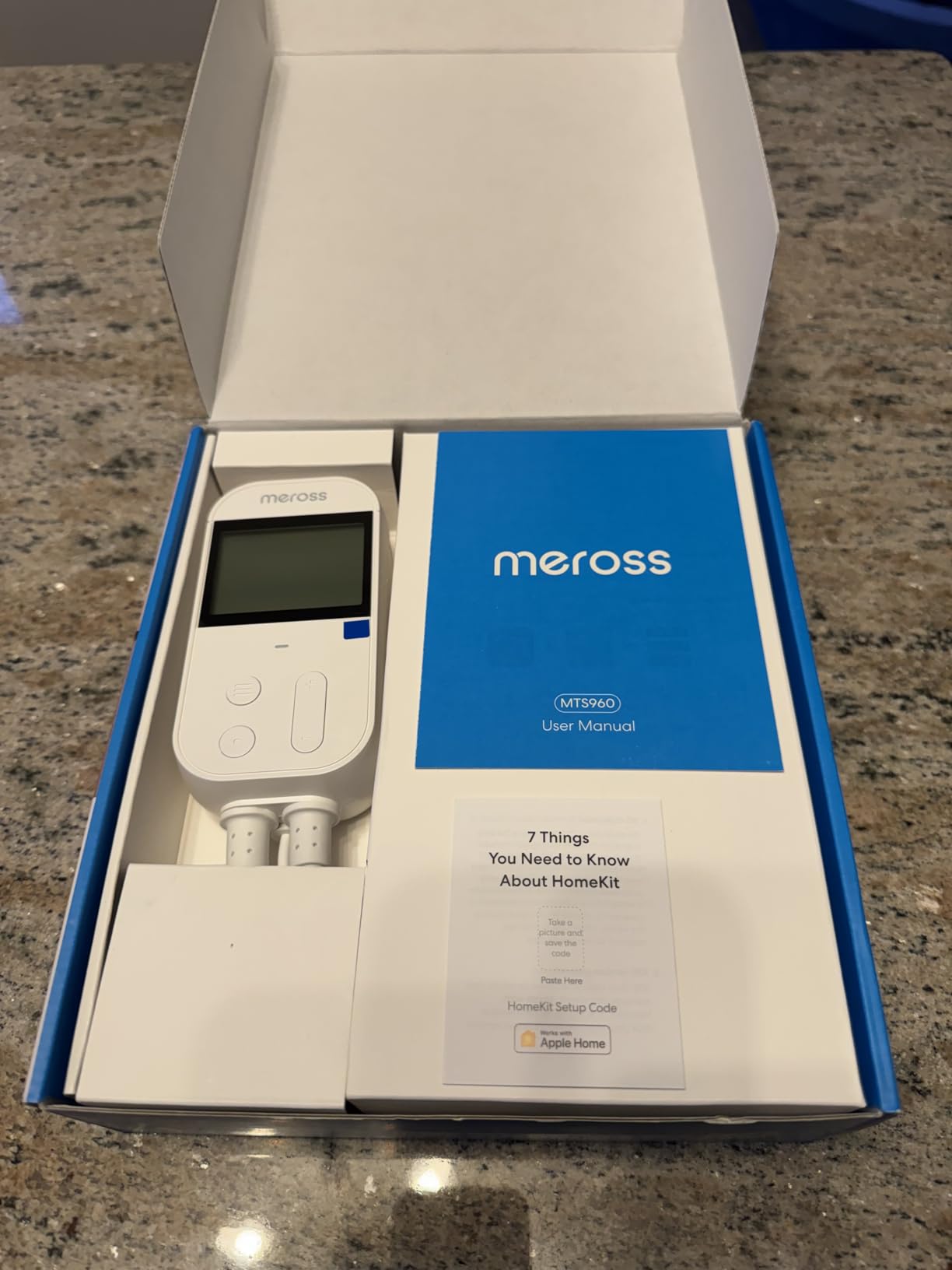
It works with Apple Home, Alexa, Google Home and SmartThings, runs up to 12 scheduling periods per day, has a backlit LCD with Celsius and Fahrenheit, and adds a child lock and sensor failure alarm. It is also listed as compatible with infrared heaters and fan heaters. Power-off memory means it resumes preset operation after an outage.
The compromises are substantial and you should know them up front. At 4.1 stars with a 13 percent one-star share it is the least-liked product here, and the complaints are specific: plugs losing Wi-Fi and failing after a few months, a display that appears dead until you hold the Mode button, and an app whose scheduling interface users find confusing.
It is also not really a plug. At 1.4 pounds and 2.3 by 7.8 by 8.4 inches, it is a wall unit with a long sensor cord, so it needs a real socket rather than a tidy inline arrangement.
Why external-probe control is worth the fuss
The dominant question across three separate forum threads is whether any smart plug can switch a heater based on room temperature. The honest answer is that consumer plugs cannot, because they have no temperature input. The workaround those communities use is a Shelly Plug or an equivalent paired with an external probe inside Home Assistant’s Generic Thermostat, and this meross controller is essentially that, packaged as one box with its own app.
It also means you can place the probe away from the heater’s hot outflow, which several owners cite as the reason their setups hold temperature more steadily. For an oil-filled radiator running a bedroom overnight, that is a meaningful improvement over a plain on-off schedule.
Where this controller falls short
The 13 percent one-star share is the highest here and it is not all app grumbling, since several reports describe plugs failing outright after a few months. For an unattended heating load, that is a real consideration.
It is also 2.4GHz-only with no QR code fallback for manual network setup, the scheduling UI is widely disliked, and the size means it competes for outlet space. If you only want a dependable timer, this is more complexity than you need.
7. Legrand Radiant Wi-Fi Matter 15A Smart Plug – Best for Apple Home and Google Home
Legrand Radiant Wi-Fi Matter 15 Amp Smart Plug-in Switch, White, 1 Pack
15A at 120V
Matter protocol
QR-code setup
Local control without internet
ANSI C-73
Pros
- Matter standard works across Apple Home
- Google Home
- Alexa and SmartThings
- Local control keeps working when the internet connection drops
- Compact Decora-style body that lines up with a wall plate
- Physical push button works even when the network does not
Cons
- Requires a Matter hub for setup unlike hub-free competitors
- The Legrand control app cannot find the plug without a Netatmo or rebranded Legrand hub
- No firmware updates through that app
- Better suited to lights than to motors
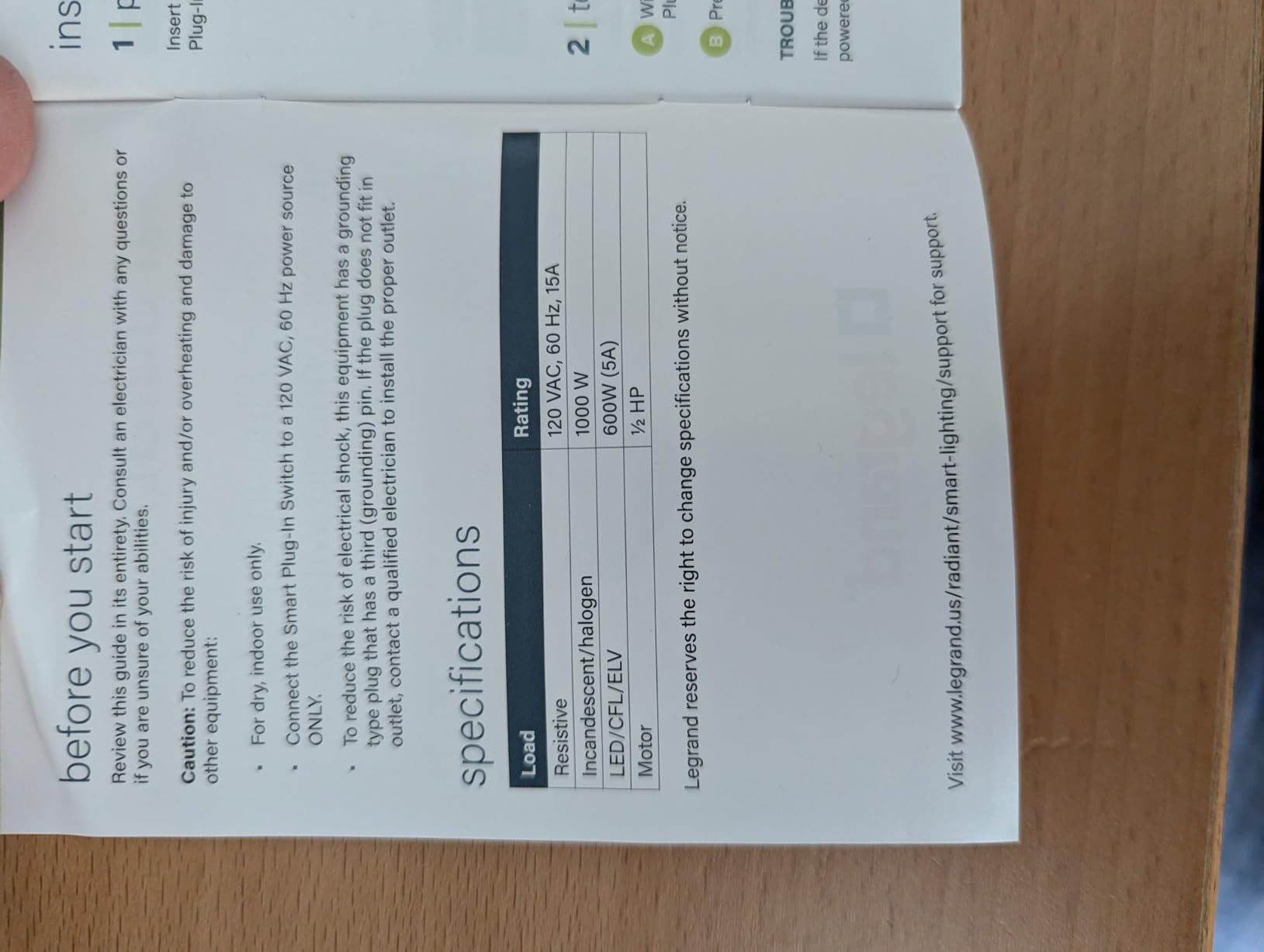
The verdict on the Legrand Radiant is that it is the safest platform choice in this roundup, because Matter local control keeps working when your internet does not. It is rated 15 amps at 120 volts, meets ANSI C-73, and operates on 2.4GHz WPA2-secured Wi-Fi. The one thing it does not do is quietly stop working when the cloud is down.
That is a meaningful difference for a heater. Anyone automating a bedroom overnight has to decide how much risk a network outage adds, and a device that keeps executing its schedule locally removes most of that worry. The physical push button works too, so a failed hub never leaves you without manual control.
Setup is by scanning a Matter QR code with a phone camera or your smart home app. Reviewers consistently credit it with better Wi-Fi signal than competing Matter plugs, which is useful if the heater lives in a basement, garage or far corner. At 4.4 stars across more than 500 reviews with 73 percent at five stars, the sentiment is broadly positive.
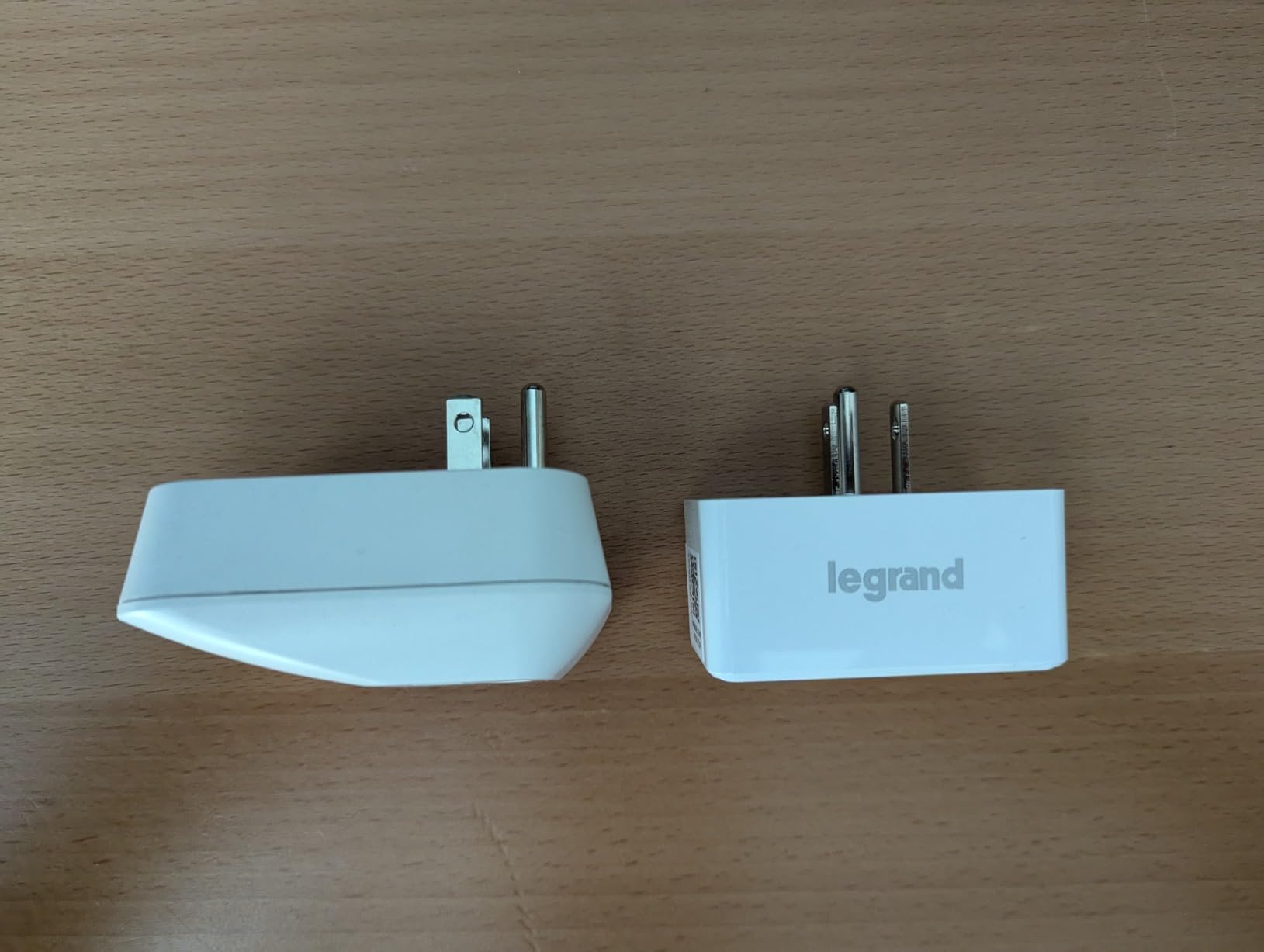
The physical design is a compact Decora-style body that aligns with a wall plate, which is neater than the generic white blocks and avoids the blocked-outlet problem. It pairs with Apple HomeKit, Google Home, Amazon Alexa and Samsung SmartThings through a Matter hub.
The cost of that is real though. It needs a Matter hub for setup when every competitor here is hub-free, and users report that the Legrand control app cannot discover the plug without a Netatmo or rebranded Legrand hub, with no firmware update path through that app.
Why Matter matters more for heaters than for lamps
Matter is usually sold as a convenience about not owning six apps. For a heating load it is a reliability question. Local control means a scheduled cutoff still happens if your internet connection drops mid-freeze, which is the specific failure the smart-home forums worry about most.
It also protects you from the platform abandonment problem. Leviton buyers in this roundup, for example, frequently arrive after another brand discontinued its app. A standards-based protocol is less exposed to that.
Where this plug falls short
The hub requirement is the main one, and it adds cost and setup friction for anyone who just wants a timer. If you already run Home Assistant, Apple Home or a SmartThings hub, that cost is already sunk and this is an easy yes.
Owners also report occasional drops from the network that need a reset, and the app limitations mean local firmware control is limited. It is also 2.4GHz-only, which constrains where you can place your router.
8. Leviton Decora Smart Plug D215P-1RW – Best UL-Listed Pick for Smaller Heaters
Leviton Decora Smart Plug, Wi-Fi 2nd Gen, D215P-1RW, White
15A general use
1500W incandescent/halogen
3/4 HP motor
UL certified
Matter and Wi-Fi
Pros
- Highest average rating in the group at 4.7 with 87 percent five-star reviews and only 2 percent one-star
- UL certified with a full published load table
- Works with Matter
- Home Assistant
- Apple Home
- Alexa and SmartThings
- No hub needed for standalone use
Cons
- 1500W maximum load is lower than the 1800W plugs in this roundup
- LED and CFL limited to 5A
- Pairing with the optional Leviton wall switch is fiddly and poorly documented
The verdict on the Leviton D215P is nuanced and important. It is UL certified, it is rated 15 amps for general use, and at 4.7 stars with 87 percent five-star reviews it is the highest-rated product in this roundup. But its published load table tops out at 1,500W for incandescent and halogen loads, which is exactly the draw of the heater we have been using as our reference point.
That leaves zero headroom. A 1,500W heater on a 1,500W-rated plug is running the limit, not the derated continuous load, which means it works for short bursts and is the wrong choice for an all-evening run. For a 1,000W or 750W convection heater, it is an excellent choice with real headroom and a genuine UL listing.
Its load table is unusually well specified for this category. Beyond the 15A general use rating and the 1,500W resistive figure, it covers 5A for LED and CFL, 15A magnetic loads and up to 3/4 HP motors, which is what lets owners run small fans alongside lighting. It works with Alexa, Google Assistant, Apple Home, SmartThings and Sonos.
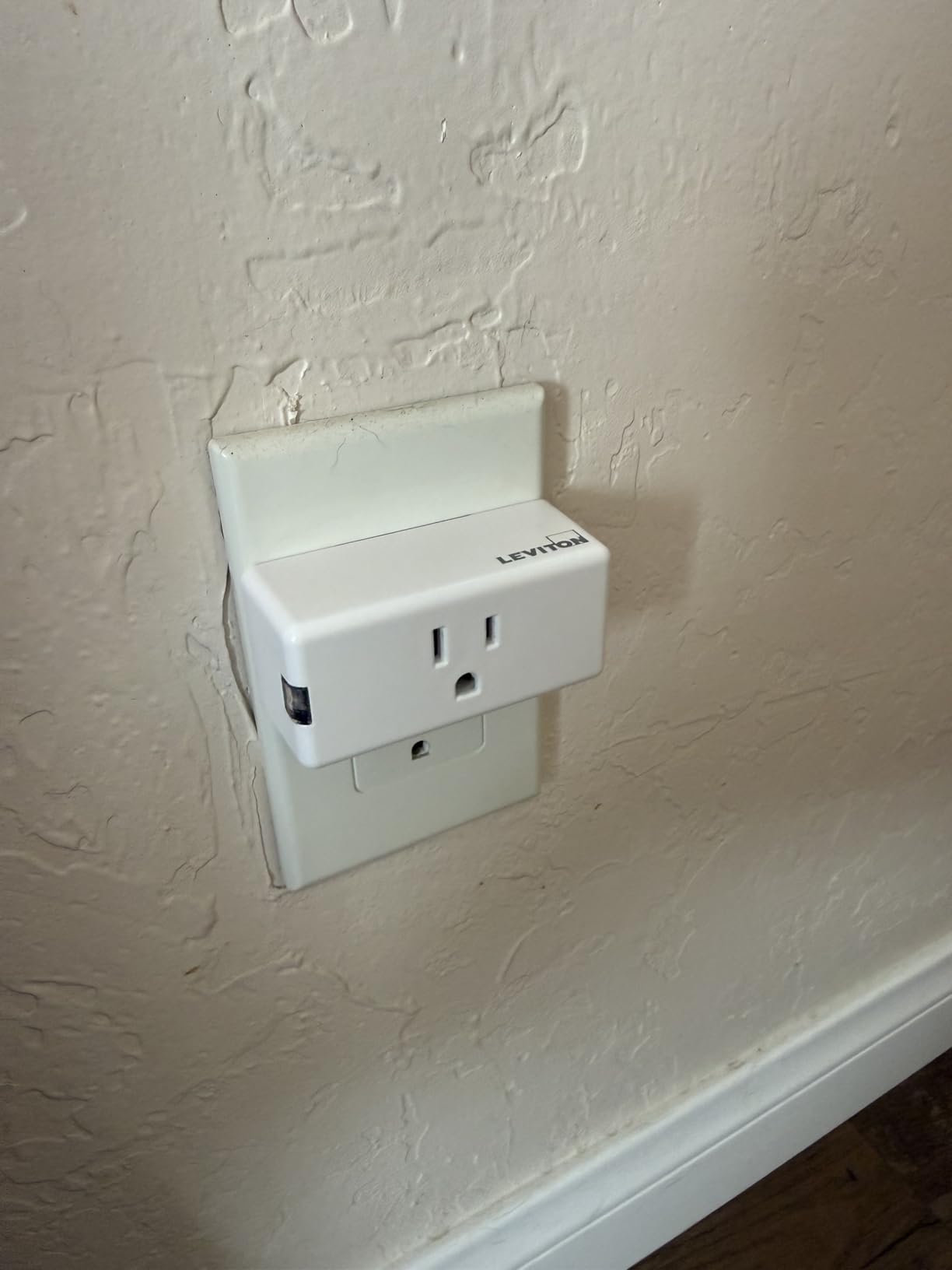
It plugs into any standard, AFCI or GFCI non-controlled outlet, which matters in a garage or kitchen-adjacent space where GFCI protection is required. No hub is needed for standalone use, and Leviton app scheduling includes sunrise and sunset triggers and multi-device scenes. A firmware update added Matter and Home Assistant support, and owners report holding a stable Apple Home connection compared with other Matter plugs.
The pairing experience with the optional Leviton wall switch is the main complaint. Standalone pairing requires pressing the button five times rather than holding it, the printed instructions are confusing, and firmware updates over the app can be slow.
Why UL listing changes the conversation
The users in the heater threads raise a recurring worry: UL does not let a manufacturer recommend plugging a space heater into a smart plug, and no mainstream brand does. A UL listing on a specific load rating is the closest verifiable answer to that concern, because it certifies the device against a stated load rather than against a marketing claim.
That is why this product is on the list even with the lower wattage ceiling. If your heater is under 1,200W, the certified rating is worth more to you than a higher number on an uncertified generic plug.
Where this plug falls short
The 1,500W ceiling is the headline limitation and it is why this is not our top pick. If you run a full-size 1,500W heater on a schedule, you want a 1,800W plug with margin instead.
The 5A LED and CFL limit is worth noting if you plan to also automate lighting on the same circuit, and the wall-switch pairing instructions will cost you an evening if you buy the switch add-on.
How to Choose a Heater-Safe Smart Plug
Match the plug’s rating to the load, not to the price. Fifteen amps and 1,800 watts is the practical target for a portable heater, and a 10-amp plug rated at 1,000W or 1,200W is simply the wrong device no matter how well it reviews. Every plug in this roundup meets the 15A bar; the wattage ceiling is where they differ.
Then decide how much automation you actually want. A schedule is a one-tap setup in any of these apps. Temperature-based control requires an external probe, and the meross controller here has one built in. If you want the plug to fail safe when the network drops, you want Matter local control or a device that keeps its own schedule.
Energy monitoring is worth paying for if you are trying to change your behaviour rather than just automate an existing habit. Two of these plugs, the Tapo P115 and the Govee H5086, report real-time draw and keep history you can read back, and the Tapo additionally enforces a wattage limit automatically.
Ecosystem choice is the last filter. Most of these plugs work with Alexa and Google Home out of the box and several add SmartThings, while the Legrand and the Leviton are the two built around Matter, which is the route to a single Apple Home install. The meross controller also reports to Apple Home. If you run Home Assistant, the Leviton and Legrand are the ones that fit.
There is also what you give up. Consumer smart plugs have no temperature input and no fail-safe behaviour on connection loss, they cut continuous-load headroom by derating to 80 percent, and some brands apply a two-minute auto-off on the outlet itself. None of them replaces the tip-over and overheat protection built into a certified heater.
Smart Plugs to Avoid With a Space Heater
Any plug rated 10A should stay away from a 1,500W heater. The 10A models that dominate shopping carousels and review counts, including the Govee Smart Plug Pro and some Amazon Basics plugs, top out near 1,000 to 1,200 watts. A 1,500W heater asks for about 12.5 amps, which is more than those plugs are built for. Note that this is not the same model as the Govee H5086 in this roundup, which is a 15A unit.
Power strips and extension cords are the two things heater manufacturers themselves warn against, and that warning applies with a smart plug in the chain just as much as without one. A power strip also multiplies the number of connection points carrying 12.5 amps.
Two heaters on one duplex receptacle, or two plugs stacked into one receptacle, removes the clearance that lets heat escape from the connection. If you need to heat two rooms, use two circuits and two plugs.
Finally, do not share a 20A circuit with a 1,000W microwave or a kettle while the heater runs. A 1,500W heater plus a microwave exceeds what the circuit is comfortable delivering, and the breaker or the plug face becomes the failure point.
How to Set Up a Smart Plug and a Space Heater Safely
Start with the heater’s nameplate. Find the wattage rating on the label, write it next to the plug’s rating, and confirm the plug’s number is higher. If the heater is 1,500W, a 1,800W plug is the minimum sensible choice.
Confirm the plug is 15 amps or better and is UL or ETL certified. Then check which appliances share that circuit by switching off the breaker and looking at what stops working.
Give the heater its own receptacle. Do not use a power strip, an extension cord, or the second socket of the same duplex unit if the plug body is large enough to crowd it.
Set a schedule rather than a manual switch, and pick a hard cutoff window. A heater left running on a timer that fails is the failure case; a heater on a working schedule with an automatic cutoff is not.
Set an away or holiday cutoff as a second layer, so a long weekend away does not depend on a single automation.
During the first few runs, touch the plug face after 30 minutes and note the temperature. Warm is expected at a 12.5-amp load. Too hot to hold is not, and means you stop using that pairing immediately.
Finally, test the physical button behaviour. Most heaters return to their last setting when power is restored, so confirm what your specific heater does when the plug cuts and restores power, and decide whether that is what you want.
One more option worth considering: a dedicated heater with a built-in thermostat, tip-over switch and overheat cutoff handles this problem without a relay in the chain. Our picks for ceramic space heaters and larger-room heaters all carry those protections in hardware.
Frequently Asked Questions
Which smart plug is the most reliable?
The Kasa EP10 Ultra Mini 15A is the most reliable pick for a space heater in this roundup. It carries a genuine 15A / 1800W rating, UL certification and a 4.5-star average across more than 40,000 reviews, the largest review base we examined. If your heater draws less than 1,200W and you want a certified load table rather than a headline number, the Leviton Decora D215P is the alternative.
What is the best smart plug for high-power appliances?
For high-power appliances, match the plug to the load rather than to the app. A 15A plug rated for 1,800 watts covers most portable heaters, air fryers and coffee makers, and you should keep continuous heating loads near 1,440 watts. The BN-LINK Heavy Duty unit states the highest wattage rating here at 1,875W, while the Tapo P115 adds an automatic power limit on top of a 15A / 1800W rating.
What devices should not be used with smart plugs and why?
Avoid 10-amp smart plugs with a 1,500W space heater, since the heater draws about 12.5 amps and exceeds what those plugs are rated for. Also avoid power strips, extension cords, two heaters on one duplex receptacle, and running a heater on a circuit shared with a microwave or kettle. Each of these adds a connection point or a load the circuit was not sized for.
Are smart plugs safe to use?
They are, when the rating matches the load and the plug stays cool under normal use. A 15A / 1800W plug on its own wall circuit, driving a heater under roughly 1,440 watts on a timer, is the configuration we consider acceptable. Stop using any pairing where the plug face becomes too hot to hold after 30 minutes, where you hear continuous relay buzz, or where you smell burnt plastic.
Are smart plugs safe to leave plugged in?
A plug left plugged into the wall with nothing attached is low risk, since the relay is open and there is no load. The real concern is leaving a heater running unattended. Schedule a hard cutoff, use an away or holiday cutoff as a second layer, and note that consumer plugs cannot act as a fail-safe when the connection drops. A Matter plug with local control is the closest option to that behaviour.
What are the disadvantages of smart plugs?
They depend on a network, they have no temperature input, and they cannot serve as safety devices. Continuous heating loads must be derated to about 80 percent, some brands apply a two-minute auto-off at the outlet, and a Cloud outage can leave a schedule unexecuted. If you want true temperature-based control you need an external probe, which is what the meross controller in this roundup provides.
The Best Smart Plug for Space Heaters in 2026
The Kasa EP10 Ultra Mini 15A is our pick for the best smart plugs for space heaters because it is the rare combination of a genuine 1,800W rating, UL certification, a compact body and the deepest reliability record in the category. If you are heating more than one room, the EIGHTREE four-pack covers it once you have confirmed the wattage figure on the box. If you want to see what the heater costs, the Tapo P115 or the Govee H5086 will tell you, and if your worry is a network outage leaving a heater running, a Matter plug like the Legrand or Leviton keeps executing its schedule locally.
Whatever you pick, verify three things before the first cold night: the plug is 15 amps or better, the heater sits alone on a dedicated receptacle, and there is a hard cutoff on a timer. Those three checks remove most of the risk, and the rest is just picking a schedule you will actually keep.