
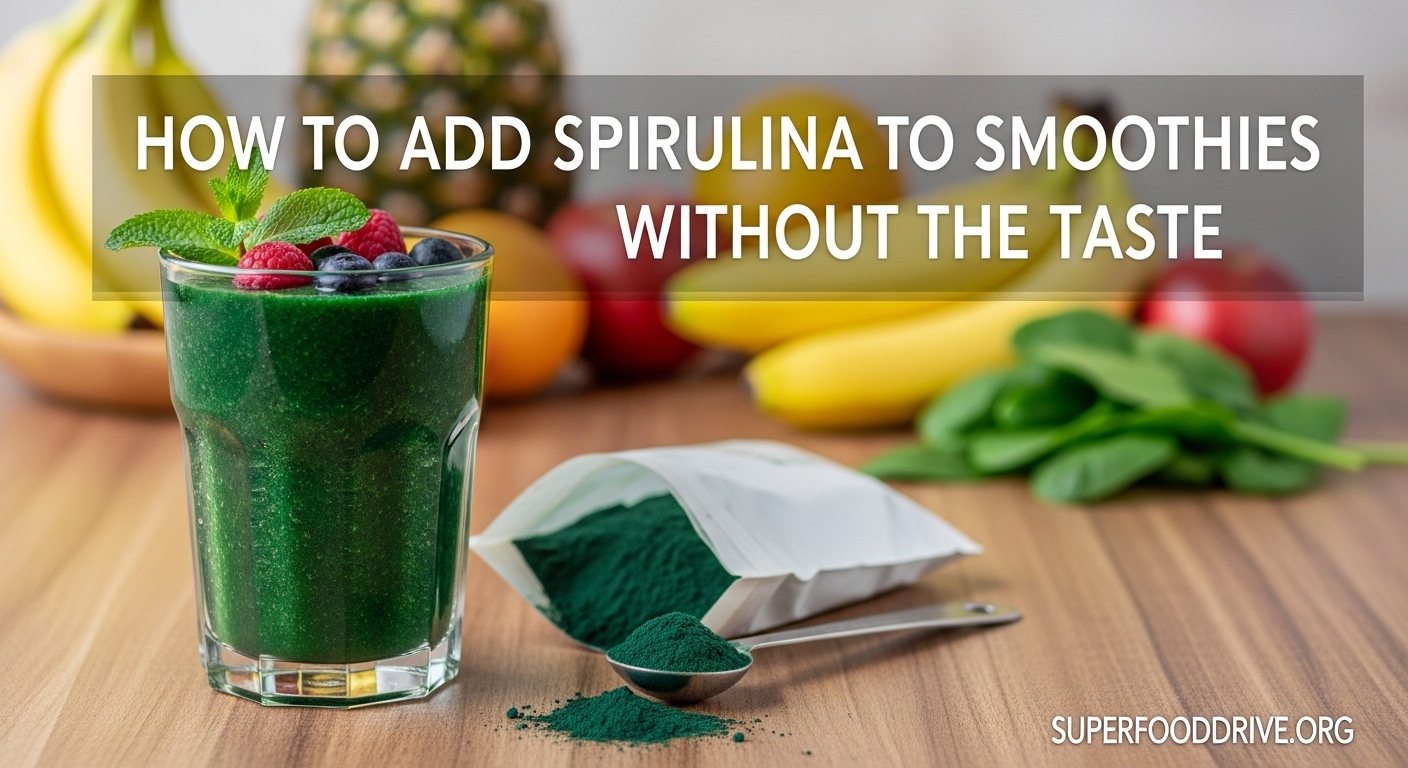
You have probably heard about spirulina’s incredible health benefits. It is packed with protein, iron, B vitamins, and antioxidants that can boost your energy and immune system.
But there is one major problem. Spirulina tastes like pond water mixed with seaweed and a hint of fish.
I have been adding spirulina to my smoothies for over two years now. At first, I gagged on every sip. Now I genuinely enjoy my morning green smoothies and cannot taste the spirulina at all.
In this guide, I will show you exactly how to add spirulina to smoothies without the taste ruining your drink. These techniques come from my own trial and error, plus insights from hundreds of people in online health communities who have cracked the code.
Table of Contents
Why Does Spirulina Taste So Bad?
The nasty taste is not a manufacturing defect or poor quality. It is actually a sign that your spirulina is authentic and nutrient-dense.
Spirulina is a blue-green algae that grows in freshwater and saltwater environments. Its distinctive flavor comes from three key compounds:
Chlorophyll: This green pigment gives spirulina its color and contributes to the grassy, earthy taste. The more chlorophyll, the stronger the “pond scum” flavor.
Phycocyanin: The blue pigment that makes spirulina a “blue-green” algae. It has a subtle umami flavor that can taste slightly fishy or marine-like to sensitive palates.
Marine minerals: Spirulina absorbs minerals from its water environment, including iodine. This creates that characteristic seaweed or ocean-like aftertaste that many people find unpleasant.
The combination hits your taste buds as earthy, bitter, and slightly fishy all at once. Some people compare it to licking a fish tank or chewing on wet grass. Others describe it as “healthy dirt.”
Blue Spirulina vs Green Spirulina: Which Tastes Better?
Here is a game-changer that most articles miss. Not all spirulina tastes equally bad.
Green spirulina is the whole algae powder. It contains both chlorophyll (green) and phycocyanin (blue), plus all the minerals. This gives it the strongest, most complete nutrient profile but also the harshest taste.
Blue spirulina is an extract containing only the phycocyanin pigment. Because it has no chlorophyll and fewer minerals, it tastes significantly milder. Many people describe it as nearly tasteless or slightly sweet.
If you are just starting out and the taste is your biggest barrier, blue spirulina is worth the extra cost. It is easier to mask and does not turn your smoothie a dark swamp-green color. Instead, you get a vibrant blue or teal drink that looks like something from a tropical beach cafe.
The trade-off is that blue spirulina lacks some of the nutrients found in the whole algae, particularly the chlorophyll benefits. But you still get the protein, antioxidants, and anti-inflammatory effects from the phycocyanin.
My recommendation: start with blue spirulina for the first month while your taste buds adapt. Then transition to green spirulina once you are comfortable with the routine.
Best Fruits to Mask Spirulina Taste
Fruit is your first line of defense against spirulina’s flavor. Some fruits work better than others at covering that earthy, bitter taste.
Bananas: The Ultimate Masking Fruit
Bananas are the single best fruit for hiding spirulina taste. Their creamy texture and natural sweetness create a thick base that dilutes the algae flavor.
Use ripe bananas with brown spots for maximum sweetness. Frozen bananas work even better because the cold temperature slightly numbs your taste buds and the texture blends more smoothly.
I use one whole banana per teaspoon of spirulina. That ratio completely masks the taste for me.
Mangoes: Tropical Sweetness
Mangoes are nearly as effective as bananas. Their intense tropical sweetness and fiber content work together to overpower spirulina’s earthy notes.
Frozen mango chunks are affordable and available year-round. They also give your smoothie a beautiful orange color that helps disguise any green tint from the spirulina.
Pineapple: Acidity Cuts Through Earthiness
Pineapple contains natural acids that counteract spirulina’s bitterness. The tangy, sweet flavor profile is strong enough to dominate the algae taste.
Fresh pineapple works best, but frozen or canned (in juice, not syrup) are solid alternatives. Combine pineapple with banana for a one-two punch that eliminates any detectable spirulina flavor.
Berries: Antioxidant Power Plus Flavor
Strawberries, blueberries, raspberries, and blackberries all work well. Their tartness and deep flavors add complexity that distracts from any underlying algae taste.
Berries also add their own antioxidant benefits, complementing spirulina’s nutritional profile. I especially like using mixed berries with banana for a triple-layered flavor defense.
Citrus Fruits: The Acidity Secret
Oranges, lemons, and limes do not just add flavor. Their acidity actually changes how your taste buds perceive bitterness.
Add the juice of half a lemon or lime to any spirulina smoothie. The citrus cuts through the earthy notes and brightens the entire drink. Orange juice as a liquid base works similarly well.
Best Liquid Bases for Spirulina Smoothies
The liquid you choose affects both texture and taste masking. Some bases complement spirulina better than others.
Coconut Water: The Winner
Coconut water is my top recommendation for spirulina smoothies. Its natural sweetness and mild tropical flavor work with rather than against the algae taste.
Unlike plain water, coconut water has enough character to contribute to the overall flavor profile. It also adds electrolytes like potassium and magnesium, which pair well with spirulina’s mineral content.
Use about one cup of coconut water per smoothie serving.
Almond Milk: Creamy Neutral Base
Unsweetened almond milk provides a blank canvas that lets your fruit flavors shine. Its mild, nutty taste does not clash with spirulina the way dairy milk might.
For extra masking power, use vanilla-flavored almond milk. The vanilla adds another layer of flavor complexity that helps hide the spirulina.
Oat Milk: Thick and Satisfying
Oat milk has become my go-to for post-workout spirulina smoothies. It is naturally thicker than almond milk, creating a more substantial drink that feels like a meal.
The mild, slightly sweet oat flavor complements rather than competes with fruit and spirulina. Look for barista-style oat milk for the creamiest texture.
Fruit Juice: Maximum Masking Power
If you are really struggling with the taste, pineapple juice or orange juice provides the strongest flavor mask. These juices are intense enough to completely overwhelm spirulina’s subtle notes.
The downside is added sugar and calories. Use juice sparingly if you are watching your sugar intake. A half cup of juice mixed with water or coconut water works well.
Additives That Mask Spirulina Flavor
Sometimes fruit alone is not enough. These additional ingredients add flavor punch that guarantees you will not taste the spirulina.
Cocoa Powder or Cacao
This is the secret weapon for chocolate lovers. Unsweetened cocoa powder or raw cacao completely masks spirulina taste while creating a healthy chocolate smoothie.
Use one tablespoon of cocoa powder per teaspoon of spirulina. The chocolate flavor is so dominant that you could probably add twice the spirulina and still not taste it.
Add a frozen banana and some almond milk, and you have a healthy chocolate milkshake that happens to contain superfood algae.
Vanilla Extract or Vanilla Protein Powder
Vanilla has a way of smoothing out rough edges in flavor profiles. A half teaspoon of pure vanilla extract or a scoop of vanilla protein powder adds sweetness and depth.
Vanilla protein powder is especially effective because it adds sweetness, flavor, and extra protein all at once. This is my favorite addition for breakfast smoothies.
Cinnamon and Other Spices
Ground cinnamon, nutmeg, or pumpkin spice blend can transform your spirulina smoothie into something that tastes like a treat. Cinnamon is particularly effective at masking earthy flavors.
Start with a quarter teaspoon of cinnamon and adjust to taste. It pairs especially well with banana and almond milk combinations.
Honey, Maple Syrup, or Dates
When all else fails, add sweetness. A tablespoon of honey or maple syrup can overpower any remaining spirulina taste.
For a whole-food option, use two to three pitted Medjool dates. They add caramel-like sweetness plus fiber and minerals. Soak the dates in warm water for ten minutes if your blender is not high-powered.
Ginger: The Zest Factor
Fresh ginger root adds a spicy kick that distracts from spirulina’s taste. It also has its own health benefits for digestion and inflammation.
Use a half-inch piece of peeled fresh ginger per smoothie. It works particularly well in tropical combinations with pineapple and coconut water.
How to Add Spirulina to Smoothies Without the Taste
Here is my go-to recipe that completely hides one teaspoon of spirulina. I have made this smoothie at least 200 times over the past two years.
The No-Taste Spirulina Smoothie Recipe
Ingredients:
1 cup frozen mango chunks
1 frozen banana
1 cup coconut water
1 teaspoon spirulina powder (start with half teaspoon if new)
1 scoop vanilla protein powder (optional but recommended)
Juice of half a lime
Instructions:
Step 1: Add the coconut water to your blender first. This helps the blades move freely.
Step 2: Add the frozen mango and banana on top of the liquid.
Step 3: Sprinkle the spirulina powder over the fruit. Do not dump it in one clump or it will form green chunks.
Step 4: Add the protein powder and lime juice.
Step 5: Blend on high for 45 to 60 seconds until completely smooth. Stop and scrape down the sides if needed.
Step 6: Pour into a glass and enjoy immediately. The texture is best fresh.
Recipe Variations
Chocolate Version: Replace the protein powder with one tablespoon of cocoa powder. Use almond milk instead of coconut water. Add a pitted date for extra sweetness.
Berry Version: Replace mango with one cup of mixed frozen berries. Use orange juice as the liquid base. Add a quarter teaspoon of cinnamon.
Green Machine: Add a handful of fresh spinach. It sounds counterintuitive, but more greens actually dilute the spirulina flavor further. The banana and mango still dominate the taste.
Tropical Blast: Use half mango and half pineapple. Add the fresh ginger piece. Use coconut water and a splash of pineapple juice.
Pro Tips to Hide Spirulina Taste Completely
After two years of daily spirulina smoothies, I have learned some tricks that make the process foolproof.
Start Small and Build Up
Never start with a full teaspoon of spirulina. Your taste buds need time to adapt to the flavor profile.
Begin with just one-quarter teaspoon per smoothie for the first week. Increase to half teaspoon in week two. Work up to a full teaspoon by week three or four.
This gradual approach lets your palate adjust without shocking your system. Most people who quit spirulina tried too much too fast.
Freeze Your Fruit
Frozen fruit is non-negotiable for the best taste masking. The cold temperature slightly dulls your taste buds, making the spirulina less noticeable.
Plus, frozen fruit creates a thicker, creamier texture that feels more like a milkshake and less like a grassy health drink. I keep my freezer stocked with frozen bananas, mangoes, and berries at all times.
The 21-Day Taste Adaptation Protocol
Here is something fascinating about human taste buds. They adapt to new flavors over time, usually within three weeks of consistent exposure.
I created this protocol based on that science and my own experience:
Days 1-7: Use one-quarter teaspoon of spirulina. Load up on the strongest masking ingredients: double banana, cocoa powder, or extra sweet fruit.
Days 8-14: Increase to half teaspoon. You might start noticing a slight difference in taste, but it should not be unpleasant. Keep using your favorite masking combinations.
Days 15-21: Increase to three-quarters teaspoon. By this point, many people report that the spirulina taste bothers them less or not at all.
After Day 21: Move to a full teaspoon. You may actually start to enjoy or at least not mind the subtle earthy notes. Your taste buds have adapted.
I have shared this protocol with friends and online communities. About 80% of people who stick with it report being able to tolerate or enjoy spirulina by day 21.
Try Fresh Frozen Spirulina
If you have access to fresh frozen spirulina pods or cubes, they have a milder taste than powder. The freezing process seems to mellow the flavor, and the fresh form lacks the concentrated dryness that can make powder taste harsher.
Fresh frozen spirulina is more expensive and harder to find, but worth trying if you absolutely cannot handle the powder form.
Blend Thoroughly
Nothing ruins a spirulina smoothie faster than finding a clump of undissolved green powder. These concentrated pockets hit your tongue with full-strength algae flavor.
Blend for at least 45 seconds on high speed. Use a tamper tool if your blender has one. Stop and scrape down the sides once during blending to catch any stray powder.
Common Mistakes to Avoid
Learn from the mistakes I and others have made when starting with spirulina smoothies.
Using the Wrong Fruits
Apples, pears, and mild melons do not have enough flavor punch to mask spirulina. They create a drink where the algae taste dominates.
Stick to the bold flavors: banana, mango, pineapple, berries, and citrus.
Adding Too Much Spirulina Too Soon
Starting with a heaping tablespoon because you want maximum health benefits is a recipe for disaster. You will gag, pour the smoothie down the drain, and never try again.
Patience pays off. Start small and build up gradually.
Using Low-Quality Spirulina
Not all spirulina powders are created equal. Cheap, low-quality spirulina often tastes worse due to contamination or poor growing conditions.
Look for organic, third-party tested spirulina from reputable brands. If your spirulina smells strongly fishy or rotten, it may be contaminated and should be discarded.
Mixing with Dairy Milk
Dairy milk and spirulina create an unpleasant combination for many people. The milk proteins seem to amplify the fishy notes rather than mask them.
Plant-based milks work much better. If you must use dairy, try yogurt instead of milk.
Letting It Sit Too Long
Spirulina smoothies are best consumed immediately. As they sit, the flavors can separate and the spirulina taste becomes more pronounced.
If you must make ahead, store in an airtight container and shake vigorously before drinking. Even then, consume within 4 hours for best taste.
FAQ
Can you taste spirulina in a smoothie?
You can taste spirulina in a smoothie if it is not properly masked with strong-flavored ingredients like banana, mango, pineapple, or cocoa powder. When blended with the right fruits and additives, spirulina becomes virtually undetectable while still providing all its health benefits.
How to make spirulina palatable?
Make spirulina palatable by mixing it with frozen bananas, mangoes, or pineapple. Add cocoa powder for a chocolate flavor, use coconut water or fruit juice as the liquid base, and include vanilla or cinnamon. Start with small amounts and gradually increase as your taste buds adapt.
What should you not mix with spirulina?
Avoid mixing spirulina with dairy milk, as it can amplify fishy flavors. Do not combine with alcohol or very hot liquids, which may degrade nutrients. Avoid mixing with foods that have subtle flavors like mild melons or apples, as they cannot mask the spirulina taste effectively.
How much spirulina should I put in my smoothie?
Start with one-quarter teaspoon of spirulina per smoothie and gradually increase to one teaspoon over three weeks. This allows your taste buds to adapt while still providing health benefits. Advanced users may work up to one tablespoon, but this requires significant taste adaptation.
Does blue spirulina taste better than green spirulina?
Yes, blue spirulina tastes significantly milder than green spirulina. Blue spirulina is an extract containing only phycocyanin pigment without chlorophyll and minerals. Many people describe it as nearly tasteless, making it the best choice for beginners who are sensitive to the earthy, seaweed-like flavor of green spirulina.
Can I take spirulina if I have hyperthyroidism?
People with hyperthyroidism should consult their doctor before taking spirulina. Spirulina contains iodine, which can affect thyroid function. While spirulina is generally considered safe, the iodine content may interfere with thyroid medications or exacerbate certain thyroid conditions. Always get medical clearance first.
Conclusion
Adding spirulina to smoothies without the taste is absolutely possible once you know the right techniques. The key is using strong-flavored masking ingredients like bananas, mangoes, pineapple, and cocoa powder.
Start with small amounts of spirulina and gradually increase over three weeks. Consider beginning with milder blue spirulina before transitioning to the more nutrient-dense green variety.
Remember that your taste buds will adapt over time. What tastes unbearable on day one may become barely noticeable by day 21. The health benefits of this blue-green algae are worth the short adjustment period.
Try the recipe and tips in this guide, and you will be enjoying spirulina smoothies that taste great while delivering incredible nutrition. Your body will thank you for making this superfood a regular part of your routine.