
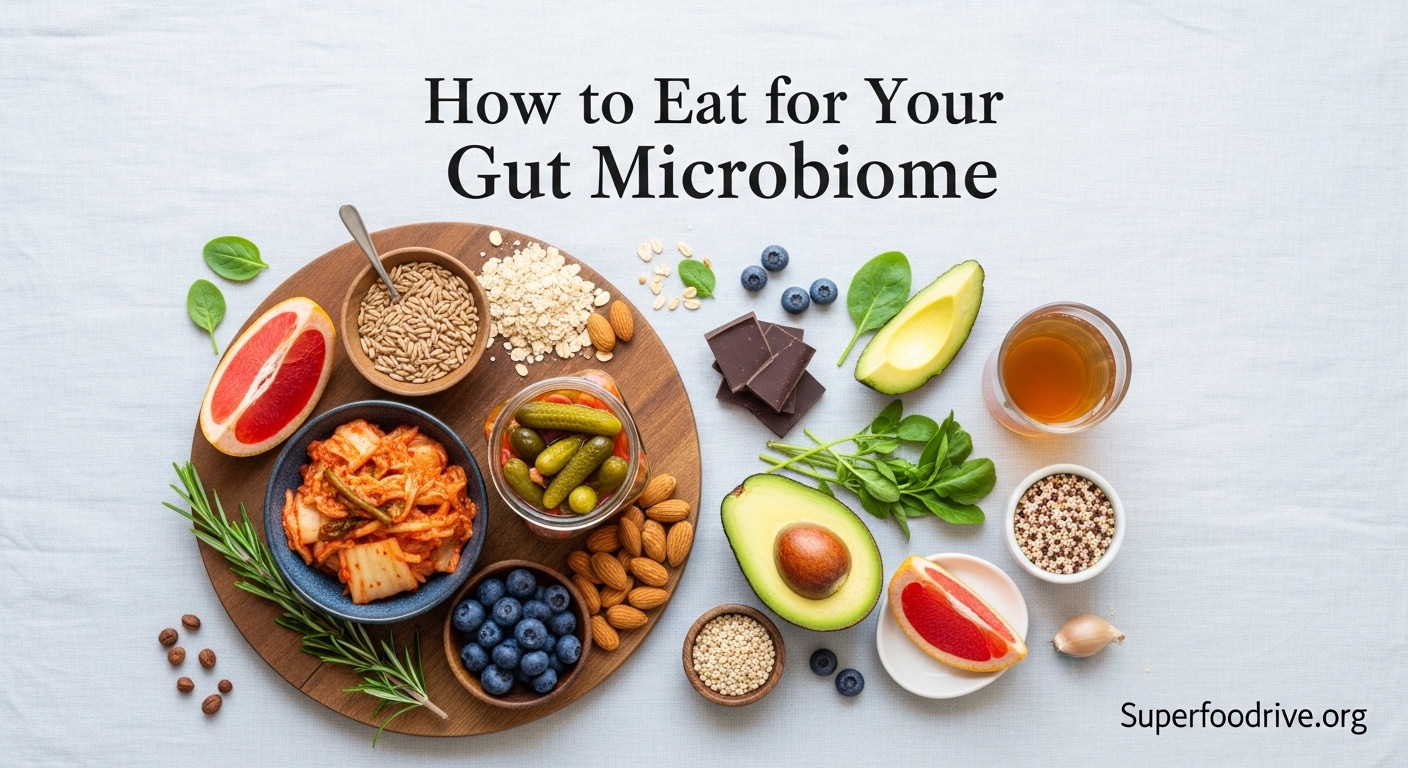
Your gut microbiome holds the key to better digestion, stronger immunity, and even improved mental health. If you are wondering how to eat for gut microbiome health, you are in the right place. I have spent years researching nutrition science and testing practical strategies to help people transform their digestive wellness through simple dietary changes.
In this guide, you will learn exactly which foods feed your beneficial bacteria and which ones harm them. You will also discover practical steps you can start today, including the research-backed goal of eating 30 different plant foods per week. Let us dive into the science and build a gut-healthy eating plan that actually works.
Table of Contents
What Is the Gut Microbiome and Why Does It Matter
Your gut microbiome is a community of trillions of bacteria, viruses, and fungi living in your digestive tract. These microscopic organisms play a crucial role in breaking down food, producing vitamins, and protecting you from harmful pathogens.
Research from Johns Hopkins Medicine shows that a balanced microbiome supports immune function, reduces inflammation, and even influences your mood through the gut-brain axis. When your gut bacteria are diverse and thriving, you digest food more efficiently and absorb nutrients better.
An unhealthy gut microbiome has been linked to digestive issues, weakened immunity, weight gain, and mental health challenges. The good news is that you can reshape your microbiome through the foods you choose every day.
How to Eat for Gut Microbiome: The Two Pillars
Eating for your gut microbiome comes down to two essential strategies: adding beneficial bacteria through probiotic foods and feeding those bacteria with prebiotic fiber. Both approaches work together to increase your microbial diversity.
The American Gut Project found that people who ate more than 30 different plant types per week had significantly more diverse microbiomes than those eating fewer than 10. This diversity directly correlates with better health outcomes and lower inflammation markers.
Probiotic Foods: Adding Beneficial Bacteria
Probiotic foods contain live beneficial bacteria that colonize your gut and improve your microbial balance. A recent study published in Cell showed that a diet rich in fermented foods led to increased microbial diversity and decreased inflammatory markers.
Here are the best probiotic foods to add to your diet:
- Yogurt with live cultures – Choose plain, unsweetened varieties with active cultures listed on the label
- Kefir – A fermented milk drink with more probiotic strains than yogurt
- Kombucha – Fermented tea that provides beneficial bacteria and antioxidants
- Sauerkraut – Fermented cabbage rich in Lactobacillus bacteria
- Kimchi – Korean fermented vegetables with spicy, tangy flavors
- Miso – Fermented soybean paste used in soups and dressings
- Tempeh – Fermented soybeans that provide both probiotics and protein
- Pickles – Naturally fermented cucumbers (not vinegar-pickled varieties)
Start with small portions if you are new to fermented foods. Some people experience mild bloating initially as their gut adjusts to the increased bacterial activity.
Prebiotic Foods: Feeding Your Good Bacteria
Prebiotics are types of fiber that your body cannot digest, but your gut bacteria can. These fibers serve as fuel for beneficial bacteria, helping them multiply and thrive.
Research from Harvard Health emphasizes that prebiotic foods are just as important as probiotic foods. Without adequate fiber, even the best probiotic bacteria cannot establish themselves in your gut.
Include these prebiotic-rich foods in your meals:
- Garlic and onions – Both contain inulin fiber that feeds beneficial bacteria
- Bananas – Slightly green bananas are especially high in resistant starch
- Asparagus – One of the best prebiotic vegetable sources available
- Legumes – Beans, lentils, and chickpeas provide soluble and insoluble fiber
- Whole grains – Oats, barley, quinoa, and brown rice support gut bacteria
- Apples – Contain pectin fiber that promotes bacterial diversity
- Flaxseeds – Provide both fiber and omega-3 fatty acids
- Artichokes – Jerusalem artichokes are particularly high in inulin
Aim for 21 to 38 grams of fiber daily depending on your age and gender. Increase fiber gradually and drink plenty of water to avoid digestive discomfort.
Foods to Limit or Avoid for Better Gut Health
Just as some foods feed beneficial bacteria, others harm your microbiome. Reducing or eliminating these foods can dramatically improve your gut health within weeks.
Limit these gut-damaging foods:
- Processed foods – Contain additives and emulsifiers that disrupt gut bacteria
- Added sugars – Feed harmful bacteria and promote inflammation
- Artificial sweeteners – May negatively alter gut bacterial composition
- Excessive alcohol – Damages gut lining and disrupts microbial balance
- Fried foods – High in unhealthy fats that promote bad bacteria growth
- Refined grains – White bread and pasta lack the fiber needed for gut health
Many people in online health communities report that reducing processed foods had a more noticeable impact on their digestion than adding supplements. Start by cutting back on packaged snacks and sugary beverages.
Practical Tips to Improve Your Gut Microbiome
Knowing which foods to eat is helpful, but putting it into practice is where real change happens. Here are actionable strategies to transform your gut health starting today.
Start the 30 Plant Foods Challenge
Track your plant food variety for one week. Count every different fruit, vegetable, legume, whole grain, nut, seed, and herb. Aim for 30 different plant types by week’s end.
Each plant species feeds different bacteria strains. The more variety you consume, the more diverse your microbiome becomes. Even different colored versions of the same vegetable count as separate entries.
Prioritize Fiber at Every Meal
Build your plate around fiber-rich foods. Add berries to breakfast, include a large salad with lunch, and make vegetables the centerpiece of dinner. Legumes like lentils and chickpeas can replace meat in many dishes.
I have found that swapping white rice for quinoa and adding beans to soups doubled my daily fiber intake without extra effort.
Chew Your Food Thoroughly
Digestion begins in your mouth. Chewing food completely breaks it down into smaller particles, making it easier for gut bacteria to process. Aim for 20 to 30 chews per bite.
Slowing down while eating also helps you recognize fullness cues and reduces digestive discomfort from swallowing air.
Stay Hydrated Throughout the Day
Water helps fiber move through your digestive system and supports the mucosal lining of your intestines. Drink at least 8 glasses daily, more if you exercise or live in a hot climate.
Herbal teas and water infused with lemon or cucumber count toward your hydration goals. Limit caffeinated beverages which can be dehydrating in large amounts.
Manage Stress Levels
Chronic stress negatively impacts gut bacteria through the gut-brain connection. Practice stress-reduction techniques like meditation, deep breathing, or gentle yoga.
Research shows that even 10 minutes of daily meditation can improve markers of gut health over time. Your mental state directly influences your microbial balance.
The Gut-Brain Connection: Why Your Diet Affects Your Mood
The gut-brain axis represents one of the most fascinating discoveries in modern nutrition science. Your gut and brain communicate constantly through the vagus nerve, hormones, and immune signaling.
Nearly 90 percent of serotonin, your body’s feel-good neurotransmitter, is produced in the gut. When your microbiome is healthy, this production runs smoothly. When it is imbalanced, mood disorders can develop.
Studies show that people with depression often have less diverse gut microbiomes. Eating probiotic and prebiotic foods may help improve symptoms alongside traditional treatments. This connection explains why you feel butterflies when nervous or why digestive issues accompany anxiety.
How Long Does It Take to Improve Gut Health
Many people wonder how quickly they can expect results from dietary changes. The timeline varies, but research offers some helpful benchmarks.
Dietary changes can shift your microbiome composition within 24 to 48 hours. However, lasting improvements typically require consistent effort over several weeks. Most people report noticeable digestive improvements within 2 to 4 weeks of adopting gut-healthy eating patterns.
Forum discussions reveal that consistency matters more than perfection. People who stick with gut-healthy eating 80 percent of the time see better long-term results than those who follow strict protocols for a week then quit.
Remember that everyone starts with a different baseline. If you have been eating a standard processed diet for years, your gut needs time to heal and rebalance. Be patient with the process.
Frequently Asked Questions
What foods help repair the gut microbiome?
Fermented foods like yogurt, kefir, sauerkraut, and kimchi add beneficial bacteria. Fiber-rich foods including garlic, onions, bananas, legumes, and whole grains feed those bacteria. Aim for 30 different plant foods weekly and include fermented options daily for optimal repair.
What are the 7 signs of an unhealthy gut?
Common signs include frequent bloating and gas, diarrhea or constipation, food intolerances, unintentional weight changes, constant fatigue, skin irritations like eczema, and autoimmune conditions. If you experience multiple symptoms, consider consulting a healthcare provider about your gut health.
What is the 7 day gut reset?
A 7 day gut reset involves eliminating processed foods, added sugars, and alcohol while focusing on whole plant foods and fermented options. The goal is to reduce inflammation and give your microbiome a chance to rebalance. Include 30 plus plant foods, drink plenty of water, and prioritize sleep.
What is the fastest way to heal gut microbiome?
The fastest approach combines eliminating gut-damaging foods while adding both probiotics and prebiotics immediately. Stop eating processed foods and added sugars today. Add fermented foods at every meal and increase fiber intake to 30 plus grams daily. Most people notice improvements within one to two weeks.
Start Your Gut Health Journey Today
Learning how to eat for gut microbiome health does not require expensive supplements or complicated protocols. Focus on adding fermented foods daily, eating 30 different plant foods per week, and cutting back on processed options.
Start small. Add one fermented food to your next meal. Swap white bread for whole grain. Throw an extra handful of vegetables into your dinner. These small steps compound into significant health improvements over time.
Your gut microbiome is constantly changing based on what you feed it. Every meal is an opportunity to nourish beneficial bacteria or harm them. Choose wisely, be consistent, and watch your digestion, energy, and overall wellness transform in 2026.