
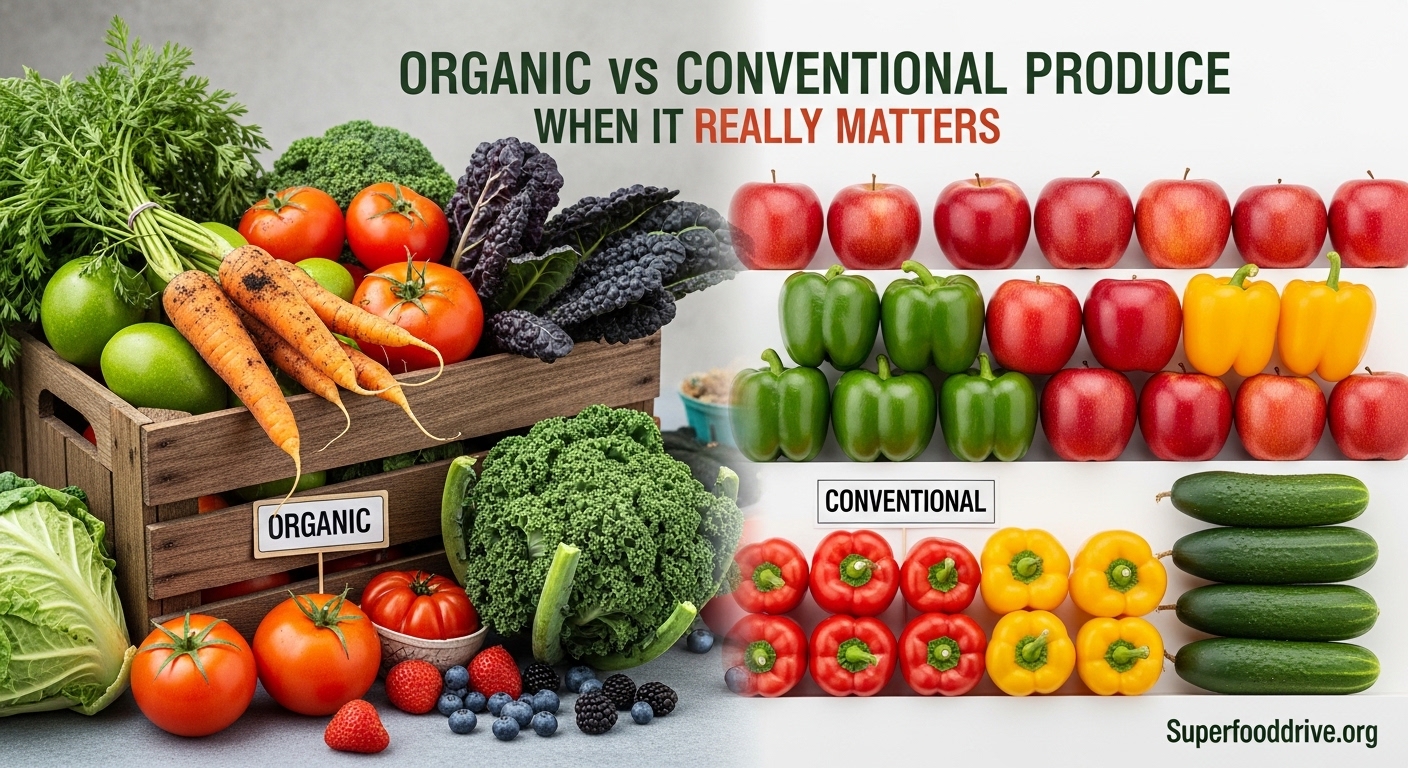
Standing in the produce aisle, you have probably stared at those organic apples and wondered if they are actually worth the extra two dollars. You are not alone. I have spent months digging through research, talking to nutritionists, and tracking my own grocery bills to figure out when organic produce truly matters and when you can save your money.
The truth is more nuanced than the headlines suggest. Organic produce is not automatically healthier, but there are specific situations where it makes a real difference. In this guide, I will break down the actual differences between organic vs conventional produce, what the science really says about nutrition and safety, and give you a practical framework for deciding when to spend the extra money.
Table of Contents
What Is the Difference Between Organic and Conventional Produce?
Before deciding what to buy, you need to understand what those labels actually mean. The difference comes down to farming practices, not some magical property that makes organic food inherently superior.
Organic Farming Standards
Organic produce must meet strict USDA standards to carry the certified organic seal. Farmers cannot use synthetic pesticides, chemical fertilizers, genetic engineering (GMOs), or irradiation. Instead, they rely on natural processes like composting, crop rotation, and biological pest control.
The USDA Organic seal means the product is at least 95% organic ingredients. You might also see “Made with Organic Ingredients” labels, which require only 70% organic content. These standards are enforced through regular inspections and certification processes that add to the final cost.
Conventional Farming Practices
Conventional farming uses synthetic chemicals to fight pests, control weeds, and boost crop yields. This includes pesticides, herbicides, and chemical fertilizers developed in laboratories. Genetic modification is also permitted in conventional farming, though most produce sold in stores is not actually GMO.
Conventional farming feeds the vast majority of the world’s population. These practices are regulated by the EPA and FDA, with established safety limits for pesticide residues. The goal is maximizing yield and efficiency to keep food affordable and accessible.
Is There Really a Nutritional Difference?
Here is where much of the confusion comes from. Major studies have found surprisingly little nutritional difference between organic and conventional produce. A comprehensive Stanford University review analyzed 237 studies and found that organic foods are not significantly more nutritious than conventional alternatives.
The researchers looked at vitamins, minerals, and other nutrients across thousands of samples. Organic produce did show slightly higher levels of phosphorous and omega-3 fatty acids, particularly in dairy and meat products. But for fruits and vegetables, the nutritional differences were negligible for most people already eating a balanced diet.
There is one nutritional caveat worth noting. Organic produce does show lower levels of cadmium, a toxic heavy metal found in some fertilizers. While the difference is small, every bit of reduction in toxic heavy metal exposure matters for long-term health.
Pesticide Exposure: The Real Difference
This is where organic vs conventional produce actually shows meaningful separation. The same Stanford study found that organic produce has 30% lower pesticide residues than conventional alternatives. That is not just a statistic, it represents a real reduction in your chemical exposure.
What Pesticide Residue Means for You
Pesticide residues on conventional produce are typically well below EPA safety limits. However, these limits are based on single-exposure scenarios, not the cumulative effect of eating multiple pesticide-treated foods daily over decades. The long-term impact of low-level chronic exposure is still being studied.
For most healthy adults, conventional produce is considered safe. The health benefits of eating fruits and vegetables far outweigh any potential risks from pesticide residue. But for certain populations, including pregnant women, infants, and young children, reducing pesticide exposure makes more sense as a precaution.
Beyond Pesticides: Other Contaminants
Organic meat and dairy products also show lower levels of antibiotic-resistant bacteria. This matters because conventional animal farming uses antibiotics routinely, contributing to the global problem of antibiotic resistance. When you choose organic animal products, you are reducing exposure to these resistant strains.
Some studies have also found higher levels of beneficial compounds like certain antioxidants in organic produce. The theory is that plants under natural pest pressure produce more protective compounds. While research is ongoing, this potential benefit adds another point in favor of organic for some shoppers.
Environmental Impact of Organic vs Conventional
If you care about environmental sustainability, organic farming has clear advantages. Conventional farming relies heavily on synthetic fertilizers and pesticides that can contaminate groundwater, harm pollinators like bees, and degrade soil health over time.
Organic practices emphasize soil health through composting, cover crops, and natural fertilizers. Healthier soil retains water better, reducing irrigation needs and preventing runoff that pollutes waterways. Organic farms also tend to support greater biodiversity, providing habitat for beneficial insects and wildlife.
However, organic farming is not perfect from an environmental standpoint. It typically requires more land to produce the same amount of food, which can mean more habitat conversion. The carbon footprint depends heavily on transportation, so locally grown conventional produce might beat organic imports on total environmental impact.
Cost Comparison: Why Organic Costs More
Let us talk about the elephant in the room. Organic produce typically costs 20% to 40% more than conventional alternatives. For a family buying hundreds of dollars in groceries monthly, that premium adds up fast.
Those higher prices reflect real cost differences. Organic farming is more labor-intensive because farmers cannot rely on chemical shortcuts. Certification is expensive and time-consuming. Yields are often lower, and organic supplies are more limited, driving prices up through basic supply and demand.
For many families, buying all organic is simply not financially realistic. That is exactly why understanding when organic vs conventional produce really matters becomes so important. You can make strategic choices that reduce pesticide exposure without breaking your budget.
When Organic Matters Most: The Dirty Dozen and Clean 15
The Environmental Working Group publishes an annual Shopper’s Guide that tests thousands of produce samples for pesticide residue. Their findings give you a practical roadmap for when to prioritize organic and when conventional is perfectly fine.
The Dirty Dozen: Always Buy Organic
These fruits and vegetables consistently show the highest pesticide residues. When you are deciding where to spend your organic budget, prioritize these:
- Strawberries
- Spinach
- Kale, collard and mustard greens
- Peaches
- Pears
- Nectarines
- Apples
- Grapes
- Peppers
- Cherries
- Blueberries
- Green beans
Strawberries top the list year after year, with samples showing multiple pesticide residues. Leafy greens like spinach and kale also rank high because their surface area holds more chemicals. If you can only afford some organic produce, start with these items.
The Clean 15: Conventional Is Fine
These produce items show the lowest pesticide levels, making them safe to buy conventional:
- Avocados
- Sweet corn
- Pineapple
- Onions
- Papaya
- Sweet peas (frozen)
- Asparagus
- Honeydew melon
- Kiwi
- Cabbabe
- Mushrooms
- Cantaloupe
- Mangoes
- Watermelon
- Sweet potatoes
Avocados are consistently the cleanest produce tested, with very low pesticide residues thanks to their thick skin. The same applies to pineapples and onions. Save your organic budget for the Dirty Dozen and buy these conventional without worry.
Special Considerations for Pregnancy and Children
Certain populations may benefit more from choosing organic. Pregnant women pass nutrients and contaminants directly to developing babies. Young children have smaller bodies and developing organ systems that may be more vulnerable to pesticide effects.
The American Academy of Pediatrics notes that organic diets reduce pesticide exposure in children. While they emphasize that eating fruits and vegetables is the priority regardless of type, they acknowledge that organic choices make sense for families concerned about chemical exposure during critical developmental periods.
If you are pregnant or feeding young children, focusing on organic versions of the Dirty Dozen provides meaningful exposure reduction without requiring a completely organic diet. Even switching just a few high-priority items can cut pesticide intake significantly.
5 Tips for Buying Organic on a Budget
After years of shopping strategically, here are my best tips for reducing pesticide exposure without spending a fortune:
1. Prioritize the Dirty Dozen – Focus your organic spending on the highest-risk produce and buy the Clean 15 conventional.
2. Buy Seasonal and Local – Seasonal organic produce is often cheaper and fresher than out-of-season imports. Local farmers may use organic practices without official certification.
3. Consider Frozen Organic – Frozen organic fruits and vegetables are often cheaper than fresh and retain their nutritional value. They are pre-washed and convenient for cooking.
4. Shop Sales and Store Brands – Major retailers now carry affordable organic store brands. Stock up when organic items go on sale and freeze extras.
5. Wash Everything Thoroughly – Even organic produce should be washed. For conventional produce, washing with water removes some surface pesticide residues, though it cannot eliminate chemicals that have been absorbed into the plant.
Frequently Asked Questions
Is organic produce really worth it?
Organic produce is worth it for the Dirty Dozen fruits and vegetables that have the highest pesticide residues. For the Clean 15 items with low pesticide levels, conventional produce is fine and offers the same nutritional benefits at a lower cost. Your personal health priorities and budget should guide the decision.
Is it scientifically proven that organic food is better?
Research shows organic food has lower pesticide residues and fewer antibiotic-resistant bacteria, but nutritional differences are minimal. The Stanford University meta-analysis of 237 studies found no significant nutritional advantage to organic produce. The main proven benefits are reduced chemical exposure and environmental sustainability.
Is there really a difference in organic produce?
Yes, organic produce shows measurable differences in farming methods and chemical content. Organic produce has 30% lower pesticide residues on average and lower levels of toxic heavy metals like cadmium. However, vitamin and mineral content is largely similar between organic and conventional produce.
What are the disadvantages of organic produce?
The main disadvantages of organic produce are higher cost (typically 20-40% more), shorter shelf life due to lack of preservatives, more limited availability in some areas, and occasional cosmetic imperfections. Organic farming also requires more land per unit of food produced.
Why do people choose not to buy organic food?
People avoid organic food primarily due to higher prices, confusion about whether benefits justify the cost, limited availability in their area, skepticism about marketing claims, and the fact that nutritional differences are minimal. Many prioritize eating more conventional fruits and vegetables over buying fewer organic items.
Organic vs Conventional Produce: Making Your Choice
After reviewing all the evidence, my recommendation is simple but strategic. The question is not whether organic vs conventional produce is universally better, but when the extra cost actually matters for your health and priorities.
Buy organic for the Dirty Dozen, especially if you are pregnant or feeding young children. Buy conventional for the Clean 15 without guilt. Wash everything thoroughly. Remember that eating any fruits and vegetables is better than avoiding produce because of cost or confusion.
The Environmental Working Group updates their Shopper’s Guide annually, so check their website for the latest Dirty Dozen and Clean 15 lists. Your wallet and your health can both win when you shop smart.