
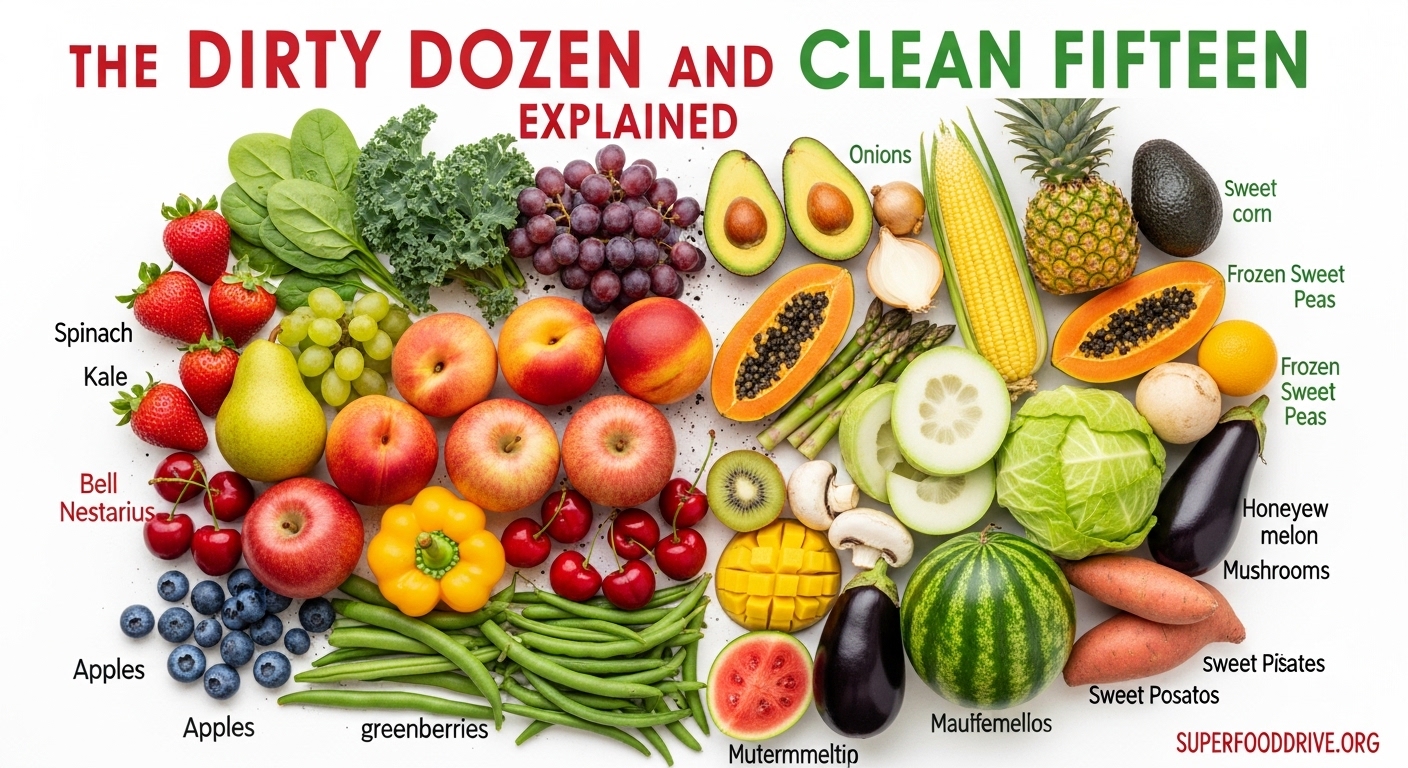
The Dirty Dozen and Clean Fifteen are two annual lists published by the Environmental Working Group (EWG) that help shoppers make smarter decisions about buying organic produce. I have been using these lists for the past three years to stretch my grocery budget while reducing my family’s exposure to pesticide residues.
The concept is simple. The Dirty Dozen contains 12 fruits and vegetables that test highest for pesticide contamination. The Clean Fifteen contains 15 items that test lowest. This means you can prioritize buying organic for the Dirty Dozen items and feel comfortable buying conventional for the Clean Fifteen.
In this guide, I will explain exactly what these lists are, how EWG creates them, and how you can use them to shop smarter in 2026.
Table of Contents
What Is the Dirty Dozen?
The Dirty Dozen is a list of 12 fruits and vegetables that contain the highest levels of pesticide residues according to USDA testing data. EWG analyzes test results from over 47,000 produce samples to create this ranking each year.
These items are the ones where buying organic makes the most difference for reducing pesticide exposure. In 2026, strawberries top the list for the third consecutive year. Leafy greens like spinach and kale consistently appear because their porous surfaces absorb more chemicals than produce with thicker protective skins.
The EWG methodology changed in 2026. Previously, rankings were based solely on the number of different pesticides detected. Now the organization also incorporates toxicity scores, meaning some pesticides that are more dangerous count more heavily in the rankings.
What Is the Clean Fifteen?
The Clean Fifteen is the counterpart to the Dirty Dozen. These 15 fruits and vegetables have the lowest pesticide residues when grown conventionally.
Most items on this list share common characteristics. They tend to have thick outer skins that protect the edible portion from pesticide spray. Items like avocados, pineapples, and onions naturally resist chemical absorption.
This is where you can save money on your grocery bill. Conventional Clean Fifteen items are tested to have minimal pesticide contamination, so you do not need to pay the organic premium for these.
Many shoppers ask why cabbage appears on the Clean Fifteen. Cabbage has tight leaf structures that protect inner layers from direct pesticide contact. The outer leaves are typically removed before sale, taking any surface residue with them.
The 2026 Dirty Dozen and Clean Fifteen Lists
Here are the complete 2026 lists from EWG’s latest testing data.
The Dirty Dozen (Buy These Organic)
- Strawberries – Topped the list for three years running with the highest pesticide residues
- Spinach – Leafy greens absorb chemicals easily through porous surfaces
- Kale, collard and mustard greens – Often treated with multiple pesticide applications
- Grapes – Thin skin and surface area make them prone to residue retention
- Peaches – Fuzzy skin traps pesticides more than smooth surfaces
- Pears – Testing shows increasing pesticide loads over recent years
- Nectarines – Similar to peaches in pesticide absorption
- Apples – Conventionally grown apples may contain residue in the flesh, not just skin
- Bell and hot peppers – Multiple applications throughout growing season
- Cherries – Sweet fruit attracts pests requiring chemical treatments
- Blueberries – Delicate berries absorb chemicals easily
- Green beans – Testing found concerning insecticide residues
The Clean Fifteen (Conventional Is Fine)
- Avocados – Thick skin provides excellent protection; almost no detectable residues
- Sweet corn – Protective husk keeps edible kernels clean
- Pineapple – Tough outer skin is removed before eating
- Onions – Multiple layers and papery outer skin protect inner flesh
- Papaya – Thick skin prevents chemical penetration
- Sweet peas (frozen) – Pod protection and typical freezing process
- Asparagus – Grows quickly with minimal pest pressure
- Honeydew melon – Thick rind protects the flesh
- Kiwi – Fuzzy skin provides a protective barrier
- Cabbage – Tight leaf structure protects inner layers
- Mushrooms – Grown in controlled indoor environments
- Cantaloupe – Netted exterior and thick rind provide protection
- Cauliflower – Protected by leaves during growth
- Broccoli – Similar protective structure to cauliflower
- Sweet potatoes – Underground growth means minimal surface exposure
What Changed in 2026: The New Toxicity Scoring
EWG updated its methodology in 2026 to provide more accurate risk assessments. The previous system ranked produce based only on how many different pesticides were detected.
The new system weights pesticides by their toxicity levels. This means a highly toxic pesticide counts more toward the score than a mildly toxic one. Some items shifted positions on the lists as a result of this change.
Green beans moved onto the Dirty Dozen in 2026 partly because of this methodology update. Certain insecticides used on green beans have high toxicity scores that were not fully weighted in previous years.
This change makes the lists more scientifically rigorous. The rankings now reflect actual health risk rather than just counting chemical varieties.
Why Pesticide Exposure Matters
Pesticides are chemicals designed to kill insects, fungi, or weeds. When residues remain on food, we consume small amounts with every bite.
The Environmental Protection Agency sets safety limits for pesticide residues. These limits are designed to protect consumers based on average exposure. However, critics argue that developing bodies, pregnant women, and people who eat high volumes of produce may face greater risks than the general population.
Research links chronic pesticide exposure to various health concerns. Studies have associated certain pesticides with hormone disruption, neurological effects, and increased cancer risk. While the levels found on most produce are below EPA limits, many health-conscious consumers prefer to minimize exposure where possible.
The Dirty Dozen and Clean Fifteen give you a practical framework. You cannot eliminate all pesticide exposure without going entirely organic. But you can significantly reduce your intake by focusing your organic dollars where they matter most.
How to Use These Lists When Shopping
I have developed a simple system for using these lists that saves my family about $30 per week on groceries.
Step 1: Prioritize organic for all Dirty Dozen items. When I buy strawberries, spinach, or grapes, I always choose organic. The price difference is worth the peace of mind.
Step 2: Buy conventional for Clean Fifteen items. Avocados, onions, and pineapples from the conventional section save money with minimal risk.
Step 3: For items not on either list, use your judgment. Most other produce falls somewhere in the middle. I typically buy conventional for thick-skinned items and organic for leafy greens.
Consider frozen produce. Frozen fruits and vegetables are often flash-frozen at peak ripeness and can be significantly cheaper than fresh. The Dirty Dozen and Clean Fifteen apply to frozen produce too. I buy organic frozen strawberries but conventional frozen corn.
Shop farmers markets when possible. Small local farms may not have organic certification due to cost, but they often use fewer chemicals than large conventional operations. Talk to the farmer about their growing practices.
Grow your own if you have space. Herbs, tomatoes, and peppers are easy to grow in containers. Homegrown produce eliminates pesticide concerns entirely.
Does Washing Produce Remove Pesticides?
Washing helps, but it does not eliminate all residues. Some pesticides are designed to adhere to surfaces and resist water.
The USDA tests produce after washing and peeling according to standard consumer practices. This means the residues detected on the Dirty Dozen are what remains after typical washing. Even with thorough washing, these items retain higher pesticide levels.
For best results, rinse produce under running water and scrub firm items with a brush. Do not use soap, as it can leave its own residue. Soaking in a baking soda solution for 15 minutes may help remove additional surface pesticides for some items.
Peeling can remove residues on the outer surface, but some pesticides penetrate the skin into the flesh. Apples are a prime example. Peeling removes some residues but not all.
Frequently Asked Questions
Why is cabbage on the Clean Fifteen?
Cabbage has a tight leaf structure that protects inner layers from direct pesticide contact. The outer leaves are typically removed before sale, taking surface residues with them. Testing consistently shows minimal pesticide penetration into the edible portions.
Should I buy organic only for Dirty Dozen items?
For optimal pesticide reduction, yes. The Dirty Dozen items show the highest pesticide residues in USDA testing. Buying organic for these 12 items and conventional for the Clean Fifteen provides a good balance between health protection and budget.
What about frozen fruits and vegetables?
The Dirty Dozen and Clean Fifteen apply to frozen produce as well. Frozen items are processed from fresh produce using the same growing methods. Buy organic frozen strawberries and spinach, but conventional frozen corn and peas are fine.
Does washing produce remove all pesticides?
No. USDA testing already accounts for standard washing practices. The residues detected on Dirty Dozen items remain even after typical washing. Soaking in baking soda solution may help remove additional surface residues for some produce.
Is the EWG methodology scientifically sound?
EWG uses publicly available USDA pesticide testing data. Critics note that residues on Dirty Dozen items are typically below EPA safety limits. Supporters argue that cumulative exposure and vulnerable populations warrant caution. The lists provide guidance for risk reduction, not absolute safety claims.
Conclusion
The Dirty Dozen and Clean Fifteen give you a practical framework for making informed produce choices. Buy organic for the Dirty Dozen to minimize pesticide exposure where it matters most. Save money with conventional Clean Fifteen items that naturally resist chemical absorption.
I recommend printing the lists or saving them to your phone. After a few shopping trips, you will know which items to grab from the organic section and which to buy conventional. Small changes in your shopping habits can reduce your pesticide intake without blowing your grocery budget.