
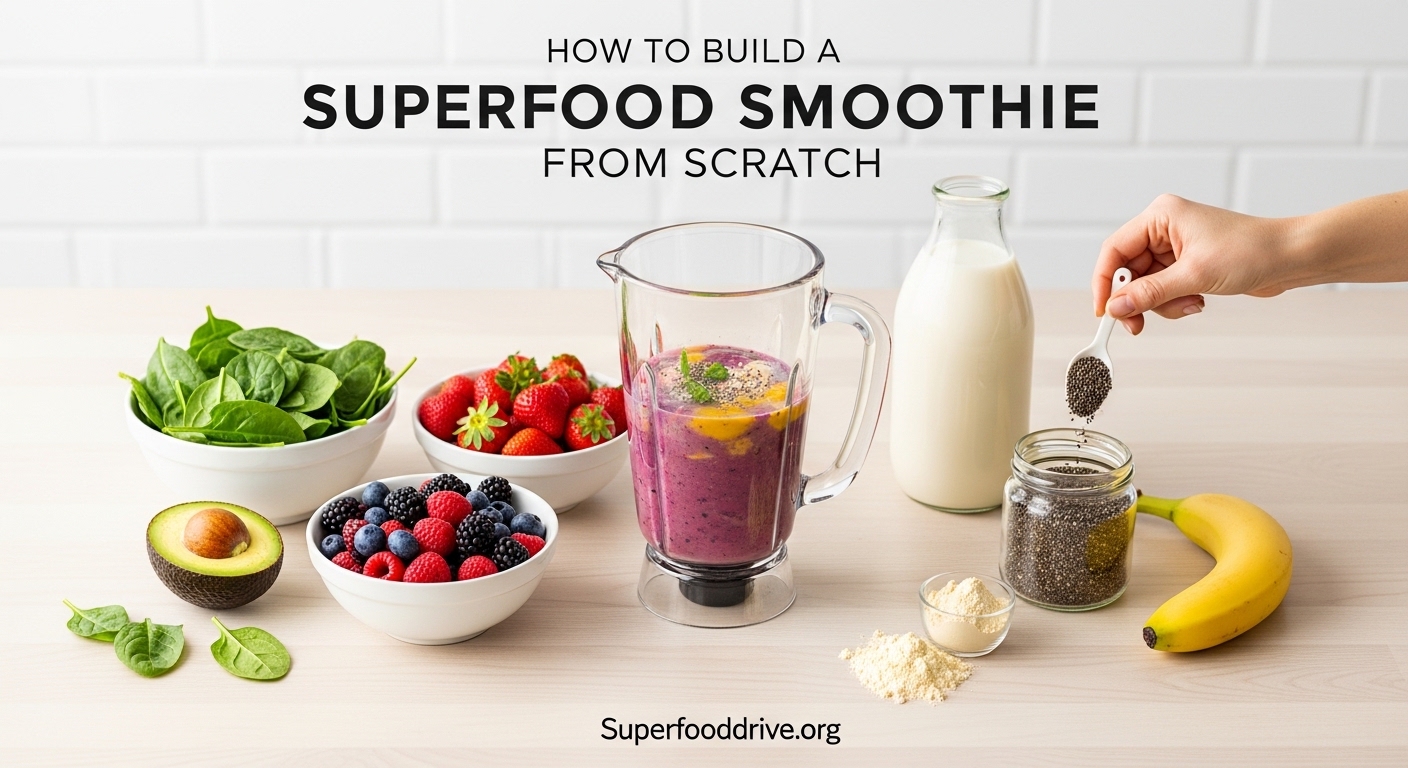
I have been building superfood smoothies from scratch every morning for the past three years. What started as a simple attempt to eat more vegetables has transformed into a daily ritual that fuels my energy, supports my immune system, and takes less than five minutes to prepare. Learning how to build a superfood smoothie from scratch is one of the most valuable skills you can develop for your health in 2026.
Unlike store-bought smoothies loaded with hidden sugars and preservatives, homemade superfood smoothies give you complete control over every ingredient. You decide exactly what goes into your body. You choose the flavors. You adjust for your specific health goals.
This guide will walk you through everything you need to know. By the end, you will understand the simple formula that makes building nutrient-dense smoothies effortless. You will have five tested recipes to get started. And you will know how to troubleshoot common problems that frustrate many beginners.
Table of Contents
How to Build a Superfood Smoothie From Scratch
Building a superfood smoothie from scratch follows a simple six-step formula anyone can master. Start with 1 to 1.5 cups of liquid base. Add 1 to 2 cups of leafy greens. Include 1 cup of frozen fruit for natural sweetness and texture. Add 1 serving of protein. Include 1 tablespoon of healthy fats from seeds or nuts. Finish with superfood boosters and blend until smooth.
What Makes a Smoothie ‘Super’
A superfood smoothie differs from an ordinary fruit smoothie in one key way: nutrient density. Regular smoothies might contain fruit and yogurt. Superfood smoothies intentionally pack multiple ingredients that deliver exceptional nutritional value per calorie.
Superfoods are whole foods naturally concentrated with vitamins, minerals, antioxidants, and beneficial compounds. Think leafy greens like spinach and kale. Consider berries bursting with antioxidants. Include seeds rich in omega-3 fatty acids like chia and flax. These ingredients elevate a simple beverage into a nutritional powerhouse.
The beauty of superfood smoothies lies in bioavailability. Blending breaks down cell walls, making nutrients easier for your body to absorb than eating the same ingredients whole. You get more benefit from the same foods.
Key Superfood Categories
Understanding the categories helps you build balanced smoothies every time. Greens provide folate, iron, and chlorophyll. Fruits offer antioxidants and natural sweetness. Seeds and nuts deliver healthy fats and protein. Spices add anti-inflammatory compounds. Protein sources keep you full and support muscle health.
The best superfood smoothies combine ingredients from multiple categories. This creates synergistic effects where nutrients work together better than they would alone.
Essential Superfood Ingredients
Building your smoothie arsenal starts with understanding the ingredients. Here is what I keep stocked in my kitchen at all times.
Leafy Green Base
Leafy greens form the nutritional foundation of any superfood smoothie. Spinach remains the best starter green because its mild flavor disappears behind fruit. It is packed with iron, vitamin K, and folate. I use two large handfuls in most of my smoothies.
Kale offers more texture and a stronger nutritional profile including vitamin C and calcium. Baby kale works better than mature leaves for smoothies. It blends smoother and tastes less bitter.
Swiss chard provides beautiful color and impressive mineral content. Romaine lettuce works for ultra-mild green smoothies. Mixed greens bags from the store offer variety without extra shopping.
Power Fruits
Frozen fruit creates the perfect smoothie texture while eliminating the need for ice. Blueberries rank highest for antioxidants. Strawberries add vitamin C and natural sweetness. Raspberries provide fiber with minimal sugar.
Bananas serve as the ultimate smoothie thickener. A frozen banana creates milkshake-like consistency without dairy. They also provide potassium and natural sweetness that balances greens.
Mango and pineapple bring tropical flavor and digestive enzymes. Acai packets offer concentrated antioxidants but cost more. Frozen cherries taste indulgent while supporting recovery after exercise.
Super Seeds and Nuts
Seeds transform smoothies from simple fruit drinks into complete meals. Chia seeds absorb liquid and expand, creating thickness and providing omega-3 fatty acids. They also offer impressive fiber content that supports digestion.
Ground flaxseed delivers lignans and additional omega-3s. Buy whole flaxseed and grind it yourself for maximum freshness. Pre-ground flax oxidizes quickly and loses nutritional value.
Hemp seeds provide complete protein with all essential amino acids. They taste slightly nutty and blend completely smooth. Pumpkin seeds offer zinc and magnesium. Almond butter or other nut butters add creaminess plus healthy fats that help absorb fat-soluble vitamins.
Protein Sources
Protein keeps you full longer and stabilizes blood sugar. Plain Greek yogurt adds creaminess and probiotics alongside 15 to 20 grams of protein per serving. Choose unsweetened varieties to control sugar content.
Silken tofu blends completely smooth without any taste. It adds 10 grams of protein per half cup and works great for dairy-free smoothies. Plant-based protein powders from pea, rice, or hemp offer convenience. Look for brands without artificial sweeteners.
Cottage cheese might sound strange but creates incredibly thick, creamy smoothies with casein protein. Collagen peptides dissolve completely and support skin and joint health.
Liquid Bases
Your liquid choice affects both flavor and nutrition. Unsweetened almond milk provides creamy texture with minimal calories. Coconut water adds electrolytes and natural sweetness. Oat milk creates thicker smoothies and works well for nut allergies.
Brewed green tea boosts antioxidants and provides gentle caffeine. Plain water works fine when you want pure ingredient flavors. Dairy milk adds protein and calcium but increases calorie content.
I keep multiple options on hand and choose based on my goals. Coconut water after workouts. Almond milk for everyday smoothies. Green tea when I want energy without coffee.
Boosters and Extras
Boosters take your smoothie from good to exceptional. Cacao powder delivers chocolate flavor with magnesium and antioxidants. Matcha provides sustained energy and metabolism support. Maca powder supports hormone balance and adds malt-like flavor.
Spices like cinnamon help regulate blood sugar and taste warm and comforting. Turmeric and ginger fight inflammation. Fresh mint brightens any fruit combination. Vanilla extract enhances sweetness without adding sugar.
The Perfect Smoothie Building Formula
After years of daily smoothie making, I developed a foolproof formula that works every time. Follow these six steps in order for perfect results.
Step 1: Choose Your Liquid Base
Start with 1 to 1.5 cups of liquid in your blender. This prevents ingredients from sticking and creates the right consistency. Use less liquid for thicker smoothie bowls. Add more for easier drinking.
Step 2: Add Leafy Greens
Add 1 to 2 cups of leafy greens. Pack them loosely. Fresh or frozen both work. Putting greens near the blade helps them blend smoother, especially in less powerful blenders.
Step 3: Include Fruits for Sweetness
Add 1 cup of frozen fruit. Frozen creates better texture than fresh. Bananas work best when peeled, broken into chunks, and frozen overnight. Mixed berries create beautiful color and antioxidant content.
Step 4: Add Protein and Healthy Fats
Include one serving of protein and one tablespoon of healthy fats. This might be half a cup of Greek yogurt plus a tablespoon of almond butter. Or a scoop of protein powder plus chia seeds. These ingredients make the smoothie filling.
Step 5: Boost With Superfoods
Add your boosters. Start with just one or two until you learn your preferences. A teaspoon of cacao. Half a teaspoon of cinnamon. A tablespoon of hemp seeds. Small amounts deliver big benefits.
Step 6: Blend and Adjust
Blend on high for 30 to 60 seconds until completely smooth. Taste and adjust. Too thick? Add more liquid. Too thin? Add more frozen fruit or ice. Not sweet enough? Add half a frozen banana or a date.
5 Beginner-Friendly Superfood Smoothie Recipes
These recipes have been tested hundreds of times. They work with standard blenders and taste delicious even to people who claim they hate green smoothies.
The Green Energy Starter
This mild green smoothie converts skeptics. It tastes like banana with a hint of vanilla. The spinach completely disappears behind the fruit.
Ingredients: 1 cup unsweetened almond milk, 2 cups fresh spinach, 1 frozen banana, 1 cup frozen mango chunks, 1 tablespoon almond butter, 1 teaspoon vanilla extract, 1 teaspoon hemp seeds.
Instructions: Add almond milk and spinach to blender. Blend on high 30 seconds until greens are completely broken down. Add remaining ingredients. Blend another 30 seconds until smooth. Pour and enjoy immediately.
Berry Antioxidant Blast
This deep purple smoothie tastes like dessert while delivering serious antioxidants. Frozen berries make it thick and satisfying.
Ingredients: 1 cup coconut water, 1 cup fresh kale, 1 cup frozen mixed berries, 1 frozen banana, 2 tablespoons chia seeds, 1 tablespoon cacao powder.
Instructions: Blend coconut water and kale first. Add remaining ingredients. Let sit 2 minutes so chia seeds can soften. Blend again 60 seconds until completely smooth. The wait creates better texture.
Tropical Protein Power
This sunshine-yellow smoothie fuels workouts or busy mornings. Pineapple provides natural sweetness and digestive enzymes.
Ingredients: 1 cup unsweetened coconut milk, 1 cup spinach, 1 cup frozen pineapple chunks, 1 frozen banana, 1 scoop vanilla protein powder, 1 tablespoon ground flaxseed, small piece fresh ginger.
Instructions: Blend all ingredients 60 seconds until smooth. The ginger adds kick without overwhelming the tropical flavor. Adjust ginger amount to your preference.
Chocolate Almond Decadence
This tastes like a chocolate milkshake but supports your health goals. Cacao provides magnesium that many people lack.
Ingredients: 1.5 cups unsweetened almond milk, 1 frozen banana, 2 tablespoons almond butter, 1 tablespoon cacao powder, 1 tablespoon chia seeds, 1 teaspoon cinnamon, pinch of sea salt.
Instructions: Blend all ingredients 45 seconds. The sea salt enhances chocolate flavor. Add an extra half banana if you want more sweetness.
Golden Immunity Booster
This bright yellow smoothie supports immune function with turmeric and vitamin C. It tastes like sunshine in a glass.
Ingredients: 1 cup coconut water, 1 cup frozen mango, 1 frozen banana, juice of half a lemon, 1 teaspoon fresh turmeric or half teaspoon ground, half teaspoon fresh ginger, pinch of black pepper, 1 tablespoon honey.
Instructions: Blend all ingredients until smooth. The black pepper helps your body absorb turmeric. Fresh turmeric stains everything yellow, so handle carefully.
Troubleshooting and Pro Tips
After helping dozens of friends start their smoothie habits, I have encountered every problem. Here are the solutions that actually work.
Fixing Texture Problems
Too thick? Add liquid two tablespoons at a time and blend again. You can always add more liquid. You cannot take it out.
Too thin? Add frozen fruit, a handful of ice, or a tablespoon of chia seeds. These thicken without diluting flavor.
Too gritty? Your blender needs more time. Blend 30 seconds longer. Or strain through a fine mesh sieve. Next time, blend greens with liquid first before adding other ingredients.
Making Vegetables Disappear
Start with spinach rather than kale. Spinach has virtually no taste in smoothies. Kale can taste strong to beginners.
Always use frozen banana. The banana flavor dominates while masking greens completely. A full frozen banana can hide two cups of spinach.
Add strong flavors like cacao, cinnamon, or peanut butter. These overpower any vegetable taste. Vanilla extract also helps mask green flavors.
Blend greens with liquid first. This extra step breaks them down completely so no flecks remain.
Natural Sweetening Without Sugar
Dates work magic. One Medjool date adds caramel sweetness without refined sugar. Remove the pit first. Soak in warm water if your blender is not powerful.
Ripe bananas provide the best natural sweetness. Wait until bananas have brown spots. Then peel, break into chunks, and freeze overnight.
Cinnamon enhances perceived sweetness without adding calories. Vanilla extract does the same. Unsweetened cacao tastes chocolatey without sugar.
Meal Prep and Storage
Freezer packs save morning time. Portion greens, fruit, and seeds into freezer bags. Store up to three months. In the morning, dump into blender with liquid and protein.
Prepped smoothies last 24 to 48 hours in the refrigerator. Store in mason jars filled to the top to minimize oxidation. Shake before drinking as separation is normal.
Smoothie cubes work for longer storage. Blend your smoothie, pour into ice cube trays, freeze, then store cubes in freezer bags. Blend cubes with fresh liquid when ready to drink.
Building Smoothies for Specific Goals
Customize your smoothie formula based on what your body needs.
Diabetic-Friendly Options
Focus on low glycemic fruits like berries over tropical fruits. Use cinnamon which helps regulate blood sugar response. Add protein and healthy fats to slow carbohydrate absorption. Avoid fruit juice as liquid base. Stick to water, unsweetened nut milk, or coconut water.
Portion control matters. Keep total fruit to one cup maximum. Load up on greens instead. They provide nutrition without blood sugar impact.
Heart Health and Cholesterol
Soluble fiber from oats and flaxseed binds cholesterol. Add one third cup rolled oats to any smoothie. Berries support cardiovascular health. Omega-3 fatty acids from chia, flax, and hemp seeds reduce inflammation. Cocoa flavanols support blood vessel function.
Multiple studies show that daily smoothie consumption can lower LDL cholesterol when fiber-rich ingredients are included.
Energy and Focus
Green tea as liquid base provides L-theanine for calm focus. Matcha powder offers concentrated antioxidants plus caffeine. Maca root supports sustained energy without jitters. Healthy fats from nuts provide slow-burning fuel. Avoid excess sugar which causes energy crashes.
Frequently Asked Questions
What are the best superfoods to add to smoothies?
The best superfoods for smoothies include leafy greens like spinach and kale, berries high in antioxidants, chia seeds for omega-3s and fiber, hemp seeds for complete protein, cacao powder for magnesium and antioxidants, and turmeric for anti-inflammatory benefits. Start with these core ingredients and experiment based on your taste preferences and health goals.
What’s the best smoothie for diabetics?
The best diabetic-friendly smoothie uses low glycemic fruits like berries, includes cinnamon to help regulate blood sugar, adds protein and healthy fats to slow absorption, and avoids fruit juice. Try unsweetened almond milk, spinach, mixed berries, chia seeds, and plain Greek yogurt as a base formula.
Can smoothies help lower cholesterol?
Yes, smoothies can help lower cholesterol when they include soluble fiber from oats, ground flaxseed, and chia seeds. These ingredients bind cholesterol in the digestive system. Berries provide antioxidants that support cardiovascular health, and plant sterols from nuts and seeds block cholesterol absorption.
How long do smoothies last in the fridge?
Freshly made smoothies last 24 to 48 hours in the refrigerator when stored properly. Fill storage containers to the top to minimize air exposure and oxidation. Mason jars work best. Separation is normal after storage, simply shake before drinking. For longer storage, freeze smoothie cubes and blend with fresh liquid when ready.
Are frozen fruits healthy in smoothies?
Frozen fruits are just as healthy as fresh, sometimes more so because they are picked at peak ripeness and flash-frozen. Freezing preserves nutrients and makes smoothies thick and cold without needing ice. Frozen berries, bananas, and tropical fruits are convenient year-round options that often cost less than fresh.
Conclusion
Learning how to build a superfood smoothie from scratch opens up endless possibilities for your health. Start with the six-step formula. Experiment with the five recipes provided. Adjust based on your goals and preferences.
The key is consistency. One smoothie will not transform your health. But making them part of your daily routine provides concentrated nutrition that supports energy, immunity, and overall wellness.
Start simple. Master the basics. Then get creative with your own combinations. Your perfect smoothie is waiting to be blended.