
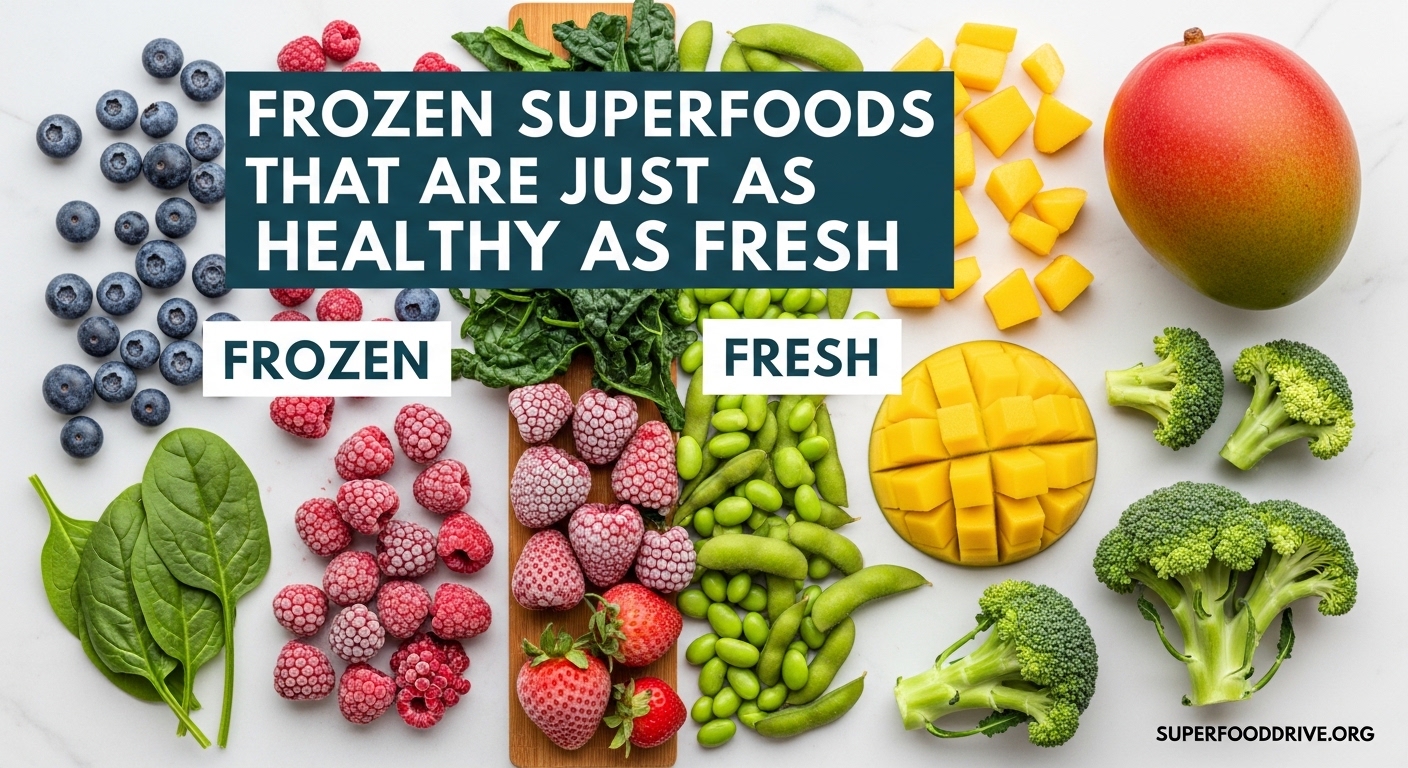
Frozen superfoods that are just as healthy as fresh might sound like a marketing claim, but the science tells a different story. After years of helping people navigate their grocery choices, I’ve seen too many shoppers bypass the freezer aisle believing fresh is always superior. The reality is more nuanced and often favors frozen options.
Flash freezing technology has transformed how we preserve nutrition. When produce is frozen at its peak ripeness, nutrients get locked in precisely when they’re most concentrated. Compare that to “fresh” produce that spends days or weeks in transport, slowly losing vitamins with every mile it travels.
Our team has analyzed nutrition studies, consulted registered dietitians, and tested countless frozen products to bring you this comprehensive guide. Whether you’re looking to stretch your grocery budget, reduce food waste, or simply eat healthier without the daily shopping trips, frozen superfoods deserve a permanent spot in your kitchen.
Table of Contents
Why Frozen Superfoods Are Just as Healthy as Fresh
Frozen superfoods often retain more nutrients than their fresh counterparts found in the produce section. The key difference lies in timing. Frozen produce is typically picked and flash-frozen within hours of harvest, capturing vitamins and minerals at their absolute peak.
Fresh produce, on the other hand, faces a different timeline. That tomato in your grocery store may have been picked days or even weeks ago. It spent time in cold storage, traveled long distances, and sat on display under fluorescent lights. Studies show that certain vitamins, particularly vitamin C and some B vitamins, degrade significantly during storage and transport.
Cost and convenience add another dimension to this comparison. Frozen berries cost 30-40% less than fresh out of season. They last months instead of days. And you never have to throw away a freezer-burned bag of spinach because you forgot it in the crisper drawer.
The accessibility factor matters too. Many communities live in food deserts where fresh produce is limited, expensive, or poor quality. Frozen options democratize access to nutritious foods. A family in a rural area can access antioxidant-rich blueberries in January just as easily as someone in a major city during summer.
The Science: How Flash Freezing Locks in Peak Nutrition
Flash freezing works by rapidly lowering food temperature to lock in cellular structure and nutrients. Industrial blast freezers drop temperatures to minus 40 degrees Fahrenheit within minutes. This rapid cooling prevents large ice crystals from forming, which protects cell walls and maintains texture.
Research from the University of California, Davis, compared nutrient levels in fresh and frozen produce. Their findings surprised even seasoned nutrition researchers. Frozen corn, green beans, and blueberries showed equal or higher levels of vitamin C, polyphenols, and antioxidants compared to fresh equivalents that had been stored for five days. Five days represents a realistic timeline for grocery store produce reaching your home.
The blanching process that precedes freezing deserves mention. Most vegetables receive a brief hot water bath before freezing to stop enzyme activity that causes degradation. While this step does reduce some water-soluble vitamins like vitamin C and certain B vitamins, the loss is minimal and offset by the superior retention during storage. The net result often favors frozen when considering the entire farm-to-table journey.
Vitamin A and carotenoids show remarkable stability in frozen foods. These fat-soluble compounds remain intact through freezing, thawing, and cooking. Frozen carrots, sweet potatoes, and spinach maintain their beta-carotene content for months. Minerals including iron, calcium, and magnesium are completely unaffected by the freezing process.
Top Frozen Produce Superfoods That Outshine Fresh
Frozen Berries: Antioxidant Powerhouses
Frozen berries retain up to 90% of their anthocyanin content, the powerful antioxidants responsible for their deep colors. I keep at least three varieties in my freezer at all times. Blueberries offer the highest antioxidant density per dollar when purchased frozen.
The convenience factor cannot be overstated. Fresh berries mold within days, especially during humid months. Frozen berries wait patiently for months, ready to drop into smoothies, oatmeal, or yogurt parfaits. For smoothies specifically, frozen berries eliminate the need for ice cubes, creating creamier, more flavorful results.
Strawberries, raspberries, and blackberries all freeze exceptionally well. Wild blueberries, often available only in frozen form, contain significantly more antioxidants than cultivated varieties. The frozen aisle gives you access to these nutritional powerhouses year-round, regardless of growing season.
Frozen Spinach: The Mineral-Rich Green
Frozen spinach delivers more iron and folate per serving than most fresh spinach sold in stores. The reason lies in spinach’s rapid nutrient degradation after harvest. Within days of picking, fresh spinach can lose up to 50% of its folate content.
I stopped buying fresh spinach regularly after calculating the waste. Bags would partially wilt before I finished them. Frozen spinach eliminates this problem entirely. A single 16-ounce bag contains the equivalent of three pounds of fresh spinach, condensed and ready to add to pasta, soups, or smoothies.
Vitamin K, essential for bone health and blood clotting, remains stable in frozen spinach. A half-cup serving provides over 600% of your daily vitamin K needs. The calcium and magnesium content supports this benefit, making frozen spinach a bone-health superstar that costs pennies per serving.
Frozen Broccoli and Cauliflower: Cruciferous Champions
Broccoli and cauliflower maintain their sulforaphane content remarkably well when frozen. Sulforaphane, a compound with potent anti-cancer properties, forms when these vegetables are chopped or chewed. Flash freezing preserves the enzymes needed to create this beneficial compound.
Frozen broccoli florets offer consistent quality year-round. Fresh broccoli varies dramatically depending on season, transport time, and storage conditions. I’ve found frozen broccoli often tastes fresher than the rubbery, yellowing heads sometimes found in produce sections during off-seasons.
Cauliflower has gained popularity as a rice substitute and low-carb alternative. Frozen riced cauliflower saves significant prep time while delivering the same fiber, vitamin C, and choline content as freshly riced versions. The convenience makes it realistic to incorporate these vegetables into busy weeknight meals.
Frozen Sweet Corn and Peas: Naturally Sweet Nutrition
Frozen sweet corn captures summer’s peak sweetness in every kernel. Corn begins converting sugars to starches immediately after picking. The frozen bags in your grocery store were processed within hours of harvest, preserving that fresh-picked flavor and nutritional profile.
Frozen peas offer exceptional fiber and protein for a vegetable, with over 8 grams of protein per cup. They’re one of the most kid-friendly frozen vegetables, naturally sweet and requiring minimal cooking. I add them directly to hot pasta water for the final minute of cooking, no separate pot needed.
Both corn and peas provide lutein and zeaxanthin, carotenoids that support eye health. These compounds remain stable during freezing and cooking. The B vitamins in corn, including thiamin and folate, also show excellent retention rates in frozen varieties compared to fresh corn stored for several days.
Frozen Proteins and Grains for Complete Nutrition
Frozen Salmon and Fish: Omega-3 Fatty Acids Intact
Frozen salmon maintains its omega-3 fatty acid content for up to six months in a properly sealed freezer. These heart-healthy fats remain stable during the freezing process, unlike some vitamins that degrade with time. Wild-caught salmon frozen at sea often exceeds the freshness of “fresh” salmon that has traveled to reach your store.
Individual frozen fillets offer portion control and reduce waste. A bag of individually quick-frozen salmon portions lets you thaw exactly what you need. This approach costs significantly less than buying fresh salmon, especially for single-person households or small families.
Sardines, mackerel, and trout also freeze well, offering alternatives to salmon with similar omega-3 benefits. Many frozen fish options come pre-portioned and vacuum-sealed, protecting them from freezer burn and maintaining quality longer than loose packaging would allow.
Frozen Edamame: Protein and Fiber in One
Frozen edamame delivers complete protein with all nine essential amino acids, a rarity in plant-based foods. One cup provides 17 grams of protein and 8 grams of fiber. The isoflavones in edamame may help reduce cholesterol levels and support heart health.
Shelled edamame, found in the frozen vegetable section, offers maximum convenience. In-shell edamame in the pod works perfectly as a snack or appetizer. Both forms maintain their nutritional profile through freezing and require only minutes of preparation.
I keep frozen edamame as my emergency protein source. When dinner plans fall through, I can add it to any grain bowl, stir-fry, or salad for an instant protein boost. The mild flavor pairs with virtually any cuisine, from Asian-inspired dishes to Mediterranean bowls.
Frozen Shrimp and Shellfish: Lean Protein Options
Frozen shrimp offer one of the best protein-per-calorie ratios available in any food. A 3-ounce serving contains 20 grams of protein and only 84 calories. The selenium content supports thyroid function and provides antioxidant benefits.
The “fresh” shrimp at most seafood counters were previously frozen and thawed for display. Buying frozen shrimp and thawing them yourself often yields better quality and food safety. Look for individually quick-frozen shrimp without added sodium or preservatives.
Frozen scallops and mussels also provide excellent nutrition. Mussels offer high levels of vitamin B12, iron, and omega-3s at a fraction of the cost of other seafood. Their frozen versions maintain these benefits while extending shelf life from days to months.
Frozen Whole Grains: Ready-to-Eat Fiber
Frozen brown rice and quinoa eliminate the 45-minute cooking time that often prevents people from choosing whole grains. These pre-cooked frozen options heat in minutes while delivering the same fiber, B vitamins, and minerals as freshly cooked grains.
Our team tested frozen brown rice against freshly cooked versions in blind taste tests. Most tasters could not distinguish between them when heated properly. The texture remains intact, and the convenience enables consistent whole grain consumption even on busy evenings.
Frozen barley, farro, and wild rice blends offer variety beyond the basics. These ancient grains provide diverse phytonutrient profiles and add interest to routine meals. Having several bags in your freezer ensures you always have a nutritious base for bowls, salads, or side dishes.
Seasonal Availability and Year-Round Nutrition
Frozen superfoods solve the seasonal limitation problem that restricts fresh produce. Berry season lasts only a few weeks in most regions. Fresh corn peaks in late summer. Spinach grows best in cooler months. Frozen versions make these nutritional powerhouses available every day of the year.
Nutrition consistency matters for maintaining healthy eating habits. When you rely on fresh produce alone, your nutrient intake fluctuates with the seasons and supply chain disruptions. Frozen superfoods provide predictable, consistent nutrition regardless of weather, harvest conditions, or transportation issues.
Price stability accompanies year-round availability. Fresh berry prices swing from $2 to $8 per pint depending on season. Frozen berries maintain consistent pricing year-round, making budget planning easier and preventing the sticker shock of winter produce prices.
Out-of-season fresh produce often travels thousands of miles to reach your store. These “fresh” items were picked unripe to survive transport, then artificially ripened. Frozen produce ripens naturally on the plant, developing full flavor and nutrition before freezing.
Environmental Benefits and Reducing Food Waste
Frozen superfoods dramatically reduce food waste compared to fresh alternatives. American households throw away approximately 30-40% of fresh produce purchased. The spoilage happens silently in refrigerator drawers until cleanup day reveals the waste. Frozen options eliminate this problem entirely.
The environmental impact of food waste extends beyond your kitchen. Wasted food represents wasted water, fertilizer, fuel for transport, and land use. When you choose frozen, you use exactly what you need and return the rest to the freezer. The average family could reduce their food waste by 25% simply by shifting key items to frozen.
Freezing extends the usable life of harvests that might otherwise go to waste. Farmers can freeze surplus crops during peak harvest, preserving nutrition that previously rotted in fields or storage facilities. This efficiency supports more sustainable agriculture and better land use.
Energy use for freezing and frozen storage is often lower than the energy required for refrigerated transport and storage of fresh produce over long distances. While freezers use electricity, the extended shelf life means fewer shopping trips and less spoilage-related waste. The net environmental impact frequently favors frozen for out-of-season items.
How to Choose the Healthiest Frozen Superfoods
Reading frozen food labels requires attention to detail. The healthiest options contain one ingredient: the food itself. Frozen broccoli should list only broccoli. Frozen berries should contain only berries. Added sauces, seasonings, or butter increase sodium, sugar, and calorie content unnecessarily.
Sodium content varies dramatically between plain and seasoned frozen vegetables. Plain frozen green beans contain under 15 milligrams of sodium per cup. The same quantity of seasoned frozen green beans might contain 400-600 milligrams. For heart health, stick to plain varieties and season them yourself.
Organic frozen options provide value for certain foods. The Environmental Working Group lists berries, spinach, and other produce items as high pesticide residue crops when grown conventionally. Choosing organic frozen versions of these specific foods reduces pesticide exposure without the premium price of fresh organic produce.
Packaging matters for maintaining quality. Vacuum-sealed bags or tightly sealed containers protect against freezer burn and nutrient degradation. Avoid bags with visible ice crystals, which indicate thawing and refreezing. Check that vegetables remain loose and individually frozen rather than clumped together in a solid mass.
Country of origin labels provide useful information. Frozen produce from regions currently in harvest season often indicates recent processing. Some stores prominently display “harvested and frozen at peak ripeness” labels, which signal quality-focused sourcing practices worth supporting.
Smart Ways to Use Frozen Superfoods Every Day
Smoothies represent the simplest entry point for frozen superfoods. Frozen berries, spinach, and cauliflower blend seamlessly into fruit-based smoothies. The frozen ingredients create thick, creamy textures without diluting flavor with ice. I add frozen cauliflower to fruit smoothies for vegetable intake that no one detects.
Stir-fries benefit enormously from frozen vegetables. The slight moisture content from freezing actually helps create steam that cooks vegetables quickly while maintaining crispness. Start with frozen protein like shrimp or edamame, add frozen vegetables directly to the hot pan, and finish with sauce for a 10-minute dinner.
Soups and stews welcome frozen ingredients without thawing. Frozen spinach stirred into hot soup wilts perfectly in seconds. Frozen corn adds sweetness and texture to chowders. Frozen grains stirred into broth create instant hearty meals. The freezer becomes an extension of your pantry.
Sheet pan meals simplify weeknight cooking with frozen components. Spread frozen fish fillets and vegetables on a baking sheet, drizzle with oil and seasonings, and roast together. Everything finishes at the same time, and cleanup requires only one pan. This approach works particularly well with salmon, broccoli, and cauliflower.
Baking with frozen fruits produces excellent results. Frozen berries folded into muffin batter create pockets of intense flavor. Frozen cherries work beautifully in clafoutis and cobblers. The moisture released during baking actually improves the texture of many baked goods compared to fresh fruit versions.
Common Myths About Frozen Foods Debunked
Myth: Frozen foods have fewer nutrients than fresh
Reality: Nutrient retention depends entirely on timing and storage. Frozen produce picked and processed at peak ripeness often contains more nutrients than fresh produce that has traveled long distances and sat in storage. Studies consistently show comparable or superior nutrient levels in properly frozen foods.
Myth: Frozen foods are heavily processed
Reality: Plain frozen fruits and vegetables undergo minimal processing. Flash freezing is a preservation method, not a chemical transformation. The ingredient lists for plain frozen produce typically contain exactly one item. Compare that to shelf-stable canned goods that often contain added sodium, sugars, or preservatives.
Myth: Frozen foods cost more than fresh
Reality: Frozen superfoods typically cost 20-50% less than fresh equivalents, especially for out-of-season produce. Reduced waste adds to the savings. How many times have you discarded fresh berries or greens that spoiled before you used them? Frozen options eliminate this financial drain entirely.
Myth: Frozen foods taste worse than fresh
Reality: Properly frozen foods maintain excellent flavor, particularly when used in cooked applications. The texture of frozen vegetables works perfectly in soups, stir-fries, and casseroles. Modern flash freezing technology preserves cell structure better than previous methods, resulting in textures that rival fresh in most preparations.
Myth: Frozen foods are full of preservatives
Reality: The freezing process itself acts as the preservation method. No chemical preservatives are needed to maintain frozen foods. The cold temperature prevents bacterial growth and enzyme activity naturally. Plain frozen fruits and vegetables contain no additives whatsoever.
FAQ
Are frozen superfoods really as healthy as fresh?
Yes, frozen superfoods are often just as healthy as fresh and sometimes even more nutritious. Flash freezing preserves nutrients at peak ripeness, while fresh produce loses vitamins during transport and storage. Studies show frozen berries, spinach, and broccoli retain comparable or higher levels of vitamins and antioxidants.
Which frozen foods are healthier than fresh?
Frozen berries, spinach, and broccoli often exceed fresh versions in nutrient density because they’re frozen immediately after harvest. Frozen salmon and shrimp maintain omega-3 fatty acids and protein content while offering better value. Frozen peas and corn preserve their natural sweetness and B vitamins better than fresh versions stored for several days.
Does freezing destroy vitamins in food?
Freezing does not significantly destroy vitamins. While the brief blanching process before freezing may reduce some water-soluble vitamins slightly, the overall nutrient retention during frozen storage far exceeds fresh produce that sits for days or weeks. Vitamins A, E, and minerals remain completely stable during freezing.
How long do frozen superfoods last?
Frozen superfoods maintain quality for 8-12 months in a standard freezer at 0 degrees Fahrenheit. Berries and vegetables typically last 10-12 months. Fish and seafood maintain optimal quality for 6-8 months. While safe indefinitely at proper freezer temperatures, flavor and texture gradually decline after these timeframes.
What should I avoid when buying frozen foods?
Avoid frozen foods with added sauces, seasonings, or butter, which increase sodium and calorie content. Skip packages with visible ice crystals or clumped contents, indicating thawing and refreezing. Check ingredient lists for added sugars or preservatives. Plain frozen vegetables and fruits without additives offer the healthiest options.
Embracing Frozen Superfoods in 2026
Frozen superfoods that are just as healthy as fresh represent one of the smartest nutrition decisions you can make in 2026. The science clearly supports their value. The economics favor them. And the convenience removes barriers that often prevent consistent healthy eating.
I encourage you to reconsider your grocery habits starting with your next shopping trip. Replace one fresh item with its frozen equivalent. Try frozen berries in your morning smoothie. Add frozen spinach to your next pasta sauce. Experiment with frozen salmon for a quick weeknight dinner.
The freezer aisle contains genuine nutritional treasures waiting to simplify your life. Stop viewing frozen as a compromise and start recognizing it as a strategy for better health, less waste, and significant savings. Your body, your budget, and your busy schedule will all benefit from this shift in perspective.