
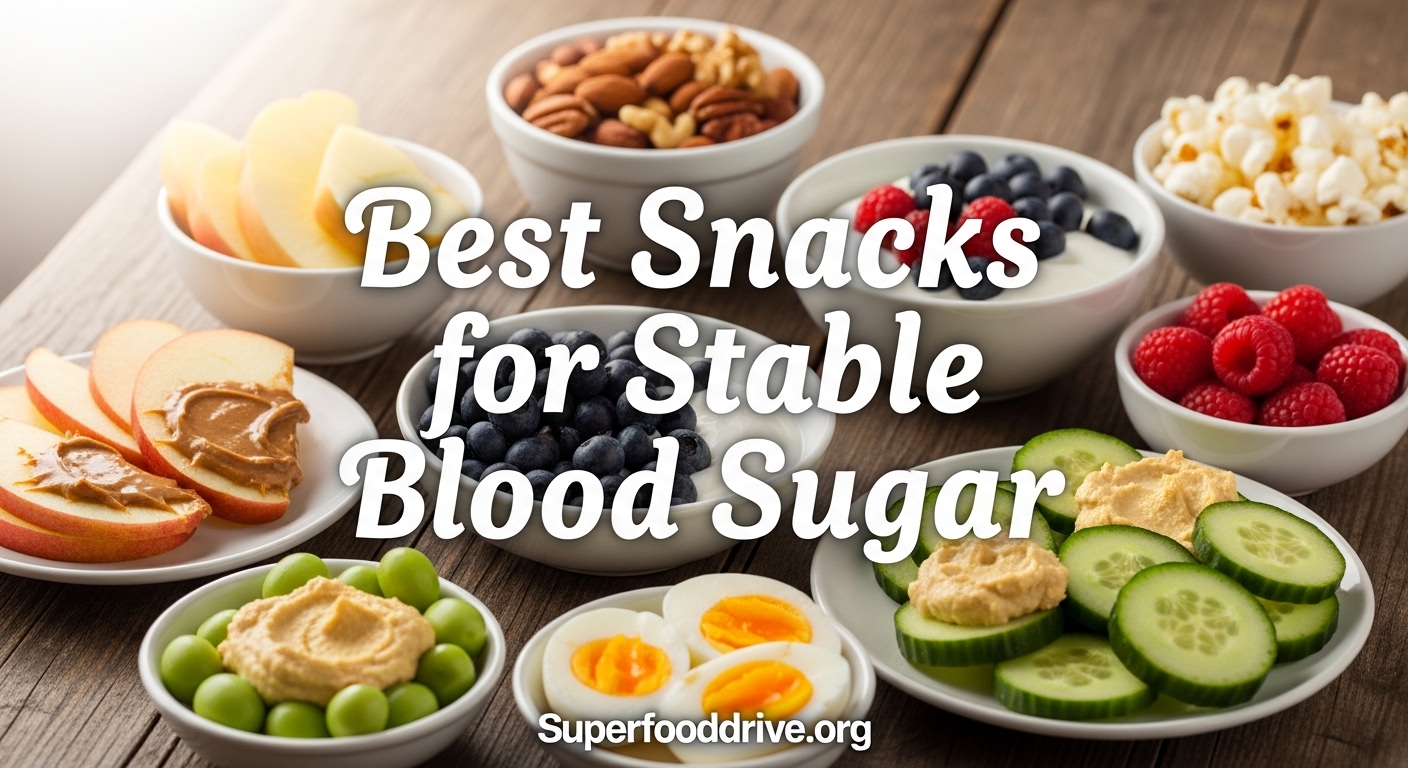
Managing blood sugar doesn’t have to mean giving up snacks entirely. I’ve spent years researching nutrition and talking with people who successfully maintain stable blood sugar levels throughout the day. The right snacks can actually help prevent the energy crashes and spikes that make blood sugar management so frustrating.
This guide covers everything you need to know about Best Snacks for Stable Blood Sugar. You’ll discover 15 specific snack recommendations with exact portions, learn the science behind why certain foods work better, and get practical tips for meal timing, food pairing, and budget-friendly options. Whether you have diabetes, prediabetes, or simply want steadier energy levels, these strategies will help you snack smarter.
Table of Contents
How Blood Sugar-Stable Snacks Work
The key to stable blood sugar lies in understanding how your body processes different nutrients. When you eat carbohydrates alone, they quickly convert to glucose and enter your bloodstream, causing a rapid spike. This triggers an insulin surge that often leads to a crash an hour or two later.
Protein, fiber, and healthy fats change this equation entirely. Fiber acts like a sponge, slowing the absorption of glucose into your bloodstream. Protein takes longer to digest and helps you feel full. Healthy fats provide sustained energy without raising blood sugar at all. When you combine these three elements, you create a buffer that keeps blood sugar levels steady.
The glycemic index measures how quickly foods raise blood sugar. Low-glycemic foods score below 55 and cause minimal spikes. High-glycemic foods score above 70 and trigger rapid increases. Most blood sugar-friendly snacks combine low-glycemic carbohydrates with protein and fat to minimize their impact on glucose levels.
Best Snacks for Stable Blood Sugar
I’ve organized these recommendations by category to make them easy to navigate. Each snack includes specific portion sizes based on nutritional research and feedback from people managing blood sugar daily.
Nuts and Seeds
Nuts and seeds deliver the perfect trifecta of protein, healthy fats, and fiber. A one-ounce serving of almonds provides 6 grams of protein, 3.5 grams of fiber, and 14 grams of fat, with minimal impact on blood sugar. I recommend keeping portions to a small handful since the calories add up quickly.
Walnuts stand out for their omega-3 fatty acid content, which supports heart health along with blood sugar control. Pumpkin seeds offer a surprising 9 grams of protein per ounce and are rich in magnesium, a mineral that plays a key role in glucose metabolism. Sunflower seeds provide similar benefits at a lower cost.
The key with nuts is portion control. Measure out one-ounce servings into small containers or bags at the start of the week. This prevents mindless overeating and makes them truly grab-and-go.
Protein Powerhouses
Hard-boiled eggs rank among the most convenient blood sugar-friendly snacks available. Each egg delivers 6 grams of complete protein and virtually zero carbohydrates. I boil a dozen eggs every Sunday and keep them in the fridge for quick snacks throughout the week.
Plain Greek yogurt offers 15-20 grams of protein per cup with probiotics that support gut health. Choose unsweetened varieties and add your own berries or nuts to control sugar content. A half-cup serving with a handful of berries creates a satisfying snack that won’t spike glucose.
Cottage cheese provides casein protein, which digests slowly and helps maintain steady blood sugar for hours. A half-cup serving contains 12 grams of protein and only 6 grams of carbohydrates. Add some cherry tomatoes or cucumber slices for crunch and additional fiber.
Veggie-Based Options
Fresh vegetables paired with hummus create a nutrient-dense snack that fills you up without raising blood sugar. A cup of raw vegetables with one-third cup of hummus provides 8 grams of protein, 6 grams of fiber, and healthy fats from the chickpeas and tahini. Baby carrots, bell pepper strips, and cucumber rounds work particularly well.
Edamame delivers 17 grams of protein per cup along with 8 grams of fiber. These young soybeans are technically a complete protein, meaning they contain all nine essential amino acids. I buy frozen shelled edamame and portion them into containers for easy snacking.
Cherry tomatoes paired with small mozzarella balls make an elegant snack that feels indulgent while supporting blood sugar goals. Ten tomatoes with one ounce of fresh mozzarella provides protein, healthy fats, and lycopene, an antioxidant that may support cardiovascular health.
Fruit Combinations
Fruit alone can spike blood sugar, but pairing it with protein or fat changes the equation completely. A small apple with one tablespoon of natural peanut butter provides fiber from the fruit, protein and fat from the nut butter, and sustained energy that lasts hours. The key is keeping the apple small and the nut butter measured.
Berries are lower in sugar than most fruits and packed with antioxidants. A half-cup of blueberries or strawberries with ten almonds creates a snack that feels like a treat while keeping blood sugar steady. The fiber in berries slows glucose absorption significantly.
A small pear with one ounce of cheese combines natural sweetness with protein and fat. Choose firmer pears, which have slightly lower sugar content than very ripe ones. This combination works especially well as an afternoon snack when energy typically dips.
Savory Snacks
Cheese paired with whole grain crackers offers a satisfying crunch without the blood sugar spike of refined crackers. One ounce of cheese with five to six whole grain crackers provides protein, fat, and complex carbohydrates that digest slowly. Look for crackers with at least 3 grams of fiber per serving.
Roasted chickpeas have become my favorite crunchy snack alternative to chips. A half-cup of roasted chickpeas delivers 6 grams of protein and 5 grams of fiber with a satisfying crunch factor. Make them at home with olive oil and your favorite seasonings, or choose low-sodium store-bought versions.
Half an avocado on one slice of whole grain toast provides healthy monounsaturated fats, fiber, and complex carbohydrates. Sprinkle with everything bagel seasoning or a pinch of salt and pepper. This snack feels substantial enough to replace a small meal when you’re genuinely hungry.
Portable Grab-and-Go Options
Beef jerky offers pure protein without refrigeration requirements, making it ideal for travel or long days away from home. Look for brands with minimal added sugar and keep portions to one ounce. The sodium content can be high, so balance jerky snacks with plenty of water.
Not all protein bars are created equal. Look for options with at least 10 grams of protein, fewer than 15 grams of total carbohydrates, and minimal added sugars. Read labels carefully since many bars marketed as healthy are essentially candy bars with protein powder.
Tuna packets require no draining and can be eaten straight from the package or spread on whole grain crackers. A single packet provides 16 grams of protein with zero carbohydrates. I keep several in my desk drawer and car for emergency protein needs.
Foods to Avoid
Some snacks that seem healthy can actually cause significant blood sugar spikes. Fruit juice concentrates the sugar from multiple pieces of fruit into a liquid that absorbs rapidly. Even 100% fruit juice can raise blood sugar faster than eating the whole fruit would.
Refined carbohydrates like pretzels, crackers made with white flour, and most commercial baked goods digest quickly and cause rapid glucose increases. These foods often leave you hungry again within an hour, leading to a cycle of snacking and spiking.
Flavored yogurts, granola bars, and trail mix with added chocolate or sweetened dried fruit often contain surprising amounts of added sugar. A single flavored yogurt can have as much sugar as a candy bar. Always check the nutrition label for total carbohydrates and added sugars.
Energy drinks and sports beverages are designed for rapid glucose absorption during intense exercise. For everyday snacking, they cause unnecessary blood sugar spikes followed by crashes. Water, unsweetened tea, or black coffee are better beverage choices between meals.
Meal Timing Strategies
When you snack matters almost as much as what you snack on. The three-hour rule suggests eating every three to four hours to prevent blood sugar from dropping too low between meals. This steady intake prevents the excessive hunger that leads to overeating and larger glucose spikes.
Bedtime snacks require special consideration. Going too long without eating overnight can cause blood sugar to drop, potentially leading to the dawn phenomenon where morning blood sugar reads high. A small protein-rich snack like a cheese stick or handful of nuts about an hour before bed can help maintain stable levels overnight.
Pre-workout snacks should provide easily digestible energy without causing stomach discomfort. Eat 30 to 60 minutes before exercise and focus on simple combinations like half a banana with a tablespoon of almond butter. Post-workout, prioritize protein to support muscle recovery along with some carbohydrates to replenish glycogen stores.
Smart Food Pairing Strategies
The most effective blood sugar management strategy involves pairing carbohydrates with protein and fat at every snack. Think of it as a formula: carbohydrate + protein + fat = stable blood sugar. Never eat carbohydrates alone if you’re trying to prevent spikes.
Apples pair perfectly with peanut butter or cheese. Berries work beautifully with Greek yogurt or a handful of nuts. Whole grain crackers become blood sugar friendly when topped with tuna, cheese, or hummus. These combinations transform potentially problematic foods into smart choices.
Portion balance matters too. A good starting point is one serving of carbohydrates paired with one serving of protein and a small amount of healthy fat. For example, one small apple (carb) with one tablespoon peanut butter (protein and fat) creates a balanced snack that satisfies without spiking.
Make-Ahead Snack Prep Ideas
Sunday prep sessions transform blood sugar management from stressful to effortless. I spend about an hour each weekend preparing snacks for the entire week. This upfront investment eliminates decision fatigue and prevents reaching for convenient but problematic options.
Hard-boil a dozen eggs and store them in their shells in the refrigerator. Portion nuts into small containers or bags so you never have to guess at serving sizes. Wash and cut vegetables like bell peppers, cucumbers, and carrots, then portion them with individual hummus containers.
Roast chickpeas in batches with different seasonings for variety throughout the week. Pre-slice cheese and portion it with whole grain crackers in small containers. Even simple steps like washing berries and storing them in visible containers increase the likelihood you’ll choose them over less healthy options.
Invest in quality storage containers with tight-fitting lids. Glass containers work well for home, while BPA-free plastic containers are lighter for travel. Having the right containers eliminates excuses for not bringing blood sugar-friendly snacks with you.
Budget-Friendly Options
Eating for stable blood sugar doesn’t require expensive specialty products. Eggs remain one of the most affordable protein sources available, typically costing less than twenty cents per egg. A dozen hard-boiled eggs provides snacks for an entire week at minimal cost.
Seasonal produce offers better value and often tastes better too. Buy vegetables and fruits when they’re in abundance and prices drop. Frozen berries and vegetables are often more affordable than fresh and last longer, making them smart choices for budget-conscious shoppers.
Buy nuts in bulk from warehouse stores or the bulk bins at grocery stores. Portion them yourself rather than buying pre-portioned snack packs, which carry a significant markup. Generic brands often offer the same quality as name brands at lower prices.
Generic Greek yogurt, cottage cheese, and cheese sticks typically cost 30-40% less than name brands while providing identical nutrition. Check unit prices on shelf tags to find the best value. Larger containers usually offer better value than single-serve portions, so consider portioning them yourself.
Frequently Asked Questions
What snacks help stabilize blood sugar?
Snacks that combine protein, fiber, and healthy fats help stabilize blood sugar most effectively. Top options include nuts and seeds, hard-boiled eggs, Greek yogurt with berries, vegetables with hummus, apple with peanut butter, cheese with whole grain crackers, and roasted chickpeas. These foods slow digestion and prevent rapid glucose absorption into the bloodstream.
What to eat to keep your blood sugar steady?
To keep blood sugar steady, eat snacks that pair carbohydrates with protein and fat. Never eat carbs alone. Good combinations include fruit with nut butter, vegetables with hummus or cheese, whole grain crackers with tuna or cheese, and yogurt with nuts. Eat every three to four hours to prevent drops that lead to overeating.
What is the 3-hour rule for diabetics?
The 3-hour rule suggests eating a small snack every three to four hours to maintain stable blood sugar levels. Going longer without eating can cause blood sugar to drop too low, leading to excessive hunger and poor food choices. This timing prevents the peaks and valleys that make blood sugar management challenging.
What is the fastest way to stabilize your blood sugar?
The fastest way to stabilize blood sugar is to eat a combination of protein and fiber immediately. Good quick options include a handful of nuts, cheese and whole grain crackers, or Greek yogurt. For emergency low blood sugar, use the 15-15 rule: consume 15 grams of fast-acting carbs like glucose tablets or juice, wait 15 minutes, then retest.
Can I eat fruit if I’m managing blood sugar?
Yes, you can eat fruit while managing blood sugar. The key is portion control and pairing. Choose lower-sugar fruits like berries, apples, and pears. Always pair fruit with protein or fat such as nuts, cheese, or yogurt. Avoid fruit juice and dried fruit with added sugar. A small piece of whole fruit has fiber that slows sugar absorption.
How much should I eat for a blood sugar-friendly snack?
A typical blood sugar-friendly snack should contain 100-200 calories with 5-10 grams of protein. Examples include one small apple with 1 tablespoon peanut butter, one hard-boiled egg, one ounce of nuts, half cup Greek yogurt with berries, or one cup raw vegetables with one-third cup hummus. Portion control prevents overeating while still satisfying hunger.
Conclusion
Best Snacks for Stable Blood Sugar combine protein, fiber, and healthy fats to slow digestion and prevent glucose spikes. The fifteen options covered in this guide provide variety, convenience, and proven results for maintaining steady energy throughout the day. From nuts and seeds to protein powerhouses like eggs and Greek yogurt, you have plenty of choices that satisfy without compromising your blood sugar goals.
Remember the key principles: always pair carbohydrates with protein and fat, eat every three to four hours, and prepare snacks ahead of time to set yourself up for success. Avoid refined carbohydrates, sugary beverages, and fruit juice that cause rapid spikes followed by crashes.
Start by choosing three snacks from this list that appeal to you and seem practical for your lifestyle. Prepare them this weekend and notice how your energy levels feel throughout the week. Small changes in snacking habits can produce significant improvements in blood sugar stability, energy, and overall health. Your body will thank you for making these smart choices.