
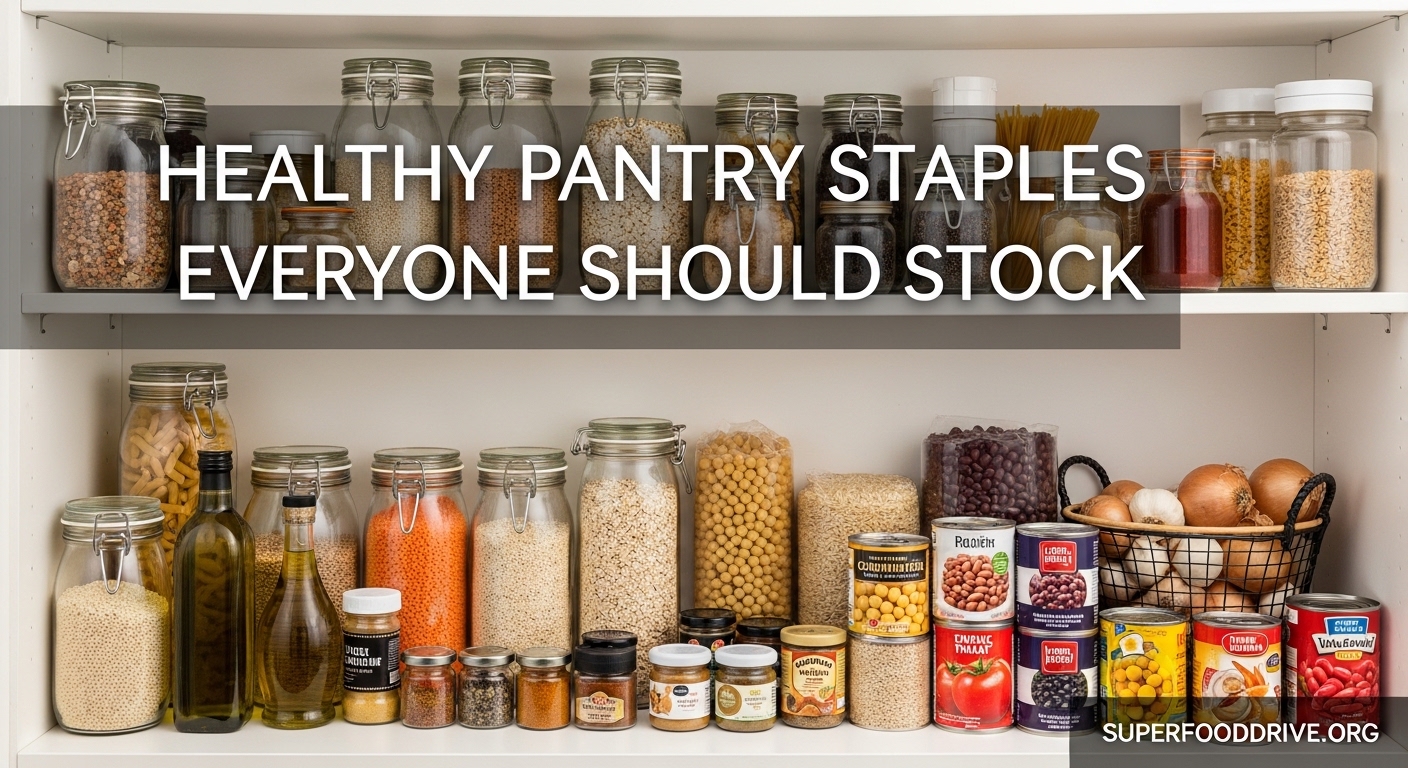
Healthy pantry staples are the foundation of nutritious, affordable meals that come together in minutes. When your kitchen is stocked with the right ingredients, you can whip up satisfying dishes without last-minute grocery runs or expensive takeout orders.
I learned this lesson the hard way after years of scrambling to figure out dinner at 6 PM with an empty fridge. Once I committed to keeping a well-stocked pantry, my stress levels dropped and my food budget shrank by 30%. The best part? I was eating better than ever.
In this guide, you will discover which healthy pantry staples deserve permanent shelf space, how to store them properly, and clever ways to turn these simple ingredients into complete meals. Whether you are building a pantry from scratch or upgrading what you already have, this roadmap will set you up for success.
Table of Contents
Why Stock a Healthy Pantry
A well-stocked pantry saves time, money, and mental energy. When you have versatile ingredients on hand, you can throw together a nutritious meal in 15 minutes instead of ordering delivery.
From a health perspective, pantry staples like whole grains, legumes, and nuts deliver consistent nutrition. They are packed with fiber, protein, and healthy fats that keep you full and energized. Unlike processed convenience foods, these whole food options support long-term wellness without sacrificing convenience.
Your wallet will thank you too. Buying staple foods in bulk costs significantly less per serving than fresh alternatives. A pound of dried lentils costs around $2 and yields 10 servings of protein-rich meals. Compare that to fresh meat or fish, and the savings add up fast. Plus, these foods rarely spoil, which means less waste and more value.
Perhaps the most underrated benefit is the peace of mind. Knowing you can always pull together a decent meal eliminates the daily “what’s for dinner” stress. For busy families, this alone is worth the effort of building a proper pantry.
The 5 Basic Pantry Staples Everyone Needs
If you are starting from scratch, focus on these five categories first. They form the backbone of countless healthy meals and provide the most nutritional bang for your buck.
Whole Grains: Brown rice, quinoa, oats, and whole wheat pasta provide complex carbohydrates and fiber.
Legumes: Beans, lentils, and chickpeas deliver plant-based protein and fiber at rock-bottom prices.
Healthy Fats: Olive oil, avocado oil, and coconut oil enable cooking and add essential fatty acids.
Nuts and Seeds: Almonds, walnuts, chia seeds, and flaxseeds contribute protein, healthy fats, and crunch.
Canned Tomatoes: The most versatile pantry item for building flavor in soups, sauces, and stews.
With just these five categories, you can create hundreds of different meals. Everything else is a bonus that adds variety and convenience.
Whole Grains and Cereals
Whole grains should anchor your pantry. They provide sustained energy thanks to complex carbohydrates and fiber that digest slowly. Unlike refined grains, they keep blood sugar stable and hunger at bay for hours.
Brown rice is the workhorse grain. It stores for 6 months at room temperature and serves as a base for stir-fries, grain bowls, and side dishes. A half-cup serving costs about 15 cents and delivers 3 grams of fiber.
Quinoa offers complete protein, containing all nine essential amino acids. It cooks in just 15 minutes and works beautifully in salads, pilafs, or as a breakfast porridge. Store it in an airtight container and it lasts 2 to 3 years.
Rolled oats deserve a permanent spot for their versatility. Overnight oats, oatmeal cookies, homemade granola, or a quick stovetop breakfast—this single ingredient does it all. Old-fashioned rolled oats have a shelf life of 1 to 2 years when stored properly.
Whole wheat pasta bridges the gap between convenience and nutrition. It contains the entire grain kernel, preserving nutrients that white pasta strips away. Keep 2 to 3 boxes on hand for emergency meals.
Barley adds variety with its chewy texture and impressive fiber content. It is perfect for hearty soups and works as a rice substitute in pilafs. Pearl barley stores for up to 2 years.
Store all grains in airtight containers away from heat and light. Transfer opened packages to glass jars or plastic containers to maximize freshness and prevent pest problems.
Beans, Lentils, and Legumes
Beans and lentils are nutritional powerhouses that cost pennies per serving. They are packed with protein, fiber, iron, and folate while being virtually fat-free. Nutrition experts consistently rank them among the healthiest foods you can eat.
Dried beans offer the best value. A 1-pound bag of black beans costs about $1.50 and yields 6 cups of cooked beans. That breaks down to roughly 25 cents per serving. The trade-off is time—dried beans need soaking and 1 to 2 hours of cooking.
Canned beans provide instant convenience for weeknight meals. They cost more per serving but eliminate prep time entirely. A 15-ounce can holds about 1.5 cups of beans and costs around 75 cents to $1. Look for no-salt-added varieties to control sodium.
Lentils cook faster than any other legume. Red lentils soften in 10 minutes, making them perfect for quick soups and Indian dals. Green and brown lentils hold their shape better and work great in salads. A pound of dried lentils costs about $2 and yields 10 servings.
Chickpeas deserve special mention for their versatility. Blend them into hummus, roast them for crunchy snacks, or toss them into salads and curries. They are a true multi-tasker in the kitchen.
Store dried beans and lentils in airtight containers for up to 1 year. Canned beans last 2 to 5 years in a cool, dry pantry. Once opened, transfer leftover canned beans to a container and refrigerate for up to 5 days.
Nuts, Seeds, and Nut Butters
Nuts and seeds add healthy fats, protein, and satisfying crunch to meals and snacks. They transform simple dishes into something special while boosting nutritional value significantly.
Almonds are the all-around champion. They are rich in vitamin E, magnesium, and monounsaturated fats. A handful provides 6 grams of protein and keeps you satisfied for hours. Store raw almonds in the freezer for up to 2 years to prevent rancidity.
Walnuts contain the highest omega-3 content of any nut. These healthy fats support brain and heart health. They are excellent in oatmeal, salads, and baked goods.
Chia seeds and flaxseeds deliver fiber and omega-3s in tiny packages. They thicken smoothies, replace eggs in baking, and add texture to yogurt. Ground flaxseed absorbs better than whole, but it spoils faster—keep it refrigerated.
Nut butters serve as instant protein sources. Peanut butter is the budget option, while almond and cashew butters offer different flavor profiles. Look for versions with just nuts and salt—no added sugars or oils. Natural nut butters need refrigeration after opening.
Pumpkin seeds (pepitas) and sunflower seeds add variety. They contain zinc, magnesium, and plant protein. Toss them on salads or eat them by the handful.
To maximize shelf life, store nuts and seeds in airtight containers in the refrigerator or freezer. They contain delicate oils that turn rancid at room temperature after a few months.
Healthy Oils and Cooking Fats
Quality cooking oils enable everything from sauteing vegetables to dressing salads. The right oils provide essential fatty acids and make healthy food taste delicious.
Extra virgin olive oil is the gold standard for dressings and low-heat cooking. It is loaded with monounsaturated fats and antioxidants linked to heart health. Look for dark glass bottles and store away from light. Quality olive oil lasts 18 to 24 months unopened.
Avocado oil has the highest smoke point of any unrefined oil at 520°F. This makes it ideal for high-heat cooking like stir-frying and roasting. It has a neutral flavor that works in any dish. It is pricier than olive oil but worth the splurge for high-temperature cooking.
Coconut oil remains solid at room temperature and adds subtle sweetness to baked goods and curries. It handles medium-high heat well. Unrefined (virgin) coconut oil retains more nutrients and flavor than refined versions.
Store oils in cool, dark places to prevent oxidation. Once opened, most oils maintain quality for 6 to 12 months. If an oil smells rancid or off, discard it.
Canned Goods and Shelf-Stable Proteins
Canned goods extend your pantry’s capabilities without requiring refrigeration. They provide instant ingredients that turn basic staples into complete meals.
Canned tomatoes are arguably the most versatile pantry item. Diced tomatoes work in soups and stews. Crushed tomatoes make quick pasta sauces. Tomato paste adds depth to almost any savory dish. Fire-roasted varieties bring smoky flavor without extra effort.
Canned tuna and salmon deliver convenient protein. They work in salads, sandwiches, pasta, and casseroles. Salmon provides omega-3 fatty acids that support heart and brain health. Water-packed options have fewer calories than oil-packed.
Coconut milk transforms simple ingredients into creamy curries and soups. Full-fat versions provide richness, while light coconut milk cuts calories. Once opened, transfer to a container and refrigerate for up to 5 days.
Canned beans (mentioned earlier) deserve another nod here. They are pre-cooked and ready to eat, making them invaluable for quick meals.
Check canned goods for damage before purchasing. Avoid cans with dents, bulges, or rust. Most canned foods last 2 to 5 years when stored properly, though quality gradually declines over time.
Spices, Herbs, and Condiments
Spices are the secret weapon of pantry cooking. They transform simple staples into flavorful dishes from around the world. A modest spice collection exponentially expands your meal possibilities.
Start with these essentials: garlic powder, onion powder, cumin, paprika, oregano, and black pepper. This basic lineup handles Mexican, Mediterranean, and American cuisines.
Add these for expanded range: turmeric (anti-inflammatory benefits), cinnamon (sweet and savory uses), red pepper flakes (heat), and Italian seasoning (convenient blend).
Quality matters with spices. Buy from stores with high turnover or specialty spice shops. Whole spices (peppercorns, cumin seeds) last longer and taste brighter when freshly ground.
Vinegars add acidity and brightness. Balsamic vinegar works for dressings and marinades. Apple cider vinegar supports digestion and adds tang to sauces. Rice vinegar is essential for Asian cooking.
Soy sauce or tamari provides umami depth. Low-sodium versions let you control salt levels. Coconut aminos offer a soy-free alternative with similar flavor.
Store spices in airtight containers away from heat and light. Whole spices last 3 to 4 years, while ground spices maintain potency for 1 to 2 years.
Quick Meal Ideas Using Pantry Staples
Having staples is only half the battle—you need to know how to combine them. Here are practical meals that use pantry ingredients exclusively.
Breakfast Options:
Oatmeal with nut butter, chia seeds, and cinnamon takes 5 minutes. Overnight oats require no cooking—just mix oats with milk and refrigerate overnight. Savory options include chickpea flour pancakes or quinoa breakfast bowls.
Lunch Solutions:
Lentil soup comes together with dried lentils, canned tomatoes, onions, and spices. Bean and grain bowls combine rice or quinoa with black beans, salsa, and avocado. Tuna salad on whole grain crackers requires minimal prep.
Dinner Ideas:
Curried chickpeas simmer canned chickpeas with coconut milk, curry powder, and spinach. Pasta with white beans and tomatoes uses whole wheat pasta, cannellini beans, and canned tomatoes. Fried rice transforms leftover rice with frozen vegetables and soy sauce.
Emergency Meals:
These meals work when the fridge is empty: peanut butter and banana sandwiches, tuna and white bean salad, or rice and beans with salsa. Keep ingredients for 2 to 3 emergency meals always stocked.
The key is combining a grain, a protein, and a vegetable. With practice, you will improvise meals without recipes.
Storage Tips and Organization
Proper storage protects your investment and keeps food safe. Most pantry staples last years when stored correctly, but poor conditions waste food and money.
Temperature matters more than most people realize. Store pantry items between 50°F and 70°F. Heat above 85°F damages oils and reduces shelf life significantly. Avoid storing food above the stove or refrigerator, where temperatures fluctuate.
Light exposure degrades oils and bleaches spices. Use opaque containers or store items in dark cabinets. Clear glass jars look pretty but reduce shelf life unless kept in dark spaces.
Airtight containers prevent pests and maintain freshness. Transfer opened packages to glass jars, plastic containers, or resealable bags. This also lets you see exactly what you have at a glance.
Label everything with purchase dates. While many staples last years, freshness declines over time. Use older items first and rotate stock when adding new purchases.
Organize by category—grains together, legumes together, spices together. This makes meal planning easier and prevents duplicate purchases.
Check pantry quarterly for pests, moisture, or expired items. A 10-minute inspection every few months prevents major problems.
Building Your Pantry on a Budget
Stocking a pantry does not require a massive upfront investment. Building gradually spreads costs and lets you learn what you actually use.
Start with the basics from the 5 staples list. Buy one grain, one legume, one oil, and one nut or seed. Add spices as needed for recipes you want to try.
Buy in bulk for items you use regularly. Bulk bins at grocery stores often cost 30 to 50 percent less than packaged versions. Bring your own containers for additional savings and sustainability.
Watch sales and stock up strategically. When staples you use go on sale, buy 3 to 6 months worth. Beans, rice, and oats rarely spoil, so there is no risk.
Cost per serving reveals true value. A $5 jar of organic peanut butter provides 16 servings at 31 cents each. Compare that to individual snack packs costing $1 or more. The math favors pantry staples overwhelmingly.
Focus on versatility. Ingredients that work in multiple dishes give better value than single-purpose items. A bag of dried lentils works in soups, salads, tacos, and curries.
Expect to spend $50 to $100 to build a basic pantry, then $20 to $30 monthly to maintain it. Most people see grocery bills drop significantly within the first month.
Frequently Asked Questions
What are healthy pantry items to stock up on?
Focus on whole grains like brown rice and quinoa, dried or canned beans and lentils, nuts and seeds, healthy oils like olive and avocado oil, canned tomatoes, and spices. These nutrient-dense foods form the foundation of balanced meals and have long shelf lives.
What are the five basic pantry staples?
The five essentials are: 1) Whole grains (rice, oats, quinoa), 2) Legumes (beans, lentils), 3) Healthy fats (olive oil, coconut oil), 4) Nuts and seeds, and 5) Canned tomatoes. With these five categories, you can create hundreds of different nutritious meals.
What is the healthiest staple food?
Lentils are widely considered one of the healthiest staple foods. They deliver high-quality plant protein, fiber, iron, and folate while being extremely low in fat and calories. Beans and legumes consistently rank at the top of nutrition experts’ lists for their combination of nutrients, versatility, and affordability.
What foods are always good to have on hand?
Always keep versatile ingredients that combine easily: rolled oats for breakfast, rice and pasta as meal bases, canned beans for quick protein, canned tomatoes for sauces and soups, eggs (refrigerated), onions and garlic for flavor, and a variety of spices. These essentials let you create meals even when fresh groceries run low.
Conclusion
Healthy pantry staples everyone should stock transform how you cook, eat, and feel about meal planning. By keeping whole grains, legumes, healthy fats, nuts, and versatile canned goods on hand, you eliminate the daily stress of figuring out dinner.
Start small. Choose one category from this guide and add three to five items to your kitchen this week. Over the next month, build out the remaining categories. Within 30 days, you will have a pantry that supports your health goals and simplifies your life.
Remember, you do not need everything at once. The goal is progress, not perfection. Even a basic pantry with brown rice, beans, olive oil, and spices puts you miles ahead of scrambling for takeout every night.
Your future self—the one with dinner ready in 15 minutes and money still in the bank—will thank you for starting today.