
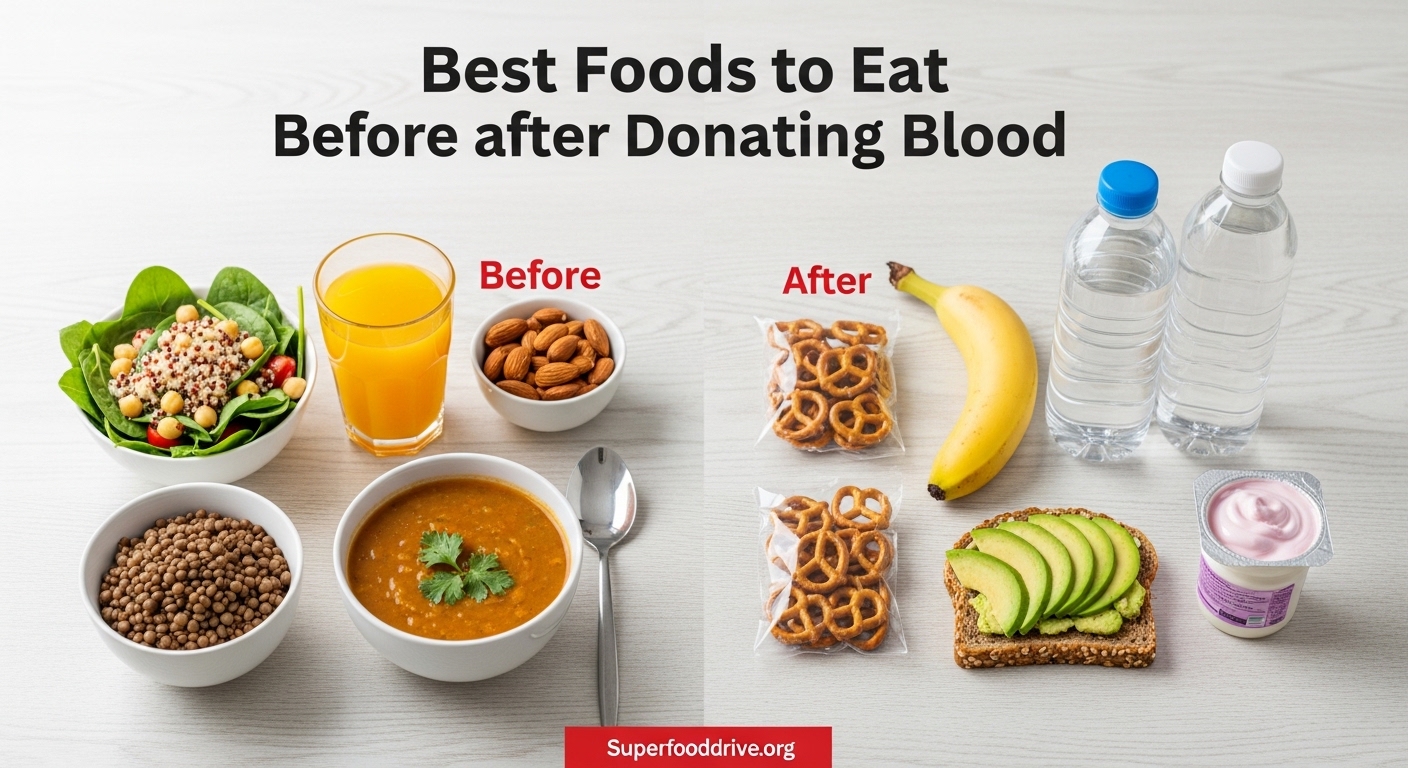
Eating the right foods before and after donating blood can mean the difference between a smooth donation and getting turned away due to low iron. It also affects how quickly you recover afterward.
In this guide, I will share exactly what to eat and drink to maximize your donation success. These recommendations come from medical guidelines, nutrition research, and conversations with regular donors who have learned what works through experience.
Key Takeaway: Focus on iron-rich foods paired with vitamin C, stay well-hydrated, avoid fatty foods and caffeine before donation, and prioritize protein and fluids afterward.
Table of Contents
Why Nutrition Matters for Blood Donation
When you donate blood, you lose approximately one pint of blood along with iron-rich red blood cells. Your hemoglobin levels must meet minimum requirements to donate safely. Low iron is the most common reason donors get deferred.
Proper nutrition before donation helps maintain adequate hemoglobin levels and prevents side effects like dizziness and fatigue. After donation, your body needs nutrients to rebuild red blood cells and restore fluid balance.
According to the American Red Cross, your body replaces lost plasma within 24 hours. Red blood cells take longer to regenerate, typically 4 to 6 weeks for complete replenishment. The right foods can support this recovery process.
Iron-Rich Foods to Eat Before Donating Blood
Iron is essential for producing hemoglobin, the protein that carries oxygen in your blood. There are two types of dietary iron, and understanding both helps you plan better meals.
Heme Iron Sources (Best Absorption)
Heme iron comes from animal sources and your body absorbs it most efficiently. Aim to include these foods in meals 24 to 48 hours before donation:
- Beef, lamb, and pork
- Chicken and turkey (dark meat has more iron)
- Salmon, tuna, and other fatty fish
- Shellfish like oysters, clams, and shrimp
- Liver and other organ meats
A 3-ounce serving of beef liver provides about 5 milligrams of iron. The same portion of cooked beef delivers roughly 2 to 3 milligrams.
Non-Heme Iron Sources (Plant-Based)
Non-heme iron comes from plant sources. Your body absorbs less of it, but these foods are still valuable, especially for vegetarians and vegans:
- Beans, lentils, and chickpeas
- Tofu and tempeh
- Spinach and other dark leafy greens
- Fortified breakfast cereals
- Pumpkin seeds and sesame seeds
- Quinoa and brown rice
- Dark chocolate (70% cacao or higher)
Cooked spinach contains about 3 milligrams of iron per half-cup serving. A cup of cooked lentils provides approximately 6.6 milligrams.
Vitamin C Foods to Enhance Iron Absorption
Vitamin C significantly improves iron absorption, especially from non-heme sources. Combining iron-rich foods with vitamin C sources can double or triple the amount of iron your body absorbs.
Excellent vitamin C sources to pair with your iron-rich meals include:
- Citrus fruits like oranges, grapefruit, and tangerines
- Strawberries, kiwi, and papaya
- Bell peppers (especially red)
- Broccoli and Brussels sprouts
- Tomatoes and tomato juice
- Potatoes with skin
A simple example would be eating a spinach salad topped with strawberries and bell peppers, or having orange juice with your morning oatmeal fortified with iron.
Hydration Guidelines for Blood Donation
Proper hydration is crucial for blood donation. Being well-hydrated makes your veins easier to locate and helps maintain blood pressure during the process.
Follow these specific hydration guidelines:
- 24 hours before: Drink at least 64 ounces of water throughout the day
- Day of donation: Drink an additional 16 ounces of water or juice before your appointment
- After donation: Consume 32 ounces of fluids within the first 4 hours
- Next 24 hours: Continue drinking more than your normal amount
Water is the best choice. Avoid alcohol for 24 hours before and after donation, as it dehydrates you and can affect blood pressure.
Foods to Avoid Before Donating Blood
Some foods and beverages can interfere with iron absorption or affect donation eligibility. Plan to avoid these starting 24 hours before your appointment.
Fatty Foods
High-fat foods can make your blood plasma appear milky or lipemic, which may disqualify your donation. Avoid fried foods, ice cream, cheeseburgers, and heavy creamy sauces before donating.
Caffeine and Iron Blockers
Coffee, tea, and some sodas contain compounds that inhibit iron absorption. Avoid these beverages within 2 hours before and after eating iron-rich meals. Also limit:
- Red wine (tannins block absorption)
- Calcium-rich foods around the same time as iron sources
- High-fiber bran cereals immediately before donation
Many regular donors report that switching to herbal tea or water on donation day helps them feel better throughout the process.
When to Eat Before Your Donation Appointment
Timing your meals correctly helps prevent lightheadedness and keeps your energy stable. Follow these guidelines based on your appointment time:
Morning Appointments (Before Noon)
Eat a substantial breakfast 2 to 3 hours before donation. Include complex carbohydrates, lean protein, and avoid high-fat items. Good options include oatmeal with fruit, eggs with toast, or yogurt with granola.
Never donate on an empty stomach, even for early morning appointments. Your blood sugar needs to remain stable.
Afternoon and Evening Appointments
Eat your normal breakfast and lunch. Have a light snack like crackers with peanut butter or an apple with cheese about 1 hour before donation. Avoid heavy meals immediately beforehand.
Many donors recommend bringing a small snack to eat immediately after donation while you rest.
Sample Meal Plan for Donation Day
Here is a practical meal plan that incorporates all the nutritional recommendations for donation day:
Breakfast Options (2-3 Hours Before)
- Scrambled eggs with spinach and bell peppers, whole grain toast, and orange juice
- Oatmeal topped with strawberries and pumpkin seeds, plus a glass of water
- Greek yogurt with fortified cereal and sliced kiwi
- Whole grain toast with almond butter and banana slices
Light Snack (1 Hour Before)
- Whole grain crackers with peanut butter
- Apple slices with a small handful of nuts
- Granola bar and water
What to Bring
Pack a small snack for immediately after donating. Good choices include crackers, pretzels, or a piece of fruit. Most donation centers provide snacks, but having your own ensures you have something you tolerate well.
What to Eat After Donating Blood
Post-donation nutrition focuses on replenishing fluids, iron, and protein. Your body needs these nutrients to rebuild red blood cells and restore energy levels.
Immediate Post-Donation (First 4 Hours)
Enjoy the snacks provided at the donation center, typically crackers, cookies, or pretzels. Drink the juice or water they offer. Then continue with these options:
- Protein-rich foods like eggs, chicken, or beans
- Iron-fortified foods paired with vitamin C
- Electrolyte-containing beverages
- Complex carbohydrates for sustained energy
Meals for the Next 24 Hours
Focus on nutrient-dense meals. Many donors make a tradition of going out for a steak dinner or hearty meal after donation. Good options include:
- Grilled salmon with roasted vegetables and quinoa
- Lean beef stir-fry with broccoli and bell peppers over brown rice
- Lentil soup with a side of whole grain bread
- Chicken breast with sweet potato and steamed greens
Continue drinking extra fluids throughout the day and avoid alcohol for at least 24 hours.
How Long Does Blood Replenishment Take?
Understanding the timeline helps you plan future donations and know when you will feel fully recovered.
Your body works quickly to replace what was lost:
- Plasma: Replaced within 24 hours
- Platelets: Replaced within 72 hours
- Red blood cells: 4 to 6 weeks for full replenishment
Whole blood donors must wait 56 days between donations. Platelet donors can give more frequently, sometimes every 7 days up to 24 times per year.
If you feel unusually tired or weak for more than a day after donation, consult your healthcare provider about checking your iron levels.
Tips for Frequent Blood Donors
Regular donors face a higher risk of iron deficiency because they lose iron more frequently. If you donate every 8 weeks, these strategies become even more important:
- Take a multivitamin with iron daily, especially if you are a woman of childbearing age
- Get your ferritin levels checked periodically if you donate regularly
- Focus on heme iron sources in the week leading up to donation
- Consider iron supplementation under medical supervision if levels are low
- Track your donation dates and plan iron-rich meals accordingly
Research shows that donors who take 18 to 38 milligrams of elemental iron daily can replenish their iron stores faster and continue donating regularly without deferral.
Frequently Asked Questions About Blood Donation Nutrition
What is the best thing to eat before and after giving blood?
Before donation, eat iron-rich foods like beef, chicken, beans, or leafy greens paired with vitamin C sources such as citrus or bell peppers. Avoid fatty foods and caffeine. After donation, focus on protein, iron, and extra fluids. Good choices include grilled meat or fish, beans, and plenty of water or electrolyte drinks.
What should I eat for breakfast before donating blood?
Eat a breakfast containing complex carbohydrates, lean protein, and iron-rich foods 2 to 3 hours before donation. Good options include scrambled eggs with spinach and orange juice, oatmeal with strawberries and pumpkin seeds, or Greek yogurt with fortified cereal and kiwi. Avoid high-fat items like bacon or fried foods.
Can I drink coffee before donating blood?
You can drink coffee, but avoid it within 2 hours before and after eating iron-rich foods. Caffeine and tannins in coffee inhibit iron absorption. Many donors switch to water or herbal tea on donation day to maximize their iron levels and prevent lightheadedness.
How long does it take to replenish blood after donation?
Plasma replenishes within 24 hours, platelets within 72 hours, and red blood cells take 4 to 6 weeks for full recovery. You can donate whole blood again after 56 days. Regular donors should monitor their iron levels and consider supplementation to maintain eligibility.
Can I eat eggs before donating blood?
Yes, eggs are an excellent pre-donation food. They provide protein and heme iron. Pair them with vitamin C sources like orange juice, tomatoes, or bell peppers to enhance iron absorption. Avoid eating eggs with coffee or tea, as these beverages can block iron uptake.
What foods should I avoid 24 hours before donating blood?
Avoid fatty foods like fried items, cheeseburgers, and ice cream, as they can make your blood plasma appear lipemic. Skip alcohol for 24 hours. Limit caffeine and avoid it around iron-rich meals. Also avoid aspirin if you are donating platelets.
Final Thoughts on Blood Donation Nutrition
Following the right nutrition plan before and after donating blood helps ensure a successful donation and faster recovery. Focus on iron-rich foods paired with vitamin C, stay well-hydrated with specific amounts, and avoid fatty foods and caffeine before your appointment.
By eating the best foods to eat before and after donating blood, you can avoid deferral due to low iron, minimize side effects, and help your body replenish what was lost. Regular donors should pay extra attention to maintaining iron stores through diet and appropriate supplementation.
Your donation saves lives. A little planning with your meals makes the experience better for everyone involved.