
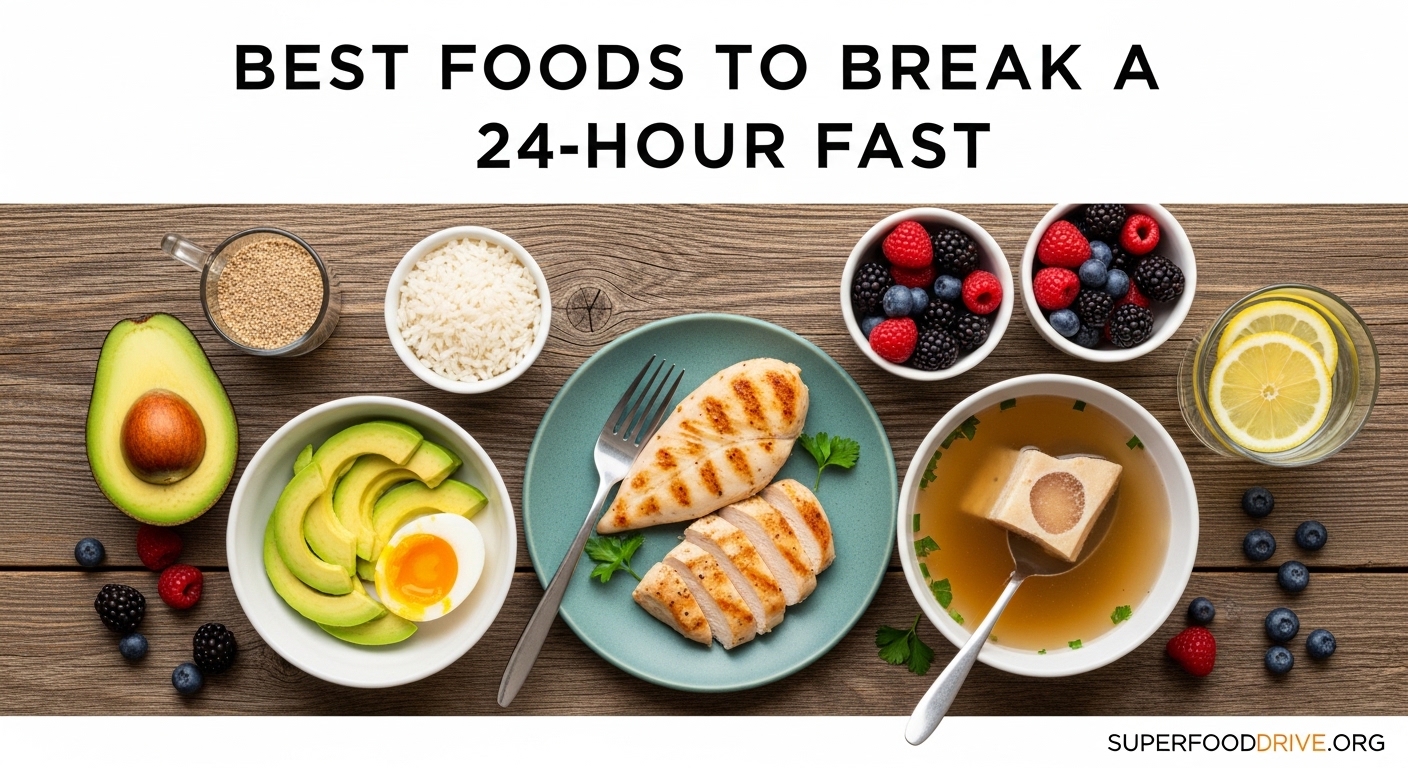
Breaking a 24-hour fast requires more care than most people realize. I learned this the hard way after my first extended fast when I ate a heavy meal immediately and spent the next two hours dealing with nausea and stomach cramps. The best foods to break a 24-hour fast are gentle, easy-to-digest options that help your digestive system ease back into processing food without overwhelming it.
After 24 hours without food, your digestive enzymes, stomach acid production, and gut motility have slowed down significantly. Jumping straight into a normal meal can trigger what is called the gastrocolic reflex too aggressively, causing discomfort, bloating, and even diarrhea. This guide will show you exactly what to eat, what to avoid, and how to transition back to regular eating safely.
Whether you are practicing intermittent fasting, completing a religious fast, or fasting for health reasons, these recommendations will help you break your fast properly and feel your best.
Table of Contents
How Fasting Affects Your Digestive System
Your digestive system does not simply pause when you stop eating. It enters a rest and repair mode that affects multiple processes. Understanding these changes explains why reintroducing food requires a gradual approach.
The Gastrocolic Reflex and Why It Matters
The gastrocolic reflex is a normal response where your colon contracts when food enters your stomach. After fasting, this reflex can become overactive. Eating too much or the wrong foods triggers intense contractions that cause cramping, urgency, and discomfort. Starting with small portions of gentle foods allows this reflex to reactivate gradually rather than suddenly.
Digestive Enzyme Production Slows Down
Your pancreas and stomach reduce enzyme and acid production during extended fasting. This is completely normal and actually gives your digestive organs a much-needed break. However, it means that heavy meals with complex fats and proteins are harder to process immediately after fasting. Your body needs time to ramp production back up.
Gut Bacteria Changes During Fasting
The balance of bacteria in your gut shifts during a 24-hour fast. Beneficial bacteria that thrive on fiber may decrease slightly, while other populations adapt to the fasting state. Reintroducing food with probiotic options like yogurt helps restore healthy bacterial balance quickly and supports overall gut health.
Best Foods to Break a 24-Hour Fast
The ideal foods to break a fast share common characteristics. They are easy to digest, contain moderate amounts of protein or healthy carbohydrates, provide hydration, and are gentle on the stomach. Here are the top options that meet these criteria.
1. Bone Broth
Bone broth tops the list for good reason. It provides electrolytes like sodium, potassium, and magnesium that your body may have depleted during fasting. The warm liquid is soothing to the stomach and requires almost no digestive effort. I personally start every extended fast break with one cup of bone broth and wait 20 minutes before eating solid food.
The collagen and amino acids in bone broth also support gut lining health, which is beneficial after the rest period of fasting. Choose homemade or high-quality store-bought options without added MSG or excessive salt.
2. Watermelon
Watermelon is approximately 92 percent water, making it incredibly hydrating after a fast. It contains natural sugars that provide quick energy without spiking blood sugar dramatically. The soft texture requires minimal chewing and digestion.
Start with one cup of cubed watermelon. The fruit also provides lycopene, vitamin C, and small amounts of potassium. Other melons like cantaloupe and honeydew work similarly well if you prefer variety.
3. Steamed Vegetables
Cooked vegetables are significantly easier to digest than raw ones after fasting. Steaming until soft breaks down fiber and cell walls, making nutrients more accessible. Zucchini, carrots, spinach, and squash are excellent starter vegetables.
Avoid cruciferous vegetables like broccoli and cauliflower initially, as they can cause gas and bloating even when cooked. Start with half a cup of steamed vegetables and see how your body responds before eating more.
4. Bananas
Bananas are the classic bland food for a reason. They are easy to digest, provide potassium that helps with electrolyte balance, and contain natural sugars for energy. The soft texture makes them ideal for breaking a fast gently.
Choose ripe bananas with some brown spots for the easiest digestion. A single medium banana makes a perfect first solid food after your initial hydrating beverage. You can also mash it for even easier consumption.
5. Eggs
Eggs provide complete protein with all essential amino acids, making them an excellent choice once you have had your initial gentle food. They are highly bioavailable and easy to digest when cooked simply. Scrambled or poached eggs are gentler than fried.
Start with one or two eggs rather than a large serving. The protein helps stabilize blood sugar after the initial reintroduction of food. Many experienced fasters consider eggs the perfect bridge food between very gentle options and full meals.
6. Yogurt or Kefir
Fermented dairy products provide beneficial probiotics that help restore gut bacteria balance after fasting. They also supply protein and calcium in an easily digestible form. Choose plain, unsweetened varieties without artificial additives.
If you are lactose intolerant, look for long-fermented yogurt or lactose-free kefir options. The fermentation process reduces lactose content significantly. A half-cup serving is plenty to start with when breaking your fast.
7. Avocado
Avocado provides healthy monounsaturated fats that are relatively easy to digest compared to animal fats or oils. The creamy texture is gentle on the stomach, and the potassium content supports electrolyte replenishment.
However, avocado contains fiber and fat, so it should come after you have successfully tolerated gentler foods like broth and fruit. Start with a quarter or half avocado rather than a whole one.
8. Lean Proteins
Once your initial foods have gone down well, lean proteins like fish, chicken breast, or turkey can provide satiety and sustained energy. These should be prepared simply without heavy oils, breading, or rich sauces.
Baked or poached fish is particularly gentle and provides omega-3 fatty acids that support overall health. A three to four ounce serving is appropriate for your first protein serving after fasting.
9. Smoothies
Blended fruit and vegetable smoothies can work well when breaking a fast, provided they are not overloaded with ingredients. Keep it simple with just two or three components like banana, spinach, and water or coconut water.
Avoid adding protein powder, nut butters, or large amounts of fruit initially. These increase the digestive load significantly. A simple green smoothie is hydrating and provides nutrients in an easily absorbed form.
10. Soups
Well-cooked vegetable soups or simple chicken soup make excellent breaking-fast meals. The liquid base provides hydration while the cooked vegetables and protein offer substance. Blended soups are especially gentle.
Homemade soup allows you to control the sodium and avoid preservatives. Start with one cup and assess how you feel before consuming more. Avoid cream-based soups initially as the dairy fat can be harder to digest.
Foods to Avoid When Breaking a Fast
Knowing what not to eat is just as important as knowing the best foods to break a 24-hour fast. Certain foods can trigger digestive distress, blood sugar spikes, or other unpleasant symptoms when introduced too quickly after fasting.
High-Fat and Fried Foods
Fried foods, heavy creams, and large amounts of oil require significant bile production and digestive enzyme activity. Your body is not prepared for this immediately after fasting. Eating high-fat foods too soon commonly causes nausea, stomach pain, and diarrhea.
Avoid bacon, fried eggs, french fries, pizza, burgers, and creamy dishes for your first meal. Wait at least two to three hours after breaking your fast before consuming higher-fat foods.
High-Fiber Raw Vegetables
Raw cruciferous vegetables like broccoli, cauliflower, cabbage, and kale are excellent foods normally. After fasting, their high fiber content can cause significant bloating, gas, and cramping. The same applies to large salads with raw greens.
Save raw vegetables for later meals once your digestive system has fully reactivated. If you want vegetables in your first meal, ensure they are well-cooked and soft.
Processed Sugars and Refined Carbohydrates
Donuts, candy, white bread, pastries, and sugary cereals cause rapid blood sugar spikes when eaten after fasting. Your insulin sensitivity is heightened after 24 hours without food, and a sugar rush can lead to jitters, headaches, and subsequent crashes.
These empty calories also undo some of the metabolic benefits of fasting. Choose natural sugars from fruit instead, which come with fiber, water, and nutrients that moderate absorption.
Alcohol
Drinking alcohol after a 24-hour fast is particularly problematic. Your body absorbs alcohol much faster on an empty stomach, leading to quicker intoxication. Your liver is also in a different metabolic state after fasting.
Additionally, alcohol dehydrates you further when you may already need rehydration. It can also irritate the stomach lining that has been resting. Wait until you have eaten normally for several hours before consuming any alcohol.
Caffeine on an Empty Stomach
Coffee and caffeinated tea can trigger acid reflux and stomach upset when consumed immediately after fasting. The caffeine stimulates acid production in a stomach that has been resting. This often causes heartburn, jitters, and anxiety.
If you drink coffee regularly, have it after you have eaten some food rather than as your first intake. Consider starting with half-caff or decaf options, or try herbal tea instead.
Spicy Foods
Foods containing capsaicin and other spicy compounds can irritate a resting digestive system. What is normally tolerable spice level may cause burning, cramping, or discomfort after fasting. This includes hot peppers, hot sauce, and heavily spiced dishes.
Keep your first meal bland and gradually reintroduce normal spice levels over subsequent meals. Your tolerance will return to normal within a day.
Refeeding Syndrome: A Serious Warning
While rare after just 24 hours of fasting, refeeding syndrome is a potentially dangerous condition that can occur when food is reintroduced too quickly after extended fasting. It involves dangerous shifts in fluids and electrolytes that affect heart function.
Symptoms include confusion, weakness, difficulty breathing, and heart palpitations. The risk is highest for people who are malnourished, have eating disorders, or have fasted for multiple days. Starting with small portions of gentle foods significantly reduces this risk.
If you experience severe symptoms after breaking a fast, seek medical attention immediately.
How to Break a 24-Hour Fast: Step-by-Step
Breaking your fast properly involves more than just choosing the right foods. The process and timing matter significantly. Follow this step-by-step approach for the best results and minimal discomfort.
Step 1: Start with Hydration
Before eating any food, drink 8 to 16 ounces of water. This rehydrates your system and prepares your digestive tract for food intake. Room temperature or slightly warm water is gentler than ice-cold water.
You can also choose herbal tea or bone broth as your hydrating starter. These provide additional electrolytes and nutrients while being gentle on the stomach.
Step 2: Wait 15-20 Minutes
After your initial hydration, wait at least 15 to 20 minutes before eating solid food. This allows your stomach to begin waking up and preparing for digestion. It also gives you time to assess your true hunger level.
Use this time to prepare your first small portion of food mindfully. Avoid rushing or eating while distracted.
Step 3: Eat Your First Small Portion
Choose one of the recommended gentle foods and eat a small portion of 200 to 300 calories maximum. This could be one cup of bone broth, one cup of watermelon, or one banana. Eat slowly and chew thoroughly.
Pay attention to how your body responds. If you feel any discomfort, stop eating and give yourself more time.
Step 4: Wait 30-60 Minutes
After your first small portion, wait 30 to 60 minutes before eating more. This gives your digestive system time to process the initial food and signal whether it is ready for more. Watch for signs of digestive distress.
Signs that your body is handling food well include normal stomach sensations, steady energy, and absence of bloating or cramping.
Step 5: Continue with a Balanced Meal
If your initial food went down well, proceed with a balanced meal containing protein, vegetables, and complex carbohydrates. Keep portions moderate, about 75 percent of your normal meal size.
Good options include grilled chicken with steamed vegetables, eggs with cooked spinach, or fish with squash. Continue avoiding high-fat, highly processed, or very spicy foods for this meal.
Step 6: Resume Normal Eating
After your first balanced meal, you can typically resume normal eating patterns for subsequent meals that day. Your digestive system will be fully reactivated within a few hours of breaking your fast properly.
Some people prefer to keep their eating window lighter on the day they break a fast, gradually increasing to normal intake over 24 hours.
Hydration and Electrolyte Considerations
Proper hydration is essential when breaking a fast. During 24 hours without food, you continue to lose fluids through breathing, skin evaporation, and urine output. Many fasters are mildly dehydrated when they break their fast.
Best Drinks to Break Your Fast
Plain water is always appropriate, but several other beverages offer additional benefits. Bone broth provides electrolytes and protein. Coconut water offers natural electrolytes including potassium. Herbal teas like ginger or chamomile are soothing to the stomach.
Diluted apple cider vinegar in water can help stimulate digestion gently. Some people enjoy lemon water for the vitamin C and mild digestive support.
Signs of Electrolyte Imbalance
Electrolyte imbalances can cause headaches, dizziness, muscle cramps, fatigue, and heart palpitations. These symptoms often appear when breaking a fast if electrolytes have not been maintained. Sodium, potassium, and magnesium are the most commonly affected.
If you experience these symptoms, prioritize electrolyte-rich fluids and foods. Add a pinch of sea salt to your water, eat potassium-rich foods like bananas or avocado, and consider a magnesium supplement if needed.
Supplement Timing After Fasting
Take supplements with or after your first solid food rather than on an empty stomach. Some supplements like magnesium or vitamin C can cause digestive upset when taken without food. Fat-soluble vitamins A, D, E, and K should be taken with a meal containing some healthy fat.
Probiotics can be particularly beneficial when taken after fasting, as they help restore and support gut bacteria balance. Take them with your first or second meal for best results.
Frequently Asked Questions
What to eat after a 24 hour food fast?
The best foods to break a 24-hour fast include bone broth, watermelon, steamed vegetables, bananas, eggs, yogurt, avocado, and lean proteins. Start with small portions of gentle, hydrating foods and gradually transition to more substantial meals over 1-2 hours.
How can I break a 24 hour fast?
Break a 24-hour fast by first drinking water or bone broth, waiting 15-20 minutes, then eating a small 200-300 calorie portion of easy-to-digest food like fruit or broth. Wait 30-60 minutes before eating a balanced meal with protein and cooked vegetables.
What not to do after a 24 hour fast?
Avoid eating large portions immediately, consuming high-fat or fried foods, drinking alcohol, eating raw cruciferous vegetables, or having caffeine on an empty stomach. These can cause nausea, bloating, digestive distress, and blood sugar spikes.
Can I eat eggs after fasting?
Yes, eggs are an excellent food to break a fast after you have consumed initial gentle options like broth or fruit. They provide complete protein and are highly bioavailable. Start with one or two eggs prepared simply, such as scrambled or poached rather than fried.
How long should I wait to eat normally after breaking a fast?
Wait 1-2 hours after breaking a fast before eating a full normal meal. Start with hydration, then a small 200-300 calorie gentle food, wait 30-60 minutes, then proceed with a balanced meal at 75% of your normal portion size. Resume fully normal eating by your next meal.
Conclusion
Choosing the best foods to break a 24-hour fast makes the difference between a smooth transition back to eating and hours of digestive discomfort. The key principles are simple: start small, choose gentle hydrating foods, wait between portions, and avoid high-fat, high-fiber, and processed options initially.
Remember that your digestive system needs time to reactivate after 24 hours of rest. Treat it gently, and it will serve you well. With these guidelines, you can confidently complete your fast and enjoy the full benefits of your fasting practice 2026 and beyond.