
I used to dread dinner time. Every meal felt like a gamble. Would this be the night heartburn kept me awake until 3 AM?
If you are reading this, you probably know that feeling. Acid reflux and GERD affect millions of people, and food plays a massive role in managing symptoms. The right foods for acid reflux and GERD can mean the difference between peaceful sleep and a night of discomfort.
This guide covers everything you need to know about eating for acid reflux relief. We will explore which foods calm your stomach, what triggers to avoid, and practical tips that actually work.
Table of Contents
What Is GERD and How Food Affects It
GERD stands for gastroesophageal reflux disease. It is a chronic condition where stomach acid flows backward into your esophagus. That burning sensation in your chest? That is acid irritating the lining of your food pipe.
The lower esophageal sphincter acts like a valve between your stomach and esophagus. When this valve weakens or relaxes at the wrong time, acid escapes upward. Certain foods either strengthen this valve or cause it to relax.
The pH scale measures how acidic or alkaline something is. Stomach acid has a pH around 1 to 3, which is highly acidic. Alkaline foods with higher pH values can help neutralize some of that acid.
High-fat foods slow down digestion and keep your stomach full longer. This increases pressure and gives acid more opportunities to escape. Low-fat options move through faster, reducing that risk.
Foods for Acid Reflux and GERD That Actually Help
After years of trial and error, I have found that certain categories of foods consistently reduce my symptoms. Here are the foods that actually help prevent acid reflux.
High-Fiber Foods
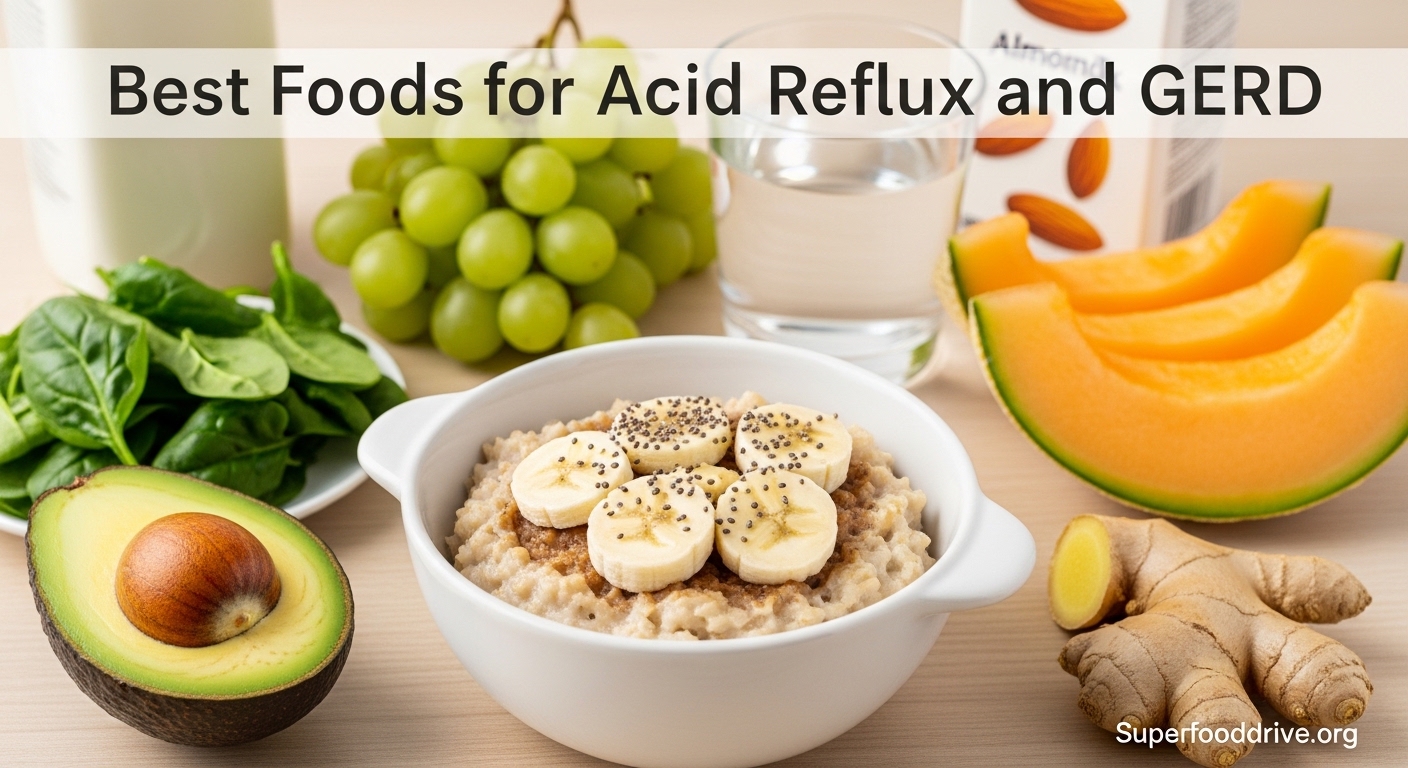
Fiber absorbs acid in your stomach and keeps digestion moving smoothly. Oatmeal became my breakfast staple because it coats the stomach and reduces irritation. Whole grain bread, brown rice, and quinoa work similarly.
Root vegetables like sweet potatoes, carrots, and beets are gentle on the stomach. They provide bulk without causing gas or pressure. Green vegetables including broccoli, green beans, and asparagus add fiber while remaining low in acid.
Alkaline Foods
Alkaline foods help neutralize stomach acid through their higher pH levels. Bananas are my go-to snack because they are easy to digest and naturally alkaline. Melons including cantaloupe, honeydew, and watermelon share this property.
Fennel is particularly effective for reducing stomach acid. I chew on fennel seeds after meals or add sliced fennel to salads. Cauliflower and nuts like almonds and cashews also provide alkaline benefits.
Lean Proteins
Fatty meats trigger reflux, but lean proteins do not. Skinless chicken breast, turkey, and fish are safe choices. Egg whites provide protein without the fat found in yolks.
I prepare these by grilling, baking, or poaching instead of frying. A simple baked chicken breast with steamed vegetables rarely causes me issues. Fish like salmon and trout add omega-3 fatty acids that reduce inflammation.
Watery Foods
Foods with high water content dilute stomach acid. Cucumber, celery, and lettuce are excellent choices. Soups and broths provide hydration while being gentle on the stomach.
Herbal additions like ginger and parsley offer extra benefits. Ginger has natural anti-inflammatory properties that soothe the digestive tract. Fresh parsley can help reduce gas and bloating.
Foods That Trigger Acid Reflux and Heartburn
Knowing what to avoid is just as important as knowing what to eat. These foods consistently cause problems for GERD sufferers.
High-Fat and Fried Foods
French fries, fried chicken, and greasy burgers are major triggers. The fat content slows stomach emptying and relaxes the lower esophageal sphincter. Even healthy fats like avocado can cause issues in large amounts.
I learned the hard way that pizza is a triple threat. The tomato sauce, cheese, and greasy crust combine for maximum discomfort. Save these foods for rare occasions or avoid them entirely.
Acidic Foods and Citrus
Oranges, lemons, grapefruits, and their juices are highly acidic. Tomatoes and tomato-based sauces pose similar problems. These foods directly irritate the esophageal lining.
Vinegar-based dressings and pickled foods also fall into this category. I switched to olive oil and herb dressings instead of balsamic or red wine vinegar options.
Caffeine and Chocolate
Coffee, tea, and chocolate all contain compounds that relax the esophageal sphincter. Caffeine specifically increases acid production in your stomach. Dark chocolate causes more problems than milk chocolate due to higher caffeine content.
If you cannot quit coffee entirely, try cold brew which is less acidic. Limit yourself to one small cup in the morning rather than drinking throughout the day.
Alcohol and Carbonated Drinks
Alcohol relaxes the lower esophageal sphincter and increases stomach acid. Wine and beer are particularly problematic. Carbonated beverages create gas pressure that pushes acid upward.
Sparkling water might seem healthy, but the bubbles cause bloating and reflux. Stick to still water or herbal teas instead.
Onions, Garlic, and Spicy Foods
Onions and garlic relax the esophageal sphincter in many people. Raw onions are worse than cooked ones. Spicy foods do not directly cause reflux but they irritate an already inflamed esophagus.
I use herbs like basil, oregano, and thyme for flavor instead of garlic and onion powder. Turmeric adds warmth without the burn of chili peppers.
What to Drink for Acid Reflux Relief
Beverages matter just as much as food. Here is what actually helps versus what makes symptoms worse.
Safe Beverage Options
Water is your best friend for acid reflux. Drink it throughout the day to dilute stomach acid. Room temperature water is gentler than ice cold water which can trigger esophageal spasms.
Ginger tea reduces inflammation and nausea. Chamomile tea calms the digestive system and reduces stress. Licorice root tea may help increase mucus production that protects the esophagus.
Almond milk and other plant-based milks are less acidic than dairy milk. They provide a soothing coating effect for your throat and esophagus.
Beverages to Limit or Avoid
Coffee and black tea are highly acidic and contain caffeine. Orange juice and other citrus drinks directly irritate the esophagus. Soda combines carbonation, caffeine, and often citrus flavors for maximum reflux potential.
Alcohol in any form relaxes your esophageal sphincter. Wine and beer are particularly acidic. Even mixed drinks with soda or juice combine multiple triggers.
Alkaline Water Benefits
Alkaline water has a higher pH than regular tap water. Some studies suggest it may help neutralize stomach acid. I drink it occasionally though regular water works well for daily hydration.
Meal Timing and Portion Strategies
How and when you eat matters almost as much as what you eat. These timing strategies have helped me tremendously.
The Three-Hour Rule
Stop eating at least three hours before bedtime. Lying down with a full stomach gives gravity a chance to work against you. Acid flows upward more easily when you are horizontal.
I eat dinner around 6 PM if I plan to sleep by 10 PM. This simple change eliminated my nighttime heartburn almost completely.
Smaller, More Frequent Meals
Large meals stretch your stomach and increase upward pressure. Switch to five or six small meals instead of three large ones. Your stomach will empty faster and produce less acid.
Portion control takes practice. Use smaller plates and eat slowly. Stop when you feel satisfied, not stuffed.
Eating Speed and Mindfulness
Eating quickly leads to swallowing air which causes bloating. Bloating pushes stomach contents upward. Chew thoroughly and put your fork down between bites.
Stress during meals also triggers acid production. Eat in a calm environment without work distractions or screens.
Cooking Methods That Reduce Symptoms
The way you prepare food changes how it affects your reflux. Some cooking methods add fat and irritation while others keep meals gentle.
Recommended Cooking Techniques
Grilling and baking allow fat to drip away from meat. Steaming vegetables preserves nutrients without adding oil. Poaching fish and eggs keeps proteins tender without frying.
I use a slow cooker for tender, flavorful meals without added fat. Soups and stews made with lean meats and vegetables are naturally reflux-friendly.
Methods to Avoid
Deep frying adds massive amounts of fat to otherwise healthy foods. Pan frying with lots of oil creates similar problems. Butter and cream-based sauces add unnecessary fat and calories.
If you must use oil, choose olive oil and use it sparingly. A light spray coating works better than pouring oil into the pan.
Lifestyle Changes That Support Your GERD Diet
Diet works best when combined with other healthy habits. These lifestyle factors significantly impact acid reflux frequency.
Weight Management
Excess weight, especially around the abdomen, increases pressure on your stomach. Even losing 5 to 10 percent of body weight can reduce reflux symptoms. Focus on the GERD-friendly foods in this guide for sustainable weight loss.
Sleep Position
Elevate the head of your bed by 6 to 8 inches. Use blocks under the bed frame or a wedge pillow. Extra pillows alone do not work because they bend your waist, increasing pressure.
Sleep on your left side rather than your right. The shape of your stomach makes this position less likely to allow acid flow.
Clothing Choices
Tight belts, waistbands, and shapewear squeeze your stomach. This pressure forces acid upward. Choose loose, comfortable clothing especially around meal times.
Stress Reduction
Stress increases stomach acid production and makes you more sensitive to pain. Deep breathing, meditation, and regular exercise help manage stress levels. Even a short walk after meals aids digestion and reduces anxiety.
Frequently Asked Questions
What foods can calm down acid reflux?
Foods that calm acid reflux include oatmeal, bananas, melons, ginger, lean proteins like chicken and fish, and green vegetables. These foods are either alkaline, high in fiber, or low in fat which helps reduce stomach acid and prevent irritation. Eating small portions and avoiding triggers also helps calm symptoms quickly.
What is the one fruit that fixes acid reflux?
Bananas are often considered the best fruit for acid reflux because they are naturally alkaline and easy to digest. They contain pectin which helps food move through the digestive tract smoothly. Melons including cantaloupe and honeydew are also excellent choices with similar benefits.
What drink will calm acid reflux?
Ginger tea, chamomile tea, and plain water are the best drinks for calming acid reflux. Ginger tea has natural anti-inflammatory properties. Chamomile reduces stress and soothes the digestive tract. Room temperature water helps dilute stomach acid without triggering esophageal spasms.
What foods soak up acid in your stomach?
High-fiber foods like oatmeal, brown rice, and whole grain bread absorb excess stomach acid. Root vegetables including sweet potatoes and carrots also help soak up acid while providing gentle bulk. These foods act like sponges, reducing the amount of acid available to flow back up.
Is milk good for acid reflux?
Milk provides temporary relief by coating the esophagus, but it may worsen symptoms long-term. Dairy fat can relax the lower esophageal sphincter and stimulate more acid production. Plant-based milks like almond milk are safer alternatives that provide coating benefits without the fat.
Is yogurt good for acid reflux?
Low-fat or non-fat yogurt can be good for acid reflux due to its probiotics which support digestive health. Choose plain varieties without added sugar or fruit. Full-fat yogurt may trigger symptoms in some people. Greek yogurt is often better tolerated than regular yogurt.
Final Thoughts
Managing acid reflux through diet takes commitment, but the relief is worth it. The right foods for acid reflux and GERD can transform your daily comfort and sleep quality. Start by adding more high-fiber and alkaline foods while removing common triggers.
Remember that everyone responds differently to foods. Keep a food diary to identify your personal triggers and safe foods. What bothers one person might be fine for another.
If symptoms persist despite dietary changes, consult a gastroenterologist. Chronic untreated GERD can lead to serious complications. Medication may be necessary alongside your diet modifications.
Updated for September 2026.