
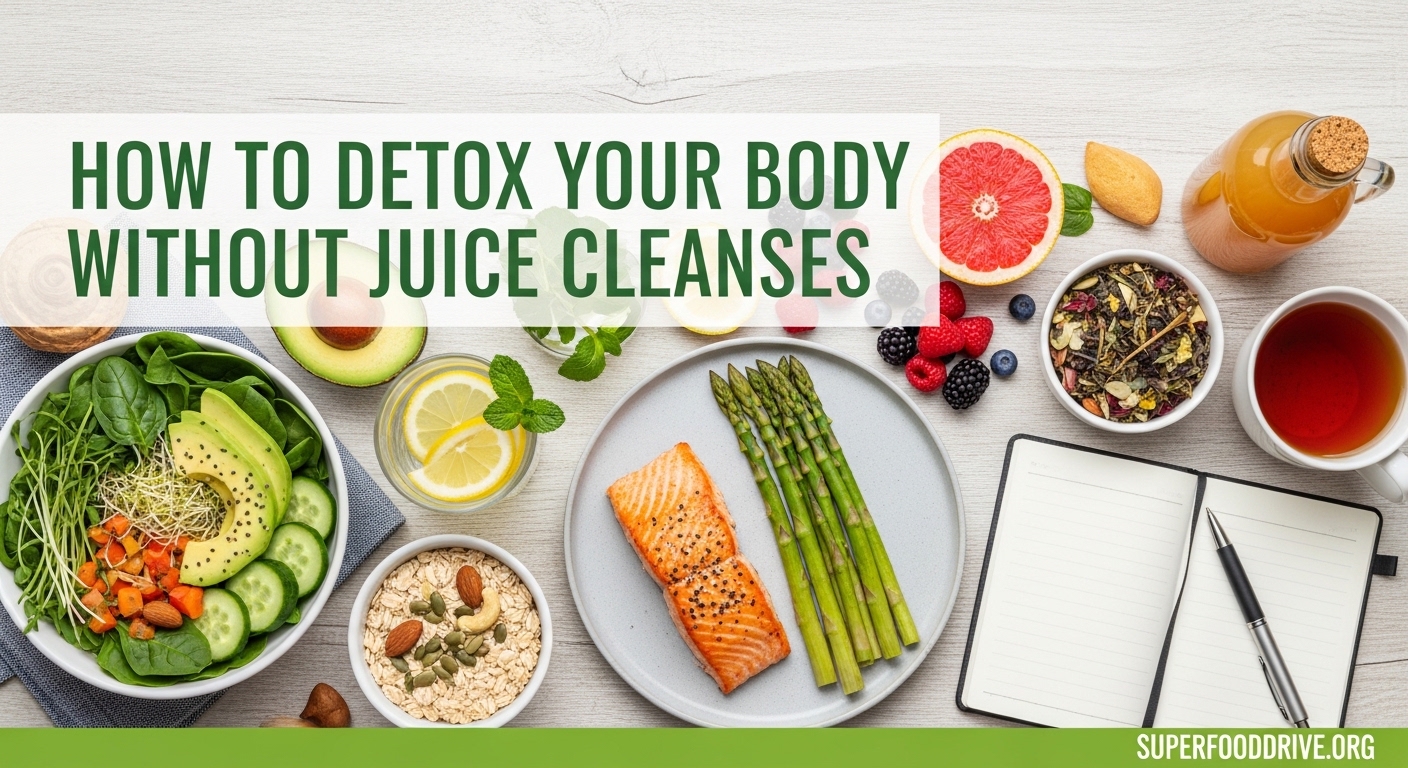
You have probably seen the ads for expensive juice cleanses promising to flush toxins and reset your body. The truth is that your body already has everything it needs to detoxify itself. Learning how to detox your body without juice cleanses means working with your natural systems rather than fighting them with restrictive diets.
I used to think I needed special teas, supplements, or week-long juice fasts to feel clean inside. After researching the science and speaking with health professionals, I discovered that the most effective detox methods are simple, free, and supported by real evidence.
In this guide, I will share proven strategies to support your liver, kidneys, and entire detoxification system using hydration, nutrition, sleep, and movement. No expensive products required.
Table of Contents
- How to Detox Your Body Without Juice Cleanses: Understanding Your Body’s Natural Systems
- Hydration: The Foundation of Natural Detoxification
- Nutrition Strategies to Support Your Body’s Detox Process
- Sleep and the Glymphatic System: Detox Happens at Night
- Physical Activity: Moving Toxins Out
- Additional Natural Detox Methods
- A Simple Daily Routine for Natural Detox Support
- Frequently Asked Questions About Natural Detox
- How to detox without juicing?
- What can I do instead of a juice cleanse?
- What is the fastest way to flush your body of toxins naturally?
- What flushes waste out of the body?
- Does your body really need help detoxing?
- How long does it take to see results from natural detox methods?
- Are detox supplements safe?
- Conclusion: Your Body Already Knows How to Detox
How to Detox Your Body Without Juice Cleanses: Understanding Your Body’s Natural Systems
Your body is a detoxification machine that works around the clock. Understanding how these systems function helps you support them effectively.
Your Liver: The Detoxification Powerhouse
Your liver performs over 500 vital functions, with detoxification at the top of the list. Every drop of blood passes through this organ, where enzymes break down toxins, medications, and metabolic waste into harmless compounds.
The liver produces glutathione, often called the master antioxidant. This compound neutralizes free radicals and binds to heavy metals and toxins for elimination. Without adequate glutathione, toxins accumulate and cause oxidative stress.
Your liver does not need a cleanse. It needs support through proper nutrition, limited alcohol, and consistent hydration.
Kidneys: Your Filtration System
Your kidneys filter approximately 150 quarts of blood daily, removing urea, creatinine, and other metabolic waste products. These bean-shaped organs maintain electrolyte balance and regulate fluid levels while sending toxins to your bladder for excretion.
Each kidney contains about one million nephrons that act as microscopic filters. When you stay properly hydrated, your kidneys work efficiently to flush waste out of the body through urine.
Digestive System, Lungs, and Skin
Your digestive system eliminates solid waste through bowel movements, removing undigested food, bacteria, and toxins that entered through your mouth. Fiber plays a crucial role by binding to toxins and sweeping them out before they can be reabsorbed.
Your lungs expel carbon dioxide and volatile organic compounds every time you exhale. Deep breathing increases this elimination process while oxygenating your blood. Your skin releases small amounts of toxins through sweat, though this pathway is less significant than the liver and kidneys.
Hydration: The Foundation of Natural Detoxification
Water is the medium through which your body transports and eliminates toxins. Without adequate hydration, your kidneys cannot filter effectively and your liver works harder to process concentrated waste.
How Much Water You Actually Need
The National Academies of Sciences recommend approximately 3.7 liters daily for men and 2.7 liters for women from all beverages and food. However, a more personalized approach uses your body weight.
Divide your weight in pounds by two. That number represents the minimum ounces of water you should drink daily. A 160-pound person needs at least 80 ounces, or ten cups of water. Active individuals or those in hot climates need more.
Start your day with 16 to 20 ounces of water before consuming anything else. This rehydrates your body after sleep and kickstarts kidney function first thing in the morning.
Signs You Need More Fluids
Dark yellow urine is the most obvious indicator of dehydration. Your urine should be pale yellow or straw-colored. Other signs include headaches, dry mouth, fatigue, and difficulty concentrating.
Drink water consistently throughout the day rather than chugging large amounts at once. Keep a reusable bottle nearby and sip every 15 to 20 minutes.
Nutrition Strategies to Support Your Body’s Detox Process
Food is medicine for your detoxification systems. The right nutrients provide the building blocks for glutathione production, support liver enzymes, and help eliminate waste efficiently.
Fiber-Rich Foods for Digestive Cleansing
Fiber binds to toxins in your digestive tract and carries them out before they can be reabsorbed into your bloodstream. It also feeds beneficial gut bacteria that support immune function and toxin elimination.
Women should aim for 25 grams of fiber daily, while men need 38 grams. Most people consume less than half this amount. Increase your intake gradually to avoid digestive discomfort.
Excellent fiber sources include lentils and beans, raspberries and blackberries, pears and apples with skin, broccoli and Brussels sprouts, oats and quinoa, chia seeds and flaxseeds.
Antioxidant-Rich Foods That Protect Your Cells
Antioxidants neutralize free radicals, unstable molecules that damage cells and contribute to oxidative stress. Colorful fruits and vegetables provide the widest range of antioxidant compounds.
Blueberries contain anthocyanins that support brain health and reduce inflammation. Leafy greens like spinach and kale provide lutein and vitamin K. Beets offer betalains that support liver function. Turmeric contains curcumin, a powerful anti-inflammatory compound.
Eat a rainbow of produce daily to maximize your antioxidant intake. Aim for at least five servings of fruits and vegetables, with more vegetables than fruits to limit sugar consumption.
Cruciferous Vegetables and Sulfur-Rich Foods
Cruciferous vegetables contain compounds that activate detoxification enzymes in your liver. These vegetables boost glutathione production and help your liver process toxins more efficiently.
Include broccoli, cauliflower, Brussels sprouts, kale, cabbage, and bok choy in your meals several times per week. Garlic and onions provide sulfur compounds that support phase two liver detoxification.
Cilantro has shown potential for binding to heavy metals like mercury and lead. While research continues, adding fresh cilantro to salads and salsas may provide additional detox support.
Foods to Limit or Avoid
Alcohol places significant stress on your liver. When you drink, your liver prioritizes alcohol metabolism over other functions. Regular consumption reduces glutathione levels and promotes fatty liver disease.
Ultra-processed foods contain additives, preservatives, and artificial ingredients that add to your toxic burden. These foods often lack the nutrients your liver needs for optimal function. Limit packaged snacks, fast food, and sugary beverages.
Added sugars and refined carbohydrates contribute to inflammation and fatty liver. Focus on whole foods in their natural state rather than products with lengthy ingredient lists.
Sleep and the Glymphatic System: Detox Happens at Night
Quality sleep is essential for brain detoxification. Your brain does not have lymphatic vessels like the rest of your body. Instead, it relies on the glymphatic system to clear waste.
How Sleep Clears Toxic Proteins from Your Brain
During sleep, your brain cells shrink by up to sixty percent. This creates space for cerebrospinal fluid to flow through and wash away toxic proteins including beta-amyloid, a substance linked to Alzheimer’s disease.
The glymphatic system operates primarily during deep sleep stages. Shortchanging your sleep means these toxic proteins accumulate. Research suggests chronic sleep deprivation may contribute to neurodegenerative diseases over time.
Creating a Sleep Routine That Supports Detox
Aim for seven to nine hours of sleep per night. Consistency matters more than perfection. Go to bed and wake up at the same times daily, even on weekends.
Stop eating three hours before bedtime to allow your digestive system to rest. Avoid screens one hour before sleep since blue light suppresses melatonin production. Keep your bedroom cool, dark, and quiet.
Consider a relaxing bedtime routine including gentle stretching, reading, or meditation. These practices signal your brain that it is time to transition into the restorative sleep your glymphatic system needs.
Physical Activity: Moving Toxins Out
Exercise supports detoxification through multiple pathways. Movement increases circulation, stimulates the lymphatic system, and promotes sweat production.
How Exercise Supports Detoxification
Physical activity increases blood flow to your liver and kidneys, helping these organs receive the oxygen and nutrients they need for optimal function. Better circulation means more efficient toxin transport and elimination.
Your lymphatic system does not have a pump like your heart. It relies on muscle contractions to move lymph fluid through your body. Regular exercise keeps this system flowing, carrying waste products away from tissues.
While sweat does eliminate some toxins, the amounts are relatively small compared to what your liver and kidneys process. The real benefit comes from improved circulation and organ function.
Recommended Activity Levels
The CDC recommends at least 150 minutes of moderate-intensity activity per week, or 75 minutes of vigorous activity. This breaks down to about 30 minutes of movement on five days each week.
Moderate activities include brisk walking, cycling on flat terrain, water aerobics, and dancing. Vigorous activities include running, swimming laps, hiking uphill, and high-intensity interval training.
Strength training twice weekly provides additional benefits. Building muscle mass improves insulin sensitivity and supports metabolic health. Simple bodyweight exercises like squats, push-ups, and planks provide excellent results.
Additional Natural Detox Methods
Beyond nutrition, hydration, sleep, and exercise, several supportive practices can enhance your body’s natural detoxification abilities. These methods complement your foundation rather than replace it.
Deep Breathing Techniques for Toxin Elimination
Your lungs eliminate carbon dioxide and volatile compounds with every exhale. Most people use only a fraction of their lung capacity. Deep breathing exercises maximize this elimination pathway while reducing stress hormones.
Try this simple breathing technique for five minutes daily. Sit comfortably with your back straight. Inhale through your nose for four counts, allowing your belly to expand. Hold for four counts. Exhale through your mouth for six counts. Repeat this cycle ten times.
Ujjayi breathing, used in yoga practice, involves slightly constricting the back of your throat while breathing. This creates resistance that strengthens your respiratory muscles and increases oxygen exchange.
Epsom Salt Baths for Sulfur Support
Epsom salts contain magnesium sulfate, which breaks down into magnesium and sulfur when dissolved in warm water. Your skin absorbs these minerals while you soak, supporting glutathione production.
Sulfur is a key component of glutathione, the master antioxidant your liver uses to neutralize toxins. Many people are deficient in this important mineral. Epsom salt baths provide an easy absorption method.
Add two cups of Epsom salts to a warm bath and soak for twenty minutes. Do this two to three times per week. Stay hydrated before and after your bath. If you have kidney disease or heart conditions, consult your doctor before trying Epsom salt baths.
Reducing Environmental Toxin Exposure
Reducing your toxic burden means limiting what comes in. Choose organic produce when possible, especially for the dirty dozen fruits and vegetables with the highest pesticide residues. Wash all produce thoroughly before eating.
Switch to natural cleaning products and personal care items. Many conventional products contain phthalates, parabens, and synthetic fragrances that add to your toxic load. Look for products with simple, recognizable ingredients.
Filter your drinking water to remove chlorine, heavy metals, and other contaminants. Open windows regularly to improve indoor air quality. Small changes in your environment reduce the work your detoxification systems must perform.
A Simple Daily Routine for Natural Detox Support
Combining all these methods into a sustainable daily routine makes natural detoxification automatic. Here is a practical schedule you can adapt to your lifestyle.
Upon waking, drink 16 to 20 ounces of water. Eat a breakfast rich in fiber and antioxidants, such as oatmeal with berries and chia seeds. Include cruciferous vegetables in your lunch or dinner.
Take five minutes for deep breathing exercises during a break. Move your body for 30 minutes through walking, yoga, or your preferred activity. End your day with an Epsom salt bath two or three times weekly.
Stop eating three hours before your target bedtime. Sleep seven to nine hours in a cool, dark room. Repeat this pattern consistently, and your body will thank you.
Frequently Asked Questions About Natural Detox
How to detox without juicing?
You can detox without juicing by supporting your body’s natural systems through proper hydration, eating whole foods rich in fiber and antioxidants, getting quality sleep, exercising regularly, limiting alcohol and processed foods, and practicing deep breathing. Your liver, kidneys, and digestive system already handle detoxification when given proper nutrition and care.
What can I do instead of a juice cleanse?
Instead of a juice cleanse, focus on eating whole foods, drinking adequate water, sleeping seven to nine hours nightly, moving your body daily, and reducing alcohol and processed food consumption. These methods support your natural detoxification systems without the hunger, expense, and potential nutrient deficiencies of juice cleanses.
What is the fastest way to flush your body of toxins naturally?
The fastest natural way to support toxin elimination is drinking adequate water, especially starting your day with 16 to 20 ounces before eating. Combine this with fiber-rich foods, deep breathing exercises, and physical activity to support your liver, kidneys, and digestive system. Remember that your body detoxifies continuously, not just during special protocols.
What flushes waste out of the body?
Your liver filters toxins from blood and breaks them down for elimination. Your kidneys filter waste into urine. Your digestive system eliminates solid waste through bowel movements. Your lungs expel carbon dioxide when you breathe. Your skin releases small amounts through sweat. Supporting these organs through hydration, nutrition, sleep, and exercise optimizes their natural functions.
Does your body really need help detoxing?
Healthy bodies detoxify effectively on their own through the liver, kidneys, digestive system, lungs, and skin. However, you can support and enhance these natural processes through lifestyle choices. Reducing alcohol, eating nutrient-dense foods, staying hydrated, sleeping well, and exercising regularly helps your detoxification systems work optimally without requiring special cleanses or products.
How long does it take to see results from natural detox methods?
Most people notice increased energy and mental clarity within three to seven days of adopting natural detox habits. Digestive improvements often appear within a week. Skin health and inflammation reduction may take two to four weeks. The key is consistency rather than quick fixes. Sustainable lifestyle changes provide lasting benefits compared to short-term cleanses.
Are detox supplements safe?
Many detox supplements lack scientific evidence and may cause harm. Some contain laxatives that disrupt electrolyte balance. Others include unregulated ingredients that stress the liver. The FDA does not regulate supplements for safety or effectiveness before they reach the market. Supporting your body’s natural detoxification through food, water, sleep, and movement is safer and more effective than most commercial supplements.
Conclusion: Your Body Already Knows How to Detox
Learning how to detox your body without juice cleanses reveals a liberating truth. You do not need expensive products, restrictive diets, or special protocols. Your liver, kidneys, digestive system, lungs, and skin work continuously to keep you clean from the inside out.
The most powerful detox strategies are simple, free, and backed by science. Drink adequate water based on your body weight. Eat whole foods rich in fiber, antioxidants, and sulfur compounds. Sleep seven to nine hours nightly. Move your body regularly. Limit alcohol and processed foods. Practice deep breathing. Consider Epsom salt baths.
Start with one or two of these practices today. Add more as they become habits. Your body has been detoxifying since the day you were born. Give it the support it deserves, and it will continue doing what it does best.