
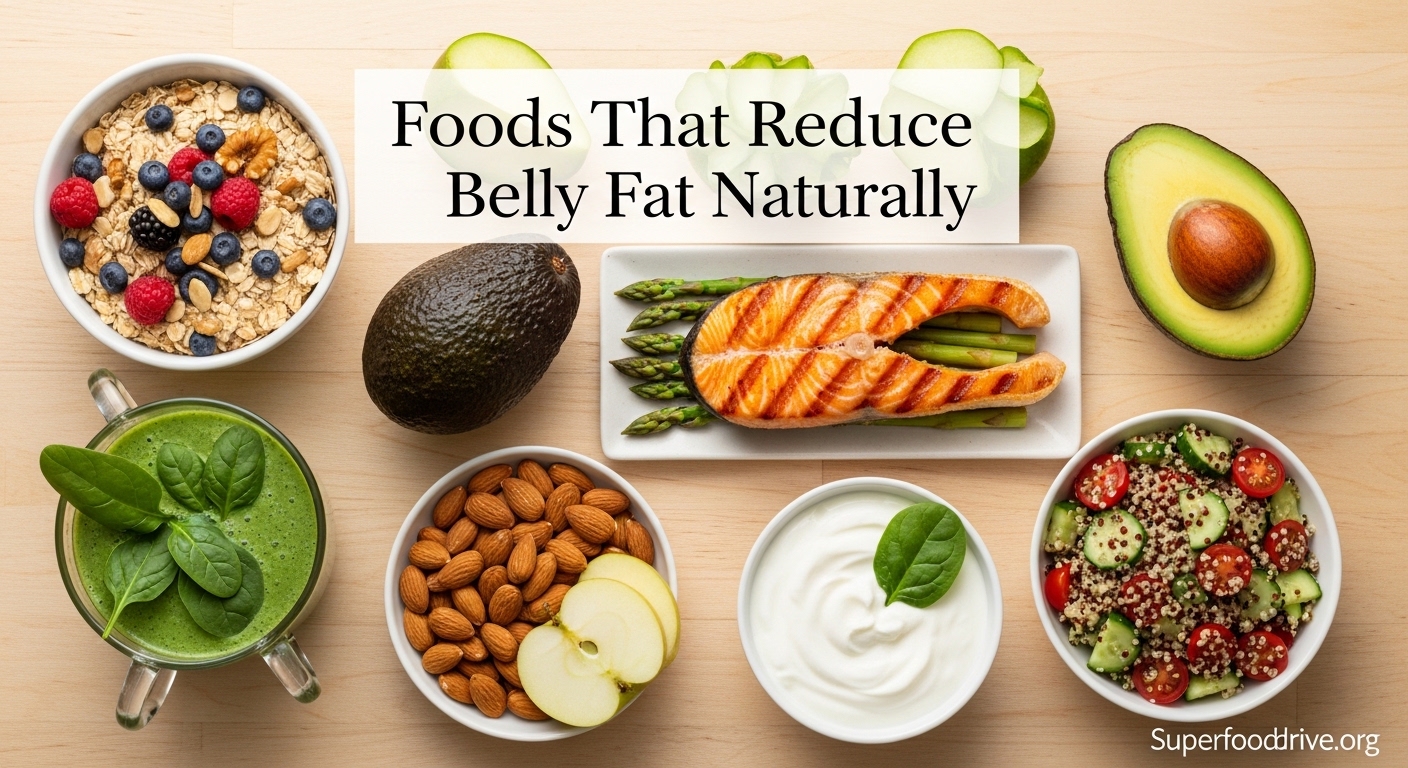
If you have been struggling with stubborn belly fat, you are not alone. I have spent years researching nutrition, and I want to be honest with you right away – no single food magically melts away belly fat overnight. However, certain foods that reduce belly fat naturally can absolutely support your body’s fat-burning processes when combined with a balanced lifestyle. In this guide, I will share the science-backed foods that help target abdominal fat, explain how they work at the molecular level, and show you practical ways to include them in your daily meals.
Table of Contents
Understanding Belly Fat: What You Are Really Fighting
Before we dive into specific foods, I need to clarify something important. Not all belly fat is the same. Subcutaneous fat sits just beneath your skin – this is the soft, pinchable fat. Visceral fat, however, wraps around your internal organs and poses serious health risks. This deeper fat releases inflammatory markers that increase your risk of type 2 diabetes, heart disease, and metabolic syndrome.
Here is the truth about spot reduction – you cannot target belly fat specifically with food alone. When you lose fat, you lose it from your entire body. However, certain foods that reduce belly fat naturally are particularly effective because they address the underlying drivers of visceral fat storage: insulin resistance, chronic inflammation, and hormonal imbalances.
Research shows that foods rich in protein, soluble fiber, and anti-inflammatory compounds can help reduce visceral fat more effectively than calorie restriction alone. These foods work by stabilizing blood sugar, reducing inflammation, improving gut health, and increasing satiety hormones that signal fullness to your brain.
High-Protein Foods That Target Belly Fat
Protein deserves special attention when discussing foods that reduce belly fat naturally. Here is why – protein has a high thermic effect, meaning your body burns more calories digesting protein compared to fats or carbohydrates. Protein also reduces the hunger hormone ghrelin while boosting peptide YY, a hormone that makes you feel full.
1. Eggs
Eggs are perhaps the most complete protein source available. I recommend starting your day with eggs because they provide 6 grams of high-quality protein each. Studies show that eating eggs for breakfast increases satiety and reduces calorie intake throughout the day. The choline in eggs also supports metabolism and liver function.
2. Greek Yogurt
Greek yogurt offers double benefits – it provides about 17 grams of protein per serving plus beneficial probiotics. The protein supports muscle maintenance and satiety, while the probiotics improve gut health. Research links gut microbiome diversity to lower visceral fat storage. Choose plain, unsweetened Greek yogurt to avoid added sugars.
3. Fatty Fish
Fatty fish like salmon, mackerel, and sardines are excellent sources of protein and omega-3 fatty acids. The omega-3s in fatty fish reduce inflammation, improve insulin sensitivity, and may specifically target visceral fat. Aim for at least two servings per week. The protein in fish provides all essential amino acids while being relatively low in calories.
4. Lean Poultry
Chicken and turkey breast provide lean protein without excessive saturated fat. I recommend removing the skin to keep calories in check. The high protein content supports muscle retention during weight loss, which is crucial because muscle tissue burns more calories at rest than fat tissue.
5. Legumes
Beans, lentils, and chickpeas offer plant-based protein combined with fiber. This combination is powerful for blood sugar regulation and sustained energy. The fiber in legumes feeds beneficial gut bacteria, while the protein supports muscle maintenance. They are also incredibly budget-friendly compared to animal protein sources.
Fiber-Rich Foods That Keep You Full and Flat
Soluble fiber is particularly effective among foods that reduce belly fat naturally. This type of fiber dissolves in water to form a gel-like substance in your digestive tract. This gel slows down digestion, stabilizes blood sugar, and helps you feel full longer. More importantly, soluble fiber specifically targets visceral fat by reducing visceral fat accumulation and improving insulin sensitivity.
1. Oatmeal
Oatmeal contains beta-glucan, a soluble fiber that has been extensively studied for its metabolic benefits. When you eat oatmeal, the beta-glucan forms a gel in your digestive tract that delays stomach emptying and increases feelings of fullness. Studies show that regular oat consumption is associated with reduced waist circumference and lower visceral fat. Choose steel-cut or rolled oats rather than instant varieties with added sugar.
2. Berries
Raspberries, blackberries, strawberries, and blueberries are fiber powerhouses with relatively low sugar content. A cup of raspberries provides 8 grams of fiber for just 64 calories. The antioxidants in berries also combat inflammation, which is linked to visceral fat storage. I recommend including berries in your breakfast or as a satisfying sweet treat.
3. Apples and Pears
Apples and pears contain pectin, a soluble fiber that slows digestion and promotes satiety. Eating whole apples rather than apple juice is crucial – the fiber is what makes them effective for belly fat reduction. Studies show that increased fruit intake, particularly apples and pears, is associated with reduced weight gain over time.
4. Leafy Greens
Spinach, kale, and Swiss chard provide volume and nutrients with very few calories. This allows you to eat satisfying portions without consuming excess calories. The fiber in leafy greens supports digestive health and provides food for beneficial gut bacteria. I try to include leafy greens in at least two meals daily.
5. Chia Seeds and Flaxseeds
These tiny seeds pack incredible amounts of fiber into tiny packages. Just two tablespoons of chia seeds provide 10 grams of fiber. These seeds absorb water and expand in your stomach, creating a sense of fullness. They also provide omega-3 fatty acids that reduce inflammation. I recommend adding them to smoothies, yogurt, or oatmeal.
6. Beans and Lentils
Beans and lentils combine protein, fiber, and resistant starch – a type of carbohydrate that resists digestion and feeds healthy gut bacteria. The combination makes them incredibly filling while being relatively low in calories. Research shows that regular bean consumption is associated with lower body weight and reduced waist circumference.
Healthy Fats That Support Fat Loss
This might seem counterintuitive, but eating fat can help you lose belly fat – when you choose the right types. Healthy fats reduce inflammation, improve insulin sensitivity, and increase satiety. The key is choosing whole food sources of fat rather than processed oils.
1. Avocados
Avocados provide monounsaturated fats that specifically target visceral fat. Research shows that avocado consumption is associated with reduced belly circumference and improved metabolic health markers. The fiber in avocados further enhances their satiety effect. I recommend adding a quarter to half an avocado to meals rather than using it as your main fat source.
2. Nuts
Almonds, walnuts, and pistachios provide healthy fats combined with protein and fiber. Studies show that regular nut consumption is associated with lower body weight despite their calorie density. The combination of fat, protein, and fiber makes nuts incredibly satisfying. Portion control matters – I recommend a small handful rather than unlimited portions.
3. Olive Oil
Olive oil is rich in monounsaturated fats and polyphenol antioxidants that reduce inflammation. Extra virgin olive oil retains more beneficial compounds than refined versions. I recommend using olive oil for salad dressings and low-temperature cooking rather than high-heat cooking methods. Research links olive oil consumption to reduced inflammation and improved metabolic health.
Metabolism-Boosting Foods and Beverages
While no food dramatically increases metabolism on its own, certain foods that reduce belly fat naturally provide compounds that support metabolic health and fat oxidation. These foods work best as part of an overall healthy diet rather than magic solutions.
1. Green Tea
Green tea contains catechins, particularly EGCG, which may enhance fat burning and improve metabolic health. Studies show that regular green tea consumption can support modest weight loss and specifically target visceral fat. The caffeine in green tea also provides a mild metabolic boost. I recommend 2-3 cups daily rather than green tea extracts, which can be excessive.
2. Coffee
Coffee contains caffeine that temporarily increases metabolic rate and fat burning. More importantly, coffee is rich in antioxidants that reduce inflammation. Research links moderate coffee consumption to reduced risk of type 2 diabetes and improved metabolic health. Avoid adding sugar or excessive cream, which undermines the benefits.
3. Chili Peppers
Chili peppers contain capsaicin, the compound responsible for their heat. Capsaicin may increase calorie burning slightly and reduce appetite. While the effect is modest, regularly including spicy foods can support overall metabolic health. I recommend adding chili peppers to meals rather than taking capsaicin supplements.
4. Apple Cider Vinegar
Apple cider vinegar contains acetic acid, which may improve insulin sensitivity and reduce fat storage. Some research suggests that consuming vinegar before meals can reduce calorie intake and improve blood sugar control. I recommend adding a tablespoon to water or salad dressings rather than consuming it undiluted.
5. Ginger and Turmeric
Ginger and turmeric are anti-inflammatory spices that support metabolic health. Ginger may increase thermogenesis and fat burning, while turmeric’s curcumin compound reduces inflammation linked to visceral fat storage. I recommend including these spices regularly in cooking rather than relying on supplements.
Foods That Sabotage Your Belly Fat Goals
Discussing foods that reduce belly fat naturally would be incomplete without addressing what to avoid. Certain foods promote visceral fat storage through their effects on insulin, inflammation, and hunger hormones.
1. Added Sugars and Sugar-Sweetened Beverages
Added sugars, particularly in the form of high-fructose corn syrup, promote visceral fat storage. Fructose is metabolized primarily in the liver, where excessive intake drives fat accumulation in the abdominal area. Sugar-sweetened beverages are especially problematic because they provide concentrated sugar without satiety. I recommend eliminating sugary drinks and drastically reducing added sugars in your diet.
2. Refined Carbohydrates
White bread, pasta, and pastries cause rapid blood sugar spikes that drive insulin release. Chronically elevated insulin promotes fat storage, particularly in the abdominal area. These foods are also low in fiber and nutrients, leaving you hungry soon after eating. I recommend choosing whole grains instead of refined products.
3. Trans Fats and Processed Foods
Trans fats are artificially created fats that promote inflammation and insulin resistance. These fats are found in many processed foods and are strongly linked to increased visceral fat storage. Always check ingredient lists for partially hydrogenated oils and avoid products containing them.
4. Alcohol
Alcohol presents a double challenge for belly fat. Alcohol provides empty calories while also increasing appetite and reducing inhibitions around food. More importantly, alcohol consumption specifically promotes visceral fat storage – hence the term “beer belly.” I recommend moderating alcohol intake or eliminating it temporarily when focusing on belly fat reduction.
5. Excess Sodium
Excess sodium does not directly cause fat gain, but it causes water retention that makes your belly appear larger. Many processed foods are extremely high in sodium. Reducing sodium intake can quickly reduce bloating and make your midsection appear flatter within days.
How to Put This Into Practice
Knowing about foods that reduce belly fat naturally is different from actually eating them regularly. Here is how I recommend implementing this information in a sustainable way.
Start with Protein at Breakfast
I have found that beginning the day with 20-30 grams of protein sets the tone for reduced hunger and better food choices throughout the day. Eggs, Greek yogurt, or a protein smoothie with berries and flaxseeds are excellent options.
Build Balanced Plates
I use a simple formula: fill half your plate with vegetables, one-quarter with protein, and one-quarter with fiber-rich carbohydrates like beans or whole grains. Add a small amount of healthy fat like avocado or olive oil. This combination provides sustained energy and prevents overeating.
Plan Snacks Strategically
Instead of grazing, plan 1-2 intentional snacks between meals. I recommend combining protein with fiber – apple with almond butter, Greek yogurt with berries, or hummus with vegetables. These combinations keep you satisfied between meals without spiking blood sugar.
Batch Prep for Busy Weeks
Sunday meal prep makes healthy eating realistic. I cook a large batch of lean protein, prepare several servings of vegetables, and cook a pot of beans or whole grains. Having these components ready makes it easy to assemble balanced meals even on busy days.
Shop Strategically
Focus your grocery shopping on the perimeter where fresh foods are located. Choose frozen vegetables and fruits when fresh is expensive or unavailable – they are just as nutritious. Buy beans and lentils in bulk for budget-friendly protein. Stock up on frozen fish when it is on sale.
Sample Day of Eating
Here is a sample day of eating that incorporates foods that reduce belly fat naturally:
Breakfast: Scrambled eggs with spinach and tomatoes, half an avocado, and a cup of berries.
Lunch: Large salad with mixed greens, grilled chicken, olive oil and lemon dressing, and a cup of lentil soup.
Snack: Greek yogurt with flaxseeds and blueberries.
Dinner: Baked salmon with roasted vegetables and a small portion of quinoa.
Evening: Herbal tea with a handful of almonds if hungry.
Beyond Food: The Complete Picture
While foods that reduce belly fat naturally are powerful, they work best as part of a comprehensive approach. Here are the lifestyle factors I have found most important for addressing visceral fat.
Sleep Quality
Sleep quality directly affects belly fat. Sleep deprivation increases cortisol and ghrelin while reducing leptin – the perfect storm for abdominal fat gain. Studies consistently show that people who sleep less than 6 hours nightly have more visceral fat than those getting adequate sleep. I recommend prioritizing 7-9 hours of quality sleep.
Stress Management
Stress management is crucial because chronic stress keeps cortisol elevated, which specifically promotes visceral fat storage. I have found that even simple stress reduction practices like daily walks, deep breathing, or time in nature can make a measurable difference in belly fat over time.
Physical Activity
Physical activity should include both cardiovascular exercise and resistance training. Cardio burns calories during the activity, while resistance training builds muscle that increases your resting metabolic rate. Research shows that combining both types of exercise is most effective for reducing visceral fat. Even walking 30 minutes daily provides meaningful benefits.
Hydration
Hydration affects belly fat in multiple ways. Mild dehydration can be mistaken for hunger, leading to unnecessary eating. Adequate water intake also supports proper digestion and helps reduce water retention that makes the belly appear larger. I recommend drinking primarily water rather than calorie-containing beverages.
Meal Timing
Meal timing may matter more than we previously thought. Some research suggests that front-loading calories earlier in the day may support better metabolic health than eating large evening meals. However, the most important factor is still total food quality and quantity rather than precise timing.
FAQ
What foods get rid of hanging belly fat?
No specific food targets hanging belly fat directly. The appearance of excess skin or fat in the lower abdomen is typically a combination of subcutaneous fat and loose skin. Overall fat loss through a calorie deficit, combined with protein-rich foods that support muscle retention, can help reduce the appearance of hanging belly fat over time. Strength training that builds core muscle can also improve the appearance of the abdominal area.
What are the 5 superfoods to burn belly fat?
While no single food burns belly fat on its own, these five foods have strong scientific support: 1) Fatty fish like salmon, which provides omega-3s that reduce inflammation and improve insulin sensitivity. 2) Eggs, which provide high-quality protein that increases satiety and calorie burning. 3) Leafy greens, which provide volume and nutrients with minimal calories. 4) Greek yogurt, which combines protein with beneficial probiotics. 5) Beans and lentils, which offer the powerful combination of protein, fiber, and resistant starch.
What to eat to reduce tummy in 7 days?
Realistically, you cannot significantly reduce actual belly fat in 7 days. However, you can reduce bloating and appear leaner by focusing on: reducing sodium intake to minimize water retention, eating potassium-rich foods to balance sodium, including probiotic foods to support digestion, avoiding gas-producing foods, staying hydrated, and limiting alcohol. These changes can make your midsection appear flatter within a week, but this is primarily water weight reduction rather than true fat loss.
What to eat for a flat stomach in 3 days?
Achieving a flat stomach in 3 days is about reducing bloating rather than losing actual fat. Focus on: drinking plenty of water to flush excess sodium, eating potassium-rich foods like bananas and leafy greens, avoiding carbonated drinks and chewing gum that introduce air, limiting gas-producing vegetables like broccoli and cabbage, choosing lean proteins that digest easily, and avoiding processed foods high in sodium. The difference will be primarily from reduced water retention and digestive contents rather than fat loss.
How long does it take to see results from eating belly fat reducing foods?
Realistically, most people begin to see noticeable reductions in belly fat after 8-12 weeks of consistent dietary changes. The first 4-6 weeks typically show the most dramatic changes on the scale as water weight drops, with actual fat loss becoming more apparent after 6-8 weeks. Sustainable fat loss averages 1-2 pounds per week, meaning significant belly fat reduction typically requires 3-6 months of consistent effort. Individual results vary based on genetics, starting point, and overall lifestyle.
Can you spot reduce belly fat with specific foods?
No, you cannot spot reduce belly fat with specific foods or exercises. When your body burns fat, it draws from fat stores throughout your body, not just from your abdominal area. However, foods that reduce belly fat naturally can help address the underlying hormonal factors that promote visceral fat storage, such as insulin resistance and chronic inflammation. While you cannot control where you lose fat first, you can influence overall fat loss and specifically target visceral fat through diet quality.
What foods burn belly fat while sleeping?
No food actively burns fat while you sleep, but certain foods eaten before bed can support overnight fat burning by improving sleep quality and stabilizing blood sugar. Small portions of protein-rich foods like Greek yogurt or a handful of nuts can prevent nighttime hunger without spiking blood sugar. Foods containing tryptophan like turkey or seeds may support better sleep quality, and adequate sleep itself is crucial for belly fat reduction. Avoid large meals or high-sugar foods before bed.
Your Next Steps
Now that you understand foods that reduce belly fat naturally, I encourage you to start small. Choose one or two changes to implement this week rather than overhauling everything at once. Maybe start with adding protein to your breakfast, or commit to including vegetables at lunch and dinner. Remember that consistency beats perfection every time. The foods that reduce belly fat naturally work gradually through multiple pathways – reducing inflammation, improving insulin sensitivity, supporting gut health, and increasing satiety. These benefits compound over time, making sustainable changes far more powerful than extreme short-term measures. Your belly did not appear overnight, and it will not disappear overnight either. But with consistent attention to the foods discussed here, combined with adequate sleep, stress management, and physical activity, you can absolutely reduce visceral fat and improve your metabolic health in 2026.