
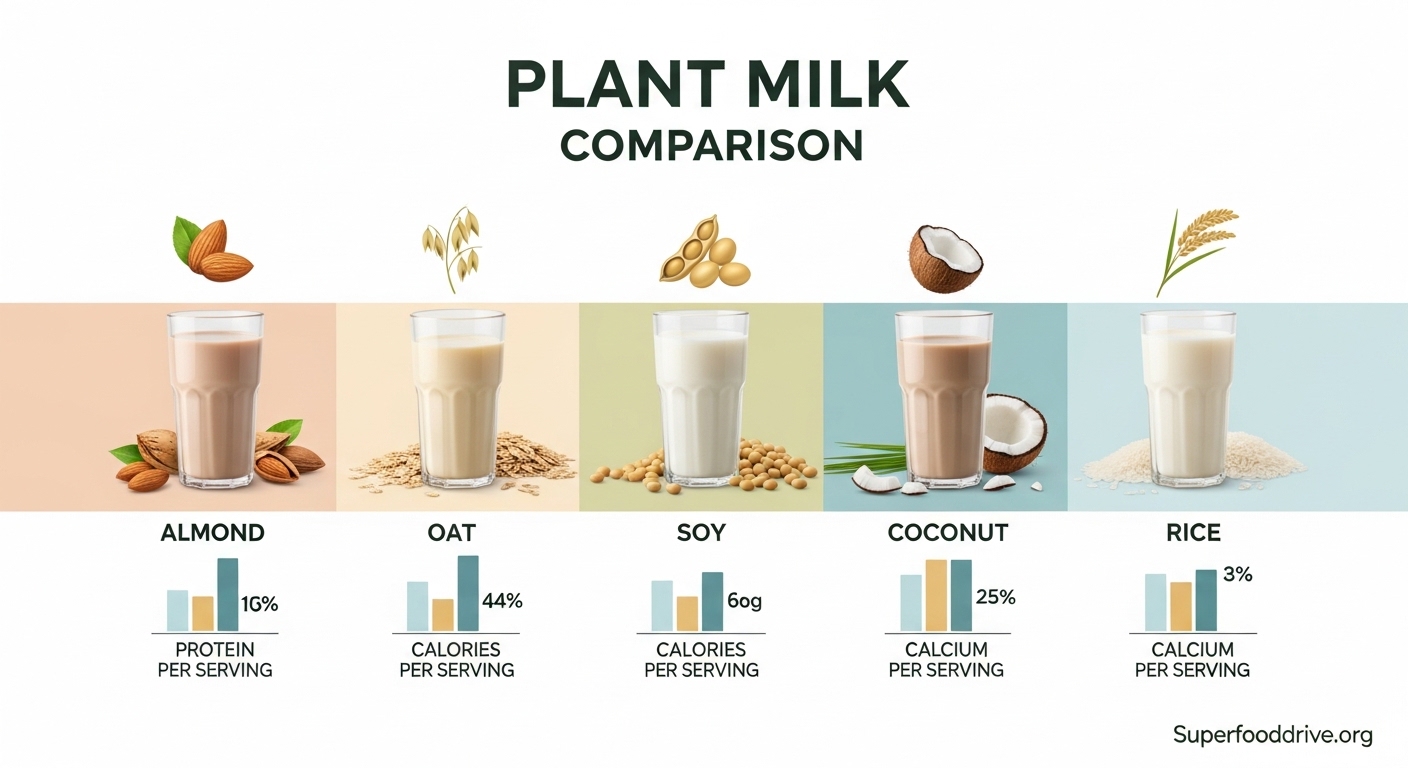
Walking through the dairy aisle today feels completely different than it did a decade ago. Where shelves once held only cow’s milk in various fat percentages, you’ll now find dozens of plant-based milk alternatives vying for your attention. Our team has spent the last three months testing and analyzing almond, oat, soy, and coconut milk to bring you the definitive plant milk comparison for 2026.
Each of these dairy-free milk options brings something unique to your morning coffee, baking projects, or smoothie routine. Some offer high protein content that rivals dairy milk. Others provide creamy texture that froths beautifully for lattes. A few have environmental advantages that matter to sustainability-minded consumers.
This guide breaks down everything you need to know about the four most popular plant-based milk alternatives. We have examined nutritional profiles, taste characteristics, best use cases, and environmental impacts to help you make an informed choice based on your specific health goals and values.
Table of Contents
Almond Milk: Low-Calorie Lightness with Environmental Trade-Offs
Almond milk dominates the plant-based milk market with approximately 65% market share in the United States. It offers a subtle nutty flavor and remarkably low calorie count that appeals to health-conscious consumers watching their weight.
Nutritional Profile and Health Benefits
Unsweetened almond milk typically contains just 30-40 calories per cup, making it the lowest-calorie option among the four milks in this comparison. The fat content sits around 2.5 grams per serving, with zero saturated fat in most brands.
Protein content represents almond milk’s biggest weakness. You’ll get only 1 gram of protein per cup compared to 8 grams in dairy milk. This makes it less suitable as a direct protein replacement unless you choose a fortified version or consume other protein sources.
Most commercial almond milk comes fortified with calcium, vitamin D, and vitamin B12. These additions bring the nutritional value closer to dairy milk for bone health. Check the label when shopping because fortification levels vary significantly between brands.
Taste and Best Uses
Almond milk delivers a light, slightly sweet, nutty flavor that works well in cereal, smoothies, and overnight oats. The thin consistency makes it less ideal for creamy sauces or recipes requiring thickening.
Many users report that almond milk curdles when added to hot coffee or tea. The acidity and temperature difference can cause separation. Barista blends with added stabilizers perform better for hot beverages.
Bakers appreciate almond milk for its neutral flavor that rarely overpowers other ingredients. It works particularly well in muffins, quick breads, and pancake batter where a light texture matters more than creaminess.
Environmental Impact Concerns
California produces over 80% of the world’s almonds, creating significant water usage concerns. Growing one almond requires approximately 3.2 gallons of water, though this is still less than dairy production overall.
The bee population has suffered due to almond farming practices. Commercial almond orchards require massive bee pollination operations, and pesticide exposure has led to colony collapse issues.
Transportation emissions add to the environmental footprint because most almonds travel long distances from California to processing facilities and then to stores worldwide.
Pros and Cons of Almond Milk
Pros: Lowest calorie count of all plant milks, neutral taste works in many recipes, widely available, affordable price point, zero saturated fat, good source of vitamin E.
Cons: Very low protein content, environmental concerns about water usage and bee health, can curdle in hot drinks, thin consistency not suitable for all recipes, potential allergen for those with nut allergies.
Oat Milk: The Creamy Crowd-Pleaser with Fiber Benefits
Oat milk has experienced explosive growth over the past five years, becoming the second most popular plant milk in many markets. Its naturally creamy texture and mild sweetness have made it a favorite for coffee shops and home baristas alike.
Nutritional Profile and Health Benefits
A cup of unsweetened oat milk contains approximately 120-130 calories, placing it in the middle range among plant milks. The carbohydrate content runs higher than other options at 15-20 grams per cup.
Oat milk provides 2-3 grams of protein per serving, slightly more than almond milk but significantly less than soy. The real nutritional standout comes from beta-glucan fiber, which may help lower cholesterol levels and support heart health.
The glycemic index of oat milk varies by brand but generally runs higher than almond or soy milk. People monitoring blood sugar should choose unsweetened varieties and monitor their response.
Taste and Best Uses
Oat milk offers a naturally sweet, mild oat flavor that many people find closest to dairy milk in taste tests. The creamy consistency works beautifully in coffee, creating that coveted microfoam for lattes and cappuccinos.
Baristas consistently choose oat milk as their favorite plant milk for latte art. The protein and fat content create stable foam that holds patterns well, something almond and coconut struggle to achieve.
For cooking, oat milk performs well in creamy soups, sauces, and mashed potatoes. The natural starch content helps thicken dishes without requiring additional thickeners or flour.
Environmental Impact
Oat milk generally receives praise for its relatively low environmental impact. Oats require significantly less water than almonds and can grow in cooler climates with less intensive farming.
Production of oat milk generates lower greenhouse gas emissions compared to dairy and most other plant milks. The crop requires less land use than soy and creates minimal habitat disruption when grown responsibly.
Most major oat milk brands now source oats from North American or European farms, reducing transportation emissions compared to coconut or almond milk that often travels long distances.
Pros and Cons of Oat Milk
Pros: Creamiest texture of all plant milks, excellent for coffee and frothing, naturally sweet flavor, good for cooking and baking, beta-glucan fiber benefits, lower environmental impact than almond, widely available.
Cons: Higher calorie and carbohydrate content than almond milk, less protein than soy milk, can contain added sugars, not suitable for those with gluten sensitivity unless certified gluten-free, higher glycemic index.
Soy Milk: The Protein Powerhouse with Complete Nutrition
Soy milk has the longest history as a dairy alternative, with consumption dating back thousands of years in Asian cultures. It remains the only plant milk that naturally provides protein levels comparable to dairy milk.
Nutritional Profile and Health Benefits
Unsweetened soy milk delivers 7-9 grams of protein per cup, nearly matching dairy milk’s 8 grams. This makes it the clear winner for anyone prioritizing protein intake, including athletes, older adults, and those building muscle.
Soy contains all nine essential amino acids, making it a complete protein source. This is rare among plant foods and gives soy milk an advantage over other plant-based milk alternatives.
Isoflavones in soy have been studied extensively for their potential health benefits. Research suggests they may support heart health and help with hot flashes during menopause, though individual responses vary.
Most soy milk comes fortified with calcium, vitamin D, and B12. The combination of high protein plus fortification makes it nutritionally the closest substitute for dairy milk.
Taste and Best Uses
Soy milk offers a distinct bean-like flavor that some people love and others find off-putting. Modern processing has improved taste significantly compared to earlier generations of soy milk.
The creamy consistency works well in most applications, though it can sometimes leave a slight aftertaste in delicate desserts. Chocolate soy milk particularly shines as a post-workout recovery drink.
For savory cooking, soy milk performs excellently in creamy pasta sauces, casseroles, and mashed potatoes. The neutral flavor profile rarely clashes with herbs and seasonings.
Environmental and Health Considerations
Soy production has faced criticism for deforestation, particularly in South America. However, most soy milk sold in North America and Europe uses soybeans grown in those regions with stricter environmental standards.
The vast majority of soy grown globally feeds livestock, not humans. Choosing organic soy milk ensures your purchase supports more sustainable farming practices.
Some people avoid soy due to concerns about phytoestrogens and hormone disruption. Current research indicates moderate soy consumption is safe for most people, including those with thyroid conditions when consumed with adequate iodine.
Pros and Cons of Soy Milk
Pros: Highest protein content of plant milks, complete amino acid profile, nutritionally closest to dairy, affordable and widely available, long shelf life when shelf-stable, works well in cooking and baking.
Cons: Distinctive taste not everyone enjoys, allergen concerns for those with soy allergies, phytoestrogen concerns persist despite research, environmental concerns about monoculture farming, can curdle in very acidic hot drinks.
Coconut Milk: Tropical Richness with Unique Applications
Coconut milk brings a distinctly tropical character to the plant milk comparison. It comes in two forms: the thick canned version used in cooking and the thinner beverage version found in cartons alongside other plant milks.
Nutritional Profile and Health Benefits
Coconut milk beverage contains approximately 45-60 calories per cup, placing it between almond and oat milk. The fat content runs higher than almond milk at 4-5 grams per serving.
Saturated fat represents the biggest nutritional consideration with coconut milk. A cup contains 4-5 grams of saturated fat, significantly more than other plant milks. However, the specific type of saturated fat in coconut (MCTs) metabolizes differently than animal saturated fats.
Protein content remains very low at less than 1 gram per cup. Coconut milk cannot serve as a protein source and should be paired with other protein-rich foods.
Coconut milk provides trace amounts of iron, magnesium, and manganese. Some brands fortify with calcium and vitamins, though fortification is less common than with other plant milks.
Taste and Best Uses
Coconut milk delivers an unmistakable tropical flavor that works beautifully in specific applications but can clash with others. The rich, creamy texture stands out in curries, soups, and desserts.
Thai and Indian cuisines rely heavily on coconut milk for authentic flavor in dishes like massaman curry, coconut rice, and various kormas. No other plant milk substitutes adequately in these recipes.
Breakfast applications get interesting with coconut milk. Overnight oats, chia pudding, and tropical smoothies benefit from the flavor, but cereal and coffee can taste odd with coconut notes.
Environmental Impact
Coconut farming faces fewer environmental concerns than almond or soy production. Coconuts grow in tropical coastal regions without requiring irrigation or intensive inputs.
Transportation emissions represent the primary environmental drawback. Coconuts travel long distances from Southeast Asia, South America, and Pacific islands to reach global markets.
Some coconut farming regions face labor concerns, including reports of monkey labor in Thailand. Fair Trade certified coconut products help ensure ethical sourcing.
Pros and Cons of Coconut Milk
Pros: Rich, creamy texture perfect for cooking, distinctive tropical flavor for specific cuisines, works beautifully in curries and soups, contains MCTs that may support energy, lower calorie than oat milk, minimal allergen concerns (tree nut classification varies by region).
Cons: Very low protein content, high saturated fat content, strong flavor limits versatility, less commonly fortified than other milks, can separate when heated, transportation emissions from tropical sourcing.
Plant Milk Nutritional Comparison Table
The following table shows how almond, oat, soy, and coconut milk compare nutritionally per one-cup serving of unsweetened varieties:
| Nutrient | Almond Milk | Oat Milk | Soy Milk | Coconut Milk |
|---|---|---|---|---|
| Calories | 30-40 | 120-130 | 80-100 | 45-60 |
| Protein | 1g | 2-3g | 7-9g | 0-1g |
| Total Fat | 2.5g | 5g | 4g | 4-5g |
| Saturated Fat | 0g | 0.5g | 0.5g | 4-5g |
| Carbohydrates | 1-2g | 15-20g | 4-6g | 2-3g |
| Sugars | 0g | 2-4g (natural) | 1-2g | 0-1g |
| Calcium (fortified) | 450mg (35% DV) | 350mg (25% DV) | 300mg (20% DV) | 200mg (15% DV) |
| Vitamin D (fortified) | 100 IU (25% DV) | 100 IU (25% DV) | 120 IU (30% DV) | 100 IU (25% DV) |
| Vitamin B12 (fortified) | 1.0 mcg (40% DV) | 1.2 mcg (50% DV) | 1.0 mcg (40% DV) | 0.5 mcg (20% DV) |
| Fiber | 0g | 2g (beta-glucan) | 1-2g | 0g |
Nutritional values vary by brand and whether you choose sweetened or unsweetened varieties. Always check the nutrition label for exact values on your preferred brand.
Which Plant Milk Is Best for Different Uses
Each plant milk excels in specific applications. Here’s what our testing and research revealed about the best options for common use cases.
Best Plant Milk for Coffee and Lattes
Oat milk wins for coffee applications, particularly when frothing matters. The protein and fat content create stable microfoam that holds latte art patterns. Barista-specific oat milk blends include added fats that improve performance even further.
Soy milk takes second place for coffee, offering decent frothing ability and a neutral flavor that doesn’t overpower espresso. Some brands separate in very hot or acidic coffee, so experiment with your preferred roast.
Almond milk and coconut milk generally struggle with hot coffee. Almond can curdle, while coconut’s strong flavor clashes with coffee’s bitterness. Cold brew applications work better with both.
Best Plant Milk for Baking
Almond milk shines in baking where you want moisture without heaviness. Muffins, cakes, and quick breads rise well with almond milk’s light consistency. The neutral flavor won’t compete with vanilla, chocolate, or fruit additions.
Oat milk works beautifully in denser baked goods like brownies, cookies, and pancakes. The natural sweetness can reduce the sugar needed in recipes.
Soy milk performs reliably across most baking applications. The higher protein content can create slightly denser textures, which works well in bread and heartier muffins.
Best Plant Milk for Smoothies
Your smoothie goals determine the best choice. For protein-packed post-workout smoothies, soy milk provides the most complete nutrition profile.
For creamy, indulgent smoothies, oat milk creates the thickest, most milkshake-like texture. The natural sweetness pairs beautifully with berries and bananas.
Almond milk works well for lighter, lower-calorie smoothies. Green smoothies and fruit-forward blends benefit from almond milk’s clean taste that lets produce shine.
Best Plant Milk for Cooking and Savory Dishes
Coconut milk dominates in curry applications and tropical cuisines. The rich fat content carries spices beautifully and creates authentic texture.
Oat milk excels in creamy soups and sauces where you want thickness without coconut flavor. The natural starches help create body in dishes like Alfredo sauce or cream of mushroom soup.
Soy milk performs well in savory applications where you want creaminess without competing flavors. It works in mashed potatoes, creamed spinach, and pasta sauces.
Environmental Impact: Which Plant Milk Is Most Sustainable
Environmental concerns drive many people’s switch from dairy to plant milk. Understanding the ecological footprint of each option helps you align your choices with your values.
Water Usage Comparison
Almond milk requires the most water to produce, with approximately 3.2 gallons needed per single almond. A liter of almond milk requires roughly 1,600 liters of water when accounting for the entire production chain.
Dairy milk actually uses more water overall at approximately 1,000 liters per liter of milk. However, almond milk’s water intensity has drawn criticism in drought-prone California where most almonds grow.
Oat milk requires significantly less water, approximately 48 liters per liter of milk. Soy milk falls in the middle at around 300 liters per liter. Coconut milk water data varies widely but generally requires less irrigation than almonds because coconuts grow in naturally humid coastal regions.
Greenhouse Gas Emissions and Land Use
Oat milk generates the lowest greenhouse gas emissions among the four options, producing approximately 0.18 kg of CO2 equivalent per liter. Soy milk produces around 0.2 kg, while almond milk generates about 0.4 kg per liter.
All plant milks produce significantly less emissions than dairy milk, which generates approximately 3.2 kg of CO2 equivalent per liter. Switching from dairy to any plant milk reduces your carbon footprint substantially.
Soy farming requires more land than oat farming, which has contributed to deforestation concerns in South America. However, as mentioned earlier, most soy milk sold in Western markets uses locally grown soybeans.
Sustainability Verdict
Oat milk wins on overall sustainability metrics, combining low water usage with minimal greenhouse gas emissions and responsible land use. The crop grows well in temperate climates with existing agricultural infrastructure.
Soy milk ranks second for sustainability when sourced from North American or European growers. The high protein content means you get more nutritional value per environmental unit invested.
Coconut milk faces transportation concerns but minimal intensive farming inputs. Almond milk has the highest environmental impact among these options due to water intensity and bee colony stress.
What to Look for When Buying Plant Milk
Not all plant milks are created equal. The same type of milk can vary dramatically between brands based on fortification, added ingredients, and processing methods.
The Importance of Fortification
Fortified plant milk provides calcium, vitamin D, and vitamin B12 that you would otherwise get from dairy. These nutrients matter significantly for bone health, immune function, and energy metabolism.
Choose brands that provide at least 20% of your daily calcium needs per cup and include vitamin D to help absorb that calcium. Vitamin B12 fortification is particularly important for vegans who get no animal products in their diet.
Organic plant milks are not always fortified. If you prefer organic, check the label carefully or ensure you get these nutrients from other sources.
Reading the Ingredient List
Clean ingredient lists typically contain the plant base, water, salt, and perhaps a stabilizer like gellan gum or lecithin. Some brands add multiple gums, thickeners, and preservatives that serve more aesthetic than nutritional purposes.
Sweetened varieties can contain 7-20 grams of added sugar per cup. The American Heart Association recommends limiting added sugars to 25 grams daily for women and 36 grams for men. Sweetened plant milk can quickly consume this budget.
Many people prefer brands with minimal additives. Look for “unsweetened” and “no gum” varieties if clean ingredients matter to you. These often taste closer to homemade and may digest more easily for sensitive individuals.
Organic vs. Conventional Considerations
Organic certification ensures no synthetic pesticides or GMO ingredients. For soy milk, organic guarantees non-GMO soybeans. For oats, organic means no glyphosate residue concerns.
However, organic plant milk often costs 30-50% more than conventional options. Conventional plant milk with fortification may provide better nutritional value per dollar for budget-conscious shoppers.
Some conventional brands still use high-quality ingredients and responsible sourcing. Research your preferred brands to understand their specific practices beyond the organic certification.
Frequently Asked Questions About Plant Milk Comparison
What is the healthiest plant milk?
The healthiest plant milk depends on your individual nutritional needs. Soy milk offers the most complete protein profile similar to dairy milk. Oat milk provides beneficial beta-glucan fiber for heart health. Almond milk works well for low-calorie diets. For overall nutrition, fortified soy milk most closely matches dairy milk’s protein, calcium, and vitamin content.
Which plant milk has the most protein?
Soy milk has the highest protein content among plant milks, providing 7-9 grams per cup compared to 1 gram in almond milk, 2-3 grams in oat milk, and less than 1 gram in coconut milk. Soy is also a complete protein containing all nine essential amino acids, making it nutritionally comparable to dairy milk for protein needs.
Is almond milk good for you?
Almond milk offers benefits for those seeking low-calorie dairy alternatives, with just 30-40 calories per cup and zero saturated fat. Fortified versions provide calcium and vitamins D and B12. However, almond milk contains very little protein at only 1 gram per cup, so it should not be relied upon as a protein source. Environmental concerns about water usage and bee colony stress may also factor into your decision.
What is oat milk made from?
Oat milk is made by blending whole oats with water, then straining out the solid fiber. Commercial production often involves enzymes that break down oat starches into smaller sugars, creating the naturally sweet flavor. The process creates a creamy, milk-like consistency without requiring many additives. Some brands add enzymes, vitamins, minerals, and stabilizers for texture and shelf life.
Is soy milk healthier than almond milk?
Soy milk provides significantly more protein at 7-9 grams per cup compared to almond milk’s 1 gram, making it more nutritionally complete. Soy milk also offers isoflavones that may support heart health. However, almond milk contains fewer calories and no saturated fat. For protein needs, soy milk wins. For low-calorie diets, almond milk may be preferable. Both work well when fortified with calcium and vitamins.
What plant milk is best for weight loss?
Almond milk is the best choice for weight loss at only 30-40 calories per cup with minimal carbohydrates. Unsweetened varieties contain zero sugar. Soy milk at 80-100 calories can work well too, offering protein that helps satiety. Avoid oat milk for weight loss as it contains 120-130 calories and 15-20 grams of carbohydrates per cup. Always choose unsweetened varieties regardless of milk type.
Why is everyone ditching almond milk?
Some consumers have moved away from almond milk due to environmental concerns about California’s water usage and impact on bee populations. Others prefer creamier options like oat milk for coffee and cooking. However, almond milk remains the most popular plant milk by sales volume, so reports of mass abandonment are overstated. The shift reflects growing category diversity rather than rejection of almond milk specifically.
Does almond milk raise A1C?
Unsweetened almond milk should not significantly raise A1C levels because it contains only 1-2 grams of carbohydrates per cup with zero sugar. The glycemic impact is minimal. However, sweetened almond milk varieties contain 7-15 grams of added sugar per cup, which can affect blood glucose and A1C over time. People monitoring blood sugar should always choose unsweetened plant milks and check labels carefully.
Which plant milk is best for the environment?
Oat milk generally has the lowest environmental impact, requiring minimal water and producing low greenhouse gas emissions. Soy milk ranks second when sourced from local growers. Coconut milk has moderate impact with transportation being the main concern. Almond milk has the highest environmental footprint among these options due to intensive water requirements in drought-prone regions and concerns about commercial bee colony stress.
Is oat milk better than almond milk?
Oat milk offers creamier texture and better performance in coffee, plus beneficial beta-glucan fiber. It also has lower environmental impact. However, oat milk contains significantly more calories and carbohydrates than almond milk. Almond milk works better for low-calorie diets and has a more neutral flavor for baking. Neither is objectively better; the choice depends on your priorities for nutrition, taste, and environmental impact.
Final Thoughts: Choosing Your Plant Milk in 2026
No single plant milk wins every category in this comparison. Your ideal choice depends entirely on what you prioritize. Soy milk dominates protein content. Oat milk offers the best texture for coffee. Almond milk keeps calories minimal. Coconut milk brings irreplaceable flavor to specific cuisines.
Consider rotating between different plant milks based on your needs. Use soy milk for post-workout smoothies when protein matters. Choose oat milk for your morning latte. Grab almond milk for baking and low-calorie applications. Keep coconut milk on hand for curry nights.
All four options represent significant environmental improvements over dairy milk. Any switch you make supports lower water usage, reduced greenhouse gas emissions, and more sustainable land use. Choose fortified varieties to ensure you get calcium, vitamin D, and B12 regardless of which plant milk becomes your favorite.