
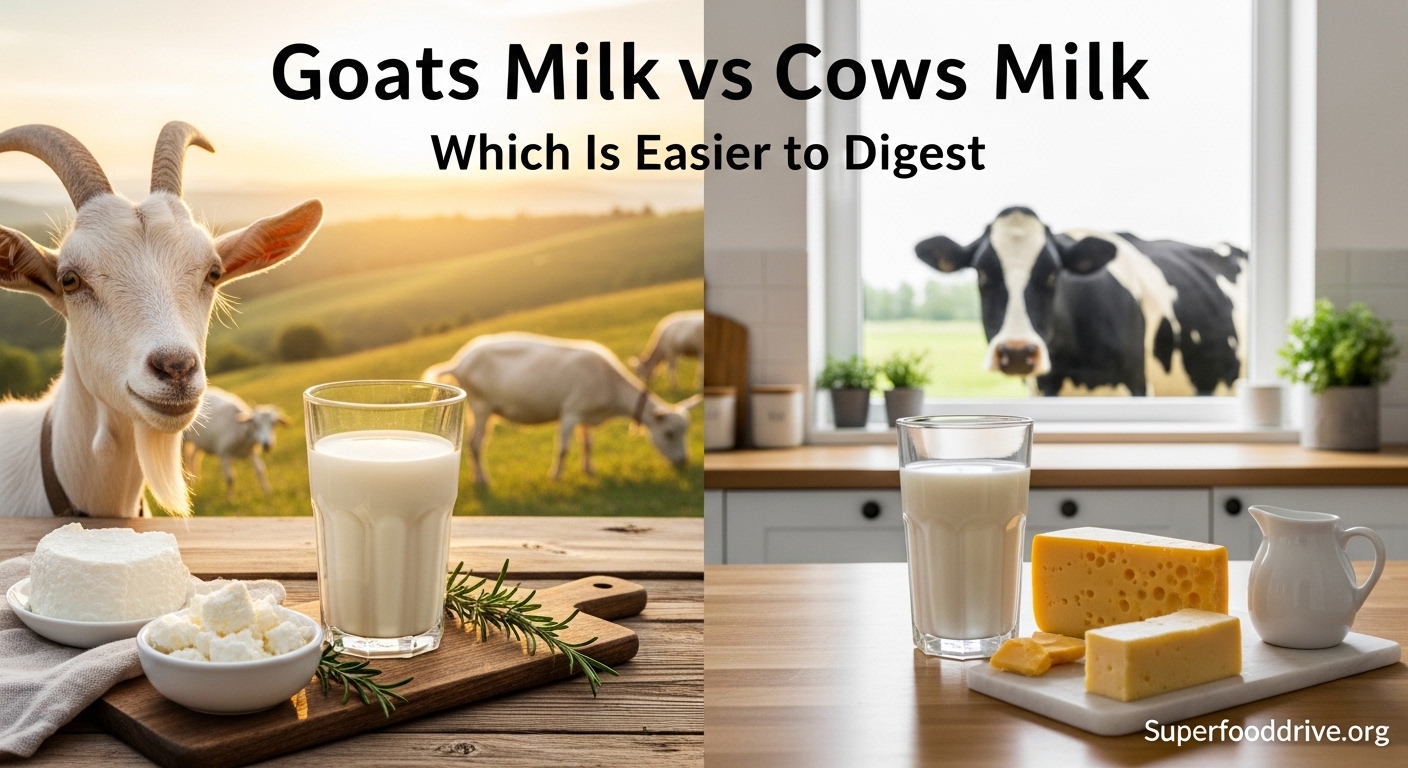
Goat milk is easier to digest than cow milk due to its smaller fat globules, softer curd formation, and unique protein structure. Our team reviewed the scientific literature and found that these structural differences translate to measurably faster gastric emptying and reduced digestive discomfort for many people. If you experience bloating, gas, or stomach upset after drinking cow milk, understanding these differences could help you make a more informed choice about your dairy consumption.
In this guide, I will explain exactly why goat milk digestive benefits are more than just marketing claims. You will learn about the specific biological mechanisms that make goat milk stomach friendly, how the protein structures differ, and whether switching could help with lactose intolerance or sensitive digestion. I have also included a detailed nutritional comparison and practical tips for making the transition.
Table of Contents
Why Goat Milk Is Easier to Digest: The Science Explained
The question of goats milk vs cows milk which is easier to digest comes down to three key structural differences at the molecular level. These differences affect how your stomach processes each type of milk and how quickly nutrients become available for absorption.
Research published in the Journal of Dairy Science has consistently shown that goat milk forms a softer, more digestible curd in the stomach compared to cow milk. This is not just a minor difference. The curd formed by goat milk is finer and more friable, meaning it breaks apart more easily when exposed to gastric enzymes and stomach acid.
Here is what makes goat milk fundamentally different from cow milk at the digestive level:
- Smaller fat globules: Goat milk fat globules are approximately one-third the size of cow milk fat globules, providing more surface area for digestive enzymes to work on
- Softer curd formation: The casein proteins in goat milk form looser, softer curds that break down faster in the stomach
- Different protein composition: Goat milk contains less alphaS1-casein, the protein most often associated with cow milk protein allergies
- Higher medium-chain triglycerides: MCTs in goat milk are metabolized more quickly and easily than long-chain fatty acids
- Prebiotic oligosaccharides: Goat milk naturally contains higher levels of these compounds that feed beneficial gut bacteria
Fat Globule Size and Natural Homogenization
One of the most significant goat milk digestive benefits relates to fat structure. The fat globules in goat milk average about 3.5 micrometers in diameter, while cow milk fat globules average 4.5 micrometers. This size difference may seem small, but it has major implications for digestion.
Smaller fat globules mean more total surface area for lipase enzymes to attack. Your pancreas produces lipase to break down dietary fats, and with more surface area available, this process happens more efficiently. The result is faster fat digestion and less time for undigested fats to cause discomfort or bloating.
Additionally, goat milk is naturally homogenized. Unlike cow milk, where cream rises to the top because the fat globules clump together, goat milk fat stays evenly distributed throughout the liquid. This natural homogenization means the fat is already dispersed and ready for enzymatic action when it reaches your stomach.
Goat milk fat globules also contain higher proportions of medium-chain triglycerides (MCTs) compared to cow milk. MCTs are absorbed directly into the bloodstream from the small intestine rather than being processed through the lymphatic system first. This shortcut means faster energy availability and less digestive burden.
Protein Structure: AlphaS1-Casein and Digestibility
The protein composition of goat milk vs cow milk represents another crucial difference for digestive comfort. Milk contains several types of casein proteins, and the ratios differ significantly between these two animal sources.
Cow milk contains high levels of alphaS1-casein, a protein that forms firm, rubbery curds in the stomach. Goat milk contains significantly less alphaS1-casein, sometimes up to 90% less depending on the breed. Instead, goat milk relies more heavily on beta-casein and other casein variants that form softer, more digestible curds.
This difference in goat milk casein structure means the stomach can break down the curd more quickly. For people with sensitive digestion or those prone to cow milk bloating, this faster breakdown can translate to noticeably less discomfort after drinking milk.
The alphaS1-casein content is also relevant for allergy considerations. While goat milk is not safe for people with severe milk allergies, the lower alphaS1-casein content means some people with mild cow milk protein sensitivity can tolerate goat milk better. This is why goat milk is sometimes described as hypoallergenic, though this term should be used cautiously.
Many people wonder about the A2 protein connection. Goat milk naturally contains A2 beta-casein rather than A1 beta-casein, which is the variant found in most cow milk. Some research suggests A2 proteins may be easier to digest and less likely to cause inflammation, though the evidence is still emerging.
Lactose Content: Is Goat Milk Better for Lactose Intolerance?
Many people ask whether lactose intolerance goat milk is a viable combination. Goat milk does contain lactose, but the concentration is slightly lower than in cow milk. A cup of goat milk typically contains about 4.1% lactose compared to about 4.7% in cow milk.
This 12-15% reduction in lactose content means that some people with mild lactose intolerance can tolerate goat milk when cow milk causes problems. However, the difference is not dramatic enough for people with severe lactose intolerance to drink goat milk without symptoms.
The improved tolerance some people experience with goat milk may be due more to the faster digestion and softer curd formation than to the modest lactose reduction. When milk moves through the digestive system more quickly, there is less time for undigested lactose to cause fermentation and gas production in the colon.
If you are lactose intolerant, you should still approach goat milk with caution. The lactose is present, and sensitive individuals will react to it. Lactose-free goat milk products are available and may be a better option for those who want the nutritional benefits without the lactose.
Prebiotic Oligosaccharides and Gut Microbiome Support
Goat milk oligosaccharides represent one of the lesser-known but potentially significant advantages for digestive health. Goat milk contains 4-5 times more oligosaccharides than cow milk. These complex carbohydrates act as prebiotics, feeding the beneficial bacteria in your gut.
When gut bacteria ferment these oligosaccharides, they produce short-chain fatty acids (SCFAs) like butyrate, propionate, and acetate. These SCFAs serve as fuel for the cells lining your colon and help maintain a healthy gut barrier. Research suggests that SCFA production from goat milk consumption may contribute to reduced inflammation and improved immune function.
The goat milk gut health benefits extend beyond simple digestion. A healthier gut microbiome has been linked to better immune function, improved mood through the gut-brain axis, and reduced risk of various digestive disorders. While cow milk also provides some prebiotic benefits, the higher concentration in goat milk makes it a more potent option for supporting gut flora.
Some studies have also identified bioactive peptides in goat milk with anti-inflammatory properties. These compounds may help soothe an irritated digestive tract and reduce the inflammation that sometimes accompanies dairy consumption in sensitive individuals.
Nutritional Comparison: Goat Milk vs Cow Milk
Understanding the nutritional differences helps contextualize why goat milk vs cow milk nutrients matter beyond just digestion. Here is a side-by-side comparison per one-cup serving:
| Nutrient | Goat Milk | Cow Milk |
|---|---|---|
| Calories | 168 | 149 |
| Protein | 8.7g | 7.7g |
| Total Fat | 10.1g | 7.9g |
| Saturated Fat | 6.5g | 4.6g |
| Carbohydrates | 10.9g | 11.7g |
| Lactose | ~4.1% | ~4.7% |
| Calcium | 327mg | 276mg |
| Phosphorus | 271mg | 222mg |
| Potassium | 498mg | 322mg |
| Magnesium | 34mg | 24mg |
| Vitamin A | 483 IU | 395 IU |
Goat milk contains more calcium, phosphorus, potassium, and magnesium than cow milk. The higher mineral content is significant because goat milk minerals absorption may also be more efficient. Research suggests that the chemical form of these minerals in goat milk, combined with the faster digestion, results in better bioavailability.
However, goat milk is lower in folate and vitamin B12 compared to cow milk. This is an important consideration for pregnant women or those relying on dairy as a significant source of these nutrients. Goat milk also contains less vitamin B6 and slightly less vitamin D.
The higher fat and calorie content in goat milk is worth noting for those watching their intake. While the fats are more digestible, they still contribute to total caloric load. If you are substituting goat milk for cow milk in a weight management plan, you may need to adjust portions accordingly.
Who Should Consider Switching to Goat Milk
Based on the digestive advantages and forum discussions with people who have made the switch, certain groups tend to benefit most from goat milk:
- People with cow milk sensitivity: If cow milk causes bloating, gas, or mild digestive discomfort but you do not have a diagnosed allergy, goat milk may be worth trying
- Those with sensitive stomachs: The softer curd and faster gastric emptying make goat milk easier on delicate digestive systems
- People with mild lactose intolerance: The slightly lower lactose content combined with faster transit time helps some individuals tolerate goat milk better
- Individuals with IBS: Many people with irritable bowel syndrome report that goat milk is less likely to trigger symptoms than cow milk
- Parents of children with cow milk sensitivity: Goat milk formula is available and may be better tolerated than standard cow milk formula
- Anyone seeking more bioavailable nutrients: The higher mineral content and potentially better absorption rates make goat milk nutritionally attractive
It is important to distinguish between milk allergy and milk intolerance. If you have a diagnosed cow milk protein allergy, you should not assume goat milk will be safe. The proteins are similar enough that cross-reactivity can occur. Always consult with an allergist before trying goat milk if you have a diagnosed allergy.
For those with sensitive digestion who have not found relief with lactose-free cow milk, goat milk represents a different approach. The benefits come from the structural differences in fats and proteins, not just lactose reduction.
Taste Differences and Tips for Making the Switch
Goat milk does taste different from cow milk. Many people describe it as having a slightly tangy or earthy flavor compared to the neutral sweetness of cow milk. The difference is noticeable but not overwhelming, and many people find they adapt to the taste within a week or two.
The flavor of goat milk can vary significantly based on the diet of the goats and the processing methods used. Fresh, high-quality goat milk from grass-fed goats often has a milder, sweeter taste than lower-quality alternatives. Ultra-pasteurized goat milk may taste stronger than gently pasteurized versions.
If you are transitioning from cow milk to goat milk, here are some practical tips from people who have made the switch:
- Start by using goat milk in cooking or smoothies where the flavor is less noticeable
- Try different brands, as flavor profiles vary significantly
- Chill the milk thoroughly before drinking, as cold temperatures mellow the flavor
- Consider goat milk yogurt as an intermediate step, as the fermentation process creates a familiar texture
- Use goat milk in coffee or tea, where the additional flavors complement the milk
Many people report that the digestive benefits of goat milk make the taste adaptation worthwhile. Reduced bloating and stomach comfort often become more important than flavor preferences after experiencing the difference.
Potential Drawbacks and Considerations
While goat milk offers significant digestive advantages, it is not without drawbacks. Understanding these limitations helps set realistic expectations.
Cost is the most commonly cited disadvantage. Goat milk typically costs 2-3 times more than cow milk. This price difference reflects the lower volume of goat milk production, higher feed costs per unit of milk, and more labor-intensive farming practices. For families consuming significant amounts of milk, the cost difference can be substantial.
Availability can be limited. Depending on your location, goat milk may not be available in all grocery stores. You may need to visit specialty stores, farmers markets, or health food stores to find it. Online ordering is an option but adds shipping costs.
Nutritional gaps exist. As noted earlier, goat milk is lower in folate, vitamin B12, and vitamin B6 compared to cow milk. If goat milk becomes your primary dairy source, you may need to ensure you are getting these nutrients from other foods or supplements.
Higher fat and calories. Goat milk contains more fat and calories per cup than cow milk. While the fats are more digestible, they still contribute to caloric intake. Those managing their weight should account for this difference.
Not suitable for all allergies. If you have a diagnosed cow milk protein allergy, goat milk may still trigger reactions. The proteins are similar enough that cross-reactivity is common. Goat milk should not be given to infants under 12 months as a replacement for breast milk or infant formula without medical supervision.
Frequently Asked Questions
Which animal milk is the easiest for us to digest?
Goat milk is widely considered the easiest animal milk for humans to digest. Its smaller fat globules, softer curd formation, and lower alphaS1-casein content create a combination that breaks down more quickly in the digestive system. Sheep milk is also relatively digestible but higher in fat. Camel milk is another easily digested option, though it is less commonly available.
Is goat milk easier on the stomach than cow’s milk?
Yes, goat milk is generally easier on the stomach than cow’s milk. The fat globules are about one-third the size, providing more surface area for digestive enzymes. The casein proteins form a softer, looser curd that breaks down faster. Many people who experience bloating or discomfort with cow milk find goat milk significantly more comfortable to digest.
Is goat milk ok for IBS?
Many people with irritable bowel syndrome (IBS) find goat milk more tolerable than cow milk. The faster digestion and softer curd formation mean less time for fermentation in the gut. The prebiotic oligosaccharides in goat milk may also support a healthier gut microbiome. However, individual responses vary, and those with IBS should introduce goat milk gradually to assess tolerance.
What is the disadvantage of goat milk?
The main disadvantages of goat milk are higher cost (typically 2-3 times more than cow milk), limited availability in some areas, and lower levels of folate and vitamin B12. Goat milk also contains more calories and fat per cup than cow milk. Additionally, people with diagnosed cow milk protein allergies may still react to goat milk due to protein similarities.
Conclusion: Making the Right Choice for Your Digestion
The evidence clearly supports that goats milk vs cows milk which is easier to digest has a definitive answer. Goat milk’s smaller fat globules, softer curd formation, lower alphaS1-casein content, and higher levels of prebiotic oligosaccharides combine to create a dairy option that is measurably easier on the digestive system.
If you experience bloating, gas, or discomfort after drinking cow milk, goat milk represents a scientifically supported alternative worth trying. The structural differences are real and documented in research literature, not merely marketing claims. While the higher cost and different taste require adjustment, many people find the digestive benefits make the switch worthwhile.
Remember that goat milk is not a solution for diagnosed milk allergies, and those with severe lactose intolerance may still experience symptoms. Start with small amounts to assess your tolerance, and consider the nutritional differences when planning your overall diet. For many people with sensitive digestion, goat milk offers a path to enjoying dairy without the discomfort.