
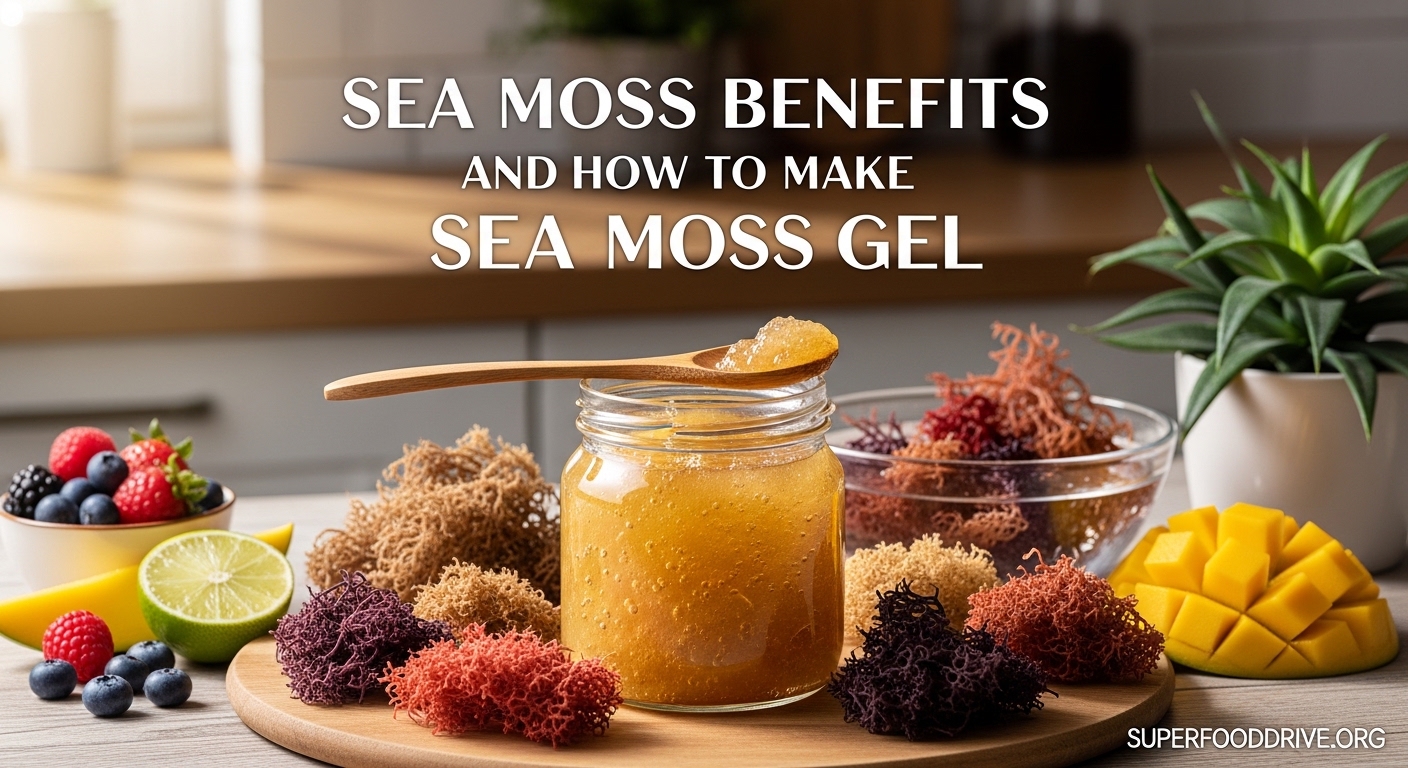
Sea moss has exploded in popularity as a wellness powerhouse over the past few years. If you are wondering what all the buzz is about and how to incorporate this ocean-derived superfood into your daily routine, you have come to the right place.
I have spent months researching sea moss benefits and testing different preparation methods in my own kitchen. This guide combines scientific research with practical, real-world experience to give you everything you need to know about sea moss.
You will learn exactly what sea moss is, why it contains 92 of the 102 minerals your body needs, how to make perfect sea moss gel at home, and the safety considerations that matter most. By the end, you will have the confidence to start using sea moss safely and effectively.
Table of Contents
What Is Sea Moss?
Sea moss, also known as Irish moss, is a type of red seaweed called Chondrus crispus that grows along the rocky Atlantic coastlines of North America, Europe, and the Caribbean islands. Despite the name, it is not actually a moss but a species of red algae that has been harvested for centuries for its nutritional and medicinal properties.
The plant contains a natural thickening agent called carrageenan, which gives sea moss its distinctive gel-like consistency when soaked and blended. This same compound has made sea moss valuable in both traditional medicine and modern food production as a vegan alternative to animal-based gelatin.
Caribbean Sea Moss vs Irish Sea Moss
Not all sea moss is created equal, and understanding the difference between varieties can help you choose the best product for your needs. Caribbean sea moss, particularly the varieties harvested from St. Lucia and Jamaica, tends to grow in warmer waters and develops a thicker, more robust texture with higher mineral density.
Irish sea moss harvested from the colder Atlantic waters off Ireland and the northeastern United States typically has a finer, more delicate structure. While both varieties offer impressive nutritional profiles, many users report that Caribbean sea moss creates a thicker, more stable gel that lasts longer in storage.
Pool-grown or farmed sea moss has also entered the market in recent years. This type is grown in controlled conditions rather than wild-harvested from the ocean. While it may look similar, pool-grown sea moss often lacks the full spectrum of minerals found in wild varieties and may contain chemical residues from the growing process.
The 92 Minerals Claim Explained
You have probably seen claims that sea moss contains 92 of the 102 minerals the human body needs. While this specific number is difficult to verify through independent testing, what we do know is that sea moss is genuinely one of the most mineral-dense foods on the planet.
Sea moss provides significant amounts of iodine, iron, magnesium, potassium, calcium, zinc, and selenium. It also contains trace amounts of sulfur compounds, B-vitamins, and vitamin C. The key advantage is that these minerals come in their natural, bioavailable forms, meaning your body can absorb and use them more efficiently than synthetic supplements.
Sea Moss Benefits
The health benefits of sea moss span multiple body systems, which explains why this humble seaweed has earned superfood status. Here is a breakdown of the most significant benefits supported by both traditional use and emerging research.
Thyroid Support
Your thyroid gland needs iodine to produce the hormones that regulate metabolism, energy production, and body temperature. Sea moss is one of the richest natural sources of iodine available, making it particularly valuable for supporting thyroid health.
The iodine in sea moss is bound to amino acids in a form that the body can readily use. This natural binding may offer advantages over isolated iodine supplements, which can sometimes cause adverse reactions in sensitive individuals. People with hypothyroidism or underactive thyroid function may find particular benefit from incorporating sea moss into their diet.
However, this same iodine content means that people with hyperthyroidism or autoimmune thyroid conditions like Hashimoto’s need to approach sea moss with caution. I will cover these safety considerations in detail later in this guide.
Immune System Boost
Sea moss contains several compounds that support immune function, including antioxidants that protect cells from oxidative stress and amino acids that help build immune proteins. The high vitamin C content, along with zinc and selenium, provides direct support for immune cell production and activity.
The prebiotic fiber in sea moss also feeds beneficial gut bacteria, which play a crucial role in immune system regulation. Since approximately 70 percent of immune tissue resides in the gut, supporting digestive health with sea moss creates downstream benefits for overall immunity.
Digestive and Gut Health
The mucilaginous texture of sea moss gel coats and soothes the digestive tract, making it beneficial for people dealing with inflammation, ulcers, or digestive discomfort. This soothing effect can help calm irritated stomach lining and promote healing.
Sea moss acts as a prebiotic, feeding the beneficial bacteria that make up your gut microbiome. A healthy microbiome is linked to better digestion, improved nutrient absorption, reduced inflammation, and even better mental health through the gut-brain connection.
Many users report that regular sea moss consumption helps with regularity and reduces bloating. The natural fiber content adds bulk to stool while the gel-like consistency helps things move smoothly through the digestive system.
Skin, Hair, and Nail Health
The collagen-boosting minerals in sea moss, including sulfur, copper, and zinc, support the structural proteins that keep skin firm and elastic. Many people use sea moss both internally and externally as a face mask to hydrate and nourish their skin.
For hair health, the iodine and mineral content supports scalp circulation and follicle function. Some users report stronger nails after several weeks of consistent sea moss use, likely due to the silica and calcium content that supports keratin production.
Applied topically as a mask, sea moss gel draws moisture to the skin while delivering minerals directly to the surface layers. The anti-inflammatory properties may also help with conditions like eczema, psoriasis, and acne when used regularly.
Energy and Metabolism
Sea moss provides iron, which is essential for oxygen transport throughout the body. Low iron levels are a common cause of fatigue, and sea moss offers a plant-based source that is gentler on the digestive system than many iron supplements.
The B-vitamins and magnesium in sea moss support cellular energy production and help the body convert food into usable fuel. Many users report sustained energy throughout the day without the jitters associated with caffeine.
For metabolism support, the iodine content helps regulate thyroid function, which controls how quickly your body burns calories. Combined with the blood sugar-stabilizing fiber, sea moss may support healthy weight management as part of a balanced approach.
Anti-Inflammatory Properties
Chronic inflammation is linked to numerous health conditions, from joint pain to heart disease. Sea moss contains several compounds with demonstrated anti-inflammatory effects, including omega-3 fatty acids and specific types of carrageenan that differ from the inflammatory processed forms.
Many users with joint pain or arthritis report relief after adding sea moss to their routine. While more research is needed, the combination of minerals and anti-inflammatory compounds makes sea moss a promising natural option for managing inflammation.
Respiratory and Mucus Support
One of the most frequently reported benefits of sea moss is its effect on respiratory health and mucus reduction. The high potassium chloride content helps dissolve phlegm and mucus in the airways, making it easier to clear congestion.
This same property makes sea moss popular among people dealing with seasonal allergies or chronic sinus issues. The soothing gel can coat irritated respiratory passages while helping to break up excess mucus that harbors bacteria and irritants.
How to Make Sea Moss Gel
Making your own sea moss gel at home is simple, cost-effective, and ensures you know exactly what is going into your body. The process requires only two ingredients: dried sea moss and clean water. Let me walk you through each step based on my own testing and the methods that produce the best results.
Choosing Quality Sea Moss
Before you start, you need quality raw material. Real sea moss should have a distinct ocean smell, not a chemical or chlorine odor. The color should range from golden to dark purple, never pure white, which indicates bleaching.
The texture should be slightly salty and firm but pliable, not flaky or falling apart. Wild-harvested sea moss from St. Lucia, Jamaica, or Grenada generally offers the best quality. Look for suppliers who provide origin information and ideally third-party heavy metal testing.
Be wary of prices that seem too good to be true. Quality wild-harvested sea moss requires labor-intensive collection and cleaning. Extremely cheap options are often pool-grown, bleached, or fake products made from other seaweeds.
Step-by-Step Preparation
Step 1: Clean Your Sea Moss
Rinse your dried sea moss thoroughly in cold water to remove any sand, salt, or ocean debris. I usually rinse mine three to four times, rubbing the strands gently between my fingers to dislodge any particles. Inspect for any small shells or rocks that may have been missed during processing.
Step 2: Soak Overnight
Place your cleaned sea moss in a large glass bowl and cover it with filtered or spring water. Use about two cups of water for every ounce of dried sea moss. The sea moss will expand significantly, so make sure your bowl has plenty of room.
Let it soak at room temperature for 12 to 24 hours. The longer soak time allows the sea moss to fully rehydrate and soften. You can add a squeeze of lime or lemon juice to the soaking water, which helps with preservation and reduces any ocean taste.
Step 3: Rinse Again
After soaking, drain the water and give your sea moss another quick rinse. You will notice it has expanded to about three times its original size and has a soft, gelatinous texture. The water should run clear, indicating the sea moss is clean.
Step 4: Blend to Gel Consistency
Transfer your soaked sea moss to a high-speed blender. Add just enough fresh water to cover the sea moss, about one cup of water per cup of soaked moss. Blend on high for 1 to 3 minutes until completely smooth and creamy.
The consistency should resemble thick applesauce or pudding. If it is too thick, add water one tablespoon at a time. If it is too thin, add more soaked sea moss. Getting the right ratio takes some practice, but you will quickly learn what works for your preference.
Step 5: Store Properly
Transfer your finished sea moss gel to a clean glass jar with a tight-fitting lid. Mason jars work perfectly for this. Refrigerate immediately. Properly made and stored sea moss gel will last 3 to 4 weeks in the refrigerator.
Troubleshooting Common Issues
Gel Is Too Thin or Watery
This usually happens from adding too much water during blending or using low-quality sea moss that does not have enough natural carrageenan. Next time, use less water in the blender or add more soaked sea moss to thicken the consistency.
Gel Has a Strong Ocean Taste
Extended soaking with lime or lemon juice helps reduce ocean flavor. You can also rinse more thoroughly before blending. When using in smoothies, strong flavors like berries, cacao, or nut butters completely mask any sea taste.
Mold Growth in Storage
Always use clean utensils when scooping from your jar. Never double-dip or use your fingers. If you notice mold, discard the entire batch immediately. Adding a squeeze of lime juice during blending or storage can extend shelf life by a few days.
Storage and Shelf Life
Fresh sea moss gel stored in the refrigerator typically lasts 3 to 4 weeks. I recommend making smaller batches more frequently rather than large batches that might spoil. For longer storage, you can freeze sea moss gel in ice cube trays and thaw as needed.
Frozen sea moss gel cubes last up to 3 months and are perfect for tossing directly into smoothies. Just pop out a cube or two and blend with your other ingredients. The gel thaws quickly and maintains its nutritional properties through freezing.
How to Use Sea Moss Gel
Once you have your homemade sea moss gel, the possibilities are nearly endless. Here are the most effective ways to incorporate this superfood into your daily routine based on what has worked best for me and thousands of other users.
Daily Dosage Recommendations
For general wellness, most practitioners recommend starting with 1 to 2 tablespoons of sea moss gel per day. I suggest starting with 1 tablespoon for the first week to allow your body to adjust, then increasing to 2 tablespoons if desired.
For specific health goals or under the guidance of a healthcare provider, some people use up to 4 tablespoons daily. However, more is not always better, especially given the high iodine content. Consistency matters more than quantity.
Listen to your body. Some people experience digestive adjustment when first starting sea moss. If you notice any discomfort, reduce your dose and increase gradually as your system adapts to the increased mineral intake.
Smoothies and Drinks
Smoothies are the easiest and most popular way to consume sea moss gel. The gel blends seamlessly into fruit and vegetable smoothies, adding creaminess without any noticeable taste when combined with flavorful ingredients.
My favorite morning smoothie combines 1 tablespoon sea moss gel with frozen berries, half a banana, a handful of spinach, almond milk, and a scoop of protein powder. The sea moss adds a silky texture that makes the smoothie more satisfying.
The traditional Jamaican Irish Moss Drink is another delicious option. Blend sea moss gel with non-dairy milk, vanilla, nutmeg, cinnamon, and a natural sweetener like dates or maple syrup. This warming, spiced drink has been enjoyed in Caribbean cultures for generations.
Food Applications
Sea moss gel works as a thickening agent in soups, stews, and sauces. Add 1 to 2 tablespoons toward the end of cooking to create a richer, more velvety texture without altering the flavor profile of your dish.
In baking, sea moss gel can replace eggs as a vegan binding agent. Use 3 tablespoons of gel to replace one egg in muffin, pancake, or bread recipes. The result is moist, tender baked goods with added nutritional benefits.
You can also stir sea moss gel into oatmeal, yogurt, or chia pudding. The neutral flavor means it integrates well with almost any food, making it easy to get your daily dose however you prefer.
Beauty and Topical Uses
Sea moss makes an excellent hydrating face mask. Apply a thin layer of plain gel to clean skin and leave for 15 to 20 minutes before rinsing. The minerals and moisture help plump skin and reduce the appearance of fine lines.
For hair care, mix sea moss gel with a little aloe vera juice and apply as a pre-shampoo treatment. The minerals nourish the scalp while the gel helps detangle and condition hair strands. Leave on for 30 minutes before washing as usual.
Some people also use sea moss gel on minor skin irritations or burns, taking advantage of its soothing, anti-inflammatory properties. While not a replacement for medical treatment, it can provide comfort for minor issues.
Safety and Side Effects
Sea moss is generally safe for most people when consumed in reasonable amounts, but there are important considerations to keep in mind. Understanding these safety factors helps you use sea moss confidently and avoid potential problems.
Thyroid Considerations
People with existing thyroid conditions need to exercise caution with sea moss due to its high iodine content. If you have hypothyroidism and are taking medication, sea moss may support your thyroid function, but you should coordinate with your healthcare provider to monitor your levels.
For those with hyperthyroidism or autoimmune thyroid conditions like Hashimoto’s, the extra iodine from sea moss could potentially worsen symptoms or trigger immune responses. Many practitioners recommend avoiding sea moss entirely in these cases or using it only under close medical supervision.
The PAA question “Can I take sea moss if I have Hashimoto’s?” comes up frequently. The conservative answer is that people with Hashimoto’s should approach sea moss cautiously. While some individuals report benefits, others experience increased antibody levels or symptom flare-ups. Always consult your endocrinologist before adding sea moss if you have any thyroid condition.
Carrageenan Safety
You may have heard concerns about carrageenan being inflammatory or dangerous. This confusion stems from a misunderstanding about different forms of carrageenan. Food-grade carrageenan found in whole sea moss is completely different from degraded carrageenan, also called poligeenan.
Poligeenan is created by processing carrageenan with acid at high temperatures, resulting in smaller molecules that can trigger inflammation. This processed form is not found in natural sea moss. The carrageenan in sea moss is a whole food fiber that actually supports gut health.
Think of it like the difference between whole soybeans and highly processed soy protein isolate. The whole food form contains all the natural compounds in their balanced state, while isolated or degraded forms can behave very differently in the body.
Who Should Avoid Sea Moss
Beyond thyroid concerns, certain groups should avoid or limit sea moss use. People taking blood-thinning medications should be cautious, as sea moss may have mild anticoagulant properties. Pregnant and breastfeeding women should consult their healthcare provider before using sea moss regularly.
Anyone with a known allergy to seaweed or iodine should obviously avoid sea moss. If you experience any rash, itching, or swelling after consuming sea moss, discontinue use immediately and seek medical attention if symptoms are severe.
Start slowly and pay attention to how your body responds. While side effects are rare at normal doses, individual sensitivity varies. When in doubt, consult a healthcare provider familiar with sea moss and your personal health history.
Frequently Asked Questions
Can I take sea moss if I have Hashimoto’s?
People with Hashimoto’s thyroiditis should approach sea moss with caution due to its high iodine content. While some individuals report benefits, others experience increased antibody levels or symptom flare-ups. The iodine in sea moss can potentially trigger immune responses in autoimmune thyroid conditions. Always consult your endocrinologist before adding sea moss if you have Hashimoto’s or any autoimmune thyroid condition. Many thyroid specialists recommend avoiding sea moss entirely for Hashimoto’s patients.
How do I make my own sea moss gel?
Making sea moss gel involves four simple steps: First, thoroughly rinse dried sea moss to remove sand and debris. Second, soak the sea moss in filtered water for 12 to 24 hours until it expands and softens. Third, drain and rinse again. Fourth, blend the soaked sea moss with fresh water until smooth and creamy. Store your finished gel in a glass jar in the refrigerator for up to 3 to 4 weeks. Use 1 to 2 tablespoons of gel daily in smoothies, drinks, or recipes.
Can sea moss help lower cortisol?
Sea moss contains magnesium and B-vitamins that support adrenal function and may help regulate cortisol levels. The iodine content also supports thyroid health, which plays a role in stress hormone regulation. Additionally, the anti-inflammatory compounds in sea moss may reduce physical stress on the body. However, there is limited direct scientific research specifically linking sea moss to cortisol reduction. Many users report feeling calmer and more balanced with regular use, though individual results vary.
Is sea moss good for bone density?
Sea moss provides several minerals essential for bone health including calcium, magnesium, and trace minerals that support bone formation and maintenance. The anti-inflammatory properties may also help protect bone health by reducing chronic inflammation that can contribute to bone loss. However, sea moss should not replace calcium-rich foods or prescribed bone health supplements. It can be a valuable addition to a comprehensive bone health protocol that includes weight-bearing exercise and adequate vitamin D intake.
How long does sea moss gel last?
Freshly made sea moss gel stored in an airtight glass jar in the refrigerator typically lasts 3 to 4 weeks. Adding a squeeze of lime or lemon juice during preparation can help extend shelf life slightly. Always use clean utensils when scooping from the jar and never double-dip. If you notice any mold, off-smell, or discoloration, discard the entire batch immediately. For longer storage, freeze sea moss gel in ice cube trays for up to 3 months.
What does sea moss taste like?
Plain sea moss gel has a very mild, slightly ocean-like taste that is barely noticeable when added to foods or drinks. High-quality sea moss should smell like the ocean, not fishy or chemical. The taste is easily masked by fruits, spices, or other strong flavors in smoothies and recipes. Most users report that after a few days of use, they do not notice any taste at all. If your sea moss has a strong, unpleasant fishy or chemical taste, it may be low quality or improperly processed.
How much sea moss gel should I take daily?
For general wellness, most practitioners recommend 1 to 2 tablespoons of sea moss gel per day. Start with 1 tablespoon for the first week to allow your body to adjust to the increased mineral intake, then increase to 2 tablespoons if desired. Some people use up to 4 tablespoons daily for specific health goals, but this should only be done under healthcare provider guidance due to the high iodine content. Consistency matters more than quantity. Take your daily dose at the same time each day for best results.
Sea moss benefits span from thyroid support and immune boosting to skin health and digestive wellness. Learning how to make sea moss gel at home puts this powerful superfood at your fingertips for a fraction of the cost of pre-made products.
Start with quality wild-harvested sea moss, follow the preparation steps carefully, and begin with a conservative daily dose. Pay attention to how your body responds and adjust accordingly. With consistent use, you may join the thousands of people who have made sea moss a cornerstone of their wellness routine.
Remember to consult your healthcare provider if you have thyroid conditions, take medications, or have any concerns about adding sea moss to your diet. Used wisely, this ocean treasure can be a valuable addition to your journey toward better health.