
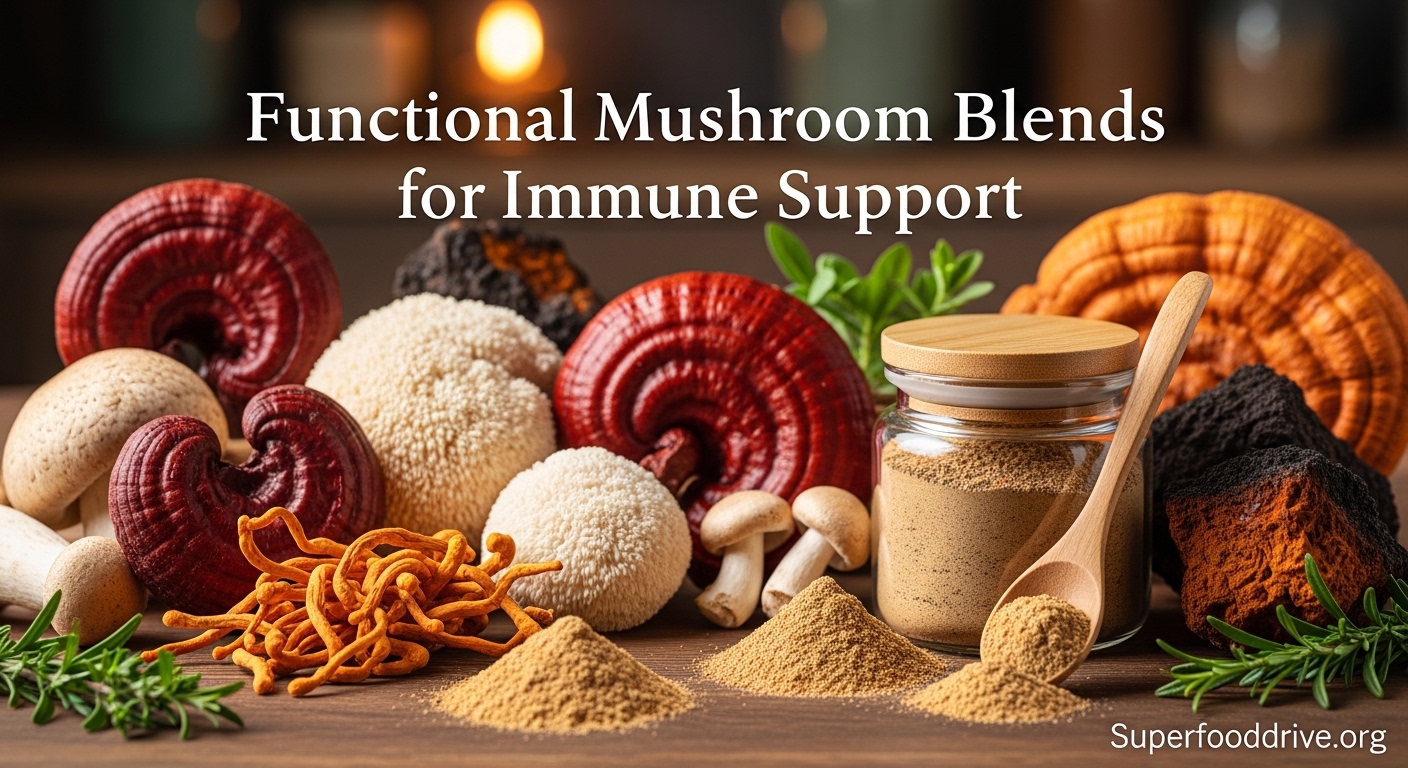
I started taking functional mushroom blends three years ago after my third round of antibiotics left my immune system struggling. The difference was noticeable within weeks. My energy returned. I stopped catching every cold that went around the office. This guide shares everything I have learned about how these natural powerhouses support immune health.
Functional mushroom blends combine multiple medicinal mushroom species into one formula. They work synergistically to strengthen your body’s natural defenses through compounds called beta-glucans and polysaccharides. Unlike single-mushroom supplements, blends offer broader protection by addressing multiple aspects of immune function simultaneously.
In this guide, you will learn exactly how functional mushroom blends for immune support work, which mushrooms pack the biggest immune-boosting punch, and how to choose quality supplements that actually deliver results.
Table of Contents
What Are Functional Mushrooms
Functional mushrooms are species that provide health benefits beyond basic nutrition. They contain bioactive compounds that interact with your body’s systems to promote wellness. Unlike the white button mushrooms in your salad, these have been used medicinally for thousands of years.
The distinction matters. Culinary mushrooms provide vitamins and minerals. Functional mushrooms deliver concentrated doses of immune-modulating compounds. Reishi, Chaga, Turkey Tail, Lion’s Mane, Cordyceps, and Shiitake represent the most researched species for immune support.
Traditional Chinese Medicine has utilized these fungi since at least 200 AD. Practitioners called Reishi the “Mushroom of Immortality” and prescribed it for longevity and vitality. Russian folk medicine embraced Chaga as a health tonic. Modern science now confirms what these ancient healers observed.
How Functional Mushroom Blends Support Immune Function
Functional mushroom blends for immune support work through several interconnected mechanisms. Understanding these helps you appreciate why quality matters and why blends often outperform single mushrooms.
Beta-Glucans: The Primary Immune Activators
Beta-glucans are complex sugars found in mushroom cell walls. They activate immune cells called macrophages and natural killer cells. These frontline defenders recognize and destroy pathogens more effectively when beta-glucans are present.
Research published in the journal Medicina shows that mushroom beta-glucans bind to specific receptors on immune cells. This binding triggers a cascade of protective responses. Your body essentially becomes better at identifying and neutralizing threats.
Polysaccharides and Immune Modulation
Beyond beta-glucans, mushrooms contain various polysaccharides that modulate immune response. Turkey Tail contains Polysaccharide-K (PSK) and Polysaccharide Peptide (PSP). These compounds are so well-studied that they are approved as cancer adjunct therapies in Japan and China.
The term “modulation” is important. These compounds do not simply boost immunity indiscriminately. They help balance it. If your immune system is underactive, they stimulate it. If it is overactive (as in autoimmune conditions), they may help calm inappropriate responses.
The Gut-Immune Connection
Seventy percent of your immune system resides in your gut. Functional mushrooms support gut health by acting as prebiotics. They feed beneficial bacteria that produce short-chain fatty acids. These compounds strengthen the intestinal barrier and reduce inflammation.
A healthy gut lining prevents unwanted substances from entering your bloodstream. This reduces the burden on your immune system. Mushroom blends support this defensive barrier while also providing direct immune stimulation.
Antioxidant and Anti-Inflammatory Properties
Chronic inflammation weakens immune function over time. Functional mushrooms contain powerful antioxidants that neutralize free radicals. Chaga specifically shows one of the highest ORAC (Oxygen Radical Absorbance Capacity) scores of any natural substance.
By reducing oxidative stress and inflammation, mushroom blends create an internal environment where immune cells can function optimally. This is particularly valuable for people dealing with chronic stress, poor sleep, or environmental toxin exposure.
Top Mushrooms for Immune Support
Not all mushrooms affect immunity equally. These six species offer the strongest scientific backing for immune support. Quality blends typically include several of these working together.
Reishi: The Adaptogenic Defender
Reishi (Ganoderma lucidum) has earned its reputation as the “Mushroom of Immortality.” It contains over 400 bioactive compounds including triterpenes and polysaccharides. These work together to modulate immune response and support stress adaptation.
Research shows Reishi increases white blood cell production and activity. It is particularly helpful for people under chronic stress. Stress hormones suppress immunity. Reishi’s adaptogenic properties help your body maintain balance during demanding periods.
I take Reishi-based blends during my busiest work weeks. The difference in my resilience is noticeable. My recovery time from workouts improves, and I sleep more deeply.
Chaga: Antioxidant Powerhouse
Chaga (Inonotus obliquus) grows on birch trees in cold climates. It concentrates antioxidants from the tree bark. The result is a mushroom with extraordinary free-radical scavenging ability. This protects immune cells from damage.
Chaga contains betulinic acid, which shows anti-inflammatory and immune-modulating effects in studies. It supports the production of beneficial cytokines. These signaling molecules coordinate immune responses.
People dealing with chronic inflammation often report benefits from Chaga. Its soothing properties extend to the digestive tract. This supports the gut-immune axis mentioned earlier.
Turkey Tail: The Clinical Standout
Turkey Tail (Trametes versicolor) might be the most scientifically validated immune mushroom. Its PSK and PSP compounds are prescription drugs in several Asian countries. Over 400 clinical studies support its immune-enhancing effects.
Turkey Tail specifically supports the activity of natural killer cells and T-cells. These are your immune system’s precision instruments. They identify and eliminate infected or cancerous cells.
National Institutes of Health-funded research at Bastyr University showed Turkey Tail supporting immune function in breast cancer patients. The mushroom helped maintain healthy immune cell levels during conventional treatment.
Shiitake: The Accessible Immune Booster
Shiitake (Lentinula edodes) bridges culinary and functional categories. You can eat it daily as food or take concentrated extracts. Both forms provide immune benefits. Lentinan, its key polysaccharide, is another approved cancer adjunct therapy in Asia.
Studies show regular Shiitake consumption improves immune markers in healthy adults. One study published in the Journal of the American College of Nutrition found improved gamma-delta T-cell function and reduced inflammatory markers after four weeks of daily consumption.
Shiitake also supports cardiovascular health. Healthy circulation ensures immune cells reach where they are needed. This makes Shiitake a valuable addition to any immune blend.
Cordyceps: Energy and Immunity Combined
Cordyceps (Cordyceps militaris and sinensis) offers unique benefits for active individuals. It supports oxygen utilization and ATP production. This translates to better energy levels and exercise performance.
The immune benefits come from its polysaccharides and cordycepin. These compounds show immunomodulatory effects in research. Cordyceps supports both innate and adaptive immunity.
Athletes often report fewer illnesses when taking Cordyceps. Intense training temporarily suppresses immunity. Cordyceps appears to help maintain immune function during these vulnerable periods.
Lion’s Mane: Cognitive Support with Immune Benefits
Lion’s Mane (Hericium erinaceus) is famous for cognitive support. Its nerve growth factor stimulation helps brain health. However, it also provides significant immune benefits through its polysaccharides.
Research shows Lion’s Mane supports gut health specifically. It promotes the growth of beneficial bacteria. Since gut health and immunity are so closely linked, this provides indirect but meaningful immune support.
Blends including Lion’s Mane offer dual benefits. You get immune support plus cognitive clarity. Many users report this combination helps them stay productive while protecting their health.
Benefits of Blends vs Single Mushrooms
After trying both single mushrooms and blends, I consistently recommend blends for most people. The advantages are significant and supported by both traditional use and modern understanding.
Synergistic Effects
Different mushrooms contain different active compounds. Reishi provides triterpenes. Turkey Tail offers PSK and PSP. Chaga delivers betulinic acid. Together, these create a broader spectrum of immune support than any single mushroom.
Traditional Chinese Medicine has always used herbal combinations. Practitioners understood that synergistic formulas outperform isolated ingredients. Modern research confirms this wisdom. The whole truly is greater than the sum of parts.
Broader Protection
Your immune system has multiple components. Innate immunity provides immediate response. Adaptive immunity offers targeted protection. Inflammation must be balanced. Gut health requires support.
Single mushrooms typically excel in one or two areas. Blends cover all bases. A quality functional mushroom blend for immune support addresses the full spectrum of immune function.
Convenience and Cost
Taking six different mushroom supplements daily becomes expensive and impractical. A quality blend delivers equivalent benefits in one or two doses. This improves compliance and reduces cost per effective dose.
Forum discussions consistently mention this practical consideration. Users want immune support without complicated protocols. Blends solve this problem elegantly.
How to Choose Quality Mushroom Blends
The supplement industry varies widely in quality. After researching dozens of products, I have identified the key factors that separate effective supplements from marketing hype.
Fruiting Body vs Mycelium
This distinction matters enormously. The fruiting body is the actual mushroom you would recognize. It contains the highest concentration of beneficial compounds. Mycelium is the root-like network that produces fruiting bodies. It is cheaper to produce but less potent.
Some companies use mycelium grown on grain. The final product contains mostly grain starch, not mushroom compounds. Look for supplements specifying “100% fruiting body” or listing beta-glucan content.
Research from the Journal of Agricultural and Food Chemistry confirms fruiting bodies contain significantly more beta-glucans than mycelium. For immune support, fruiting body extracts are superior.
Extraction Methods
Mushroom compounds require extraction to become bioavailable. Water extraction pulls out polysaccharides and beta-glucans. Alcohol extraction captures triterpenes and other fat-soluble compounds.
Dual extraction uses both methods. This yields the complete spectrum of beneficial compounds. Single-extraction products may miss important active ingredients. Quality brands clearly state their extraction process.
Beta-Glucan Content
The best functional mushroom blends for immune support disclose beta-glucan percentages. Look for products with at least 20-30% beta-glucans. This indicates concentrated, quality extracts.
Some products list “mushroom extract” without specifying standardization. These may contain minimal active compounds. Beta-glucan disclosure demonstrates transparency and quality commitment.
Certifications and Testing
Organic certification ensures mushrooms grow without pesticides and contaminants. Third-party testing verifies purity and potency. Reputable brands share certificates of analysis.
Avoid products with unnecessary fillers, artificial colors, or magnesium stearate. The ingredient list should be short and recognizable. Mushroom extracts and possibly a vegetarian capsule. Nothing else needed.
Recommended Dosage and Usage
Effective dosing depends on extract concentration. Most quality blends recommend 1000-3000mg daily. This aligns with research showing benefits at these levels.
Start with the lower end and increase gradually. Some people experience mild digestive adjustment initially. Taking with food helps.
Different Forms Available
Powders offer flexibility and value. You can add them to smoothies, coffee, or recipes. They typically cost less per serving than capsules. The downside is taste. Some mushroom extracts are bitter.
Capsules provide convenience and consistent dosing. They mask taste completely. This helps with compliance. The trade-off is slightly higher cost.
Tinctures absorb quickly and allow easy dose adjustment. However, alcohol content may not suit everyone. They also typically provide lower beta-glucan concentrations than extracts.
Timing Recommendations
Take functional mushroom blends consistently. Immune benefits build over time. Most studies show effects after 4-12 weeks of daily use.
Split doses morning and evening for sustained support. Some people prefer mornings for energy-supporting blends. Others take them before bed for Reishi’s calming effects. Experiment to find what works for you.
Safety Precautions and Considerations
Functional mushrooms have excellent safety profiles. Thousands of years of use and modern research support this. However, certain situations require caution.
People with autoimmune conditions should consult healthcare providers before use. While mushrooms modulate immunity, they could theoretically exacerbate certain conditions. Professional guidance ensures safety.
Those taking blood-thinning medications should exercise caution. Some mushrooms have mild anticoagulant effects. Discontinue two weeks before surgery as a precaution.
Pregnant and breastfeeding women lack safety data. Most practitioners recommend avoiding concentrated extracts during these periods. Culinary amounts of Shiitake and similar mushrooms are generally fine.
Allergic reactions are rare but possible. Start with small doses when trying new products. Discontinue if you experience rash, itching, or breathing difficulties.
Frequently Asked Questions
What mushroom is best for the immune system?
Turkey Tail is arguably the most scientifically supported mushroom for immune support due to its PSK and PSP compounds used in clinical settings. However, blends containing Reishi, Chaga, Turkey Tail, and Shiitake typically provide superior results through synergistic effects. The best choice depends on your specific needs: Turkey Tail for direct immune cell support, Chaga for antioxidant protection, or Reishi for stress-related immune compromise.
Do mushroom blends really work?
Yes, research supports the immune-supporting effects of functional mushroom blends. Studies demonstrate that beta-glucans and polysaccharides in mushrooms activate immune cells, modulate inflammatory responses, and support gut health where 70% of immunity resides. Blends are particularly effective because they combine multiple mechanisms of action. Users typically notice benefits after 4-12 weeks of consistent use.
Is mushroom good for H pylori?
Some research suggests certain mushrooms may support gut health, but they are not proven treatments for H. pylori infection. This bacterium requires specific antibiotic protocols for eradication. While mushrooms like Lion’s Mane support overall gut health through prebiotic effects, they should not replace medical treatment for active H. pylori infections. Always consult healthcare providers for diagnosed conditions.
What is the strongest herb for the immune system?
While mushrooms are technically fungi not herbs, they rank among the strongest immune supporters in the natural world. Turkey Tail mushroom rivals pharmaceutical immune therapies in some applications. Among true herbs, Astragalus, Echinacea, and Elderberry also show strong immune-supporting properties. Many practitioners recommend combining mushrooms with these herbs for comprehensive immune support.
How long do mushroom blends take to work?
Most people notice subtle improvements in energy and resilience within 2-4 weeks. Measurable immune marker changes typically appear after 8-12 weeks of consistent use. Beta-glucans work by gradually modulating immune function rather than providing immediate stimulation. Consistency matters more than dose timing. Daily use over months yields the strongest results.
Can I take mushroom blends with other supplements?
Generally yes, functional mushrooms combine well with most supplements. They work particularly well with vitamin D, vitamin C, and zinc for immune support. Probiotics complement mushrooms’ gut health benefits. However, consult healthcare providers if taking immunosuppressive medications or blood thinners. Avoid combining with other powerful immune stimulants unless guided by a practitioner.
Conclusion: Embracing Functional Mushroom Blends for Immune Support
Functional mushroom blends for immune support represent one of the most promising natural approaches to maintaining health. The combination of beta-glucans, polysaccharides, and unique bioactive compounds offers comprehensive immune modulation. Unlike stimulants that force immune response, mushrooms help your system find balance.
My personal experience mirrors the research. Consistent use of quality blends has transformed my resilience. I no longer dread cold and flu season. Recovery from workouts improves. Overall vitality increases.
If you are considering functional mushroom blends for immune support, start by identifying your specific needs. Look for products with fruiting body extracts, disclosed beta-glucan content, and third-party testing. Be patient. The benefits build over weeks and months.
Your immune system works tirelessly to protect you. Give it the support it deserves with these remarkable natural allies.