
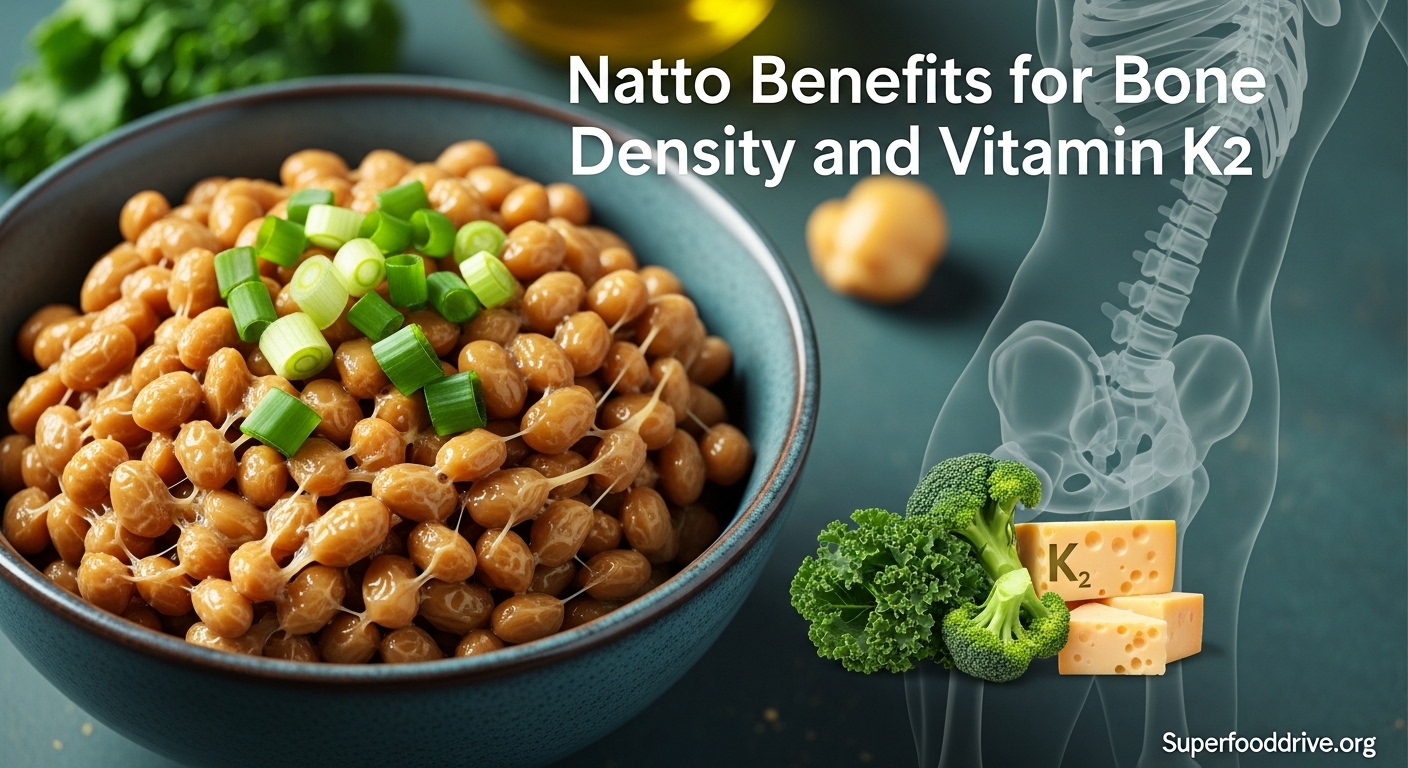
Have you heard about the Japanese superfood that delivers more bone-building vitamin K2 than any other food on earth? Natto, a fermented soybean dish with a distinctive texture and powerful health benefits, contains approximately 700 micrograms of vitamin K2 per 100 grams. That is over seven times the amount found in the next best food source.
For anyone concerned about bone density, especially postmenopausal women and older adults, understanding how natto supports skeletal health could be a game-changer. In this guide, I will explain exactly how natto benefits bone density through its vitamin K2 content, how much you need to eat, and practical ways to incorporate this potent food into your diet.
Table of Contents
What Is Natto?
Natto is a traditional Japanese food made by fermenting cooked soybeans with Bacillus subtilis var. natto, a beneficial bacterium that transforms ordinary soybeans into a nutrient powerhouse. The fermentation process creates a distinctive sticky, stringy texture and a strong, pungent aroma that many find challenging at first.
This fermented food has been a breakfast staple in Japan for over a thousand years. Japanese consumers often eat it over rice with soy sauce, mustard, or green onions. The bacteria responsible for fermentation produce several unique compounds, including nattokinase and high concentrations of vitamin K2 in the form of menaquinone-7 (MK-7).
Unlike regular cooked soybeans or tofu, natto undergoes a transformation that unlocks nutrients and creates new bioactive compounds. The fermentation breaks down proteins into more digestible forms and generates vitamin K2, which is virtually absent in unfermented soy products.
Natto’s Nutritional Profile
Beyond its famous vitamin K2 content, natto delivers an impressive array of nutrients. A typical 40-gram serving provides about 7 grams of complete protein, making it a valuable protein source for plant-based eaters. The fermentation process also breaks down phytates, anti-nutrients that can interfere with mineral absorption in unfermented soy.
The standout nutrient is vitamin K2 as MK-7. Research shows that 100 grams of natto contains approximately 700 micrograms of MK-7, while a more manageable 40-gram serving still delivers around 350 micrograms. This form of vitamin K2 stays in the bloodstream longer than other forms, providing sustained benefits for bone and cardiovascular health.
Natto also contains nattokinase, a fibrinolytic enzyme that may support cardiovascular health by helping to break down blood clots. Additionally, the live bacteria in natto provide probiotic benefits for gut health, while the fiber content supports digestive regularity.
How Vitamin K2 Supports Bone Health
Vitamin K2 plays a critical role in bone metabolism that many people do not fully understand. Here is how it works in simple terms.
Your bones contain a protein called osteocalcin. This protein helps bind calcium to the bone matrix, essentially anchoring calcium where it belongs. However, osteocalcin must be activated through a process called carboxylation before it can do its job.
Vitamin K2 is the activator. Without adequate K2, osteocalcin remains inactive, and calcium cannot properly integrate into your bone structure. This is why vitamin K2 deficiency is linked to weaker bones and higher fracture risk, even in people who consume plenty of calcium.
Think of K2 as the traffic director for calcium. It activates proteins that direct calcium into bones and teeth while keeping it away from soft tissues like arteries. This dual action makes K2 essential for both skeletal strength and cardiovascular health.
Research Evidence: Natto and Bone Density
Scientific research supports the connection between natto consumption and better bone health. Multiple studies have examined this relationship with compelling results.
A study published in the Journal of Nutrition examined Japanese postmenopausal women and found that those who regularly consumed natto had significantly higher bone mineral density compared to non-consumers. The researchers attributed this benefit to the high MK-7 content.
Another important study tracked serum MK-7 levels and found that habitual natto intake elevated these levels substantially. Higher circulating MK-7 correlated with better osteocalcin carboxylation, meaning the vitamin K2 was actively supporting bone-building processes.
Research also indicates that natto consumption may reduce bone loss in postmenopausal women. One study showed that women who ate natto regularly experienced less decline in bone mineral density at the femoral neck, a common fracture site, compared to those who did not consume natto.
How Much Natto to Eat for Bone Health
The most common question I hear is “How much natto should I eat daily?” Here is what the research and nutritional data suggest.
A 40-gram serving of natto provides approximately 350 micrograms of vitamin K2 as MK-7. This is well above the recommended daily intake for bone health, which typically ranges from 100 to 200 micrograms for adults. Even a smaller 20-gram serving delivers about 175 micrograms, which may be sufficient for maintenance.
For therapeutic bone support, especially for those with low bone density or osteoporosis risk, studies have used amounts equivalent to 40-100 grams of natto daily. Starting with 40 grams (about one small container) three to four times per week is a practical approach for most people.
The key is consistency. Because MK-7 has a long half-life in the body, regular consumption matters more than exact daily amounts. Eating natto several times per week provides sustained K2 levels for continuous bone support.
Natto vs Other Vitamin K2 Sources
Understanding how natto compares to other K2 sources helps you make informed dietary choices. The differences are significant.
Natto stands alone as the richest food source of vitamin K2. With approximately 700 micrograms per 100 grams, it dwarfs other options. Hard cheeses like gouda and edam provide about 75 micrograms per 100 grams. Egg yolks contain roughly 30-60 micrograms per 100 grams. Other fermented foods like sauerkraut provide minimal amounts.
Supplements can deliver concentrated K2, but food sources like natto provide additional nutrients and co-factors. The MK-7 in natto is naturally bound within the food matrix, which may enhance absorption and utilization compared to isolated supplements.
Tofu and regular soybeans, while healthy foods, contain virtually no vitamin K2. The fermentation process is what creates the K2, which is why natto offers benefits that unfermented soy cannot match.
How to Incorporate Natto Into Your Diet
If you are new to natto, the texture and smell can be challenging. I have learned several strategies from regular natto eaters that make this superfood more approachable.
Start with small amounts mixed into familiar dishes. Stir natto into rice with soy sauce, sesame oil, and chopped green onions. The rice dilutes the intensity while you adjust to the flavor. Adding mustard, either Japanese karashi or Dijon, helps cut the strong taste.
Some people find that freezing natto briefly reduces the stringiness. Others blend it into smoothies where the texture becomes less noticeable. You can also mix natto into soups or stews after cooking to preserve the live bacteria and enzymes.
The key is persistence. Many long-time natto eaters report developing a genuine taste for it after several attempts. The acquired taste phenomenon is real with fermented foods.
Where to Find Quality Natto
Finding natto in Western countries is easier than ever. Asian grocery stores, particularly Japanese and Korean markets, typically stock natto in the refrigerated or freezer section. Look for it near other fermented foods like kimchi and miso.
Online retailers also offer frozen natto that ships nationwide. Japanese brands like Shirakiku and JFC are widely available. Some health food stores now carry natto as awareness of its benefits grows.
When buying natto, check the ingredients. Traditional natto contains only soybeans and Bacillus subtilis culture. Some commercial versions add sauce packets, which you can use or skip based on your taste preferences.
Safety Considerations and Who Should Avoid Natto
While natto offers impressive benefits, it is not appropriate for everyone. Understanding contraindications is essential.
The most important warning involves blood thinners. People taking warfarin or other vitamin K antagonists must avoid natto or only consume it under medical supervision. The extremely high vitamin K content can interfere with these medications, potentially causing dangerous blood clotting issues.
Those with soy allergies should avoid natto entirely. If you have histamine intolerance, fermented foods like natto may trigger symptoms. People with certain thyroid conditions may need to moderate soy consumption.
Pregnant women should consult their healthcare provider before adding natto to their diet. While vitamin K is important for pregnancy, the potent effects of concentrated K2 warrant professional guidance.
Frequently Asked Questions
How much natto to eat for osteoporosis?
Research suggests that 40-100 grams of natto several times per week provides therapeutic levels of vitamin K2 for bone support. A 40-gram serving delivers approximately 350 micrograms of MK-7, which exceeds daily recommended amounts. Consistency matters more than exact daily amounts. Start with 40 grams three to four times weekly and adjust based on tolerance and results.
What is the number one vitamin to rebuild bone density?
Vitamin K2 is considered the most important vitamin for activating bone-building proteins. It carboxylates osteocalcin, enabling it to bind calcium to bone matrix. While calcium and vitamin D are essential building blocks, K2 is the activator that directs calcium into bones. Natto provides the highest concentration of K2 as MK-7, the most bioavailable and long-acting form.
Should you take vitamin K2 with nattokinase?
Nattokinase and vitamin K2 coexist naturally in natto and work synergistically. Nattokinase supports cardiovascular health by helping to break down fibrin, while K2 directs calcium away from arteries and into bones. If you take nattokinase supplements separately, you may miss the K2 that comes with whole food natto. Those on blood thinners should avoid both nattokinase and high-K2 foods.
How much natto a day for K2?
A 40-gram serving of natto provides approximately 350 micrograms of vitamin K2 as MK-7, which is sufficient for most adults daily requirements. Eating this amount three to four times per week maintains adequate K2 levels due to MK-7s long half-life. For therapeutic bone support, daily consumption of 40-100 grams may be beneficial under professional guidance.
Conclusion
Natto benefits for bone density and vitamin K2 are well-supported by scientific research. This traditional Japanese fermented food delivers the highest concentration of MK-7 available in any natural source, providing your body with the specific nutrient needed to activate bone-building proteins.
For anyone concerned about bone health, especially postmenopausal women facing increased osteoporosis risk, incorporating natto into your diet several times per week offers a natural, food-based approach to skeletal support. Start with small amounts, experiment with preparation methods, and give yourself time to acquire the taste. Your bones will thank you.