
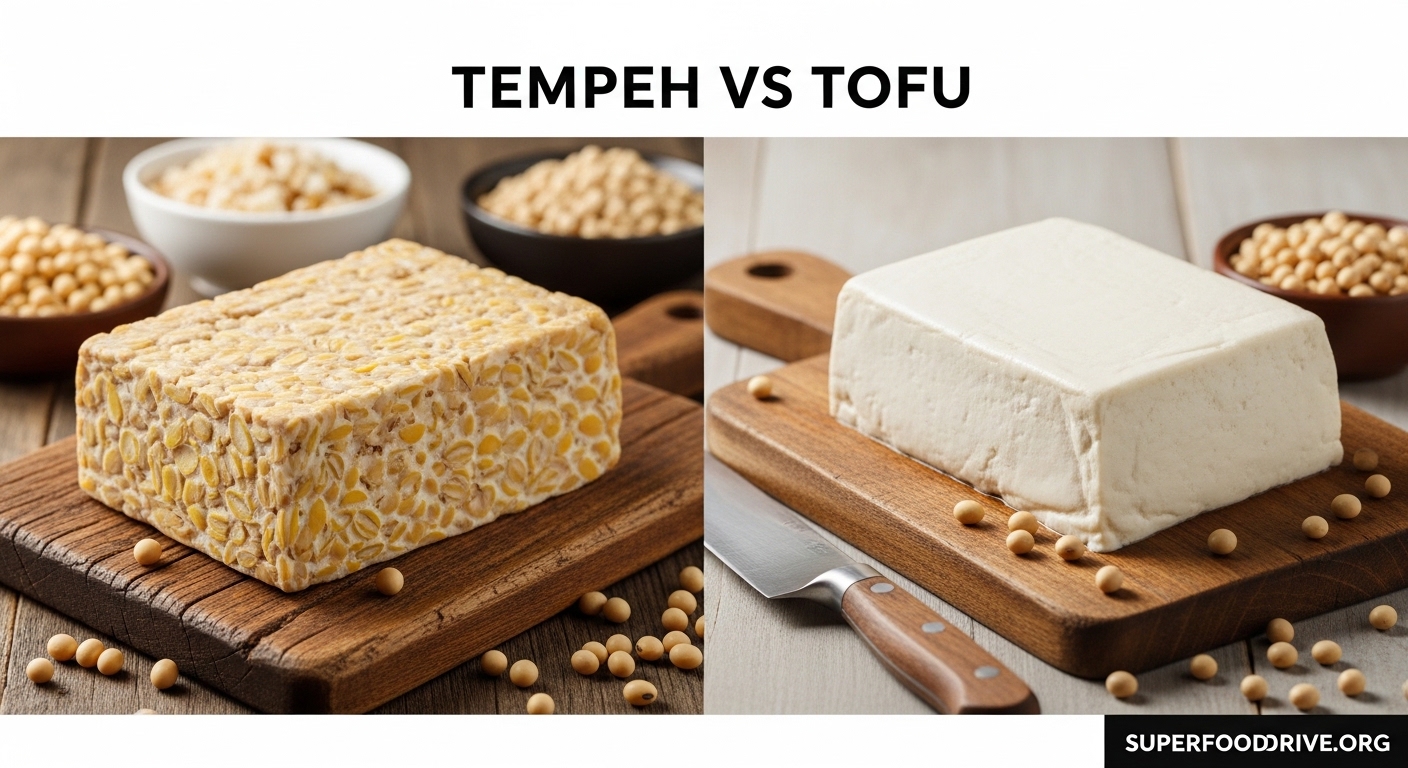
If you’re exploring plant-based protein options, you’ve probably encountered the tempeh vs tofu debate. Both are soy-based foods that have become staples in vegetarian and vegan diets worldwide. But when it comes to nutrition, taste, and health benefits, these two ingredients are quite different.
Our team has spent months researching fermented soy products and consulting nutrition data to bring you this comprehensive comparison. In this guide, you’ll learn exactly how tempeh and tofu differ in their production methods, nutritional profiles, and health impacts. We’ll also address common concerns about phytoestrogens, digestibility, and which option might work better for your specific dietary needs.
By the end of this article, you’ll have clear answers to questions like “What’s better for you, tempeh or tofu?” and “Does tempeh have more estrogen than tofu?” We’ll also explore how to cook each ingredient, what they taste like, and how to incorporate them into your daily meals. Let’s dive into the details.
Table of Contents
What is Tempeh?
Tempeh is a traditional Indonesian food made from fermented whole soybeans. The fermentation process uses a specific type of mold called Rhizopus oligosporus, which binds the soybeans together into a firm, dense cake. This ancient food has been a protein cornerstone in Indonesian cuisine for centuries.
Unlike many processed soy products, tempeh retains the whole soybean structure. This means you get all the fiber, protein, and nutrients present in the original bean. The fermentation process also creates beneficial compounds that aren’t found in unfermented soy, including probiotics and prebiotics that support digestive health.
Origins and Traditional Production
The origins of tempeh trace back hundreds of years to the island of Java in Indonesia. Historical records suggest that tempeh production began sometime between the 16th and 19th centuries, likely discovered accidentally when cooked soybeans fermented naturally. The warm, humid climate of Indonesia provided ideal conditions for this fermentation process to develop.
Traditional preparation involves several carefully controlled steps. First, dried soybeans are soaked overnight to soften them. The beans are then boiled until tender, drained, and cooled to the right temperature for inoculation. A starter culture containing Rhizopus spores is mixed with the beans, and the mixture is packed into perforated containers that allow air circulation.
The inoculated beans are then incubated for 24 to 48 hours at temperatures between 85°F and 90°F. During this time, the white mycelium of the mold grows throughout the beans, binding them together into a solid cake. The finished tempeh has a distinctive white coating and firm texture that holds together when sliced.
Modern Varieties
Modern tempeh production maintains these traditional methods while adding quality control measures for food safety and consistency. Today you can find several varieties of tempeh in stores and markets.
Soy tempeh is the classic version made entirely from fermented soybeans. Some producers add grains like barley, millet, brown rice, or flax seeds to create multigrain tempeh. These variations add different flavors, textures, and nutritional profiles. There are also tempeh products made from other legumes like black beans, chickpeas, or lentils for those seeking alternatives to soy.
You can identify good quality tempeh by its white mycelium coating and firm texture. A thin layer of dark spots is normal and safe to eat—it simply indicates mature spores. However, extensive dark coloring, sliminess, or off-odors indicate spoilage and the product should be discarded.
Flavor Profile
The flavor of tempeh is distinctively earthy, nutty, and slightly fermented. Some people detect subtle mushroom-like or yeast notes in the background. This taste profile makes it an excellent meat substitute in savory dishes, though it does require an acquired taste according to many Reddit users in vegan cooking communities.
Fresh tempeh has a mild, pleasant aroma. The fermentation creates umami compounds that enhance savory dishes. When cooked, tempeh develops a nutty, almost meaty flavor that satisfies those seeking hearty plant-based proteins. The flavor intensifies when marinated and becomes even more pronounced when grilled or pan-fried.
What is Tofu?
Tofu, also known as bean curd, originated in China over 2,000 years ago. Legend attributes its invention to Prince Liu An during the Han Dynasty, though the exact origins remain uncertain. It has since become a dietary staple throughout East Asia and now enjoys worldwide popularity as a versatile plant-based protein source.
The production process differs significantly from tempeh. Rather than fermenting whole beans, tofu production involves extracting protein from soy milk and coagulating it into solid blocks. This creates a completely different texture and nutritional profile compared to tempeh.
The Production Process
Tofu makers begin by soaking dried soybeans in water for several hours to rehydrate them. The soaked beans are then ground with fresh water to create a slurry. This slurry is boiled to extract the soy milk, after which the solids are strained out, leaving a smooth, protein-rich liquid.
Coagulants are then added to separate the curds from the whey. The most common coagulants include calcium sulfate (gypsum), magnesium chloride (nigari), or glucono delta-lactone. Each coagulant creates slightly different textures and mineral contents. Calcium sulfate produces a firmer tofu with higher calcium content, while nigari creates a softer, smoother texture.
The curds are then transferred to molds and pressed to remove excess liquid. The amount of pressing determines the final firmness of the tofu. The resulting blocks are cooled in water and packaged for sale.
Types of Tofu
You’ll find several types of tofu available in stores, each suited to different culinary applications. Understanding these varieties helps you choose the right tofu for your recipe.
Silken tofu has a custard-like texture with high water content. It works beautifully in smoothies, desserts, salad dressings, and soups where you want a creamy consistency without visible curds. Because of its delicacy, silken tofu doesn’t hold its shape well during cooking.
Regular or soft tofu holds its shape better than silken but remains quite delicate. It works well in soups and can be gently pan-fried. Medium-firm tofu offers more body while still maintaining some softness, making it suitable for scrambles and light frying.
Firm and extra-firm varieties have had more moisture pressed out, creating denser blocks that can be pan-fried, baked, or grilled without falling apart. These are the best choices for stir-fries, grilling, and any application where you want the tofu to maintain its shape.
Flavor Characteristics
On its own, tofu has a very mild, almost bland flavor. This neutral taste makes it incredibly versatile—it absorbs marinades and seasonings like a sponge. As one Reddit user noted in r/vegan, “Soft tofu is underrated—good in soups, ramen, smoothies.” This adaptability is why tofu appears in cuisines from Japanese to Thai to American vegan cooking.
The texture ranges from silky smooth to chewy and meat-like depending on the variety and preparation method. Proper pressing removes excess moisture, allowing firmer tofu to develop a golden crust when pan-fried. The interior remains tender and creamy, creating a pleasant textural contrast.
Tempeh vs Tofu: Nutritional Comparison
When comparing tempeh vs tofu nutrition, the differences are significant. Tempeh generally packs more nutrients per serving, largely because it uses whole soybeans while tofu uses extracted soy milk. This fundamental difference in processing creates distinct nutritional profiles that may influence your choice depending on your health goals.
The following table shows nutritional values per 100 grams of each food, based on USDA FoodData Central:
| Nutrient | Tempeh | Tofu (Firm) |
|---|---|---|
| Calories | 193 kcal | 144 kcal |
| Protein | 19 grams | 17 grams |
| Total Fat | 11 grams | 9 grams |
| Carbohydrates | 9 grams | 3 grams |
| Fiber | 6 grams | 2 grams |
| Calcium | 111 mg | 372 mg |
| Iron | 2.7 mg | 2.0 mg |
| Magnesium | 81 mg | 37 mg |
| Phosphorus | 266 mg | 167 mg |
| Zinc | 1.1 mg | 1.0 mg |
| Isoflavones | 43-62 mg | 27-28 mg |
Protein Content Analysis
Looking at protein content, tempeh edges out tofu with about 19 grams per 100 grams compared to tofu’s 17 grams. While this difference may seem small, it adds up over multiple servings. For someone consuming 200 grams daily, tempeh provides 4 extra grams of protein—that’s equivalent to a small egg.
Both foods provide complete proteins containing all nine essential amino acids your body needs. This completeness is rare in plant foods and makes both tempeh and tofu exceptional protein sources for those following vegetarian or vegan diets. The protein quality score (PDCAAS) for soy protein is approximately 1.0, matching animal proteins.
Fiber Differences
The fiber difference is dramatic and represents one of the most significant nutritional distinctions between these foods. Tempeh delivers three times more fiber than firm tofu—6 grams versus 2 grams per 100-gram serving. This fiber comes from the whole soybean structure that tempeh preserves.
For adults aiming for the recommended 25 to 38 grams of fiber daily, a 200-gram serving of tempeh provides nearly half that amount. The fiber in tempeh includes both soluble and insoluble types, supporting digestive health, blood sugar regulation, and satiety. Tofu’s lower fiber content results from the extraction process that removes the fibrous bean hulls.
Vitamin and Mineral Comparison
Where tofu shines is calcium content. Firm tofu prepared with calcium sulfate as a coagulant contains significantly more calcium—about 372 mg compared to tempeh’s 111 mg per 100 grams. This makes tofu particularly valuable for those avoiding dairy products or seeking to increase bone mineral density.
Tempeh provides more iron, magnesium, phosphorus, and zinc than tofu. The iron content is especially notable—2.7 mg per 100 grams provides about 15% of the daily requirement for adult men and 8% for premenopausal women. The magnesium content supports muscle function and sleep quality, while phosphorus plays essential roles in bone health and energy metabolism.
Key Similarities Between Tempeh and Tofu
Despite their differences, tempeh and tofu share important nutritional characteristics that make them valuable additions to plant-based diets. Understanding these commonalities helps you appreciate why both foods deserve a place in your meal rotation.
Both foods are rich in isoflavones, a type of phytoestrogen that mimics estrogen in the body. Research suggests these compounds may reduce the risk of heart disease and certain cancers. A typical serving of either food provides 25 to 60 milligrams of isoflavones, primarily as genistein and daidzein.
Heart Health Benefits
Heart health benefits are well-documented for both options. Regular consumption of soy protein has been shown to lower LDL (bad) cholesterol levels by 3 to 4 percent. This modest reduction can translate to meaningful cardiovascular protection over time, particularly when combined with other heart-healthy dietary patterns.
The isoflavones in both foods may also improve blood vessel function and reduce inflammation. Studies have shown that populations with high soy consumption tend to have lower rates of heart disease. The Food and Drug Administration has approved a health claim stating that 25 grams of soy protein daily may reduce the risk of heart disease.
Complete Protein Sources
Both tempeh and tofu provide complete proteins, meaning they contain all nine essential amino acids in sufficient quantities. This makes them valuable protein sources for vegetarians, vegans, and anyone reducing meat consumption. You don’t need to combine them with other proteins to meet your amino acid needs.
Each food is naturally low in saturated fat and contains no cholesterol. They both fit well within heart-healthy dietary patterns like the Mediterranean diet and DASH diet. Additionally, both are gluten-free, making them suitable for people with celiac disease or gluten sensitivity.
Key Differences: Processing, Probiotics, and More
The most fundamental difference between tempeh and tofu lies in their processing methods. Tempeh undergoes natural fermentation while tofu relies on chemical coagulation. This distinction creates cascading differences in nutrition, digestibility, and health effects.
Fermentation vs. Coagulation
Tempeh is minimally processed. The whole soybeans remain intact, only bound together by beneficial mold. This fermentation creates probiotics—live beneficial bacteria that support gut health. The Rhizopus mold produces enzymes that break down complex compounds, making nutrients more bioavailable.
Tofu involves more extensive processing. The soybeans are ground, boiled, and strained to extract soy milk. Coagulants then separate the proteins from the liquid. While not heavily processed compared to many modern foods, this process removes some fiber and nutrients found in the whole bean.
Probiotic and Prebiotic Content
The fermentation process gives tempeh significant digestive advantages. The living mold culture provides probiotics—beneficial microorganisms that support a healthy gut microbiome. Additionally, the whole soybean fiber serves as prebiotics, feeding your existing beneficial bacteria.
Tofu contains neither probiotics nor prebiotics. The cooking process kills any naturally occurring bacteria, and the extraction process removes the fibrous components that would feed gut bacteria. For gut health specifically, tempeh offers clear advantages over tofu.
Digestibility Factors
The fermentation process gives tempeh advantages in digestibility. The mold partially breaks down oligosaccharides—complex sugars that can cause gas and bloating. This makes tempeh easier on the digestive system for many people, though its stronger flavor can be challenging initially.
Tofu contains more of these complex sugars in their intact form, potentially causing more digestive discomfort for sensitive individuals. However, the lower fiber content makes tofu gentler for some people, particularly those with active digestive conditions.
Texture and Flavor Contrasts
Texture differs dramatically between the two. Tempeh has a firm, chewy texture with visible whole beans. It holds its shape well during cooking and provides a satisfying bite similar to meat. The compact structure resists crumbling even when sliced thin.
Flavor profiles also contrast sharply. Tempeh offers an earthy, nutty, slightly fermented taste that stands up to bold seasonings. Tofu is neutral and bland, which makes it a blank canvas that takes on whatever flavors you add. This neutrality is either tofu’s greatest strength or weakness depending on your cooking style.
Tempeh vs Tofu: Which is Healthier?
Tempeh is generally considered the healthier option due to its superior nutrient density and additional health benefits from fermentation. The whole food nature, higher protein, significantly more fiber, and probiotic content give it a nutritional edge for most people.
However, the answer depends on your specific health goals and dietary needs. No single food is perfect for everyone, and individual circumstances may make tofu the better choice in certain situations.
When to Choose Tempeh
If you’re seeking more protein and fiber with gut health benefits, tempeh is the clear winner. The fermentation provides probiotics you won’t find in tofu, and the 6 grams of fiber per serving supports healthy digestion and blood sugar regulation. The higher mineral content also supports overall metabolic health.
For people with diabetes or prediabetes, tempeh may be the better choice. The higher fiber and protein content, combined with the fermentation benefits, support better blood sugar control. The glycemic impact of tempeh is lower than that of tofu, making it less likely to cause blood sugar spikes.
When to Choose Tofu
If you need more calcium in your diet, firm tofu prepared with calcium sulfate provides over three times the calcium of tempeh. Those counting calories might prefer tofu at 144 calories per 100 grams compared to tempeh’s 193 calories. This 50-calorie difference per serving can matter for those in caloric deficit.
Those with IBS may tolerate tofu better initially, particularly the silken or soft varieties. The lower fiber content puts less stress on sensitive digestive systems. However, tempeh’s fermentation actually makes it more digestible long-term, so starting with small portions and gradually increasing can help your gut adjust.
The Verdict
Ultimately, both foods are healthy choices with different strengths. Including both in your diet gives you the benefits of each—tofu’s calcium and versatility alongside tempeh’s fiber and probiotics. Rather than choosing one exclusively, we recommend alternating between them based on your nutritional needs and culinary preferences.
Taste and Texture: What to Expect
Understanding the taste and texture differences helps you choose the right ingredient for your meal and palate. These sensory characteristics often determine whether someone becomes a fan of plant-based eating or gives up prematurely.
Tofu Taste Profile
Tofu has a very mild, almost flavorless taste that some describe as slightly bean-like or milky. This neutrality is actually its superpower—you can make tofu taste like almost anything through marinades, spices, and cooking methods. Reddit users in r/veganfitness note that “tofu is more versatile and tastes better” when properly seasoned.
The lack of strong flavor means tofu works in sweet applications like smoothies and desserts equally well as in savory dishes. It can become Italian with basil and tomatoes, Mexican with cumin and chilies, or Asian with soy and ginger. This chameleon-like quality makes tofu invaluable for diverse meal planning.
Tempeh Taste Profile
Tempeh delivers a bold, earthy, nutty flavor with subtle fermented notes. Some people detect mushroom or yeast-like undertones. This distinctive taste can be polarizing—people tend to love it or need time to adjust. Forum discussions reveal that many people need time to acquire a taste for tempeh, but once they do, they often prefer it to tofu.
The fermentation creates umami compounds that give tempeh a savory depth even before seasoning. This makes it satisfying for former meat-eaters seeking substantial flavors. The taste pairs beautifully with smoky, tangy, or spicy preparations.
Texture Comparison
Texture-wise, tofu ranges from custard-soft (silken) to quite firm and meaty (extra-firm). When pressed and pan-fried, firm tofu develops a pleasant chewy exterior with a tender interior. The uniform, smooth texture works well in dishes where you want protein without textural interference.
Tempeh has a dense, firm, slightly crumbly texture with visible whole soybean pieces. It provides a substantial bite that many find more satisfying than tofu. Reddit users often describe tempeh as “vastly superior for most purposes” when seeking a meat substitute because of its hearty, non-uniform texture.
Both benefit enormously from proper preparation. Marinating is essential—tofu especially absorbs flavors well after pressing out excess water. Tempeh takes well to steaming before marinating, which opens its pores and allows deeper flavor penetration.
Culinary Uses and Preparation Tips
Knowing how to cook each ingredient unlocks their full potential in your kitchen. Proper technique transforms these humble soy products into restaurant-worthy dishes.
Cooking with Tofu
Tofu works in virtually any cuisine and cooking method. The key is matching the variety to the application. Crumble soft tofu into scrambles as an egg replacement, seasoned with turmeric for color and nutritional yeast for savory depth. Blend silken tofu into smoothies for protein without grittiness—it creates a creamy texture indistinguishable from dairy.
Cube firm tofu for stir-fries, or slice and pan-fry until golden for sandwiches and grain bowls. Baking creates a chewy texture perfect for buffalo-style appetizers or barbecue preparations. The key to great tofu is pressing—remove excess moisture by wrapping tofu in clean towels and placing a weight on top for 15 to 30 minutes. This allows the tofu to absorb marinades better and develop crispy edges when cooked.
Cooking with Tempeh
Tempeh excels in hearty, savory dishes where its nutty flavor complements other ingredients. Slice it thin for sandwiches and wraps, or cube it for stir-fries and grain bowls. It makes excellent bacon substitutes when thinly sliced and seasoned with smoky spices, liquid smoke, and maple syrup. Crumble it as a ground meat replacement in tacos, pasta sauces, or chili.
Preparation tip from experienced cooks: steam tempeh for 10 minutes before marinating. This softens the dense texture and opens the pores, allowing the marinade to penetrate deeply. Reddit cooking communities frequently recommend this step for transforming tempeh from dry to delicious. After steaming, marinate for at least 30 minutes—tempeh can handle bold, acidic marinades that might break down tofu.
Flavor Pairings
Both ingredients work well with Asian flavor profiles—soy sauce, ginger, garlic, and sesame. Tempeh also pairs beautifully with barbecue sauces, smoky spices, and tangy dressings. Its hearty flavor stands up to bold preparations without being overwhelmed.
Tofu shines in delicate Japanese preparations like agedashi tofu, in creamy sauces, and in sweet applications. The neutral flavor adapts to any cuisine, making it the more versatile option for global cooking.
Phytoestrogens: Addressing Common Concerns
One of the most frequent concerns about soy foods involves phytoestrogens—the plant compounds that can mimic estrogen in the body. Let’s address these concerns with current scientific understanding.
Both tempeh and tofu contain isoflavones, which are classified as phytoestrogens. Tempeh typically contains slightly more—43 to 62 mg per 100 grams compared to tofu’s 27 to 28 mg. However, these plant compounds are not human estrogen and do not act the same way in the body.
Research consistently shows that moderate soy consumption is safe for most people, including men and children. Isoflavones are selective estrogen receptor modulators—they can have weak estrogen-like effects in some tissues while blocking stronger estrogen effects in others. Population studies in Asia, where soy consumption is high, show no negative effects on male hormone levels or fertility.
For breast cancer survivors, soy foods appear safe and may even be protective. The American Cancer Society includes soy foods in their dietary recommendations for cancer survivors. As always, those with specific health conditions should consult their healthcare providers.
Digestibility and Gut Health
How your body processes these foods matters as much as their nutritional content. Digestibility affects comfort, nutrient absorption, and long-term gut health.
Tempeh offers significant advantages for digestive health due to its fermentation. The Rhizopus mold produces enzymes that pre-digest proteins and carbohydrates, making them easier for your body to process. The fermentation also reduces oligosaccharides—the complex sugars that cause gas and bloating.
The probiotics in tempeh contribute to a healthy gut microbiome. These beneficial bacteria support immune function, nutrient absorption, and even mood regulation through the gut-brain axis. The fiber in tempeh serves as prebiotic food for your existing gut bacteria, supporting their growth and activity.
Tofu lacks these probiotic benefits but offers easier digestibility for those with very sensitive systems. The lower fiber content means less work for your digestive tract. However, the intact oligosaccharides in tofu may cause more gas for some people compared to fermented tempeh.
Environmental Sustainability Considerations
Environmental impact increasingly influences food choices. Both tempeh and tofu offer significant advantages over animal proteins, but they differ in their ecological footprints.
Soy production does have environmental concerns, particularly regarding deforestation in regions like the Amazon. However, the vast majority of soy grown globally goes to animal feed, not human food. Direct soy consumption is far more efficient than feeding soy to animals and then eating the animals.
Tempeh may have a slight sustainability edge due to minimal processing. The fermentation requires no chemical inputs and little energy beyond controlled temperature maintenance. Tofu production requires more water and energy for grinding, boiling, and pressing.
Both options remain dramatically more sustainable than meat production. Choosing organic soy products can help address concerns about pesticide use and genetic modification.
How to Choose: A Simple Decision Framework
With all this information, how do you decide which to use? Consider these factors when making your choice.
Choose tempeh when you want maximum nutrition and satiety, need gut health support, prefer bold, savory flavors, or want a meat-like texture. It’s the better choice for diabetics and those seeking higher protein and fiber.
Choose tofu when you need versatility for various cuisines, want to increase calcium intake, prefer neutral flavors that absorb seasonings, or are cooking for someone with very sensitive digestion. It’s ideal for creamy dishes, smoothies, and delicate preparations.
Consider keeping both in your refrigerator. They have similar shelf lives and can be used interchangeably in many recipes once you understand their characteristics.
Frequently Asked Questions
What’s better for you, tempeh or tofu?
Tempeh is generally better for you due to its higher fiber content, more protein, and beneficial probiotics from fermentation. It retains whole soybeans, providing more nutrients per serving. However, tofu offers more calcium and fewer calories, making it a better choice for specific dietary needs. Both are healthy plant-based proteins.
Is tofu good for IBS?
Tofu is generally well-tolerated by people with IBS because it’s low in fiber and FODMAPs. Silken and firm tofu are considered low-FODMAP foods in appropriate portions. However, individual responses vary. Start with small portions and monitor your symptoms. Tempeh may actually become easier to digest over time due to its fermentation, which reduces compounds that cause bloating.
Is tempeh ok for diabetics?
Yes, tempeh is excellent for diabetics. Its high protein and fiber content helps regulate blood sugar levels and improves satiety. The fermentation process may provide additional metabolic benefits. Studies show that soy protein can improve insulin sensitivity. The low glycemic impact of tempeh makes it a smart choice for blood sugar management.
Does tempeh have more estrogen than tofu?
No, tempeh does not have more estrogen than tofu. Both contain similar amounts of phytoestrogens called isoflavones. Tempeh typically contains 43-62 mg per 100g while tofu contains 27-28 mg per 100g, so tempeh actually has slightly more. However, these plant compounds are not human estrogen and do not act the same way in the body. Research shows moderate soy consumption is safe for most people.
Conclusion
The tempeh vs tofu debate doesn’t have a one-size-fits-all answer. Both foods offer excellent plant-based protein with unique benefits that make them valuable additions to a healthy diet. Your choice depends on your nutritional needs, health goals, and personal taste preferences.
Tempeh stands out for its superior nutrition—more protein, significantly more fiber, and probiotics from fermentation. Its whole food nature and minimal processing make it the nutritional winner for most people. The earthy flavor and hearty texture work beautifully in savory dishes as a satisfying meat alternative. For gut health, blood sugar control, and maximum nutrient density, tempeh is the clear choice.
Tofu remains the champion of versatility. Its neutral flavor adapts to any cuisine, while the range of textures from silken to extra-firm offers endless culinary possibilities. The higher calcium content and lower calorie count appeal to those with specific dietary requirements. For creamy dishes, delicate preparations, and maximum adaptability, tofu excels.
Our recommendation? Include both in your regular meal rotation rather than choosing just one. Use tempeh when you want maximum nutrition and a substantial, meaty texture. Reach for tofu when you need a neutral protein that absorbs your favorite flavors or when cooking for diverse palates. Together, they provide a complete spectrum of plant-based protein benefits that support your health in 2026 and beyond.
Start with the one that appeals to you most, learn to prepare it well, and gradually incorporate the other. With practice, both tempeh and tofu become kitchen staples that make plant-based eating delicious, nutritious, and sustainable for the long term.