
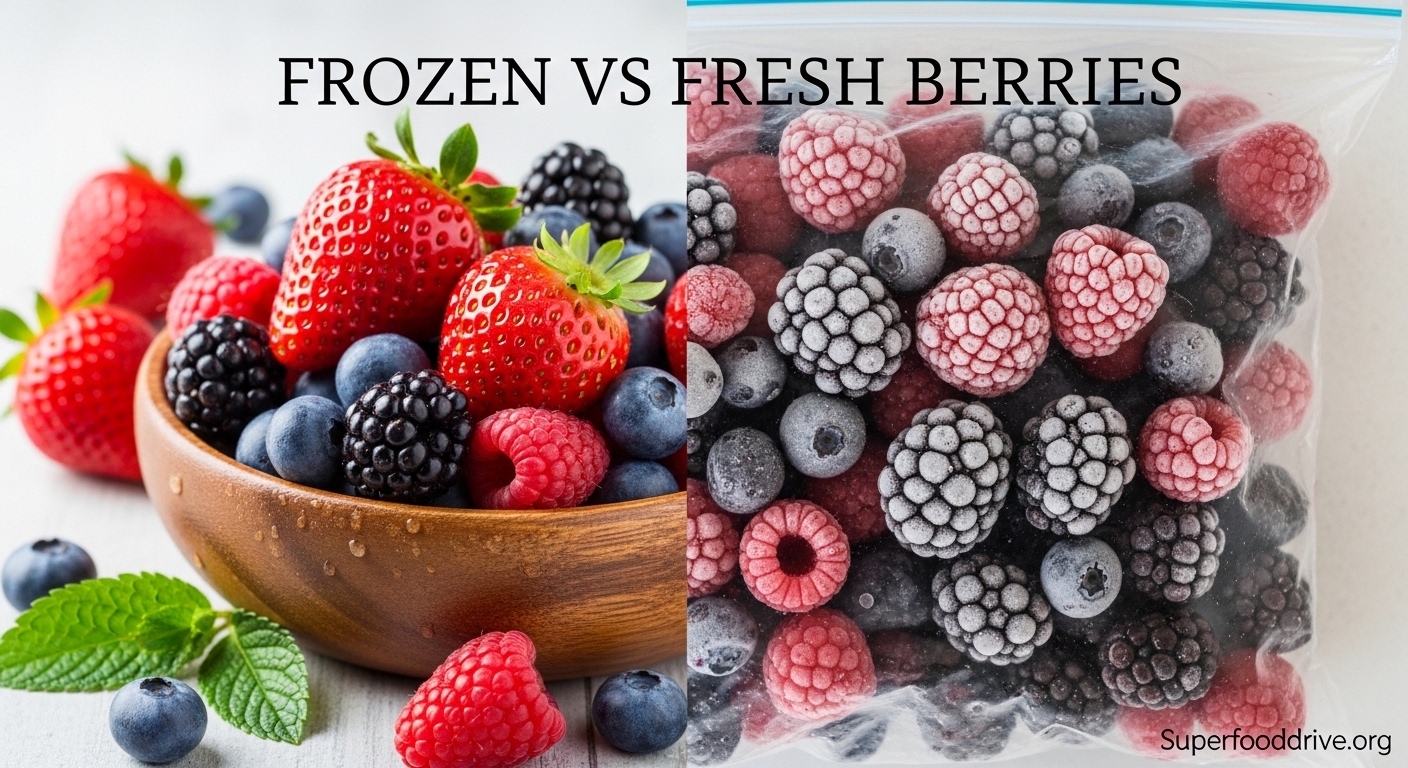
You are not losing nutrients by choosing frozen berries. Research shows that frozen berries often contain equal or higher levels of antioxidants and vitamins compared to fresh berries from the grocery store. This surprising fact comes down to when and how berries are harvested and processed.
I spent weeks reviewing nutritional studies and talking to food scientists about this topic. The truth about frozen vs fresh berries nutrients is more nuanced than most people realize. Both options can be excellent sources of vitamins, fiber, and antioxidants when handled properly.
In this guide, I will explain the science behind nutrient retention, compare popular berry types, and help you decide which option makes sense for your lifestyle and budget.
Table of Contents
How Flash Freezing Preserves Nutrients
Frozen berries are typically harvested at peak ripeness and flash-frozen within hours of picking. This rapid freezing process locks in nutrients at their maximum levels. The technology behind modern flash freezing has transformed how we preserve fruits.
When berries reach peak ripeness on the plant, their antioxidant activity and vitamin content are at their highest. Commercial freezing facilities use temperatures around -40 degrees Fahrenheit to freeze berries within minutes. This quick freeze prevents the formation of large ice crystals that could damage cell walls and cause nutrient loss.
The Science Behind Peak Ripeness Harvesting
Fresh berries sold in grocery stores are often harvested before reaching full ripeness. This practice allows them to survive long transport times without becoming overripe or damaged. Unfortunately, harvesting early means these berries never reach their full nutritional potential.
A study published in the Journal of Agricultural and Food Chemistry found that berries picked at peak ripeness contain significantly higher levels of phenolic compounds and anthocyanins. These antioxidants give berries their vibrant colors and provide many of their health benefits. Flash freezing preserves these compounds for months.
What Nutrients Are Most Stable
Fiber and mineral content remain virtually unchanged during the freezing process. These nutrients are bound within the cellular structure and do not break down when frozen. Antioxidant activity also stays remarkably stable across months of frozen storage.
Water-soluble vitamins like vitamin C and B-vitamins are more susceptible to degradation over time. However, the rapid freezing process actually helps preserve these sensitive nutrients better than extended fresh storage. Once frozen, berries maintain their nutrient density for up to 12 months when stored properly.
Fresh Berry Nutrient Loss Timeline
Fresh berries begin losing nutrients almost immediately after harvest. Vitamin C is particularly vulnerable, degrading when exposed to light, heat, and oxygen during transport and storage. The journey from farm to supermarket can take days or even weeks.
Research indicates that fresh produce can lose up to 15% of its vitamin content during transport and storage before reaching your kitchen. Once in your refrigerator, the degradation continues. Most fresh berries maintain optimal nutrition for only 3 to 7 days after purchase.
The Transportation Problem
Fresh berries often travel hundreds or thousands of miles to reach grocery stores. During this journey, they are stored in controlled atmosphere containers that slow ripening but cannot stop nutrient loss entirely. Temperature fluctuations during shipping accelerate vitamin C degradation.
Blueberries shipped from South America to North American markets may spend two weeks in transit. By the time they reach your cart, their antioxidant levels have already declined significantly from their peak. This timeline explains why frozen berries sometimes test higher for certain nutrients in laboratory analysis.
Storage Conditions Matter
Even under ideal refrigeration, fresh berries continue respiring after harvest. This natural process consumes stored sugars and degrades delicate vitamins. Proper storage at home can slow this process but cannot stop it entirely.
I recommend consuming fresh berries within 3 days of purchase for maximum nutrition. Storing them unwashed in the refrigerator helps preserve their quality. Only wash berries right before eating to prevent moisture from accelerating spoilage.
Nutritional Comparison by Berry Type
Not all berries respond identically to freezing. Understanding how each popular variety handles the process can help you make informed choices about which form to buy.
Blueberries: Frozen Often Wins
Blueberries are one of the best candidates for freezing. Their thick skins protect the delicate flesh inside, and flash freezing actually helps break down cell walls in a way that can make their antioxidants more bioavailable. Studies comparing fresh and frozen blueberries often show frozen varieties with equal or slightly higher anthocyanin content.
The anthocyanins in blueberries provide their deep blue color and contribute to heart health and cognitive function. These compounds remain stable during frozen storage for up to 10 months. When buying fresh blueberries out of season, frozen may actually provide superior nutrition.
Strawberries: A Mixed Picture
Strawberries are more delicate than blueberries and can lose some texture quality when frozen. However, their vitamin C content remains surprisingly well-preserved. Research shows frozen strawberries retain about 90% of their original vitamin C after 6 months of frozen storage.
The main nutritional concern with frozen strawberries is the potential for added sugars in some commercial preparations. Always check ingredient labels to ensure you are buying berries without syrup or added sweeteners. Plain frozen strawberries are nutritionally comparable to fresh.
Raspberries and Blackberries
These soft berries have thin skins that can rupture during freezing, causing some texture loss. Nutritionally, they maintain their fiber and antioxidant content well. The ellagic acid in raspberries, a compound linked to cancer prevention, remains stable through the freezing process.
Fresh raspberries have a very short shelf life, often spoiling within 2 to 3 days of purchase. For this reason, frozen raspberries are often the more practical choice for consistent access to these nutritious berries. Their intense flavor actually concentrates slightly when frozen.
Practical Considerations Beyond Nutrition
While nutrient content is important, other factors influence whether fresh or frozen berries make sense for your household. Cost, convenience, and intended use all play roles in this decision.
Cost Comparison
Frozen berries are typically 30% to 50% less expensive per pound than fresh berries, especially outside of local growing season. This price difference makes frozen berries an attractive option for families on tight budgets who still want to include nutrient-dense fruits in their diet.
Fresh berries command premium prices when out of season. A pint of fresh strawberries might cost $5 or more in winter months, while frozen strawberries remain consistently affordable year-round. The price stability of frozen produce helps with meal planning and budgeting.
Convenience and Shelf Life
Frozen berries last up to 12 months in a standard freezer, eliminating the pressure to consume them quickly. This extended shelf life reduces food waste significantly. Many households find themselves throwing away fresh berries that spoiled before they could be eaten.
For smoothie preparation, frozen berries offer added convenience. They eliminate the need for ice and create a perfectly thick texture. Pre-portioned frozen bags make it easy to grab exactly the amount needed without defrosting the entire package.
Taste and Texture Differences
Fresh berries eaten at peak ripeness offer unmatched flavor and texture. Their firm flesh and juicy burst provide a eating experience that frozen berries cannot replicate. For snacking or fruit salads, fresh berries remain the preferred choice.
When cooked or blended, the texture difference becomes negligible. Frozen berries work beautifully in baked goods, oatmeal, sauces, and smoothies. In fact, many bakers prefer frozen berries because they hold their shape better when folded into batter.
When to Choose Fresh vs Frozen Berries
Both fresh and frozen berries can be healthy choices depending on your specific needs. Here is a simple framework for deciding which to buy.
Choose fresh berries when they are in season locally, when you plan to eat them within a few days, or when texture is important for your recipe. Local farmers markets often sell berries harvested at peak ripeness just hours before sale.
Choose frozen berries for smoothies, baking, budget-conscious shopping, or when you need extended storage. Frozen berries make it easy to keep nutritious fruit on hand even during busy weeks when grocery shopping gets delayed.
Tips for Maximizing Nutrition
Buy fresh berries during their natural growing season in your region. Wash them only before eating. Store them in the refrigerator crisper drawer in a container lined with paper towels to absorb excess moisture.
For frozen berries, avoid packages with visible ice crystals, which indicate thawing and refreezing. Keep your freezer at 0 degrees Fahrenheit or below. Do not thaw frozen berries on the counter at room temperature, as this can promote bacterial growth and accelerate nutrient loss.
Frequently Asked Questions
Are frozen berries less healthy than fresh berries?
Frozen berries are not less healthy than fresh berries. In fact, they often contain equal or higher levels of antioxidants because they are harvested at peak ripeness and flash-frozen immediately. Fresh berries may lose nutrients during transport and storage.
Do frozen berries lose nutrients when thawed?
Frozen berries may lose a small amount of water-soluble vitamins like vitamin C when thawed, especially if you discard the liquid that drains out. To minimize loss, consume the thawed berries with their juices or add them directly to recipes without thawing first.
Are frozen berries good for you?
Frozen berries are excellent for your health. They contain the same fiber, antioxidants, vitamins, and minerals as fresh berries. Studies show that frozen berries maintain their nutritional value for up to 12 months when properly stored.
Can you eat frozen berries straight from the freezer?
Yes, you can safely eat frozen berries directly from the freezer. Many people enjoy them frozen as a refreshing snack. They are also ideal for adding directly to smoothies without thawing first.
Final Thoughts
The debate over frozen vs fresh berries nutrients has a clear winner: both are excellent choices. You are not losing nutrients by choosing frozen berries. In many cases, frozen berries offer superior nutrition because they are harvested at peak ripeness.
Your decision should depend on budget, convenience, and how you plan to use the berries. Keep frozen berries on hand for smoothies and cooking. Enjoy fresh berries when they are in season and you can eat them quickly. Either way, you are making a healthy choice that supports your nutritional goals.
The most important thing is eating berries regularly. Whether fresh or frozen, these colorful fruits provide antioxidants, fiber, and vitamins that support overall health. Stock your kitchen with whichever form helps you consume more berries more often.