
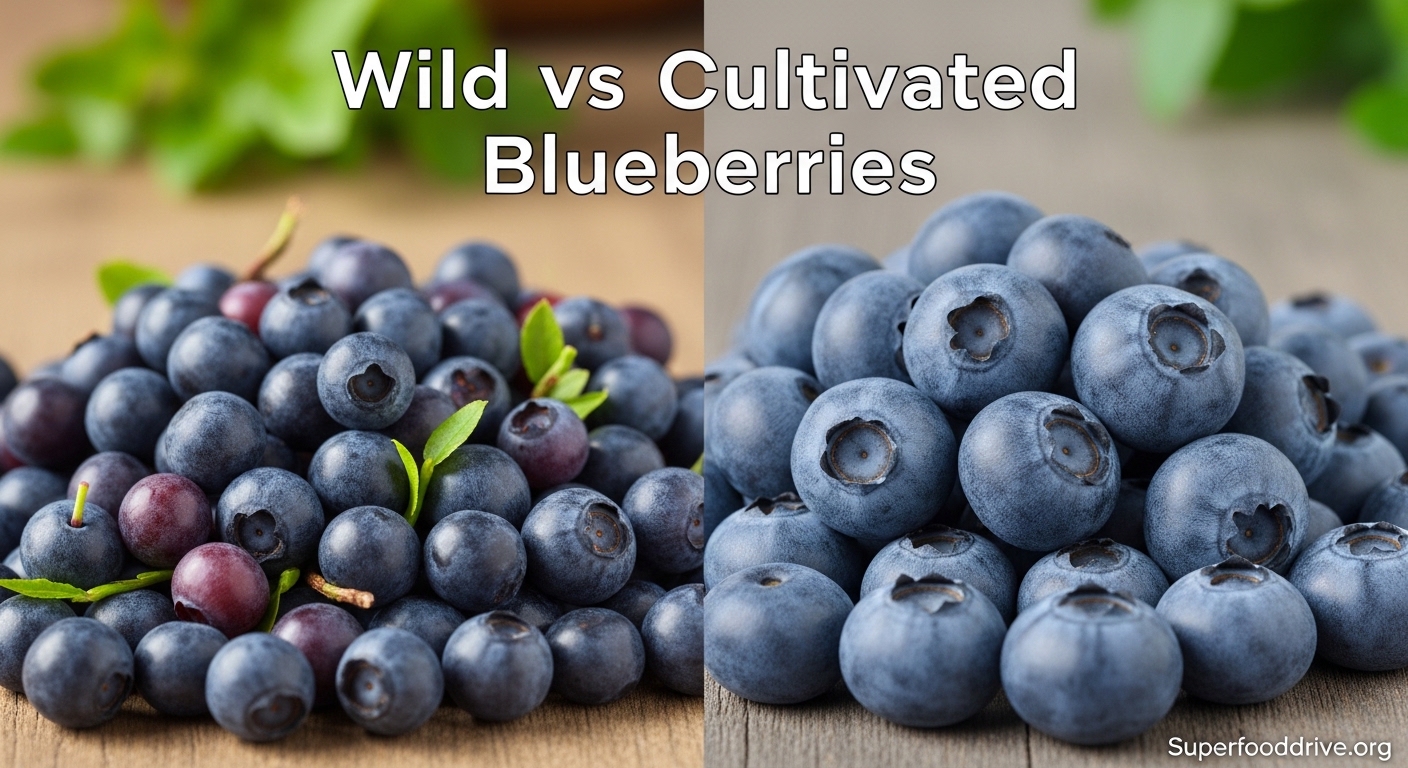
Wild blueberries contain twice the antioxidant capacity of cultivated blueberries, with 33% more anthocyanins per serving. I have spent years researching berry nutrition and examining the science behind these claims. The difference is not just marketing hype. It is rooted in the biological differences between lowbush wild blueberries (Vaccinium angustifolium) and highbush cultivated varieties (Vaccinium corymbosum).
In this guide, I will break down exactly why wild blueberries pack more antioxidant power. You will learn what this means for your health, how to identify true wild blueberries in stores, and whether the extra cost is worth it. Let us dive into the science.
Table of Contents
What Are Wild vs Cultivated Blueberries
Wild blueberries and cultivated blueberries are different species with distinct characteristics. Wild blueberries grow naturally in Maine, Canada, and parts of the Northeast. They are called lowbush blueberries because the plants grow close to the ground, spreading through underground runners. These berries have not been bred for size. They remain small, intensely flavored, and rich in protective compounds.
Cultivated blueberries, also known as highbush blueberries, grow on tall shrubs that can reach 6 to 12 feet. Farmers developed these varieties for consistent size, sweetness, and ease of harvesting. They dominate the fresh blueberry market in grocery stores across America.
The Biological Difference
Wild blueberries (Vaccinium angustifolium) evolved over thousands of years to survive harsh conditions. They developed higher concentrations of protective compounds to defend against environmental stress. Cultivated blueberries (Vaccinium corymbosum) were selectively bred for commercial appeal. Larger berries mean more water content and less concentrated nutrition per berry.
The physical differences are obvious when you compare them side by side. Wild blueberries are pea-sized, deep blue-purple, and have a tangy, intense flavor. Cultivated berries are marble-sized, lighter in color, and sweeter with more water content.
Wild vs Cultivated Blueberries Antioxidants: The Direct Comparison
Wild blueberries have significantly higher antioxidant levels than cultivated varieties. Research from Cornell University found that wild blueberries demonstrate higher cellular antioxidant activity than farm-raised alternatives. The numbers tell a clear story.
Wild blueberries contain 2 times the antioxidant capacity of ordinary blueberries. They deliver 33% more brain-healthy anthocyanins per serving. Their total phenolic content measures higher across multiple studies.
The Skin-to-Pulp Ratio Advantage
The secret lies in the skin. Anthocyanins, the compounds responsible for blueberries’ deep blue color and antioxidant power, concentrate in the skin. Wild blueberries have a higher skin-to-pulp ratio because of their smaller size. More skin per serving means more antioxidants in every bite.
Think of it this way. When you eat a cup of wild blueberries, you are consuming the skin of hundreds of tiny berries. A cup of cultivated blueberries contains fewer berries with proportionally less skin. This difference adds up to measurable nutritional impact.
ORAC Values Compared
ORAC stands for Oxygen Radical Absorbance Capacity. It measures how well foods neutralize free radicals. Wild blueberries consistently score higher on ORAC tests than cultivated varieties. While exact numbers vary by growing conditions and testing methods, wild blueberries typically demonstrate 30 to 50 percent higher antioxidant capacity per gram.
Why Wild Blueberries Have More Antioxidants
The higher antioxidant content in wild blueberries stems from evolutionary biology. Wild plants must defend themselves against environmental threats without human intervention. They produce more phytochemicals as natural protection.
Wild blueberries grow in nutrient-dense glacial soils that have not been depleted by intensive agriculture. They face more stress from weather, insects, and competition. This stress triggers increased production of protective compounds.
Natural Selection vs Selective Breeding
Natural selection favored wild blueberries that could survive harsh winters and poor soils. The plants that produced the most protective compounds survived and reproduced. Cultivated blueberries were bred for traits that appeal to consumers and farmers. Size, sweetness, and shelf life took priority over nutritional density.
The result is a berry that looks better and lasts longer but contains fewer antioxidants per gram. It is not that cultivated blueberries are unhealthy. They simply lack the concentrated nutrition of their wild cousins.
Water Content Dilutes Nutrients
Cultivated blueberries contain more water by volume. When you breed for size, you increase the water content of the fruit. This dilutes the concentration of nutrients. Wild blueberries have less water and more fiber per serving, concentrating the beneficial compounds.
Health Benefits Supported by Research
The higher antioxidant content in wild blueberries translates to measurable health benefits. Multiple studies support the connection between wild blueberry consumption and improved health markers.
Brain Health and Cognitive Function
Research shows that regular wild blueberry consumption supports cognitive function. The anthocyanins cross the blood-brain barrier and accumulate in brain regions responsible for memory and learning. Studies on older adults show improved cognitive performance after daily wild blueberry consumption.
The anti-inflammatory effects may help protect against age-related cognitive decline. While both types of blueberries offer benefits, wild varieties provide more of these protective compounds per serving.
Heart Health Benefits
The American Heart Association recognizes blueberries as heart-healthy food. The polyphenols in wild blueberries help reduce inflammation and improve blood vessel function. Regular consumption may help maintain healthy blood pressure levels.
The 33% higher anthocyanin content in wild blueberries means potentially greater cardiovascular benefits per serving. Anthocyanins have been linked to reduced risk of heart disease in population studies.
Gut Microbiome Support
Both types of blueberries support healthy gut bacteria. The fiber and polyphenols feed beneficial bacteria in your digestive system. Wild blueberries contain more of these compounds, potentially offering greater microbiome support.
A healthy gut microbiome connects to immune function, mental health, and metabolic health. Choosing wild blueberries may amplify these benefits.
Anti-Inflammatory Effects
Chronic inflammation underlies many modern diseases. The polyphenols in wild blueberries have demonstrated anti-inflammatory effects in laboratory and human studies. Higher antioxidant intake correlates with lower inflammatory markers.
Fresh vs Frozen vs Dried: What About Antioxidant Retention
One of the most common questions I hear concerns preparation methods. Do frozen wild blueberries retain their antioxidant benefits? What about cooking or baking?
Fresh wild blueberries offer peak nutrition when in season. However, frozen wild blueberries maintain most of their antioxidant content. The freezing process actually helps preserve anthocyanins by preventing oxidation. Many nutritionists consider frozen wild blueberries just as healthy as fresh.
Cooking Effects on Anthocyanins
Heat affects anthocyanins. Prolonged cooking at high temperatures can break down these beneficial compounds. However, baking with blueberries does not eliminate all benefits. You still get fiber, vitamins, and some antioxidants.
To maximize antioxidant retention, eat blueberries raw or minimally processed. Add them to smoothies, yogurt, or oatmeal without extensive cooking. If you do bake with them, use gentler heat and shorter cooking times when possible.
Best Preparation Methods
For maximum antioxidant intake, eat wild blueberries raw. Thaw frozen berries and add them to cold dishes. Avoid microwaving at high power, which can degrade heat-sensitive compounds.
When making smoothies, blend briefly to minimize heat from friction. Store fresh berries in the refrigerator and eat within a few days of purchase. Frozen berries maintain quality for months when kept at consistent freezer temperatures.
How to Identify and Buy Wild Blueberries
Finding true wild blueberries requires reading labels carefully. Many products labeled “wild” in mainstream stores are not actually wild blueberries. Here is what to look for.
True wild blueberries are typically sold frozen. Fresh wild blueberries appear seasonally, usually in late summer, and primarily in regions where they grow naturally. Look for “Wild Blueberries” or “Lowbush Blueberries” on the package. The berries should be small and intensely colored.
Label Reading Tips
Check the ingredient list. True wild blueberry products list “wild blueberries” or “lowbush blueberries” as the main ingredient. Be wary of products that say “wild blueberry flavor” or “made with wild blueberries.” These often contain mostly cultivated berries with minimal wild content.
Geographic origin matters. Authentic wild blueberries come from Maine, Eastern Canada, and parts of New England. Packages often highlight this provenance.
Cost Considerations
Wild blueberries cost more than cultivated varieties. The price reflects harvesting challenges and lower yields. Wild blueberries must be harvested by hand or with specialized equipment from low-growing plants. The berries are smaller, so you need more of them per pound.
Many health-conscious consumers find the extra cost worthwhile for the concentrated nutrition. You can stretch your budget by buying frozen wild blueberries in bulk when on sale.
Frequently Asked Questions
Are cultivated blueberries as healthy as wild blueberries?
Both types are healthy, but wild blueberries contain twice the antioxidant capacity and 33% more anthocyanins. Cultivated blueberries still provide significant fiber, vitamins, and antioxidants. They remain an excellent healthy choice even if they are not as nutrient-dense as wild varieties.
Which blueberry has the most antioxidants?
Wild blueberries have the highest antioxidant content of common blueberry varieties. They contain 2 times the antioxidant capacity of cultivated blueberries due to their higher skin-to-pulp ratio and concentrated phytochemical content.
Do blueberries help lower A1C?
Research suggests blueberries may support healthy blood sugar levels. The anthocyanins in blueberries have been linked to improved insulin sensitivity. However, blueberries should complement, not replace, medical treatment for blood sugar management. Wild blueberries may offer enhanced benefits due to higher anthocyanin content.
Are wild blueberries worth the extra cost?
Whether wild blueberries are worth the cost depends on your health goals and budget. They provide more antioxidants per serving, which may offer enhanced benefits for brain health and inflammation. If budget allows, wild blueberries are a worthwhile investment in nutrition. If not, cultivated blueberries still provide substantial health benefits.
Are frozen wild blueberries as healthy as fresh?
Frozen wild blueberries retain most of their antioxidant content. The freezing process preserves anthocyanins and other beneficial compounds. Many studies use frozen wild blueberries with positive results. Frozen berries may actually maintain more consistent nutrient levels than fresh berries that have been transported long distances.
Conclusion
Wild blueberries contain significantly more antioxidants than cultivated varieties. The 2x antioxidant capacity and 33% higher anthocyanin content make them the superior choice for maximizing nutritional benefits. The higher skin-to-pulp ratio concentrates these beneficial compounds in every serving.
That said, both wild and cultivated blueberries support health. If you can find and afford wild blueberries, they offer the most antioxidant bang for your buck. If cultivated blueberries fit your budget and availability better, you are still making a healthy choice. The most important thing is eating blueberries regularly, regardless of type.
Wild vs cultivated blueberries antioxidants comparison shows clear differences, but either option contributes to a healthy diet. Look for frozen wild blueberries in your grocery store freezer section, and enjoy the brain-boosting, heart-protecting benefits these powerful berries provide.