
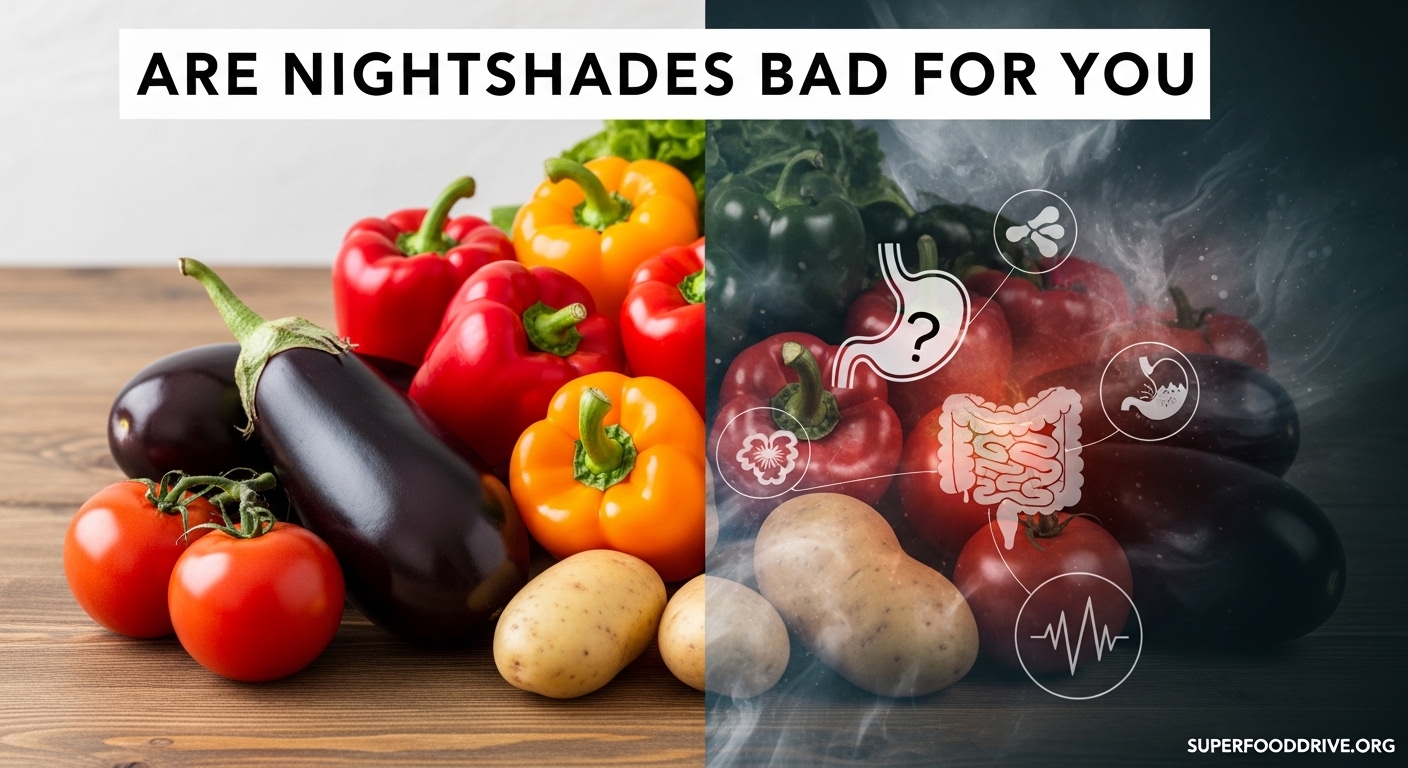
Nightshade vegetables are safe and nutritious for the vast majority of people. The scientific evidence does not support the widespread claim that tomatoes, potatoes, eggplant, or peppers cause inflammation or autoimmune flares in healthy individuals. However, a small subset of people with specific autoimmune conditions or food sensitivities may experience joint pain, digestive issues, or symptom flares after consuming these foods.
I have reviewed the latest research from 2026 and spoken with registered dietitians to bring you a clear, evidence-based look at what nightshades actually do in your body. This guide will explain what these vegetables are, why they have developed a controversial reputation, and who should consider limiting them.
Table of Contents
What Are Nightshade Vegetables?
Nightshades belong to the Solanaceae family, a diverse group of plants that includes both edible vegetables and toxic species. The edible nightshades that appear on most dinner plates are tomatoes, potatoes, eggplant, and peppers. These foods are staples in cuisines worldwide and provide significant nutritional benefits.
Other edible nightshades include goji berries, tomatillos, pimentos, and ground cherries. Some spices also fall into this category, notably cayenne pepper, crushed red pepper, paprika, and chili powder. On the other hand, sweet potatoes and yams are not nightshades. Many people confuse white potatoes with sweet potatoes, but they belong to completely different plant families.
Complete List of Edible Nightshades
Understanding which foods count as nightshades is the first step in evaluating whether they affect your health. Here are the common edible nightshades you might encounter:
Tomatoes in all forms including cherry tomatoes, Roma tomatoes, and tomato sauce. White potatoes including baked, mashed, and french fries. Eggplant in dishes like ratatouille, baba ganoush, and eggplant parmesan. Bell peppers, jalapeños, habaneros, and all other pepper varieties. Goji berries, which appear in smoothies and health foods. Tomatillos used in salsa verde. And cayenne pepper, paprika, and chili powder as spices.
Non-Nightshade Vegetables That Are Often Confused
Sweet potatoes are often grouped with white potatoes, but they belong to the morning glory family and are not nightshades. Yams, which are different from sweet potatoes, are also safe. Black pepper comes from the Piperaceae family and is completely unrelated to nightshade peppers. Zucchini, cucumbers, and other squashes are not nightshades either.
This distinction matters because people eliminating nightshades often unnecessarily remove nutritious foods like sweet potatoes, which offer excellent alternatives to white potatoes.
The Chemical Compounds in Nightshades: Alkaloids Explained
Nightshades contain natural chemical compounds called alkaloids that function as the plant’s defense mechanism against insects and fungi. The most well-known alkaloid is solanine, a glycoalkaloid found primarily in the leaves, stems, and sprouts of potato plants. Tomatoes contain a related compound called tomatine. Peppers contain capsaicin, which gives them their heat.
These compounds are technically toxins at high concentrations. The deadly nightshade plant (Atropa belladonna) contains high levels of tropane alkaloids that can be fatal. However, the alkaloid content in edible nightshades is extremely low compared to their poisonous relatives. You would need to eat pounds of green potatoes or potato sprouts to consume a toxic dose of solanine.
Solanine and Glycoalkaloids in Food
Solanine concentration is highest in green potatoes and potato sprouts. Cooking does reduce solanine somewhat, but the best practice is to avoid eating potatoes that have turned green or begun sprouting. The flesh of properly stored potatoes contains minimal solanine and is considered safe for consumption.
Tomatine in tomatoes is present in the stems and leaves rather than the fruit. The tomato fruit itself contains such low levels that it poses no health concern. Eggplant contains solanine primarily in the skin, but again, levels are too low to cause harm in normal portions.
Lectins and Saponins: Additional Compounds
Beyond alkaloids, nightshades also contain lectins and saponins. Lectins are proteins found in many plant foods, including beans and grains. Some theorize that lectins damage the intestinal lining and contribute to leaky gut. Saponins have soap-like properties and may affect cell membranes.
Research on these compounds in nightshades specifically is limited. Most studies on lectin concerns focus on raw kidney beans or other legumes, not cooked nightshade vegetables. Cooking significantly reduces lectin activity in all foods.
Are Nightshades Bad for You? What the Science Actually Shows
For most people, nightshades are not bad for you. Multiple studies and health organizations have found no conclusive evidence that nightshade vegetables cause inflammation, autoimmune disease, or joint pain in the general population. The Arthritis Foundation states that there is no research showing nightshades trigger arthritis flares for most people.
The confusion stems from theoretical mechanisms rather than proven outcomes. Alkaloids can theoretically cause inflammation in high doses. Some animal studies have shown effects on gut permeability and inflammation markers. However, human studies have not replicated these findings with normal dietary consumption of nightshades.
The Research on Inflammation Claims
A comprehensive review published in 2024 examined the evidence linking nightshades to inflammatory conditions. The researchers found no human studies demonstrating that nightshade consumption increases inflammatory markers in healthy individuals or those with arthritis. Some studies even showed that tomato consumption reduced inflammatory markers due to the presence of lycopene, a powerful antioxidant.
The Arthritis Foundation specifically notes that while some people report symptom relief after eliminating nightshades, this is likely due to individual food sensitivities rather than any universal inflammatory property of these vegetables.
Nutritional Benefits That Counter Concerns
Tomatoes are one of the best dietary sources of lycopene, an antioxidant linked to reduced heart disease risk and cancer protection. They are also rich in vitamin C, potassium, and folate. Bell peppers contain more vitamin C per serving than oranges. Potatoes provide potassium, fiber, and resistant starch that feeds beneficial gut bacteria.
Removing these foods from your diet without a specific medical reason means losing access to these valuable nutrients. For most people, the benefits far outweigh any theoretical risks.
Nightshades and Autoimmune Conditions
While nightshades appear safe for the general population, the conversation changes when we look at autoimmune conditions. Some individuals with rheumatoid arthritis, psoriatic arthritis, Hashimoto’s thyroiditis, and inflammatory bowel disease report symptom flares after eating nightshades. The scientific evidence here is mixed and largely anecdotal.
The Autoimmune Protocol (AIP) diet eliminates nightshades along with other potential trigger foods like gluten, dairy, and eggs. This elimination approach has helped some people identify specific food triggers that worsen their symptoms.
Nightshades and Hashimoto’s Thyroiditis
Many people with Hashimoto’s thyroiditis wonder whether nightshades worsen their condition. The connection remains theoretical. Some practitioners suggest that the glycoalkaloids in nightshades may irritate the gut lining, potentially increasing intestinal permeability. Since gut health and thyroid function are connected through the immune system, this could theoretically affect Hashimoto’s symptoms.
However, no clinical trials have specifically examined nightshade consumption and Hashimoto’s disease progression. The evidence is limited to patient reports and practitioner observations. Some Hashimoto’s patients report feeling better after eliminating nightshades, while others notice no difference.
The Connection to Arthritis and Joint Pain
The link between nightshades and arthritis originated from observations that certain alkaloids can affect calcium metabolism and potentially deposit in joints. This theory has not been substantiated in human research. A survey by the Arthritis Foundation found that foods commonly reported as worsening arthritis symptoms included processed sugars, saturated fats, and refined carbohydrates. Nightshades were not prominently mentioned.
That said, individual variation exists. Some people with arthritis do report reduced joint pain after eliminating nightshades. This could represent a true sensitivity, a placebo effect, or benefits from the overall dietary pattern change rather than nightshade removal specifically.
What Forum Discussions Reveal
In online communities for autoimmune conditions, experiences with nightshades vary widely. Some users report severe reactions including joint pain that feels like bones being crushed, migraines, and significant abdominal cramps occurring 12 hours after consumption. Others with the same diagnoses eat nightshades daily without issue.
This variation supports the idea that food sensitivities are highly individual. What triggers symptoms in one person may be completely safe for another, even with the same underlying diagnosis.
Who Should Avoid Nightshade Vegetables
Not everyone needs to avoid nightshades. However, certain groups may want to consider an elimination trial. People with confirmed nightshade allergies should obviously avoid these foods. Those with persistent joint pain, unexplained inflammation, or digestive issues that have not responded to other dietary changes might benefit from testing their response.
Individuals following the Autoimmune Protocol diet for conditions like Crohn’s disease, ulcerative colitis, lupus, or multiple sclerosis typically eliminate nightshades during the initial phase. Athletes and individuals in peak performance situations, like Tom Brady, sometimes avoid nightshades based on the theory that they contribute to inflammation, though this is not supported by scientific evidence.
Signs You May Have Nightshade Sensitivity
Symptoms of nightshade sensitivity typically appear within hours to a day after consumption. Common signs include joint pain or stiffness, particularly in small joints like fingers and toes. Digestive symptoms such as bloating, gas, diarrhea, or abdominal cramping. Skin reactions including rashes or hives. Some people experience headaches or migraines. In autoimmune conditions, symptom flares may occur.
These symptoms are not specific to nightshades and could indicate other food intolerances or health conditions. Proper diagnosis requires careful testing rather than assumption.
Why Does Tom Brady Avoid Nightshades?
NFL quarterback Tom Brady famously avoids nightshades as part of his strict anti-inflammatory diet. His approach is based on the theoretical concern that these foods cause inflammation and slow recovery. However, Brady’s dietary choices are designed for elite athletic performance and recovery, not general health.
For professional athletes at the peak of their careers, marginal gains matter. Even unproven theories may be worth testing if they provide a competitive advantage. This does not mean nightshades are harmful for the average person.
How to Test for Nightshade Sensitivity
If you suspect nightshades affect your health, an elimination trial is the gold standard for testing. This approach removes all nightshades from your diet for a period, then reintroduces them systematically to observe any reactions. Unlike blood tests for food allergies, elimination trials reveal how your specific body responds.
The Arthritis Foundation recommends a two-week elimination trial followed by careful reintroduction. If you notice improvement during the elimination phase and symptoms return upon reintroduction, you likely have a sensitivity.
The Elimination Protocol
Remove all nightshades completely for at least two weeks, preferably four. This includes tomatoes, potatoes, eggplant, peppers, and spices like paprika and cayenne. Read labels carefully, as paprika and cayenne appear in many processed foods. Keep a detailed food and symptom diary during this period.
After the elimination phase, reintroduce one nightshade at a time. Start with a small portion and observe for 48 hours before trying the next food. Note any changes in energy, digestion, joint comfort, or other symptoms.
Working With Healthcare Providers
Before beginning an elimination trial, consult with your doctor or a registered dietitian. They can help ensure you are not missing essential nutrients during the elimination phase. If you have an autoimmune condition, they may recommend specific testing or monitoring to track objective markers alongside your subjective symptoms.
A dietitian can also help you plan satisfying alternatives so the elimination trial feels manageable rather than restrictive. This increases the likelihood of completing the trial and getting clear results.
Frequently Asked Questions
Why do they say not to eat nightshade vegetables?
Some people claim nightshades cause inflammation due to their alkaloid content, particularly solanine. The theory suggests these compounds can irritate the gut and trigger autoimmune responses. However, scientific research has not found evidence that nightshades cause inflammation in the general population. The recommendation to avoid them typically applies only to individuals with specific autoimmune conditions or confirmed sensitivities.
Why does Tom Brady not eat nightshades?
Tom Brady follows a strict anti-inflammatory diet designed for elite athletic performance and recovery. He avoids nightshades based on the theoretical concern that they cause inflammation. His dietary choices are tailored for professional athletes seeking marginal performance gains and do not reflect scientific evidence that nightshades are harmful for the general population.
Which potato is not a nightshade?
Sweet potatoes are not nightshades. Despite their name, sweet potatoes belong to the morning glory family (Convolvulaceae), not the Solanaceae family that includes white potatoes. Yams are also not nightshades. Both sweet potatoes and yams are safe alternatives for people following nightshade elimination diets.
Are nightshades bad for Hashimoto’s?
There is no conclusive evidence that nightshades are harmful for Hashimoto’s thyroiditis specifically. Some practitioners suggest they may irritate the gut lining, but clinical research is lacking. Some Hashimoto’s patients report feeling better after eliminating nightshades, while others notice no difference. An elimination trial is the best way to determine your individual response.
Conclusion: Are Nightshades Bad for You?
Nightshades are not bad for you if you are a healthy individual without specific sensitivities. The scientific evidence from 2026 does not support the claim that tomatoes, potatoes, eggplant, or peppers cause inflammation or disease in the general population. These vegetables provide valuable nutrients including lycopene, vitamin C, potassium, and fiber.
However, individual variation matters. Some people with autoimmune conditions, arthritis, or confirmed food sensitivities may experience symptom flares from nightshades. If you suspect you are sensitive, a structured elimination trial lasting two to four weeks can help you identify your personal triggers. Work with a healthcare provider or registered dietitian to ensure you maintain nutritional adequacy during any elimination period.
For the vast majority of people, enjoying nightshades as part of a balanced diet supports rather than harms health.