
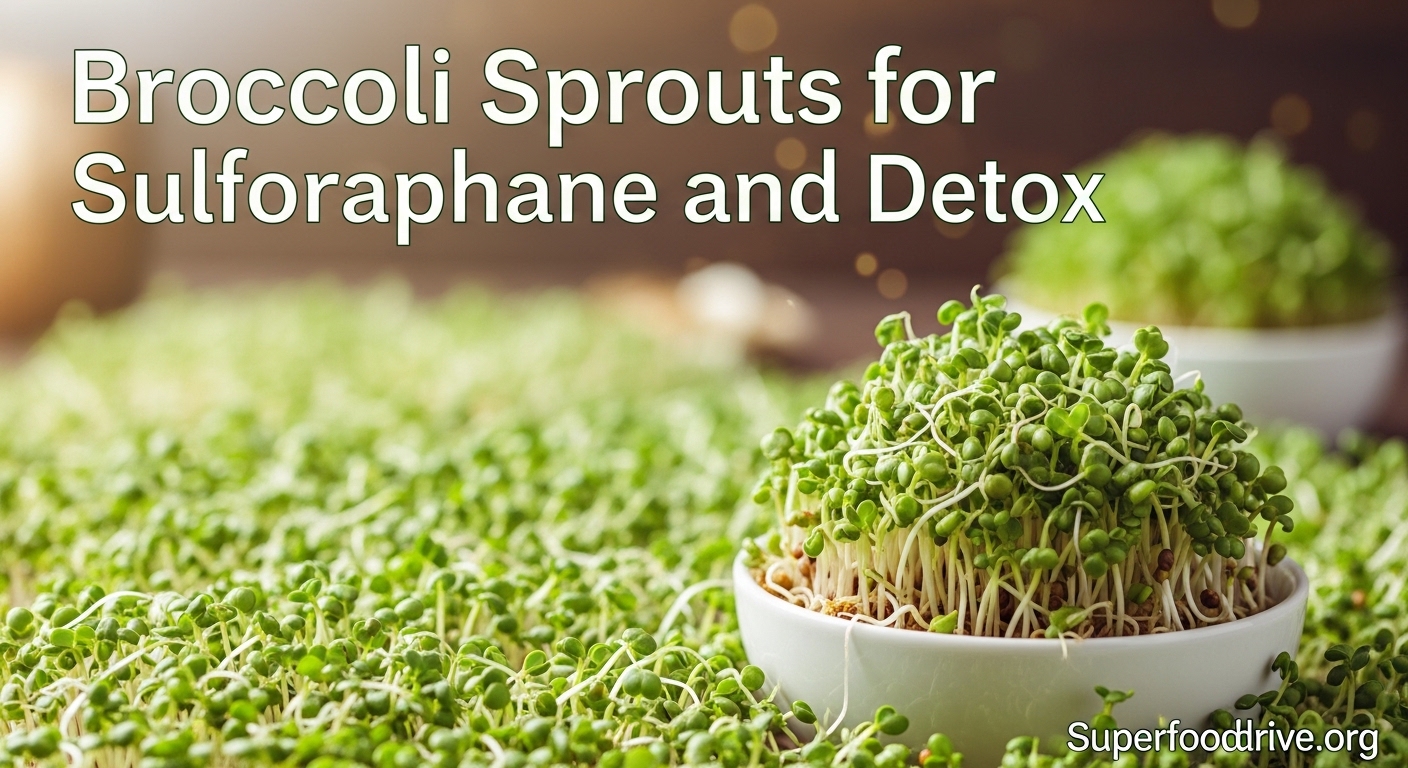
Broccoli sprouts contain up to 100 times more sulforaphane than mature broccoli, making them one of the most potent natural foods for supporting your body’s detoxification processes. If you are looking for a simple, affordable way to enhance your liver function, reduce inflammation, and protect against environmental toxins, understanding how to use broccoli sprouts for sulforaphane and detox could transform your health routine.
In this guide, I will explain exactly what sulforaphane is, how it works at the cellular level to remove toxins, and the practical steps you can take to maximize its benefits. I have researched the science behind Nrf2 pathway activation, reviewed clinical studies from Johns Hopkins, and compiled real-world advice from biohackers and health practitioners who use broccoli sprouts daily.
Whether you want to grow your own sprouts at home or buy them from the store, you will learn the optimal preparation methods, dosage recommendations, and safety considerations to get the most from this powerful compound.
Table of Contents
What Is Sulforaphane
Sulforaphane is a sulfur-rich compound belonging to the isothiocyanate class of phytochemicals found in cruciferous vegetables. It forms when the enzyme myrosinase converts glucoraphanin, a glucosinolate stored in plant cells, into active sulforaphane during chewing, chopping, or other mechanical damage to the plant tissue.
Discovered in 1992 by researchers at Johns Hopkins University, sulforaphane has become one of the most studied plant compounds for its ability to activate cellular protective pathways. Unlike many antioxidants that directly neutralize free radicals, sulforaphane works indirectly by switching on genes that produce your body’s own antioxidant and detoxification enzymes.
The compound is most abundant in young broccoli sprouts, specifically those harvested between days 3 and 5 of growth. During this brief window, the sprout concentrates glucoraphanin as a natural defense mechanism, providing the highest sulforaphane potential of any commonly consumed food.
Broccoli Sprouts vs Mature Broccoli
While both broccoli sprouts and mature broccoli contain sulforaphane precursors, the concentration difference is dramatic. Three-day-old broccoli sprouts contain 20 to 100 times more glucoraphanin per gram than the mature broccoli heads you find in grocery stores.
A single ounce of broccoli sprouts delivers approximately 73 milligrams of sulforaphane glucosinolate. You would need to eat more than a pound of mature broccoli to get an equivalent amount. This concentration makes sprouts the clear choice for anyone seeking therapeutic levels of sulforaphane.
The reason for this difference lies in the plant’s life cycle. Young sprouts pack their cells with glucoraphanin as a defense against predators and environmental stress. As the plant matures and develops physical defenses like tough cell walls and secondary metabolites, glucoraphanin production decreases significantly.
Harvest timing matters enormously. Research shows that 3-day-old sprouts contain peak glucoraphanin levels. By day 5, content begins declining, and by day 7, levels drop substantially. This narrow harvest window explains why store-bought sprouts sometimes vary in potency and why growing your own gives you maximum control.
How Broccoli Sprouts Support Detoxification
Broccoli sprouts detox your body by activating the Nrf2 pathway, a master regulator of cellular defense mechanisms. When sulforaphane enters your cells, it triggers this pathway to produce phase II detoxification enzymes and increase glutathione synthesis.
The Nrf2 (nuclear factor erythroid 2-related factor 2) pathway acts like a thermostat for cellular stress responses. Under normal conditions, Nrf2 remains bound in the cytoplasm. Sulforaphane and other electrophilic compounds disrupt this binding, allowing Nrf2 to travel to the nucleus and activate over 200 genes involved in protection and detoxification.
These activated genes produce several key enzymes. Glutathione S-transferases conjugate toxins with glutathione, making them water-soluble and easier to eliminate. UDP-glucuronosyltransferases perform similar functions for different toxin classes. NAD(P)H quinone oxidoreductase 1 protects against oxidative stress. Together, these enzymes transform harmful fat-soluble toxins into compounds your body can excrete through urine or bile.
Glutathione deserves special attention as your body’s master antioxidant. Sulforaphane increases glutathione production by upregulating the enzymes responsible for its synthesis. Higher glutathione levels enhance your liver’s ability to process environmental pollutants, heavy metals, and metabolic waste products.
A landmark 2014 study from Johns Hopkins and China’s Qidong demonstrated this effect in humans exposed to high air pollution. Participants who consumed a broccoli sprout beverage daily excreted 61% more benzene and 23% more acrolein, two dangerous air pollutants, compared to those drinking a placebo. This research provided direct evidence that sulforaphane enhances detoxification of real-world environmental toxins.
What Toxins Does Sulforaphane Remove
Sulforaphane supports the elimination of multiple toxin categories through enhanced phase II detoxification. Understanding which specific toxins are affected helps explain why broccoli sprouts benefit people with varied health concerns.
Heavy metals including lead, mercury, cadmium, and arsenic are detoxified more efficiently with adequate phase II enzyme activity. Sulforaphane increases metallothionein expression, proteins that bind and neutralize heavy metals. While sulforaphane does not directly chelate metals, it enhances the cellular machinery that processes and excretes them.
Air pollutants represent another major category. Benzene, found in cigarette smoke, vehicle exhaust, and industrial emissions, is classified as a known carcinogen. Acrolein, present in burning fats, cigarette smoke, and some plastics, damages DNA and accelerates cardiovascular disease. The Johns Hopkins trial demonstrated that sulforaphane significantly increases urinary excretion of both compounds.
Environmental chemicals including pesticides, herbicides, plasticizers, and flame retardants are processed by the same phase II enzymes sulforaphane activates. While individual chemical structures vary, the glucuronidation and glutathione conjugation pathways handle thousands of xenobiotics.
Carcinogens from cooked meats, fungal toxins, and industrial byproducts also undergo enhanced detoxification. Research shows sulforaphane increases elimination of heterocyclic amines formed during high-heat cooking and aflatoxin, a potent mold toxin linked to liver cancer.
The liver benefits directly from sulforaphane’s hepatoprotective effects. Animal studies demonstrate protection against liver injury from acetaminophen overdose, alcohol, and other toxins. By supporting glutathione production in liver cells, sulforaphane helps this organ perform its central role in body-wide detoxification.
Health Benefits Beyond Detox
While detoxification receives significant attention, sulforaphane offers broader health benefits through its effects on inflammation, oxidative stress, and cellular signaling pathways.
Cancer prevention represents one of the most researched applications. Sulforaphane influences multiple cancer-related processes including cell cycle arrest, apoptosis induction, angiogenesis inhibition, and metastasis reduction. Epidemiological studies consistently show higher cruciferous vegetable intake correlates with lower cancer risk, particularly for prostate, breast, colon, and lung cancers.
Brain health benefits emerge from sulforaphane’s neuroprotective and anti-inflammatory properties. The compound crosses the blood-brain barrier and has shown promise in models of Alzheimer’s disease, Parkinson’s disease, and traumatic brain injury. Many users report reduced brain fog and improved mental clarity after incorporating broccoli sprouts into their routine.
Cardiovascular support occurs through several mechanisms. Sulforaphane improves endothelial function, reduces oxidative stress in blood vessels, and may modestly lower blood pressure in some individuals. While not a replacement for hypertension medication, the anti-inflammatory effects support overall heart health.
Chronic inflammation underlies many modern diseases, and sulforaphane is a potent anti-inflammatory agent. It inhibits NF-kB, a pro-inflammatory transcription factor, and reduces production of inflammatory cytokines. This explains benefits reported by people with inflammatory conditions including IBS, autoimmune disorders, and chronic pain.
Gut health improvements come from sulforaphane’s antimicrobial effects against H. pylori, the bacterium linked to ulcers and gastric cancer, combined with general anti-inflammatory action in the digestive tract. Some GERD sufferers report symptom reduction, though raw sprouts can irritate sensitive stomachs.
How to Prepare Broccoli Sprouts for Maximum Sulforaphane
Getting the most sulforaphane from broccoli sprouts requires understanding myrosinase, the enzyme that activates it. Without proper preparation, you miss much of the potential benefit.
Step 1: Choose raw over cooked. Heat destroys myrosinase. Cooking broccoli sprouts above 140 degrees Fahrenheit significantly reduces sulforaphane formation. Eat them raw, lightly warmed, or add them after cooking to preserve enzyme activity.
Step 2: Chew thoroughly. Mechanical damage triggers myrosinase activity. Chewing breaks cell walls and allows the enzyme to contact glucoraphanin. Aim for 20-30 chews per bite to maximize conversion.
Step 3: Let them sit after chopping. If adding sprouts to smoothies or recipes, chop them and wait 5-10 minutes before consuming. This resting period allows myrosinase to convert glucoraphanin to sulforaphane before the enzyme encounters stomach acid.
Step 4: Add mustard seed powder. This is the biohacker’s secret weapon. Mustard seeds contain myrosinase that remains stable through cooking. If you must cook your sprouts or want to maximize sulforaphane from frozen sprouts, adding a pinch of mustard seed powder restores enzyme activity. Daikon radish also works.
Step 5: Avoid boiling or microwaving. These cooking methods destroy myrosinase completely. If you prefer warm sprouts, steam lightly for under 3 minutes or add them to hot dishes just before serving.
Growing Your Own Broccoli Sprouts at Home
Growing broccoli sprouts at home ensures freshness, saves money, and lets you harvest at the optimal 3-5 day window for maximum sulforaphane content.
Supplies needed: Organic broccoli sprouting seeds, a wide-mouth mason jar, a sprouting lid or cheesecloth with rubber band, filtered water, and a bowl to rest the jar upside down.
Day 1 – Soaking: Add 2 tablespoons of seeds to your jar and cover with 2 inches of filtered water. Let soak 8-12 hours or overnight.
Day 2 – Rinsing begins: Drain the soaking water and rinse thoroughly. Rest the jar upside down at an angle in a bowl to allow drainage and air circulation. Keep out of direct sunlight. Rinse twice daily, morning and evening.
Day 3 – First harvest option: By day 3, sprouts show small leaves and reach peak glucoraphanin concentration. You can harvest now for maximum sulforaphane potential.
Day 4-5 – Continue growth: Sprouts grow larger and develop more green color. Still excellent sulforaphane content but beginning to decline from peak.
Harvest and storage: Rinse final time, drain well, and store in a sealed container with a paper towel to absorb moisture. Refrigerate and use within 3-5 days for best quality. You can also freeze harvested sprouts for smoothies, though myrosinase activity decreases.
The entire process from seed to harvest takes 3-5 days and costs pennies per serving compared to store prices. One pound of seeds produces approximately 6-8 pounds of fresh sprouts.
How Many Broccoli Sprouts Should You Eat
Optimal broccoli sprout dosage depends on your goals, body weight, and individual response. Research provides guidance, but personal experimentation fine-tunes the approach.
For general health maintenance and detox support, 1/4 to 1/2 cup of fresh broccoli sprouts daily provides meaningful sulforaphane. This equals roughly 20-40 sprouts and delivers approximately 20-50 milligrams of sulforaphane glucosinolate.
For therapeutic purposes including chronic illness support, heavy metal detox, or significant inflammation, some practitioners recommend up to 1 cup daily divided into two servings. The Johns Hopkins air pollution study used approximately 1/2 cup equivalent in beverage form.
Timing matters for absorption. Many users report best results consuming sprouts on an empty stomach or 30 minutes before meals. Sulforaphane absorbs better without competing food proteins. However, if you experience digestive discomfort, eating sprouts with food reduces irritation.
Consistency beats quantity. Eating smaller amounts daily maintains steady sulforaphane levels and keeps Nrf2 pathway activation constant. This cumulative effect supports ongoing detoxification better than occasional large doses.
Individual variation is significant. Genetic differences in glutathione S-transferase enzymes affect how people respond to sulforaphane. Some notice effects within days, while others require weeks of consistent use. Pay attention to your body’s signals and adjust accordingly.
Safety and Side Effects
Broccoli sprouts are generally safe for most people, but certain conditions and medications warrant caution.
Digestive issues represent the most common side effect. Raw sprouts contain fiber and compounds that can cause gas, bloating, or stomach upset, especially when first introduced. Start with small amounts (1-2 tablespoons) and increase gradually. Cooking reduces digestive irritation but also reduces sulforaphane formation.
Food safety is a legitimate concern with raw sprouts. Broccoli seeds can harbor bacteria like E. coli or Salmonella. Purchase seeds from reputable sources, rinse thoroughly, and consider growing your own under sanitary conditions. Pregnant women, young children, elderly individuals, and those with compromised immunity should exercise extra caution with raw sprouts.
Medication interactions are possible. Sulforaphane affects phase II enzymes that metabolize many drugs. If you take prescription medications, especially those processed by the liver, consult your healthcare provider. Particular caution applies to blood thinners, as vitamin K in sprouts affects clotting.
People with gastritis or active ulcers may find raw sprouts irritating. While some evidence suggests sulforaphane helps with H. pylori, the physical roughage can aggravate sensitive stomachs. Start cautiously or consider supplements if whole food causes problems.
The MTHFR community reports mixed experiences. Some people with methylation issues benefit from sulforaphane’s detoxification support, while others experience temporary worsening of symptoms as toxins mobilize. If you have MTHFR variants, start slowly and work with a knowledgeable practitioner.
Broccoli Sprouts vs Sulforaphane Supplements
Both whole food broccoli sprouts and sulforaphane supplements offer ways to increase intake, but important differences exist in bioavailability, cost, and overall value.
Broccoli sprout supplements typically contain either dried sprout powder, extracted glucoraphanin, or stabilized sulforaphane. Quality varies enormously between products. Some supplements provide myrosinase to ensure conversion, while others rely on gut bacteria for activation, which is inconsistent between individuals.
Bioavailability studies generally favor whole food over most supplements. The natural matrix of plant cells, combined with active myrosinase when properly prepared, typically delivers more usable sulforaphane. However, high-quality supplements with myrosinase and stabilized sulforaphane can approximate food-based levels.
Cost comparison favors home-grown sprouts significantly. Organic sprouting seeds cost approximately $15-25 per pound and yield 6-8 pounds of fresh sprouts. High-quality sulforaphane supplements run $30-60 monthly. Growing your own provides superior value.
Supplements offer convenience and consistent dosing that appeals to busy individuals or those without sprout access. They also eliminate food safety concerns associated with raw sprouts. For travel or intermittent use, supplements provide a practical alternative.
The best approach for many people combines both. Use fresh home-grown sprouts as your primary source for daily consumption, keeping supplements available for travel or days when preparation time is limited.
Frequently Asked Questions
Do broccoli sprouts detox your body?
Yes, broccoli sprouts support detoxification through sulforaphane, which activates the Nrf2 pathway and increases production of phase II detoxification enzymes and glutathione. Clinical research shows enhanced elimination of air pollutants like benzene and acrolein.
What toxins does sulforaphane remove?
Sulforaphane helps eliminate heavy metals including lead, mercury, cadmium, and arsenic. It also enhances excretion of air pollutants like benzene and acrolein, environmental chemicals including pesticides and plasticizers, and carcinogens from cooked meats and mold toxins.
Are broccoli sprouts good for gastritis?
Broccoli sprouts may help with H. pylori bacteria associated with gastritis, but raw sprouts can irritate sensitive stomachs. Start with small amounts, consider cooked preparations, or consult a healthcare provider if you have active gastritis or ulcers.
Does sulforaphane lower blood pressure?
Sulforaphane may provide modest cardiovascular benefits through improved endothelial function and reduced inflammation, which can indirectly support healthy blood pressure. However, it is not a treatment for hypertension and should not replace prescribed medications.
What happens if I eat broccoli sprouts every day?
Daily consumption maintains steady sulforaphane levels and cumulative detoxification benefits. Most people tolerate daily intake well, though some experience initial digestive adjustment. Typical daily amounts range from 1/4 to 1/2 cup of fresh sprouts.
What is the anticancer compound in broccoli?
Sulforaphane is the primary anticancer compound in broccoli and broccoli sprouts. It is most concentrated in 3-5 day old broccoli sprouts, which contain 10-100 times more sulforaphane potential than mature broccoli. Sulforaphane activates protective cellular pathways but is not a replacement for conventional cancer treatment.
Is it safe to take sulforaphane every day?
Sulforaphane from broccoli sprouts is generally safe for daily consumption. Research shows safety at doses up to 40mg daily. Food sources like sprouts are preferred over supplements. Consult a healthcare provider if pregnant, nursing, taking medications, or if you experience adverse reactions.
Conclusion
Broccoli sprouts for sulforaphane and detox offer one of the most scientifically supported, affordable approaches to enhancing your body’s natural detoxification capacity. By activating the Nrf2 pathway and boosting glutathione production, sulforaphane helps eliminate heavy metals, air pollutants, and environmental toxins while providing broader benefits for inflammation, brain health, and cellular protection.
The key to success lies in proper preparation. Eat sprouts raw or lightly warmed, chew thoroughly, and consider the mustard seed trick to maximize myrosinase activity. Growing your own ensures harvest at the 3-5 day peak and costs a fraction of store prices or supplements.
Start with 1/4 cup daily, adjust based on your response, and maintain consistency for cumulative benefits. While broccoli sprouts are not a magic bullet, they provide powerful support for your body’s innate detoxification systems in a simple, whole-food form that has sustained human health for generations.