
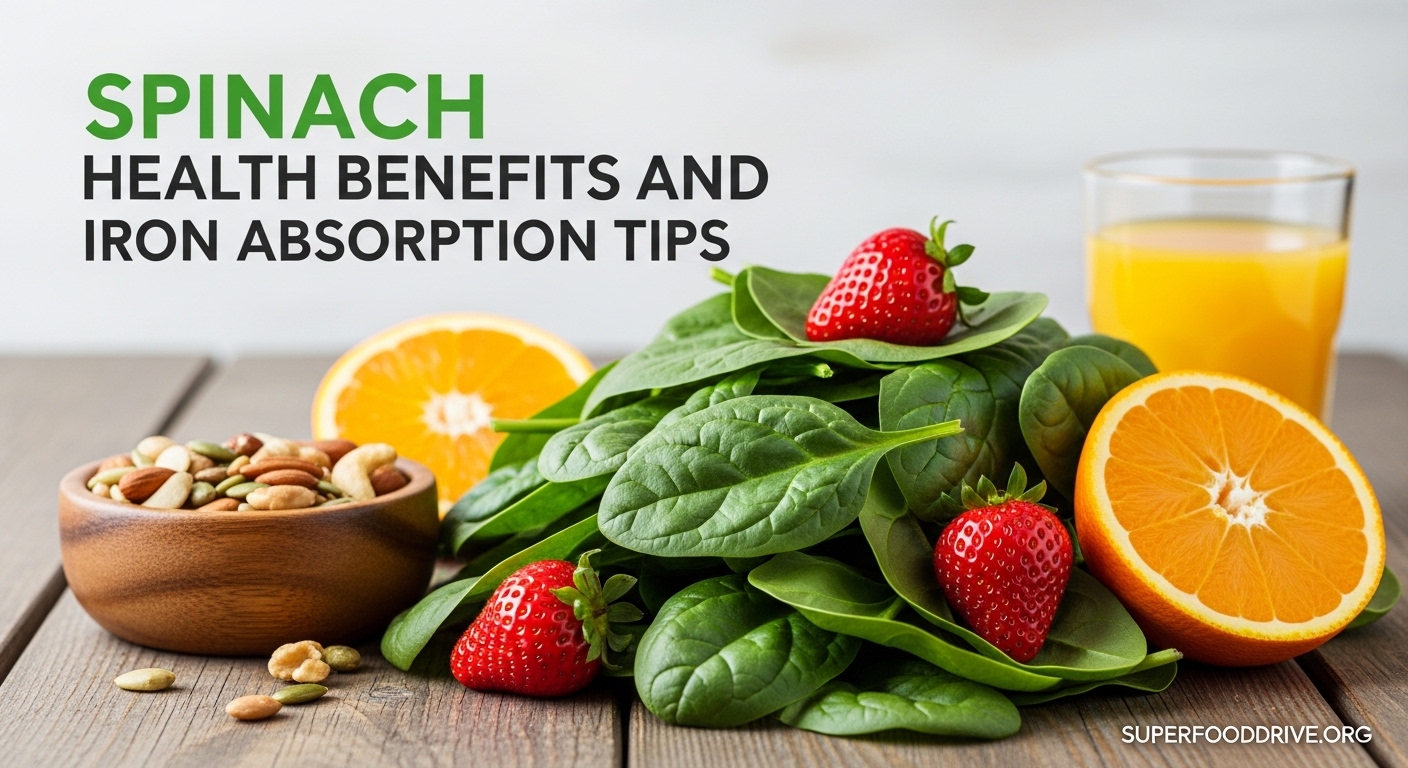
Spinach contains 2.7mg of iron per 100g, making it appear as an excellent source on paper. Yet your body absorbs only 2-5% of that iron due to compounds called oxalates that bind tightly to the mineral. I spent weeks researching the science behind spinach iron absorption, and what I discovered changed how I eat this leafy green forever.
In this guide, I will show you exactly how spinach health benefits iron absorption works in your body. You will learn why Popeye got it wrong, how to unlock spinach’s iron potential with simple food pairings, and the best cooking methods to maximize what your body actually absorbs.
Table of Contents
Understanding Non-Heme Iron in Spinach
Spinach contains non-heme iron, which is the type found in plant foods. Your body processes this differently than heme iron from animal sources like beef, chicken, and fish.
Non-heme iron must undergo chemical conversion before absorption can occur. This conversion step makes plant-based iron inherently less bioavailable than heme iron, which your body absorbs directly without modification.
A 100g serving of raw spinach provides approximately 2.7mg of iron, which represents about 15% of the recommended daily value for adults. Cooked spinach concentrates this further, delivering roughly 3.6mg per 100g because water loss reduces volume while iron content remains constant.
How Oxalic Acid Blocks Iron Absorption
Oxalic acid is the primary reason spinach iron absorption remains low despite its impressive iron content. This compound binds to iron molecules and forms ferrous oxalate, a complex your body cannot absorb.
Spinach contains approximately 750mg of oxalic acid per 100g serving. This concentration is among the highest of any commonly consumed vegetable, which explains why spinach iron bioavailability suffers compared to other leafy greens.
Research published in the International Journal for Vitamin and Nutrition Research found that oxalates can reduce iron absorption by 50-65% depending on the concentration present in the food. This binding effect happens immediately upon digestion, effectively locking away the iron before your intestinal cells can absorb it.
Vitamin C: The Key to Unlocking Spinach Iron
Vitamin C breaks the bond between oxalic acid and iron, freeing the mineral for absorption. This powerful interaction can increase non-heme iron absorption by up to 300% according to multiple clinical studies.
The mechanism works through ascorbic acid reducing ferric iron to the more absorbable ferrous form. Vitamin C also forms a chelate with iron that remains soluble in the alkaline environment of the small intestine, preventing the formation of insoluble iron compounds.
To maximize spinach health benefits iron absorption, pair your spinach with these vitamin C-rich foods:
- Bell peppers (127mg vitamin C per cup)
- Strawberries (85mg per cup)
- Broccoli (81mg per cup)
- Oranges and citrus fruits (70mg per medium fruit)
- Kiwi (64mg per fruit)
- Tomatoes (17mg per medium tomato)
- Lemon juice (12mg per tablespoon)
Even small amounts of vitamin C help. Squeezing fresh lemon juice over cooked spinach provides enough ascorbic acid to significantly improve iron uptake without changing the flavor profile dramatically.
Raw vs Cooked Spinach: Which Has Better Iron?
Cooked spinach delivers more absorbable iron than raw spinach despite having similar total iron content per weight. Cooking breaks down cell walls and reduces oxalic acid concentration, making the remaining iron more accessible.
Raw spinach contains 2.7mg iron per 100g with high oxalate levels intact. One cup of raw spinach (30g) provides about 0.8mg of iron, but your body absorbs only 0.016-0.04mg of that due to oxalate interference.
Cooked spinach contains 3.6mg iron per 100g because cooking removes water and concentrates nutrients. One cup of cooked spinach (180g) delivers approximately 6.4mg of iron. More importantly, cooking reduces oxalic acid by 30-90% depending on method and duration, dramatically improving absorption rates.
A study in the Journal of Agricultural and Food Chemistry found that boiling spinach for just one minute reduces soluble oxalate content by 30%. Extending cooking time to five minutes increases this reduction to nearly 50%.
Cooking Methods That Maximize Iron Absorption
Boiling spinach in water removes the most oxalates, making it the best cooking method for iron absorption. The water-soluble oxalates leach out into the cooking liquid, which you should discard rather than consume.
For optimal results, boil spinach for 3-5 minutes at 100°C (212°F). This timeframe balances oxalate reduction with nutrient preservation. Longer boiling continues removing oxalates but begins degrading heat-sensitive vitamins like vitamin C and folate.
Steaming spinach for 5-7 minutes reduces oxalates by approximately 30% while preserving more water-soluble vitamins than boiling. This method works well when you want to retain maximum overall nutrition while still improving iron availability.
Sautéing spinach quickly in oil reduces oxalates by roughly 15-25%. While less effective than boiling for iron absorption, sautéing preserves the most nutrients overall and creates appealing texture and flavor that encourages regular consumption.
Timing Matters: When to Eat Spinach for Maximum Iron
Eating spinach in the morning maximizes iron absorption because hepcidin levels are naturally lowest at this time. Hepcidin is a hormone that regulates iron absorption, and high levels block iron uptake from the intestine.
Research published in 2017 showed that hepcidin follows a circadian rhythm, peaking in the afternoon and evening. Morning consumption of iron-rich foods resulted in 40% better absorption compared to the same foods eaten at dinner.
For maximum benefit, enjoy your spinach-based breakfast or lunch with vitamin C-rich foods. A morning spinach smoothie with orange juice, or sautéed spinach with bell peppers at lunch, takes advantage of both optimal timing and absorption enhancers.
Spinach vs Other Iron-Rich Leafy Greens
While spinach gets the most attention for iron content, other leafy greens offer comparable or better iron bioavailability with lower oxalate content.
| Leafy Green | Iron per 100g | Oxalate Content | Relative Absorption |
|---|---|---|---|
| Spinach (cooked) | 3.6mg | 750mg | Low |
| Kale (cooked) | 1.5mg | 17mg | High |
| Swiss Chard (cooked) | 2.0mg | 500mg | Medium |
| Collard Greens (cooked) | 1.1mg | 50mg | High |
| Beet Greens (cooked) | 2.6mg | 675mg | Low |
| Turnip Greens (cooked) | 0.8mg | Low | High |
Kale provides less total iron than spinach but significantly better absorption due to minimal oxalate content. One cup of cooked kale delivers about 1.1mg of highly bioavailable iron, potentially matching or exceeding what your body extracts from spinach despite the lower starting amount.
Collard greens offer another excellent alternative with very low oxalate levels. Traditional Southern cooking methods often include pork or other meats, which provide heme iron that further enhances non-heme absorption from the greens themselves.
Combining Heme and Non-Heme Iron
Eating spinach alongside heme iron sources creates a synergistic effect that boosts absorption of both types. The presence of heme iron in a meal increases non-heme iron absorption by approximately 50-100% through mechanisms not fully understood but well documented.
Practical combinations include adding spinach to beef stir-fry, serving creamed spinach with grilled chicken, or tossing spinach into seafood pasta. Even small amounts of meat, fish, or poultry alongside spinach improve overall iron uptake from the meal.
For vegetarians and vegans who avoid heme iron sources, combining multiple non-heme iron foods with strong vitamin C sources becomes even more critical. Lentils, beans, and fortified grains eaten with spinach and bell peppers create a complete iron-absorption meal.
Foods That Boost Iron Absorption
Beyond vitamin C, several other dietary factors enhance spinach iron absorption. Understanding these allows you to build meals that maximize nutritional benefit.
Citric acid and other organic acids found in fruits and vegetables improve iron solubility. Malic acid from apples, tartaric acid from grapes, and citric acid from citrus all help keep iron in the absorbable ferrous state longer during digestion.
Beta-carotene and other carotenoids, which spinach itself contains in abundance, may also enhance iron absorption. This creates an interesting paradox where spinach contains compounds that both block and potentially assist iron uptake.
Onions and garlic contain sulfur compounds that increase iron absorption from grains and vegetables. Adding these aromatics to sautéed spinach improves both flavor and mineral availability.
Foods and Substances to Avoid with Spinach
Certain foods and beverages contain compounds that inhibit iron absorption and should be consumed separately from spinach meals. Timing these away from iron-rich foods prevents interference with absorption.
Polyphenols in coffee and tea bind iron in the intestine and reduce absorption by up to 60%. Drink these beverages at least one hour before or two hours after eating spinach to avoid blocking iron uptake.
Calcium competes with iron for absorption in the intestine. Dairy products, calcium-fortified foods, and calcium supplements taken with spinach reduce iron absorption by approximately 50%. Space calcium-rich foods away from spinach meals when possible.
Phytates found in whole grains and legumes also inhibit iron absorption, though less dramatically than polyphenols or calcium. Soaking, sprouting, or fermenting these foods reduces phytate content and minimizes this effect.
Antacids and proton pump inhibitors that reduce stomach acid impair iron absorption significantly. Iron requires an acidic environment for optimal solubility and uptake. If you use these medications, discuss iron supplementation with your healthcare provider.
Signs You May Need More Iron
Iron deficiency affects approximately 10 million people in the United States, making it the most common nutritional deficiency. Recognizing early symptoms allows you to adjust your diet before serious anemia develops.
Early signs of iron deficiency include persistent fatigue, weakness, and difficulty concentrating. Many people notice their exercise performance drops and everyday tasks feel more exhausting than usual.
Physical symptoms often include pale skin, brittle nails, and hair loss. Some people develop cracks at the corners of the mouth or a swollen, sore tongue. Unusual cravings for ice, dirt, or starch may indicate more severe deficiency.
Groups at highest risk include menstruating women, pregnant women, infants and children, vegetarians and vegans, frequent blood donors, and people with digestive disorders. If you belong to these groups, paying attention to spinach health benefits iron absorption becomes especially important.
If you suspect iron deficiency, consult a healthcare provider for blood testing. Self-diagnosing and supplementing with iron can be dangerous, as excess iron causes its own health problems.
How to Maximize Spinach Health Benefits Iron Absorption
Putting all this information together, here is a practical framework for maximizing iron absorption from spinach in your daily diet. These strategies compound on each other for maximum benefit.
First, choose cooked spinach over raw whenever possible. Boiling for 3-5 minutes removes the most oxalates while preserving other nutrients. Discard the cooking water rather than consuming it.
Second, pair spinach with vitamin C-rich foods at every meal. Bell peppers, tomatoes, citrus fruits, or a squeeze of lemon juice all provide sufficient ascorbic acid to break oxalate-iron bonds.
Third, time your spinach consumption for breakfast or lunch when hepcidin levels remain low. Avoid eating iron-rich foods late in the day when your body’s iron absorption mechanisms are naturally suppressed.
Fourth, add meat, fish, or poultry to spinach dishes when your diet allows. The heme iron in these foods enhances absorption of spinach’s non-heme iron through synergistic effects.
Fifth, avoid coffee, tea, dairy, and calcium supplements within two hours of spinach meals. These substances actively block iron absorption and undo your careful preparation efforts.
Frequently Asked Questions About Spinach and Iron
How to maximize iron absorption from spinach?
Cook spinach for 3-5 minutes to reduce oxalates, pair it with vitamin C-rich foods like bell peppers or citrus, eat it in the morning when hepcidin levels are low, and avoid coffee, tea, and dairy within two hours of your meal.
What should not be mixed with spinach?
Avoid mixing spinach with coffee, tea, dairy products, calcium supplements, and antacids. These contain polyphenols, calcium, or acid-reducing compounds that inhibit iron absorption by 50-60%.
Is it better to eat spinach raw or cooked for iron?
Cooked spinach provides better iron absorption than raw. Cooking reduces oxalic acid content by 30-90% depending on method, making the remaining iron more bioavailable even though total iron content remains similar.
What to eat with spinach for absorption?
Eat spinach with vitamin C-rich foods including bell peppers, strawberries, broccoli, oranges, kiwi, tomatoes, or lemon juice. Adding heme iron sources like meat, fish, or poultry also boosts absorption by 50-100%.
Conclusion: Spinach Health Benefits Iron Absorption
Spinach health benefits iron absorption best when you understand and work around its limitations. While the Popeye myth suggested spinach was an iron powerhouse, the reality requires more strategic eating to unlock its potential.
By cooking spinach to reduce oxalates, pairing it with vitamin C sources, timing meals for morning consumption, and avoiding absorption inhibitors, you can increase iron uptake from this leafy green by 300% or more. These simple adjustments transform spinach from a mediocre iron source into a valuable contributor to your daily mineral needs.
Start with one change this week. Add lemon juice to your cooked spinach. Switch your spinach smoothie to breakfast time. Small shifts in how you prepare and time this vegetable lead to meaningful improvements in what your body actually absorbs.