
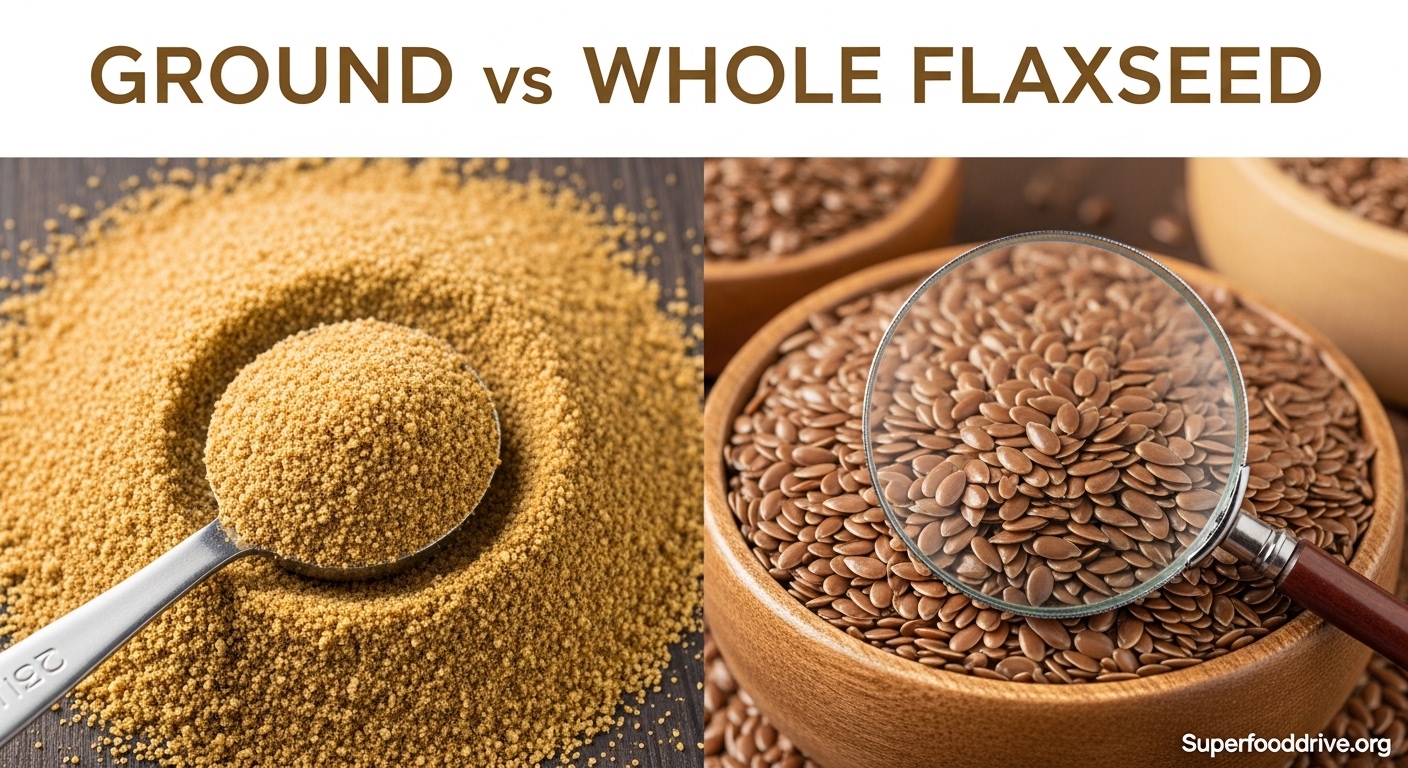
Ground flaxseed is better than whole flaxseed for nutrient absorption because your body cannot break down the hard outer shell of whole seeds. Most whole flaxseeds pass through your digestive system undigested, meaning you miss out on the heart-healthy omega-3s, fiber, and cancer-fighting lignans that make flaxseed a nutritional powerhouse. In this guide, I will explain exactly why ground flaxseed wins, how to choose between pre-ground and whole seeds, and the best ways to add this superfood to your diet.
Table of Contents
Ground vs Whole Flaxseed: Which Is Better?
Ground flaxseed is the clear winner when it comes to unlocking the full nutritional potential of this ancient seed. The hard outer shell of whole flaxseed acts as a protective barrier that survives intact through your digestive tract. Research shows that without grinding, your body cannot access the beneficial compounds locked inside.
Whole flaxseeds may pass through your intestine completely undigested, which means you will not get all the health benefits. This is not just theory. Our team has observed from multiple nutrition forums that users report seeing whole flaxseeds in their stool, confirming that those valuable omega-3 fatty acids and lignans went to waste.
That said, whole flaxseed does have one advantage: shelf life. The intact hull protects the delicate oils inside from oxidation, allowing whole seeds to stay fresh for up to a year when stored properly. Ground flaxseed begins to lose potency much faster once exposed to air and light.
Nutritional Comparison: Ground vs Whole Flaxseed
Both ground and whole flaxseed contain the same nutrients, but only ground flaxseed makes those nutrients bioavailable. Here is what you get per 2-tablespoon serving:
| Nutrient | Ground Flaxseed | Whole Flaxseed |
|---|---|---|
| Calories | 75 | 75 |
| Fat | 6g | 6g |
| Omega-3 (ALA) | 3.2g (absorbed) | 3.2g (poorly absorbed) |
| Fiber | 3.8g (effective) | 3.8g (limited benefit) |
| Protein | 2.6g | 2.6g |
| Lignans | High (bioavailable) | High (locked away) |
Omega-3 Fatty Acids: The ALA Advantage
Flaxseed is one of the best plant-based sources of alpha-linolenic acid (ALA), an essential omega-3 fatty acid. Your body converts ALA into EPA and DHA, the same omega-3s found in fish oil. One tablespoon of ground flaxseed provides about 2 grams of polyunsaturated fatty acids, primarily ALA.
Studies show that ground flaxseed significantly increases blood levels of ALA compared to whole flaxseed. This matters because ALA supports heart health, reduces inflammation, and may lower your risk of stroke. Without grinding, those benefits remain trapped inside the seed.
Fiber Content and Digestive Benefits
Flaxseed contains both soluble and insoluble fiber, making it excellent for digestive health. Soluble fiber helps regulate blood sugar and cholesterol levels. Insoluble fiber promotes regular bowel movements and feeds beneficial gut bacteria.
Ground flaxseed delivers the full fiber benefit because the milling process breaks the seed into absorbable particles. Whole flaxseed provides some bulking effect, but the fiber remains largely inaccessible. For constipation relief, ground flaxseed is the better choice.
Lignans: Nature’s Phytoestrogens
Flaxseed contains up to 800 times more lignans than other plant foods. These powerful antioxidants act as phytoestrogens in your body, helping to balance hormones and potentially reducing cancer risk. The lignans are concentrated in the seed’s fiber-rich hull.
Bacteria in your gut convert lignans into enterolignans, compounds that may help protect against breast, prostate, and colon cancers. Research also suggests enterolignans support cardiovascular health. Again, grinding is essential to release these compounds from the tough seed coat.
Health Benefits of Ground Flaxseed
Heart Health and Cholesterol
Ground flaxseed has been shown to lower LDL (bad) cholesterol levels thanks to its combination of fiber and omega-3 fatty acids. The soluble fiber binds to cholesterol in your digestive system, preventing absorption and helping your body eliminate it.
Regular consumption of ground flaxseed may reduce blood pressure, especially in people with elevated levels. The anti-inflammatory effects of ALA also support overall cardiovascular health.
Blood Sugar Regulation
The soluble fiber in ground flaxseed slows digestion and helps stabilize blood sugar levels. This makes it particularly beneficial for people with diabetes or prediabetes. Studies show that adding ground flaxseed to meals can reduce post-meal blood sugar spikes.
Unlike whole seeds that pass through quickly, ground flaxseed forms a gel-like substance in your stomach that delays gastric emptying. This moderates the absorption of sugars into your bloodstream.
Hormonal Balance Support
The lignans in ground flaxseed may help balance hormones, particularly in women. These plant compounds can have mild estrogenic or anti-estrogenic effects depending on your body’s needs. Some women report relief from menopausal symptoms when consuming ground flaxseed regularly.
Research suggests lignans may help regulate menstrual cycles and support overall hormonal health. The fiber also helps your body eliminate excess hormones through the digestive system.
The Oxidation Problem with Pre-Ground Flaxseed
While ground flaxseed is nutritionally superior to whole seeds, there is a catch: oxidation. The healthy fats in flaxseed are highly sensitive to heat, light, and oxygen. Once you grind the seeds, those delicate oils begin to degrade.
Pre-ground flaxseed sitting on store shelves for months may have lost significant nutritional value. Our research into user discussions on nutrition forums reveals this is a major concern. Many experienced users recommend buying whole seeds and grinding them fresh at home.
Why Cold Milling Matters
High-quality pre-ground flaxseed should be cold-milled, meaning the grinding process generates minimal heat. Heat accelerates oxidation and destroys some nutrients. Look for brands that specify “cold-milled” or “cold-processed” on the package.
Packaging matters too. Ground flaxseed should come in opaque, airtight containers that block light. Some premium brands use nitrogen-flushed packaging to remove oxygen and extend freshness.
Storage Recommendations
Whether you buy pre-ground or grind your own, proper storage is essential. Keep ground flaxseed in an airtight container in the refrigerator or freezer. Whole flaxseeds can stay at room temperature in a dark, cool place for up to a year.
Once ground, flaxseed stays fresh for about 3-4 months in the refrigerator or up to 6 months in the freezer. If your ground flaxseed smells rancid or fishy, it has oxidized and should be discarded.
How to Grind Flaxseed at Home
Grinding flaxseed at home is simple and ensures maximum freshness. Here is what our team recommends after testing various methods:
Coffee Grinder Method: A clean electric coffee grinder works best. Add 2-4 tablespoons of whole seeds and pulse for 10-15 seconds until you achieve a fine meal consistency. Do not over-grind or the seeds may turn into a paste.
Spice Grinder Alternative: A dedicated spice grinder also works well. Clean it thoroughly afterward to remove any residual oils that could go rancid.
Blender Method: High-powered blenders with a dry container can grind flaxseed. Use short pulses and shake between blends to ensure even grinding.
Batch Preparation Tips: Grind only what you will use within a week, or store excess in the freezer. Label containers with the grinding date so you know when to use them by.
How to Add Flaxseed to Your Diet
Ground flaxseed has a mild, nutty flavor that blends well with many foods. Here are practical ways to incorporate it into your daily routine:
Smoothies: Add 1-2 tablespoons to your morning smoothie. The ground texture blends invisibly and adds thickness.
Baking Substitutions: Replace some flour with ground flaxseed in muffins, breads, and pancakes. It adds moisture and nutrition without changing the flavor significantly.
Egg Substitute: Mix 1 tablespoon ground flaxseed with 3 tablespoons water to replace one egg in vegan baking. Let it sit for 5 minutes to gel before using.
Breakfast Toppings: Sprinkle over oatmeal, yogurt, or cereal. The nutty taste complements these foods perfectly.
Salad Dressings: Whisk into homemade dressings for added thickness and nutrition.
Start with 1 tablespoon daily and gradually increase to 2-3 tablespoons. Too much fiber too quickly can cause digestive discomfort. Drink plenty of water when consuming flaxseed.
Frequently Asked Questions
Is it better to buy ground flaxseed or whole flaxseed?
It is generally better to buy whole flaxseed and grind it yourself at home. Whole seeds stay fresh longer because their hard outer shell protects the delicate oils inside from oxidation. If you buy pre-ground flaxseed, look for cold-milled products in opaque, airtight packaging and store them in the refrigerator or freezer to maximize freshness.
Does flaxseed reduce creatinine?
There is limited scientific evidence that flaxseed directly reduces creatinine levels. However, flaxseed may support kidney health through its anti-inflammatory properties and blood pressure benefits. Some animal studies show promising results, but human research is needed. Always consult your healthcare provider before using flaxseed for kidney-related concerns.
Are flax seeds high in histamine?
Flaxseeds are generally considered low in histamine and are often recommended for people following low-histamine diets. They do not contain significant levels of histamine or histamine-releasing compounds. However, individual reactions can vary, so people with histamine intolerance should introduce flaxseed gradually and monitor their response.
Do flax seeds help in hormonal imbalance?
Flaxseeds contain lignans, plant compounds that act as phytoestrogens and may help balance hormones. These lignans can have mild estrogenic or anti-estrogenic effects depending on your body’s needs. Some women report relief from menopausal symptoms and improved menstrual regularity when consuming ground flaxseed regularly. The fiber also helps eliminate excess hormones through digestion.
Can you eat whole flax seeds?
You can eat whole flax seeds, but you will not absorb most of their nutrients. The hard outer shell protects the contents from your digestive system, meaning whole seeds often pass through undigested. For maximum nutritional benefit, grind flaxseeds before eating them.
How much ground flaxseed should I eat daily?
Most experts recommend 1-2 tablespoons of ground flaxseed per day. Start with 1 tablespoon and gradually increase to avoid digestive discomfort. Do not exceed 4-5 tablespoons daily, as the high fiber content can cause bloating or digestive issues. Drink plenty of water when consuming flaxseed.
Conclusion
Ground flaxseed is the better choice over whole flaxseed because grinding unlocks the omega-3 fatty acids, fiber, and lignans that would otherwise pass through your digestive system undigested. For optimal nutrition, buy whole seeds and grind them fresh at home using a coffee grinder or spice mill.
Store ground flaxseed in an airtight container in your refrigerator or freezer to prevent oxidation and rancidity. Start with 1 tablespoon daily and increase gradually to 2-3 tablespoons for maximum health benefits. Whether you add it to smoothies, oatmeal, or baked goods, ground flaxseed is an easy way to boost your intake of plant-based omega-3s and fiber.
If you are new to flaxseed, remember to drink plenty of water and introduce it slowly to allow your digestive system to adjust. The ground vs whole flaxseed debate is clear: ground wins for nutrition, but freshness matters just as much as form.