
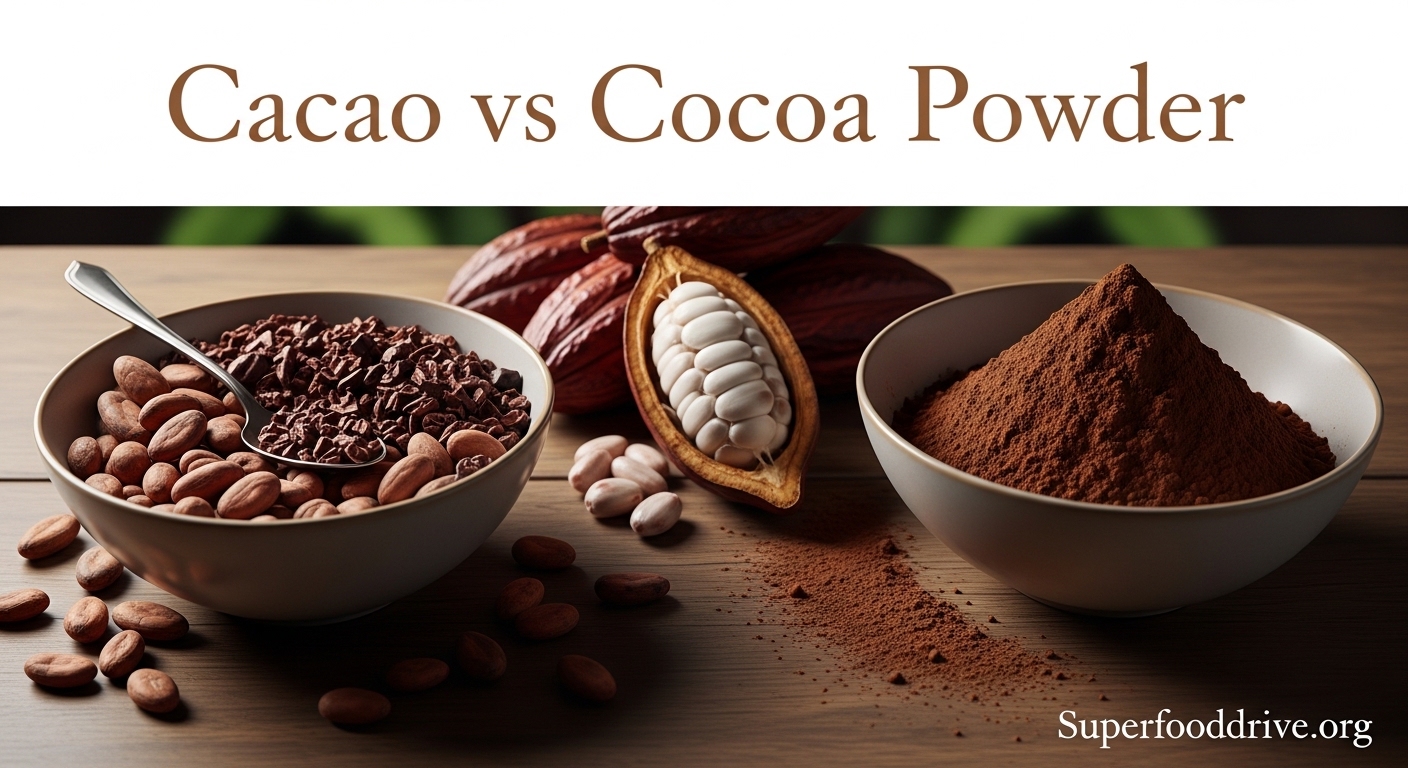
Standing in the baking aisle, you have probably stared at two nearly identical bags wondering what is the real difference between cacao powder and cocoa powder. I spent weeks researching this exact question after noticing my energy levels changed depending on which one I added to my morning smoothie.
Both cacao and cocoa powder come from the same source: the seed of the Theobroma cacao tree. The difference lies entirely in how the beans are processed after harvest. That processing gap creates meaningful variations in nutrition, flavor, and how your body responds to each one.
In this guide, I will break down the cacao vs cocoa powder debate with specific nutritional data, processing explanations, and practical advice for choosing between them. Whether you are baking brownies or blending a post-workout drink, you will know exactly which powder to reach for.
Table of Contents
Cacao vs Cocoa Powder: What Is the Difference?
The core distinction between cacao and cocoa comes down to heat. Cacao powder is made from raw beans that are cold-pressed and processed at low temperatures. Cocoa powder starts with the same beans but roasts them at high heat before grinding.
This temperature difference matters because heat degrades delicate compounds called flavanols. Studies show roasting can reduce antioxidant content by 60 percent or more. Cacao powder retains significantly more of these beneficial compounds because it skips the high-heat roasting step.
Think of it like the difference between raw and cooked vegetables. Both offer nutritional value, but the raw version preserves certain heat-sensitive nutrients. The same principle applies when comparing raw cacao powder to roasted cocoa powder.
How Cacao and Cocoa Powder Are Made
Understanding the production process clarifies why these two powders behave differently in recipes and nutrition.
Cacao Processing: Cold-Pressed and Raw
Cacao beans begin their journey like all chocolate products: harvested from cacao pods and fermented to develop flavor. Here is where the paths diverge.
Raw cacao skips the roasting phase entirely. Instead, producers cold-press the fermented beans to remove the cocoa butter. What remains is cacao powder, which retains more of the bean’s original nutritional profile. The cold-pressing process keeps temperatures low enough to preserve heat-sensitive compounds.
Cacao nibs, the crunchy bits you see in trail mixes, are simply broken pieces of these unroasted beans. They contain the same nutritional benefits as cacao powder but add texture to foods.
Cocoa Processing: Roasted and Refined
Traditional cocoa powder follows a similar path through fermentation, then adds a high-heat roasting step. Beans are roasted at temperatures between 250°F and 350°F to develop the classic chocolate flavor most people recognize.
After roasting, the beans are pressed to remove cocoa butter, then ground into fine powder. The result is the familiar cocoa powder found in most grocery stores. This process creates a milder, less bitter flavor but sacrifices some nutritional density.
Dutch-processed cocoa takes this further by treating the powder with an alkaline solution. This reduces acidity and creates a darker color with smoother flavor. However, the alkalization process reduces antioxidant content even more than standard roasting.
Cacao vs Cocoa Powder: Nutritional Comparison
Both powders offer impressive nutritional profiles, but cacao maintains advantages in several key areas. Here is how they compare per one-tablespoon serving.
| Nutrient | Cacao Powder | Cocoa Powder |
|---|---|---|
| Calories | 12 | 12 |
| Total Fat | 0.7g | 0.7g |
| Protein | 1g | 1g |
| Carbohydrates | 3g | 3g |
| Fiber | 2g | 2g |
| Iron | 0.6mg (3% DV) | 0.4mg (2% DV) |
| Magnesium | 27mg (7% DV) | 26mg (6% DV) |
| Flavanols | Higher retention | 60% reduced |
The macronutrient profiles are remarkably similar. Both provide minimal calories and fat while delivering fiber and protein. Where cacao pulls ahead is in its mineral content and antioxidant levels.
Cacao powder contains approximately 50 percent more iron than cocoa powder per serving. That makes it a better choice for anyone looking to boost iron intake, particularly vegetarians and vegans who need plant-based sources.
The real difference lies in compounds not listed on standard nutrition labels. Flavanols, polyphenols, and other antioxidants are significantly higher in cacao due to minimal processing. Research shows these compounds drive many of the health benefits associated with chocolate consumption.
Health Benefits of Cacao and Cocoa Powder
Despite the processing differences, both cacao and cocoa powder offer impressive health benefits supported by scientific research. Here is what the studies show.
Heart Health Benefits
Cacao and cocoa flavanols improve cardiovascular function in measurable ways. A 2021 meta-analysis found that cocoa flavanol intake reduced systolic blood pressure by an average of 4.5 mmHg. That is comparable to some lifestyle interventions for hypertension.
The mechanism involves nitric oxide production. Flavanols stimulate the lining of blood vessels to produce nitric oxide, which relaxes arteries and improves circulation. Better blood flow means lower blood pressure and reduced strain on the heart.
Regular consumption also improves cholesterol profiles. Studies show cocoa products can raise HDL (good) cholesterol while reducing LDL (bad) cholesterol oxidation. Since oxidized LDL contributes to plaque buildup, this protection matters for long-term heart health.
Brain Function and Mood
Your brain benefits from chocolate too. Research indicates flavanol-rich cocoa improves cognitive function, particularly in older adults. One study found that participants consuming high-flavanol cocoa showed improved memory and attention within hours.
The mood-boosting effects are not just in your head, or rather, they are exactly in your head. Cacao contains tryptophan, an amino acid that helps produce serotonin. Higher serotonin levels correlate with better mood and reduced anxiety.
Cacao also provides small amounts of caffeine and theobromine. These stimulants improve alertness without the jitters associated with coffee. Theobromine in particular provides sustained energy without the crash.
Antioxidant Power
Cacao is one of the most antioxidant-dense foods on the planet. ORAC scores, which measure antioxidant capacity, place raw cacao powder near the top of all foods tested. The polyphenols in cacao neutralize free radicals that damage cells and accelerate aging.
The antioxidant advantage goes to cacao powder here. Because it undergoes minimal processing, it retains significantly more polyphenols than cocoa powder. Some estimates suggest cacao contains up to four times the antioxidant capacity of heavily processed cocoa.
That said, cocoa powder still delivers meaningful antioxidant benefits. A 2013 study found that even processed cocoa provided enough polyphenols to reduce inflammation markers in participants. Do not dismiss cocoa as unhealthy just because it is processed.
Flavor Differences and Best Uses
Taste preferences matter when choosing between these powders. Each brings a distinct flavor profile that works better in certain applications.
Taste Profile Comparison
Cacao powder tastes intense, bitter, and slightly acidic. It has the sharp edge of dark chocolate at 90 percent cacao or higher. Some people find it too strong at first, especially if they are used to milder cocoa powder.
Cocoa powder offers a familiar, comforting chocolate flavor. The roasting process mellows bitterness and creates subtle caramel notes. Dutch-processed cocoa is even milder, with reduced acidity that tastes smoother in recipes.
Forum users report that cacao powder tastes exactly like cocoa when baked into brownies or muffins. The heat of baking seems to mellow the intensity. For raw applications like smoothies, the difference is more noticeable.
Recommended Applications
Use cacao powder when you want maximum nutrition and do not mind a stronger flavor. It works beautifully in smoothies, energy balls, and raw desserts. The bitterness pairs well with sweet fruits like bananas and dates.
Choose cocoa powder for traditional baked goods where a milder chocolate flavor is desired. Brownies, cakes, and cookies generally taste better with cocoa powder because the recipe accounts for its specific properties.
Dutch-processed cocoa is ideal for recipes calling for baking powder rather than baking soda. The reduced acidity works better with powder leavening agents. I will explain this in more detail in the baking section below.
Baking With Cacao vs Cocoa Powder
Can you swap cacao for cocoa in recipes? Sometimes, but you need to understand a few key differences.
Acidity is the main factor. Natural cocoa powder is acidic, with a pH around 5.5. Cacao powder is also acidic, though slightly less so. Dutch-processed cocoa is neutral or slightly alkaline with a pH of 7 or higher.
This matters because recipes balance acid against leavening agents. Baking soda (an alkali) needs acidic ingredients to create rise. If your recipe calls for baking soda, stick with natural cocoa or cacao powder. Substituting Dutch-processed cocoa here will leave you with flat, dense baked goods.
For recipes using baking powder, Dutch-processed cocoa works best. Baking powder contains both acid and alkali, so it does not rely on ingredients for pH balance. You can also use cacao or natural cocoa here, though the final texture may differ slightly.
When substituting cacao for cocoa in recipes, use a one-to-one ratio. However, expect a more intense chocolate flavor. You may want to slightly increase sweeteners to balance the bitterness. Some bakers add a pinch more liquid since cacao powder can absorb moisture differently than cocoa.
Caffeine Content: What You Need to Know
A common question is whether cacao or cocoa contains significant caffeine. The answer is yes, but the amounts are modest compared to coffee.
Cacao powder contains approximately 12 to 25 milligrams of caffeine per tablespoon. Cocoa powder has slightly less, around 8 to 15 milligrams per tablespoon, because some caffeine degrades during roasting.
For comparison, an eight-ounce cup of coffee contains 95 to 200 milligrams of caffeine. You would need to eat several tablespoons of cacao powder to match one cup of coffee.
Theobromine is another stimulant present in both powders at higher levels than caffeine. It provides sustained energy without the crash associated with coffee. However, theobromine affects heart rate more than the central nervous system, so sensitive individuals should monitor their intake.
If you are caffeine-sensitive, avoid cacao or cocoa in the evening. Morning consumption is generally fine for most people, even those monitoring caffeine intake.
How Much Cacao or Cocoa Powder Should You Eat Daily?
Moderation matters with any concentrated food, and cacao or cocoa is no exception. Here are practical guidelines for daily consumption.
Research suggests that health benefits appear at intakes of 200 to 400 milligrams of flavanols per day. That translates to roughly one to two tablespoons of cacao powder or two to three tablespoons of cocoa powder, since cacao is more concentrated.
Is four tablespoons of cacao a day too much? For most healthy adults, probably not. However, that amount provides significant caffeine and theobromine, plus concentrated minerals that could cause digestive upset in sensitive individuals.
I recommend starting with one tablespoon daily and increasing gradually. This lets you assess your tolerance for the compounds present. Some people experience headaches or digestive discomfort at higher doses.
For children, reduce serving sizes proportionally. A teaspoon in a smoothie is plenty for kids. The caffeine content, while low, still affects smaller bodies more significantly.
Is Cacao Powder Okay for GERD and Acid Reflux?
People with acid reflux or GERD often wonder if chocolate products trigger symptoms. The answer is nuanced.
Both cacao and cocoa powder are mildly acidic, which can theoretically aggravate reflux. However, cacao powder may actually be gentler for some people. Raw cacao contains enzymes and compounds that some find easier to digest than heavily roasted cocoa.
The real trigger for many GERD sufferers is the fat content. While both powders are relatively low in fat, combining them with high-fat ingredients like cream or butter can definitely trigger reflux. Keep your cacao or cocoa preparations light if you have GERD.
Try small amounts first to test your personal tolerance. Some people with GERD handle cacao powder without issues, while others find any chocolate product problematic. Everyone’s reflux triggers are different.
If you experience symptoms, try Dutch-processed cocoa. The alkalization process reduces acidity significantly, making it potentially better tolerated than natural cocoa or cacao powder.
Cacao vs Cocoa Powder for Specific Goals
Your specific health and cooking goals should guide your choice between these two powders.
For maximum antioxidants and nutrition, choose cacao powder. The minimal processing preserves more flavanols, polyphenols, and minerals. If you are prioritizing health benefits over taste, cacao is the clear winner.
For baking traditional recipes, cocoa powder works better. The familiar flavor profile and predictable behavior in recipes make it more versatile for cookies, cakes, and brownies. Your baked goods will taste like people expect them to taste.
For smoothies and raw applications, cacao powder shines. The intense flavor holds up against other strong ingredients like frozen berries and protein powder. You get maximum nutrition without heating away beneficial compounds.
For budget-conscious shoppers, cocoa powder offers excellent value. You still get meaningful health benefits at a lower price point. The 60 percent reduction in antioxidants compared to cacao is unfortunate, but the remaining 40 percent still provides value.
Frequently Asked Questions
Which one is healthier, cocoa powder or cacao powder?
Cacao powder is generally healthier because it undergoes minimal processing and retains more flavanols, antioxidants, and minerals. Studies show cacao contains up to 60 percent more antioxidants than processed cocoa. However, both offer health benefits, and cocoa powder is still nutritious despite the processing.
Is cacao powder okay for GERD?
Cacao powder is mildly acidic and may trigger symptoms in some people with GERD. However, some find raw cacao easier to digest than heavily roasted cocoa. Start with small amounts and monitor your symptoms. Dutch-processed cocoa, which is alkalized, may be better tolerated if acidity is a concern.
Why is there a warning on cacao powder?
Some cacao powder products carry warnings about potential heavy metal content, specifically cadmium. Cacao plants can absorb cadmium from soil, particularly in certain growing regions. This warning is required by California’s Proposition 65. Buy from reputable brands that test for heavy metals, and consume in moderation.
Is 4 tablespoons of cacao a day too much?
Four tablespoons daily is likely excessive for most people. While not dangerous, this amount provides significant caffeine and theobromine that may cause jitters, headaches, or digestive upset. Most research shows health benefits at 1-2 tablespoons daily. Start with less and increase gradually based on your tolerance.
Can I use cacao instead of cocoa in baking?
Yes, you can substitute cacao for cocoa powder in most recipes using a 1:1 ratio. However, cacao has a more intense, bitter flavor and may require recipe adjustments. Since both are acidic, they work similarly with baking soda. You may want to slightly increase sweeteners to balance the stronger chocolate taste.
Does cacao have more caffeine than cocoa?
Yes, cacao powder typically contains slightly more caffeine than cocoa powder, approximately 12-25 mg per tablespoon compared to 8-15 mg for cocoa. The difference is small compared to coffee but may matter for caffeine-sensitive individuals. Both also contain theobromine, another stimulant that affects heart rate.
Final Thoughts
The cacao vs cocoa powder debate does not have a single right answer. Both come from the same remarkable bean and offer meaningful health benefits. Your choice depends on priorities: maximum nutrition favors cacao, while versatility and familiar flavor favor cocoa.
In my kitchen, I keep both on hand. Cacao powder goes into my morning smoothie for the antioxidant boost. Cocoa powder handles baking duties where the milder flavor works better. This approach gives me the best of both worlds without compromise.
Start with one tablespoon daily of whichever powder you choose. Pay attention to how your body responds. The health benefits are real, but individual tolerance varies. Experiment with both to discover what works for your taste buds and your wellness goals.