
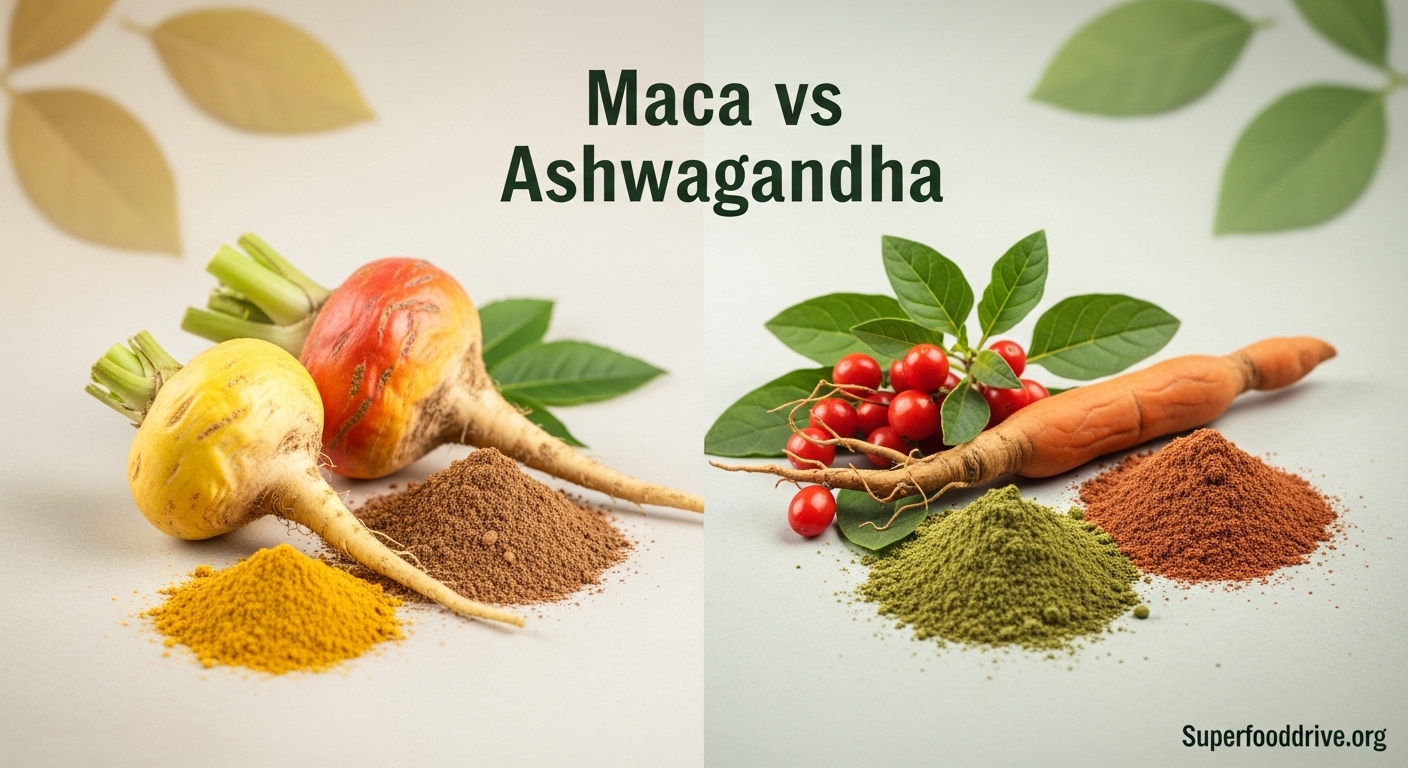
Standing in the supplement aisle trying to choose between Maca and Ashwagandha feels overwhelming. Both promise better energy, reduced stress, and improved wellbeing. But they work differently and target different health concerns.
Our team spent weeks researching clinical studies and analyzing real user experiences from Reddit and health forums. This guide cuts through the confusion so you can decide which adaptogen fits your specific needs.
By the end, you will understand exactly what each herb does, how they differ, and whether you should choose one or use them together.
Table of Contents
What Is Ashwagandha
Ashwagandha (Withania somnifera) is an adaptogenic herb native to India and North Africa. Ayurvedic medicine has used this shrub root for over 3,000 years to promote longevity and vitality.
The name translates to “smell of horse” in Sanskrit, referring to its distinct odor and traditional belief that it imparts horse-like strength. Modern research identifies withanolides as the primary active compounds responsible for its effects.
Traditional Ayurvedic practitioners classify Ashwagandha as a Rasayana herb. This category promotes physical and mental health by supporting the body’s natural resilience to stress and disease.
Ashwagandha Benefits: What This Adaptogen Does for Your Body
Clinical research supports several evidence-backed benefits of Ashwagandha supplementation. Understanding these effects helps determine if this adaptogen matches your health goals.
Stress Relief and Cortisol Regulation
Ashwagandha’s most studied benefit involves reducing stress and anxiety. Multiple randomized controlled trials show significant decreases in cortisol levels after consistent supplementation.
One landmark study published in the Indian Journal of Psychological Medicine found participants taking Ashwagandha extract experienced 44% reduction in stress scores compared to placebo. Cortisol levels dropped significantly in the treatment group.
The adaptogen works by modulating the hypothalamic-pituitary-adrenal axis. This regulates your body’s stress response system.
Sleep Support and Relaxation
Beyond daytime stress relief, Ashwagandha promotes better sleep quality. The herb contains triethylene glycol, a compound with sleep-inducing properties.
Research from the Journal of Ethnopharmacology demonstrates improved sleep efficiency and reduced sleep onset latency in participants taking Ashwagandha root extract. Many users report feeling more rested upon waking.
Forum users consistently mention this calming effect. One Reddit user noted, “the ashwagandha definitely helped with general anxiety levels – wasn’t expecting much but noticed I wasn’t getting as wound up about small stuff.”
Athletic Performance and Muscle Strength
Studies show Ashwagandha enhances physical performance markers including VO2 max, muscle strength, and recovery time. The herb appears to increase testosterone levels in men while reducing exercise-induced muscle damage.
A 2015 study in the Journal of the International Society of Sports Nutrition found significant improvements in muscle mass and strength in men taking 600 mg daily over eight weeks.
However, some users report mixed results for energy. As one Reddit user shared, “Ashwagandha imo will not boost your energy much. It’s more calming by lowering cortisol.”
Brain Health and Cognitive Function
Emerging research suggests Ashwagandha supports cognitive function through neuroprotective effects. The withanolides demonstrate antioxidant properties that may protect brain cells from oxidative damage.
Studies indicate potential benefits for memory, attention, and information processing speed. These effects may prove particularly valuable for aging populations.
What Is Maca
Maca (Lepidium meyenii) grows exclusively in the high Andes mountains of Peru at elevations between 13,000 and 16,500 feet. Indigenous Peruvians have cultivated this cruciferous vegetable root for approximately 2,000 years.
Sometimes called Peruvian ginseng, Maca has served as both food and medicine in traditional Andean cultures. The Inca warriors reportedly consumed Maca before battle to enhance strength and endurance.
The root contains unique compounds called macamides and macaenes, along with glucosinolates and various vitamins and minerals. These bioactive compounds differentiate Maca from other adaptogenic herbs.
Maca Benefits: Energy, Libido, and Hormonal Balance
Maca offers a distinct benefit profile compared to Ashwagandha. While both support overall wellness, Maca particularly excels in areas of energy, sexual health, and endocrine support.
Natural Energy Boost Without Stimulants
Unlike caffeine, Maca provides steady energy without jitters or crashes. The root’s nutritional profile includes B vitamins, iron, and copper that support cellular energy production.
Research published in the journal Pharmaceuticals found Maca supplementation improved energy and stamina in study participants. The antioxidant content helps combat fatigue at the cellular level.
Note that effects take time. Forum discussions consistently mention the need for patience. One user reported, “Maca takes more than 2 weeks” to show noticeable effects.
Libido Enhancement and Sexual Health
Maca’s most well-known benefit involves supporting sexual desire and function. Multiple clinical trials demonstrate positive effects on libido in both men and women.
A systematic review in BMC Complementary Medicine and Therapies found evidence supporting Maca’s aphrodisiac properties. The effects appear to work through mechanisms other than direct hormone alteration.
For men, some studies show improvements in semen quality and sperm count. For women, Maca may help with sexual dysfunction associated with antidepressant use.
Hormone Balance and Menopause Support
Maca shows particular promise for supporting hormonal health in women. Research indicates benefits for menopause symptoms including hot flashes, mood swings, and sleep disturbances.
Unlike hormone replacement therapy, Maca does not contain hormones itself. Instead, it appears to support the endocrine system’s natural function. This makes it attractive for those seeking natural approaches to hormonal balance.
Studies suggest Maca may help regulate estrogen and progesterone levels. One animal study showed Maca increased progesterone while decreasing estradiol.
Mood and Brain Health Support
Maca demonstrates potential antidepressant and anxiolytic effects in preliminary research. The antioxidant compounds help protect brain cells from oxidative stress.
A 2015 study in the Journal of Medicinal Food found Maca reduced symptoms of depression in postmenopausal women. Black Maca variety showed particular promise for cognitive enhancement.
The root’s nutritional density provides essential fatty acids and amino acids that support neurotransmitter production and overall brain health.
Maca vs Ashwagandha: Side-by-Side Comparison
Understanding the key differences between these adaptogens simplifies your decision. Here’s how they stack up across important categories:
| Feature | Ashwagandha | Maca |
|---|---|---|
| Origin | India (Ayurvedic medicine) | Peru (Andean traditional medicine) |
| Primary Active Compounds | Withanolides | Macamides, Macaenes, Glucosinolates |
| Best For | Stress, anxiety, sleep, cortisol | Energy, libido, hormone balance |
| Energy Effect | Calming (reduces fatigue from stress) | Stimulating (direct energy support) |
| Sleep Support | Strong | Moderate |
| Libido Enhancement | Moderate | Strong |
| Athletic Performance | Muscle strength, recovery | Endurance, stamina |
| Hormone Effects | Supports testosterone, cortisol | Supports estrogen, progesterone |
| Traditional Name | Indian Ginseng, Winter Cherry | Peruvian Ginseng |
| Botanical Family | Solanaceae (Nightshade) | Brassicaceae (Cruciferous) |
This comparison reveals why the choice depends entirely on your primary health goals. Ashwagandha targets stress and relaxation. Maca targets energy and hormonal vitality.
Can You Take Ashwagandha and Maca Together
Yes, combining Ashwagandha and Maca is generally safe and may provide complementary benefits. The two adaptogens target different pathways in the body, creating potential synergy rather than competition.
Ashwagandha’s calming effects balance Maca’s energizing properties. This combination supports both stress resilience and natural vitality. Many users report positive experiences taking both supplements.
However, timing matters. Consider taking Ashwagandha in the evening to support sleep and relaxation. Take Maca in the morning for sustained energy throughout the day.
Forum discussions reveal mixed approaches. Some users take both together without issues. Others prefer staggering them based on their individual responses. Start with one herb before adding the second to identify how each affects you personally.
Safety and Side Effects: What You Need to Know
Both adaptogens have excellent safety profiles when used appropriately. However, certain populations should exercise caution or avoid these supplements entirely.
Ashwagandha Precautions
Most people tolerate Ashwagandha well. Common side effects include mild stomach upset, drowsiness, and in rare cases, diarrhea.
Important considerations include thyroid function. Ashwagandha may increase thyroid hormone production. Those with hyperthyroidism should avoid it. Individuals with Hashimoto’s thyroiditis should consult healthcare providers before use.
Autoimmune conditions require caution since Ashwagandha may stimulate immune activity. Pregnant and breastfeeding women should avoid this herb due to insufficient safety data.
Maca Precautions
Maca also demonstrates strong safety in research studies. Side effects are rare but may include digestive upset, insomnia if taken too late in the day, and mood changes in sensitive individuals.
Those with thyroid conditions should choose gelatinized Maca over raw varieties. Raw Maca contains goitrogens that may interfere with thyroid function. Gelatinization removes these compounds.
Pregnant and breastfeeding women should consult healthcare providers before using Maca. While traditionally consumed as food in Peru, concentrated supplements differ from dietary amounts.
Who Should Avoid These Adaptogens
Avoid Ashwagandha if you have hyperthyroidism, are pregnant or breastfeeding, take sedative medications, or have autoimmune conditions without medical supervision.
Proceed cautiously with Maca if you have estrogen-sensitive conditions, thyroid disorders (choose gelatinized only), or hormone-sensitive cancers. Always consult healthcare providers when managing serious health conditions.
Dosage and Timing Recommendations
Getting the dosage right maximizes benefits while minimizing side effects. Research provides clear guidance for both adaptogens.
Ashwagandha Dosage Guidelines
Standardized root extract dosages range from 300-600 mg daily. Look for supplements containing 5% withanolides for consistent potency.
Most clinical studies use 600 mg daily, often split into two doses. Take Ashwagandha with food to minimize stomach upset.
Timing depends on your goals. Take it in the evening for sleep support. Split doses morning and evening for all-day stress management.
Maca Dosage Guidelines
Maca powder typically ranges from 1,500-3,000 mg daily. Start with lower doses and gradually increase based on your response.
Take Maca in the morning for energy support. Taking it too late may interfere with sleep in sensitive individuals.
Both red, black, and yellow Maca varieties exist. Black Maca shows strongest effects for male fertility and athletic performance. Red Maca supports prostate health. Yellow Maca provides general benefits.
How Long Until You See Results
Patience is essential with adaptogens. Neither herb produces immediate effects like caffeine or prescription medications.
Ashwagandha typically requires 4-8 weeks of consistent use before noticeable benefits appear. Some users report stress reduction within 2-3 weeks.
Maca generally shows effects within 2-4 weeks. Libido benefits may appear sooner than hormonal or energy improvements.
Forum experiences align with research. Users consistently emphasize the need for at least 4 weeks before judging effectiveness. One user summarized: “Ashwagandha takes more than 4 weeks to have any sort of noticeable effect.”
Maca vs Ashwagandha: Which Adaptogen Is Right for You
Your specific health goals determine the best choice. Here’s a simple framework to guide your decision.
Choose Ashwagandha If:
- You struggle with chronic stress or anxiety
- Sleep quality is your primary concern
- You want to lower cortisol levels
- Athletic recovery and muscle building matter most
- You need calming support without drowsiness
- Brain fog and mental fatigue bother you
Choose Maca If:
- Low energy and fatigue are your main complaints
- You want to support libido and sexual health
- Hormonal balance is your priority
- You experience menopause symptoms
- Endurance and stamina need improvement
- Mood support without sedation is preferred
Consider Both If:
- You want comprehensive stress and energy support
- Athletic performance covers multiple areas
- Hormonal health and stress resilience both matter
- You have tolerated adaptogens well previously
Remember that individual responses vary significantly. What works for others may not work identically for you. Starting with one adaptogen allows you to assess personal effects before adding complexity.
One Reddit user shared their decision process: “I had to make the decision between maca and ashwagandha. Ultimately I decided on ashwagandha due to health issues.” Your specific health context should guide the choice.
Frequently Asked Questions
What is better, maca root or ashwagandha?
Neither is universally better. Ashwagandha excels for stress relief, sleep support, and cortisol regulation. Maca works better for energy, libido, and hormone balance. Choose based on your specific health goals.
Can I take maca if I have Hashimoto’s?
Consult your healthcare provider first. Raw Maca contains goitrogens that may affect thyroid function. If approved, choose gelatinized Maca which has these compounds removed. Monitor thyroid levels regularly when using any adaptogen with Hashimoto’s.
Can people with schizophrenia take ashwagandha?
Ashwagandha may interact with medications used for schizophrenia and other psychiatric conditions. The herb affects neurotransmitter systems including GABA. Consult a psychiatrist before using Ashwagandha if you have schizophrenia or take antipsychotic medications.
What is the most powerful adaptogen?
No single adaptogen is most powerful for everyone. Effectiveness depends on individual biochemistry and health goals. Ashwagandha and Maca are both well-researched with strong evidence. Other notable adaptogens include Rhodiola rosea, Panax ginseng, and Holy Basil.
Can you take ashwagandha and maca together?
Yes, taking both together is generally safe and may provide complementary benefits. Ashwagandha’s calming effects balance Maca’s energizing properties. Consider taking Ashwagandha in the evening and Maca in the morning for optimal timing.
How long does it take for maca and ashwagandha to work?
Both adaptogens require consistent use over weeks. Ashwagandha typically shows effects in 4-8 weeks. Maca may work faster with some benefits appearing in 2-4 weeks. Neither produces immediate results like caffeine.
Does ashwagandha lower libido?
Some users report decreased libido with Ashwagandha, likely due to its calming effects and potential impact on certain hormone pathways. However, research shows mixed results. Maca generally shows stronger evidence for libido enhancement than Ashwagandha.
Final Thoughts
Maca vs Ashwagandha is not a competition but a choice based on your unique needs. Ashwagandha serves those seeking calm, better sleep, and stress resilience. Maca supports those wanting energy, vitality, and hormonal balance.
Remember that adaptogens require patience and consistency. Expect 4-8 weeks before judging effectiveness. Start with one herb, assess your response, then consider adding the other if needed.
Consult healthcare providers before starting any supplement, especially if you take medications or have health conditions. The right adaptogen chosen thoughtfully can become a valuable tool in your wellness routine.