
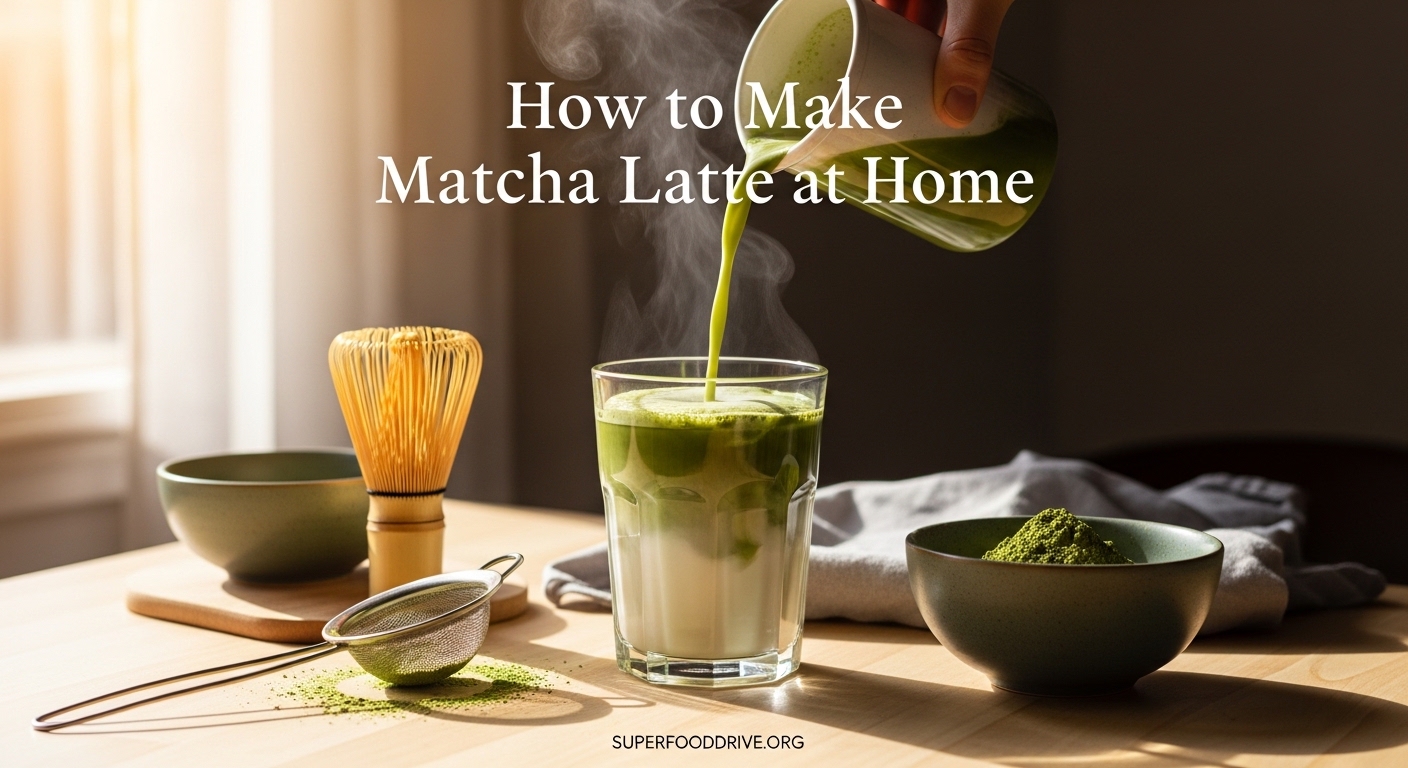
Learning how to make matcha latte at home will transform your morning routine. I spent months perfecting my technique after too many bitter, clumpy attempts. Now I enjoy smooth, frothy matcha lattes that rival any coffee shop for a fraction of the cost.
Matcha lattes combine the earthy richness of Japanese green tea powder with creamy steamed milk. The result is a vibrant green drink packed with antioxidants and sustained energy without the jitters of coffee. Making them at home means controlling sweetness, choosing your favorite milk, and avoiding the $6 coffee shop price tag.
Our team tested dozens of methods to find what actually works. This guide covers everything from basic ingredients to pro techniques that prevent the common problems ruining homemade matcha.
Table of Contents
What Is Matcha and Why Use It for Lattes
Matcha is finely ground green tea leaves grown under shade before harvest. This shading process increases chlorophyll content, giving matcha its signature bright green color. Unlike regular green tea where you steep and discard leaves, you consume the entire powdered leaf when drinking matcha.
The caffeine in matcha releases slowly over 4-6 hours. You get sustained alertness without the crash associated with coffee. Each serving also delivers 137 times more antioxidants than standard green tea, plus L-theanine for calm focus.
Ceremonial Grade vs Culinary Grade Matcha
Understanding matcha grades helps you choose the right powder for lattes. Ceremonial grade matcha comes from the youngest, most tender leaves. It has a delicate, naturally sweet flavor perfect for traditional tea preparation. This grade works beautifully in lattes when you want pure matcha taste.
Culinary grade matcha uses slightly older leaves and has a stronger, more robust flavor. It stands up well to milk and sweeteners, making it ideal for lattes, baking, and smoothies. Many baristas actually prefer culinary grade for milk-based drinks because the flavor cuts through.
For beginners, either grade works. Ceremonial produces a smoother, less bitter drink. Culinary offers better value and stands up to added flavors. Both provide the same health benefits.
What You Need to Make Matcha Latte
Gathering the right ingredients and tools makes the difference between clumpy disappointment and silky perfection. Here is everything you need for a basic matcha latte at home.
Ingredients
- 1 teaspoon (2 grams) matcha powder
- 2 ounces hot water (175°F/80°C)
- 6-8 ounces milk of choice
- Sweetener to taste (honey, maple syrup, or sugar)
Essential Equipment
- Fine mesh sifter
- Bamboo whisk (chasen) or electric frother
- Wide-mouthed bowl or mug
- Milk frother or small saucepan
- Food thermometer (optional but helpful)
The sifter is non-negotiable. Matcha powder clumps easily, and dry lumps never dissolve properly in liquid. A simple tea strainer works perfectly for this.
Your bamboo whisk, called a chasen in Japanese, has delicate tines designed specifically for incorporating air and creating smooth matcha. It makes a noticeable difference in texture compared to metal whisks or spoons.
How to Make Matcha Latte at Home: Step-by-Step Recipe
This recipe creates one perfect hot matcha latte in about 5 minutes. The technique prevents clumping and produces a beautiful layer of foam on top.
Step 1: Sift the Matcha
Place your sifter over your bowl or mug. Add 1 teaspoon of matcha powder and gently press through with the back of a spoon. This removes any lumps and aerates the powder for easier whisking.
Step 2: Add Hot Water
Heat water to 175°F (80°C). If you do not have a thermometer, bring water to a boil then let it cool for 2-3 minutes. Pour about 2 ounces (1/4 cup) of hot water over the sifted matcha.
Never use boiling water. Water above 180°F scalds the matcha, releasing tannins that create bitter, astringent flavors. This is the most common mistake ruining homemade matcha lattes.
Step 3: Whisk the Matcha
Hold your bamboo whisk vertically and whisk in a “W” or “M” motion. Move quickly but smoothly for 15-20 seconds. You want to incorporate air and break up any remaining powder.
Look for a smooth, bright green liquid with a light foam on top. The surface should have tiny bubbles and no visible green specks. If you see lumps, whisk a few seconds longer.
Step 4: Heat and Froth the Milk
Heat your milk in a saucepan over medium-low heat until steaming but not boiling (about 150°F). Alternatively, use a milk frother or steam wand if you have one.
For foam without special equipment, warm the milk then transfer to a French press. Pump the plunger rapidly 10-15 times to create froth. Heat develops the natural sweetness in milk while frothing creates that satisfying coffee shop texture.
Step 5: Combine and Serve
Pour the frothed milk over your whisked matcha. Add sweetener if desired and stir gently. The milk should create a beautiful green gradient before mixing completely.
Traditionalists drink matcha latte unsweetened to appreciate the natural flavor. Start with 1 teaspoon of honey or maple syrup and adjust to taste. Some people prefer vanilla syrup for a subtle flavor enhancement.
How to Make Iced Matcha Latte
Iced matcha lattes refresh on hot days and actually mask any slight bitterness better than hot versions. The layering technique also creates an impressive visual.
Step-by-Step Iced Version
Step 1: Sift and whisk your matcha with 2 ounces of hot water (175°F) as described above. Whisk until completely smooth with light foam.
Step 2: Fill a tall glass with ice. Pour your cold milk of choice over the ice, filling about two-thirds full.
Step 3: Sweeten if desired by adding syrup to the milk and stirring. Maple syrup dissolves easily in cold liquid.
Step 4: Slowly pour the whisked matcha over the milk and ice. Pouring over the back of a spoon helps create distinct layers. The matcha will gradually sink and marble through the milk.
Stir before drinking to combine all layers. For extra creaminess, froth your milk cold using an electric frother before pouring over ice.
Pro Tips for the Perfect Matcha Latte
After testing hundreds of lattes, these techniques solve the problems most people encounter. Small adjustments make dramatic differences in your final drink.
The 30/20/10 Rule Explained
Professional matcha preparation follows specific timing for optimal results. The 30/20/10 rule refers to 30 seconds of sifting preparation, 20 seconds of active whisking, and consuming within 10 minutes of preparation.
This timing ensures your matcha stays fresh and does not oxidize or settle. Matcha begins degrading once exposed to air and water. The bright green color fades and bitterness increases with time.
For home preparation, focus on the whisking timing. Count 15-20 seconds of vigorous whisking for proper incorporation. Do not over-whisk or you introduce too much air and create large bubbles instead of smooth microfoam.
Best Milk Options for Matcha Latte
Oat milk produces the creamiest, most coffee-shop-like results. Its natural sweetness complements matcha without overpowering it. The neutral flavor and excellent frothing capability make it our top choice.
Coconut milk adds richness and subtle tropical notes. It froths beautifully but can separate if overheated. Use full-fat canned coconut milk for indulgent texture or carton varieties for everyday drinking.
Almond milk works well but produces thinner foam. Choose barista blends designed for coffee drinks. Unsweetened varieties let the matcha flavor shine through.
Dairy milk offers the most protein for frothing stability. Whole milk creates luxurious foam, while 2% works well too. Skim milk froths stiffly but tastes less rich.
How to Whisk Matcha Without a Bamboo Whisk
Electric milk frothers work surprisingly well for matcha. Add your sifted matcha and hot water to a tall container. Insert the frother and run for 30 seconds, moving up and down to incorporate all powder.
A small kitchen whisk or fork requires more effort but produces acceptable results. Use a bowl rather than a mug for better movement. Whisk vigorously in circular motions for 45-60 seconds.
Cocktail shakers create smooth matcha when nothing else works. Add matcha and hot water to a shaker with a small ice cube. Shake hard for 15 seconds. The ice helps create friction and break up clumps while cooling slightly.
Common Matcha Latte Problems and Solutions
Even experienced home baristas encounter issues. Here is how to fix the most reported problems from online communities.
Why Is My Matcha Latte Bitter
Bitterness usually means water too hot or too much matcha powder. Check your water temperature stays below 180°F. Use a kitchen thermometer or the cooling method described earlier.
Reduce your matcha amount if bitterness persists. Start with 1 teaspoon (2 grams) per 8 ounces of liquid. Some culinary grades require slightly less powder than ceremonial grades.
Old or poorly stored matcha also tastes bitter. Matcha oxidizes quickly when exposed to air, light, or heat. Store yours in an airtight container in the refrigerator after opening. Use within 2-3 months for best flavor.
How to Fix Clumpy Matcha
Clumping frustrates beginners but has simple solutions. Always sift your powder before adding liquid. This single step eliminates 90% of lump problems.
Create a matcha paste first when using lower-quality powder. Add just 1 tablespoon of hot water to your sifted matcha. Stir into a thick paste with the back of your spoon, then gradually add remaining water while whisking.
Check your matcha freshness. Old matcha absorbs moisture from air and clumps severely. Fresh matcha should be vibrant green and flow freely. Brownish or yellowish tones indicate oxidation.
Why Does My Matcha Sink to the Bottom
Matcha powder is denser than milk and naturally settles. Proper whisking suspends particles temporarily in the water phase before adding milk.
Whisk more vigorously for longer if settling occurs quickly. The foam layer helps maintain suspension. Adding matcha to milk rather than water almost guarantees separation.
Stir before each sip if separation persists. This is normal and does not affect flavor. Some traditional preparations actually embrace the settling as part of the drinking experience.
Frequently Asked Questions
What do I need to make matcha latte?
You need matcha powder, hot water (175°F), milk, and optionally sweetener. Essential tools include a sifter and whisk (bamboo chasen preferred). A thermometer helps control water temperature.
How to make a matcha latte at home that actually tastes good?
Sift your matcha first, use water at 175°F not boiling, whisk vigorously for 15-20 seconds, and use quality milk. Oat milk creates the creamiest results. Start with less matcha and increase to taste.
Can diabetics drink matcha latte?
Yes, matcha itself is sugar-free and low in carbohydrates. Choose unsweetened milk alternatives like unsweetened almond or coconut milk. Skip sweeteners or use diabetes-friendly alternatives like stevia or monk fruit.
What is the 30/20/10 rule for matcha?
The 30/20/10 rule refers to 30 seconds preparation (sifting), 20 seconds whisking, and consuming within 10 minutes. This timing ensures optimal flavor before oxidation affects taste.
Conclusion
Learning how to make matcha latte at home rewards you with better drinks at a fraction of cafe prices. The keys are simple: sift your powder, control water temperature, whisk vigorously, and use quality milk.
Start with the basic recipe above and adjust to your taste preferences. Some people prefer stronger matcha flavor; others want more milk. Experiment with different milk alternatives and sweeteners until you find your perfect combination.
With practice, you will make matcha lattes in under 5 minutes that rival any coffee shop. Your morning routine deserves this upgrade.