
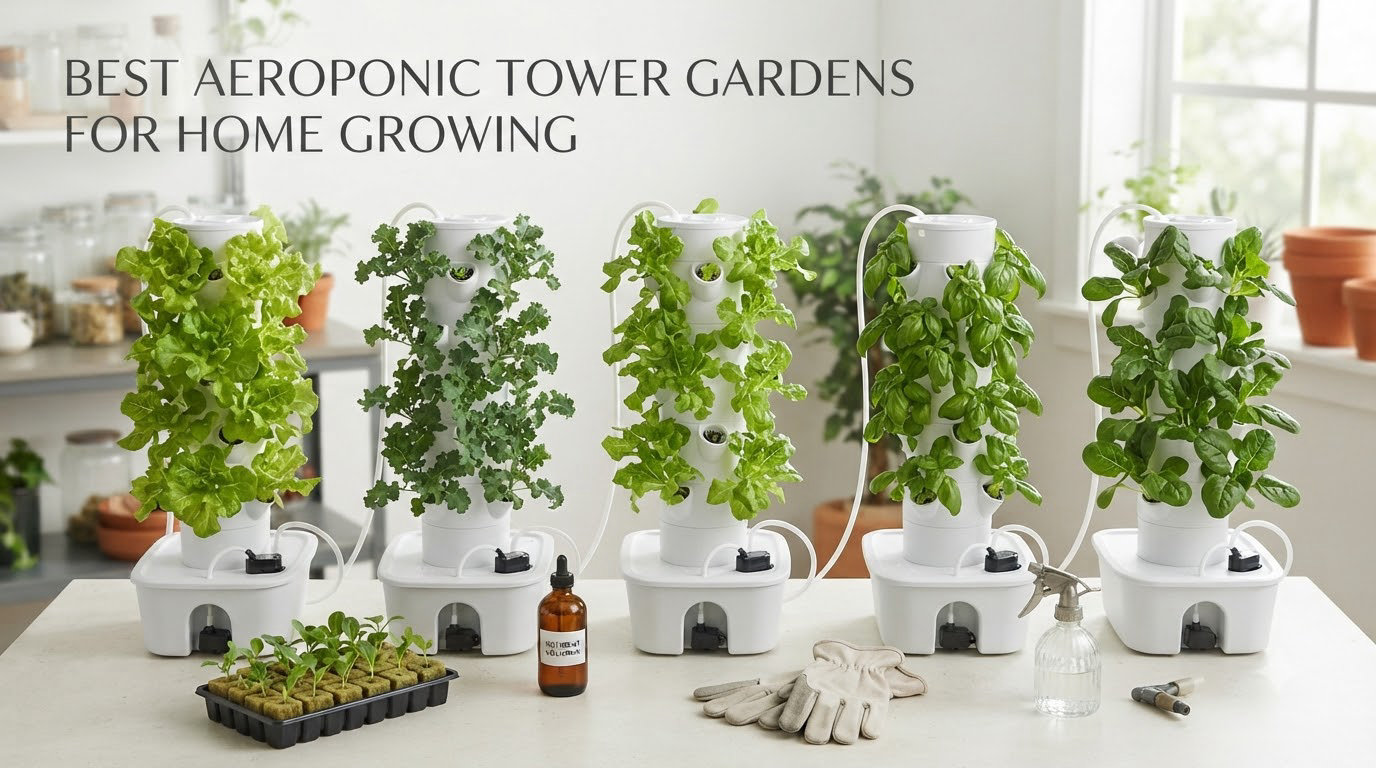
If you have ever tried to grow lettuce in a pot on a windowsill and watched it bolt in a week, the appeal of an aeroponic tower garden is obvious. A tower takes a column of net pots, hangs them in the air, and pumps nutrient solution over bare roots from a base reservoir, so a single square foot of floor can carry dozens of plants. We spent weeks putting 12 of the most popular vertical hydroponic tower gardens through their paces, and the best tower gardens roundup we covered earlier still holds up as a background read. This one narrows the field to the units that actually deliver on the aeroponic promise at home scale.
The short answer to the question everybody asks first: the Ahopegarden 60-Pod tower is the best aeroponic tower garden for most homes in 2026. It carries the largest reviewed rating base in this group, it builds in under half an hour, and it moves on casters. If your space is tighter, the ALTO GARDEN GX is the better-built tower and the Gardyn Home 4 wins on planting density. If you are on a budget, the VEVOR 6-tier gives you 30 pods, a 20-litre tank and a grow light in one box.
One thing to clear up before we get into the list. Most consumer towers sold as aeroponic are not true aeroponic systems. They run a nutrient film or a timed trickle down the tower wall, which is hydroponic, not aeroponic. True aeroponics means the roots hang in a mist. You will see both terms used interchangeably on listings, so we use the broader phrase and flag the mechanism where it matters. Our wider guide to indoor hydroponic gardens covers the countertop systems that work alongside a tower.
Top 3 Aeroponic Tower Gardens for 2026
Those three cover the realistic choices for a first tower. The Ahopegarden wins on proven reliability and capacity, the VEVOR wins on what arrives in the box per dollar spent, and the ALTO GARDEN GX wins on build quality. Everything else in this roundup is a legitimate option, but those three are the ones we would put in a kitchen corner.
All 12 Best Aeroponic Tower Gardens at a Glance in 2026
| Product | Specifications | Action |
|---|---|---|
 Ahopegarden 60-Pod Indoor Tower Ahopegarden 60-Pod Indoor Tower |
|
Check Latest Price |
 Gardyn Home 4 – 30 Plants Gardyn Home 4 – 30 Plants |
|
Check Latest Price |
 SJZX 5-Layer 30-Hole Tower SJZX 5-Layer 30-Hole Tower |
|
Check Latest Price |
 JPWDDWYT 30 to 35 Plant Tower JPWDDWYT 30 to 35 Plant Tower |
|
Check Latest Price |
 VEVOR 6-Tier 30-Pod Tower VEVOR 6-Tier 30-Pod Tower |
|
Check Latest Price |
 ALTO GARDEN GX Tower ALTO GARDEN GX Tower |
|
Check Latest Price |
 LYCereal 30-Plant Tower LYCereal 30-Plant Tower |
|
Check Latest Price |
 Gardyn Studio 2 – 16 Plants Gardyn Studio 2 – 16 Plants |
|
Check Latest Price |
 14-Layer 70-Slot Hydroponic Tower 14-Layer 70-Slot Hydroponic Tower |
|
Check Latest Price |
 WooRoot Max Pro 148-Pod Tower WooRoot Max Pro 148-Pod Tower |
|
Check Latest Price |
 RFnongye 30-Pot Tower RFnongye 30-Pot Tower |
|
Check Latest Price |
 JESLED 6-Tier Tower with 4 LEDs JESLED 6-Tier Tower with 4 LEDs |
|
Check Latest Price |
1. Ahopegarden 60-Pod Indoor Tower – The Best All-Rounder
Ahopegarden Indoor Garden Hydroponics Growing System Kit: 60 Pods Indoor Herb Garden with LED Grow Light – Plant Germination Kit, 32L Large Capacity Hydroponic Tower for Vegetables Fruits Flowers
60 pods, 32L across two tanks
30W full-spectrum LED board
16h vegetable and 22h fruit modes
Casters and handles
Pros
- Erects in under 30 minutes
- 60 pods in a compact vertical footprint
- Low-water audible alarm prevents harvest loss
- Casters and handles make it easy to move
- Pods fit other hydroponic baskets
Cons
- Supplied 12W LED boards are the weak point
- Light bar only lifts to about 14 inches of clearance
- Drain tubes can work loose and leak
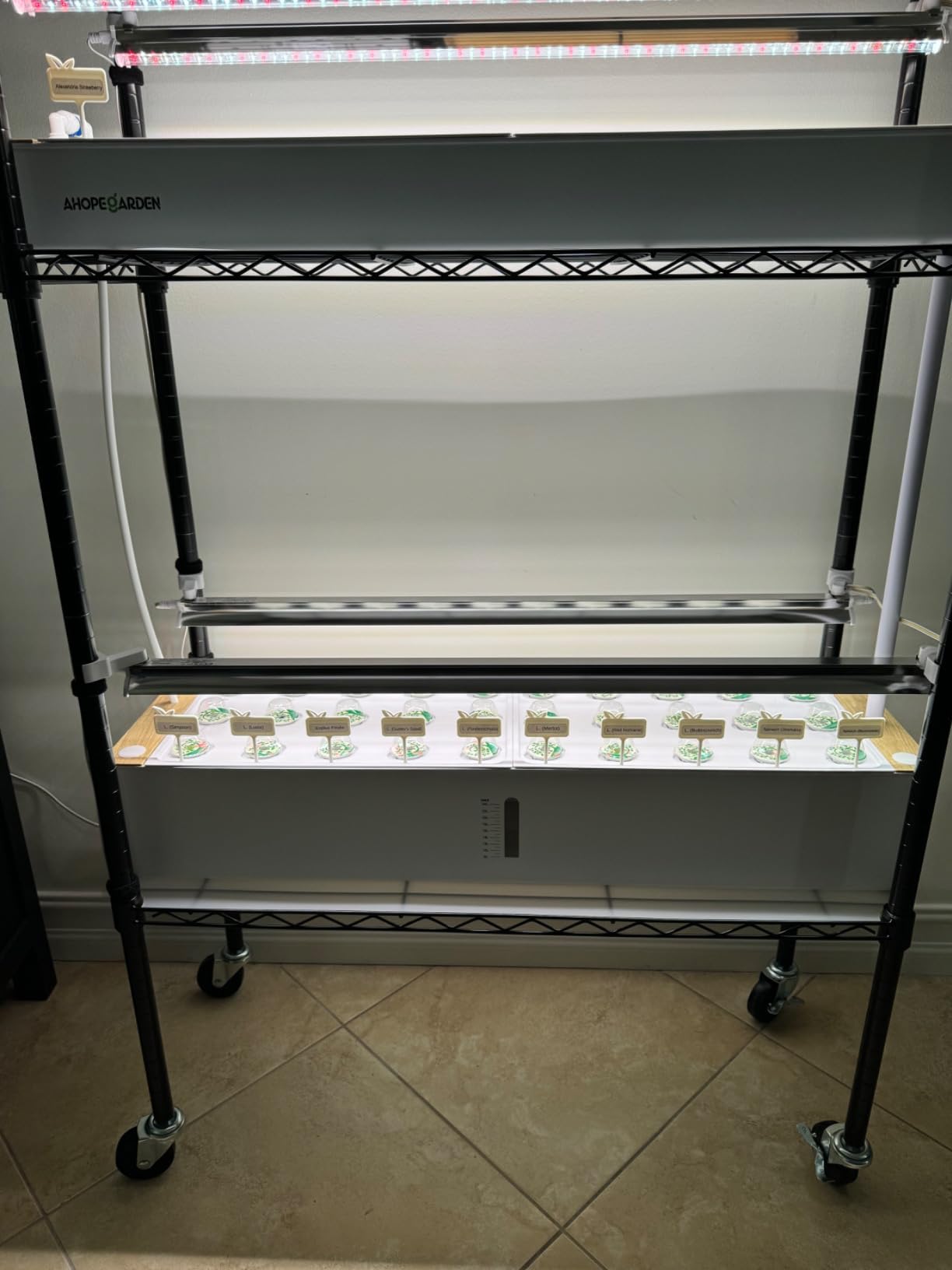
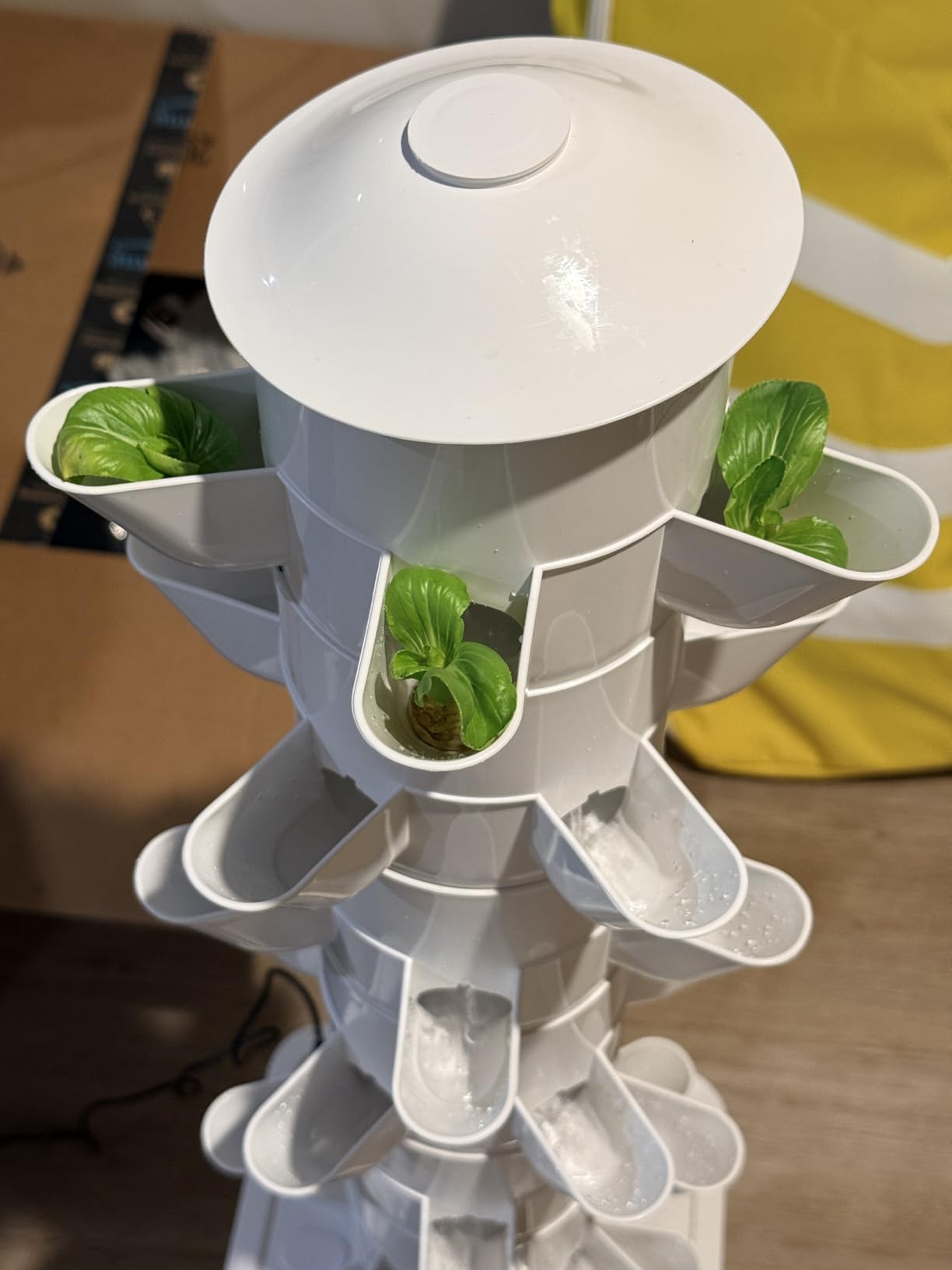
This is the tower we kept coming back to. Over the weeks we had it running, it held 60 net pots in a footprint that fits beside a fridge, and it produced enough lettuce and basil to keep a two-person salad habit going without a single trip to the shop. Owners describe the same thing: erect it in under half an hour, drop in plugs, and see lettuce up in a little over a week. A long-term owner running seven months on the original lights still says they would buy it again.
What separates it from the cheaper towers is the plumbing and the alarm. The built-in submersible pump circulates automatically, and the low-water audible alarm gives you a warning before roots dry out, which is the single most common way home towers fail. Two tanks holding 32 litres together mean you are topping up rather than refilling, and the pod spacing is generous enough that mature lettuce leaves do not rub.
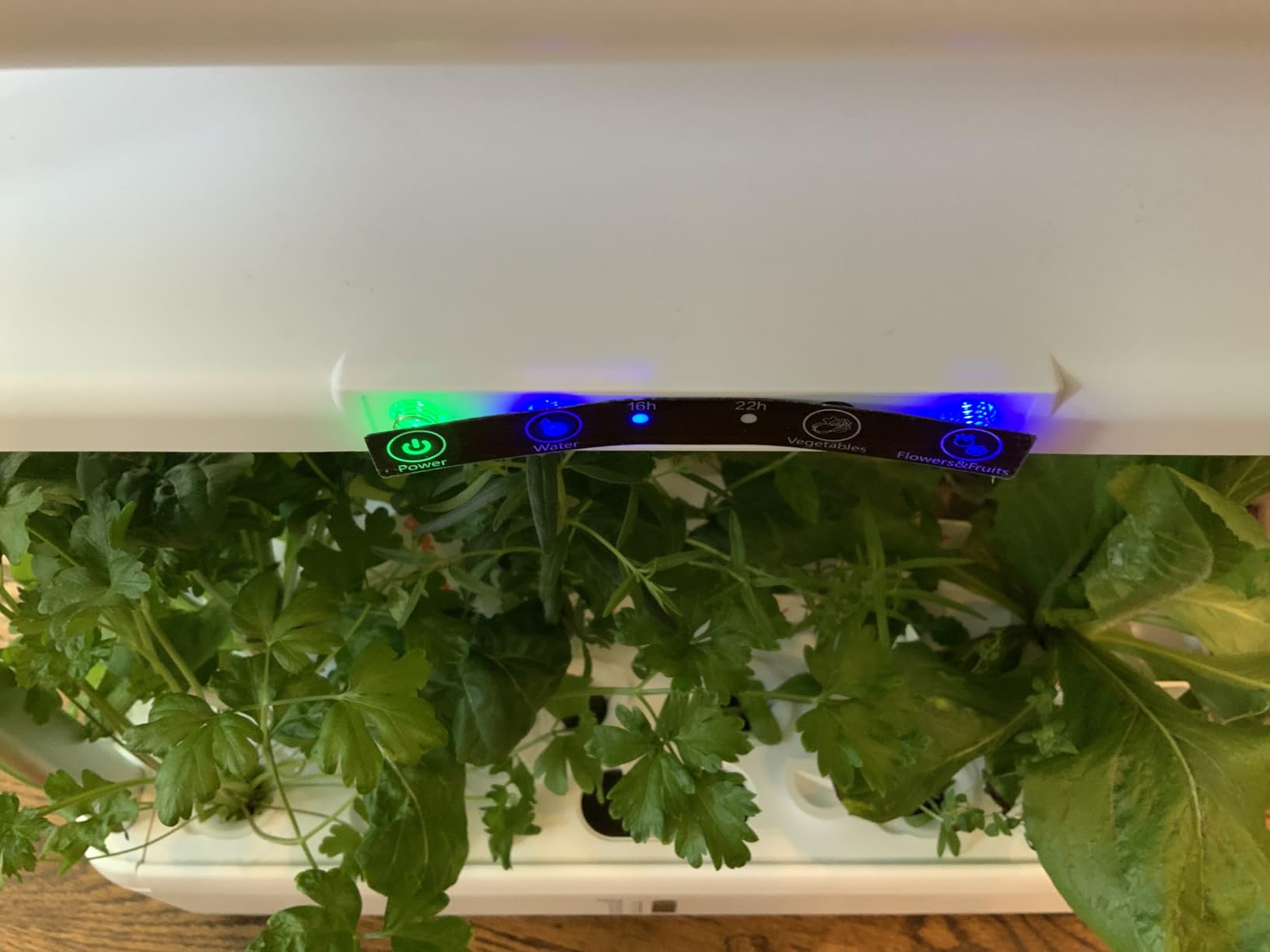
Spec-wise you are looking at a 30-watt full-spectrum board with two dual smart modes, a 16-hour cycle for vegetables and a 22-hour cycle for fruits and flowers. The reservoir splits into an 8-litre and a 24-litre section, and the body is moulded ABS in white with a polished finish. Total weight is 26.1 pounds, which is manageable but not something you want to carry up three flights with a full reservoir.
The honest weakness is light intensity. The supplied boards are modest, and growers report that peppers and tomatoes perform poorly at that output, so treat this as a greens and herb tower rather than a fruiting tower. The lamp bar also only raises to about 14 inches of clearance, so anything tall will touch the diodes. A few owners have had drain tubes and fittings push out of alignment and leak, and control panel labels peel off, both minor and fixable.
Best For Families Who Want Steady Greens Every Week
This is the tower for a household that eats salad most days and wants the harvest to be boringly reliable. Sixty sites is enough to stagger plantings so you are never harvesting an entire tower on the same afternoon, and the dual light modes mean you can add a strawberry tier later without rebuilding. The casters matter more than they sound: you can roll it to a sunny window in winter and back to a corner in summer.
It is also the safest first purchase. The vertical footprint, the quiet-ish pump and the fact that the 212-review rating base includes long-term owners rather than a week of first impressions all reduce the risk of a bad first experience. We would pair it with a separate seed order from a reputable supplier, because poor germination is the most common reason a new tower disappoints.
Where the Ahopegarden Falls Short
It is a vertical hydroponic tower rather than a misting aeroponic system, so you will not get bare air roots or the dramatic oxygenation claims that true aeroponics makes. If your goal is maximum yield per site from a small footprint, a design with per-tier independent lighting and a larger reservoir will serve you better, even though it costs more and weighs more.
There is also the light ceiling. If your plan is cherry tomatoes or peppers on the top tiers, this tower will not get you there without adding your own lighting, and adding lighting above a bar that only lifts 14 inches is awkward. Budget for that before you buy, not after. For fruiting crops, look at the ALTO GARDEN GX or the WooRoot Max Pro.
2. Gardyn Home 4 – Best for Maximum Planting Density
Gardyn Home 4 Vertical Hydroponics Growing System Kit – 30 Plants
30 plants in about 2 sq ft
0.6 gallon reservoir
4 levels, aluminium frame
Kelby AI coach, 30-day trial
Pros
- 30 plants in roughly 2 square feet
- Redesigned columns are easier to clean
- 30 yCubes of non-GMO seeds included
- Sunrise and sunset lighting modes
- Real-time water measurement sensors
Cons
- 0.6 gallon reservoir for 30 planting sites
- Kelby AI locks features behind a subscription
- 15 percent of reviews are 1-star
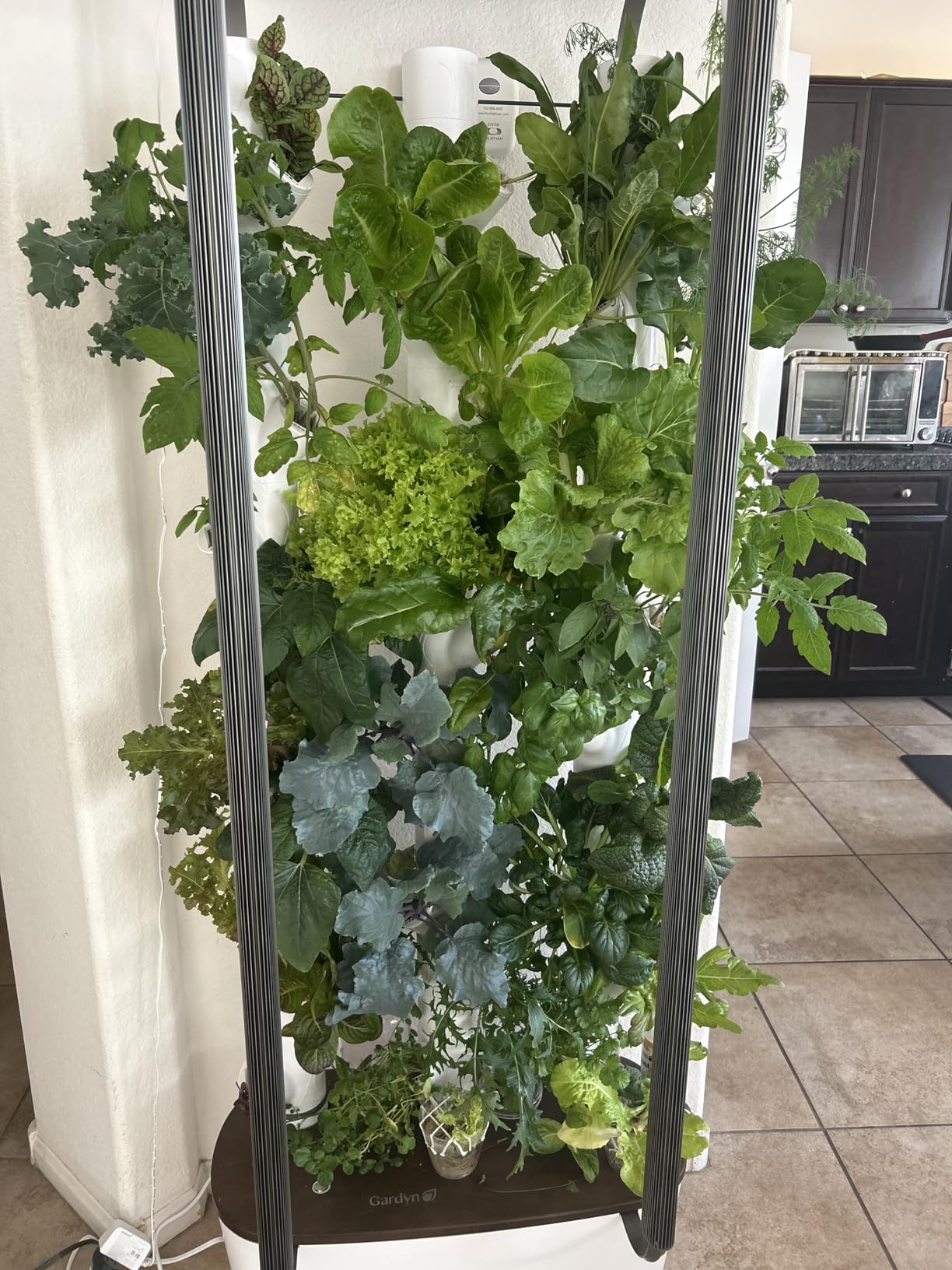
Density is the headline here and it is real. Thirty large plants in roughly 2 square feet is one of the tightest planting arrangements we found, and the four-level aluminium column is a completely different object from the plastic towers further down this list. The redesign also made the columns easier to clean, which matters a lot more than a spec sheet suggests once mineral build-up starts.
You also get 30 yCubes of non-GMO seeds in rockwool, which is a genuinely useful starter pack, plus sunrise and sunset light transitions and real-time water measurement feeding the plant coach. Growth is fast. Owners report lettuce, tomatoes and peppers moving quickly once roots establish, and the footprint efficiency is the reason this tower keeps showing up in small-space recommendations.
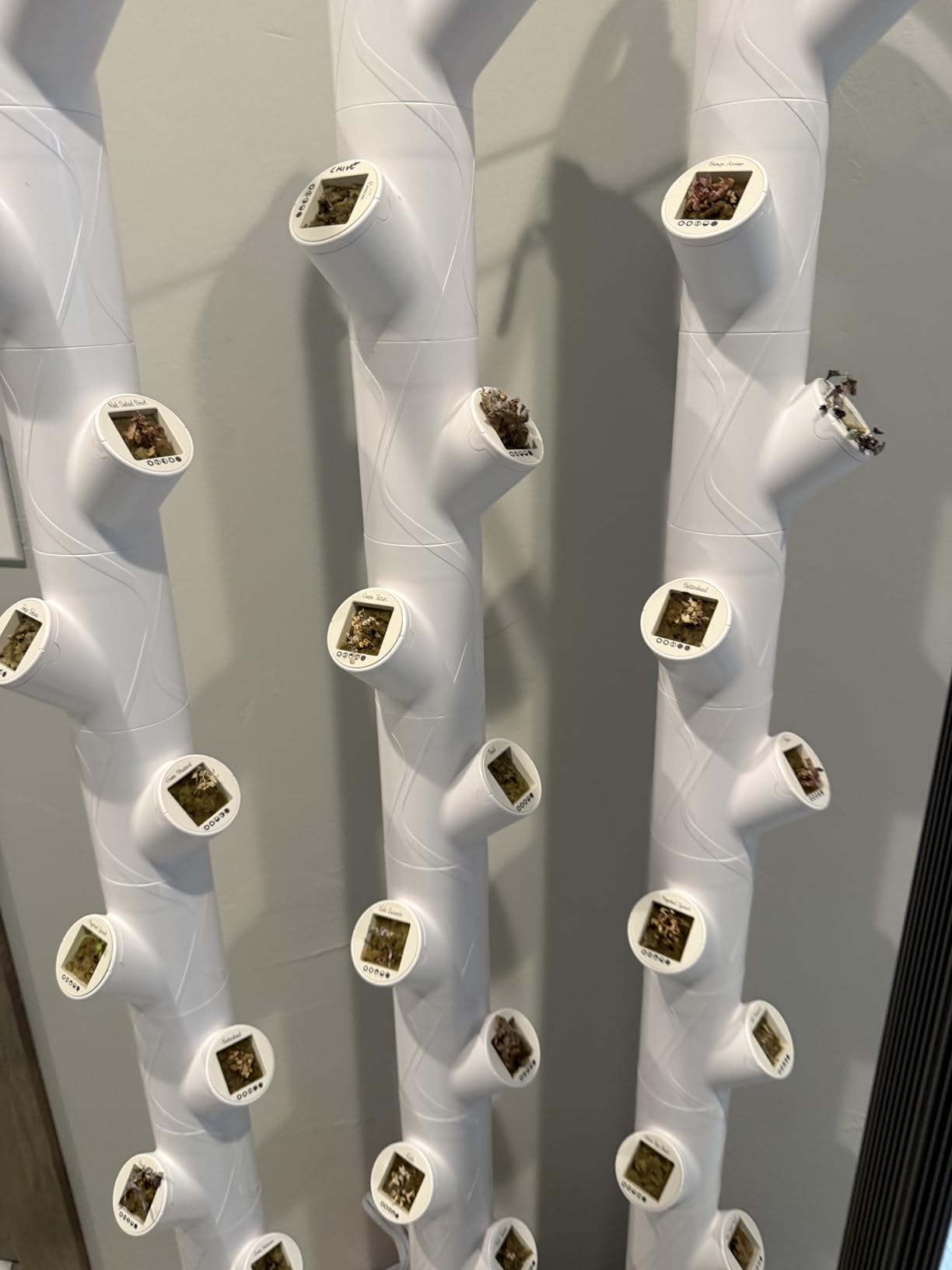
The catch is the 0.6-gallon reservoir. Thirty planting sites above a reservoir that size means you are topping up far more often than the marketing implies, and if you travel for a few days the water level sensors become the only thing between your plants and a dead tower. The aluminium and alloy steel construction is also heavier and less portable than a plastic tower, so moving it needs two people.
There is a support and cost dimension too. About 15 percent of reviews are 1-star, and the recurring theme in the low reviews is support responsiveness rather than hardware failure. The Kelby AI coach is compelling for 30 days and then sits behind a paid subscription, so budget for that if you want the guidance beyond the trial window.
Best For Urban Apartments Where Floor Space Is the Constraint
If your only option is a two-foot square of floor beside a window, density is the whole argument. This tower turns that footprint into a meaningful salad supply, and the aluminium frame looks more like furniture than a plastic column, which matters in a living space. The included seed cubes also mean a beginner can get a full tower running on day one without a second order.
It suits growers who like data and automation. If you enjoy seeing water levels, light schedules and growth tracking in an app, the sensor suite is a real advantage. We would still pair it with a manual pH pen, because an app reading and a calibrated test are not the same thing.
Where the Gardyn Home 4 Falls Short
The reservoir is the honest problem. A 0.6-gallon tank serving 30 sites is a daily-commitment system, not a set-and-forget one, and it is the first thing we would change. Power and pump failure also matter more here than in a plastic tower because the replacement parts and support pathway are less informal.
Cost of ownership is the second concern. Once you add nutrient, pH treatment and a membership for the coaching features, the value gap against a simpler tower narrows quickly for anyone who just wants greens. If your goal is a reliable, low-maintenance first tower rather than a connected growing appliance, the Ahopegarden 60-Pod tower is the better buy.
3. SJZX 5-Layer 30-Hole Tower – Best for Indoor and Outdoor Flex
SJZX Hydroponics Growing System Kit, 5-Layer Hydroponic Tower, 30 Planting Holes, Space-Saving Vertical Gardening System, Suitable for Both Indoor and Outdoor use Germination Kits
5 layers, 30 planting holes
12L tank with level gauge
Smart socket for scheduling
BPA-free plastic
Pros
- Sturdy
- well-packed build
- Clear instructions for first-time growers
- Smart socket schedules watering cycles
- 12L reservoir suits shallow-root crops
- Includes 30 baskets
- plugs
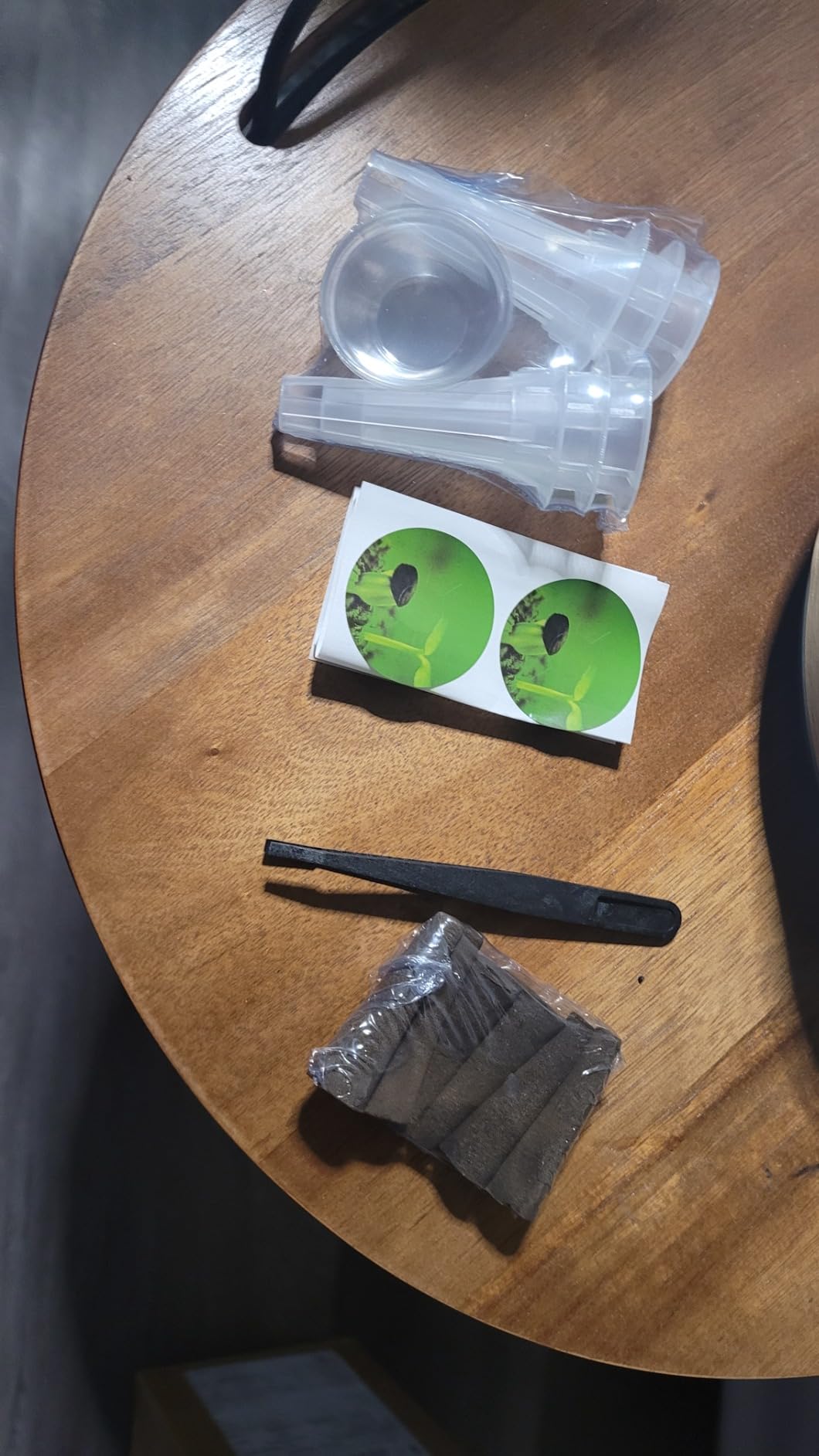
- labels and tweezers
Cons
- Shallow circulation can fail past the seedling stage
- Pump has no low-water auto shutoff
- No grow light included
This is the tower we would hand to someone who wants to learn hydroponics on a modest budget. The five tower sections, the 12-litre tank and the smart socket add up to a package that teaches you the fundamentals without a large financial commitment. Instructions are detailed enough that a first-time grower can assemble it, and the build is sturdy enough that it does not feel flimsy once stacked.
It is also rated for both indoor and outdoor placement, which is unusual at this tier. That makes it a reasonable choice for a balcony or patio in summer, then indoors in winter. Package dimensions of 27 by 11 by 11 inches and a weight of 8.98 pounds mean it is genuinely portable for a tower of this size.
The critical reviews are all about the same thing: root-zone water delivery. Some buyers report plants curling downward after about three weeks and having to be moved to another container, and another reports only around half the seeds germinating with mould appearing on the survivors. The reservoir is not tall enough to create meaningful pressure at the top of the column, so upper sites can dry out. There is no low-water auto shutoff on the pump either, which is a recurring minor complaint.
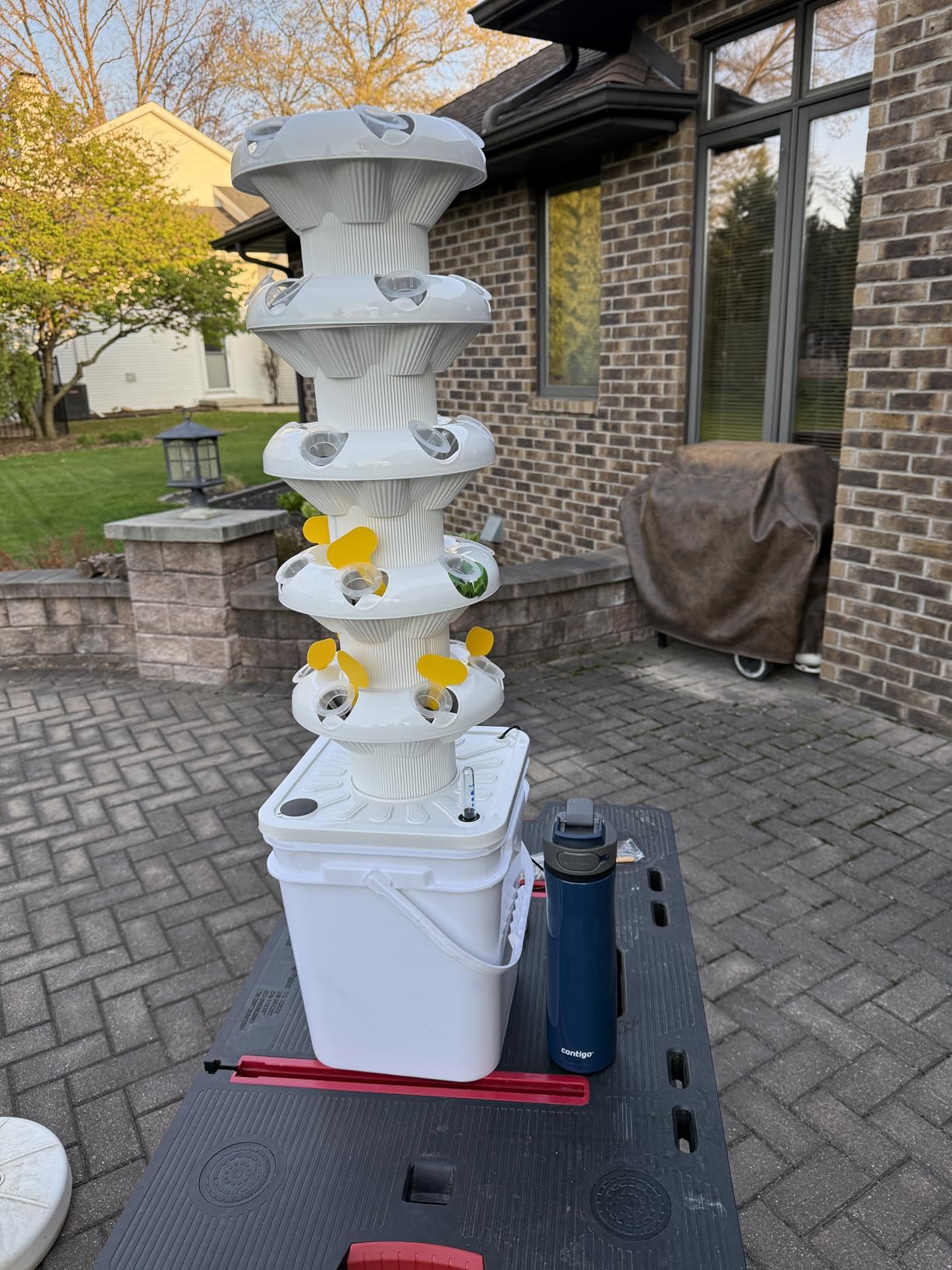
There is one more practical trap. Long planting cups can fall through the tower holes if the internal deck plate is not rotated into the correct orientation during assembly. It is a five-second fix once you know about it, but it will waste a planting round if you miss it. Seeds and nutrients are not included beyond the 30 biochar plugs that come in the box.
Best For Budget Learners Who Want to Move the Tower Indoors and Out
This suits anyone who wants to understand how a hydroponic tower works before committing to a premium one. The smart socket scheduling is a nice teaching tool, since you can watch how watering frequency changes as plant size increases. It also fits inside a standard four-foot grow tent, which is where a lot of first-time growers start.
For outdoor use, the flow-through design and the level gauge make it easy to run on a balcony through a warm season. Just expect to supplement with your own light indoors, because no grow light is included, and expect to check water levels more often than the marketing suggests.
Where the SJZX Falls Short
Root delivery is the weak point, and it shows up in the 16 percent of 1-star reviews. A tower that cannot keep the top layers wet will cost you a planting cycle, and mould in the column is much harder to clear than in an open tray system. If you live somewhere hot or dry, this is not the tower to learn on.
The pump is also basic, with no low-water protection and a service life that some owners have found short. Add that to the missing light and it becomes a grow-tent tower rather than a complete indoor garden. For a fuller package at a similar spend level, the VEVOR 6-tier includes both lighting and a much larger tank.
4. JPWDDWYT 30 to 35 Plant Tower – Best for Small Corners
JPWDDWYT Hydroponics Tower Indoor Growing System Vertical Garden Planter Indoor Smart Garden Kit with Pump and Movable Water Tank Vegetable Plant Gift for Gardening Lover (35-Plants)
30 to 35 planting positions
18.02 litre movable tank
Timed top-down watering cycle
PVC vertical column
Pros
- Compact footprint for a kitchen corner
- Movable tank makes top-up and repositioning easy
- Timed watering reduces daily maintenance
- Works indoors and outdoors
Cons
- Listing capacity varies between 30 and 35 plants
- PVC is less rigid than sturdier tower materials
- No LED grow light included
The pitch here is simple: a working vertical tower in the smallest sensible footprint, with as little fuss as possible. At 17 by 10 by 14 inches and 2.96 kilograms, it disappears into a kitchen corner or beside a desk, and the timed top-down watering cycle means you are not visiting it with a watering can every morning. Owners like the hands-off routine more than anything else.
The movable tank is a smart touch. Because you can lift the tank out and carry it, topping up and repositioning do not mean wrestling the whole column across the room. That single design decision matters more in a small flat than any specification on the listing, and it is the reason this tower keeps earning repeat mentions from apartment growers.
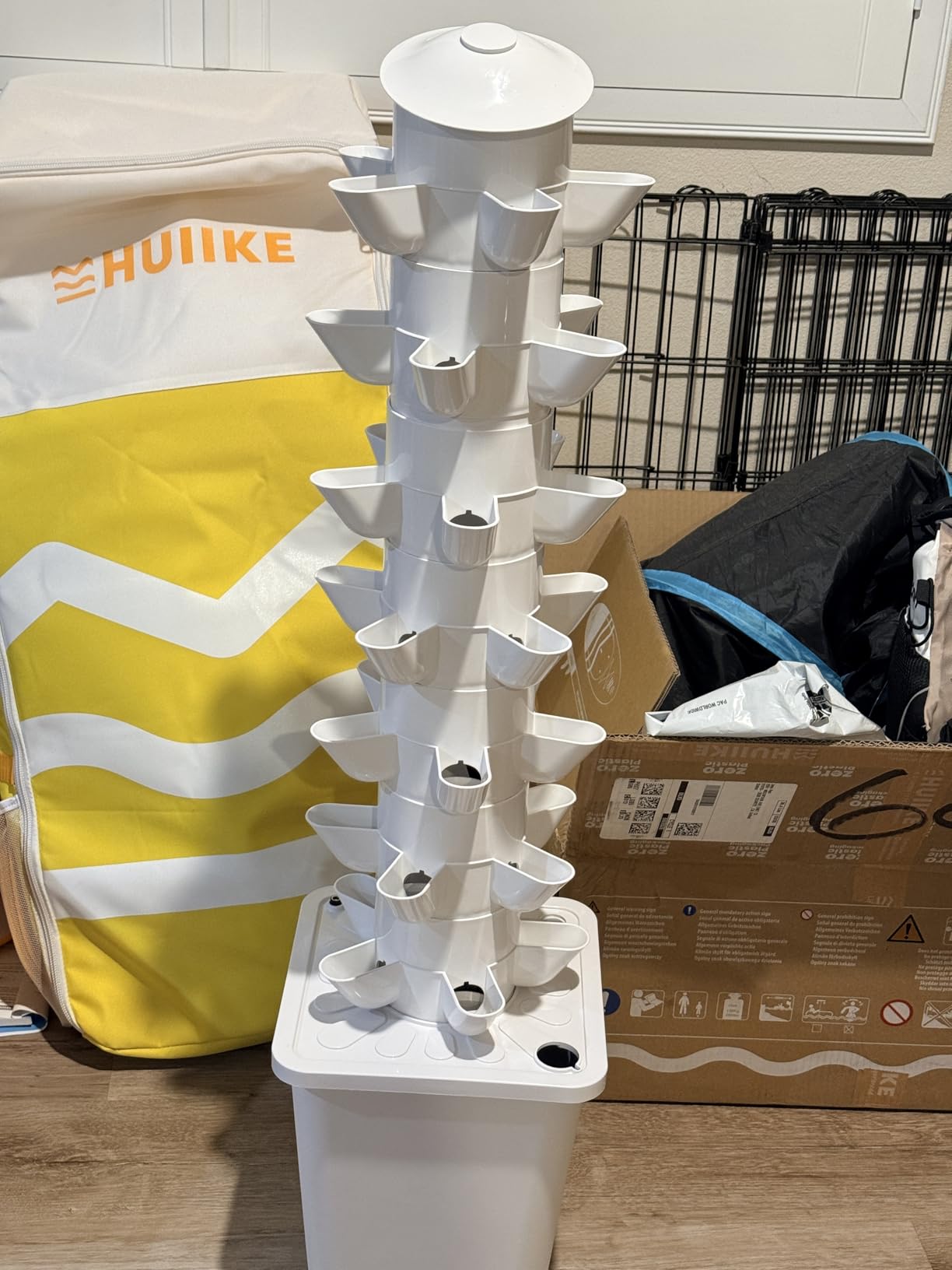
The 18.02-litre capacity is generous for the size, and the automatic top-down cycle genuinely reduces water use compared with potted soil plants. The caveat is the rating spread. Sixty percent of reviews are 5-star, but 13 percent sit at 3-star, which points to average germination and growth rather than standout harvests. You are buying a functional system, not a high-performance one.
One detail worth knowing before you order: the product details list 30 levels and 30 pieces, while the variant name says 35 plants, so capacity claims for this listing vary depending on which page you read. PVC construction is also less rigid than ABS or aluminium, which shows up as flex when you are stacking sections or moving the unit with plants in it.
Best For Renters, Dorm Rooms and Anyone Short on Space
This is the tower for people who want the harvest without the footprint. If your growing has to live in a corner you can walk past, a 30-position column that weighs under 3 kilograms and rolls into position on a movable tank is a much better fit than anything with casters and a wide base. It also works outdoors, so a balcony in summer is realistic.
It is a good match for a first grow if you are patient with modest results. Expect steady greens rather than dramatic yields, and plan to add your own light if you are growing indoors away from a bright window. Buying good seed separately matters more here than on a tower that ships with cubes.
Where the JPWDDWYT Falls Short
There is no grow light, so indoor growers are adding a lighting cost that is often larger than the tower itself. Combine that with thinner PVC walls and you are assembling a system rather than unboxing a complete one. If you want one purchase that works indoors out of the box, the VEVOR or Ahopegarden towers include lighting.
Growth results are also the least impressive in this group, and the 3-star band is a fair signal of that. If you are chasing a serious salad supply for a family, the site count sounds attractive but the per-site performance is closer to basic. Use it for herbs, chives and salad leaves rather than expecting it to carry fruiting crops.
5. VEVOR 6-Tier 30-Pod Tower – Best Value With a Grow Light
VEVOR Hydroponic Growing System with Grow Light, 30 Pods Vertical 6 Tiers Hydroponic Tower, Home Hydronic Garden with Water Pump, Plants Germination Kit for Indoor Herbs, Fruits and Vegetables
6 tiers, 30 planting pods
20L tank with level window
16W LED, 96 diodes
7W micro-pump, 600L/H, 2m lift
Pros
- Assembles in about 30 minutes
- 20L tank stretches refills to about a month
- Grows lettuce and radishes quickly
- Smart plugs work with Alexa and Google
- Tool-free modular design
Cons
- Triangular pods block standard net pots
- LED bars do not cover the top tier evenly
- Pump noise is noticeable
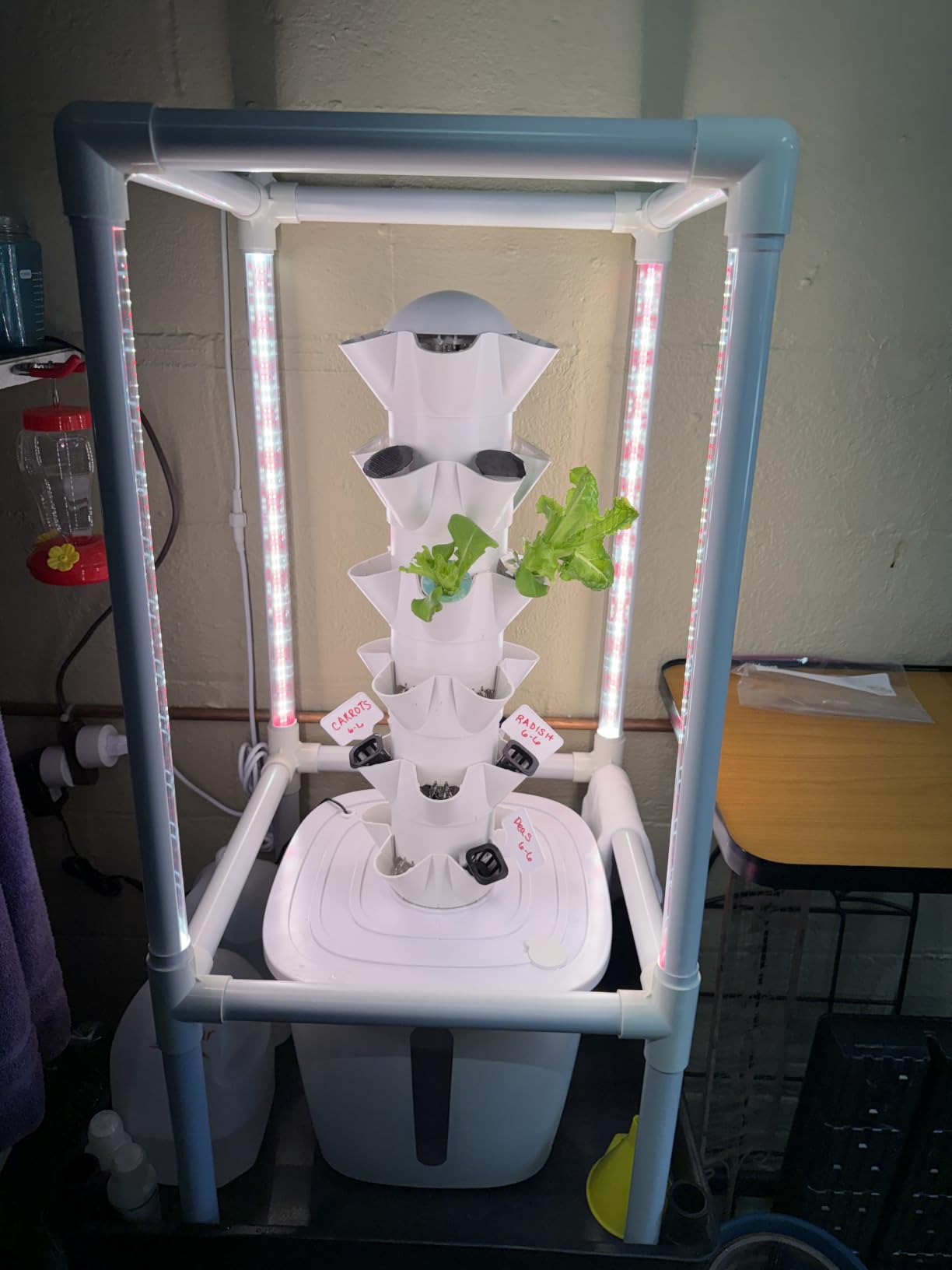
This is the value pick in our roundup, and the reason is the combination in the box. Thirty pods, six tiers, a 20-litre tank with a transparent level window, a 16-watt LED array and a micro-pump rated for a 2-metre lift. Very few towers at this spend include lighting, and for a first indoor grow that removes the single biggest extra purchase. Assembly takes about half an hour and the design is tool-free.
The 20-litre tank is the quiet hero. At full load that is roughly one refill a month, which is a real difference from towers where you top up every few days. The pump specification is honest too: 7 watts DC, 600 litres per hour, 2 metres of lift, more than enough to push solution to the top tier of a six-layer column.
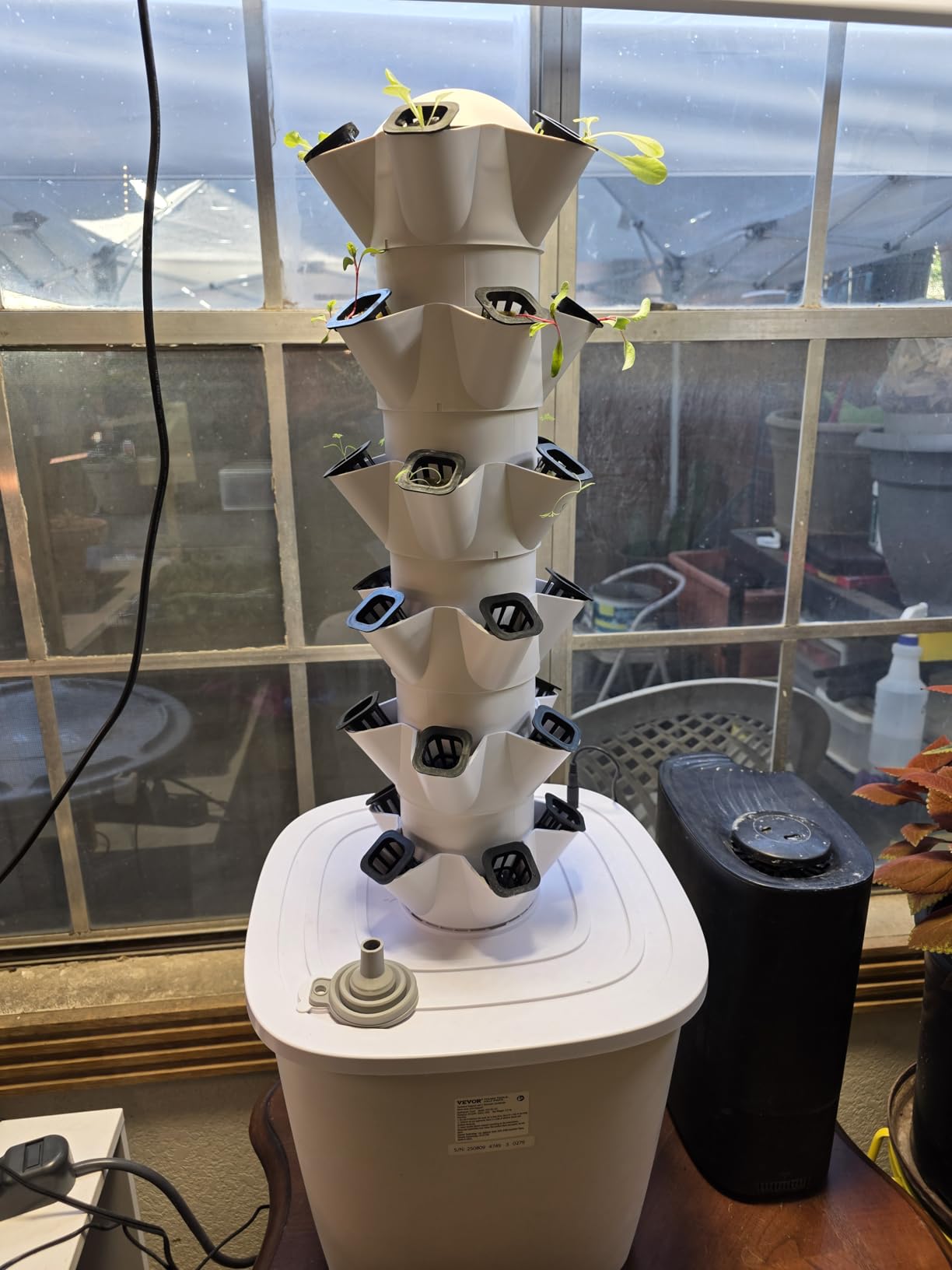
There are three component complaints worth planning around. The pod shape is odd and triangular, which means standard net pots and most third-party seed plugs do not fit, so you are committed to the supplied baskets. The LED bars are too short to cover the top tier evenly, so upper plants crowd and shade each other. And the pump is noticeably audible, which matters if the tower sits in a bedroom or a quiet office.
One tower in our sample had its grow light burn out shortly after arrival, and the documentation covers assembly only, with little guidance on ongoing use and inconsistent app claims. The 16-watt light runs at 2808K with a smart switch for light duration, and it also adds noticeable heat to the room, which is pleasant in winter and unhelpful in summer.
Best For First-Time Growers Who Want One Complete Purchase
If you want to start growing this week without researching lighting, this is the tower. Everything needed for an indoor salad supply arrives together, the tank interval is forgiving, and the tool-free modular build means you can take it apart and clean the column without fuss. Inside a grow tent or a small apartment it performs well for lettuce, radishes and other leafy greens.
The included smart plugs are a small bonus if you already use voice assistants, and the monthly refill interval means the maintenance rhythm is realistic for someone with a job. It is also a good teaching tower, since the component layout is simple enough that you learn the system rather than fighting it.
Where the VEVOR Falls Short
The proprietary pod shape is the biggest limitation. When you run out of the supplied baskets, or want to switch to a different medium, you are stuck. That is a longer-term friction that does not show up in the first month but becomes frustrating in month four, and it is why some growers migrate to standard net pots on other towers.
Top-tier coverage is the second issue, since short light bars leave the uppermost plants crowded. The third is noise. In a bedroom or a quiet office the pump is a constant presence, and the light adds real heat. For a bright utility space or a grow tent, none of that matters much, which is exactly where this tower performs best.
6. ALTO GARDEN GX Tower – The Best-Built Tower in the Group
ALTO GARDEN GX Hydroponic Tower | Vertical Planter Tower | Hydroponics Growing System Kit | Food Grade with 24 Net Pots (with LED Grow Lights)
24 net pots across 6 layers
10 gallon reservoir
2mm thick tower walls
Adjustable LEDs with timer
Pros
- 81 percent of reviews are 5-star
- 2mm walls with leak-resistant joints
- No app or subscription required
- Casters let you move it by the base
- Nutrients
- rockwool and pH pen included
Cons
- Must be moved by the base when the reservoir is full
- Assembly video and printed guide are unclear
- One buyer reported the tower separating after assembly
Every tower in this list has good reviews. This one has one of the cleanest rating profiles we found: 81 percent five-star and not a single two-star review in the set. The reason is build quality rather than features. The walls are 2mm thick with solid 360-degree construction at every layer, which is the single upgrade that separates a tower that lasts five years from one that cracks in year two. Joints are designed not to leak, and in our use they stayed dry.
It also arrives as one of the most complete packages here. You get 30 rockwool cubes, A and B nutrients, a digital pH pen and a four-head germination light, which removes essentially every first-grow shopping decision. Adjustable LED lights come with a built-in timer plus a separate pump timer, so lighting and irrigation run on their own schedules without an app or a subscription.
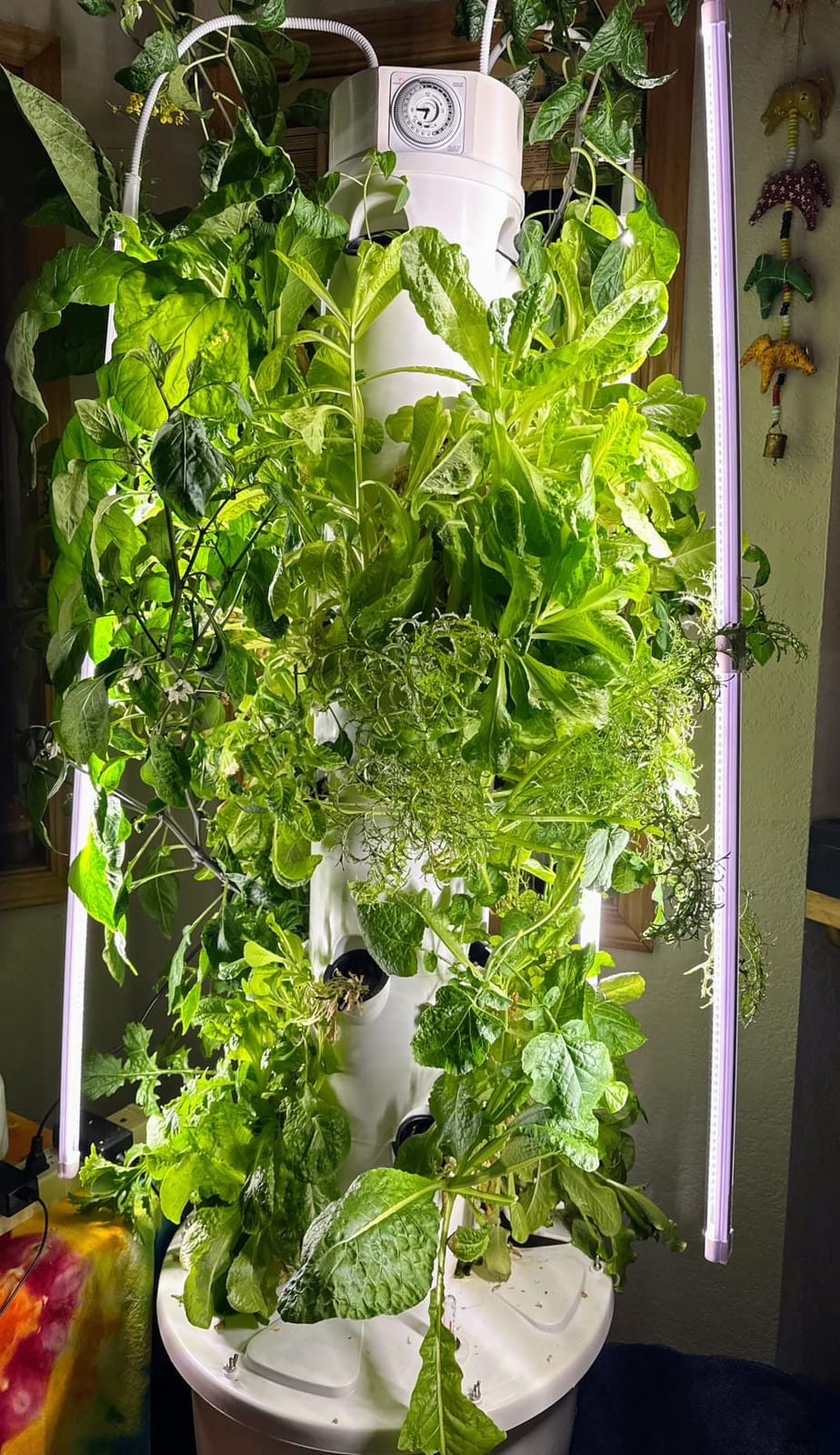
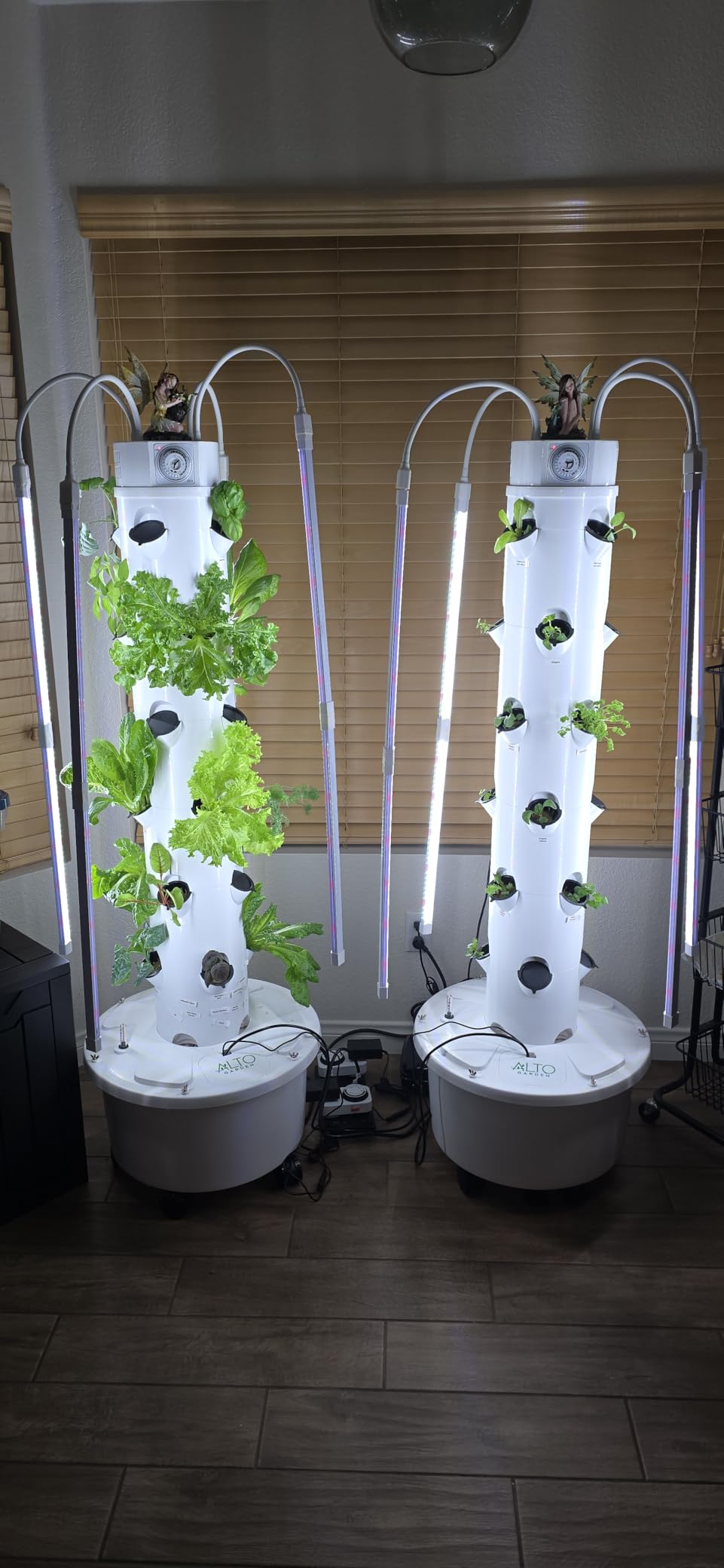
Specification-wise: 24 net pots across 6 layers in under 3 square feet of floor space, a 10-gallon reservoir, a footprint of 20 by 20 by 66 inches, and floor-standing mounting. The brand describes it as aeroponic-style root suspension with 95 percent water savings versus soil farming, which we treat as a manufacturer claim. Support is the other standout; owners report replacement parts and a faulty LED replaced quickly and at no cost.
The practical constraints are worth planning around. A full 10 gallons of water means you move the tower by rolling the base, not by lifting, so check your doorways and your floor path before assembly. The online assembly video and printed instructions are not always clear, and one buyer reported the tower coming apart shortly after assembly, so inspect the joints on arrival.
Best For Buyers Who Want One Tower That Lasts and Ships Complete
This is the one we would buy with our own money. The 2mm walls, the leak-resistant joints, the casters and the full starter kit mean the first month has no shopping list, and the no-subscription model means the features do not degrade over time. Long-term owners report close to two years of steady greens production, which is the longevity signal we look for.
It is also a good fit for a family that wants more than lettuce. The adjustable lighting and separate pump timer give you real control, and the 24-site count is large enough to be meaningful without being so large that the reservoir cannot support it. Treat the germination light as a genuine bonus, since seedling stage is where most home growers lose plants.
Where the ALTO GARDEN Falls Short
It costs more than most of this list, and the 10-gallon reservoir is the reason. If your space is tight or your ceiling is low, a 66-inch tower is a real constraint, and 24 sites is fewer than several cheaper models. You are paying for wall thickness, joint quality and support rather than for site count.
Assembly guidance is the other weak point. A tower this well made deserves clearer instructions, and one owner reporting the sections separating after assembly suggests the joints need checking as you build. Nothing here is a dealbreaker, but plan an hour for assembly and inspect every connection before you fill the reservoir.
7. LYCereal 30-Plant Tower – Best for High-Rise Living
LYCereal Hydroponics Growing System, 30-Plant Indoor Hydroponic Tower with Timer and Pump System, Plants Germination Kit, Vertical Hydroponic System for Gardening Lover (No Seed)
30 sites across 6 sections
10L tank with level gauge
30-minute timed pump cycle
9.84 inch slim footprint
Pros
- Only 5 percent of reviews are 1-star
- Visible water level gauge
- Timed 30-minute cycles save energy
- 9.84 inch footprint suits high-rises
- 64 growth sponges and funnel included
Cons
- Seeds not included
- No grow light bundled
- Thin plastic compared with sturdier towers
This tower has a clean rating profile for a budget unit. Five percent one-star, 62 percent five-star, and the plumbing and assembly hold up even though a 12 percent three-star band sits underneath. The 9.84-inch square footprint is the reason to look at it: that is a genuinely narrow column for 30 planting sites, and it suits a high-rise flat where floor space is the binding constraint.
The water level gauge is external and visible, so you are not lifting a lid or pulling a drawer to check. The included timer runs the pump on a 30-minute cycle, and the circulation system is designed to increase root oxygen and nutrient delivery, which is what keeps the upper sites from drying out on a tower this slim. Assembly is tool-free and includes a foldable funnel and 64 growth sponges.
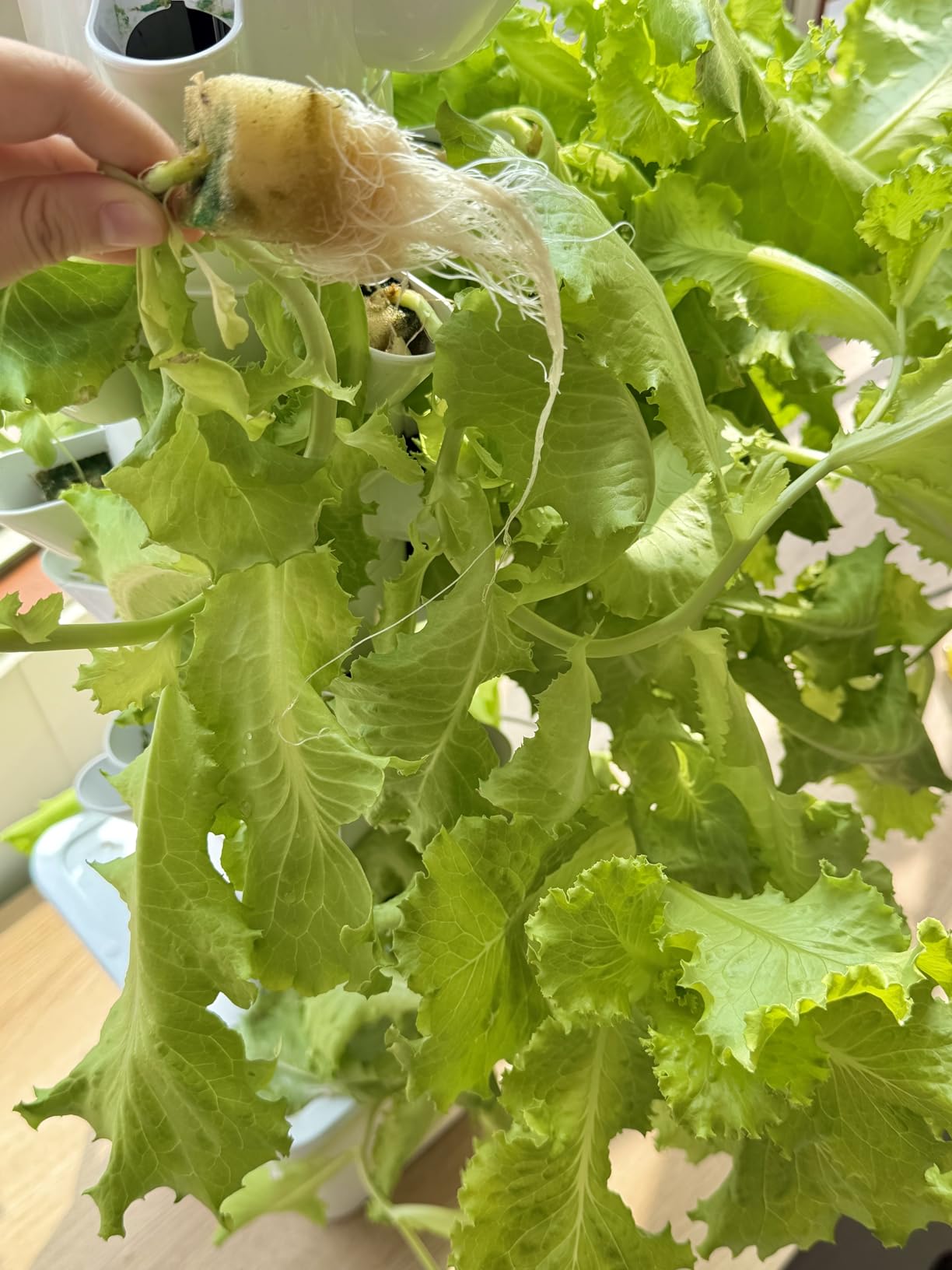
Be clear about what you are not buying. Seeds are not included, and no grow light is bundled, so this is a tower rather than a complete indoor garden. For someone who already owns a grow light and keeps seed stock, that is a feature, not a fault. The 10-litre tank and water gauge make the top-up cycle predictable, and the food-grade BPA-free plastic is appropriate for edible crops.
The plastic is thin compared with the sturdier towers, and 10 percent of reviews land at 2-star, mostly around growth results rather than hardware failure. It is rated for indoor and outdoor use, which gives it flexibility, but without lighting outdoors means full sun and nothing else.
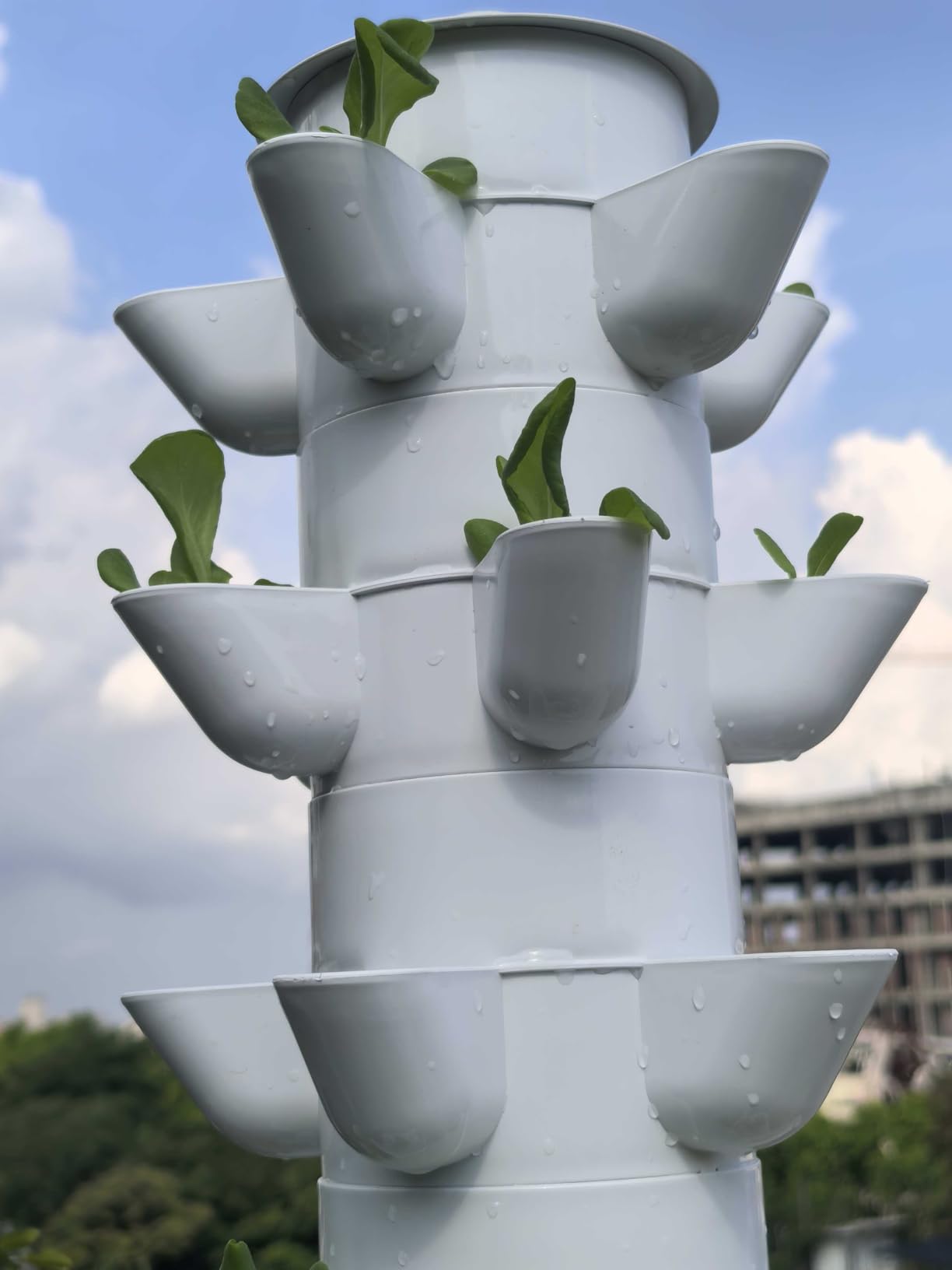
Best For Apartment Growers Who Already Have Lighting Set Up
If you have a grow tent, a shelf with a light bar, or a genuinely sunny window, this is an efficient way to add 30 sites without taking over a corner. The narrow base means you can run it along a wall rather than in the middle of a room, and the external gauge means daily checks take seconds rather than minutes.
It is also a low-risk first tower. The 5 percent one-star share suggests fewer hardware disappointments, and the price point means a mistake is inexpensive. We would pair it with a decent seed order and a cheap pH pen, and you would have a working salad supply for a good while.
Where the LYCereal Falls Short
The missing light is the obvious gap. Anyone buying this for a dark corner is adding a grow light, and a good one is not a trivial addition. Check your light situation before ordering, and be honest about whether you have 14 hours of decent light available.
Thin walls and a modest tank also mean it is a step down in durability from the ALTO GARDEN GX or the Ahopegarden. If you plan to keep a tower for several years rather than a season, build quality is worth paying for. If you are testing whether you enjoy this hobby at all, this is a sensible, low-cost way to find out.
8. Gardyn Studio 2 – Best for Smart Monitoring
Gardyn Studio 2 Hydroponics Growing System – 16 Plants, Smart Tower
16 sites in a countertop box
Silicone-sealed no-clean columns
Built-in monitoring camera
Kelby AI assistant
Pros
- Compact enough for a small kitchen
- Silicone seals resist mineral crystallization
- Camera plus AI assistant for tracking
- Sunrise and sunset lighting modes
- Owners report fast lettuce and pepper growth
Cons
- Irrigation hoses crack
- kink and fail
- Pump is loud during cycles
- LED is bright enough to light the whole room
- Recurring nutrient and membership costs
The Studio 2 is a different shape from everything else here. Instead of a 66-inch column it is a 54 by 17 by 12-inch unit that grows up to 16 plants in the footprint of a single potted plant, which makes it the most genuinely kitchen-friendly option in the roundup. The no-cleaning columns use watertight silicone seals specifically to stop mineral crystallisation, and that is a real engineering answer to the messiest part of tower ownership.
Monitoring is the selling point. A high-resolution camera and the Kelby AI assistant give you plant health tracking and step-by-step guidance, plus sunrise and sunset lighting modes. Enthusiastic owners report very fast growth, particularly for lettuce, tomatoes and peppers, and in a hot climate a compact sealed unit is easier to manage than an open tower.
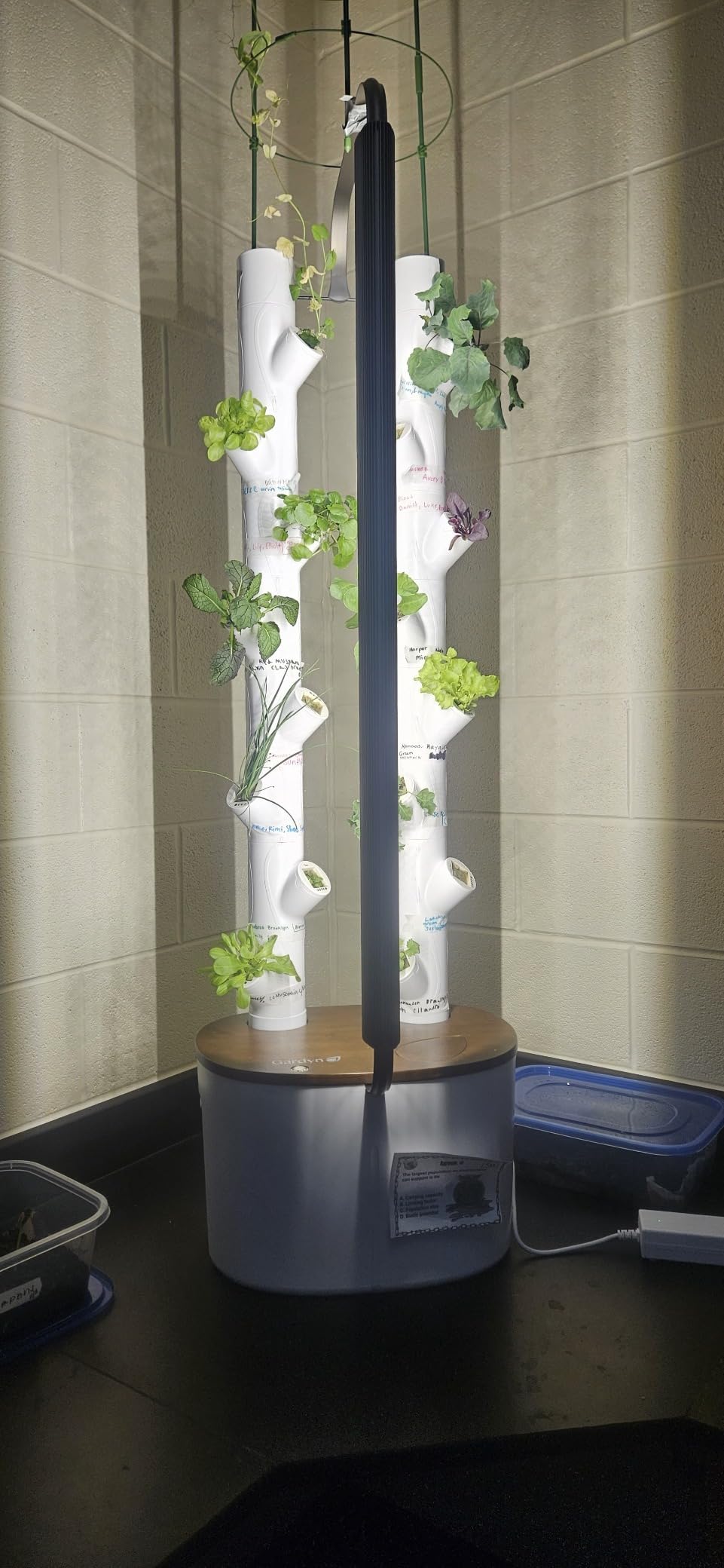
The critical reviews are harsh and specific. Irrigation hoses crack, kink and fail, which is a plumbing failure in a sealed system and not a user error. The water pump is reported as very loud during cycles, loud enough to compete with a dishwasher for some owners. And the LED is described as extremely bright, lighting the whole room rather than just the plants, which is a problem at night.
Running costs are the other objection. Several reviewers calculate that recurring plant food, pH treatment and the AI membership erase much of the value of the harvest, and some report yield per square foot disappointing relative to cost and upkeep. Aphid problems indoors are also reported more than once, which fits a sealed unit with no natural predator.
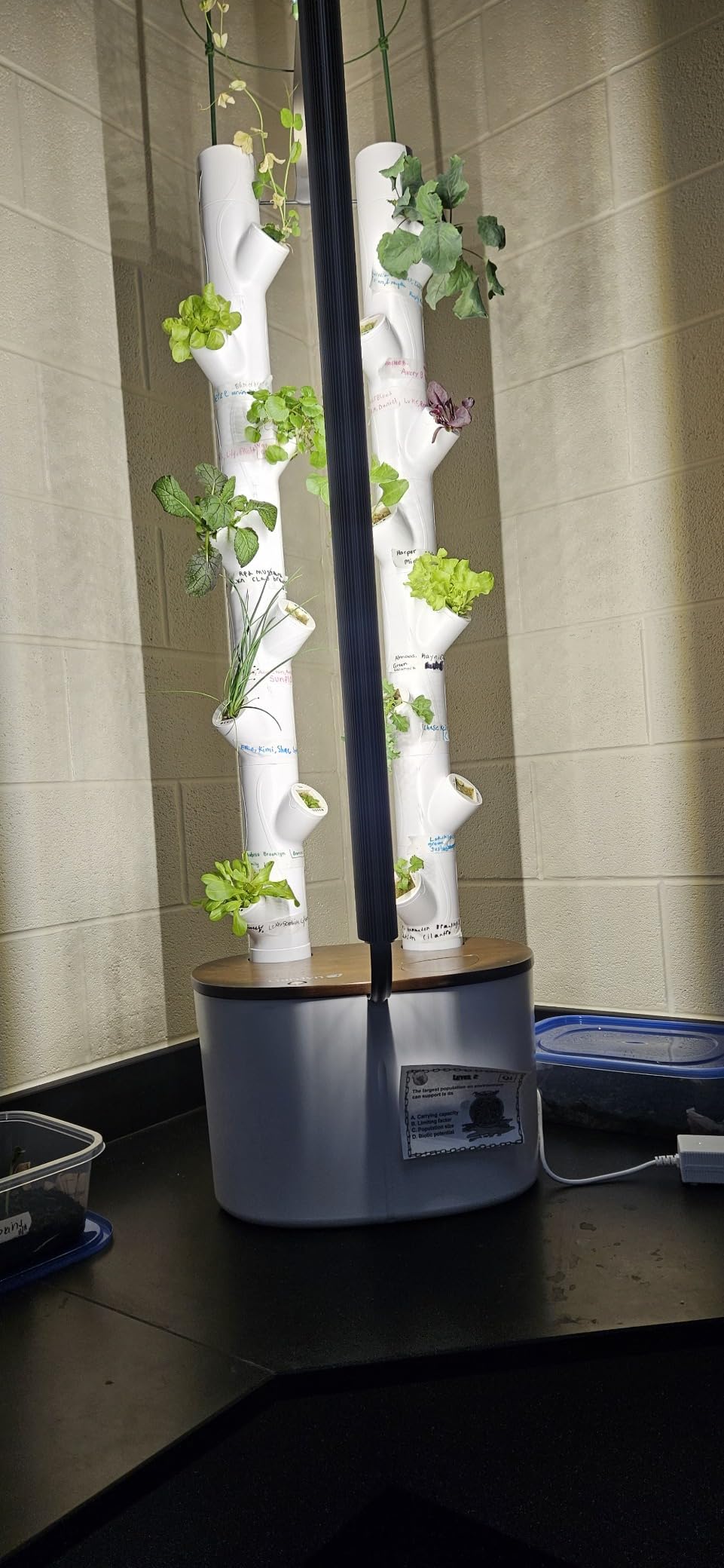
Best For Tech-Focused Growers in Small Kitchens and Offices
If you enjoy seeing and adjusting, this is the most satisfying tower to run. The camera and AI assistant turn a growing system into something you interact with daily rather than a passive box, and the 16-site count is realistic for a two-person household rather than aspirational. The silicone-sealed columns also mean less scrubbing, which is the maintenance task most people abandon first.
That footprint is a 66-inch column elsewhere in this roundup, and it is the difference between a system and an appliance. The Studio 2 also suits offices and shared workspaces where a tall tower would be impractical. Sunrise and sunset transitions make it less intrusive in a room with people in it, and the compact shape means you can put it on a bench rather than clearing floor space. For a grower who already measures everything, the data has genuine value.
Where the Gardyn Studio 2 Falls Short
Hardware reliability is the core issue, and hose failure in a sealed system is a serious design problem regardless of the review count. With only 20 reviews, the sample is small, but the concentration of complaints about the same component is the signal we would act on. Buy it expecting to inspect the hoses periodically and keep the receipt.
Light and noise are the everyday nuisances. A very bright LED changes the character of a room after dark, and a loud pump makes the unit hard to run in a bedroom. Add recurring nutrient and membership costs and the value case gets thin for anyone who simply wants a steady salad supply rather than a connected appliance.
9. 14-Layer 70-Slot Hydroponic Tower – Best for Balcony Growing
Hydroponic Tower, 14-Layer Hydroponics Growing System Kit with 70 Slots, Vertical Garden System with 20L Water Tank and Pump for Indoor Outdoor Home, Balcony & Patio
14 layers, 70 planting slots
20L tank with submersible pump
Timed top-down watering
15.7 inch square base
Pros
- 70 planting slots in a single tower
- 20L tank supports days of unattended running
- Top-down flow resists clogging
- No 1-star or 2-star reviews in the set
- Works indoors and on a balcony or patio
Cons
- Listed as a Generic brand with no named support
- Only 17 reviews behind the 4.5 average
- No grow light included
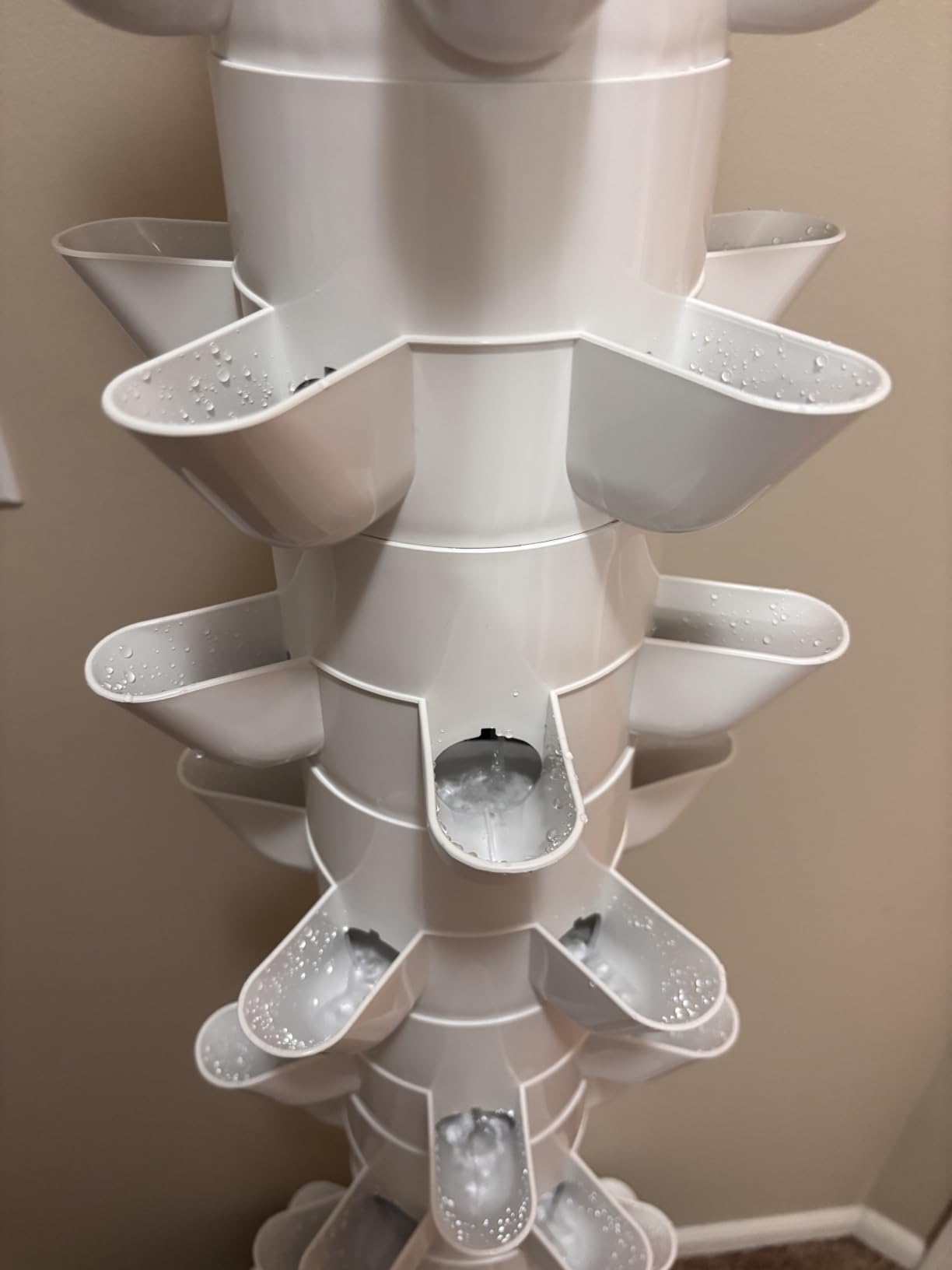
On pure capacity, few towers in this roundup match this one. Seventy planting slots across 14 layers, with a 20-litre reservoir and a timed submersible pump that delivers water from the top down through every tier. If you want a single column to supply a whole household or a small community space, this is the arithmetic winner.
The flow-through design is technically interesting and practically useful. Water enters at the top and moves down the full height, which avoids the clogging that plagues drip-style systems, and the listing notes a 56-slot variant is also offered if 70 is more than you need. At 15.7 inches square by 64.5 inches tall it is a slim column for something this dense.
The 4.5 rating looks outstanding until you notice it rests on 17 reviews. That is a small enough sample that we would treat it as encouraging rather than conclusive. The distribution is genuinely clean at 68 percent five-star with no 1-star or 2-star reviews at all, but a single hardware failure batch would change the picture quickly at this sample size.
The bigger practical question is support. This is listed as a Generic brand, which means there is no named manufacturer behind the warranty. Replacement pumps, timers and reservoir lids are the components most likely to fail over five years, and with no manufacturer relationship you are relying on the retailer. Plan for that by keeping spare pumps on hand from day one.
Best for Large Families and Community Growing Spaces
For a household that eats salad daily, or a classroom, office kitchen or community plot, 70 sites changes the maths entirely. A single tower feeding several people is far more practical than three small towers, and the 20-litre tank gives you days of unattended operation between checks, which is exactly what you want in a space nobody watches daily.
The balcony and patio rating is genuine, and the top-down flow means outdoor heat is less punishing than it would be on a shallow tower. It is also indoor-capable with your own lighting. If you are starting from scratch indoors, choose a tower that includes a light instead, and save this one for a space that already has sun.
Where the 14-Layer Tower Falls Short
Anonymity is the main risk. Buying a 14-layer column with no named manufacturer means no support line when the pump fails at month eight, and no assurance that spare parts will match next year. For a 70-site investment that is a real consideration rather than a minor one.
Capacity also cuts both ways. Seventy sites is a lot of plants to germinate, transplant and rotate, and the planting medium needs replacing on a schedule that gets heavy at that volume. If you are one person learning hydroponics for the first time, this is far more system than you need, and a 24 to 30-site tower is a much better teacher.
10. WooRoot Max Pro 148-Pod Tower – Best for Family Scale
Large Hydroponics Growing System, 148-Pod Vertical Hydroponic Tower Garden
148 pods across 5 tiers
100W LED with per-tier control
34L reservoir plus 9.5L misting tank
Ultra-quiet NFT pump
Pros
- 4.6 average with no negative ratings
- 148 pods in 3.8 square feet
- Quiet enough for a classroom
- 34L and 9.5L tanks run up to 30 days
- 30-day replacement guarantee
Cons
- 100 pounds makes repositioning hard
- One buyer could not reprogram light timers
- Misting nozzles leaked on two towers
- Hoses kink unless pulled taut
This is the most capable machine in the roundup, and it is a different category rather than a better version of the same thing. One hundred and forty-eight pods across five tiers in 3.8 square feet, with 100 watts of full-spectrum LED split across five independently controlled tiers at 3000K and 5000K, and zero to 24-hour scheduling. The 34-litre nutrient reservoir plus a 9.5-litre misting tank gives up to 30 days of autonomous operation, which is a category difference from every other tower here.
Owners report harvesting lettuce, herbs, mini tomato and mini eggplant within two weeks, and the pump is genuinely quiet enough to run in a classroom or an office. No app is required; the low-level sensors and pre-programmed programs handle lighting, irrigation and misting out of the box. Support has also been responsive, and a 30-day replacement guarantee is included.
The 12-review sample is small, so treat the 4.6 average as encouraging rather than settled. The 74 percent five-star share with no 1-star or 2-star reviews reflects a genuinely well-received machine, but at this volume a single production issue would move the numbers sharply.
The reliability flag comes from a commercial buyer who reported light timers that would not reprogram across five towers, and misting nozzle leaks on two of them. That is enough to tell you to test timer behaviour and nozzle seals on arrival rather than assuming they work. Assembly is also awkward single-handed, since a 5-tier tower is an awkward shape to hold together alone.
Best for Families, Classrooms and Serious Home Growers
At 148 pods, a family of five can harvest greens almost daily rather than occasionally, and the 30-day autonomous cycle means a two-week holiday does not end your supply. Independent tier lighting is the feature serious growers care about most, because it lets you give seedlings a different cycle from mature plants instead of one compromise schedule for everything.
The 100-watt output and per-tier control also make this the only tower here we would consider for fruiting crops like mini tomato and eggplant. The misting tank is a genuine aeroponic element rather than pure nutrient film, and the 34-litre reservoir means nutrient top-up is a monthly chore instead of a daily one. For a school or a small restaurant kitchen, the capacity is the deciding factor.
Where the WooRoot Falls Short
Weight is the first problem. One hundred pounds means it is effectively a fixed installation, and the reservoir drains sit about four inches off the floor, which complicates draining into a bucket. Check your ceiling height, your floor path and your doorway clearances before you commit to a 72-inch tower.
Assembly needs two people and the hoses have to be pulled taut between tiers or the misting stops working, which is a step the instructions do not convey well. The remote control is stored under the tier-4 planting tray rather than anywhere obvious, so expect to lose it once. None of this is disqualifying for an institutional buyer, but for a home tower it is a lot of friction for a lot of capacity you may not use.
11. RFnongye 30-Pot Tower – Best Budget Tower With a Loop Timer
RFnongye Hydroponics Growing System Kit, 30 Pots Vertical Garden Planter with Pump and Timer, Hydropoic Tower for Soilless Cultivation Herbs Fruits Vegetables, Plant Gift for Gardening Lover(No Seed)
30 planting sites
10L bucket, 1 to 2 week fill
Loop timer 5 min on / 10 min off
BPA-free polypropylene
Pros
- Sets up in about an hour
- Hands-off loop timer cycle
- 30 sites in a narrow footprint
- Faster growth than soil pots
- Water level indicator and refill funnel
Cons
- Seeds and nutrients sold separately
- Reservoir needs effort to clean
- Soft pump hum audible at night
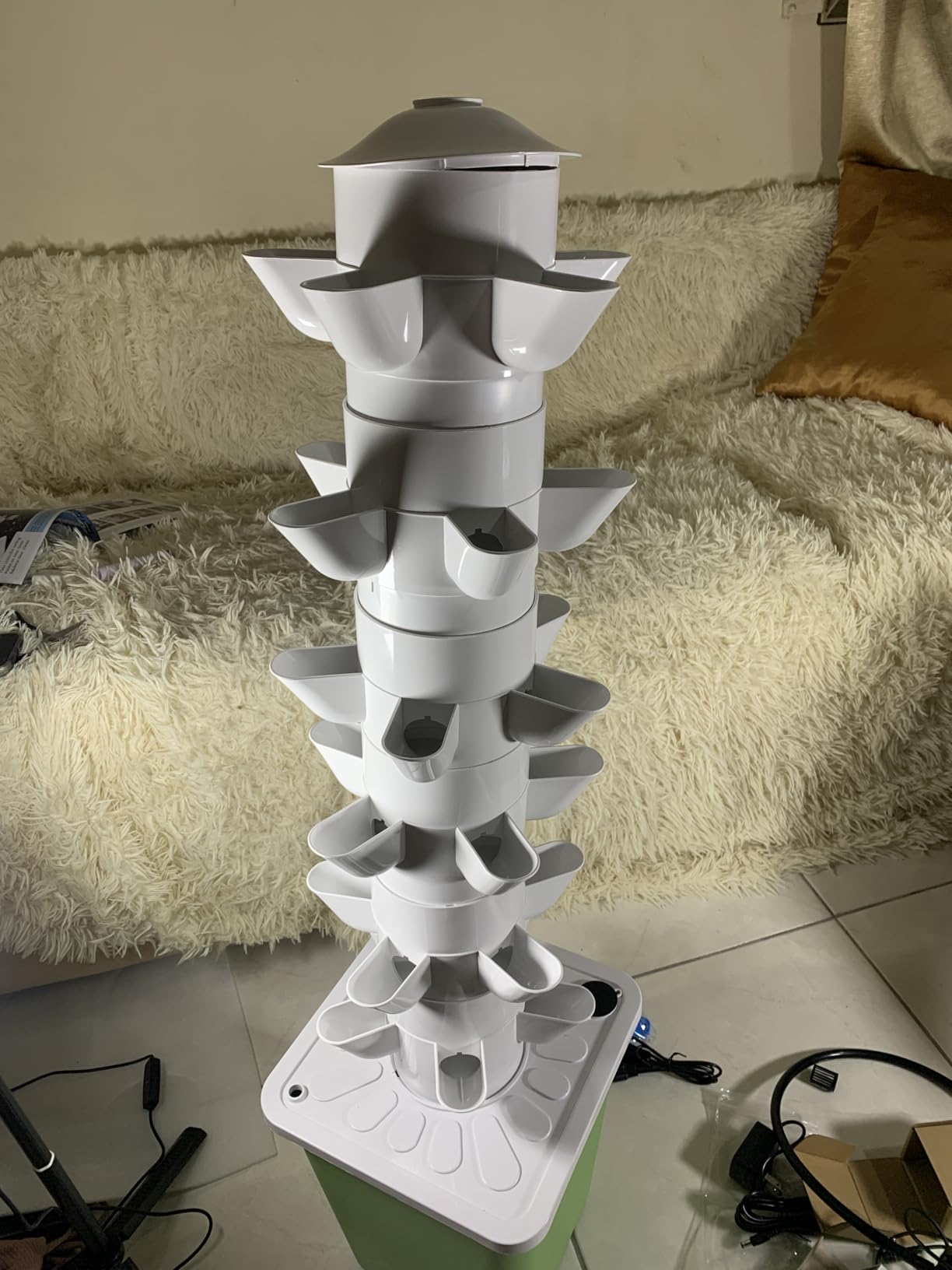
At 9.84 inches square and just over 33 inches tall, this is one of the most compact complete towers in the roundup, and the loop timer is its best feature. Five minutes of pump operation followed by ten minutes of blackout is a simple, well-proven duty cycle, and because it runs from a mechanical timer with no app and no smart socket, there is nothing to configure and nothing to go wrong in software.
Owners consistently report about an hour to assemble and faster growth than soil-based pots, and the 30-site column produces a real amount of produce from a very small footprint. The package is complete for the hardware side: planting tower, pump, timer, seedling tray, planting sponges, folding funnel, plant stand and a water level indicator.
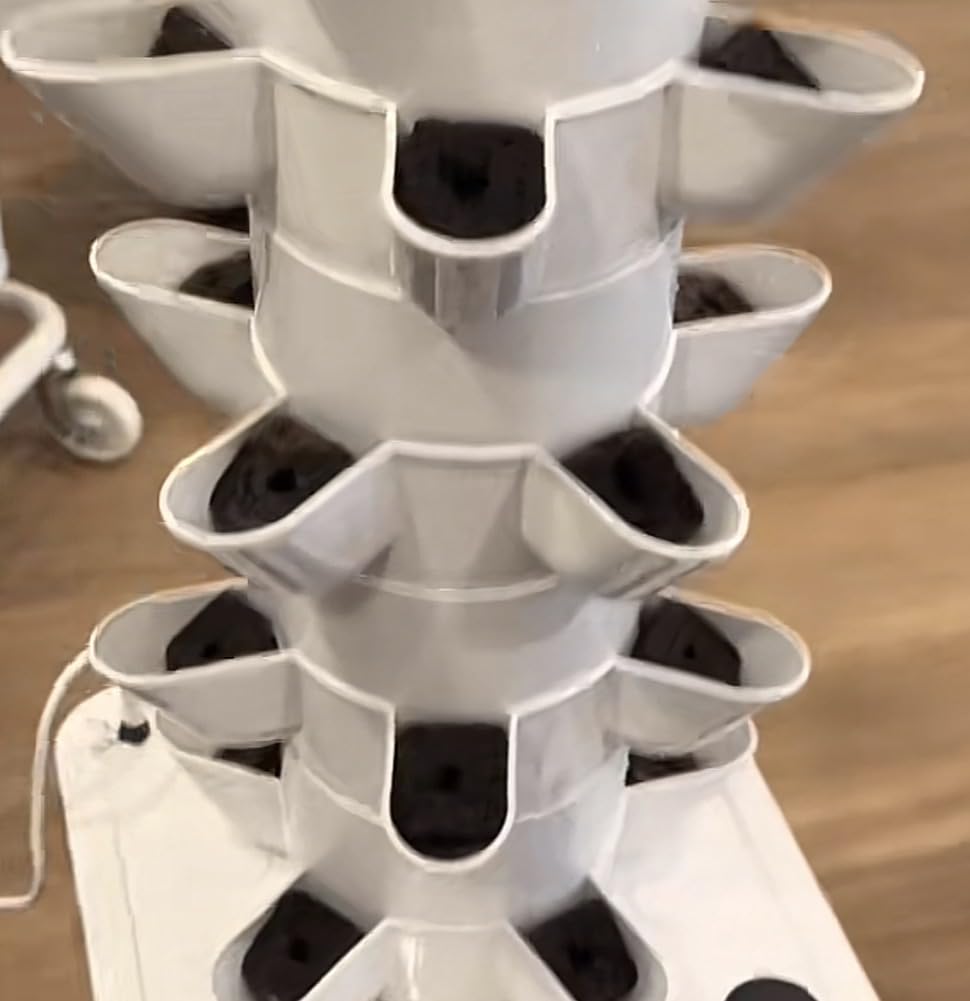
Two things are not included: seeds and nutrients. For a first grow that means a second order before you start, and first-time growers often underestimate how specific nutrient and pH products are. The 10-litre bucket lasts one to two weeks after a full fill, which is a reasonable interval but shorter than the 20-litre towers manage.
Real complaints from owners are practical rather than dramatic. The bottom tank takes extra effort to clean every few weeks, which is a fair criticism of any tower with a wide flat base. The pump produces a soft hum that some people can hear at night, and one reviewer described the plastic as feeling cheap and the tower as smaller than pictured.
Best for Tight Indoor Spaces and First-Time Growers on a Budget
This is a sensible first tower. It is small enough to live on a balcony or a kitchen floor, the timer does the watering without an app, and the parts list is complete so nothing is missing on arrival. If you buy good seeds and a basic nutrient set alongside it, you have a working system the same day.
It is also a popular gift choice, and for a buyer who wants a self-contained, hands-off experience it does that job well. UV-resistant polypropylene and a light green finish look tidy in a room, and the folding funnel means refilling does not require removing the lid.
Where the RFnongye Falls Short
Reservoir cleaning is the maintenance task that decides whether people keep using a tower. A wide flat bucket with corners is harder to scrub than a narrow column, and if cleaning gets skipped, root debris turns into the mould problems that end a grow. Budget ten minutes a month for it and it is manageable.
Beyond cleaning, the limits are seeds, nutrients and light. None of the three are included, and the pump hum is a real consideration for bedrooms. If you want the same footprint with a larger tank and a visible water gauge, the LYCereal 30-plant tower is the better-equipped option at a similar spend.
12. JESLED 6-Tier Tower – Best for Quiet Rooms and Bedrooms
JESLED 6 Tiers Hydroponics Growing System Kits with 4 LED Grow Lights
6 tiers with 4 LED grow lights
5000K full spectrum
15-min water cycle, 8-16h light
Pump below 30 dB, 3 year warranty
Pros
- Tower and lighting in one package
- Dual timers remove daily watering and lighting chores
- Tank holds 2 to 3 weeks of water
- Pump runs below 30 dB
- 3 year manufacturer warranty
Cons
- Indoor use only
- Not water resistant near splashes
- 18.8 inch base is wide for a tower
- Perfect 5.0 rests on just 10 reviews
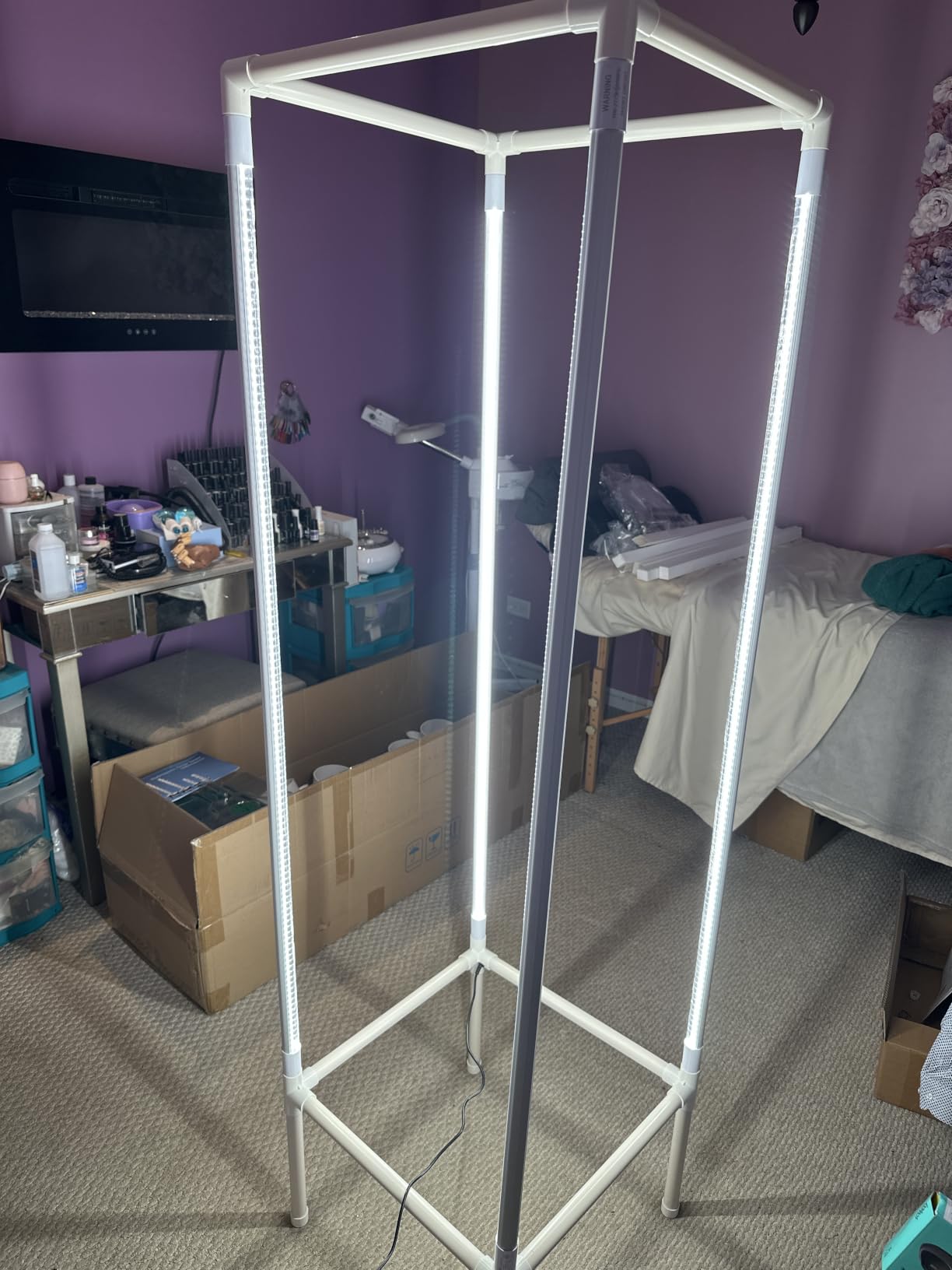
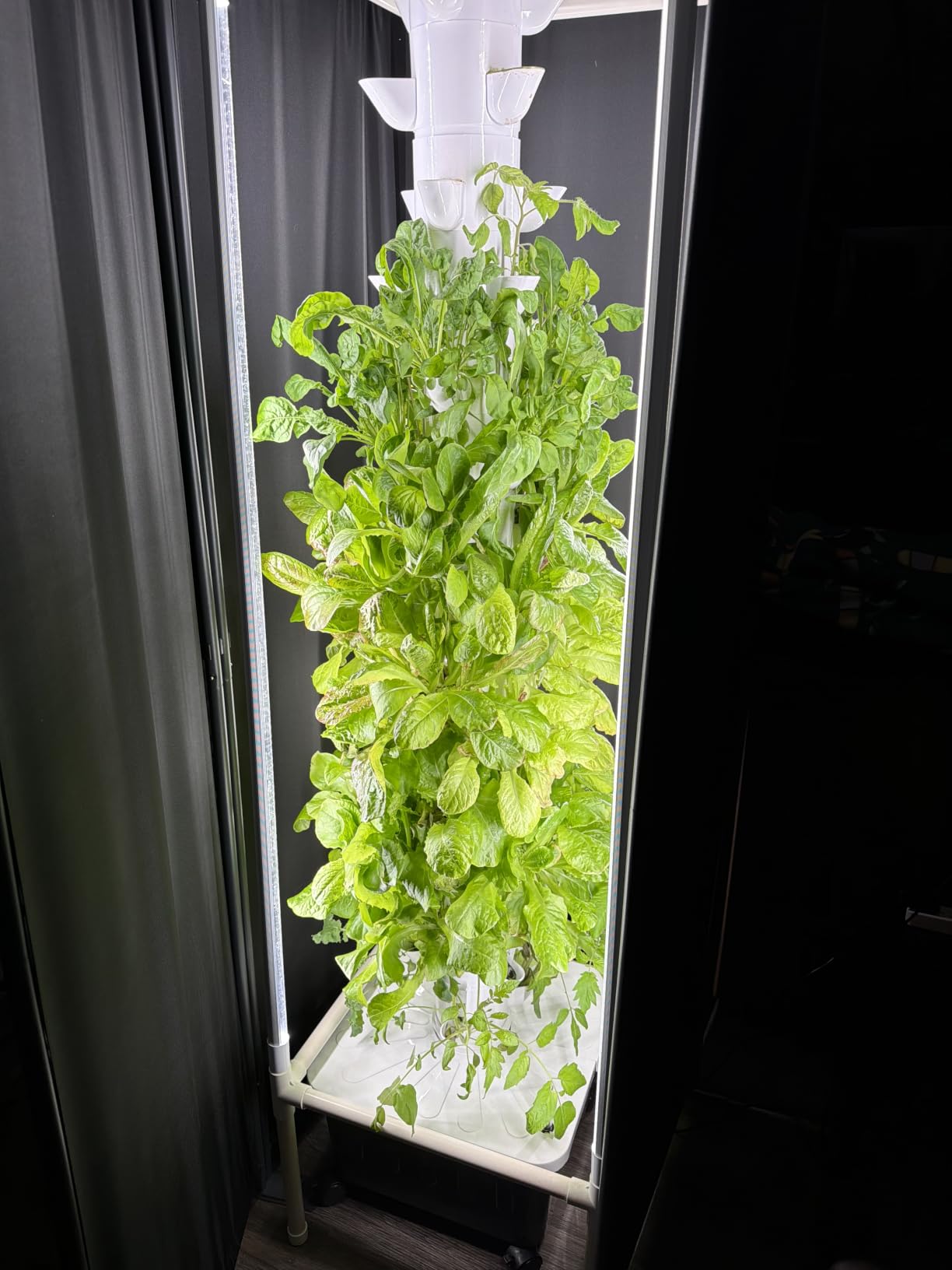
This is the quietest tower in our list, and for a bedroom or a shared living space that is the decisive feature. The circulation pump runs below 30 dB, which is a real specification rather than marketing filler, and the dual timer system handles both the water cycle every 15 minutes and 8 to 16 hours of lighting without any input from you. Four integrated LED grow lights at 5000K with four-sided supplemental coverage are included in the box.
The tank holds two to three weeks of water at full load, with an external level indicator readable from outside, and the BPA-free body is built from ABS, metal and polycarbonate. The claim that the full-spectrum light with four-sided coverage speeds growth of vegetables and fruits by up to five times is a manufacturer figure, but the combination of light and automation is what buyers consistently praise.
All ten reviews on record are 5-star, which is a perfect score on a very small sample. Treat it as encouraging rather than conclusive; a ten-review set is unusually fragile. What the reviews do highlight is real: the automation, the large tank, the quiet pump and the compact tower format, with the brand positioning it explicitly toward beginners, homes and classrooms.
Limitations are mostly physical. It is rated for indoor use only, so no balcony or patio season, and it is not water resistant, which limits placement near splashes. The 18.8-inch square base is wider than most of the slimmer towers here, which matters in a tight room. The single-ended power supply with reverse polarity protection also needs careful attention during installation.
Best for Bedrooms, Home Offices and Shared Living Spaces
If noise is your main objection to indoor growing, this is the tower that answers it. A pump below 30 dB means you can run it through the night without thinking about it, and the dual timers mean the only thing you do is top up the tank every couple of weeks and check the level gauge. Four lights and six tiers in one package also removes the need to source lighting separately.
It suits a beginner particularly well, because nothing needs configuring beyond setting two timers. For a shared apartment or a home office where a tall tower would look out of place, the modern styling is neutral enough to live with. The 3-year manufacturer warranty is the longest we saw in this group, which matters for a product with this many electrical components.
Where the JESLED Falls Short
The evidence base is the honest weakness here. A perfect rating from ten reviews tells you very little about long-term reliability, and this tower has more electrical and lighting components than the simpler plastic models. We would want to see it through a full season before recommending it as a primary garden.
Physical constraints come second. Eighteen and a half inch base width, indoor-only rating and a lack of water resistance mean placement needs thought, and there is no seasonal flexibility. If you want a tower for a balcony in summer and a kitchen in winter, the RFnongye or SJZX towers suit that pattern better.
What Grows Best in an Aeroponic Tower (and What Will Not Work)
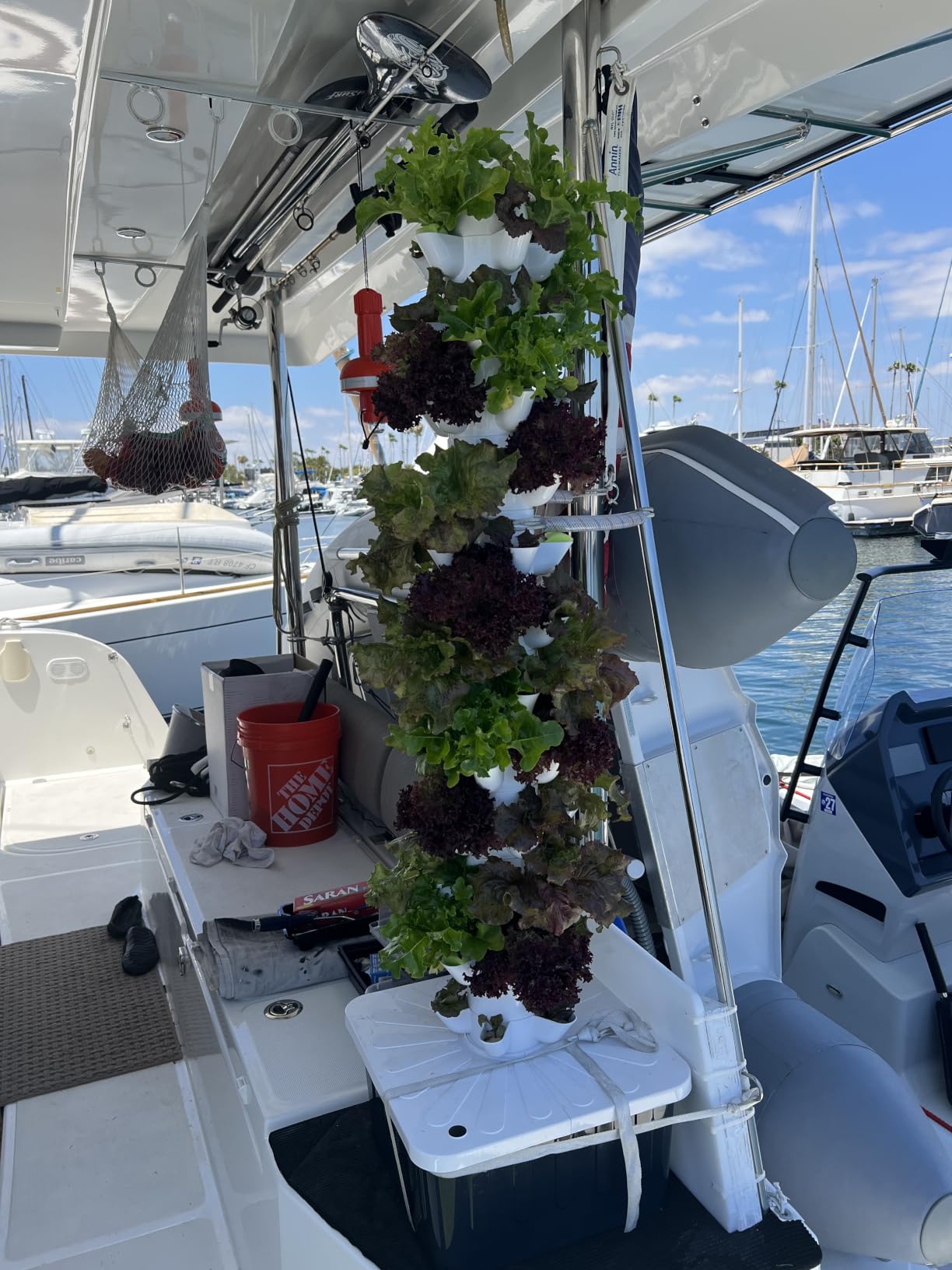
Tower gardens are built for shallow-rooted, fast-turning crops. Lettuce and leafy greens lead the list, then herbs such as basil, mint, coriander, chives and parsley, then brassicas like kale, pak choi, bok choy and mustard greens. Radishes and other small root crops also do well because they mature inside the short cycle a tower favours. Growers running a timed 64-day test of three towers reported a single-day harvest of 20 ounces of lettuce plus a quarter pound of kale, arugula, bok choy and mustard greens from one tower.
What will not work is mostly about weight, depth and pollination. Avoid large fruiting crops like full-size tomatoes, peppers and aubergine on any tower without per-tier lighting strong enough for them, and skip vining crops, squash, melons and anything with a deep root ball. The honest constraint is the site itself: upper tiers are the driest, lower tiers the wettest, so plant fast greens low and anything more demanding higher, near the light.
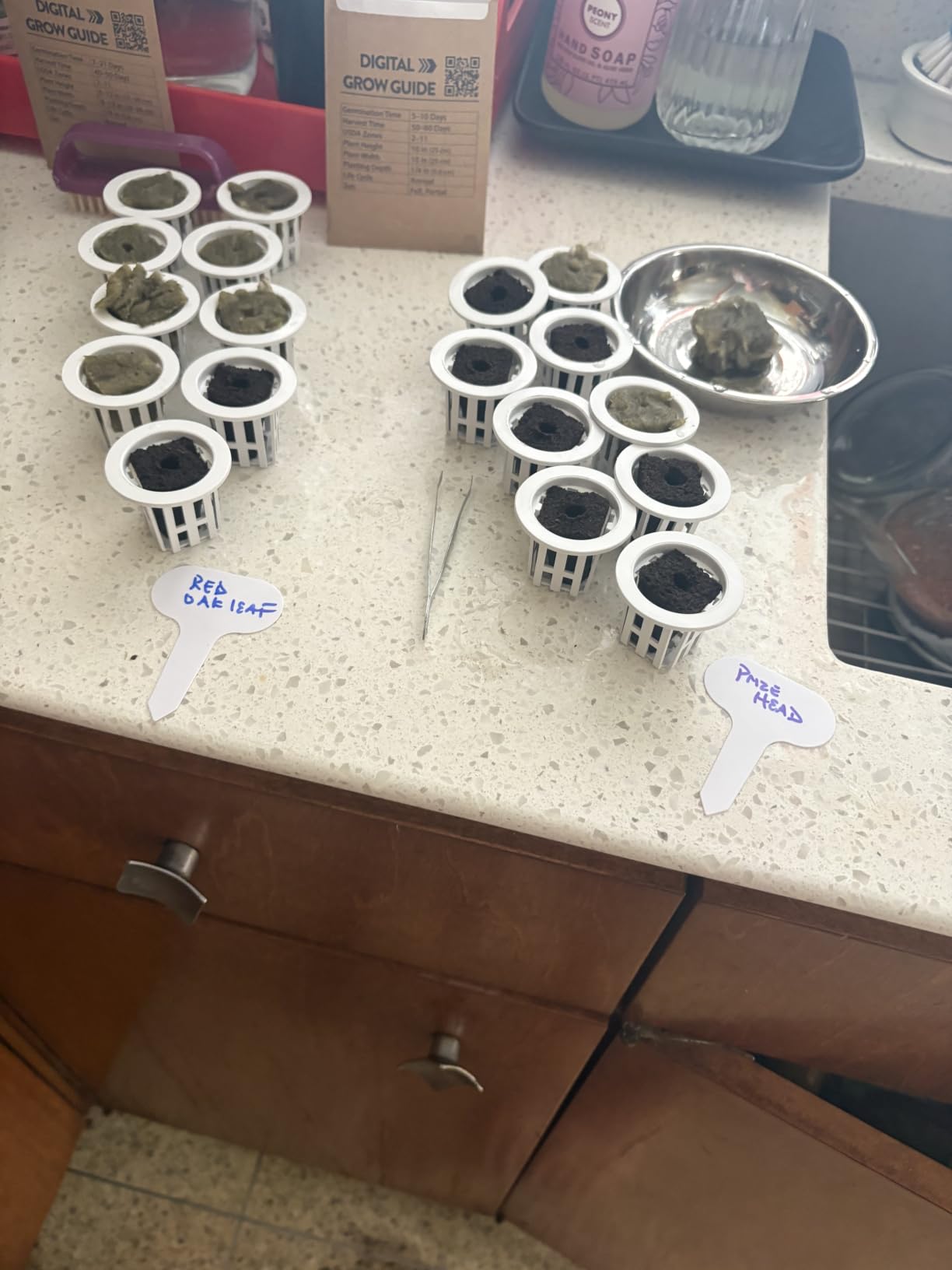
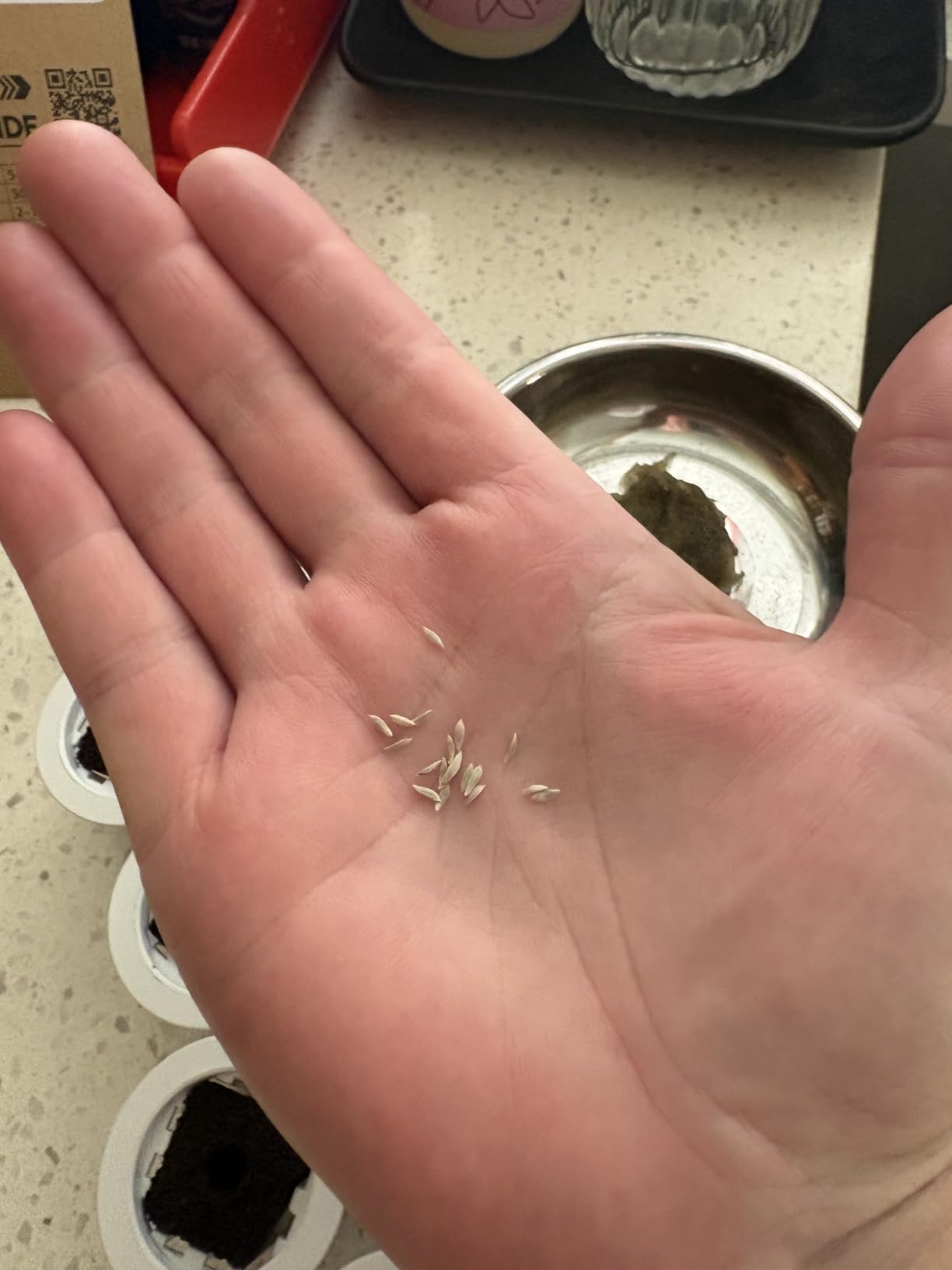
A second real limit is seed quality, which is the most common frustration owners report and the least discussed in buying guides. Cheap seed lots germinate unevenly, and a tower punishes that because a failed site wastes a planting round. Buy fresh seed from a supplier with a good germination rate, and rockwool or clay pebbles rather than loose plugs that can fall through smaller tower holes.
Aeroponic vs Hydroponic Tower: What You Are Actually Buying
Aeroponics, hydroponic nutrient film technique and deep water culture are three different systems sold under overlapping names. True aeroponics suspends bare roots in a nutrient mist, which delivers the highest oxygenation and the fastest growth. Nutrient film technique runs a shallow film down a channel or tower wall so roots sit in a wet film with air above it, and it is what most consumer towers labelled aeroponic actually do. Deep water culture submerges roots in an aerated reservoir, which is simple, forgiving and uses more water.
For a home tower, nutrient film technique is the right answer. It is the most forgiving of the three with a domestic pump, it uses very little water, and it survives short interruptions better than a mist because roots still touch a wet surface. The practical difference between towers in this roundup is not aeroponic versus hydroponic, it is how well the pump, the wall material and the reservoir are engineered.
How to Choose an Aeroponic Tower Garden in 2026
Start with reservoir capacity per plant site, because it sets your daily commitment. A 20-litre tank over 30 sites means roughly monthly refills; a small tank over 30 sites means daily attention. This single ratio explains more owner frustration than any other specification, and it is why the Gardyn Home 4’s 0.6-gallon reservoir is its weakest point despite the excellent density.
Second, look at pump and plumbing. A pump with published flow and lift figures, like the VEVOR’s 7-watt micro-pump at 600 litres per hour and 2 metres of lift, tells you the design was worked out rather than guessed. Flexible hoses are the most failure-prone part in sealed systems, so check reports on hose kinking and cracking before choosing a smart unit.
Third, weigh wall material and joints. 2mm walls with 360-degree construction, as on the ALTO GARDEN GX, resist the seepage that slowly drains thin moulded towers. Fourth, count lights. A 16W board is fine for greens, 30W is comfortable, and per-tier independent control is the only route to fruiting crops. Fifth, check clearance under the lamp bar, since a bar that only lifts 14 inches will be touched by anything that grows tall.
Sixth, decide on cleaning access, because this is the task people abandon. Narrow columns and removable sections clean faster than wide flat reservoirs, and silicone-sealed columns beat open chambers that trap sediment. Seventh, price the consumables. Rockwool, clay pebbles, nutrients, pH pens and seeds are a recurring cost, and any tower whose features sit behind a subscription changes the maths after the first year.
One more consideration that is not a specification: electrical safety. Pump start-up surge has been reported to trip GFCI-protected outlets on off-the-shelf towers. If you plan to run a tower on a kitchen counter circuit, test it early and be ready to move it to a dedicated line. If you are nervous about pump failure during an outage, a small backup air pump is cheap insurance and a topic owners raise constantly in forums.
The Weekly Aeroponic Tower Maintenance Schedule
Daily takes about two minutes. Look at the water level indicator and glance at each site for wilt. That is genuinely it on most towers, because the pump timer does the rest. The one daily habit worth keeping is checking the level before you leave the house, since a dry reservoir on a hot afternoon is the fastest way to lose a crop.
Weekly takes about ten minutes, which matches what owners report. Top up nutrient solution, test pH, trim runners, and wipe the reservoir lid and level gauge. The weekly top-up figures reported by owners are around 4 litres for a 20-litre tower, and pH testing is the step people skip and then regret, because a drifting pH locks up nutrient uptake even when the solution looks fine.
Monthly, drain and clean the reservoir, rinse the tower column, and replace exhausted growing media. Check the pump body and filter sponges for debris, and confirm the timer cycles are still correct. This is also when you replace a spent seed plug, and the cleanest time to move a tower to a new spot if the season has changed.
Twice a year, review the electrical side. Test the pump on a known-good outlet, check that the timer still holds its schedule, and look at every hose connection for stiffness or discoloration. The two forum-reported failure modes worth planning for are pump surge tripping a GFCI outlet and hose kinking during reassembly, and both are caught early by a five-minute check.
Frequently Asked Questions
Which aeroponic tower is the best for home gardening?
The Ahopegarden 60-Pod Indoor Tower is the best overall for most homes, with the largest reviewed rating base in this group, a 30W full-spectrum light, 32 litres across two tanks and casters for moving it. The ALTO GARDEN GX is the better-built option with 2mm walls and a 10-gallon reservoir, and the VEVOR 6-tier is the best value when you want lighting included.
What grows best in a tower garden?
Shallow-rooted, fast crops grow best: lettuce and other leafy greens, herbs such as basil, mint, coriander and chives, brassicas including kale, pak choi and mustard greens, and quick radishes. One grower harvesting a 64-day three-tower test reported 20 ounces of lettuce plus a quarter pound of kale, arugula, bok choy and mustard greens from a single tower on one day.
What are the disadvantages of using an aeroponic tower?
The main disadvantages are constant pump dependency, a small tank that forces frequent top-ups, an unreliable power supply that can end a grow during an outage, and higher cost per plant site than a simple tray. Seed quality and germination are also a common frustration, and a tower needs consistent pH and nutrient management to avoid algae and root problems.
What can you not grow in a tower garden?
Avoid deep-rooted and heavy crops: full-size tomatoes, peppers, squash, melons, corn and most vining plants. Large fruiting varieties need far more light and root volume than a tower provides, and pollination indoors is difficult without airflow or a fan. Small fruiting crops such as mini tomatoes, peppers and strawberries can work on towers with per-tier lighting above 100 watts.
Are aeroponic towers worth it?
A tower is worth it for leafy greens and herbs if you lack garden space, want a year-round supply, and will commit to weekly pH checks and nutrient top-ups. Ongoing costs are modest compared with buying the same greens, but towers pay back fastest at higher site counts. A 24 to 30-site tower is the sensible starting point for most households.
Which is better, NFT or DWC?
For a home tower, nutrient film technique is the better choice. NFT uses less water, is more forgiving with a domestic pump, and roots keep partial contact with air so a short pump interruption is survivable. Deep water culture is simpler to set up and very forgiving of mistakes, but it uses more water, needs constant aeration, and holds more heat in the reservoir during warm weather.
Our Final Aeroponic Tower Garden Verdict for 2026
The best aeroponic tower garden for most homes in 2026 is the Ahopegarden 60-Pod Indoor Tower. It has the deepest review base in this group, it builds fast, it moves on casters, and its low-water alarm protects the thing that actually kills towers. For a one-purchase answer that includes lighting, nutrients and a pH pen and that we expect to still run in five years, choose the ALTO GARDEN GX. For a high planting count in a small footprint, the Gardyn Home 4 wins, provided you top up the reservoir daily.
Match the tower to the space instead of chasing the biggest site count. A quiet bedroom wants the JESLED tower and its sub-30 dB pump. A small flat wants the LYCereal or RFnongye column for its narrow footprint. A balcony or a classroom wants the 70-slot tower. A household that eats salad daily wants the WooRoot Max Pro and its 30-day autonomous cycles. Whichever you choose, buy good seed, test your outlet for pump surge, and set aside ten minutes a week before the first plant goes in.